Blog

  • Can Ibuprofen Make My Baby Sleep?

    Can Ibuprofen Make My Baby Sleep?

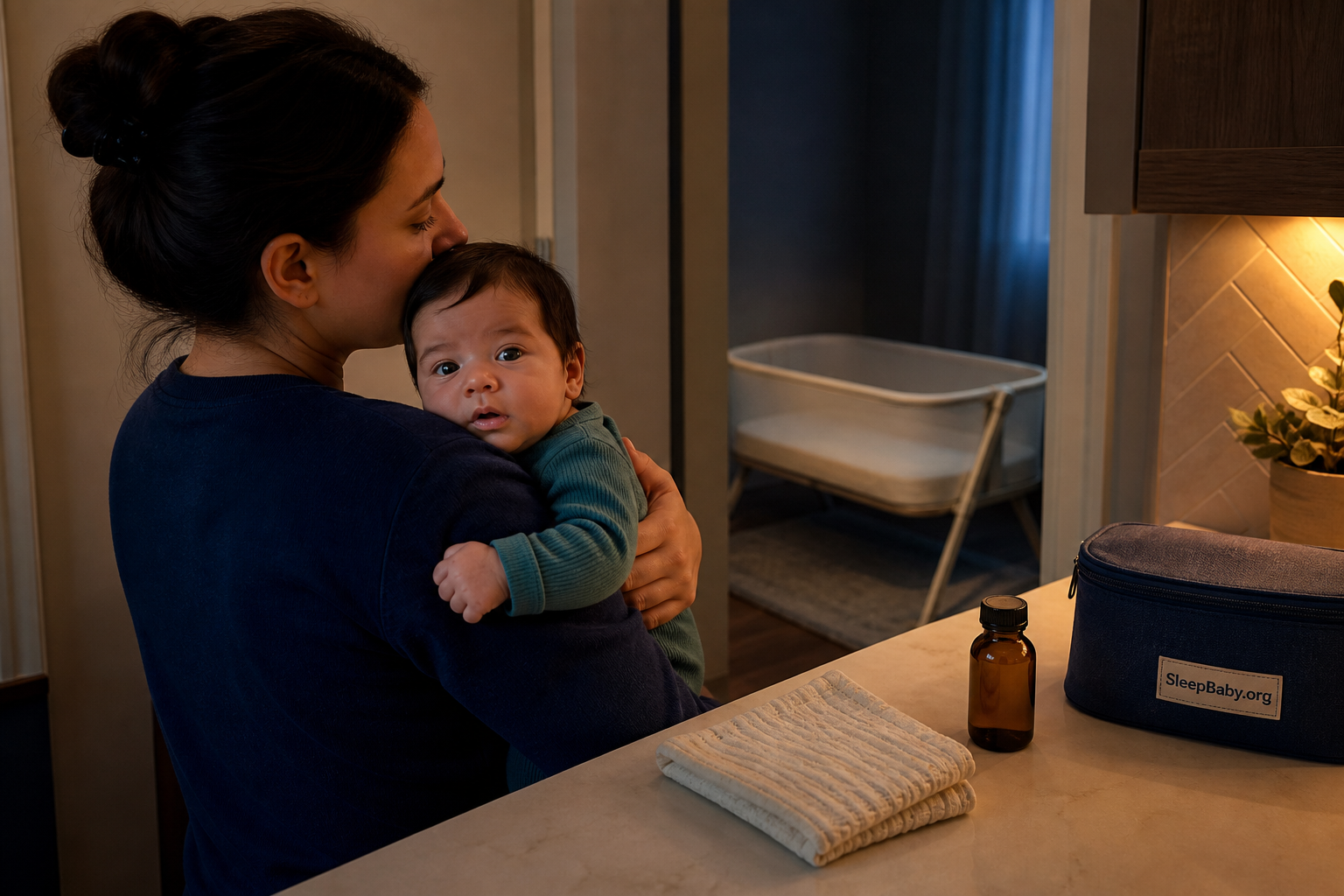
    The bottle is beside the thermometer. Your baby finally looks drowsy, and now you are trying to understand what just happened: Did the ibuprofen make my baby sleep, or did feeling better simply make sleep possible? That difference matters, especially when the hour is late and “sleepy” can mean everything from peaceful relief to difficult to wake.

    The answer before anything else

    Ibuprofen is not a sleep aid and should never be given just to make a baby sleep

    Ibuprofen treats pain and fever; it is not a sedative. A baby may rest after a correct, appropriate dose because discomfort eased, but sleep does not prove what was hurting and is not a reason to keep dosing. In the United States, do not give ibuprofen to a baby younger than 6 months unless the baby’s doctor specifically tells you to. If your baby is unusually hard to wake, cannot respond normally, has trouble breathing, turns blue or gray, has a seizure, collapses, or may have received an extra dose, treat that as a safety problem—not as successful sleep.127

    I would not use the length of the nap as a home test for whether ibuprofen “worked.” I would look at the reason it was given, the baby’s age and current weight, the exact bottle and concentration, the measured amount, the time, and the baby’s condition now. That moves the night out of guesswork and into a sequence you can actually check.

    Before we talk about bedtime, rule out the urgent lanes

    There are moments when this article is not the right next tool. Call emergency services now if your baby is struggling to breathe, has blue or gray lips or skin, has a seizure, collapses, is unresponsive, or cannot be awakened in the way you normally can. Do not drive around the internet trying to decide whether deep sleep is a side effect.

    If an extra dose may have been given, the amount is uncertain, a sibling may have reached the bottle, or you find medicine spilled with no reliable explanation, contact Poison Control right away in the United States at 1-800-222-1222 or use webPOISONCONTROL. You do not need to wait for symptoms, and you should not make the baby vomit unless a poison specialist specifically instructs you to.67

    I am putting those boundaries high on the page because a parent asking whether medicine caused sleep may really be asking, “Is this amount of sleep normal?” The answer depends less on the clock than on responsiveness, breathing, color, feeding, hydration, and the reason the medicine was used.

    Put tonight’s question in one of three lanes

    When I feel the question getting tangled, I sort it by purpose and present condition. This is not a diagnosis. It is a way to keep a sleep problem from becoming a medicine decision—and to keep a medicine problem from being mistaken for a sleep victory.

    THE GOAL IS SLEEP

    Do not give ibuprofen

    • There is no clear pain or fever reason.
    • The hope is that medicine will make bedtime easier or extend a nap.
    • The baby is simply overtired, off schedule, resisting a transfer, or waking often.

    Next move: keep medicine out of the sleep plan. Check ordinary needs and use a nonmedical settling or schedule response.

    THERE IS PAIN OR FEVER

    Follow the exact medical and label path

    • The baby’s age is eligible under the local label or a clinician gave specific instructions.
    • You have the exact product, current weight, concentration, label, and supplied dosing device.
    • You have checked other medicines for duplicate ibuprofen or another NSAID.

    Next move: use only the directed amount for the real symptom, record the time, and reassess the baby—not merely whether sleep starts.12

    SLEEPINESS IS UNUSUAL

    Stop interpreting and get help

    • The baby is much harder to wake or less responsive than usual.
    • There may have been an extra dose, wrong concentration, or accidental access.
    • Breathing, color, feeding, vomiting, urine output, or behavior is concerning.

    Next move: use emergency services for emergency signs; use Poison Control for a possible dosing or ingestion error; call the baby’s clinician for concerning illness symptoms.


    A miniature night map splits the parent's next step into safe sleep, careful medicine use, and urgent help.
    A nighttime map with three separate destinations: ordinary sleep support, label-led symptom care, or urgent help.
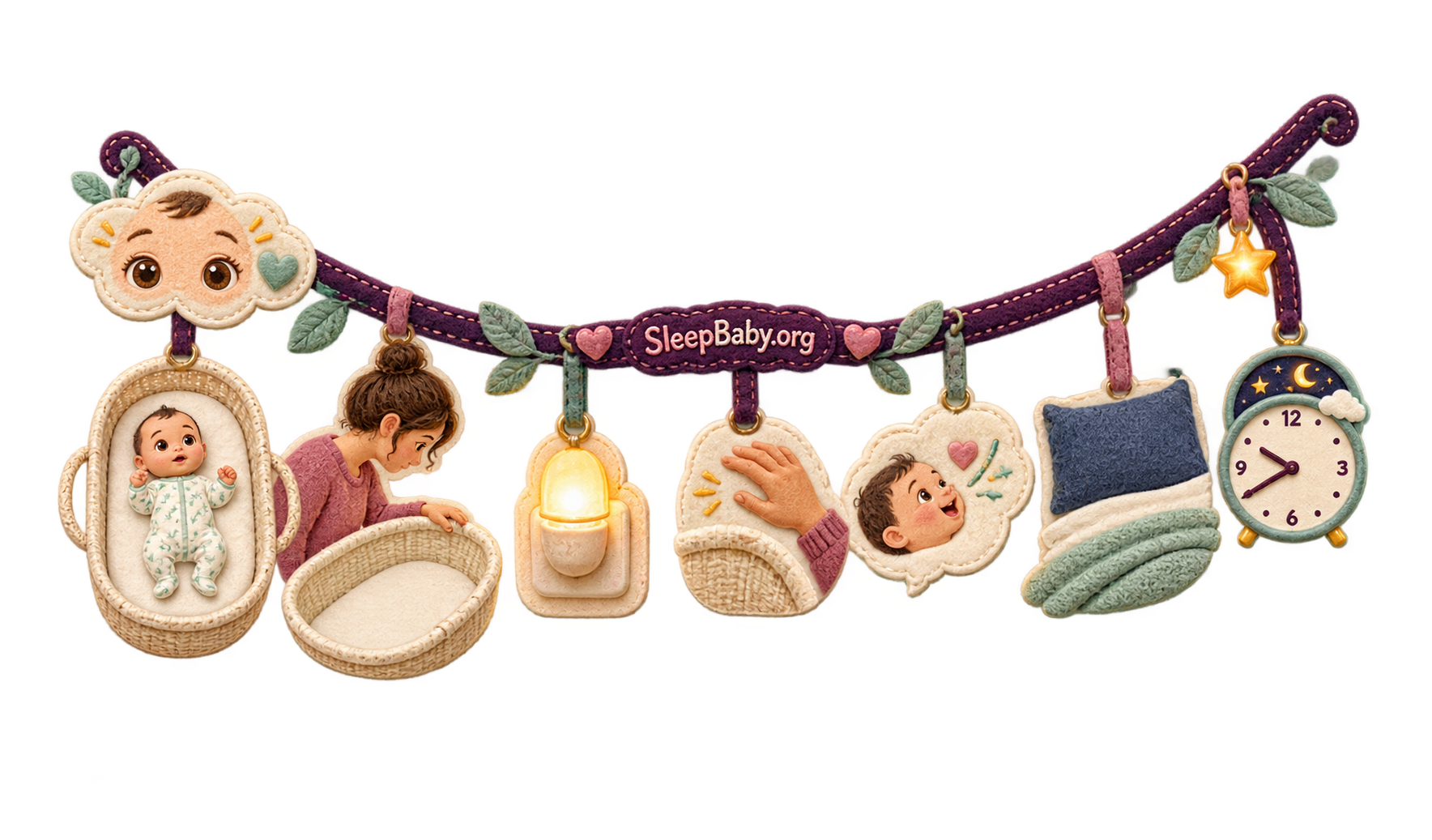
    A transparent charm rail moves from discomfort and correctly handled medicine to comfort and ordinary safe sleep, never forced sedation.
    Pain or fever reason → correct label use → comfort may return → ordinary safe sleep; never medicine → sedation.

    Why a baby may sleep after ibuprofen without ibuprofen being a sleep medicine

    Pain and fever can make it hard to settle. If a correctly used medicine reduces that discomfort, a tired baby may finally be able to do what tired babies do: sleep. That is relief making room for sleep, not the drug acting as a bedtime sedative. The same principle applies when an adult rests after a headache improves; the rest does not turn the pain reliever into a sleeping pill.

    The distinction protects you from two bad conclusions. The first is, “My baby slept, so ibuprofen must be a safe way to produce sleep.” It is not. The second is, “My baby slept, so the symptom must have been teething and everything is fine.” Sleep cannot identify the cause of pain or fever. A baby with an ear infection, a viral illness, post-vaccination discomfort, teething pain, or simple exhaustion may all sleep after being comforted. The response is one observation, not a diagnosis.

    I also would not chase a minute-by-minute “kick-in time.” Products, symptoms, feeding, and individual circumstances differ, and a timer can create false confidence. Record when the dose was given, then watch the baby and follow the exact label or clinician plan. If pain or fever persists, worsens, or keeps returning, that is information for the clinician—not permission to shorten an interval or add another medicine on your own.

    The age rule comes before the dose

    In the United States, the American Academy of Pediatrics says not to use ibuprofen in children younger than 6 months unless the child’s doctor directs it. A current U.S. infant ibuprofen label likewise says to ask a doctor for babies under 6 months.12 That boundary matters because a search result, an older sibling’s bottle, or a friend’s experience cannot make a younger baby eligible.

    Parents outside the United States may see different age cutoffs on local products or health-service guidance. That is not a reason to average the rules. It is a reason to use the label for the exact product in your hand and the advice of a clinician who knows the baby. Concentrations and directions can vary, even when the front of two packages looks similar.49

    I would not copy an internet dosing chart into a late-night decision. Weight-based instructions depend on the exact concentration and product. If you cannot confidently answer “Which product is this?”, “What is my baby’s current weight?”, “What concentration does this label show?”, and “Which device came with it?”, pause and call a pharmacist or clinician. That pause is more useful than a guessed half-mark on a syringe.

    01

    Why?

    Name the actual pain or fever reason. “To help sleep” does not qualify.

    02

    Who?

    Confirm age eligibility, current weight, relevant health conditions, and clinician instructions.

    03

    What?

    Read the active ingredient, concentration, warnings, expiry, and other medicines already given.

    04

    How?

    Measure in milliliters with the supplied device, record the time, and follow the exact interval and maximum on the label or clinician plan.
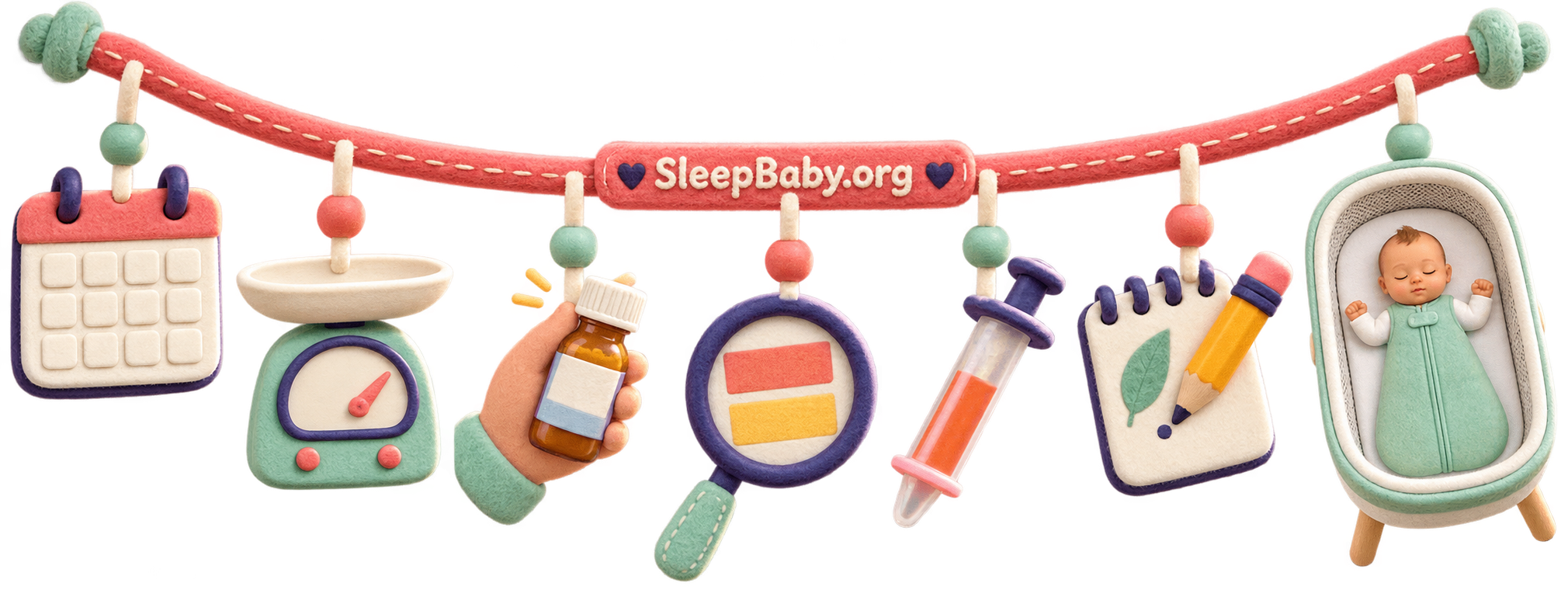
    A transparent checklist rail connects age, weight, the bottle label, supplied syringe, written time, and a bare back-sleep bassinet.
    Age and clinician direction → current weight → exact concentration → supplied syringe → recorded time.

    The 1:42 a.m. trap is treating the outcome as the purpose

    The bottle, the bassinet, and the wrong conclusion

    Picture me, Kacey, standing in a dim kitchen at 1:42 a.m. In this hypothetical, Benjamin has a real, clinician-understood pain reason, is old enough for the exact product, and has received the label-directed amount with its syringe. Later, hypothetical Benjamin is asleep. My tired brain offers a wonderfully convenient sentence: “Ibuprofen makes Benjamin sleep.”

    That sentence skips every important step. Kacey did not give medicine because Benjamin needed sleep; Kacey gave it because hypothetical Benjamin had a valid symptom and the exact directions were followed. Benjamin may be sleeping because the room is dark, the feed is finished, the pain eased, and it is 1:42 in the morning. The sleep does not tell Kacey which factor mattered most.

    So hypothetical Kacey checks what can actually be checked: Benjamin’s breathing and color look usual; the measured dose and time are written down; the bottle is recapped and put away; the bassinet is firm, flat, and empty. Kacey does not add a dose because Benjamin stirred, does not prop the mattress because he had medicine, and does not decide tomorrow night’s bedtime can begin with ibuprofen.

    The scene is useful because it exposes the mental shortcut, not because Kacey or Benjamin proves a medical claim. The safer sentence is: “Benjamin had an appropriate pain-relief dose, looks normally responsive, and can now return to ordinary safe sleep.”
    A caregiver secures a recapped bottle, checks an awake baby's response, and faces a clear nighttime bassinet.
    The hypothetical night separates the reason for medicine from the later sleep, then ends with the bottle secured and the bare bassinet ready.

    That is the reasoning I want available when fatigue starts flattening cause and effect. A medicine can be appropriate for a symptom without becoming part of the bedtime routine. A baby can sleep after relief without the nap serving as proof of safety. And a parent can notice improvement while still watching for the illness pattern that made the dose necessary.

    Measure liquid medicine like the label matters—because it does

    Infant and children’s liquid medicines can look familiar while having different concentrations or directions. Read the Drug Facts panel every time you use a new bottle. Match the active ingredient, concentration, age and weight directions, warnings, interval, and maximum. Check whether another fever, pain, cold, or combination product already contains ibuprofen or another NSAID. When you are unsure, ask a pharmacist before giving it.248

    Use the device that came with that medicine and measure in milliliters. A kitchen teaspoon is not a dosing tool; household spoons vary. An oral syringe is generally the most accurate way to measure small liquid amounts. Bring the baby upright enough for safe administration, place the syringe gently along the inside of the cheek, and deliver slowly enough for swallowing. Do not aim at the back of the throat or squirt a full amount quickly.4

    The label-to-crib handoff

    Five jobs, kept separate

    1. Verify: correct baby, eligible age, current weight, real symptom, exact product, and no duplicate ingredient.
    2. Measure: use the supplied syringe or cup on a level, well-lit surface; recheck the mark before giving.
    3. Give: use a calm upright position and slow inside-the-cheek delivery; do not mix an uncertain amount into a whole bottle.
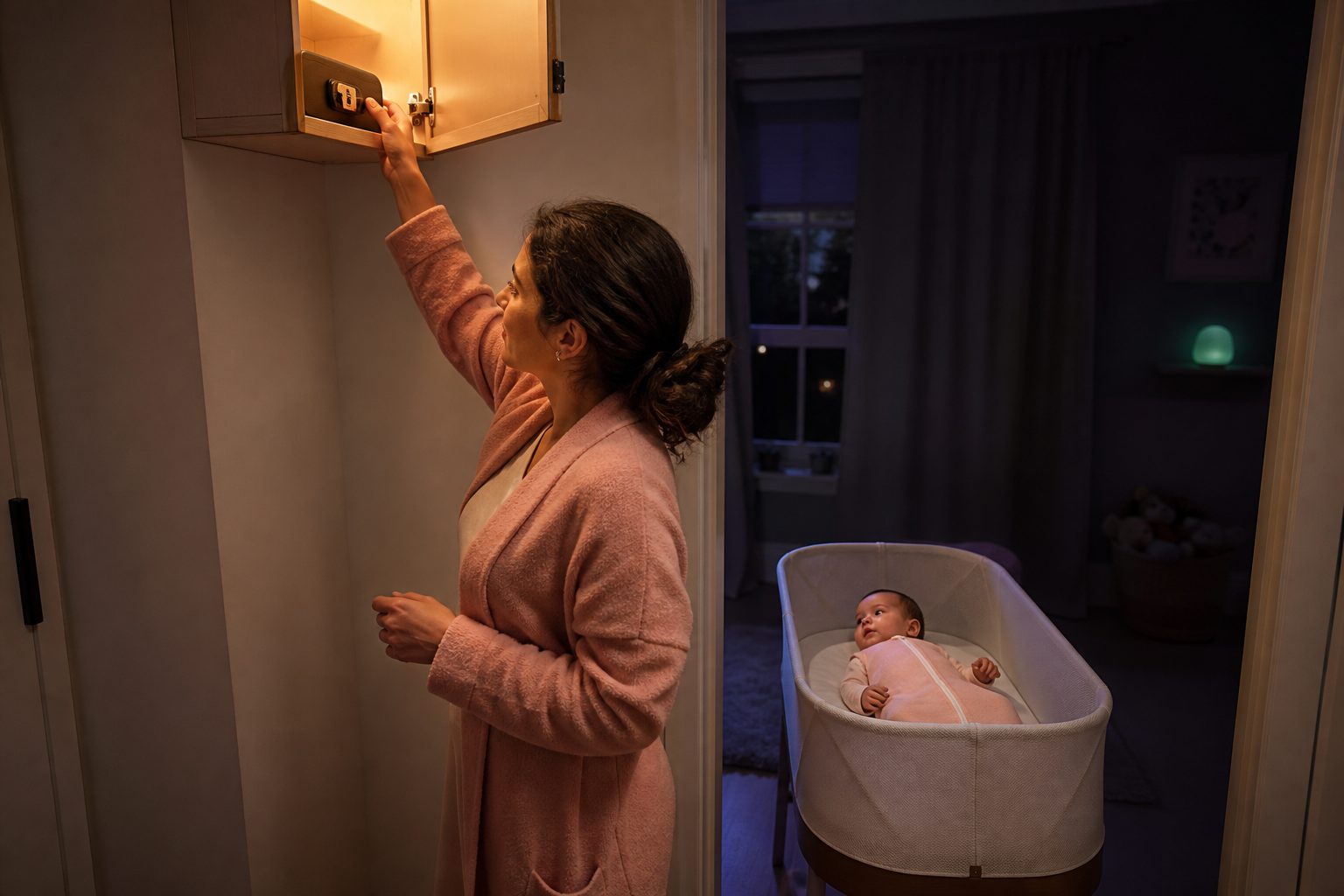
    4. Record and secure: note the medicine, amount, and time; relock the cap and put both bottle and device up, away, and out of sight.
    5. Return to sleep safely: once care is complete, place the baby on the back in the firm, flat, empty infant sleep space.

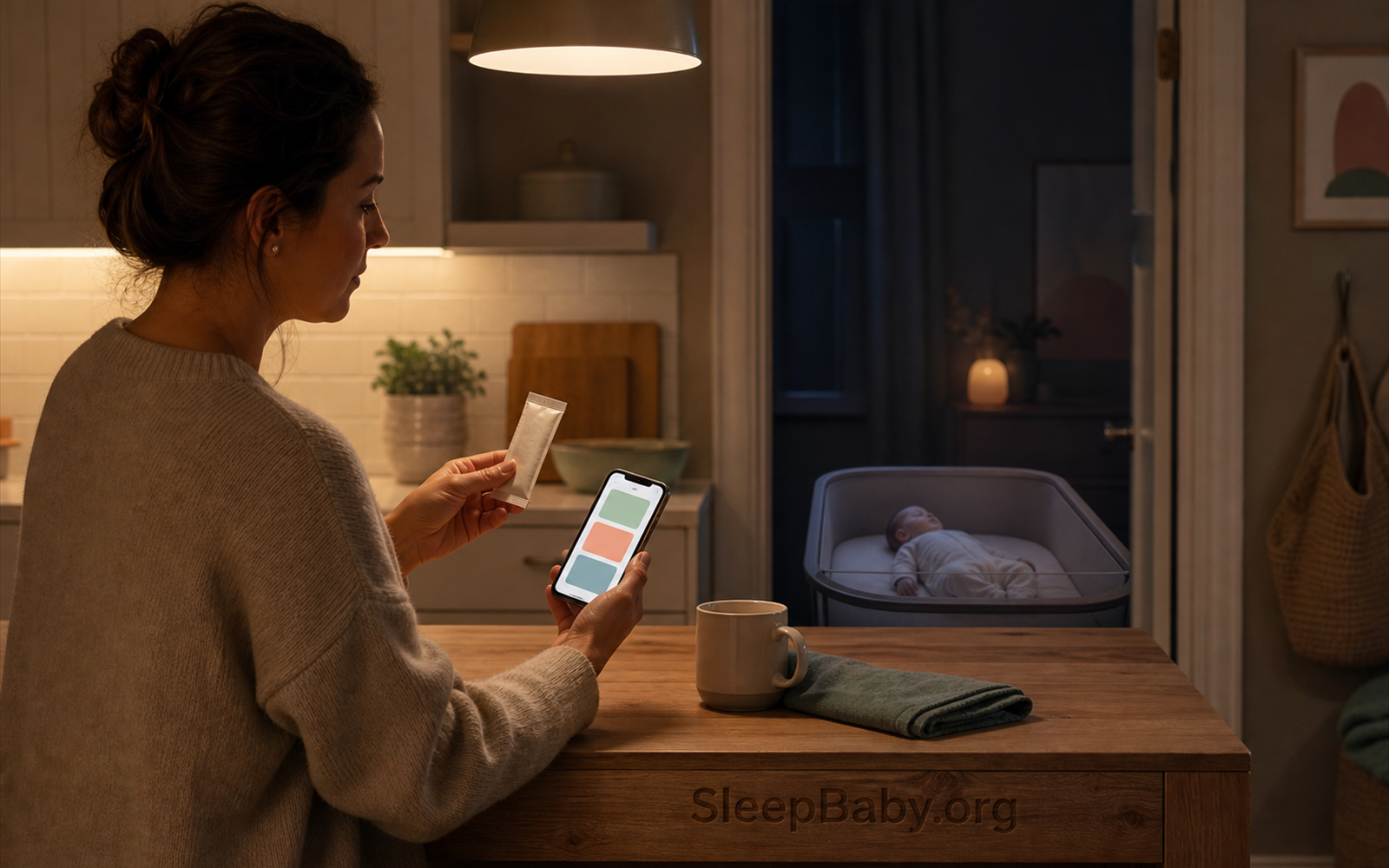
    A mother slowly gives liquid medicine along an awake baby's inner cheek beside a recapped bottle, written time, and empty bassinet.
    One calm sequence keeps measuring, administering, recording, storage, and the safe-sleep return from blurring together.

    See the syringe angle and pace

    AboutKidsHealth demonstrates how to give liquid medicine

    A written dose direction tells you an amount; it does not show the hand position. This Hospital for Sick Children video is here for that narrow visual job. Your baby’s exact product label and clinician remain the authority for whether and how much to give.

    Watch “How to Give Your Child Liquid Medicines” on YouTube.

    Written takeaway: read the exact label, measure with the proper oral syringe, keep the baby supported, aim toward the inside of the cheek, and give the liquid slowly enough to swallow.

    Reasons to pause before giving ibuprofen

    “Old enough” is not the only suitability check. Ibuprofen can be a poor choice in some circumstances, and the warning label is not decorative. Ask a clinician or pharmacist before use when the baby is dehydrated or losing a lot of fluid through vomiting or diarrhea, has kidney disease, stomach or bleeding problems, has had an allergic reaction to ibuprofen, aspirin, or another NSAID, has asthma that may react to these medicines, or is taking another medicine that could interact.289

    Dehydration deserves special attention because a child who has not been drinking or has lost a lot of fluid through vomiting or diarrhea may need a clinician’s advice before ibuprofen. If you are worried a baby is not taking in or keeping down enough fluid, pause and call rather than relying on fever medicine; the exact label and clinician must guide whether ibuprofen is appropriate.29

    NHS guidance also says not to give ibuprofen for chickenpox unless a doctor recommends it. Local labels and public-health advice differ, so I would not translate one country’s permission into another country’s bottle. Use the instructions that belong to the child, product, and place you are actually in.9

    Medicine does not change the safe-sleep surface

    Once the measuring and comfort care are finished, the sleep rules return unchanged: place the baby on the back for every sleep, on a firm, flat, noninclined surface intended for infant sleep, with a fitted sheet and no pillows, blankets, positioners, bumpers, toys, or weighted objects.5 A fever does not make an incline safer. Teething does not make side sleeping safer. Reflux, congestion, or a dose of medicine does not turn a swing, car seat, adult bed, sofa, or caregiver’s chest into the planned overnight sleep space.

    If you hold the baby during administration or comfort, stay awake and move them to the proper surface when you are done. I would prepare that surface before measuring anything so the last step of the handoff is obvious. The medicine bottle belongs secured away; the baby belongs alone in the clear sleep space.

    A transparent handoff rail moves from awake care and secured medicine to a baby sleeping on the back in a bare bassinet.
    Care while awake → bottle secured → baby on the back → firm, flat, empty sleep space.

    Should I wake a sleeping baby for the next dose?

    The label’s interval is not an automatic nighttime appointment. American Academy of Pediatrics guidance and the current infant label say a repeat dose may be given every 6 to 8 hours if needed. Whether this baby should be awakened still depends on the symptom and the exact clinician or label plan. I would not turn the earliest allowed interval into a standing dose when the need is uncertain.12

    If the baby’s clinician gave a schedule after a procedure or for a specific condition, follow that individualized plan, including any instruction about waking. If the directions are unclear, call the clinician or pharmacist rather than improvising overnight; the AAP specifically advises asking when the amount, frequency, or duration is uncertain.4 Write down each dose so another caregiver can see what was given and when.

    The useful reassessment is broader than the clock: Does the baby still appear to have the symptom? Is the baby feeding and urinating? Is the temperature or pain pattern improving, persisting, or worsening? Is the baby normally responsive? Repeated nighttime use without a clear plan is a reason to speak with the clinician, not a sleep strategy.

    What if teething seems to be the reason?

    Teething can make gums sore and sleep messy, but it should not become a blanket explanation for every fever or difficult night. The American Academy of Pediatrics notes that teething does not cause a true fever of 100.4°F (38°C) or higher.3 A true fever, a baby who looks ill, poor feeding, dehydration, vomiting, rash, or unusual sleepiness needs its own assessment.

    If an age-eligible baby seems to have genuine teething pain, ask whether the exact label or the baby’s clinician supports ibuprofen for that symptom. That is still symptom care, not sleep medicine. Do not use a difficult bedtime or later sleep as proof that teething was the cause, and keep watching for the true-fever and illness signs above.123

    If you find yourself reaching for ibuprofen most nights because sleep falls apart, bring the pattern to the pediatrician or dentist. Include how long it has lasted, what the gums look like, temperatures, feeding, wet diapers, other symptoms, and how often medicine was used. “It helps sleep” is less informative than “pain behavior eased, but the baby has needed it on five nights.”

    When the problem is sleep rather than pain

    If there is no pain or fever indication and the baby is simply waking often, resisting bedtime, or running on a new rhythm, put the medicine away. Check hunger, diaper, temperature of the room, light, noise, wake time, and the way the last nap ended. A recurring timing problem needs a timing response.

    For that lane, our guide to building a flexible baby sleep schedule can help you organize morning light, age-appropriate awake time, naps, and a repeatable wind-down. I would use that only after the health question is settled; a schedule guide should never delay care for fever, breathing trouble, dehydration, pain, or unusual responsiveness.

    If the only goal is sleep

    Try the smallest nonmedical reset

    1. Keep lights low and the response boring enough that nighttime still feels like nighttime.
    2. Meet the real need—feed, diaper, temperature, closeness—without adding medicine “just in case.”
    3. Use one familiar settling cue, then place the baby on the back in the clear sleep space.
    4. Tomorrow, inspect the whole day rather than blaming one wake: morning start, naps, feeds, and the final awake stretch.

    The dose is not finished until the medicine is put away

    A bottle left on a nightstand “because another dose might be due” is still an accessible medicine. The CDC recommends putting medicines up, away, and out of sight after every use, relocking the safety cap, and not leaving them bedside for later.6 Keep the original label and child-resistant closure, and keep the dosing syringe with that exact bottle so it does not migrate to a different concentration.

    I would make the storage step part of the medication log: give, record, recap, secure. If more than one adult is caring for the baby, the written record should show what was given and when; the storage location should be high and known to the adults but out of children’s sight and reach.

    A transparent storage rail follows a dose from cheek and written time to a closed lockbox stored high before sleep.
    Give → write it down → relock the bottle → secure it high and out of sight; never leave the next dose waiting bedside.

    The questions that usually arrive after the baby falls asleep

    Is sleepiness a normal side effect of infant ibuprofen?

    Drowsiness is not the intended effect and should not be the goal. A tired baby may sleep when pain or fever improves, but unusual difficulty waking, limpness, poor response, abnormal breathing, or a dramatic behavior change is not something to explain away as a normal bedtime effect. Seek prompt help based on the symptoms and use Poison Control if a dosing error or ingestion may have occurred.

    How quickly should ibuprofen make my baby sleep?

    It should not be expected to make a baby sleep at all. Do not use an online onset time as a countdown to sedation or as permission to redose. The useful outcome is whether the indicated pain or fever is improving while the baby remains normally responsive. Follow the exact label or clinician plan and call if symptoms persist or worsen.

    Can I give ibuprofen “just in case” before bedtime?

    No. Give medicine for a real, appropriate symptom, not to prevent an imagined bad night. “Just in case” use makes it harder to notice the actual pattern, adds dosing risk, and can turn medicine into a sleep association for the adults even though it is not a sleep treatment.

    Can I alternate ibuprofen and acetaminophen overnight?

    Do not build an alternating plan from generic online advice. If a clinician wants your baby to use both medicines, ask for written directions that identify each exact product, amount, interval, and daily limit. If no such plan exists, call the clinician or pharmacist before combining products; the AAP advises asking whenever the amount, frequency, or duration is uncertain.4

    What if my baby spits some of the dose out?

    A generic article cannot tell how much was swallowed or whether any further amount is appropriate. Call a pharmacist or clinician with the exact product, concentration, amount attempted, time, and baby’s age and weight. For any later dose they advise, follow the exact directions and use the supplied device with slow inside-the-cheek delivery.24

    What if my baby vomits after a dose?

    Do not make the next-dose decision from a generic rule. Call the baby’s clinician or pharmacist with the exact product, dose time, vomiting time, age, weight, and current symptoms. Ongoing vomiting or concern that the baby is not keeping down enough fluid also matters because the infant label tells caregivers to ask a doctor when a child has not been drinking or has lost a lot of fluid.2

    Could the medicine be masking an illness?

    It can reduce pain or fever without treating the cause. That is why I would keep watching the whole baby: breathing, color, responsiveness, feeding, wet diapers, rash, vomiting, and the return of symptoms. Improvement is welcome, but it does not erase young-infant fever rules or warning signs.

    When should repeated nighttime use trigger a call?

    Call when you are unsure of the diagnosis, the baby needs medicine repeatedly or longer than the label allows, fever or pain keeps returning, the baby is worsening, feeding or hydration changes, or you are relying on medicine to get through bedtime. Bring the bottle and your written log so the clinician can see the exact product, concentration, amount, and timing.

    A short plan for tonight

    1. Name the lane. Sleep goal, real pain/fever care, or unusual sleepiness/possible error.
    2. Escalate first when needed. Emergency services for emergency signs; Poison Control for a possible extra dose or ingestion; immediate pediatrician call for a baby 3 months or younger with a rectal temperature of 100.4°F (38°C) or higher.
    3. If medicine is appropriate, use the exact path. Confirm age, current weight, product, concentration, warnings, other medicines, supplied device, and written timing.
    4. Watch the baby, not just the nap. Relief may make sleep possible; normal breathing, color, responsiveness, feeding, and hydration are the more useful observations.
    5. Close the loop. Record the dose, relock and secure the medicine, and return the baby to a back, firm, flat, empty sleep space.

    Now return to the bottle beside the thermometer. The baby is asleep, but you no longer need sleep to answer a medical question it cannot answer. You know why the medicine was—or was not—appropriate. You know what was measured. You know which changes would move the night into urgent help.

    I would let ordinary, normally responsive sleep be ordinary sleep. I would never use ibuprofen to manufacture it. Relief can open the door to rest; it does not turn a pain reliever into a bedtime tool.

    Once the medicine question is settled

    Build the bedtime plan around sleep—not pain medicine

    You separated relief from sedation, checked the safety lane, and returned the bottle to its proper place. If ordinary wakes are still unraveling the night, SleepBaby can help you shape the next practical step without turning medicine into a settling cue.

    Help me rebuild the sleep plan

    Sources

    1. American Academy of Pediatrics / HealthyChildren.org: Ibuprofen Dosing Table for Fever and Pain
    2. DailyMed: Infants Ibuprofen Concentrated Drops—current OTC Drug Facts label
    3. American Academy of Pediatrics / HealthyChildren.org: Fever and Your Baby
    4. American Academy of Pediatrics / HealthyChildren.org: How to Use Liquid Medicines for Children
    5. Centers for Disease Control and Prevention: Helping Babies Sleep Safely
    6. Centers for Disease Control and Prevention: Up and Away medication safety toolkit
    7. National Capital Poison Center / Poison Control: NSAIDs—ibuprofen and naproxen
    8. MedlinePlus: Ibuprofen
    9. NHS: Who can and cannot take ibuprofen for children

  • Can Infacol Make My Baby Sleep? How to Read Sleepiness Safely

    Can Infacol Make My Baby Sleep? How to Read Sleepiness Safely

    The quiet answer first

    Infacol is not a sedative, so sleep after a dose needs context

    Infacol should not make a baby sleepy in the way a sedating medicine would. Its active ingredient, simeticone, acts on gas bubbles in the gut and is not absorbed into the body in the usual way. A baby may still fall asleep soon after a dose because a feed ended, crying stopped, being held was soothing, discomfort eased, or the baby was already exhausted. Timing alone does not prove the drops caused the sleep—or even that they relieved colic.

    If your baby is unusually difficult or impossible to wake, limp or floppy, too weak to feed, struggling to breathe, turning blue or grey, having a seizure, or not responding normally, call emergency services now. Get urgent medical advice for a sudden change in alertness, weak feeding, markedly fewer wet diapers, repeated vomiting, fever in a young infant, a weak or high-pitched cry, facial or mouth swelling, a new widespread rash, or any baby who looks acutely unwell. In the UK, use 999 for an emergency and NHS 111 for urgent advice; elsewhere, use your local services.

    I know the private question beneath “Can Infacol make my baby sleep?” is often, “Can I let this quiet continue, or am I watching a dangerous kind of drowsiness?” I would not judge that by the clock or the empty dropper. I would judge it by the whole baby: breathing and color, response to touch and voice, ability to feed, wet diapers, temperature when relevant, and whether this sleep feels recognizably like their sleep.

    The useful distinction is settled versus unusually hard to wake

    A baby who cries through a feed, relaxes against your shoulder, then sleeps may simply be tired. A baby who cannot sustain the next feed, barely reacts when handled, or feels strikingly different is giving you a different signal. The word “sleepy” can hide both stories, so I want to make the observable differences plain.

    More consistent with ordinary settling

    • Breathing looks comfortable and color looks normal for your baby.
    • Your baby stirs, flexes, opens their eyes, roots, cries, or otherwise responds in the usual way.
    • The next feed is close to the usual pattern for strength and duration.
    • Wet diapers continue near the expected pattern.
    • Alert periods still look like your baby, even if the evening was exhausting.

    More consistent with concerning drowsiness

    • Your baby is unusually difficult to rouse or will not wake normally.
    • Tone is limp, movement is weak, or the cry sounds weak or markedly different.
    • Your baby cannot latch, suck, or stay awake long enough to feed.
    • Breathing, color, temperature, vomiting, or urine output has changed.
    • Your instincts keep saying, “This is not my baby’s usual sleep.”

    This comparison is an observation aid, not a home diagnostic test. If you cannot confidently place the baby in the reassuring lane, call a clinician and describe exactly what happens when you speak, touch, lift, and offer a feed. “She opens her eyes and roots, then drinks normally” is different from “I cannot get her awake enough to suck.”

    Blue SleepBaby.org teaching ribbon showing an awake held baby, response checks, a back-sleeping baby, phone, doorway, and lamp.
    A quiet baby is not the whole answer. Comfortable breathing, normal response, effective feeding, and usual wet diapers tell you whether the quiet is reassuring.

    What Infacol actually does—and what it does not do

    Infacol is a brand of simeticone oral suspension used for wind, griping, and infant colic associated with swallowed air. Simeticone changes the surface tension of small gas bubbles so they can join into larger bubbles that are easier to pass. The official product information describes it as chemically inert and acting in the gastrointestinal tract rather than being absorbed throughout the body.18

    That mechanism matters because it is not a brain-sedating mechanism. Infacol is not meant to switch off alertness, shorten a wake window, or make bedtime arrive. The NHS does not list ordinary drowsiness as an expected effect of simeticone. It also notes that simeticone generally has no known common side effects, while a serious allergic reaction is rare but possible.2

    I would therefore resist two conclusions that can feel obvious at 1 a.m. First, “The dose came before sleep, so the dose caused sleep.” Second, “The baby slept, so the medicine definitely worked.” Both skip over the feed, crying, holding, exhaustion, normal sleep pressure, and the natural variability of infant behavior. A sequence can be real without proving a cause.

    Why a baby may sleep soon after Infacol without being sedated

    Several ordinary events often land in the same ten-minute window. The drops are given around a feed. Feeding itself is rhythmic and tiring. A caregiver holds the baby close, the room grows dimmer, crying slows, and a baby who has spent a long stretch upset finally runs out of wakefulness. If wind passes or pressure changes, the release may help the baby relax—but even that does not prove simeticone produced the change.

    The feed ended

    Sucking, warmth, fullness, and close contact can make babies drowsy. A dose given near a feed inherits the feed’s timing.

    The crying ended

    After a long period of crying or straining, a baby may be exhausted and sleep once the episode settles.

    Sleep was already due

    The dose may simply coincide with the end of a wake period. Infant sleep does not wait for a clean experiment.

    Comfort changed

    Being upright, held, burped, changed, rocked, or moved to a quieter room can change the moment without proving which part mattered.

    If your baby fell asleep at the end of a feed and did not burp, you can use the separate guide to what to do when a baby falls asleep without burping. The important boundary is the same: comfort upright while awake or actively supervised, then back to a firm, flat, empty infant sleep space. Do not keep a sleeping baby in a sitting device or incline the mattress for gas.

    I would also avoid turning one peaceful nap into tomorrow’s dosing strategy. A single before-and-after moment cannot tell you whether Infacol helped, whether the baby would have slept anyway, or whether the crying came from colic at all. The honest goal is not to manufacture the same nap. It is to see whether your baby remains well and to use the medicine only as directed for its intended purpose.

    What I would notice before I called it “the drops”

    Imagine a hypothetical evening in which I give Benjamin the dose already directed on the current bottle, finish the feed, hold him upright, and then feel his body go wonderfully heavy against my shoulder. The room has gone from siren to library in four minutes. I can almost hear my tired brain announce a scientific conclusion: Infacol made him sleep.

    I would pause that conclusion and check the parts I can actually observe. Is his breathing easy? Does his color look ordinary? Does he stir when I change my hold? At the next appropriate feed, does he wake and drink with his usual strength? Are wet diapers continuing? Then I would place him on his back in the clear sleep space instead of keeping him upright because the quiet feels too precious to disturb.

    This scene is hypothetical, not a memory and not medical evidence. I use it because the emotional trap is real: relief makes us want a simple explanation. The changed understanding is gentler and safer. I do not have to distrust a peaceful nap. I just have to avoid using the nap as proof, and I have to let responsiveness, feeding, breathing, color, and hydration outrank the timing of a dose.

    An awake baby rests upright on a caregiver’s shoulder beside a separate adult care counter and an empty bassinet.
    After a feed or dose, check ordinary response while awake, then move to the same clear, flat sleep space.

    A whole-baby check, not a sleep test

    Four things to check in the first minute of worry

    1. Breathing and color: Watch while your baby is calm. Breathing should not look severely labored, gasping, or persistently pulling in under the ribs, and the lips, tongue, face, and skin should not turn blue, grey, or strikingly pale or mottled.
    2. Response and tone: Speak, touch the shoulder or foot, and change the hold gently. Look for a familiar stir, facial change, flex, eye opening, cry, root, or push against your hand. Do not shake a baby or keep escalating stimulation when they are not responding normally.
    3. Feeding: At the next feed required by your baby’s age and care plan, can your baby latch or take the bottle and sustain the feed? A drowsy start can be ordinary. Repeatedly being unable to wake enough to suck or swallow is not.
    4. Hydration and the rest of the picture: Compare wet diapers with the expected pattern for your baby. Note vomiting, diarrhea, fever, dry mouth, fewer tears, a new rash, swelling, or a sudden change in behavior.

    If you are seeing an emergency sign, stop checking and get help. If the baby wakes and functions normally but you still feel unsettled, call for advice and describe the sequence. The broader guide to when a baby’s sleep change needs medical attention can help you organize non-emergency details after urgent danger has been ruled out.

    Age changes urgency. A temperature of 38°C (100.4°F) or higher in a baby younger than three months needs urgent medical evaluation. NHS guidance also treats 39°C or higher in a baby aged three to six months as urgent. A fever threshold never overrules a baby who looks seriously unwell at a lower temperature.4

    Plum and teal SleepBaby.org teaching ribbon showing an awake baby’s breathing, eye contact, touch response, feeding cue, wet diaper, and empty bassinet.
    Breathing. Response. Feed. Wet. Those four observations tell you more than the number of minutes between a dose and sleep.

    The evidence does not support using simeticone as a sleep shortcut

    The evidence question is not whether individual parents have watched a baby settle after simeticone. Many have. The evidence question is whether simeticone reliably improves infantile colic beyond placebo when tested in groups of babies. That answer is much less encouraging.

    A Cochrane review of pain-relieving agents for infantile colic included 18 randomized trials and 1,014 infants, with four studies of simethicone. The authors found the evidence sparse and at risk of bias, and found no evidence supporting simethicone for infantile colic.5 A randomized, double-blind, placebo-controlled multicenter trial of 83 infants likewise found simethicone no more effective than placebo.6

    A later systematic review of reviews and guidelines reported moderate-to-low-quality evidence showing no benefit or a negative effect for simethicone, while clinical guidance emphasized evaluation, education, reassurance, and practical advice.7 The NHS summarizes the uncertainty plainly: there is little scientific evidence that simeticone works for colic, and its colic guidance does not recommend anti-colic drops or supplements because evidence of benefit is lacking.13

    “Colic” describes a crying pattern; it does not identify every cause

    Colic usually refers to frequent, prolonged crying in an otherwise healthy young baby, often beginning in the early weeks and improving by about three to four months. That description is real and exhausting, but it does not mean every cry is trapped wind. Hunger, feeding difficulty, a wet diaper, reflux, constipation, illness, temperature, overstimulation, and a baby’s ordinary need for contact can overlap.3

    I would be cautious when the word “colic” starts swallowing new information. A baby who used to cry predictably in the evening but is now hard to wake, feeding weakly, vomiting repeatedly, feverish, breathing differently, or making far fewer wet diapers needs a fresh assessment. An old label should not make a new sign look ordinary.

    For a well-looking baby with no warning signs, ordinary soothing can be reasonable: hold and cuddle, feed in an upright position if that suits the feeding plan, pause for winding after feeds, rock gently, offer a warm bath if your baby enjoys it, or use gentle white noise. Continue normal feeds unless a clinician has told you otherwise. None of those steps confirms a diagnosis, and none requires changing the crib.

    Indigo SleepBaby.org teaching ribbon showing a closed dropper bottle, feeding, crying, comfort, eye contact, tiredness, and an empty crib.
    Sequence is not proof. A dose, feed, cuddle, burp, quieter room, and overdue sleep can all share the same few minutes.

    Let the strongest observation choose the next step

    Watch, call, or act now

    Watch and keep the normal plan

    Your baby wakes and responds normally, breathes comfortably, has ordinary color, feeds close to usual, makes expected wet diapers, and has no new concerning signs. Use Infacol only according to the current leaflet or the plan already given; keep the next feed and awake period in view.

    Call promptly

    Your baby is harder to wake than usual, cannot sustain feeds, has fewer wet diapers, repeated vomiting, fever, a new rash, persistent worsening crying, a swollen belly, poor growth, or a meaningful behavior change. Lead with alertness and feeding when you call, then mention the dose and timing.

    Get emergency help now

    Your baby cannot be awakened normally, is profoundly limp or unresponsive, has severe breathing difficulty, turns blue or grey, has swelling involving the mouth or airway, collapses, or has a seizure. Do not wait for the drops to “wear off” or for the next feed.

    When you are between lanes, choose the more cautious one. A clinician can tell you that a call was not needed; an article cannot watch your baby breathe or assess tone through a screen.

    What to do tonight without turning Infacol into a sleep medicine

    Keep the task narrow. Use the exact current product leaflet, the supplied measuring device, and the plan from your pharmacist or clinician. Product instructions can differ by brand and market, so I would not borrow a dose from a forum, an older bottle, a friend’s packaging, or this article. Do not use a kitchen teaspoon, do not give extra because the last dose preceded a nap, and do not time a dose for the purpose of making your baby sleep.9

    If the medicine was given differently from the current instructions, more than the recommended amount may have been given, or you are unsure what went in, call a pharmacist, poison information service, or urgent medical service for exact advice. Do not wait for sleepiness to confirm whether there is a problem. Bring or photograph the current label for the clinician, but keep medicine and small dosing parts out of the baby’s reach.

    Then make one short observation record, not an all-night experiment:

    • Time of dose and the exact product used
    • Time and quality of the feed
    • What the crying or discomfort looked like before and after
    • Whether the baby could be roused and responded normally
    • Recent wet diapers, vomiting, temperature if relevant, rash, swelling, breathing, and color

    Do not change several variables at once just to recreate a peaceful stretch. Adding a new bottle, formula, medicine, supplement, sleep position, and schedule on the same night leaves you with more uncertainty and can create risk. If your baby is well, make the smallest appropriate change under the existing feeding or medical plan. If your baby is not well, observation is not the treatment—call.

    One specific interaction deserves mention. Official Infacol information says simeticone can impair absorption of levothyroxine. If your baby takes thyroid medicine, or if any medicine schedule is medically important, ask the pharmacist or prescriber how to handle the combination. This article cannot safely invent a spacing interval.8

    A plain-language script for the clinician or pharmacist

    When worry is high, a useful call can dissolve into “She’s just so sleepy.” I would put the functional change first:

    “My baby is [age]. I gave [exact product] at [time] using [the supplied device/how it was measured]. The last effective feed was [time]. Since then, my baby has been [easy or difficult to wake] and has [fed normally / not stayed awake to feed]. Breathing and color are [description]. Wet diapers are [usual or changed]. I have also noticed [vomiting, fever, rash, swelling, unusual cry, or none]. What level of care do you want us to use?”

    Have the bottle and leaflet beside you. Say if levothyroxine or another medicine is involved. Ask whether to continue the product, what change should trigger urgent care, and what alternative causes of crying need assessment. If you receive a dosing instruction, write down the clinician’s exact words; do not reconstruct it from memory during the next unsettled feed.

    A post-dose nap still needs an ordinary safe-sleep surface

    Place your baby on their back for every sleep on a firm, flat, level, noninclined infant sleep surface with only a fitted sheet. Keep pillows, loose blankets, positioners, nests, wedges, stuffed objects, and weighted products out. A theory about trapped wind does not make stomach sleeping, a raised mattress, or an inclined sleeper safer.10

    If your baby falls asleep in a car seat, stroller, swing, carrier, sling, feeding pillow, or your arms, move them to the regular sleep space as soon as practical. Upright holding can be part of an awake, supervised post-feed routine; it is not a substitute sleep surface. If you might fall asleep while holding or feeding, put the baby in the clear crib or bassinet and ask an alert adult for help.

    I would keep the medicine, dropper, feeding parts, and the observation notes in the adult care zone. The crib’s job is beautifully boring: back, flat, firm, empty. The awake moment is where you check response and feeding. The sleep space is where you stop troubleshooting gas with objects.

    Indigo and coral SleepBaby.org teaching ribbon showing upright awake care, burping, response, a clear bassinet, back sleep, and a nightlight.
    Upright while awake; back and flat for sleep. A feed, burp attempt, or dose never creates an exception to the clear sleep space.

    Keep the safe endpoint visible

    When the baby finally settles, the sleep setup stays simple

    A quiet post-feed baby can make any transfer feel like an unreasonable request from the universe. This short video from the American Academy of Pediatrics shows the safe-sleep basics worth protecting even after a difficult wind or colic episode.

    The video supports the sleep-space decision; it does not evaluate a medicine reaction or prove why your baby became sleepy.11

    Watch the American Academy of Pediatrics safe-sleep video on YouTube if the embedded player is unavailable.

    Takeaway: once a baby is ready to sleep, use the back, firm, flat, empty setup. If the concern is abnormal drowsiness, difficult waking, breathing, color, or feeding, seek medical help rather than changing the sleep position.

    Questions parents usually ask next

    Can Infacol cause drowsiness?

    Drowsiness is not an expected ordinary effect of simeticone. A baby can become sleepy around a dose for many unrelated reasons, especially when it is given around a feed. If sleepiness is unusual, the baby is difficult to wake, or feeding, breathing, color, tone, temperature, urine output, rash, or swelling has changed, call for medical advice or emergency help according to the signs.

    Does sleep after Infacol mean it worked?

    No. It means sleep followed the dose; it does not identify the cause. The feed, holding, exhaustion after crying, normal sleep pressure, spontaneous settling, and a change in comfort all overlap. Trials and reviews have not shown reliable benefit of simeticone for infantile colic, so a nap cannot be used as a home efficacy test.

    Can I give Infacol only at bedtime?

    Do not create a bedtime-only plan from the fact that your baby once slept afterward. Follow the current leaflet and the pharmacist or clinician who knows the exact product and baby. Infacol is intended for wind/colic symptoms, not for sleep. If the instructions or schedule are unclear, ask before changing them.

    How quickly should Infacol work?

    Official general guidance says simeticone may begin acting on gas bubbles relatively quickly, while a colic trial may be discussed over longer periods. That does not create a reliable countdown for a particular baby, and it does not mean a baby should fall asleep within any window. Use the exact label and judge a concerning baby by function, not by whether a promised number of minutes has passed.

    What if my baby is still crying after a dose?

    Do not repeat or increase the dose simply because crying continues. Check feeding, diaper, temperature, clothing, comfort, and signs of illness or pain. Use ordinary soothing if the baby otherwise looks well. Call the clinician for persistent, worsening, or unusual crying, especially with poor feeding, vomiting, fever, a swollen belly, fewer wet diapers, unusual sleepiness, or an abnormal cry.

    Should I wake my baby after Infacol?

    Do not wake a healthy baby solely to test whether Infacol is sedating. Follow the baby’s existing feeding and medical plan. Newborns and babies with weight, jaundice, prematurity, or feeding concerns may have instructions to wake for feeds. If your concern is that the baby cannot be awakened normally, that is not a routine waking question—seek urgent help.

    Can I mix Infacol into a bottle?

    Instructions vary by product and market. Use only the method on the current label or the one confirmed by a pharmacist or clinician. Do not improvise a larger bottle as a measuring device, and do not assume a partially finished bottle delivered the intended amount. The article-specific bottle recommendation below is feeding equipment, not a dosing device or instruction to mix medicine into milk.

    Is gripe water a better option?

    “Natural” does not automatically mean effective, standardized, or suitable for a young baby. The NHS does not recommend anti-colic drops, herbal supplements, or probiotics as colic treatments because evidence is lacking. Do not stack products when the baby is unusually sleepy or unwell. Ask a clinician to assess the crying pattern rather than moving sideways through remedies.

    When should I stop blaming colic?

    Whenever the pattern changes or the whole baby no longer looks well. Colic usually improves by three to four months, and symptoms persisting beyond that age deserve review. At any age, difficult waking, weak feeding, breathing or color change, fever, repeated vomiting, dehydration, swelling, a weak/high-pitched cry, poor growth, or your strong sense that something is wrong should move the question out of the colic box.

    The SleepBaby Dose-to-Dream handoff

    Four observations that travel with you to the next sleep

    1. Name the purpose: Infacol is being used for a wind/colic question, not to cause sleep.
    2. Read the whole baby: breathing, color, response, tone, feed, wet diapers, and new symptoms outrank timing.
    3. Keep the plan exact: current leaflet, supplied measuring device, no extra dose, no improvised bedtime strategy.
    4. Reset sleep safely: back, firm, flat, level, empty; move out of sitting devices and keep care objects outside the crib.

    Created for SleepBaby.org as a practical observation tool—not a medicine test or diagnostic score.

    This is where I want to return to the opening. The peaceful weight of a baby on your shoulder can still be peaceful. You do not have to turn it into proof or panic. Check that the baby can breathe, respond, feed, and hydrate normally; use the medicine only for its intended purpose; then let the next sleep happen in the same clear, safe place it would have happened without the drops.

    A glowing nighttime path moves from an awake response check through feeding and breathing observations to back sleep in an empty bassinet.
    Response, feed, breathing and color, then safe sleep: the order matters more than the fact that a dose came first.

    Sources

    1. NHS: About simeticone
    2. NHS: Side effects of simeticone
    3. NHS: Colic
    4. NHS: When to get urgent medical help for babies and children under five
    5. Cochrane: Pain-relieving agents for infantile colic
    6. Pediatrics: Simethicone in the treatment of infant colic—a randomized, placebo-controlled, multicenter trial
    7. BMJ Open: Comparison of common interventions for the treatment of infantile colic—a systematic review of reviews and guidelines
    8. Health Products Regulatory Authority: Infacol 40 mg/ml Oral Suspension Summary of Product Characteristics
    9. NHS: How and when to take simeticone
    10. American Academy of Pediatrics, HealthyChildren.org: How to Keep Your Sleeping Baby Safe
    11. American Academy of Pediatrics: Help Your Baby Sleep Safely so You Can Sleep Soundly

    When tonight’s question changes shape

    Let the medicine stay in its lane, then build the next safe sleep step

    You arrived wondering whether Infacol could make your baby sleep. The clearer answer is that Infacol is not a sedative, a nap after a dose is not proof, and unusual drowsiness belongs to a whole-baby safety check. Once breathing, response, feeding, hydration, and medical questions are in the right hands, you can stop asking the drops to explain the night.

    The SleepBaby.org Workshop can help you shape what comes next with calmer, repeatable sleep decisions—without turning a sleep plan into a diagnosis, medicine instruction, or promise.

    Start the SleepBaby.org Workshop with the next safe sleep step

    General parent education only. SleepBaby.org cannot diagnose a condition, replace individualized medical care, or promise a sleep outcome.

  • Can I Give My Baby Sleeping Pills?

    Can I Give My Baby Sleeping Pills?

    If your baby may already have swallowed a medicine

    Do not wait for symptoms. In the United States, call Poison Control now at 1-800-222-1222 or use webPOISONCONTROL. Call 911 immediately if your baby collapses, has a seizure, has trouble breathing, turns blue or gray, or cannot be awakened. Outside the United States, call your local poison service or emergency number.

    Keep the package with you. Do not make your baby vomit and do not give another medicine, food, or drink as an antidote unless Poison Control or a clinician tells you to.

    The bottle marked PM on the nightstand can look like a shortcut when the room is dark and your baby is still awake. Put it down. Do not give a baby sleeping pills, an adult nighttime product, diphenhydramine, melatonin, herbal sleep drops, or any medicine for the purpose of making the baby sleep. A medicine prescribed for your baby’s diagnosed condition is different, but it must be given only for that condition and exactly as the baby’s clinician directed.

    The answer in one breath

    No over-the-counter or borrowed “sleep aid” belongs in a baby’s bedtime routine. Sleepiness is a drug effect, not proof that a product is safe or that the baby is getting healthy sleep. If the problem is that your baby will not sleep, the useful next question is not Which pill? It is What is keeping this baby awake, and does anything about it need medical attention tonight?

    The pause I want between the thought and the bottle

    Imagine me—Kacey—in a composite 2:17 a.m. moment with Benjamin awake against my shoulder, one hand on the kitchen drawer and the other trying to keep his head from finding the exact least comfortable angle. An adult nighttime medicine is sitting there. The thought is not dramatic: Could a tiny amount help? That ordinary thought is precisely where I want a hard pause.

    In this composite scene, I close the drawer, move the medicine out of reach, and stop trying to solve wakefulness with sedation. Benjamin’s crying still needs an answer, but the answer has changed shape: check his breathing and temperature, think about feeding and pain, keep his sleep space safe, and call someone qualified when the picture does not make sense. The scene is hypothetical. The safety boundary is not.

    A SleepBaby.org teaching rail separates a closed medicine bottle from an awake baby and empty bassinet with a stop hand, locked cabinet, purpose shield, phone, and warm night lamp.
    Ribbon 1 · Purpose before product: A side effect that looks convenient at bedtime does not turn a medicine into a baby sleep treatment.

    Why “sleepy” and “safe sleep” are not the same thing

    I understand the logic that gets a tired parent here. Adults buy products labeled “nighttime,” “PM,” or “sleep aid.” Some allergy medicines make people drowsy. Melatonin is sold beside vitamins. A parent can look at an alert baby and make one dangerous leap: if a substance causes drowsiness, perhaps a smaller amount will cause a smaller, useful effect.

    Babies are not scaled-down adults, and a kitchen guess is not a pediatric dose. Age, weight, concentration, ingredients, metabolism, the reason for treatment, and other medicines all matter. Liquid products that look similar can contain different amounts. Combination cold and nighttime products may contain more than one active ingredient. A measuring teaspoon from the drawer is not a dosing syringe. Even a medicine that is appropriate for one symptom can become inappropriate when the purpose changes from treating that symptom to producing sleep.

    Diphenhydramine is the clearest example. It is an antihistamine used for allergy symptoms in some circumstances, but Poison Control specifically warns against giving it to children to make them sleep. It can cause marked drowsiness, but some children become agitated instead. Too much can cause dangerous heart effects, seizures, coma, or death. The FDA’s over-the-counter nighttime sleep-aid labeling for diphenhydramine says not to give it to children under 12. That is not a baby-dose puzzle to solve; it is a boundary.

    The same purpose test applies to acetaminophen, ibuprofen, prescription medicines, and anything described as “calming.” A pain or fever medicine may be appropriate for a real symptom when the baby’s clinician has given age-, weight-, and product-specific instructions. It is not a sleep aid. If the baby happens to sleep after pain improves, the medicine treated pain; it did not become a bedtime tool.

    A caregiver closes an adult nighttime-medicine drawer while another caregiver holds an awake baby beside an empty bassinet under warm night light.
    The useful pause happens before anything is measured: close the drawer, keep the baby responsive and supported, and ask what is actually keeping this night awake.

    A medicine-purpose sorter for the middle of the night

    When sleep deprivation makes every bottle in the cabinet feel vaguely relevant, I use a blunt sorting question: What diagnosed problem is this exact product supposed to treat for this exact baby? If the honest answer is “being awake,” stop.

    What is in your hand? What it does not mean The safer decision
    Adult sleeping pill or “PM” product A smaller body does not make an improvised fraction appropriate. Do not give it. Lock it away. If any may have been swallowed, call Poison Control.
    Diphenhydramine or another antihistamine Drowsiness on the label is not a pediatric sleep indication. Do not use it to make a baby sleep. Ask the pediatrician about the actual symptom.
    Melatonin, gummy, herbal drop, or supplement “Natural,” “children’s,” or supplement placement does not establish infant safety or dose. Do not give it without the baby’s clinician directing the exact product and plan.
    Pain or fever medicine Treating discomfort is not the same as sedating a baby. Use only for the stated symptom and only with correct product-specific clinician guidance.
    A prescription bearing your baby’s name A prescription is not a flexible bedtime tool and should not be borrowed, repeated, or repurposed. Follow its exact indication, timing, dose, and stop instructions. Call the prescriber or pharmacist if anything is unclear.
    The distinction I would write on a sticky note: treat the diagnosed problem, not the parent’s need for the baby to become unconscious. Those can feel like the same goal at 2 a.m. They are medically different goals.

    What about melatonin for a baby?

    Melatonin deserves its own answer because it is often discussed as if it sits halfway between a vitamin and a sleep medicine. The American Academy of Pediatrics describes melatonin as a hormone and says it should be considered only after a conversation with a pediatrician and after healthy sleep habits are in place. The American Academy of Sleep Medicine likewise advises parents to talk with a pediatric health professional before giving melatonin or any supplement to a child.

    Those statements are not a recommendation for babies. They are a warning against self-starting it. Evidence in children is limited in important ways, long-term effects remain uncertain, and supplement contents may not precisely match the label. A gummy can also look like candy to another child. The CDC documented a steep rise in pediatric melatonin ingestions from 2012 through 2021, driven largely by unintentional exposures in young children.

    If an older child’s specialist uses melatonin for a specific reason, that individualized plan does not transfer to a baby, a sibling, or a different product. I would not use a friend’s dose, a social-media schedule, or the front of a “kids” bottle as dosing authority. For a baby who is awake, melatonin is not the first question. Feeding, discomfort, illness, breathing, sleep timing, development, and the sleep environment all come before a supplement experiment.

    A SleepBaby.org teaching rail contrasts a locked medicine kit with caregivers checking an alert baby, breathing cues, a lit doorway, and an empty bassinet.
    Ribbon 2 · Sedation is not safe sleep: A quieter or less responsive baby has not necessarily had the cause of the waking identified or treated.

    If you already gave something, use this action rail

    This is not the moment to search five dosing charts and average the answers. Product names can hide multiple ingredients, concentrations vary, and an amount that sounds small may not be small for a baby. Bring the uncertainty to Poison Control or emergency services instead of trying to calculate your way out of it.

    Look at your baby first

    If the baby collapses, has a seizure, struggles to breathe, looks blue or gray, or cannot be awakened, call 911 now. Do not drive while trying to manage an unstable baby if emergency help can come to you.

    Call before symptoms appear

    In the United States, call Poison Control at 1-800-222-1222. The service is free and confidential. The web tool can help in appropriate cases, but call if the child is very young, symptoms are present, the product or amount is uncertain, or the web tool directs you to call.

    Put facts beside the phone

    Have the package, ingredient list, concentration, possible amount, time of exposure, and your baby’s age and weight ready. Say whether the product was swallowed, spilled, inhaled, or placed in the mouth. If you do not know an answer, say that plainly.

    Follow the instruction you receive

    Do not induce vomiting. Do not add another medicine to “cancel it out.” Poison Control or the emergency clinician will tell you whether home observation, an emergency department, or another step is appropriate for the exact exposure.

    A SleepBaby.org teaching rail shows a stop hand, phone, clock, closed package, information panel, awake baby in caregiver arms, warm lamp, and empty bassinet.
    Ribbon 3 · Stop, call, bring the package: Do not wait for a baby to look sick before asking Poison Control about a possible ingestion.

    If no medicine was given, what is keeping your baby awake?

    The private question beneath “Can I give my baby sleeping pills?” is often not really about pills. It is: How do I get through a night that no longer feels manageable? I do not want to answer that with a lecture or a list of twenty-seven bedtime habits. I want to help you separate an ordinary hard night from a baby who needs medical attention.

    Start with what is happening alongside the wakefulness. A newborn who wakes frequently to feed is not failing at sleep. Newborn sleep cycles are irregular, and day-night patterns take time to develop. A baby who suddenly cannot settle because breathing sounds different, feeding has changed, pain seems likely, vomiting is persistent, or the child is unusually hard to wake has a different problem from a healthy baby who is alert and protesting bedtime.

    Feeding and growth

    Young babies may need frequent feeds around the clock. Notice whether your baby is feeding effectively, waking for feeds, producing the expected wet diapers, and following the feeding plan your clinician gave you. Do not stretch feeds or sedate a baby in order to protect a sleep schedule.

    Illness, pain, or discomfort

    Look for fever, congestion that affects feeding or breathing, repeated vomiting, a new rash, ear-pain clues, an injury, or crying that sounds unlike your baby. Medicine should not be used to hide a symptom whose cause is unknown. Call the pediatrician when the pattern worries you.

    Breathing during sleep

    Loud snoring, gasping, pauses, pulling in around the ribs, color change, or obvious work to breathe deserves medical attention. A sedating product can make observation harder; it does not fix an airway problem.

    Timing and development

    An older baby may be undertired, overtired, practicing a new skill, shifting naps, or relying on a settling pattern that no longer works smoothly. Those are sleep-plan questions, not reasons to reach for medicine.

    Environment

    Check light, temperature, household noise, clothing, and whether a diaper or feed needs attention. Keep the sleep space firm, flat, level, and empty; do not add pillows, positioners, weighted items, or loose bedding in an attempt to improve sleep.

    A pattern you cannot explain

    A short factual log of feeds, naps, symptoms, breathing, and when the crying begins can help a clinician see the pattern. The log is for communication, not for delaying care when your baby looks unwell.

    If your problem is a very young baby who seems to have day and night reversed, my next stop would be SleepBaby’s guide to a newborn who will not sleep at night. If congestion is the obvious change, use the separate guide for a congested baby who cannot settle—while treating breathing difficulty or poor feeding as a reason for prompt medical advice, not as a routine sleep problem.

    A caregiver gently checks an awake baby's forehead under low practical light while an empty bassinet waits nearby.
    A low-stimulation check keeps the night observable: breathing, color, responsiveness, feeding, diapers, and temperature if illness is possible.

    What I would do tonight instead of giving a sleep aid

    When the baby appears well and no exposure occurred, the safest plan is intentionally boring. Boring is useful at night. It lowers stimulation, makes changes easier to observe, and prevents a desperate experiment from becoming the new variable you cannot interpret.

    1. Make one fast health check

    Look at breathing, color, responsiveness, temperature if illness is possible, feeding, wet diapers, and whether the cry sounds familiar. If something is off, call the pediatrician’s after-hours line or urgent service. If the baby is having trouble breathing, turns blue or gray, has a seizure, collapses, or cannot be awakened, call 911. A bedtime routine does not belong in front of emergency care.

    2. Meet the age-appropriate need

    Feed a young baby according to the feeding plan. Change a soiled diaper. Use the comfort method that is safe for your baby’s age and current development. Keep lights low and your response calm, but do not withhold necessary feeding or care in pursuit of a longer stretch.

    3. Return to a safe sleep surface

    Place your baby on their back on a firm, flat, level sleep surface in a safety-approved crib, bassinet, or play yard. Keep the space empty. Room sharing without bed sharing is recommended for infants. If the baby falls asleep in a car seat, swing, carrier, or another sitting device, move them to the appropriate flat sleep surface as soon as practical.

    4. Keep the night small

    Use the same short sequence—feed or comfort, dim light, quiet words, safe sleep space—rather than changing six variables. For an older baby, you can observe whether the last nap, time awake, or level of bedtime help is part of the pattern. For a newborn, frequent waking may be developmentally expected and connected to feeding. Age changes the interpretation.

    5. Decide what tomorrow needs

    If this was one hard night and the baby is otherwise well, keep notes only if they help. If wakefulness is persistent, suddenly worse, tied to pain or feeding, accompanied by snoring or gasping, or pushing your family toward unsafe decisions, call the pediatrician. Say the honest sentence: “We are exhausted enough that we considered giving medicine for sleep.” That is clinically useful information, not a confession.

    If you are so tired that you may fall asleep while holding or feeding the baby: move away from couches and armchairs, ask another alert adult to take over when possible, and return the baby to a separate safe sleep surface. Sedating the baby does not make an exhausted adult’s sleep situation safe.

    When to call the pediatrician about sleep

    I would call sooner when the sleep change arrives with a body clue: difficulty breathing, repeated vomiting, fever, poor feeding, fewer wet diapers, pain, unusual limpness, extreme irritability, a new rash, or a baby who is unusually difficult to wake. The clinician may want to examine the baby rather than troubleshoot sleep remotely.

    For a baby who looks well but persistently cannot settle, a useful appointment is still possible. Bring a concise pattern, not a theory. Record when sleep begins, how long it lasts, feeding times, naps, breathing or snoring, and what you do to settle the baby. Note every medicine, vitamin, and supplement in the home or already given. A pediatrician can help determine whether the problem is developmental, behavioral, environmental, feeding-related, or connected to a medical condition.

    These are the questions I would ask:

    • Is this waking pattern expected for my baby’s age and feeding needs?
    • Do the breathing sounds, feeding changes, reflux concerns, skin symptoms, or pain clues need evaluation?
    • Could any prescribed medicine already being used affect alertness or sleep?
    • What exact comfort or schedule adjustment is appropriate for this baby?
    • If you recommend a medicine for a diagnosed condition, what is its purpose, exact product, concentration, dose, timing, and stop rule?

    A recommendation must be exact enough that you are not left converting household spoons, guessing between formulations, or using an older sibling’s instructions. Your pharmacist is also a strong resource for checking active ingredients, concentrations, measuring devices, interactions, and duplicate ingredients in combination products.

    Locking medicine away is part of the sleep plan

    Adult sleep products often live in the least safe place for a growing child: a nightstand, handbag, bathroom counter, or suitcase pocket. The location makes sense for an adult who takes the medicine at bedtime. It also places the product near the nursery routine, visiting children, and the future toddler who can climb far earlier than anyone expects.

    Keep every medicine in its original labeled package. Close the child-resistant cap every time, but remember that child-resistant does not mean childproof. Put medicines up, away, out of sight, and behind a lock. Return them immediately after each use. Check purses, diaper bags, grandparents’ bags, weekly pill containers, gummies, and products left by overnight guests. Do not call medicine candy, even when you are trying to persuade a child to take a needed dose.

    The crib stays empty and the medicine stays locked. I like that division because it removes two kinds of improvisation from the same exhausted night: nothing gets added to the sleep space, and nothing gets borrowed from the medicine cabinet to force sleep.

    A two-minute storage reset

    Watch where medicine goes after the cap clicks

    The U.S. Consumer Product Safety Commission’s medication-storage video is useful because it focuses on the ordinary moment when risk is created: a product is used, set down, and not locked away. Watch it once, then inspect the nightstand and every bag that enters your home.

    Takeaway: “Up and away” is stronger when it also means locked, promptly returned, and still in the original container. If the player does not load, view the CPSC medication-storage video on YouTube.

    A SleepBaby.org teaching rail follows a closed medicine case into a high cabinet, clicks the lock, and turns through a warm doorway toward an empty crib.
    Ribbon 4 · Lock high, then return to the crib: Finish the adult medicine routine by locking the package away; finish the baby routine on a firm, flat, empty sleep surface.
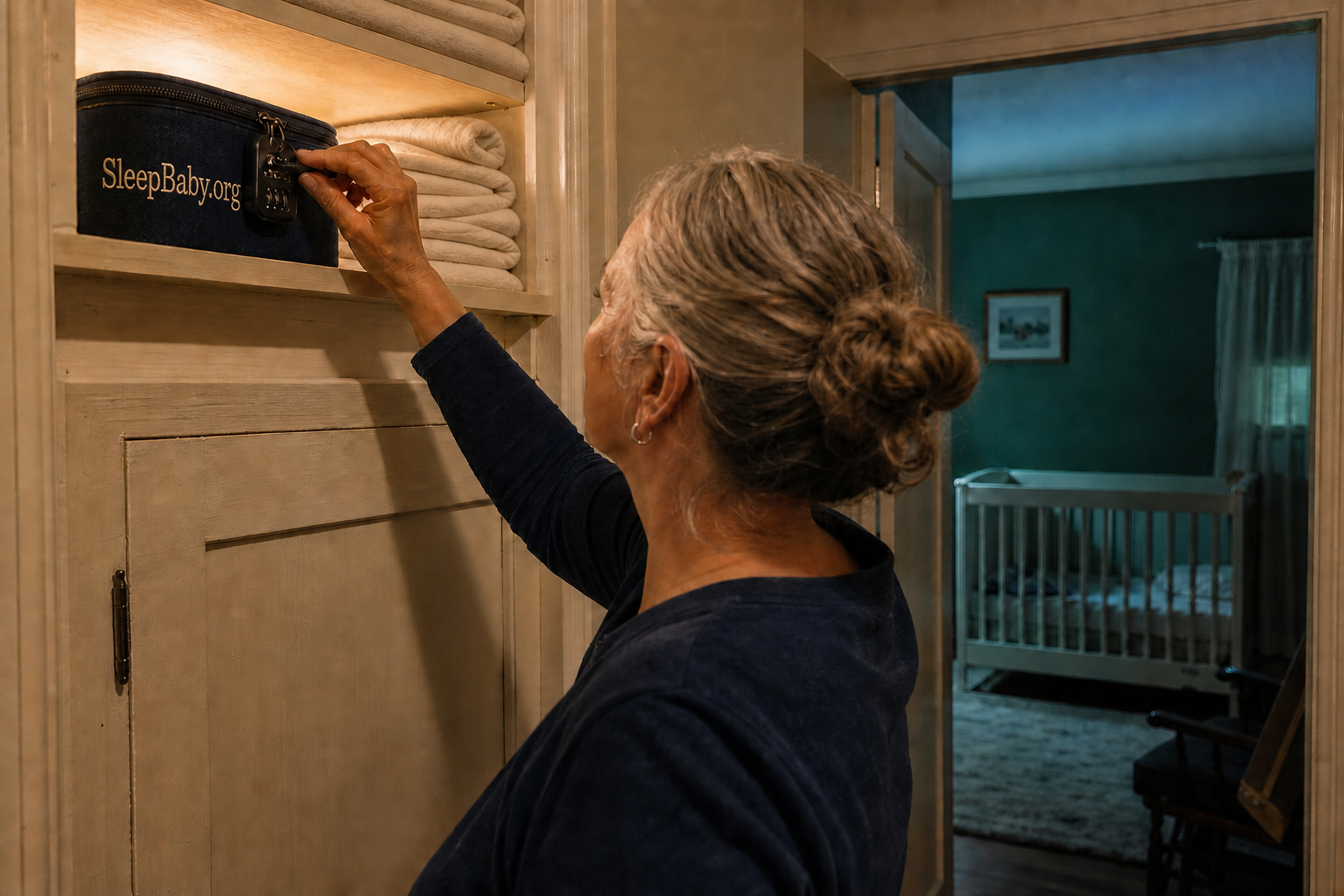
    A caregiver locks a SleepBaby.org medicine case on a high linen shelf while an empty crib waits in the dark nursery beyond.
    The adult medicine routine ends with the case closed, locked, and high; the baby routine ends on an empty sleep surface.
    Article-specific storage pick

    A lockable barrier for the adult “PM” products that live near bedtime

    If adult sleep medicine currently sits in a nightstand, toiletry bag, or open bathroom bin, my practical pick is the Vaultz Locking Medicine Case. Its useful job here is narrow: it adds a combination lock between a child and the adult nighttime products that are otherwise easy to leave near the bed. That makes it a better fit for this exact problem than an unlocked organizer or passive pill box.

    A movable case is not childproof and does not replace high, out-of-sight storage. Keep every product in its original child-resistant container, lock the case, store the whole case high, and return it immediately after use. A fixed locked cabinet may be the stronger choice if a portable case could be carried away.

    See the Vaultz Locking Medicine Case on Amazon

    As an Amazon Associate, SleepBaby may earn from qualifying purchases.

    OPTIONAL SHOPPING IDEAS

    Helpful Amazon finds for this topic

    These optional shopping links are separate from the guidance above and are not medical advice or a substitute for professional care.

    As an Amazon Associate, SleepBaby.org may earn from qualifying purchases.

    Questions parents ask after the first “no”

    Can I give a tiny piece of my own sleeping pill?

    No. Cutting an adult tablet does not create a pediatric product or a reliable infant dose. Some tablets should not be split or crushed, and a fragment may not contain an even share of the active ingredient. If a piece may already be missing or touched your baby’s mouth, call Poison Control rather than estimating what happened.

    Can I give Benadryl if my baby also has allergies?

    Do not decide this from the bedtime problem. Diphenhydramine should not be used to make a child sleep. If your baby has allergy symptoms, contact the pediatrician for an age-appropriate diagnosis and treatment plan. The presence of a symptom does not make sedation an acceptable secondary goal, and products sold for adults or older children may not be appropriate for a baby.

    What if the label says “children’s”?

    “Children’s” covers an enormous developmental range and does not mean “for infants.” Read the active ingredient, concentration, age limits, and purpose. When a label tells you to ask a doctor for a young child, that means ask the child’s own clinician; it does not mean calculate a fraction from an older child’s dose.

    Is melatonin safer because the body makes it naturally?

    No product becomes automatically safe for a baby because the body also produces a related substance. Dose, timing, formulation, label accuracy, other ingredients, and developmental context matter. Pediatric organizations advise clinician involvement, and child-safety organizations emphasize locked storage because accidental ingestions have risen sharply.

    Could a doctor ever prescribe something that makes a baby sleepy?

    A clinician may prescribe medicine for a diagnosed condition, and drowsiness may be a known effect. That is different from prescribing a general sleeping pill for an otherwise unexplained bedtime problem. Give only the exact medicine for its stated purpose. If the baby seems excessively sleepy, difficult to wake, feeds poorly, or behaves differently after a prescribed medicine, contact the prescriber promptly; call emergency services for severe symptoms.

    What if I only need one night of sleep?

    Your need for sleep is real. The solution has to protect both of you. Ask another alert adult for a shift, place the baby in a separate safe sleep space when you need a break, and call the pediatrician’s after-hours line if the crying or wakefulness is unexplained. If you feel you might hurt yourself or your baby, put the baby safely in the crib and call emergency services or a crisis resource now. A crying baby in a safe crib while you get immediate help is safer than a sedating experiment.

    Will sleep training fix a medication-level sleep problem?

    “Medication-level sleep problem” is not a useful home diagnosis. Sleep training is not a substitute for evaluating illness, pain, feeding, growth, breathing, or a caregiver safety crisis. Once medical and feeding concerns are addressed, an age-appropriate sleep plan may help an older baby learn a different settling pattern. Newborns need responsive feeding and care; they are not candidates for being medicated or pushed into an older-baby schedule.

    The answer I want beside the closed drawer

    Return to that bottle on the nightstand. The safest move is still the plain one: close it, lock it away, and look at the baby rather than the promise on the front of the package. If a medicine may already have been given, call Poison Control before symptoms. If the baby looks ill, has breathing trouble, or cannot be awakened, use emergency care. If the baby is simply awake, meet the age-appropriate need and return to a firm, flat, empty sleep space.

    I would rather help a parent make one clear call than give them twelve “natural” alternatives that leave the real question untouched. Your baby’s wakefulness may be exhausting, but it is information—not an invitation to improvise a sedative. The next safe step is to identify what the night is telling you.

    Sources

    1. American Academy of Pediatrics, HealthyChildren.org. Melatonin for Kids: What Parents Should Know About This Sleep Aid.
    2. American Academy of Sleep Medicine. Health advisory on melatonin use in children and adolescents.
    3. National Capital Poison Center. Benadryl (diphenhydramine): dosing, safety, and poisoning.
    4. National Capital Poison Center. How to get help from Poison Control.
    5. U.S. Food and Drug Administration. OTC Monograph M010: Nighttime Sleep-Aid Drug Products for Over-the-Counter Human Use.
    6. U.S. Food and Drug Administration. FDA warns about serious problems with high doses of diphenhydramine.
    7. Centers for Disease Control and Prevention. Pediatric melatonin ingestions — United States, 2012–2021.
    8. National Center for Complementary and Integrative Health. Melatonin: What You Need To Know.
    9. American Academy of Pediatrics, HealthyChildren.org. Medication Safety Tips for Families.
    10. U.S. National Library of Medicine, MedlinePlus. Diphenhydramine drug information.
    11. Centers for Disease Control and Prevention. Helping Babies Sleep Safely.
    12. American Academy of Pediatrics, HealthyChildren.org. Getting Your Baby to Sleep.
    13. American Academy of Pediatrics, HealthyChildren.org. Healthy Sleep Habits: How Many Hours Does Your Child Need?.
    14. U.S. Consumer Product Safety Commission. Medication & Cleaner Storage Safety: Protect Children at Home.
    After the medicine drawer is closed

    Build the bedtime plan after medicine is off the table

    If your baby is well and this has become a repeating sleep pattern, SleepBaby can help you sort the schedule, settling, naps, and nighttime response without turning a medicine cabinet into a sleep strategy.

    Start with SleepBaby’s practical sleep support

    SleepBaby’s sleep support does not replace Poison Control, emergency care, or advice from your baby’s clinician.

  • Can Gaviscon Make My Baby Sleep? A Comprehensive Look

    Can Gaviscon Make My Baby Sleep? A Comprehensive Look

    Reflux medicine, sleepiness, and the question you need answered tonight

    You gave your baby Gaviscon Infant as directed, the room finally went quiet, and now you are watching that little sleeping face with two opposite thoughts: Thank goodness and Wait—did the medicine make my baby drowsy?

    Gaviscon Infant is not a sedative and should not directly make a baby sleepy. It works physically in the stomach by thickening and stabilizing the contents, rather than acting on the brain. A baby may sleep more comfortably if reflux discomfort eases, but a longer nap is not, by itself, proof that the medicine is working. If your baby is unusually difficult to wake, weak, feeding poorly, breathing differently, or looks blue, grey, very pale, or mottled, treat that as a change that needs urgent help—not as a welcome stretch of sleep.

    The most useful question is not “How long did my baby sleep?”

    Sleep length is a tempting scoreboard because it is the thing you can see from across the room. It is also a poor stand-alone measure of how a reflux medicine is affecting your baby. A comfortable baby may stop arching, crying, gulping, or waking after every transfer. A tired baby may simply have reached the end of a very unsettled day. And an unwell baby may look “quiet” for a reason that has nothing to do with restorative sleep.

    The better question is: When my baby is awake, are they recognizably themselves? Think about how easily they rouse, how they look at you, how strongly they feed, how their body moves, and whether their breathing and color are usual. You are not trying to perform a neurological exam at two in the morning. You are looking for a meaningful change from your own baby’s normal pattern.

    A two-path check

    Relief or concerning drowsiness?

    This is an observation tool, not a diagnosis.

    1. Start with responsiveness.
      Does your baby rouse and respond in their usual way when it is time to feed or when you gently touch and speak to them?
    2. Then look at the awake period.
      Are feeding strength, movement, eye contact or alertness, breathing, and skin color usual for your baby?
    3. Add the reflux picture.
      Is there less distress around feeds without a new swollen tummy, repeated vomiting, marked constipation or diarrhoea, or feed refusal?
    4. Choose the response, not a verdict.
      Usual responsiveness plus better comfort can be watched and discussed at review. A new concerning change means call for medical advice; an emergency sign means get emergency help now.
    Two connected nursery moments show a normally alert baby greeting a caregiver by day and a caregiver calmly phoning while another adult holds an awake baby at night, with the same empty flat bassinet in both scenes.
    The useful comparison is not short sleep versus long sleep; it is your baby’s usual responsive wake versus a new change that needs help.

    Clearly labelled composite Kacey-and-Benjamin scene

    The bassinet went quiet—and my mind got louder

    In this composite scene, I am Kacey beside Benjamin’s bassinet after a clinician-directed dose. He has finally stopped wriggling and grunting after a feed. My first feeling is relief. My second is the familiar parent urge to turn one peaceful nap into a full medical conclusion before the kettle has even cooled.

    I do not use the clock as my answer. At the next feed, I notice whether Benjamin wakes as he normally would, latches or takes the bottle with his usual strength, looks at me, moves normally, and keeps his usual color and breathing. The longer sleep matters emotionally—of course it does—but his responsiveness while awake tells me far more about whether this looks like comfort or a concerning change.

    This scene is composite, not a report of a real medical event and not evidence that Gaviscon improves sleep. I am using it because it captures the exact trap in this question: a parent can be grateful for quiet and still check that the quiet is ordinary.

    What Gaviscon Infant actually does

    Gaviscon Infant contains alginates. According to the product information, those ingredients act physically in the stomach: they increase the thickness of stomach contents and help stabilize them. The medicine is not systemically absorbed in the way a drug designed to act on the brain would be. That is why “it knocked my baby out” is not the expected explanation for sleep after a dose.

    That physical action also explains why the exact product, dose, preparation, feeding context, and professional instructions matter. Gaviscon Infant is not interchangeable with adult liquid Gaviscon, and this article cannot tell you how much your baby needs. The clinician’s directions and the current label for the exact product in your hand are the authorities to follow.

    Plain-language mechanism

    A stomach-level effect, not a sleep-brain effect

    1. Given exactly as directed: the infant formulation is prepared and timed according to the prescriber and label.
    2. Physical thickening: alginates change the consistency and stability of the stomach contents.
    3. Possible comfort change: if reflux-related discomfort eases, settling may become easier for that individual baby.
    4. No sedation claim: easier settling is not evidence that the medicine causes sleepiness, and response still needs review in the wider feeding and health picture.

    I like this sequence because it removes a lot of night-time mythology. The medicine is not supposed to press a “sleep” button. It may change one source of discomfort, and sleep may change downstream. That distinction keeps you from chasing a longer nap with extra medicine or overlooking a baby who is genuinely less responsive.

    Transparent SleepBaby textile rail links a water cup, unreadable sachet, stomach, open eye, calm exhale, and empty bassinet to show relief without sedation.
    Less discomfort may help sleep indirectly; it is not the same as a medicine making a baby sleepy.

    Why sleep might improve indirectly

    Reflux and regurgitation are common in babies, and many babies bring up milk without being ill. When there is marked distress, feeding difficulty, or poor growth, a health professional looks at the full picture rather than treating every spit-up as disease. NICE recommends feeding assessment and other first steps before or around a short alginate trial in appropriate cases. The point is not to medicate ordinary baby behavior into silence.

    For a baby whose settling is being interrupted by genuine discomfort, reducing that discomfort may mean fewer cries after a feed, less frantic swallowing, less arching, or an easier transfer once awake post-feed care is finished. That can create a longer stretch of sleep. The sleep is an indirect consequence of comfort, not the direct pharmacological target.

    There is another ordinary possibility: the dose happens to coincide with the time your baby was finally ready to sleep. Babies have variable sleep pressure, wake windows, growth spurts, noisy phases, and wonderfully inconvenient opinions about clocks. One peaceful stretch cannot separate medicine effect, natural variation, feeding satisfaction, and sheer exhaustion. A pattern over several feeds, interpreted with your clinician, is more useful than one dramatic night.

    And sometimes sleep does not improve at all. Reflux discomfort may not be the main reason for waking. Hunger, overtiredness, temperature, illness, developmental changes, or a sleep-space transition can all show up at the same hour. If medical comfort has been reviewed and your newborn still has wide-awake nights, our guide to why a newborn may not sleep at night can help you think through the next, non-medication layer.

    What to watch over the next few feeds and sleeps

    You do not need a beautiful tracker, a color-coded spreadsheet, or the kind of pen that disappears precisely when the baby spits up. A few concrete observations are enough. If you can, note them in your phone or on the medicine instructions so you can describe a pattern accurately.

    Three observation lanes

    Comfort, responsiveness, and tummy changes

    1. Feeds and comfort

    • How much and how strongly your baby feeds
    • Whether distress, arching, gulping, coughing, or crying changes
    • How often and how forcefully milk comes back up
    • Whether your baby refuses feeds or cannot keep fluids down

    2. Awake responsiveness

    • Whether your baby wakes and rouses as usual
    • Usual eye contact, movement, tone, and feeding strength
    • Usual breathing pattern and skin color
    • Any new weakness, floppiness, irritability, or unusual tiredness

    3. Bowel and abdomen

    • New or persistent constipation or diarrhoea
    • New bloating, distension, or a tender-looking tummy
    • Blood in stool or vomit
    • Fewer wet nappies or other dehydration signs

    What this tool cannot do: it cannot confirm reflux disease, prove that Gaviscon is working, or rule out illness. It gives you better information to share with the clinician who knows your baby.

    An awake baby makes eye contact while held upright against a caregiver’s shoulder after a feed, with a burp cloth on the adult and an empty flat bassinet nearby.
    Awake post-feed care is the moment to notice comfort and responsiveness; the bassinet stays empty, firm, flat, and ready for sleep.

    When I picture the parent using this tool, I do not picture them hovering over every breath with a stopwatch. I picture one quiet pause at the next natural wake: “Do you look like you? Do you feed like you? Is anything newly wrong?” Those questions are simple enough to survive a tired brain and specific enough to improve a clinical conversation.

    Transparent SleepBaby textile rail links a feed cloth, attentive eye, three observation dots, symbol-only clock, and empty bassinet for the next-wake check.
    At the next wake, look for familiar eye contact, feeding, movement, and response—not a particular number on the clock.

    Give the exact infant product exactly as directed

    There are several products in the Gaviscon family. Advice for an adult liquid or tablet is not dosing advice for an infant sachet. For a baby, use only the exact product a health professional has recommended, in the exact amount and preparation they gave you. If the label and what you remember do not match, pause and ask a pharmacist, prescriber, or the relevant medical service rather than improvising.

    The current Gaviscon Infant product information says babies under one year and premature infants should receive it only under medical supervision. It also says not to use it with another feed-thickening agent or with milk that has already been thickened, unless the professional managing your baby has specifically addressed that combination. More thickness is not automatically more helpful; it can create a different problem.

    Do not give an extra dose because the previous sleep was short, because your baby brought some feed back up, or because you cannot remember whether the first dose “worked.” Do not double a missed dose. If you are unsure whether a dose was given, whether it stayed down, or whether the preparation was correct, ask for advice with the packet in front of you.

    Reflux does not change the safe-sleep surface

    This is where I need to be beautifully boring and completely firm: place your baby on their back for every sleep, on a firm, flat, level, non-inclined surface in a safety-approved cot, crib, or bassinet, with the sleep space clear. Do not raise the head of the cot, add a wedge or positioner, prop the mattress, or place your baby on their side or tummy because of reflux.

    The American Academy of Pediatrics specifically recommends supine sleep even for babies with gastroesophageal reflux. Back sleeping does not increase fatal choking risk in healthy infants, and an incline does not solve reflux safely. If your baby has an unusual medical condition that changes routine care, their specialist must give the individualized plan; a product page or parenting article cannot create that exception.

    Same baby, different boundary

    Awake care versus sleep

    While awake and actively supervised

    • Hold your baby upright during and after feeds if your clinician recommends it.
    • Notice comfort, feeding, breathing, color, and responsiveness.
    • Keep a cloth on your shoulder or lap for spit-up.

    When sleep begins

    • Move baby to their own firm, flat, level sleep surface.
    • Place baby on their back.
    • Remove cloths, pillows, wedges, positioners, toys, and loose bedding.

    If back sleep is becoming a nightly battle, do not solve it with unsafe positioning. Our guide for when a baby cries when sleeping on their back offers practical settling ideas while keeping the safe position intact.

    A visual explanation of the back-sleep airway

    Why back sleep still matters when your baby spits up

    Cribs for Kids® uses a short airway animation to show the anatomy behind the safe-sleep recommendation. Watch it for the position explanation—not as dosing or reflux-treatment advice.

    SleepBaby takeaway: upright holding belongs to awake, supervised care. The sleep handoff still ends with baby on their back on a flat, empty surface.

    If the player does not load, the written rule above is complete. You can also watch “Cribs for Kids Animation Airpipe” on YouTube.

    Transparent SleepBaby textile rail moves from an awake supported baby in a caregiver’s arms along a level handoff path to an empty flat bassinet under a moon.
    Upright care happens while awake; sleep returns to a firm, flat, level, empty bassinet.

    Side effects, overdose concerns, and red flags

    Most questions about “sleepiness” become clearer when you separate three categories: listed medicine effects, reflux red flags, and emergency signs. The product information lists constipation and diarrhoea as very rare effects. It also lists possible hypersensitivity, flatulence, abdominal distension, and obstruction-related problems. A sustained change in stools or a newly swollen abdomen deserves medical advice.

    The patient leaflet says that too much Gaviscon Infant can cause a mass or obstruction in the stomach, with symptoms that may include vomiting, appetite loss, irritability, and feeling tired or weak. If you think your baby may have received too much, do not wait to see whether they simply “sleep it off.” Contact an appropriate medical professional or urgent service with the packet and the best account you have of what was given and when.

    Choose the level of help

    What can wait for review, what needs a call, and what is an emergency

    Arrange or bring forward a routine review

    The trial is not improving distress; reflux or sleep is worsening; constipation or diarrhoea persists; feeds remain difficult; or you are unsure the preparation fits your feeding method. The product information advises review after seven days if symptoms have not improved, or sooner if they worsen.

    Seek urgent medical advice

    Your baby refuses feeds, cannot keep fluid down, has fewer wet nappies or dehydration signs, has projectile vomiting, green/yellow or bloody vomit, blood in stool, a swollen or tender abdomen, fever, poor weight gain, or is persistently and unusually distressed.

    Get emergency help now

    Your baby is difficult or impossible to wake, has serious breathing difficulty, looks blue, grey, very pale, or mottled, has a seizure, becomes very floppy, or has another rapidly worsening sign that makes you think they are seriously unwell.

    I would rather have you turn on enough light, wake another adult, and make the call than protect the mood of the nursery while wondering whether something is wrong. Night-time calm is lovely; it is never more important than seeing your baby clearly and getting help.

    How to prepare for the clinician or pharmacist review

    A useful review is not a performance. You do not need perfect records. You need the details that let a professional see what changed before and after the medicine and whether the treatment still makes sense.

    Bring the packet and these observations

    Seven details that make the next conversation more useful

    • The exact product name and whether the sachet or packaging matches the instructions you were given
    • The prescribed amount, timing, and how you prepared it—reported, not recalculated
    • Your baby’s feeding method and whether any formula or milk is already thickened
    • What changed in spit-up, distress, arching, coughing, gulping, and feeding
    • How your baby wakes, feeds, moves, and interacts during awake periods
    • Any change in stool, wet nappies, vomiting, gas, bloating, or abdominal shape
    • Exactly what made you ask about sleepiness: longer sleep, harder waking, weakness, or a different awake baby

    The final detail is the one I would put in plain language: “My baby slept for four hours” and “My baby was difficult to wake and fed weakly” are not the same report. One may be a welcome pattern change. The other may change how urgently the professional responds.

    A caregiver compares an unreadable infant-medicine sachet with three colored note blocks on a phone while a baby sleeps on their back in an empty flat bassinet through the doorway.
    A useful review starts with the exact packet and three kinds of observations—not with guessing a dose or judging success by sleep length alone.

    If reflux is being managed and sleep is still hard

    Once you and the clinician have dealt with comfort, feeding, side effects, and safety, it is reasonable to look at the rest of the sleep picture. That order matters. A bedtime routine cannot treat reflux disease, and medicine cannot teach a baby how to link sleep cycles, tolerate a transfer, or move through a developmental change.

    Ask what is happening at the exact boundary where sleep breaks down. Does your baby settle in arms but wake on the flat mattress? Do they wake hungry, startle during transfer, or stay bright-eyed after a full feed? Does the problem happen only after certain feeds, or at every sleep regardless of feeding? Those distinctions help you decide whether the next conversation belongs with the clinician, the feeding team, or a gentle sleep-support plan.

    I also want to protect you from the idea that every improved night must be preserved at any cost. If your baby sleeps longer after a dose but develops a new symptom, the symptom wins. If the medicine does not help, that is information, not parental failure. If reflux improves and sleep remains beautifully chaotic, you are allowed to work on sleep as its own problem.

    Transparent SleepBaby textile rail links an unreadable sachet, phone and speech bubble, three observation beads, and an empty bassinet under a dawn cue.
    The packet, a phone, and three plain observations make a calmer, more useful call.

    One practical helper for messy awake feeds

    There is no shopping fix for reflux, dosing uncertainty, or a hard-to-wake baby. But there is one very ordinary piece of equipment that can make the awake part of a reflux week less frantic: a stack of large, washable burp cloths where you actually feed.

    The questions parents usually ask next

    How quickly should Gaviscon Infant help?

    Do not use a promised minute count or a single nap as your benchmark. Follow the trial and review period your professional gave you. NICE describes a short alginate trial in the appropriate clinical context, while the product information says to seek review if symptoms have not improved after seven days or sooner if they worsen. Your baby’s feeding, comfort, growth, hydration, bowel pattern, and responsiveness matter more than a stopwatch.

    Is sleeping longer a side effect?

    Sleepiness is not the intended pharmacological effect of Gaviscon Infant. Longer, otherwise normal sleep may follow better comfort or may be ordinary variation. The important distinction is whether your baby is easy to rouse and behaves normally while awake. Tiredness or weakness after a possible excessive amount, or any newly difficult waking, needs medical advice rather than a side-effect assumption.

    Can I raise the cot because my baby has reflux?

    No. NHS, NICE, and AAP guidance all support back sleeping on a firm, flat surface and advise against raising the cot or using an incline for reflux. Hold upright only while your baby is awake and supervised, then make the flat back-sleep handoff.

    What if my baby spits up after the medicine?

    Do not automatically repeat or top up the dose. You cannot reliably judge how much stayed down by looking at the cloth. Ask the prescriber or pharmacist what to do for the exact product and timing, especially if vomiting is repeated, forceful, green/yellow, bloody, or accompanied by poor feeding or dehydration signs.

    What if my baby’s milk is already thickened?

    Tell the clinician or pharmacist before combining approaches. The product information says not to use Gaviscon Infant with another thickening agent, and NICE’s stepped approach separates thickened feeds from an alginate trial. Do not assume two thickening strategies are safer or more effective together.

    When is this no longer a reflux-and-sleep question?

    It stops being a routine reflux question when your baby is hard to wake, breathing abnormally, changing color, very floppy, having a seizure, unable to keep fluids down, showing dehydration, or otherwise rapidly worsening. Get urgent or emergency help based on the sign. You never need to prove which ingredient or illness caused the change before asking for help.

    Sources

    1. NICE: Gastro-oesophageal reflux disease in children and young people—recommendations
    2. NICE: Helping babies with symptoms
    3. NHS: Reflux in babies
    4. NHS: How and when to take Gaviscon
    5. electronic Medicines Compendium: Gaviscon Infant Summary of Product Characteristics
    6. electronic Medicines Compendium: Gaviscon Infant Patient Information Leaflet
    7. Medicines for Children: Gaviscon for gastro-oesophageal reflux disease
    8. American Academy of Pediatrics: 2022 recommendations for reducing infant deaths in the sleep environment
    9. HealthyChildren.org: Safest sleep solution for a baby with reflux
    10. NHS: When to get urgent medical help for babies and children under 5

    When the medicine question is answered but the night is still awake

    Let the quiet mean ordinary sleep—not another thing you have to diagnose alone

    You have checked the dose with the right professional, watched how your baby responds while awake, and kept the sleep surface flat and clear. If reflux care is settled but bedtime still feels like a nightly handoff you cannot quite land, SleepBaby can help you work on the sleep part with calm, practical next steps—without pretending a routine replaces medical care.

    Find your next gentle sleep step

  • Can I Fall Asleep Before Baby?

    Can I Fall Asleep Before Baby?

    Yes—you can fall asleep before your baby does. If your baby’s immediate needs are met and they are lying on their back in their own firm, flat, empty, approved crib, bassinet, bedside sleeper, or play yard, you do not have to keep watch until their eyes close. The safe-sleep question is not who falls asleep first? It is where is the baby when the adult falls asleep?

    I want to say that plainly because exhaustion turns ordinary quiet wakefulness into a moral test. You look over at a baby blinking in the bassinet and wonder whether closing your own eyes would be careless. It is not careless to sleep after you have completed a safe handoff. In fact, if you are nodding off while holding your baby, putting them down safely—even fully awake—is the safer choice.

    Sleeping parent beside an awake baby on their back in a separate clear bassinet.
    A calm, awake baby can finish the journey to sleep from a separate, bare bassinet while the parent rests nearby.

    Awake is a state, not a danger signal

    A baby can be awake and safe at the same time. Quiet alertness may look like open eyes, small wiggles, soft grunts, coos, or a few minutes of looking around. Those behaviors do not create a requirement for an adult to stare continuously at the bassinet. Current safe-sleep guidance tells us how to set up the baby’s location: on the back, on a firm and flat surface, with only a fitted sheet, in a safety-approved infant sleep product. It does not say a parent must remain awake until the baby crosses an invisible sleep threshold.

    This matters because “put baby down awake” is sometimes treated as shorthand for sleep training. I would separate those ideas. You are not promising that a newborn will self-settle, asking a distressed baby to cope alone, or following a rigid “drowsy but awake” program. You are completing a safety handoff. Your baby may drift off, fuss and need you again, or decide that 2:13 a.m. is an excellent time to inspect the ceiling. The safe location remains useful in all three outcomes.

    If your baby is crying hard, rooting, showing feeding cues, unusually sleepy, hot or cold, struggling to breathe, changing color, repeatedly vomiting, or behaving in a way that worries you, that is no longer merely “awake.” Reassess the baby and seek appropriate care. Reassurance should sharpen your attention to the right signals, not make you ignore them.

    Transparent rail shows an awake baby, clear bassinet, released hands, nightlight, outside pillow, and clock.
    Open eyes do not cancel a safe bassinet: calm wakefulness can be the last quiet step before sleep.

    Use the situation—not the eyelids—to decide what happens next

    When I am tired, I do better with a decision I can see. This one has three lanes. None asks you to predict the exact minute your baby will fall asleep.

    A three-lane decision for an exhausted night

    Rest now, move baby first, or check and get help

    Rest now

    Baby is calm or quietly alert, on their back in a separate, firm, flat, empty approved sleep space. No feed, care need, symptom, or individualized plan requires action now. You may close your eyes.

    Move baby first

    Baby is in your arms, on your chest, in adult bedding, on a couch or recliner, or asleep in a swing, bouncer, car seat outside travel, or another sitting device. Put baby on the approved flat surface before you sleep.

    Check or get help first

    A feed is due, baby is distressed or seems unwell, a clinician’s plan calls for waking, or you feel close to losing control. Meet the need, call support, or get urgent care; use the empty crib as a safe pause when needed.

    The middle lane deserves special emphasis. A couch, recliner, adult bed, or sleeping adult’s chest does not become safer because the baby finally fell asleep. Couches and armchairs are especially hazardous when an adult dozes while feeding or comforting. If your head is dropping, the goal is not a heroic extra twenty minutes of holding. The goal is to finish the transfer while you still can.

    If your baby fell asleep in a bouncer or swing, move them to the flat infant sleep surface. Our guide to what to do when a baby sleeps in a bouncer gives that handoff its own simple sequence. Supervision does not turn sitting gear into a routine sleep space, and your own sleep removes even that supervision.

    The Last Awake Check: four questions before you close your eyes

    I call this the Last Awake Check because it belongs to the final minute before the parent rests. It is not a ritual your baby has to “pass.” It is a quick way to move attention from anxious watching to the few conditions that actually change the decision.

    The practical tool

    Four real questions—then permission to rest

    1. Where is baby? On their back in their own firm, flat, level, empty, approved sleep space—not in arms, adult bedding, sitting gear, or soft furniture.
    2. What does baby need now? Check feeding cues, the diaper if it is bothering them, comfortable clothing and room temperature, escalating distress, and anything unusual about breathing, color, alertness, or behavior.
    3. What plan overrides the default? Follow a waking-to-feed, weight-gain, prematurity, illness, medication, or other individualized plan from your baby’s clinician.
    4. Can I exit safely? Your hands are off the baby, the sleep area is clear, and an awake adult has taken over if the transfer or care task is not finished.

    If all four answers are reassuring, you have completed the work that belongs to you in that moment. Your baby’s remaining job may be to blink, squirm, sigh, or fall asleep. I cannot promise how smoothly that part will go. I can tell you that watching harder does not make a correctly prepared bassinet more correct.

    Caregiver hands remain outside the rail as an awake baby rests supine in a clear bassinet.
    The handoff is complete when baby is safely placed, tonight’s needs are checked, and the exhausted adult’s arms are free.
    Patchwork rail moves from back placement and a clear bassinet to withdrawn hands and separate parent rest.
    The safest finish line is a clear infant sleep surface—not the moment a parent finally sees closed eyes.

    If the danger is falling asleep during a feed

    This is the part I would plan in daylight, because midnight judgment is operating on fumes. NICHD and AAP guidance is blunt about couches and armchairs: do not choose them for a feed when you may fall asleep. Soft cushions, gaps, and trapped positions make an accidental doze especially dangerous.

    Prepare the baby’s separate sleep space before the feed begins. Clear the bassinet, make sure the fitted sheet is secure, place anything you need for yourself within reach but outside the infant space, and decide who can take over if another awake adult is available. A timer or another person can help you stay alert, but neither changes where the baby belongs when the feed ends.

    If you feed in bed and think you might doze, remove pillows, blankets, and other soft items from the area around the baby before the feed. This is harm reduction for an unplanned event, not a recommendation to bed-share. Return the baby to their nearby separate sleep space when the feed is over, or as soon as you wake if you accidentally fell asleep. The American Academy of Pediatrics does not recommend bed sharing.

    A fatigue plan, not a willpower test

    Ready the surface → feed → hand off → lie down

    1. Ready the surface first. Bare, flat, nearby, and usable now.
    2. Feed in the least hazardous place available. Avoid couches and recliners when sleepy.
    3. Hand baby off to the separate surface. Awake is acceptable; back placement and a clear space matter.
    4. Then let the adult sleep. If the handoff keeps failing, wake another adult or use a short reset rather than continuing to hold while nodding off.

    When there is no second adult to take the handoff

    A partner handoff is useful, but I do not want to write as though every parent has another awake adult in the house. If you are solo tonight, the safe sleep space becomes your handoff partner. Prepare it before you pick baby up for the last feed or soothing attempt. Put your water, phone, and feeding supplies where you can reach them without making the bassinet a storage shelf. Decide before you sit down that the first unmistakable head drop, dreamlike confusion, or inability to keep your eyes open ends the hold.

    At that point, place baby on their back in the empty crib, bassinet, or play yard—even if the transfer wakes them and even if they protest. A crying baby in a safe sleep space while you stand, wash your face, breathe, or make a call is safer than a quiet baby on a sleeping adult. You can return after a brief reset and try feeding or soothing again if you are alert enough. If you are not, leave baby safely placed while you call someone who can come, stay on the phone, or help you decide what support is available.

    Make the call before exhaustion becomes an emergency. A friend does not have to be an infant-sleep expert to provide an awake voice. A nearby relative may be able to hold the adult logistics while you feed. Your baby’s clinician can help if feeding difficulty, unusual crying, reflux symptoms, illness, or poor weight gain is driving the cycle. If you feel unsafe to care for the baby, say that clearly rather than softening it into “I’m a little tired.”

    I would also lower the standard for everything that is not safety. The bottles can wait for daylight once the next feed is covered. The room does not need to look calm. A baby does not need a perfect wind-down performance before entering the bassinet. On a solo night, success may be wonderfully plain: baby is fed according to the plan, placed safely, and the adult is horizontal. That is not cutting a corner. That is choosing the corner that protects both of you.

    For a newborn who keeps waking through every cycle, the next useful step may be a whole-night plan rather than another transfer trick. Our guide to a newborn who will not sleep at night helps you map feeds, care loops, and adult handoffs. If the bassinet itself is the sticking point, use the safer landing ideas in what to try when a newborn will not sleep in the bassinet. Neither problem is solved by an adult falling asleep while holding the baby.

    Braided rail maps an upright feed past an avoided couch to partner help, a clear bassinet, and separate rest.
    A planned path from feeding arms to the nearby bassinet protects the moment when adult alertness runs out.

    Make the separate surface easier to use before you are exhausted

    A safe surface only helps if it is ready at the moment you need it. Put the approved crib, bassinet, bedside sleeper, or play yard where you can use it without stepping over clutter. Keep the baby’s fitted sleep clothing ready. Leave the infant space empty. If you use a room monitor, set the volume once rather than turning the night into a surveillance shift.

    For the first six months, current AAP and CDC guidance favors room sharing in a separate infant sleep space. That arrangement can make the final handoff shorter and feeding responses easier without putting the baby in the adult bed. If you are deciding where that surface belongs, our room-sharing guide separates the safety recommendation from the practical move to another room.

    Notice what I am not promising: a closer bassinet does not guarantee a sleeping transfer. It can simply remove steps from the process that has to be repeated when you are tired. Sometimes reducing friction is the most honest win available.

    The answer changes when a feeding or health plan says it does

    A broad “yes, go to sleep” should never overrule the specific plan for a specific baby. Many newborns feed every two to four hours, and some need to be awakened. A baby born early, a baby who has not regained birth weight, a baby with poor weight gain, or a baby recovering from illness may have a different overnight plan. Follow the instructions from the clinician who knows your baby.

    I would write the next feeding time down before the adult lies down if exhaustion is making time slippery. Use an alarm when your care plan calls for one. If your baby seems too sleepy to feed, has fewer wet diapers than expected, is difficult to wake, has a fever at an age when that requires urgent evaluation, or shows another concerning change, contact the baby’s clinician or seek urgent care. This article cannot decide whether a particular baby should be awakened or medically assessed.

    Same safety foundation, different overnight details

    What to check by stage and circumstance

    Situation Before the parent sleeps What does not change
    Young newborn Confirm the next feed and any waking or weight-gain plan; meet current needs. Back placement in a separate firm, flat, empty approved surface.
    Baby beginning to roll Stop swaddling at signs of trying to roll; place baby on the back at the start of every sleep. No positioner, wedge, loose bedding, or side-placement workaround.
    Older mobile baby Use the crib at the correct mattress height and keep climbable or loose items out. Baby may be awake when placed down; the sleep space remains clear.
    Prematurity, illness, or individualized plan Follow the baby’s clinician for feeding, positioning, monitoring, medication, and when to seek care. Do not improvise an incline or soft surface without specific medical direction.

    What about spit-up, rolling, and the fear that you will miss something?

    “What if my baby spits up while I am asleep?”

    Healthy babies should still be placed on their backs. The airway anatomy and gag reflex help protect them, and AAP safe-sleep guidance does not recommend side or stomach positioning for ordinary spit-up. Do not add a wedge, incline the mattress, or put a positioner around the baby. If vomiting is forceful, green, bloody, frequent with poor intake, paired with breathing trouble, or otherwise concerning, contact a clinician; that is a health question, not a sleep-position hack.

    “What if my baby leans to the side?”

    Always start the baby on the back. A newborn may curl or shift, and a baby who can roll independently may change position. Do not hold the baby in place with rolled towels, wedges, nests, or other objects. If back placement brings crying, troubleshoot feeding, comfort, timing, and transfer while preserving the safe starting position; our guide to a baby who cries when placed on the back walks through that distinction.

    “Do I need a monitor before I am allowed to sleep?”

    No consumer monitor grants permission to sleep, and no monitor repairs an unsafe surface. A monitor can be a convenience when your baby is in another room or when you want to hear waking. It has not been shown to prevent SIDS, and it cannot replace the back, bare, flat, separate sleep setup. If your baby’s clinician prescribes medical monitoring, follow that specific plan rather than treating a consumer product as equivalent.

    Watch the safe-sleep setup once, then let yourself stop watching

    AAP: Safe Sleep for Babies

    This short American Academy of Pediatrics video is a useful visual reset for the sleep-space details that matter. It does not ask you to watch a baby until sleep begins; it helps you prepare the place where baby can safely be while you rest.

    Takeaway: prepare the separate bare space before fatigue peaks; awake placement is compatible with that safe setup.

    Watch the AAP video on YouTube if the embedded player is unavailable.

    If baby is crying—and if you are reaching your limit

    A crying baby may need another pass through feeding, diaper, temperature, comfort, and illness clues. Responding does not mean you must keep holding through dangerous exhaustion. If you are getting angry, panicked, dissociated, or afraid you might shake or hurt the baby, place the baby on their back in the empty crib or play yard and step away for a short reset. Call a trusted person. Call your baby’s clinician. The American Academy of Pediatrics and CDC both support using a safe infant space while an overwhelmed caregiver regains control.

    If you think you might harm yourself or your baby, get help now. In the United States, call or text 988 for a suicidal or mental health crisis. Call 911 or go to the nearest emergency department for immediate danger or symptoms of postpartum psychosis. These instructions belong outside every shopping decision because the product is not the answer to a crisis; another human and appropriate care are.

    Sleeping parent and awake baby occupy separate bed and clear bassinet as dawn arrives.
    Rest begins after the safe handoff: baby quietly awake in a clear bedside bassinet, parent settled within the same calm room.
    Cut-paper rail links awake baby, separate parent rest, withdrawn hands, exterior monitor, dimming lights, and dawn.
    The parent’s night can soften once safety, needs, and the handoff are complete—even before baby drifts off.

    You are not abandoning an awake baby; you are trusting the safe place you prepared

    Let me return to the blinking baby in the bassinet. At the beginning, those open eyes can feel like an accusation: You are still needed. You are not allowed to sleep yet. After the Last Awake Check, the same open eyes mean something quieter. The baby is safely placed. Their current needs and tonight’s plan have been considered. The adult is no longer balancing a tiny body while losing alertness.

    I would rather have Kacey put Benjamin down safely and lie beside the bassinet while he is awake than keep holding him until exhaustion wins. That sentence is editorial judgment, not a claim about a particular night in their real life. It is also the heart of the answer: responsible care includes knowing when the safest next action is for the adult to stop doing.

    Your baby may call you back. You can respond when they do. You may discover that the feed was not quite finished, that the diaper is uncomfortable, or that they need another calm landing. None of those possibilities requires you to stay awake in advance as proof of love. Finish the handoff. Put your own body somewhere safe. Let sleep be allowed to arrive in either order.

    Sources

    1. American Academy of Pediatrics: Safe Sleep Tips for Sleep-Deprived Parents
    2. Kingston and Richmond NHS Foundation Trust: Safe sleeping guide for babies under 1 year
    3. CDC: Providing Care for Babies to Sleep Safely
    4. U.S. Consumer Product Safety Commission: Safe Sleep—Cribs and Infant Products
    5. NICHD Safe to Sleep: Safe Sleep Environment for Baby
    6. NICHD Safe to Sleep: Breastfeeding & Safe Sleep
    7. American Academy of Pediatrics: How to Keep Your Sleeping Baby Safe
    8. AAP Pediatrics: Sleep-Related Infant Deaths—Updated 2022 Recommendations
    9. American Academy of Pediatrics: How to Calm a Fussy Baby
    10. CDC: About Abusive Head Trauma
    11. CDC: How Much and How Often to Breastfeed
    12. National Institute of Mental Health: Perinatal Depression
  • Can Baby Sleep With the TV On? Light, Sound, and Safe Sleep

    Can Baby Sleep With the TV On? Light, Sound, and Safe Sleep

    The room is almost dark, but the television keeps repainting the wall—blue, white, blue again. Your baby has not opened their eyes. Can a baby sleep with the TV on? Yes, some babies can, but I would not use the television as part of their sleep environment. My practical default is TV off in the room where baby sleeps. Because the moving light and soundtrack are variable, I treat them as possible settling disruptors—not as proven infant harms—even when a baby appears to sleep through them.

    That is a sleep-quality answer, not a SIDS claim. The safety answer comes first: baby sleeps on the back on a firm, flat, clear infant sleep surface, and a tired adult does not doze with baby on a couch, recliner, chair, or adult bed. If you watch in another room, keep an open path to hear or monitor baby. If the TV is in the same room, turn it off for the final wind-down and let the last cue be something baby can meet again at 2 a.m.—your voice, a short song, darkness, and the same safe bed.

    There are two questions hiding inside “Can baby sleep with TV on?”

    Question 1: Is the sleep setup safe?

    Baby is on the back in a crib, bassinet, portable crib, or play yard that meets CPSC standards, with a firm, flat, noninclined surface and no pillows, loose blankets, positioners, or soft objects. Keep the television, remotes, and speakers outside the sleep space. Keep every monitor part and cord at least three feet from any part of the crib, bassinet, portable crib, or play yard.

    Question 2: Is the television making sleep harder?

    Moving light reaches the sleep space, dialogue and music keep changing, volume peaks produce repeated startles, or baby wakes and turns toward the screen. Those are setup observations, not diagnoses. They are enough reason to move or turn off the television.

    I separate these because parents sometimes spend their energy perfecting screen brightness while the baby is asleep on their chest and they are blinking slowly on a sofa. The American Academy of Pediatrics’ safe-sleep guidance puts the urgent risk in the surface and the adult’s sleepiness. Television does not make a sofa safer. An interesting show does not reliably keep an exhausted body awake.

    Television light redirected away from a clear bassinet as a parent prepares the room for sleep
    A baby can remain asleep through changing light without that light becoming a useful sleep cue.
    Teaching rail placing a clear infant sleep surface before the television decision
    Safe surface first: the crib-or-bassinet decision outranks the screen decision every time.

    Sleeping through the television is not the same as benefiting from it

    Babies are often startlingly good at sleeping through ordinary household life. A dishwasher starts, an older sibling drops a cup, the dog shakes its collar, and the nap continues. That does not mean every sound must disappear. It also does not mean a television is neutral just because there was no full wake-up.

    A TV is unusually variable. A quiet conversation becomes theme music. A dark scene becomes a white advertisement. The average volume can feel modest while one scene lands much louder. In the 2026 AAP technical report on digital media, the sleep concern is not reduced to one villain called blue light. Time displacement, arousing content, bedroom access, and light exposure all belong to the larger picture. Much of that evidence concerns older children and adolescents, so I would not borrow it to claim that one adult program damages an infant. I would use it for a gentler conclusion: a television is a poor choice for the cue you want a baby to depend on at sleep time.

    My test is not “Did baby survive the episode without crying?” It is “What is this room asking the baby’s nervous system to follow?” A sleep room works best when the last few cues become simpler, not more changeable. The television can be adult downtime in another room. It does not need a job in the crib-side routine.

    A four-signal TV audit

    • Light: Does the screen flash across baby’s face, the bassinet sheet, or the wall nearest the sleep space?
    • Sound: Do commercials, music, or action scenes produce peaks that cluster around startles or wake-ups?
    • Distance: Is the screen in the sleep room when it could be watched from somewhere else?
    • Handoff: When baby wakes, does the program pause so your face and voice return to the foreground?
    Teaching rail redirecting changing television light away from a sleeping baby's sightline
    Move the moving light: if the screen paints the sleep space, turn it away or move the viewing.

    What if the TV and baby are in the same room?

    Same-room television is the version I would change first. You do not need to panic or wake a sleeping baby simply because a screen is on. Lower the volume, turn the screen away, and finish the transition to TV off. If you want to keep watching, move yourself once baby is settled safely.

    A newborn bassinet beside the sofa is a common real-life arrangement. It can coexist with adults talking, eating, and moving through the room. But a bright television can become the strongest light source in that space, especially at night. I would not drape a blanket over the bassinet or improvise a cover to block the glow; that creates a new hazard. Change the source, angle, or room instead.

    If moving the adult is impossible—one-room home, hotel, temporary housing—use the smallest workable version of the screen. Face it away from the sleep space. Reduce brightness. Choose captions over louder dialogue. Avoid content with abrupt peaks. Then turn it off before your own attention and sleepiness blur together. A constrained home deserves a workable plan, not shame.

    For the separate adult question—how to watch without disturbing a sleeping baby—use the more detailed guide to watching TV while baby sleeps. This page stays with what the baby experiences and how to read the room.

    The answer changes when the baby is awake, older, or still learning day from night

    Newborn or young infant

    Newborn sleep is scattered across day and night. During awake daytime care, ordinary daylight, faces, feeding, and household activity help mark daytime. At night, dimmer light, quieter voices, and less stimulation make the contrast clearer. The television is not needed to teach day and night. If it is on during a night feed, keep it out of baby’s sightline and turn it off for the return to bed.

    Older infant who notices the screen

    Once baby tracks the pictures, turns toward sound, or lifts their head to find the screen, the television is no longer merely scenery. If the goal is sleep, move it out of view. When baby wakes for a feed or cuddle, pause it so your face, voice, and response are not competing with a bright moving target.

    Toddler in a shared family room

    A toddler may understand that the show continues after bedtime and protest the separation. I would make the boundary concrete: the program pauses or moves rooms when the bedtime sequence begins. The rule is not “screens are evil.” The rule is that sleep has a repeatable ending.

    WHO says sedentary screen time is not recommended for infants, while AAP family-media guidance prioritizes real-world interaction and protecting sleep routines. That awake-time guidance should not be stretched into a claim that an adult’s distant program during infant sleep is identical to a baby watching television. It does support one clean handoff: when the baby is awake and present, pause the background TV and let the relationship become the main event.

    A caregiver turns from a paused television to engage face to face with an awake baby
    When baby wakes, the television stops being the room’s foreground.
    Teaching rail moving from a paused television to caregiver and baby interaction and then bedtime
    Awake means pause: feeding, soothing, and face-to-face connection do not need a competing soundtrack.

    The remote under the burp cloth

    That is the private question underneath this search: “Am I doing something harmful because I want one normal adult thing?” Wanting a show is not the problem. Parents need laughter, stories, sports, news, and a little territory that is not measured in ounces or wake windows. I am not interested in turning your home into a silent museum. I am interested in placing adult entertainment where it asks the least of the baby’s sleep.

    Low volume can still have loud moments

    There is no universal television number that makes a room safe for sleep. A volume setting depends on the device, room, distance, content, and the baby’s response. I would not borrow a decibel threshold from another noise question and present it as a medical rule.

    Instead, listen for contrast. Dialogue may sit low enough that you lean forward, then an advertisement or theme song jumps. A startle is not automatically dangerous, and one wake-up does not convict the television. A repeatable pattern matters: the same kind of peak, followed by stirring, a head turn, crying, or a shortened sleep, across comparable naps or bedtimes.

    Do not turn a separate sound machine up to overpower the television. That can leave the baby with two competing sound sources and leave you less able to hear a wake. If an infant sleep machine is already part of the routine, follow the AAP’s noise safeguard: place it as far from baby as possible, set the volume as low as possible, and limit how long it runs. Then reduce or move the optional source—the TV.

    Television sound versus steady audio

    Feature Television soundtrack Steady audio cue
    Pattern Dialogue, music, silence, and sudden peaks Deliberately consistent
    Visual load Moving light and scene changes None when audio-only
    Best adjustment Lower it, move it, use captions, or turn it off Far from baby, with the volume as low as possible, for limited duration
    When baby wakes Pause and respond May remain part of the established sleep cue if it is already working
    A parent lowers the television volume after noticing a baby startle on a safe sleep surface
    The useful question is not whether a room is perfectly silent; it is whether this optional sound keeps interrupting sleep.
    Teaching rail showing a low television soundtrack with one softened peak before a calm sleep cue
    Watch the peaks: one low number on the remote does not make every scene equally quiet.

    The safety pivot is often from couch to crib

    If baby falls asleep on you during a show, the next decision is not brightness. It is the transfer. Couches, recliners, armchairs, and adult beds are not infant sleep spaces. If you feel yourself fading, stop the program, stand while you are still alert enough to move safely, and place baby on the back in the clear crib or bassinet.

    A parent may say, “The TV keeps me awake.” It may keep your attention for a while; it cannot reliably cancel sleep deprivation. If you have been awake through feeds, pumping, illness, travel, or a long day, your body can cross from watching to sleeping without a respectful warning. The safest plan is not a more gripping series. It is arranging the handoff before you sit in the soft corner.

    If every transfer fails and contact sleep has become the only way anyone rests, that deserves practical help, not blame. Start with the separate guide for a baby who will not sleep in the bassinet, and ask your pediatric clinician for individualized guidance when feeding, growth, breathing, pain, reflux-like symptoms, or unusual sleepiness complicate the pattern.

    An awake tired parent pauses the television before transferring baby toward a clear crib
    Pause while you are still fully awake; the safe-sleep transfer is the decision that matters most.

    Watch the safety hierarchy

    The television can change; the safe sleep surface cannot

    This American Academy of Pediatrics video reinforces the fixed part of the answer: every nap and night begins on the back on a firm, flat, clear infant sleep surface. Use it before experimenting with screen angle, captions, or another room.

    SleepBaby takeaway: a quiet television cannot make a couch, recliner, adult bed, or covered bassinet safe. Fix the sleep location before optimizing the room.

    Watch the AAP safe-sleep video on YouTube

    If baby expects the TV, use a three-night exit ramp

    A baby who wakes when the TV goes off has not proven they need television for sleep. They may be reacting to any abrupt change: sound stops, the room goes darker, the parent moves, or a feed ends at the same moment. Change one layer at a time so you can see what the actual cue is.

    Night one: simplify the screen

    Lower brightness, turn the picture away, use captions, and keep the same familiar final phrase or song. Turn the TV off before the final transfer rather than after baby is fully asleep.

    Night two: move the program

    Complete the same feed or cuddle without the screen in baby’s sightline. If another adult wants the show, move the viewing to another room or use private audio only when a separate awake caregiver retains monitoring responsibility.

    Night three: keep the cue baby can meet again

    Repeat the short phrase, gentle song, darkened room, and safe bed. Do not add three replacement gadgets. The goal is not sensory emptiness; it is a small, repeatable finish.

    This is not a promise that three nights fixes sleep. Teething, illness, hunger, travel, schedule changes, and development can all move through the same week. I use the exit ramp to prevent an optional, changing soundtrack from becoming the only explanation you test.

    What I would do in six real rooms

    Baby is in a bassinet beside the TV

    Turn the screen away, lower sound, and move the viewing when you can. Do not cover the bassinet to block light. Keep baby on the back in the clear sleep space.

    Baby sleeps in another room

    For a young infant, start with the AAP recommendation to room-share without bed-sharing, ideally for at least the first six months. If your older baby or your clinician-supported setup uses another room, keep the television below the level that masks the monitor or household, check the connection, and maintain a clear path to respond. A separate room solves direct screen light; it does not remove caregiver responsibility.

    An older sibling or partner is watching

    Move the family program away from the sleep space or ask the viewer to use captions. If private audio is used, designate which awake adult remains able to hear and respond to baby.

    Baby wakes and stares at the screen

    Pause it. Feed, change, soothe, or interact as needed. AAP and WHO guidance protect real interaction for infants; the easiest boundary is to stop background television while baby is awake.

    You are in a hotel or one-room space

    Turn the television away from the travel crib, reduce brightness, use captions, and stop the program before the room’s adult falls asleep. If you need a small night cue after the screen is off, read the separate guidance on a red light for baby sleep rather than leaving moving pictures on all night.

    The TV seems unrelated to the waking

    It may be. Keep the screen off for one or two comparable sleeps while leaving the safe routine unchanged. If waking is identical, look at feeding, timing, illness, comfort, and development rather than escalating the screen theory.

    How to tell whether the TV is actually waking your baby

    Newborn active sleep can include twitching or jerking, eye movement beneath closed lids, and short changes in breathing rhythm without a skin-color change. Those signs can pass without help. If you turn the television off every time an eyelid moves, you may end up changing the room for behavior that would have passed on its own. I would look for a repeated sequence rather than a single movement.

    The sequence I would watch is specific: a bright scene or sound peak happens; baby startles or turns; breathing and movement become more active; then baby fully wakes or needs help returning to sleep. One sequence can be coincidence. If it happens at similar moments over several comparable sleeps, it becomes a practical reason to change the setup. You do not need to prove a biological mechanism before making the room calmer.

    A two-sleep, one-change test

    1. Keep the nonnegotiables stable: same safe sleep surface, usual feeding response, and usual room temperature.
    2. Name the suspected signal: moving light, sudden sound, screen proximity, or the moment the program stops.
    3. Change only that signal: turn the screen away, use captions, move the viewing, or turn it off before the final cue.
    4. Compare a similar sleep: a bedtime and a twenty-minute car nap are not useful twins. Compare two ordinary bedtimes or two naps begun at roughly the usual time.
    5. Keep the result modest: “The first stretch was calmer with the TV off” is evidence for your household, not a universal rule for every baby.

    Do not run a home experiment through illness, breathing trouble, poor feeding, unusual lethargy, or an unsafe sleep arrangement. Those are care and safety questions, not optional variables. Also stop if the comparison makes the evening harder without teaching you anything. A parent does not owe the internet a controlled trial.

    The result may be that the television was not the problem. Hunger, a late nap, travel, a new skill, or ordinary active sleep may explain the timing better. That is still a useful answer. It lets you move the remote out of the defendant’s chair and return to the baby’s actual pattern.

    A narrow two-adult solution for television sound

    Avantree Ensemble wireless TV headphones

    If one adult wants to keep watching while another awake adult is the designated caregiver, the Avantree Ensemble moves the program audio into adult headphones instead of sending scene changes across the baby’s sleep area. The included transmitter and charging base make it a more direct fit than buying unrelated adapters one by one. Check the TV first: Avantree says this model needs Optical (TOSLINK) or 3.5 mm AUX output; an HDMI-only TV or a soundbar passthrough setup is not a match.

    This is not my pick for a sole caregiver who needs both ears available. It does not monitor baby, block screen light, improve infant sleep, or make any sleep surface safe. Its value is narrower and honest: in a two-adult setup, the off-duty viewer can hear the show privately while the designated caregiver keeps the monitoring channel open.

    Check the Avantree Ensemble on Amazon

    As an Amazon Associate, SleepBaby may earn from qualifying purchases.

    When the television is not the real question

    Turn the screen off and call emergency services for severe breathing trouble, blue or gray color around the lips, tongue, or face, unresponsiveness, or a pause in breathing longer than 20 seconds—especially if color or muscle tone changes. A TV adjustment, camera, audio monitor, or sleep log is not an emergency response.

    Contact your pediatric clinician for frequent snoring, recurring nighttime breathing difficulty, gasping, unusual daytime sleepiness, feeding difficulty, poor growth, pain, or another sleep change that concerns you. Those questions need the baby’s full health context. “Maybe it is the television” should not delay medical attention.

    If baby is healthy but sleep remains fragmented, use a tiny comparison rather than changing everything. Choose two similar naps or bedtimes. Keep feeding, safe sleep, and routine stable. On one, remove the TV from the room. Note whether settling, repeated startles, and sleep length meaningfully change. I trust one calm comparison more than a week of adjusting brightness, volume, white noise, and bedtime all at once.

    The plan I would use tonight

    1. Place baby on the back in a firm, flat, clear crib, bassinet, portable crib, or play yard that meets CPSC standards.
    2. Keep every remote, speaker, and device outside the sleep space, and every monitor part and cord at least three feet away.
    3. Turn the TV away and down while you finish the transition.
    4. Pause when baby wakes; return your face and voice to the foreground.
    5. Turn the TV off before the final sleep cue, or move adult viewing to another room.
    6. If your own eyelids feel heavy, choose the safe transfer and your own sleep.

    The opening room can change now. The television stops repainting the wall. Baby’s last cue is smaller: the same phrase, the same safe bed, the same darkness they can meet after the next feed. You still get to be a person who watches things. You simply stop asking the baby’s sleep space to carry the show.

    Sources

    1. American Academy of Pediatrics: 2022 safe-sleep recommendations
    2. HealthyChildren.org: How to Keep Your Sleeping Baby Safe
    3. American Academy of Pediatrics: Digital Ecosystems technical report
    4. HealthyChildren.org: Helping Kids Thrive in a Digital World
    5. World Health Organization: movement, sedentary behavior, and sleep for children under 5

    6. Kirkorian et al.: Background television and parent-child interaction
    7. Uzundağ et al.: Background TV and infant-family interactions
    8. NHS: Helping your baby to sleep
    9. American Academy of Pediatrics: How Noise Affects Children
    10. HealthyChildren.org: Stages of Newborn Sleep
    11. HealthyChildren.org: Urgent Care, ER or Pediatrician? A Parent Guide
    12. HealthyChildren.org: Sleep Apnea in Children—Detection and Treatment
    13. U.S. Consumer Product Safety Commission: Baby-monitor cord safety alert
    14. Avantree: Ensemble compatibility and connection requirements

    Let the last cue become smaller

    Move the show—not the safe-sleep rules

    A baby can sleep through a television without needing it. Keep the sleep surface safe, remove the moving screen from the final wind-down, and preserve one cue you can repeat when the night starts again.

    Find the next SleepBaby answer for tonight

    SleepBaby offers education, not individualized medical care. Contact your child’s clinician when sleep, feeding, breathing, growth, or responsiveness concerns persist.

  • Can Baby Sleep With Sippy Cup?

    Can Baby Sleep With Sippy Cup?

    The room is dark, the cup is still in your baby’s hand, and the final swallow has begun to look like the only bridge between an awake child and a sleeping one. I understand why the shortcut feels harmless. A sippy cup looks contained, familiar, and much less dramatic than another full bedtime restart.

    No—an infant should not sleep with a sippy cup in the crib, and a child of any age should not fall asleep actively drinking from one. Give a needed feed or a small drink while your child is upright and awake, then take the cup away before sleep. Keep an infant sleep space completely bare. After teeth appear, make plain water the only late-night drink after brushing whenever your child’s feeding plan allows it; milk, formula, juice, and sweet drinks should not bathe the teeth overnight. For an older toddler, a cup of plain water parked outside the bed may be a family choice, but it should not become an all-night mouthpiece or replace attention to unusual thirst.

    The private question beneath “can my baby sleep with a sippy cup?” is usually not about cup engineering. It is: If I remove the thing that settles my child, will bedtime fall apart? My answer is to separate the jobs. A drink answers thirst or hunger. A cup teaches a feeding skill. A bedtime routine carries a child toward sleep. When one object is asked to do all three jobs, the cup becomes difficult to remove—and the reason for the night waking becomes harder to read.

    An awake baby takes a supervised sip from a tiny cup while a bedtime book and dim nursery light wait nearby.
    Keep cup practice upright and awake, then let the book and bedtime light carry the transition.

    First, name the version of “sleeping with a cup”

    Parents can mean several different things by the same search. A seven-month-old may finish formula from a training cup and doze during the last ounce. An eleven-month-old may be put into the crib holding a handled cup of water. A two-year-old may request repeated sips after lights-out. A preschooler may keep a leakproof cup on a bedside table and sit up to drink. Those are not one problem with one age-neutral answer.

    For an infant, the boundary is straightforward: the crib or bassinet contains the baby on a firm, flat, noninclined mattress with a fitted sheet—nothing else. The American Academy of Pediatrics recommends keeping objects out of the infant sleep space, and the American Academy of Pediatric Dentistry specifically advises against bottles or sippy cups in a crib. A lid does not turn a feeding item into safe-sleep equipment.

    For an older child who is no longer in an infant sleep setting, I still would not make the cup part of the act of sleeping. “A cup nearby” and “a cup held in the mouth while asleep” are different. If you choose to make plain water available to a toddler who can reliably sit up, drink, and replace the cup, park it on a stable surface outside the bed. Check that it is intact, clean, and genuinely leakproof. The goal is access to water, not continuous sucking.

    If your baby falls asleep while finishing a medically or nutritionally needed feed, do not turn that sentence into “withhold the feed.” Babies still need appropriate breast milk or formula, and some older babies take those feeds from a cup. Gently finish the feed, wipe or brush as appropriate, remove the cup, and transfer your baby to the proper sleep surface. If feeding and sleep have become inseparable, change the sequence gradually; do not solve it by underfeeding.

    Why the cup does not belong in an infant crib

    I use the empty-crib rule because it is clear enough to survive 2 a.m. reasoning. A cup can leak, be chewed, break, press against the face, or simply become one more object in a space that is safest when it stays bare. I do not need to rank every possible cup shape by hypothetical danger. The cup has a job at feeding time; the crib has a job at sleep time. Keeping those jobs separate gives the baby the established safe-sleep setup without asking a plastic object to earn an exception.

    That same distinction protects us from false reassurance. A “nonspill” valve can still drip. A soft spout can still be sucked for hours. Handles do not mean a cup is developmentally appropriate for unattended sleep. A product labeled toddler, trainer, orthodontic, natural, weighted, or bedtime has not been admitted into the infant sleep environment by the AAP. Marketing adjectives do not outrank the bare-sleep-space rule.

    Place your baby on their back for every sleep, on a firm and flat surface designed for infant sleep, with no pillows, blankets, bumpers, positioners, toys, bottles, or cups. If a drink is required overnight, take your baby out or help them upright enough to feed safely according to their developmental and clinical needs, stay present, then put them back in the empty sleep space. If your child has swallowing difficulties, reflux, growth concerns, a feeding-tube plan, or another medical reason that changes positioning or feeding, use the individualized plan from their clinician rather than a general internet routine.

    Awake supervised feeding and cup practice lead to a parked cup, clean teeth, and an empty crib under a nightlight.
    The age handoff: practice while awake, park the cup, clean teeth, and keep the infant sleep space empty.

    Age changes the plan

    What I would do at each stage

    Under about 6 months: breast milk or formula remains the drink. Do not add routine water unless your pediatric clinician directs it. Feed as needed, then remove the feeding item before sleep.
    About 6–12 months: practice small cup sips while upright and awake, usually with meals. Water practice does not replace breast milk or formula. Keep every cup out of the infant sleep space.
    12 months and up: move milk toward meals and a predictable pre-bed time. Brush after the final caloric drink. If a later sip is needed, choose plain water and keep the cup outside the bed.
    Unusual thirst at any age: do not treat a sudden, persistent change as a bedtime-behavior contest. Call the child’s clinician and describe what changed.

    The liquid matters as much as the cup

    A leakproof lid can keep a sheet dry while still keeping teeth wet. Milk, formula, juice, sweetened tea, flavored water, and other carbohydrate-containing drinks can sit around the teeth when a child sips repeatedly or falls asleep with the spout in their mouth. Repeated sleepy sipping stretches one drink into prolonged contact with the teeth. The American Academy of Pediatric Dentistry links frequent and nighttime exposure to sugar-containing drinks—including repeated access through bottles and no-spill cups—with early childhood caries.

    This is why “but it is only milk” is not the end of the dental question. Milk may be nutritionally appropriate, especially for an infant, but it is not a toothbrush-compatible overnight rinse. Give the milk when your child needs it. Then end the exposure rather than letting a handled cup stretch one feed into hundreds of tiny sleepy sips.

    Juice is a particularly poor sleep companion. It is not necessary for hydration, its sugars and acids contact the teeth, and a cup makes it easy to sip longer than anyone intended. I would keep juice out of bedtime altogether. If your pediatric clinician has recommended a specific fluid for constipation, illness, medication, or another reason, follow that plan—but ask when the drink should happen, how it affects teeth, and whether it needs to remain available after the child is asleep.

    Plain water is the least complicated late option once water is developmentally appropriate. Even then, I want it to answer thirst rather than become a required prop. A child who takes two sips, hands back the cup, and rolls over is using water. A child who sucks a valve through every sleep cycle may be using the action of drinking to settle. That is not a moral failure. It is simply a habit with a different repair plan.

    Milk at the table gives way to brushing, plain water, a cup parked outside the room, and a bare crib at night.
    The mouth clock: finish milk, brush, use plain water only if needed, then park the cup.

    The mouth clock: finish, brush, then water

    1. Finish the last milk or formula feed while your child is awake enough to swallow and you can supervise.
    2. Brush teeth after that caloric drink using the age-appropriate fluoride-toothpaste guidance from your child’s dentist or pediatrician.
    3. After brushing, offer plain water only if a developmentally appropriate child truly needs another sip.
    4. Park the cup before sleep so hydration ends and the sleep cue can begin.

    Build a last-sip handoff instead of a cup battle

    If the cup currently causes sleep, yanking it away at the crib rail can feel like removing the final stair from a staircase. I would build a new final stair first. Move the last substantial drink earlier in the routine, keep your child upright, name what is happening, and give the cup a visible parking place. Then let the same short sequence carry bedtime forward every night.

    A repeatable handoff

    Sip → park → brush → bed

    1. Sip
    Offer the needed feed or drink in a lit, upright, supervised spot.
    2. Park
    Let your child place the cup on the same counter or tray every night.
    3. Brush
    Clean teeth after the last caloric drink; do not bring that drink back.
    4. Bed
    Move into the sleep cue: song, phrase, cuddle, then the correct sleep space.

    I like the parking step because it gives a child something to do instead of only something to lose. “Cup goes here; now we brush” is concrete. For a baby, you do the parking. For a toddler, let them help. The cup does not disappear in anger; it finishes its job in public.

    If your child protests, hold the sequence steady without turning a sensible boundary into a hydration standoff. Offer an adequate drink earlier. If they ask again after brushing, offer a small amount of plain water, then park it again. Keep the response brief and boring. I would not lecture about cavities at 9 p.m.; teeth are real, but they are not persuasive to a furious two-year-old in dinosaur pajamas.

    Move one variable at a time. If the cup currently contains milk and stays in bed, first keep the milk amount and move the drinking location. Once that feels ordinary, shift timing earlier. Then reduce repeated return trips if they are habit rather than thirst. A gradual sequence protects both nutrition and trust while still making the destination clear: the cup ends before sleep.

    A caregiver guides one upright sip, cup parking, and toothbrushing before an empty crib becomes the final cue.
    Give the cup a visible ending, then move through brushing and the next sleep cue.

    Clearly labeled composite scene—not biography or evidence

    Kacey, Benjamin, and the cup that has “one last job”

    Imagine a composite Kacey-and-Benjamin bedtime: Benjamin has finished his water, but his fingers are still locked around the handles. I can feel myself wanting to negotiate with the cup as though it has legal representation. Instead, I point to its little tray outside the bedroom and say, “The cup’s job is finished. Your job is cozy.” Benjamin parks it, objects to the entire concept of employment, and then chooses which song comes next.

    That scene is illustrative, not a claim about a real family event. Its useful truth is the handoff: I do not ask the child to leap from drinking directly into sleep. I give the cup an ending and give bedtime a next step. The boundary stays firm, but it does not arrive as a surprise at the crib.

    A toddler parks a handled cup in a woven basket while a caregiver offers a bedtime story beside a cup-free bedroom.
    A cup-parking ritual gives the drink an ending and bedtime a next step.

    Teach cup skill in daylight, not during sleep

    The cup transition works better when the practice itself is not loaded with bedtime urgency. The CDC says babies can begin learning from a training cup or straw cup around six months, and the AAP’s HealthyChildren guidance encourages offering a cup with solid foods around that stage. This is skill practice: sitting upright, bringing the cup to the mouth, taking a manageable sip, pausing, swallowing, and handing the cup back. It is not a race to make a baby independent from supervision.

    A “sippy cup” is a category, not a developmental destination. Some hard-spout, soft-spout, straw, and 360-degree cups have valves that require strong sucking, so the drinking pattern can resemble a bottle more than an open cup. That may make spills easier to manage, but it can also make the cup unusually good at becoming a comfort-sucking device. I would choose the simplest tool that helps this child practice the next drinking skill while awake.

    Open-cup practice can begin with a tiny amount and an adult holding or guiding the cup. A straw cup can be useful for a child who manages it well. A valved trainer may be practical for travel. I would not claim that one style is automatically “best for speech” or medically superior. Children have different oral-motor, sensory, swallowing, and motor needs. If drinking causes coughing, wet-sounding breathing, repeated gagging, distress, or poor growth, stop experimenting with cup trends and ask the child’s clinician or feeding specialist for an assessment.
    The daylight cup-practice ladder

    1. Seat and supervise. Practice upright, awake, and close enough to help.
    2. Start small. Use a small amount so a wobble is a lesson, not a flood.
    3. Pause between sips. Watch how your child manages the liquid rather than encouraging speed.
    4. Finish visibly. Put the cup away at the end of the meal or practice turn.
    5. Repeat in ordinary moments. Let competence grow at breakfast and lunch—not under bedtime pressure.

    This is also why I prefer a small open cup for deliberate practice over buying an elaborate “bedtime cup” and hoping the product will solve the routine. The more clearly the cup belongs to awake learning, the less likely it is to masquerade as sleep equipment. Spills are not proof the practice failed. They are why we start with an ounce of patience and a washable floor.

    If you are working on the larger rhythm around the final feed, my guide to building a baby sleep schedule without treating the clock like a tyrant can help you place feeding, brushing, and wind-down in a repeatable order. The point is not rigid timing. It is making the next cue predictable enough that the cup no longer has to carry the whole transition.

    When “water” is really a bedtime loop

    An older toddler’s repeated water request can be genuine thirst, a delay tactic, a need for reassurance, a hot room, a salty dinner, an illness, mouth breathing, a medication effect, or a habit that has been reinforced because it reliably brings a parent back. I do not start by assuming manipulation. I start by making water easy to obtain before bed and then observe the pattern.

    Offer water with dinner and again before brushing. Notice whether your child drinks deeply or takes one ceremonial molecule and requests a committee meeting ten minutes later. Check the room temperature, pajamas, and whether the child is congested or unwell. If thirst is ordinary and the child is old enough, one small plain-water cup parked outside the bed can reduce uncertainty. Set the rule in daylight: sit up, drink, replace the cup, lie down.

    Read the request before changing the rule

    The night-water decoder

    Likely thirst
    Drinks a meaningful amount; room, meal, activity, or illness offers a plausible reason.
    Likely transition need
    Takes a token sip but strongly needs your return, voice, or presence.
    Possible feeding issue
    A baby is due to feed, intake is uncertain, or the cup is being used to stretch feeding intervals.
    Possible health signal
    Thirst is new, intense, persistent, or paired with a clear change in urination, energy, eating, or growth.

    A calm night response moves from reassurance and one upright water sip to a cup parked outside the quiet bedroom.
    Decode the request first: thirst, reassurance, feeding, or a health change call for different responses.

    If the request is mostly about connection, answer the connection without reopening the entire drink routine. Use one short phrase, a hand on the back, or the same return pattern you already use. For older toddlers caught in repeated bedtime negotiations, the framework in my toddler sleep-training guide can help you hold a kind boundary without turning every wake into a contest.

    If the thirst itself is new or striking, behavior strategy is not the first job. Call your child’s pediatric clinician, especially if you also notice much more urination or new wetting, unexplained weight loss, unusual fatigue, vomiting, or a child who seems significantly unwell. For an infant, concerns about intake, fewer wet diapers than expected, unusual sleepiness, or poor feeding deserve prompt clinical guidance. The right response to a health signal is not to hide the cup; it is to find out why the child needs it.

    A clean cup is not the same as a sleep-safe cup

    Even if a cup contains only water, it still needs a cleaning routine. Valves, straws, seals, handles, and bite marks can trap residue or moisture. Take the cup apart exactly as the manufacturer instructs, wash every part, rinse it, and let it dry fully before reassembly. Replace damaged, cloudy, cracked, swollen, sticky, or chewed components rather than treating “doesn’t leak yet” as the only inspection standard.

    I would not keep topping up the same bedside cup for days. Empty it in the morning, clean it, and let it dry. If a child has been ill, follow the product’s cleaning and sanitizing instructions and any advice from the child’s clinician. Never put a drink into a component you cannot open and inspect. Mystery moisture is not a bedtime feature.

    A caregiver washes a disassembled handled cup at a sunny sink while switching off the nursery nightlight after sleep.
    Morning is the time to empty, disassemble, wash, inspect, and dry the cup.

    What I would do tonight

    If you arrived here with a sleeping baby and a cup already in the crib, remove the cup without adding anything else to replace it. Keep your baby on their back on the bare, firm, flat sleep surface. If the baby wakes and needs a feed, feed them appropriately and supervise; then remove the cup again before returning them to sleep.

    If you have an older baby who uses a cup at the end of the bedtime feed, keep the feed but move it to an upright, awake part of the routine. Start cup skill with meals in daylight. End the drink visibly, brush any teeth after the last milk or formula as advised, and let a song, phrase, or cuddle become the final bridge.

    If you have a toddler who asks for repeated water, offer enough plain water before brushing, provide one small post-brush sip if needed, and park the cup outside the bed. Decide in advance what your brief response will be to another request. If the child genuinely drinks a large amount or the thirst is a new pattern, call the pediatric clinician instead of escalating bedtime limits.

    Most important, do not confuse “remove the sleep cup” with “remove responsive care.” You can still feed a hungry baby, give water to a thirsty child, comfort a protesting toddler, and protect teeth and safe sleep at the same time. The useful boundary is not you get nothing. It is the cup finishes its job before sleep begins.

    Watch the cup transition, not a sleep workaround

    How to move from bottle to cup without making bedtime carry the whole change

    Pediatrician Mona Amin of PedsDocTalk walks through practical bottle-to-cup timing and routines. Use the video for awake cup-transition ideas; keep the infant sleep-space and dental boundaries above unchanged.

    My takeaway: teach the new drinking skill in ordinary awake meals, then let bedtime become simpler—not the testing ground for every cup change.

    Watch on YouTube if the embedded player is unavailable.

    A tiny open cup that keeps practice awake

    For a baby who is developmentally ready to practice cup drinking while upright and supervised, I would choose the ezpz Tiny Cup before a heavily valved “bedtime” sippy. Its two-ounce open top, small silicone body, and weighted base make it a deliberate table-practice tool: you control a small amount, help with the tilt, and put it away when the practice turn ends. That fits this exact problem better than a no-spill cup designed for continuous sucking, because it does not pretend to be something a baby should hold through sleep.

    Why buy it for this situation: it gives you one simple object for the new awake skill while the current sleep cup is being retired. Use it only while your child is seated, awake, and closely supervised; follow your pediatric clinician’s readiness guidance, and never leave it in a crib or bed.

    See the ezpz Tiny Cup on Amazon

    As an Amazon Associate, SleepBaby may earn from qualifying purchases.

    Helpful Amazon finds for this topic

    As an Amazon Associate, SleepBaby.org may earn from qualifying purchases.

    Sources

    1. Moon RY, Carlin RF, Hand I; American Academy of Pediatrics. Sleep-Related Infant Deaths: Updated 2022 Recommendations for Reducing Infant Deaths in the Sleep Environment. Pediatrics. 2022.
    2. American Academy of Pediatrics, HealthyChildren.org. How to Keep Your Sleeping Baby Safe: AAP Policy Explained.
    3. American Academy of Pediatrics, HealthyChildren.org. From Bottle to Cup: Helping Your Child Make a Healthy Transition.
    4. Centers for Disease Control and Prevention. Fingers, Spoons, Forks, and Cups.
    5. American Academy of Pediatric Dentistry. Policy on Oral Health in Child Care Centers.
    6. American Academy of Pediatric Dentistry. Policy on Early Childhood Caries: Consequences and Preventive Strategies.
    7. American Speech-Language-Hearing Association. Early Identification of Feeding and Swallowing Disorders in Children.
    8. Centers for Disease Control and Prevention. Symptoms of Diabetes.
    9. American Academy of Pediatrics, HealthyChildren.org. Signs of Dehydration in Infants and Children.
    10. ezpz. Tiny Cup product specifications and use guidance.
  • Can a Baby Sleep With Wind? What to Do Before You Put Them Down

    Can a Baby Sleep With Wind? What to Do Before You Put Them Down

    The burp cloth is still on your shoulder. Your baby has gone heavy and warm against you, eyes closed, while you wait for one last burp that seems to have missed its appointment. Now the question feels much bigger than it did before the feed: Can a baby sleep with wind, or do I need to wake them and start over?

    The quiet answer first

    A comfortable baby can usually sleep without producing a burp

    If your baby is breathing normally, looks settled, fed normally, and has no concerning symptoms, you generally do not need to wake them solely to force out wind. A burp is not a safety clearance certificate. Put your baby down on their back on a firm, flat, level sleep surface with only a fitted sheet. Do not raise the mattress, use a wedge, or place anything on the baby’s chest or tummy. If your baby is uncomfortable, pause for a brief, gentle wind attempt while they are awake. If they seem unwell, have abnormal vomiting, feeding trouble, a swollen belly, breathing difficulty, fever, unusual sleepiness, or persistent severe distress, the question is no longer just about wind—contact a healthcare professional promptly.345

    I would make the next decision from the baby in front of me, not from whether the room has heard a satisfying burp. Some babies announce swallowed air with the subtlety of a brass band. Others simply relax, pass gas later, and get on with sleeping. The important distinction is not burped versus did not burp. It is settled, uncomfortable, or unwell.

    First decide which baby is in front of you

    At night, ordinary uncertainty can begin dressing like an emergency. A useful way to lower the temperature is to sort what you see into one of three lanes. This is not a diagnosis. It is a way to decide whether to proceed with safe sleep, pause for simple comfort, or stop troubleshooting at home.

    SETTLED

    Let sleep happen

    • Breathing looks easy and usual.
    • Color and responsiveness are normal for your baby.
    • The feed went normally and your baby looks relaxed.
    • There is no repeated crying, forceful vomiting, or swollen belly.

    Next move: place baby on the back in the prepared firm, flat, empty sleep space. You do not need to keep patting until a burp appears.

    UNCOMFORTABLE

    Pause and observe

    • Fussing starts during or just after the feed.
    • Your baby repeatedly pulls away, arches, clenches, or draws up the legs.
    • They are gulping, clicking, coughing, or losing the seal during feeds.
    • The same pattern returns often enough that you can describe it.

    Next move: try one or two minutes of supported upright burping, then reassess. When awake, gentle bicycle legs or tummy massage may help. If the pattern repeats, discuss feeding mechanics and symptoms with your baby’s clinician or feeding professional.1

    UNWELL

    Get medical help

    • Breathing is difficult, very fast, noisy, or the color looks blue, gray, or unusually pale.
    • Vomit is green, yellow, bloody, or forceful/projectile; there is blood in stool.
    • The belly is markedly swollen, the baby is difficult to wake, or the crying is severe and different.
    • There is fever, poor feeding, fewer wet diapers, weight loss, or an acutely unwell appearance.

    Next move: seek urgent medical advice according to the symptom and your local emergency system. Do not keep treating a concerning pattern as ordinary wind.56

    The lane can change. A baby who was merely squirmy may settle after a pause; a baby whose vomiting becomes forceful or whose breathing changes has moved out of home wind troubleshooting. I would rather make that change explicit than bury every possibility under the word “gas.”

    A transparent rail shows a relaxed infant, comfort cloth, crying posture, clinician cue, and safe bassinet.
    Settled → safe sleep. Uncomfortable → brief comfort and observe. Unwell → medical help.

    What “wind” actually means—and what it cannot tell you

    Wind is simply air or gas in the digestive tract. A baby can swallow air while feeding or crying. Air near the top of the digestive system may come back as a burp; gas farther along usually leaves from the other end. Digestion also produces gas. That part is ordinary biology, not evidence that anything has gone wrong.12

    The frustrating part is that babies have a small repertoire for many different problems. Hunger, fatigue, a fast milk flow, reflux, a wet diaper, constipation, illness, overstimulation, and swallowed air can all produce some combination of fussing, arching, grimacing, leg drawing, or crying. Passing gas during a crying spell does not prove gas caused the crying. Sometimes the crying caused more air swallowing. Sometimes the gas is merely present while something else is happening.

    This is also why I would not spend an evening trying seven remedies in a row. If you burp, change the bottle, massage the tummy, switch formula, add drops, alter the breastfeeding parent’s diet, and delay bedtime all at once, you will have no idea what helped—or whether the baby was simply ready to settle. Start with the least disruptive observation: What happens during the feed, immediately after it, and at the next put-down?

    The pattern is more useful than the noise. Notice whether fussing begins with a fast let-down, a bottle that empties very quickly, repeated clicking or coughing, a frantic hungry feed, a large volume, or lying flat while still awake after a feed. Then notice whether a brief pause changes anything. That gives a clinician or feeding professional something more useful than “very gassy.”

    A cut-paper pathway links paced feeding, a supported shoulder pause, and the prepared flat bassinet.
    Observe the handoff, not just the burp: feeding pace, comfort, breathing, vomiting, and the safe-sleep return tell the fuller story.
    A transparent rail follows an awake bottle feed through air bubbles, upright comfort, an open hand, and a flat bassinet.
    Feed → swallowed air → burp or pass through → observe comfort → next safe sleep.

    Use a short feed-to-sleep handoff, not an endless burp hunt

    There is no universal rule that every baby must burp at a particular minute or after a particular amount of milk. The NHS advises following the baby’s cues: some need a pause during the feed, some after, and some appear fine without much help. Its practical limit is reassuringly ordinary—you do not need to spend ages winding a baby; a couple of minutes is enough.1

    I like a four-part handoff because it keeps the feed, the comfort check, and safe sleep from becoming one long blurry ritual.

    1. Feed. Support a comfortable latch or bottle position. Watch the pace. If your baby is gulping, coughing, clicking, leaking milk, or pulling away, pause instead of pushing through the fuss.
    2. Pause. Hold the head and neck securely, keep the trunk comfortably straight, and try a gentle rub or pat in a supported burping position. Do this while you are awake and holding the baby—not by propping the baby in a sleep product.
    3. Observe. Is the baby relaxed, breathing normally, and finished feeding? Or are they still repeatedly distressed, coughing, vomiting, or trying to feed? The observation decides the next step; the burp sound does not.
    4. Sleep safely. When your baby is ready for sleep, place them on the back on a firm, flat, level surface intended for infant sleep, with only a fitted sheet. The mattress stays flat even with gas, spit-up, or reflux.45

    If your baby falls asleep midway through that sequence and looks comfortable, you can keep the pause brief and move to the safe sleep surface. For the narrower question of a baby who has already drifted off without burping, I would use our guide to what to do when a baby falls asleep and will not burp; it walks through that exact handoff without turning the missing burp into a crisis.

    When the burp starts feeling like a receipt

    Imagine me at 1:19 a.m. with Benjamin asleep against my shoulder, one hand supporting his head and the other patting with the weary determination of someone trying to restart a very small router. The room is quiet. His breathing is easy. The bassinet beside me is bare and ready. Nothing about him is asking for help, but I have decided the night cannot proceed until he produces one official burp.

    That is the moment I would want Kacey-the-editor to interrupt Kacey-the-tired-parent: What information are you waiting for? If Benjamin were arching, coughing, pulling away, vomiting forcefully, or looking distressed, I would respond to those signs. If he were relaxed and asleep, I would stop treating a sound as the price of admission and put him down safely.

    The hypothetical scene is not medical evidence, and it is not a claim about Benjamin’s real history. It performs one practical job: it shows how easily a reasonable feeding habit can become a compulsory nighttime ritual even after the baby has stopped asking for it.

    That same mental check works at 1:19 p.m. too. Wind is not more dangerous because the lights are off. What changes at night is often our tolerance for uncertainty. We want one unmistakable sign that the feed is finished and the baby will stay asleep. Babies, with their legendary respect for administrative procedure, do not always provide one.

    A caregiver supports an awake infant's neck over a burp cloth beside a bare wooden bassinet.
    A hypothetical night handoff: an awake caregiver checks a relaxed baby beside a prepared, empty bassinet before back-sleep placement.
    A transparent rail moves from supported shoulder care and a burp cloth to an open hand and clear bassinet.
    Supported shoulder → comfort check → clear flat bassinet → caregiver steps away.

    How to try for wind without fully waking a sleepy baby

    If your baby looks uncomfortable and is still awake enough to handle, choose one supported position and keep the attempt gentle. More force is not more effective. A baby’s head and neck need support, and the throat should never be pressed.

    Over your shoulder

    Rest the baby’s chin on your shoulder while supporting the head and shoulder area. Keep the body comfortably straight, then rub or pat the back gently. A slow walk may help some babies settle.

    Sitting on your lap

    Face the baby away from you. Support the chest, chin, and jaw with one hand without pressing the throat. Lean the baby forward slightly and rub or pat the back with the other hand.

    Across your lap while awake

    Lay the baby tummy-down across your lap only while awake and directly supported. Keep the head higher than the chest, support the chin without throat pressure, and rub the back gently. This is a burping position, not a sleep position.

    After a minute or two, reassess. If your baby has not burped but looks peaceful, you can stop. If they are alert and still uncomfortable, gentle bicycle-leg movements or a light clockwise tummy massage may be worth trying. Those are awake comfort measures. They do not belong inside the crib, and tummy-down soothing does not become permission for tummy-down sleep.1

    See the hand support

    UNICEF demonstrates three basic burping positions

    Technique is easier to understand when you can see where the supporting hand goes. The video is included for that visual job—not because every baby must burp before sleep.

    Watch “Baby basics: How to burp your baby” on YouTube.

    Written takeaway: support the baby’s head, neck, chest, and jaw; avoid throat pressure; rub or pat gently; and stop after a brief attempt if your baby is comfortable.

    If the wind keeps returning, inspect the feed before buying remedies

    A repeated wind-and-sleep problem often starts earlier than bedtime. I would watch one complete feed in ordinary light if possible. Night is a poor laboratory: everyone is tired, the latch is harder to see, and a bottle that emptied “pretty quickly” can feel like the only available measurement.

    During breastfeeding

    Listen and look for a deep seal, rhythmic swallowing, and comfortable breathing. Clicking, repeated loss of suction, coughing, spluttering, pulling off at the start of let-down, or milk spraying quickly may mean the baby is working with a fast flow or a latch problem. Pause, let the baby recover, and consider changing position. If the pattern repeats, a lactation professional or pediatric clinician can watch a feed and help separate normal noise from a feeding issue.

    I would not jump from one windy evening to eliminating dairy, soy, or half the refrigerator. A true milk-protein allergy is not diagnosed from gas alone; clinicians look for a broader pattern such as feeding pain, vomiting, blood or mucus in stool, eczema in some cases, and poor weight gain. Restrictive dietary or formula changes deserve individualized guidance, especially in a young infant.6

    During bottle feeding

    Watch the relationship between milk flow and the baby’s ability to suck, swallow, and breathe. A teat that flows too quickly can lead to gulping and more swallowed air. A very hungry baby may also drink frantically. Try a calmer start, responsive pauses, and a nipple flow suited to your baby’s feeding skill rather than choosing by age label alone. Keep the bottle positioned so the nipple remains filled with milk, but do not force the baby to finish a set volume.2

    If a baby repeatedly coughs, chokes, turns blue or gray, has prolonged feeds, tires during feeds, cannot coordinate sucking and breathing, or is not gaining well, stop experimenting with bottles and seek clinical feeding advice. That is a different problem from an occasional missing burp.

    Wind does not change the safe-sleep surface

    This is the boundary I would keep fixed even on a difficult night: place an infant on the back for every sleep on a firm, flat, level surface intended for infant sleep, with only a fitted sheet. Keep pillows, blankets, toys, bumpers, positioners, wedges, and other objects out. Back sleeping remains the recommendation for babies who spit up or have reflux; healthy babies’ anatomy and gag reflex help protect the airway.34

    While awake and held

    • Pause the feed and support a gentle burp.
    • Hold upright briefly if that is comfortable for both of you.
    • Try gentle bicycle legs or tummy massage.
    • Observe feeding pace, latch, nipple flow, vomiting, and comfort.

    Never add for sleep

    • No raised mattress, cot incline, wedge, nest, or positioner.
    • No side or tummy placement to “help gas escape.”
    • No rice bag, weighted object, heat pack, or pressure on the chest or tummy.
    • No routine sleep in a swing, bouncer, car seat, carrier, or on an adult’s chest.

    The old version of this article suggested keeping a windy baby’s head slightly elevated. That advice is removed because it conflicts with current safe-sleep guidance. The NHS specifically says babies with reflux should sleep flat on their backs and caregivers should not raise the head of the cot or Moses basket. The same rule applies when the worry is wind.5

    A bag of rice or another weighted object on a sleeping baby’s chest can look like a clever substitute for a caregiver’s hand. It is not safe; it can create a suffocation hazard. The AAP’s answer is unambiguous: keep the sleep area empty.8 I would rather tolerate one more fussy transfer than solve a comfort problem by changing the physics of the crib.

    A paper-theatre map connects upright post-feed comfort care to back sleep in a bare bassinet.
    The signature handoff map keeps comfort work in awake arms and protects the flat, clear sleep space as the final destination.
    A coral-to-mint cut-paper boundary separates awake bottle care from back sleep in an empty bassinet.
    Awake care may flex; the sleep surface stays back, flat, level, and empty.

    Wind, colic, and reflux are not three names for the same thing

    These words often get traded around during a hard evening, but they point to different observations.

    Wind
    Air or gas in the digestive tract. It may be swallowed during feeding or crying, released as a burp, or passed through the intestines.

    Reflux
    Stomach contents move back into the esophagus and sometimes the mouth. Spit-up is common in infancy, but pain, feeding problems, poor growth, blood, green vomit, or forceful vomiting need assessment.

    Colic
    A pattern of prolonged crying in an otherwise healthy young baby, usually beginning in the early weeks and improving with time. Wind may be present, but it does not establish the cause of the crying.

    I would be cautious with any remedy sold as though these labels were interchangeable. The NHS does not recommend anti-colic drops, herbal remedies, or probiotic supplements as routine colic treatments because evidence of benefit is lacking.7 Simeticone may be used in some circumstances, but “my baby seems windy” is not enough information for me to choose a medicine, dose, or diagnosis on a parent’s behalf. Ask your pediatrician, pharmacist, health visitor, or other qualified clinician about your exact baby.

    Gripe water deserves the same restraint. Formulas vary, evidence is limited, and a bottle marketed for “wind” can turn a symptom into a shopping category before anyone has looked at the feed. If the baby is comfortable, no remedy is needed. If the baby is repeatedly distressed, the useful next purchase may be none at all—the next useful step may be a witnessed feed or clinical assessment.

    Why wind can feel worse at night even when it is not more dangerous

    Night compresses the decision. During the day, a baby can squirm, pause, burp, and return to feeding without every movement threatening the only sleep window in sight. At night, one grunt can make a parent wonder whether putting the baby down will cause pain, reflux, choking, or a 22-minute encore.

    Babies also have noisy active sleep. They may grunt, strain, lift their legs, flutter their eyelids, briefly cry out, and settle again without being fully awake. If breathing and color are normal and the baby is safely positioned, give yourself a moment to observe before scooping them up. Some “gas waking” is a parent hearing normal sleep noise and intervening just as the baby was cycling onward.

    That does not mean ignoring sustained crying or discomfort. It means asking one clean question: Is my baby awake and asking for help, or am I reacting to noise from a sleeping baby? If the answer is unclear, watch the chest, color, body tension, and direction of the pattern for a brief moment. Breathing trouble or abnormal color is never a watch-and-wait exercise.

    If your baby truly wakes upset soon after feeds, note the start of the feed, the amount or side, the pace, any coughing or clicking, whether there was spit-up or vomiting, how long upright holding lasted, and what soothed them. Two or three precise observations will help more than a week of writing “gas?” beside every wake.

    What I would do tonight

    1. Keep the safe sleep space ready before the feed. Clear, flat, and nearby is easier to use when your arms are full and your judgment is tired.
    2. Watch the feed, not the clock. Pause if the baby gulps, clicks, coughs, loses the latch, or becomes fussy. Do not force the last ounces or minutes.
    3. Try one brief burping position. Support the head and neck; rub or pat gently. Stop after a couple of minutes if the baby is comfortable.
    4. Sort the baby into the right lane. Settled means safe sleep. Uncomfortable means simple awake comfort and observation. Unwell means professional help.
    5. Put baby down on the back. Firm, flat, level, fitted sheet only. Wind does not earn an incline or extra object.
    6. Write down a repeated pattern, not every noise. Feeding pace, distress, vomiting, stools, wet diapers, and growth matter more than the number of burps.

    The questions that usually arrive after the lights go out

    Does a baby need to burp after every feed?

    No. Babies differ, and not every baby burps every time. Some breastfed babies swallow very little air. Some babies burp during a position change without assistance. If the feed is complete and the baby looks comfortable, I would not keep waking or patting solely to produce a sound.23

    Should I wake a sleeping baby to burp?

    Usually not if the baby is healthy, breathing normally, and settled. You may hold them upright briefly if that is already part of the feed, then transfer to the proper sleep surface. Newborn feeding plans can be different: some newborns need waking to feed because of age, jaundice, prematurity, weight, or a clinician-directed plan. That is a feeding requirement, not a wind requirement.

    Can my baby sleep on the side or tummy to release gas?

    No. Put an infant on the back for every sleep. Tummy-down positions may be used while the baby is awake and directly supervised—for example, across your lap during burping or during ordinary tummy time—but they are not sleep positions. Side positioning is unstable and is not the safe-sleep workaround for wind.4

    Can I raise the crib mattress after a feed?

    No. Keep it flat and level. Raising the cot head does not make infant sleep safer for gas or reflux and can create new hazards. Do upright holding only while the caregiver is awake; once sleep starts, the destination is the flat infant sleep surface.5

    Can wind make a baby wake soon after being put down?

    Discomfort from swallowed air may contribute for some babies, but a wake by itself cannot identify the cause. Hunger, reflux, a fast feed, temperature, active sleep, overtiredness, illness, or simply being transferred can look similar. I would use the feed-to-sleep pattern rather than naming every short wake “gas.”

    When do babies grow out of wind?

    There is no reliable birthday on which wind disappears. Feeding coordination, gut development, mobility, and the ability to burp or pass gas change across infancy, so many families notice improvement over time. Persistent or worsening distress should not be dismissed because someone said babies “grow out of it” by a certain month.

    What if nothing seems to help?

    Stop adding remedies and gather the pattern. Ask a clinician or feeding professional to review one feed, growth, vomiting, stools, wet diapers, and the timing of distress. Useful questions include: “Could you watch how my baby coordinates sucking, swallowing, and breathing?” “Does this look like ordinary spit-up, reflux needing assessment, or another feeding issue?” and “Which symptoms should make me seek urgent help?”

    The burp cloth can rest when the baby can

    Return to that quiet shoulder at the beginning. The cloth is still there. The bassinet is still ready. But the missing burp no longer has to carry the entire decision.

    I would look at the baby: easy breathing, usual color, relaxed body, ordinary feed, no alarming vomiting or distress. If those things fit, I would put the baby down on the back and let sleep be sleep. If discomfort keeps repeating, I would move my attention earlier—to feeding pace, latch, nipple flow, and the exact pattern—rather than changing the crib. If the baby looks unwell, I would stop calling it wind and get help.

    A burp can be useful. It is not a receipt. The safe-sleep surface is the part of the night that does not negotiate, and the baby’s whole condition—not one bubble of air—tells you what to do next.

    Sources

    1. NHS Best Start in Life: Burping your baby
    2. Pregnancy, Birth and Baby: Burping and wind in babies
    3. American Academy of Pediatrics / HealthyChildren.org: Baby Burping, Hiccups & Spit-Up
    4. Centers for Disease Control and Prevention: Helping Babies Sleep Safely
    5. NHS: Reflux in babies
    6. American Academy of Pediatrics / HealthyChildren.org: Abdominal Pain in Infants
    7. NHS: Colic
    8. American Academy of Pediatrics / HealthyChildren.org: Is it safe to put a bag of rice on a baby’s tummy to help them sleep?

    When one burp has become the whole bedtime plan

    Build a calmer handoff for the rest of the night

    You checked the feed, gave comfort a fair try, and kept the sleep surface safe. If the next wake still leaves you juggling hunger, timing, settling, and a burp cloth at 1 a.m., SleepBaby can help you choose the next useful step without changing six things at once.

    Help me plan the next wake

  • Can Baby Sleep With a WubbaNub?

    Can Baby Sleep With a WubbaNub?

    The short answer

    No—take the WubbaNub out before your baby sleeps

    A WubbaNub is a pacifier attached to a plush toy, and the plush portion should not be in an infant’s sleep space for a nap or at night. The American Academy of Pediatrics and NIH Safe to Sleep guidance call for a firm, flat, level sleep surface with only a fitted sheet. If your family offers a pacifier for sleep, use an age-appropriate standalone pacifier, do not force it, and do not put it back after it falls out. Supervision, a camera, or a “quick nap” does not turn an attached soft object into a safe-sleep exception.

    When the thing that works reaches the edge of the bassinet

    I understand why this question feels harder than a simple yes or no. The WubbaNub may be the one object your baby can hold onto, the one pacifier that stays near the mouth, or the familiar cue that softens the last few minutes before sleep. You are not asking because you want clutter in the crib. You are asking because bedtime finally started working, and taking away the helpful part can feel like volunteering for another hour of settling.

    Here is the line I use: the WubbaNub can belong to an awake, directly watched soothing moment, but the plush stops before sleep begins. That line protects the empty sleep space without pretending the comfort was meaningless. We can keep the parts of the routine that help—the same dim room, the same phrase, the same hold, and, if your baby uses one, a standalone pacifier—while moving the attached plush to a shelf or basket outside the bassinet.

    A clearly labeled composite Kacey-and-Benjamin moment

    This is a composite scene, not a claim about a specific family memory and not medical evidence. I picture Benjamin growing heavy in my arms with the WubbaNub tucked against his hand. Every instinct says, “Do not disturb the arrangement that finally worked.” Then I treat the bassinet rail as a boundary. I set the plush on the nearby shelf, keep the rest of our wind-down the same, and lower Benjamin onto his back into the clear space. If I choose to offer a pacifier, it is a standalone one. The change is small enough to repeat: comfort on this side of the rail, empty sleep space on the other.

    That scene is not proof. The safe-sleep evidence comes from pediatric and public-health guidance. But it names the emotional problem accurately: safety advice is easier to follow when it includes a handoff, not just a prohibition.

    Caregiver places a baby supine in a bare bassinet with the plush pacifier parked on a shelf.
    For naps and nights, keep the attached plush outside the bassinet.

    A WubbaNub and a standalone pacifier are two different sleep decisions

    The nipple may look like the familiar part, but the attached plush changes the object. Safe-sleep guidance does not treat a pacifier attached to a stuffed toy the same way it treats a pacifier offered by itself. That distinction is the center of this whole answer.

    Attached plush

    WubbaNub stops before sleep

    The plush is a soft object. It stays outside the crib, bassinet, portable play yard, or other approved infant sleep space for every nap and every night. Watching through a monitor does not change that boundary.

    Standalone pacifier

    May be offered by itself

    An age-appropriate, intact pacifier can be offered at nap time or bedtime. Do not attach it to a toy, blanket, cord, clip, or clothing for sleep; do not force it; and do not reinsert it after it falls out.

    I use the words “may be offered” deliberately. Some babies love a pacifier and some do not. Breastfed babies may be offered one after breastfeeding is well established, following the baby’s clinician and the family’s feeding plan. The pacifier is an option, not a requirement and not a guarantee.

    Transparent rail carries an attached-pacifier plush from a caregiver's hand to an outside shelf and clear bassinet.
    Awake comfort belongs outside the rail once sleep begins.

    What about a supervised or “observed” nap?

    This is where parents can find genuinely confusing wording. WubbaNub’s FAQ has discussed awake use and observed naps, while its safety language also says to remove plush and plush-attached pacifiers for sleep. The broader AAP and NIH guidance is clearer: keep soft objects out of the infant sleep area for every sleep.

    So I do not create a supervised-nap exception. Being in the room does not make the plush part disappear, and a video feed is not the same as preventing an airway obstruction in real time. A nap is still sleep. If the baby is going into the bassinet, crib, or play yard, the WubbaNub comes out.

    This does not mean the manufacturer’s instructions are irrelevant. They define how the product itself may be used, including its age and model limits. But a manufacturer’s most permissive wording cannot make the infant sleep environment less protective than current safe-sleep guidance. When two instructions appear to pull in different directions, I follow the stricter sleep-space rule.

    A repeatable handoff

    Awake → drowsy → sleep → if it falls out

    Awake

    Use the WubbaNub only while you are directly watching. Let it be one small part of soothing, not the entire routine.

    Drowsy

    Before transfer, set the plush outside the sleep space. Keep your voice, hold, song, or phrase consistent.

    Sleep

    Place baby on the back on a firm, flat, level surface with only a fitted sheet. Offer only a standalone pacifier if you use one.

    It falls out

    Leave it out. There is no need to reach in and replace it after sleep begins.

    If your baby is already asleep with a WubbaNub

    Remove the attached plush calmly and promptly. You do not need to create a dramatic rescue if your baby is breathing comfortably and looks well; you do need to restore the clear sleep space. Approach quietly, take the WubbaNub away, and leave the rest of the environment undisturbed.

    If your baby fell asleep somewhere that is not an approved infant sleep surface—an adult bed, sofa, recliner, nursing pillow, swing, bouncer, car seat outside travel, or another sitting device—move the baby to a firm, flat, approved surface and place them on the back. A transfer may stir the baby. That is frustrating, but it does not make the original setup safe to continue.

    If removing the pacifier wakes your baby, settle again with the routine you want to repeat: hands-on comfort, a short phrase, feeding when appropriate, or a standalone pacifier. Avoid swapping in another stuffed animal, lovey, blanket edge, pacifier clip, or cord. Those substitutes recreate the same soft-object or attachment problem under a different name.

    Check which WubbaNub model you actually have

    “Just take the pacifier off” is not safe universal advice. WubbaNub has sold original permanently attached products and detachable models. Those designs are not interchangeable, and the instructions for one should not be applied to the other.

    Original permanently attached model

    The pacifier is manufactured as a permanently attached part. Do not improvise a new product by cutting, pulling, or altering that connection. If the unit has reached the sleep line—or the age, teething, or damage limit—put the entire unit away and use a separate standalone pacifier if desired.

    Detachable model

    Detach the plush only in the way the exact product instructions permit. Confirm that the remaining pacifier is the intended compatible standalone part, intact, clean, and appropriate for your baby’s age.

    Look at the label, packaging, seam, and current manufacturer instructions rather than guessing from a photo online. If the model is unclear, do not improvise a conversion. Retire the attached unit from sleep use and choose a standalone pacifier with clear instructions.

    Hands check an intact plush-pacifier seam and label beside a fitted-sheet-only bassinet.
    Use the instructions for the exact unit in your hand, then prepare a clear sleep space.

    Age, teething, and condition can end use before sleep even enters the question

    WubbaNub’s current guidance places its pacifiers in the 0–6 month, not-teething window. That is a manufacturer limit, not a milestone to stretch because a baby still likes the product. Stop using the plush-attached pacifier when your baby is teething or older than the stated age range, even if the item still looks familiar and soothing.

    Turning one year old does not reopen the WubbaNub decision. General pediatric guidance about pacifiers at later ages is broader than this product’s own limit. The stricter applicable instruction wins: an older baby may have an individualized pacifier plan, but that does not make a 0–6 month plush-attached product suitable again.

    Inspect the exact pacifier before every use. Retire it if the nipple has enlarged, cracked, torn, changed texture, or shows excessive wear; also stop if the attachment, seams, fabric, or any part is damaged. I would rather replace a worn comfort item than rationalize one more use because bedtime is close.

    Follow the current cleaning instructions for the exact model. Do not boil, sterilize, machine-wash, or disassemble it based on advice for a different generation of the product. A label-specific instruction is more reliable than a generic cleaning hack, especially when heat or force could change the nipple or connection.

    Transparent rail sequences young-infant size, teething, label and seam checks, storage, and an empty bassinet.
    Check each boundary separately instead of stretching one product rule into another.

    How to use a standalone pacifier for sleep

    If your baby uses a pacifier, choose a one-piece or otherwise securely constructed model that is age-appropriate and intact. Offer it at nap time or bedtime without dipping it in anything sweet. Keep clips, cords, ribbons, toys, and blankets out of the sleep space. The pacifier should be alone.

    If breastfeeding is part of your feeding plan, the AAP advises waiting until breastfeeding is well established before offering a pacifier for sleep. “Established” is not one exact day for every family; feeding effectiveness, comfort, milk transfer, and clinical guidance matter. If you are unsure, ask the clinician or lactation professional who knows your situation.

    Once sleep begins, do not keep replacing the pacifier. If it falls out, leave it out. If your baby refuses it, do not force it. Those two instructions reduce the temptation to make the pacifier a condition you must recreate every few minutes.

    A pacifier offered for sleep is associated with a lower risk of sleep-related infant death in the AAP evidence base, but it is not a shield, treatment, or guarantee. It does not cancel the back position, firm flat surface, empty space, smoke-free environment, or other safe-sleep practices. And attaching it to a plush toy does not increase the benefit; it changes the safety profile.

    Transparent rail moves from a standalone pacifier and open hand to a stored plush unit and clear bassinet.
    Offer it alone, let the baby choose, and do not create a replacement loop after it falls out.

    A gentle plan if your baby expects the WubbaNub at sleep time

    Removing the WubbaNub may expose a sleep association. That does not mean you should leave the plush in place, and it does not mean the next three nights must be effortless. It means the routine needs another predictable cue that can safely cross the transition.

    1. Move the WubbaNub earlier. Use it, if you use it at all, during the awake part of the wind-down. Put it away before your baby becomes fully asleep so the boundary is consistent.
    2. Choose one replacement cue. Keep the same short song, phrase, sway, hand on the chest, or standalone pacifier. Do not add five new tricks at once; repetition makes the new sequence easier to recognize.
    3. Make the sleep space boring on purpose. Baby on the back, fitted sheet, nothing else. The warmth belongs in your voice and touch before transfer, not in objects left beside the face.
    4. Respond to need, not to the missing toy. Feed when hungry, change a dirty diaper, address illness or discomfort, and offer connection. Safety advice is not a request to ignore your baby.
    5. Repeat the same ending. If the baby wakes, settle and return to the same clear setup. Consistency matters more than whether each transfer is perfectly smooth.

    If the WubbaNub had been doing most of the settling work, the first few attempts may be louder. I would rather acknowledge that than promise a seamless swap. You are teaching a new sequence while keeping the most important part unchanged: your baby still receives you, comfort, and an appropriate response.

    For more ideas, start with ways to help a newborn settle at night without adding anything to the sleep space. If the problem is specifically the transfer, my guide to what to try when a baby will not settle in the bassinet gives the next layer without turning a plush object into the solution.

    The safe-sleep setup does not change because the WubbaNub feels small

    Place your baby on the back for every sleep on a firm, flat, level crib, bassinet, portable play yard, or other infant sleep surface that meets applicable safety standards. Use only a fitted sheet. Keep pillows, blankets, bumpers, positioners, stuffed animals, loveys, pacifier clips, and plush-attached pacifiers outside.

    Room-sharing without bed-sharing can keep your baby close while preserving a separate surface. Dress the baby appropriately for the room instead of adding loose bedding. If your baby rolls independently, continue placing them on the back and follow current pediatric guidance; never use a wedge or positioner to hold a pose.

    The empty crib can look emotionally bare. That is not a failure of comfort. Your hands, feeding, voice, smell, routine, and responsiveness do the comforting before and around sleep. The space itself has one job: provide the clearest, least cluttered place for your baby to rest.

    Official NICHD Safe to Sleep® video

    Clear the crib—including the plush attached to a pacifier

    This short official video makes the sleep-space rule visible. Watch for what remains after the crib is cleared: baby, fitted sheet, and nothing soft beside the face.

    WubbaNub takeaway: the pacifier function does not make the attached plush an exception. Park the full WubbaNub outside and use only a standalone pacifier if you offer one.

    View the official NICHD video resources and accessible versions

    A monitor can help you observe; it cannot make the setup safe

    A camera may let you see that the pacifier fell out or that your baby is still settled without walking into the room. That can reduce unnecessary check-ins. It cannot keep an attached plush away from a baby’s nose or mouth, diagnose breathing, or prevent SIDS. The safe setup must already be correct before the camera view matters.

    I also do not recommend repeatedly replacing a pacifier because a monitor shows that it is out. The AAP guidance is reassuring here: once the pacifier falls out after sleep begins, you do not need to put it back. That permission can free you from treating every empty mouth as a problem to fix.

    Only if you are already planning a premium nursery

    Luxury pick: Cradlewise convertible smart bassinet and crib

    Most families do not need an expensive system to remove a WubbaNub; the standalone-pacifier route above is the direct solution. Cradlewise is the premium option only for a family already considering a bassinet, later crib, camera, and sound machine. Its integrated camera can help you observe whether your baby has settled without walking in to replace a pacifier.

    The specific purchase case is consolidation: one bassinet-to-crib system replaces several planned nursery purchases. It does not make a WubbaNub safe, prevent SIDS, diagnose breathing, or guarantee longer sleep. The exact Amazon page may not show a featured offer, so check current seller, availability, and price yourself.

    Check the Cradlewise listing on Amazon

    As an Amazon Associate, SleepBaby may earn from qualifying purchases.

    Questions parents ask about WubbaNub and sleep

    Can a newborn sleep with a WubbaNub?

    No. Newborns need the same empty-sleep-space rule as older infants, and they have less head and neck control, not more. Use the WubbaNub only while the baby is awake and directly watched. Remove it before placing the newborn on the back in the bassinet or crib.

    Can my baby nap with a WubbaNub if I watch the whole time?

    I would not make that exception. A nap is infant sleep, and current safe-sleep guidance keeps soft objects out every time. Watching may help you notice a problem; it does not prevent the plush from moving against the face. Use a standalone pacifier if you offer one.

    Is the pacifier itself the problem?

    The central problem in this question is the attached plush. The AAP supports offering a standalone pacifier at nap time and bedtime under its usual conditions. Keep that pacifier unattached, age-appropriate, intact, and free of cords, clips, toys, or blankets in the sleep space.

    Should I pull a standalone pacifier out once my baby is asleep?

    No routine removal is required. You may leave an appropriate standalone pacifier in place, and if it falls out, you do not need to replace it. The instruction is different from a WubbaNub because there is no attached plush left beside the baby.

    What if my baby only sleeps with the WubbaNub?

    Treat that as a sleep-association transition, not as proof that the plush must stay. Move WubbaNub use earlier into the awake wind-down, choose one repeatable replacement cue, remove it at the same point each time, and settle again as needed. A few difficult transfers do not change the sleep-space rule.

    Can I cut the animal off and use the pacifier?

    Not if you have the original permanently attached model. Because that connection is manufactured as one unit, I would not turn it into another product by cutting or modifying it. If you have a detachable model, separate it only as the exact instructions permit and use the intended compatible standalone pacifier. If you cannot confirm the model, do not improvise.

    When should I stop using WubbaNub entirely?

    Follow the manufacturer’s 0–6 month and not-teething limit, and stop sooner for damage or wear. Inspect before every use. Teething, age beyond the stated window, a crack or tear, an enlarged nipple, a weakened seam, or any part that looks compromised is a stop sign.

    Can a baby older than 6 months use the plush as a lovey?

    Not in an infant sleep space. The manufacturer’s pacifier age limit has already been reached, and safe-sleep guidance still keeps stuffed toys and loveys out during infancy. Outside sleep, follow age, supervision, and product instructions; do not assume that retiring the pacifier automatically turns the whole item into a sleep-safe toy.

    Does using a monitor make WubbaNub sleep safer?

    No. A monitor changes what you can see, not what is in the sleep space. Consumer cameras and wearables do not prevent SIDS or authorize soft objects. Set up the sleep surface correctly first, then use a monitor only as an optional observation tool.

    What if the WubbaNub falls away from my baby’s face?

    Its position at one moment does not create a safe exception. Babies move, objects shift, and a sleeping infant cannot reliably manage a soft item. Remove the entire plush-attached pacifier rather than trying to position it “far enough” away.

    Will taking it away harm attachment or comfort?

    No object is the measure of your responsiveness. You can acknowledge protest, stay close, feed when appropriate, and offer touch or voice while keeping the sleep surface clear. The goal is not less comfort. It is comfort delivered in ways that do not remain loose beside a sleeping infant.

    Baby rests supine in a clear bassinet while the attached-pacifier plush stays on an outside shelf.
    The routine can change while the empty-sleep-space rule stays steady.
    Transparent rail joins sleepwear, caregiver touch, clear bassinet, outside-shelf plush, dawn, and empty sleep space.
    The routine may shift; the firm, flat, clear sleep space does not.

    The answer is no—but the parenting answer is a safe handoff

    Do not leave a WubbaNub with a sleeping baby. The plush belongs outside the crib, bassinet, or play yard for naps and nights. If you use a pacifier at sleep time, use a standalone, age-appropriate, intact one; offer it without forcing, attach nothing to it, and leave it out after it falls out.

    I want to return to the moment at the bassinet rail. You are not choosing between being comforting and being careful. You are deciding which parts of comfort can remain when your hands are no longer right there. The song can remain. The phrase can remain. Your response can remain. The attached plush does not.

    When you make that boundary the same every time, the decision becomes less loaded. WubbaNub is for awake, watched soothing within its age and condition limits. Sleep is for baby, fitted sheet, and clear space. That is simple enough to remember when everyone is tired—and sturdy enough to guide the next nap.

    Sources

    1. American Academy of Pediatrics. Sleep-Related Infant Deaths: Updated 2022 Recommendations for Reducing Infant Deaths in the Sleep Environment.
    2. NIH Safe to Sleep / NICHD. Ways to Reduce Baby’s Risk.
    3. NIH Safe to Sleep / NICHD. #ClearTheCrib Challenge.
    4. WubbaNub. Frequently Asked Questions.
    5. WubbaNub. Safety.
    6. WubbaNub. Detachable WubbaNub Pacifier.
    7. WubbaNub. WubbaNub Replacement Pacifiers.
    8. U.S. Consumer Product Safety Commission. Safe Sleep – Cribs and Infant Products.
    9. Centers for Disease Control and Prevention. Helping Babies Sleep Safely.
    10. American Academy of Pediatrics / HealthyChildren.org. How to Keep Your Sleeping Baby Safe: AAP Policy Explained.
    11. American Academy of Pediatrics / HealthyChildren.org. Baby Pacifiers & Thumb Sucking: What Parents Need to Know.
    12. American Academy of Pediatric Dentistry. Policy on Pacifiers.

    Your next safe night

    Build a wind-down that ends with comfort outside and a clear sleep space inside

    Keep one soothing cue, move the WubbaNub earlier, and repeat the same empty-bassinet ending. SleepBaby can help you shape the rest of the routine around the baby you actually have.

    SleepBaby helps with settling structure; it does not make an attached plush safe for sleep or replace guidance from your baby’s clinician.

    Find your next SleepBaby settling guide

  • Can Baby Sleep With Lights On? A Practical Night-Light Guide

    Can Baby Sleep With Lights On? A Practical Night-Light Guide

    You switch on the overhead light at 2:18 a.m. because the bottle markings have disappeared, the diaper tabs have become advanced geometry, and your baby is suddenly staring at the ceiling as if the room just opened for business. The question arrives before you have even sat down: can my baby sleep with lights on, or am I making this harder?

    Yes, a baby can sleep with some light on, but dark or very dim is the better default for sleep. If you need light to feed, change, give prescribed medicine, or walk safely, use the lowest steady light that lets you do the job. Keep it away from your baby’s face and sleep space, then turn it off when you no longer need it. I would not turn this into a purity test about perfect darkness. The useful goal is a clear contrast: brighter, ordinary life by day; lower light and less stimulation at night.

    The two-light answer

    Use darkness for sleep and just enough light for care

    Sleep light

    Off, or as dark as practical

    The baby does not need a glowing object to sleep. Darkness keeps the room visually quiet and makes nighttime feel different from daytime.

    Care light

    Low, steady, brief, and useful

    Use enough light to see breathing, feeding, diapering, medication labels, and the floor. Adult safety is part of the setup.

    What matters most: brightness, placement, duration, and what everyone does under the light. A tiny lamp beside a changing pad is a different experience from an overhead fixture shining toward the crib all night.

    The private worry beneath this search is often not really about bulbs. It is: Did I accidentally teach my baby to need this, and have I ruined the night? Usually, no. A light can become part of a familiar settling pattern, but it is one cue among feeding, age, sleep pressure, sound, touch, and the baby’s need for help. You can change it gradually without staging a midnight showdown.

    What does light actually change about baby sleep?

    Light is one of the signals that helps the body organize day and night. That organization is immature at birth and develops over time. In a small observational study of 56 healthy full-term infants, babies with more nighttime sleep also had greater early-afternoon light exposure. The finding suggests that ordinary daytime light may help the developing circadian system, but it does not prove that opening a curtain will fix one baby’s nights.[3]

    That distinction matters. Newborns still wake around the clock to feed, and lighting does not override hunger, growth needs, or short sleep cycles. I would use light as a background signal, not a lever I expect to move the entire night. During the day, open the curtains and let normal household life happen. At night, lower the lights, lower the conversation, and make care efficient without becoming abrupt. Both the NHS and the American Academy of Pediatrics recommend that day/night contrast.[1][2]

    Brightness is the part parents can see, but placement and duration change the experience too. A lamp behind your shoulder, aimed toward the changing surface, is less visually interesting than a glowing orb beside the crib rail. A light used for six minutes during a feed is not the same as a bright ceiling fixture burning until morning. A steady light is less likely to invite attention than a projector, color cycle, flashing toy, or screen.

    Color is only one piece. Shorter-wavelength, blue-enriched light is biologically active in human circadian systems, but the infant evidence does not justify promising that one red or amber bulb will improve melatonin or make a baby sleep longer. If you are choosing a care light, a dim warm or amber setting is a sensible practical choice because it can feel less stark than cool white. Keep the brightness low enough for the task. If you want the narrower answer, our guide to using a red light around baby sleep explains why color is not a treatment.

    The Light Path

    Three zones, three different jobs

    Day

    Open the room

    Curtains open, faces visible, normal conversation, and ordinary household sound. A nap can still be dark if that helps; waking time should not look like midnight.

    Wind-down

    Lower the invitation

    Dim the main lights before the final routine steps. Keep the room readable but less interesting. The same short sequence matters more than theatrical darkness.

    Overnight care

    Light the task, not the room

    Aim a dim steady glow where your hands need it. Feed, change, check, and return the baby to the safe sleep space. Then let the room go dark again.

    This is a sequence, not a score. A chaotic evening does not erase the signal. Repeat the broad contrast often enough that nighttime becomes recognizable.

    Original teaching component created for SleepBaby.org.

    One home shifts from open daytime curtains to dim bedtime reading and a localized overnight care light beside a clear empty bassinet.
    The strongest light cue is not one magic bulb. It is the repeated difference between an open day, a quieter evening, and brief low-light care.

    Why can turning the light off suddenly backfire?

    That hypothetical scene is not evidence about Kacey’s real family, and Benjamin is not being used to prove a sleep claim. It illustrates a common household pattern: when we alter one visible cue, we often alter our own behavior at the same time. That is useful, because it gives you more than one gentle way to make the night less stimulating.

    A caregiver changes an awake baby under a small amber wall light while the prepared supplies are close and an empty bassinet stays dark.
    When the supplies are ready and the light has one job, nighttime care can stay safe without announcing a new day.

    Does a newborn need darkness to sleep?

    A newborn can sleep in daylight, lamplight, noise, and the middle of family life. Newborn sleep is distributed across day and night, and waking frequently for feeds is expected. Darkness is not a switch that installs an adult schedule. The goal in the early weeks is to offer clear environmental contrast while protecting feeding and safe sleep.

    During waking periods in the day, open the curtains and let your baby see faces and normal activity. At night, keep lights low, voices soft, and interaction simple. If your baby is feeding, has expected diapers, and wakes often, do not keep darkening the room in the hope that biology will surrender. Our guide to what a newborn night can realistically look like puts those short stretches in context.

    I would also refuse the idea that you must perform care blindly. You need to see whether a latch looks workable, whether a bottle is positioned correctly, whether a diaper is soiled, whether prescribed medication is measured correctly, and whether the baby looks and breathes as expected. Use light. Just make it local, steady, and no brighter than the task requires.

    If a newborn is unusually hard to wake, feeds poorly, has fewer wet diapers, struggles to breathe, looks blue, gray, or unusually pale, has a fever or seems seriously ill, lighting is not the problem to troubleshoot. Contact the baby’s clinician or seek urgent care according to the symptoms and your local emergency guidance.

    What if my baby only falls asleep with the light on?

    First, decide whether the light is truly the cue. For two or three ordinary sleep attempts, notice what else changes when the light stays on: where you stand, how long you stay, whether you talk, whether the baby can see you, and whether the room remains active. If the baby settles under a dim lamp but protests when you leave, your presence may be the stronger cue. If the baby keeps staring at the fixture, the light may be increasing visual interest rather than offering comfort.

    Do not remove every familiar cue at once. Dim the existing light one step, or move it farther from the baby’s line of sight while preserving the rest of the routine. After several well nights, dim it again. If you use an overhead fixture now, replace it with a small task light first; that is usually a more meaningful change than debating bulb color while the whole room remains bright.

    A baby who looks at lamps, windows, and bright edges may simply be drawn to contrast. That behavior by itself does not diagnose a developmental condition or prove fear of darkness. If the fascination is the real question, read why babies stare at lights and what other patterns would make the observation worth discussing with a pediatrician.

    Keep the experiment small enough to interpret. I would change either brightness or placement, not brightness, color, bedtime, feeding, white noise, and the sleep garment on the same night. Babies produce enough variables without us applying for an assistant position.

    A real-world dimmer test

    Find the lowest useful light in five steps

    1. Set up before bedtime. Put diapers, wipes, feeding supplies, water, and any prescribed medicine where you can reach them.
    2. Turn off the overhead light. Use one small steady light aimed at the care surface, not the crib.
    3. Begin at a safe working level. You must be able to read labels, see the baby’s color, and move without tripping.
    4. Dim until the task becomes difficult, then move up one step. That is your lowest useful level. Do not compete for the darkest room award.
    5. End the light with the task. Use a timer or switch it off after care unless an older child has a genuine reassurance need.

    Write down one thing: did the care stay safe and did the room return to quiet faster? You are testing a household setup, not measuring your baby’s melatonin.

    Original decision tool created for SleepBaby.org.

    A caregiver lowers a dimmer while bottle marks and diapers remain visible at a care station, with an empty bassinet beyond the light.
    Enough light to care safely, no extra brightness left over: that is the practical target.

    What kind of night-light works best for a baby room?

    Choose the boring features first. The light should dim very low, stay steady, turn on without a phone, and sit securely where the baby cannot reach it. A warm or amber option is reasonable for nighttime care, but I would choose excellent dimming over an impressive color menu. The words “red,” “amber,” or “sleep” on a box do not tell you how bright the lamp will look from the crib.

    • Brightness control: look for continuous or several useful low settings, not merely “on” and “slightly less on.”
    • Simple control: touch or a physical button is easier during a feed than unlocking a phone and negotiating an app.
    • Steady output: skip color cycling, projections, blinking, and animated patterns during sleep.
    • Placement: set it below the baby’s eye line or behind the caregiver, aimed toward the task.
    • Automatic shutoff: a timer can prevent a brief care light from becoming an accidental all-night room light.
    • Safe hardware: keep lamps, batteries, plugs, and cords outside the crib and out of reach. Charge portable lights away from the sleep space.

    I would skip a feature-heavy lamp if the basic operation is confusing in the dark. Midnight is a poor time to remember which triple tap begins the sunrise simulation and which one starts a rainbow. The best care light is the one both caregivers can use quietly without consulting documentation.

    One useful tool for this exact job

    JolyWell JW-CL002 Baby Egg Night Light

    For a parent who needs to see a latch, diaper, medicine label, or path to the bassinet without flooding the room, this is the kind of product I would choose. Its warm-light mode, stepless touch dimming, portable rechargeable design, and one-hour timer all serve the lowest-useful-light test. That fits this situation better than a fixed plug-in light you cannot dim, a smart lamp that needs an app, or a light-and-sound bundle that adds a second sleep decision.

    The specific reason to buy: you can tap it with one occupied hand, lower it until the care task is still safe, and let the timer end a brief night visit. Keep the lamp and charging cable on a stable caregiver-controlled surface outside the crib or bassinet and out of your baby’s reach. It is a caregiving light, not a sleep treatment or guarantee.

    See the JolyWell dimmable care light on Amazon

    As an Amazon Associate, SleepBaby may earn from qualifying purchases.

    Is it okay to leave a night-light on all night?

    It can be, especially when an older child has a real fear of the dark or when a caregiver needs a stable safety light. But an infant does not require a light simply because the room is dark. If the light has no job after care ends, turn it off or use a timer. If it stays on, make it very dim, steady, and out of the baby’s direct line of sight.

    Watch what happens rather than assuming. Does the baby glance at the light and settle, or keep tracking it? Does the room look softly visible, or can you read a paperback across the room? Does the light spill directly into the crib? Can it be moved lower or behind furniture without creating a hot surface, reachable cord, or trip hazard?

    For an older baby moving toward toddlerhood, fear and imagination may become more relevant. A tiny constant night-light can be a reasonable reassurance tool. Keep the response calm and predictable: the light stays in one place, does not become a toy, and does not begin a long negotiation about colors. For a young infant, crying when the room goes dark is more likely to reflect the transition, separation, or changed routine than a clearly formed fear of darkness.

    What should you change first?

    Use the problem you can see. “The room has light” is too vague to troubleshoot. A baby staring at the lamp, an adult waking everyone with the overhead fixture, daylight leaking at 5:10 a.m., and a toddler asking for reassurance are four different jobs.

    Match the lighting change to the actual nighttime problem
    What you notice Try first Do not assume
    Baby watches the lamp Move it below eye level, aim it away, dim it, or end it with the care task. Do not assume the baby fears darkness or has a developmental problem.
    Overhead light wakes everyone Prepare supplies and use one local dimmable task light. Do not perform feeding or medication care in unsafe darkness.
    Early sun enters the room Block the leak with well-fitted window covering while keeping cords inaccessible. Do not assume light is the only cause of an early wake.
    Newborn seems awake at night Use brighter days, dimmer quiet nights, and age-appropriate feeding care. Do not expect darkness to remove normal feeding-led waking.
    Older child asks for light Offer one dim, steady, predictable night-light and a brief response. Do not turn reassurance into a changing light show.

    Change one line of the table at a time. If nothing improves after several comparable nights, restore the simpler setup. A lighting experiment should reduce work, not create a nightly engineering department.

    Should naps be completely dark?

    Naps do not have to be completely dark. Some babies nap well in ordinary daylight; others settle more easily when outside light is reduced. If darkness helps your baby nap, use it. Then open the curtains after waking so daytime still looks and feels like daytime.

    Blackout curtains are most useful when the problem is specific: late summer light at bedtime, a streetlamp aimed at the window, or dawn light arriving much earlier than the household wants to start. Install window coverings with cords completely inaccessible to children. Do not drape fabric over a crib, bassinet, stroller, or carrier to block light. Loose coverings can create suffocation and overheating hazards, and safety-critical observation should never depend on peeking under a blanket.

    If a room must be dark for a daytime nap, create your day signal elsewhere: open curtains during feeds and play, step outdoors when practical, and return to ordinary household interaction after sleep. The goal is not to keep a baby in darkness for more hours. It is to make sleep periods visually quieter while preserving a strong daytime environment.

    What about screens, hall lights, and door cracks?

    A dim landing light spilling under the door may be less disruptive than a bright lamp inside the room, especially for an older child who wants reassurance. Test the view from the sleep space. If the crack forms a bright stripe at eye level, lower the hall light or adjust the door rather than escalating to a brighter room.

    Phones and tablets are different from simple night-lights. They change images, invite interaction, and often end up near the face. Use your phone as a tool only when needed—timer, feeding record, or prescribed-care reference—and turn the screen down and away. Do not play videos beside the crib as a substitute for a steady care light.

    Projectors and color-changing lamps can be pleasant during a wind-down when an awake adult is present, but switch them off for sleep if they keep your baby visually engaged. If the baby needs a cue, the same brief book, phrase, cuddle, or song is easier to repeat than a ceiling full of moving galaxies. The stars are charming until you are troubleshooting whether Orion caused a 3:40 a.m. party.

    Lighting can be flexible. Safe sleep cannot.

    The room may be dark, dim, or briefly brighter for care. The infant sleep space still needs the same safety floor: put your baby on their back for every sleep, on a firm, flat, non-inclined sleep surface designed for infant sleep, with only a fitted sheet. Keep blankets, pillows, bumpers, toys, positioners, and other soft items out. Room-share without bed-sharing for at least the first six months.[4][5]

    Never put a night-light, projector, battery device, power bank, extension cord, or charging cable in or on the crib or bassinet. Keep any cord outside reach, including reach that expands when a baby begins rolling, scooting, pulling, or standing. Place the lamp on a stable surface where a sleepy adult cannot knock it into bedding or water.

    And never create darkness by covering the sleep space. A blanket over a crib or carrier can reduce airflow, trap heat, obstruct your view, and enter the baby’s space. If you need to block a window, treat the window. If you need to block a lamp, move or shield the lamp with a purpose-built fixture away from the baby.

    Watch: the safety rules underneath every lighting choice

    Five safe-sleep essentials from the American Academy of Pediatrics

    Lighting can be adjusted to fit the room. This short AAP video shows the parts I would not negotiate: a clear sleep space, a firm flat mattress, and back placement for every sleep.

    SleepBaby takeaway: dim light may make a night feed less stimulating, but it never makes an unsafe sleep surface acceptable. Keep every safety instruction available in writing even if the video does not play.

    Watch “5 Safe Sleep Essentials for Your Baby” on YouTube

    The lighting questions that usually arrive next

    Can a baby sleep with the overhead light on?

    Yes, but a bright overhead light is rarely necessary for sleep and may keep the room more visually stimulating. Use it when you need full visibility for a safety or care task. For routine feeds and changes, a small dimmable light aimed at the work area is usually a better fit.

    Is pitch-black always best?

    No. Darkness is a useful default, not a moral requirement. A very dim light is reasonable when it helps an adult provide safe care or reassures an older child. If darkness makes you unable to read a medicine label or walk safely, add enough light to do the job.

    Will a night-light stop my baby waking?

    There is no good basis for that promise. A light may make care calmer or reduce the disruption caused by an overhead fixture, but babies wake for age, feeding, comfort, illness, sleep-cycle, and environmental reasons. Judge it by the specific job you chose, not by whether it produces an all-night stretch.

    Should I use red, amber, or warm white?

    Any can be workable when very dim. Warm or amber often feels less stark for nighttime care; a red setting is also an option. Brightness, placement, duration, and steadiness matter more than the color name alone. Avoid claims that a color guarantees melatonin production or longer sleep.

    Can I leave the bathroom or hallway light on?

    Yes. Indirect light may give you a safe path without placing a bright source inside the room. Look from the baby’s sleep position and reduce direct glare. Secure doors and cords so the workaround does not create another hazard.

    What if my baby cries when I dim the light?

    Pause before deciding the baby is afraid. Dim in smaller steps and preserve the familiar order of feeding, cuddling, and settling. Notice whether your presence, the end of play, or the move toward the crib is the stronger trigger. If the baby appears in pain, ill, unusually distressed, or different from baseline, address that instead of pushing a lighting transition.

    What I would do tonight

    1. Open the day tomorrow. Let waking hours include daylight, faces, play, and ordinary household sound.
    2. Lower the main lights before bed. Use the same small wind-down steps without demanding perfect darkness.
    3. Prepare the care station. Put what you need within adult reach and outside the sleep space.
    4. Use one low steady task light overnight. Aim it at your hands, not the crib, and find the lowest safe working level.
    5. Keep the interaction quiet and purposeful. Meet feeding, diapering, medicine, and comfort needs; do not turn the room into daytime.
    6. End the light with the task. Switch it off or use a timer, unless an older child’s reassurance need makes a tiny constant light useful.
    7. Protect safe sleep every time. Back, firm, flat, clear, and separate—whatever the bulb is doing.

    I would try that setup for several ordinary nights before changing anything else. Look for a quieter return to sleep, less time under the overhead fixture, and a care routine another adult can repeat. If the baby still wakes, that does not mean the light experiment failed; it may mean the waking was never about light.

    The rectangle of ceiling light from the opening does not have to govern the room. You need enough visibility to care for your baby and enough darkness to make the night feel like night. Once the bottle is read, the diaper is fastened, and the path to the crib is clear, the light has finished its shift.

    Sources

    1. NHS: Helping Your Baby to Sleep.
    2. American Academy of Pediatrics: Safe Sleep Tips for Sleep-Deprived Parents.
    3. Harrison: The Relationship Between Daytime Exposure to Light and Night-Time Sleep in 6–12-Week-Old Infants.
    4. American Academy of Pediatrics: A Parent’s Guide to Safe Sleep.
    5. NIH/NICHD Safe to Sleep: Safe Sleep Environment.
    6. McGraw et al.: The Development of Circadian Rhythms in a Human Infant. This was a single-infant study and is used only as developmental context.

    When the lamp is only one piece of a very awake night

    Build a bedtime that still makes sense after the light goes out

    You have lowered the glow, prepared the diaper station, and stopped turning every wake into morning. If the rest of bedtime still feels impossible to read, SleepBaby can help you shape the cues, timing, and responses into a calmer plan for your family—without promising a perfect night or replacing feeding and medical care.

    Bring the whole night into focus