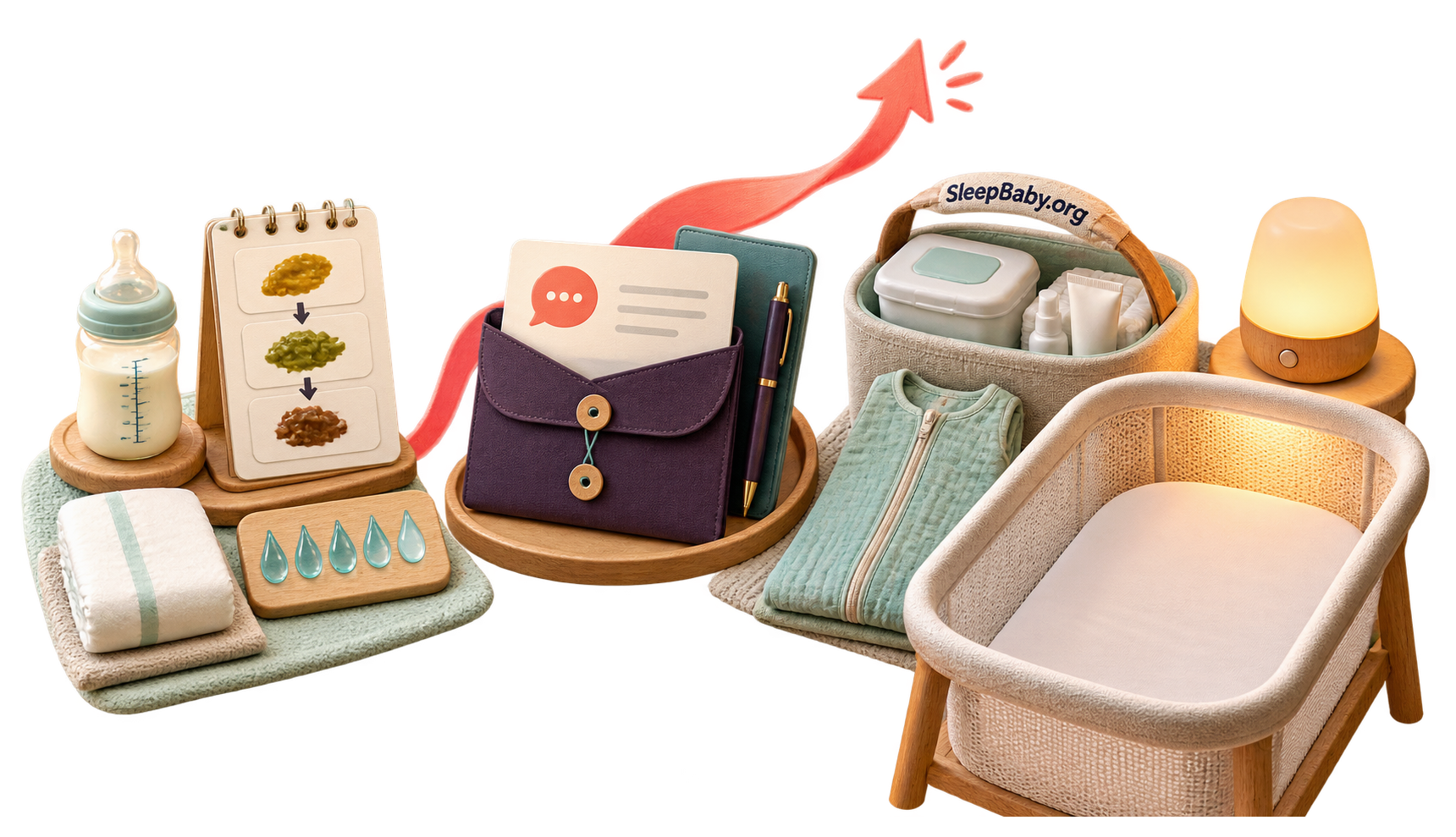
You can take a baby to Hawaii and have a lovely trip, but I would build it around one comfortable base, a confirmed safe sleep space, and short outings. The island with the longest activity list is not automatically the right one for your family. Before you book, ask the accommodation which crib or play yard it provides and where it fits in your room. A specific answer is more useful than a cheerful “family friendly.”
If your baby was born prematurely, has a medical condition, or is very young, discuss the flight and itinerary with their clinician. For everyone else, start with the room, airport transfer, and first night’s feeding supplies. Once those work, you can decide which beach deserves a morning. You do not need to fill every square of the vacation calendar.
Is there a best age for a baby’s first Hawaii trip?
There isn’t a magic month when flying, feeding, and naps all become convenient. A younger baby may need frequent feeds and more medical planning. An older infant may be more interested in everything, including the seat belt you are trying to fasten. I would choose a time when your baby’s care needs are manageable and you have enough adult help, rather than chasing a supposedly perfect age.
The American Academy of Pediatrics suggests delaying flying until around two to three months when possible to reduce a newborn’s exposure to infections. Airline minimum ages and medical requirements are separate matters. Ask your pediatrician about your baby, then confirm the carrier’s rules [1]. An airline accepting a booking does not answer the health question.
Consider your recovery, too. You may be arranging feeds, carrying equipment, and walking farther than you do at home. A trip that works for your baby also has to work for the adult doing the lifting and overnight care. Leave room to postpone without treating postponement as a parenting defeat.
I would also decide what would make this trip worthwhile before paying for it. Breakfast outdoors, a short beach visit, and time together can be enough. If your nonnegotiable plan involves long hikes, several islands, and dinner reservations every evening, change the itinerary or reconsider the timing. Your baby has not agreed to become an unusually cooperative piece of carry-on luggage.
Choose one island, then choose the easiest daily routine
For a first trip with an infant, I usually favor one island and one accommodation. Each move adds packing, check-out, transport, and a gap before the next room is ready. An interisland flight may be short, but the transfer day still has to include feeding and somewhere appropriate for sleep.
The official Hawaii island guide [2] is useful for understanding the differences. My planning shortlist would look like this: Oʻahu if you want to explore a Honolulu-based stay with nearby services; Maui if you want to compare a beach-area stay with time mostly close to your accommodation; Kauaʻi if a quieter, scenery-focused trip appeals; Hawaiʻi Island if you are happy choosing one region rather than trying to cover every highlight. These are starting points, not a ranking of baby-safe islands.
Compare actual addresses. Put the airport, accommodation, groceries, and two likely outings on a map. Look at the drive at the time you expect to travel, not only the distance. A beautiful rental can lose its appeal when every forgotten diaper becomes an excursion.
I would give an easy return to the room more weight than a famous view. Being able to end an outing before everyone is depleted changes the day. An oceanfront listing also doesn’t tell you whether access involves steps, a long walk, exposed rocks, or a beach suited to your plans.
Current conditions matter more than a saved recommendation. Check official visitor advisories, closures, and your accommodation’s operating details shortly before departure. If an area is recovering from a disaster or asking visitors to adjust plans, follow that guidance. Hawaii is somebody’s home, including on the day your carefully arranged itinerary needs to change.
Book the room for the hours you will actually spend in it
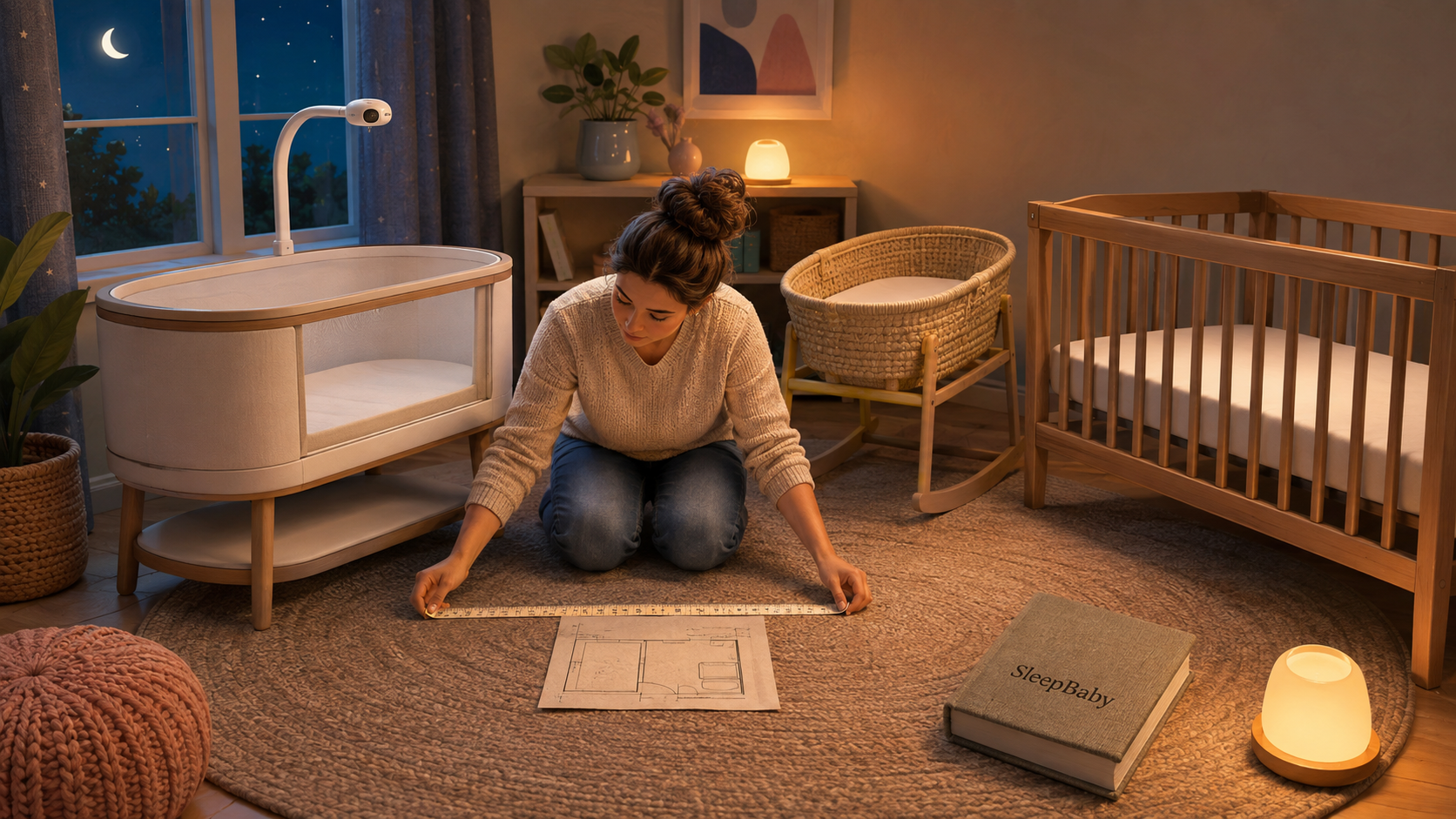
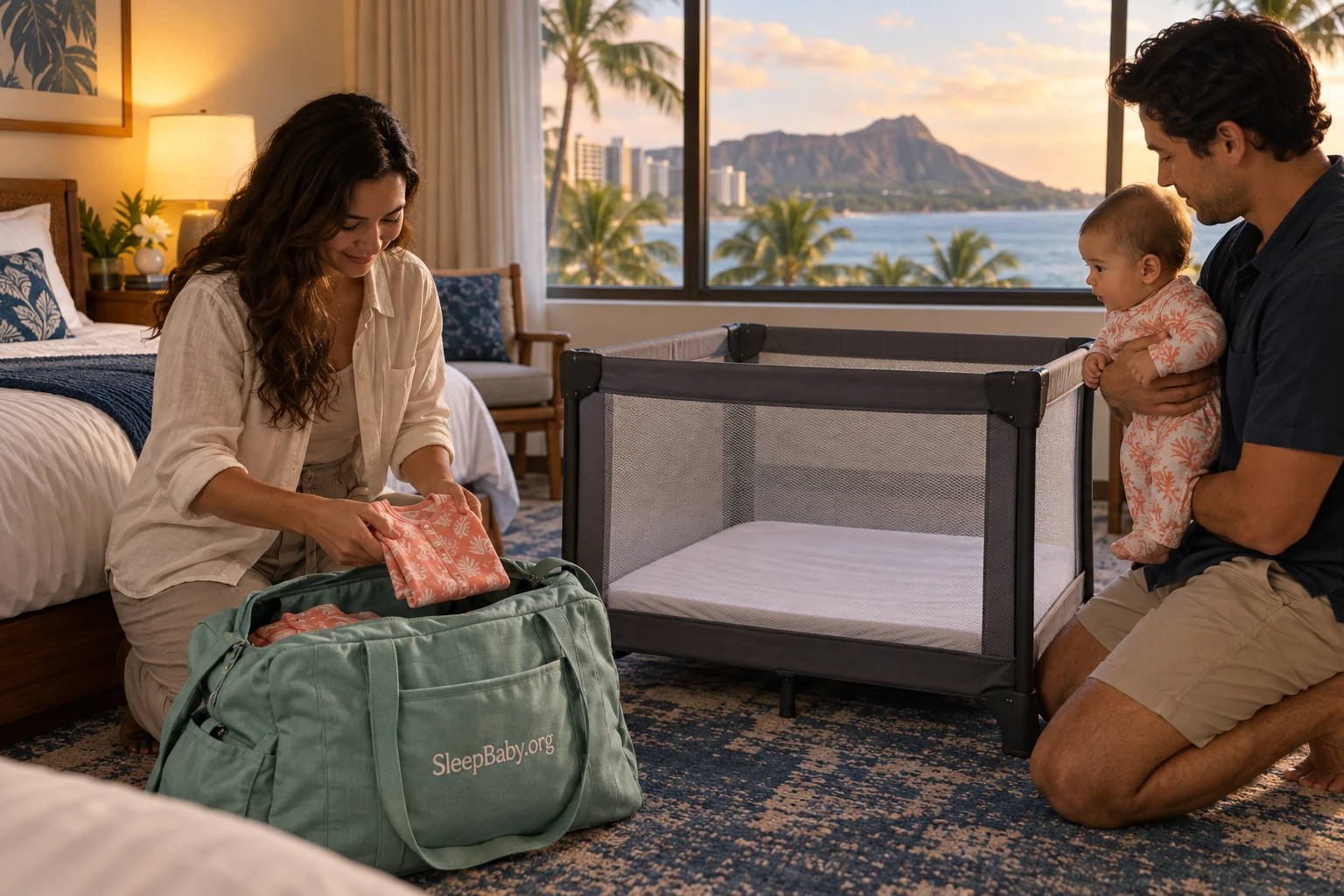
A room is where you will wash a bottle, locate clean pajamas, and settle a baby while another adult would quite like to eat dinner. Look beyond the pool photograph. Ask about usable floor space, cooling, curtains, steps or elevators, laundry, food storage, and noise from evening entertainment.
Separate living space can be helpful, but an expensive suite is not a prerequisite. A simpler room near food may serve you better than more square footage with complicated transport. If you plan to sit on a balcony after bedtime, think through supervision and access; a monitor does not make leaving a baby alone in the room appropriate.
Ask before you reserve
- Which crib or play yard will be supplied, and can it be reserved?
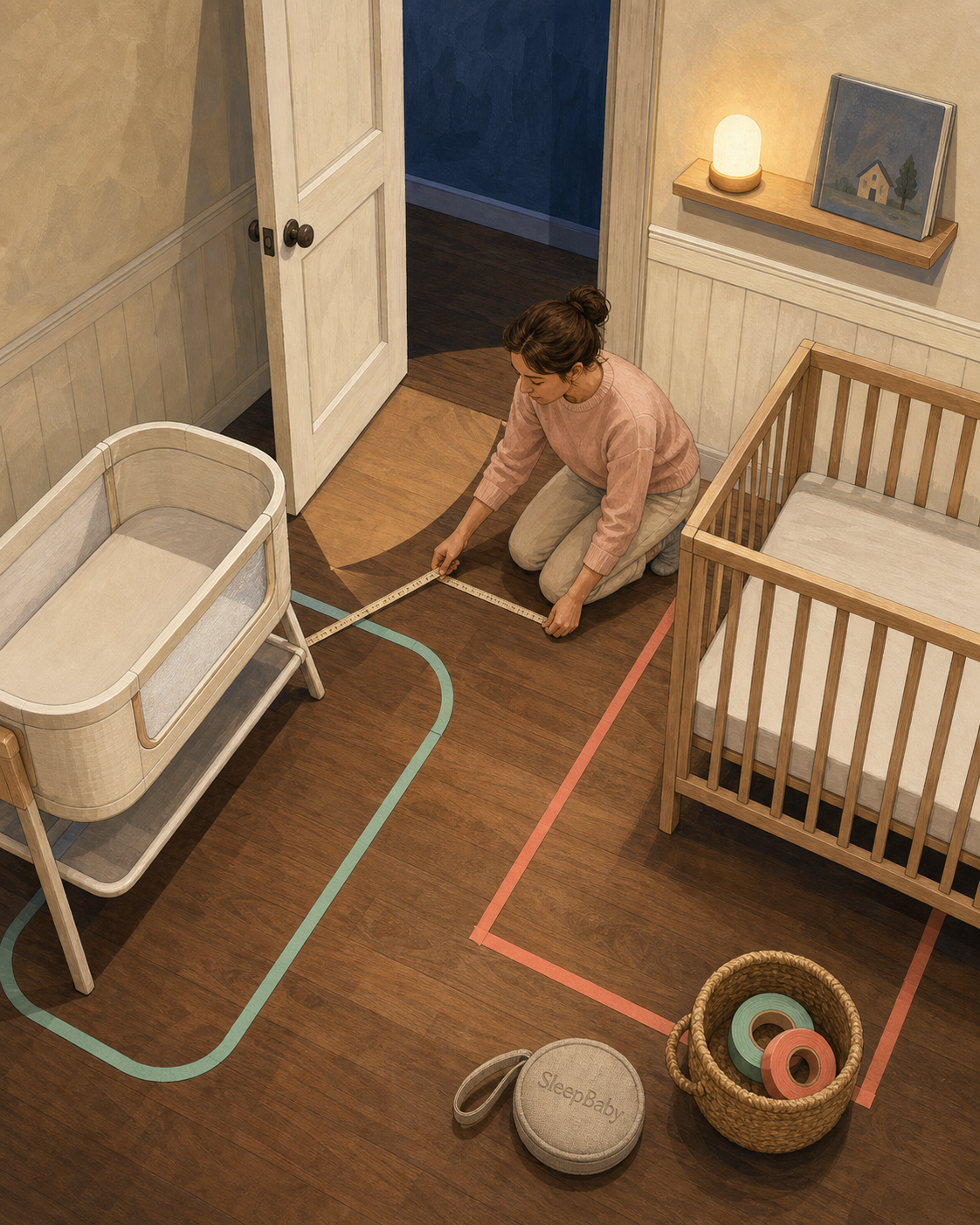
- Where can it stand safely without blocking access or sitting near cords?
- What happens if we arrive before check-in with a tired baby?
- Where can we store feeds and clean our equipment?
Save the answers with the booking. A clear sleep plan is worth more than a vague amenity list.
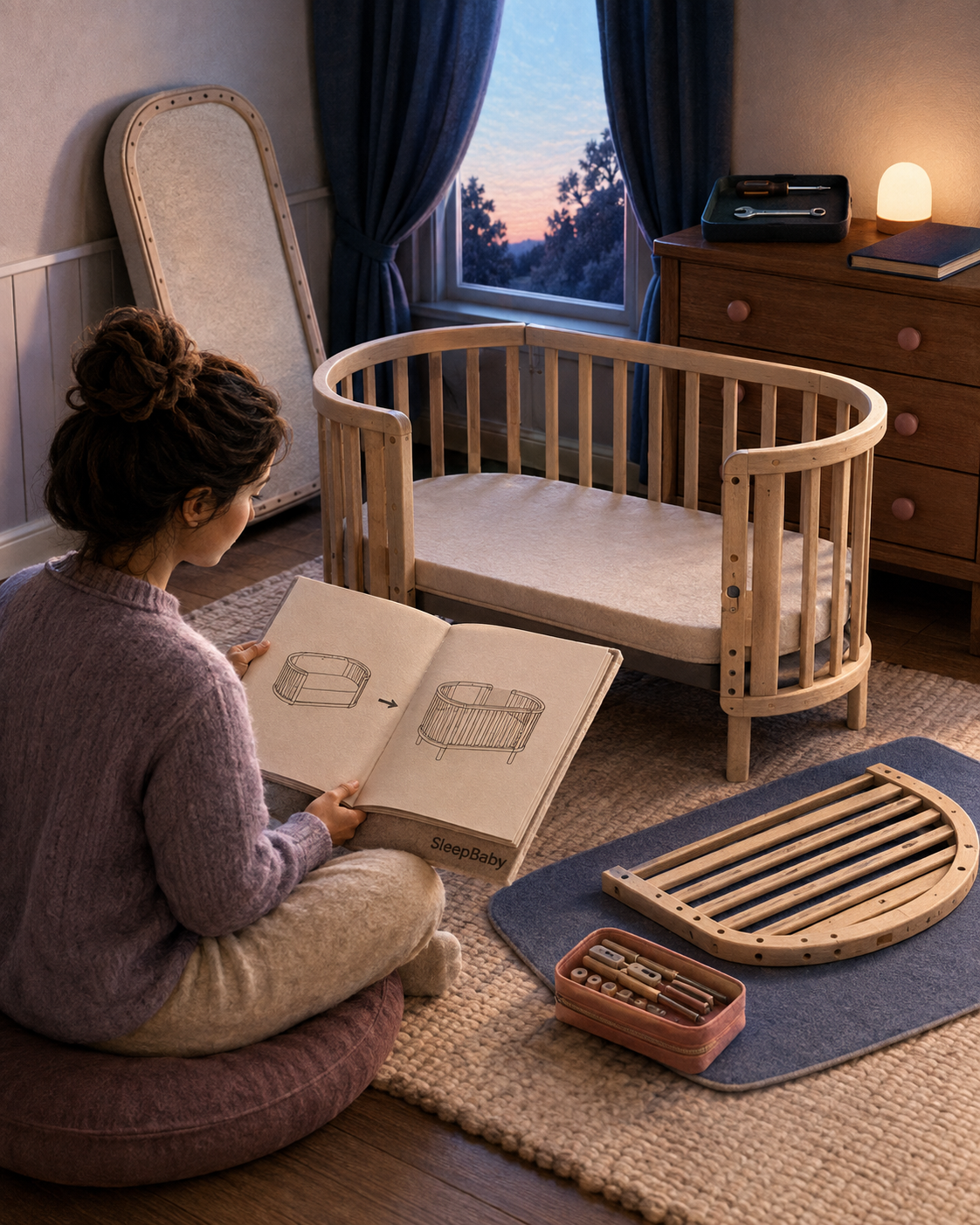
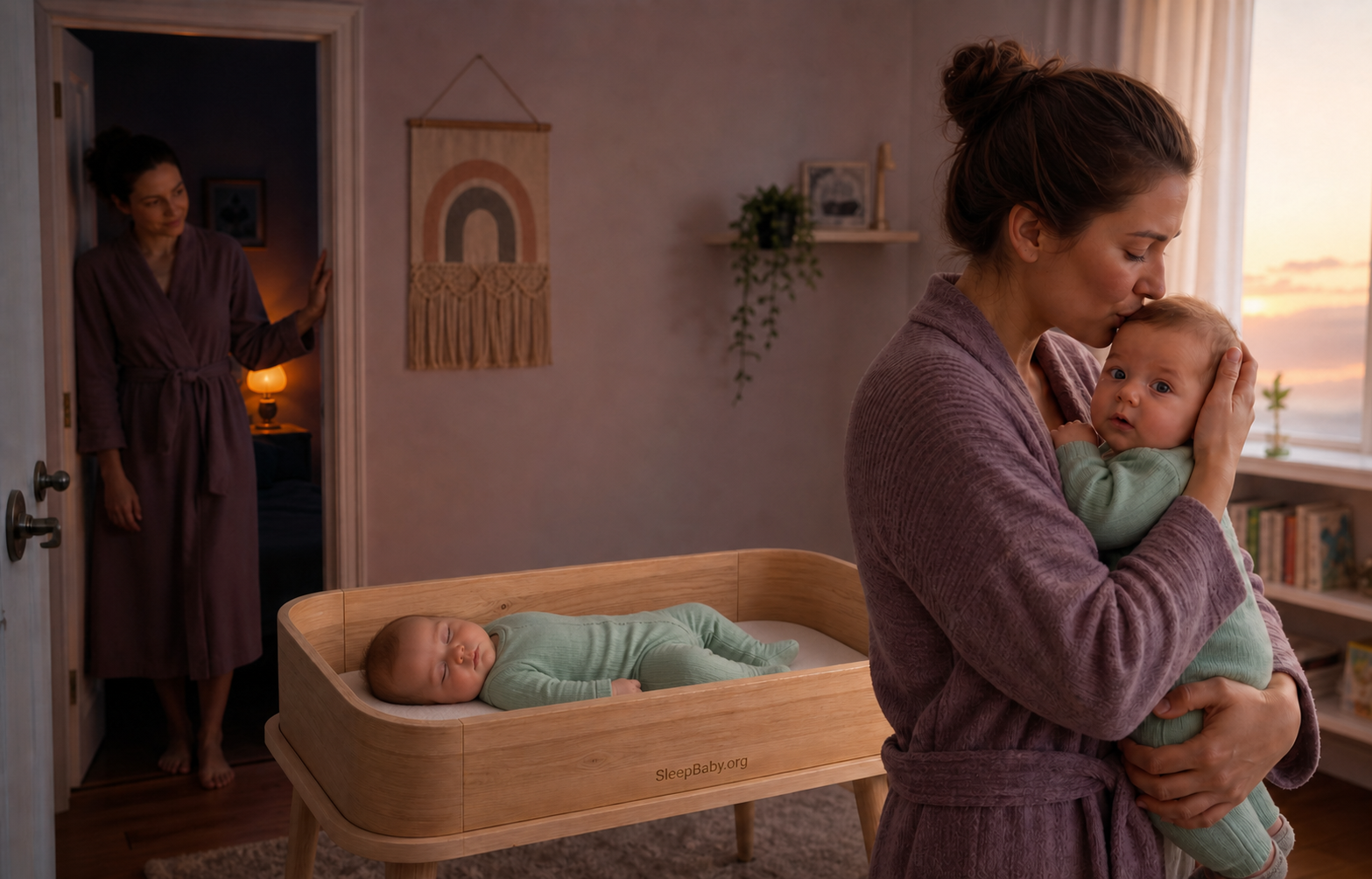
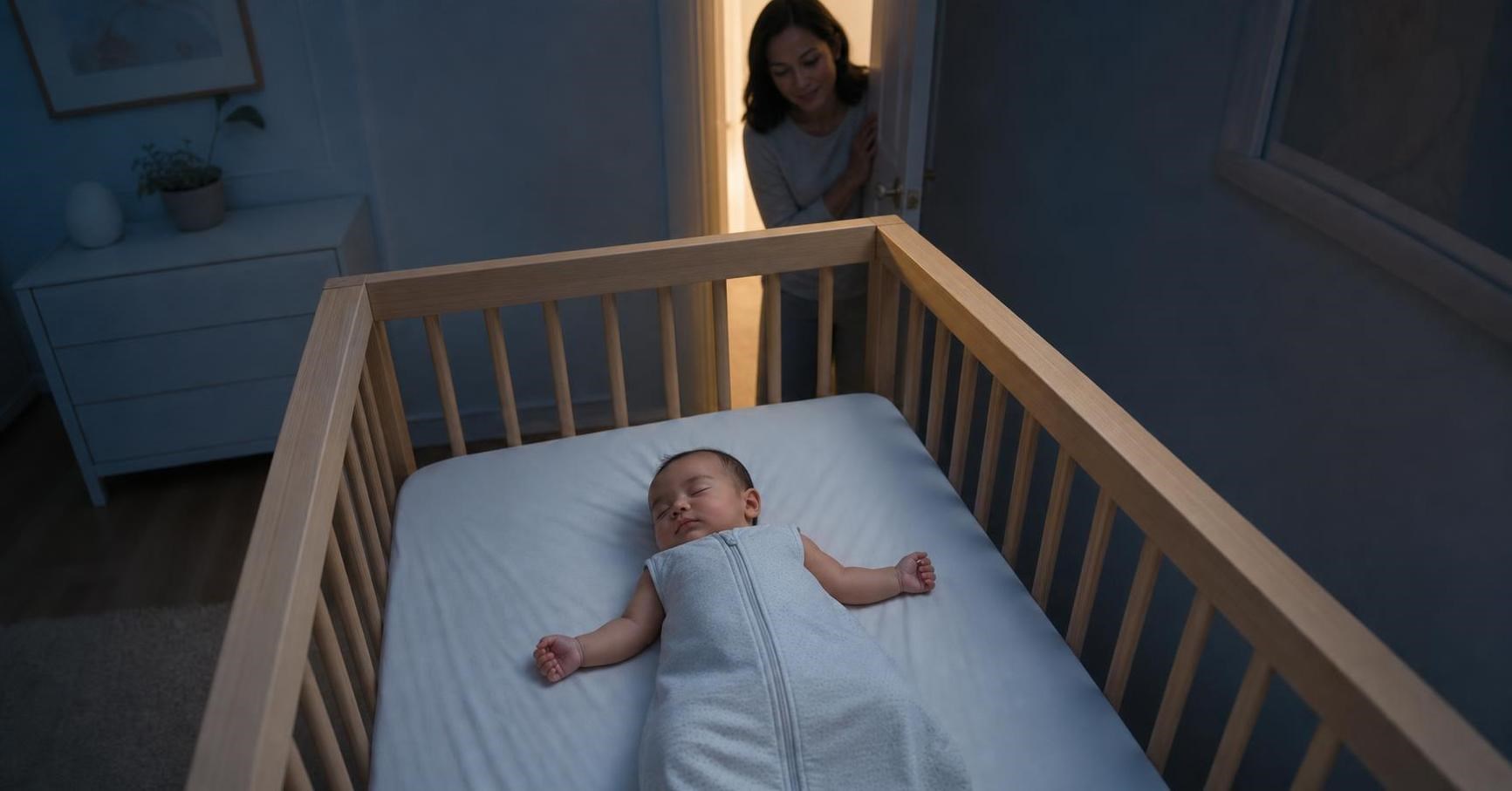
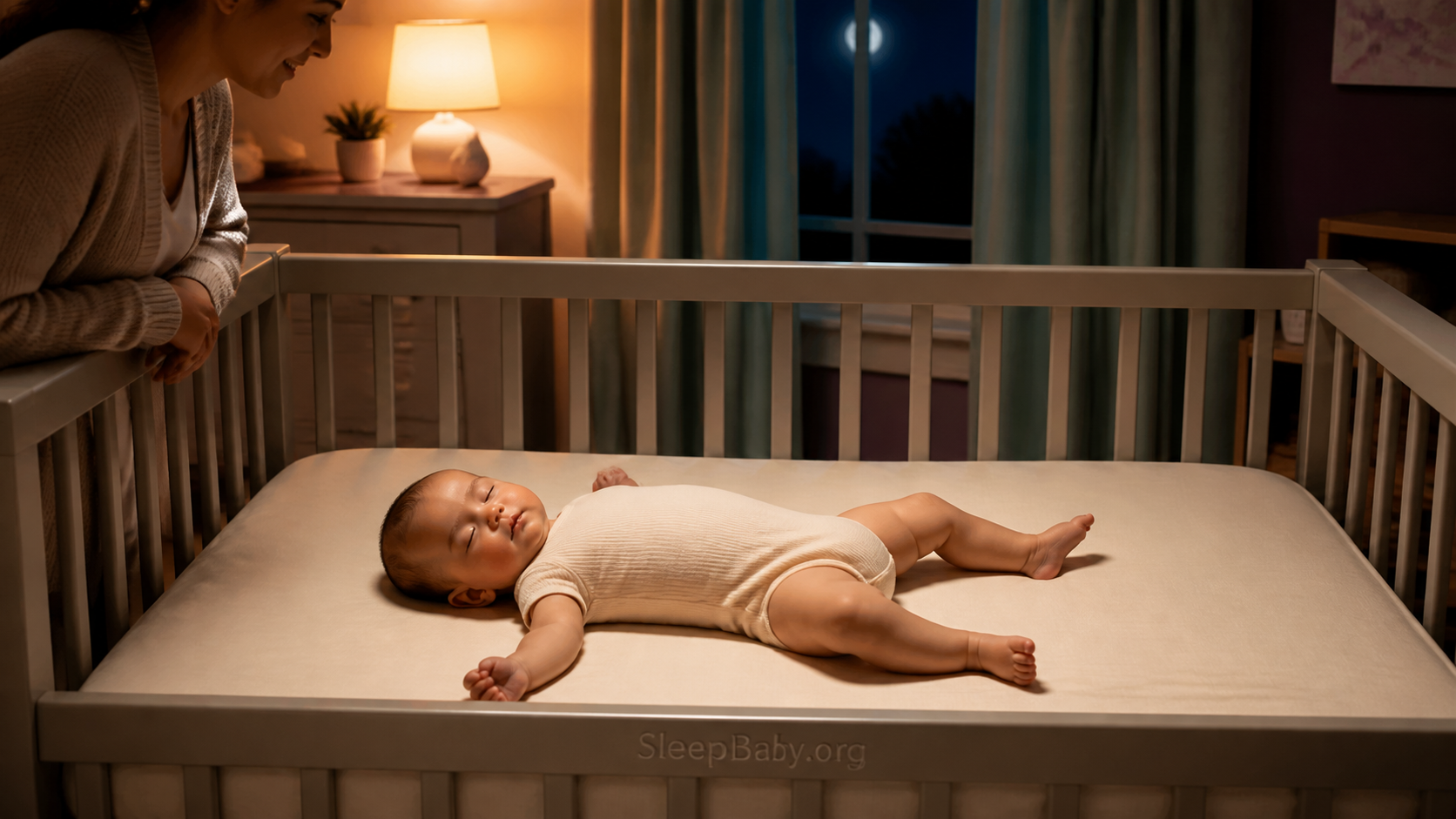
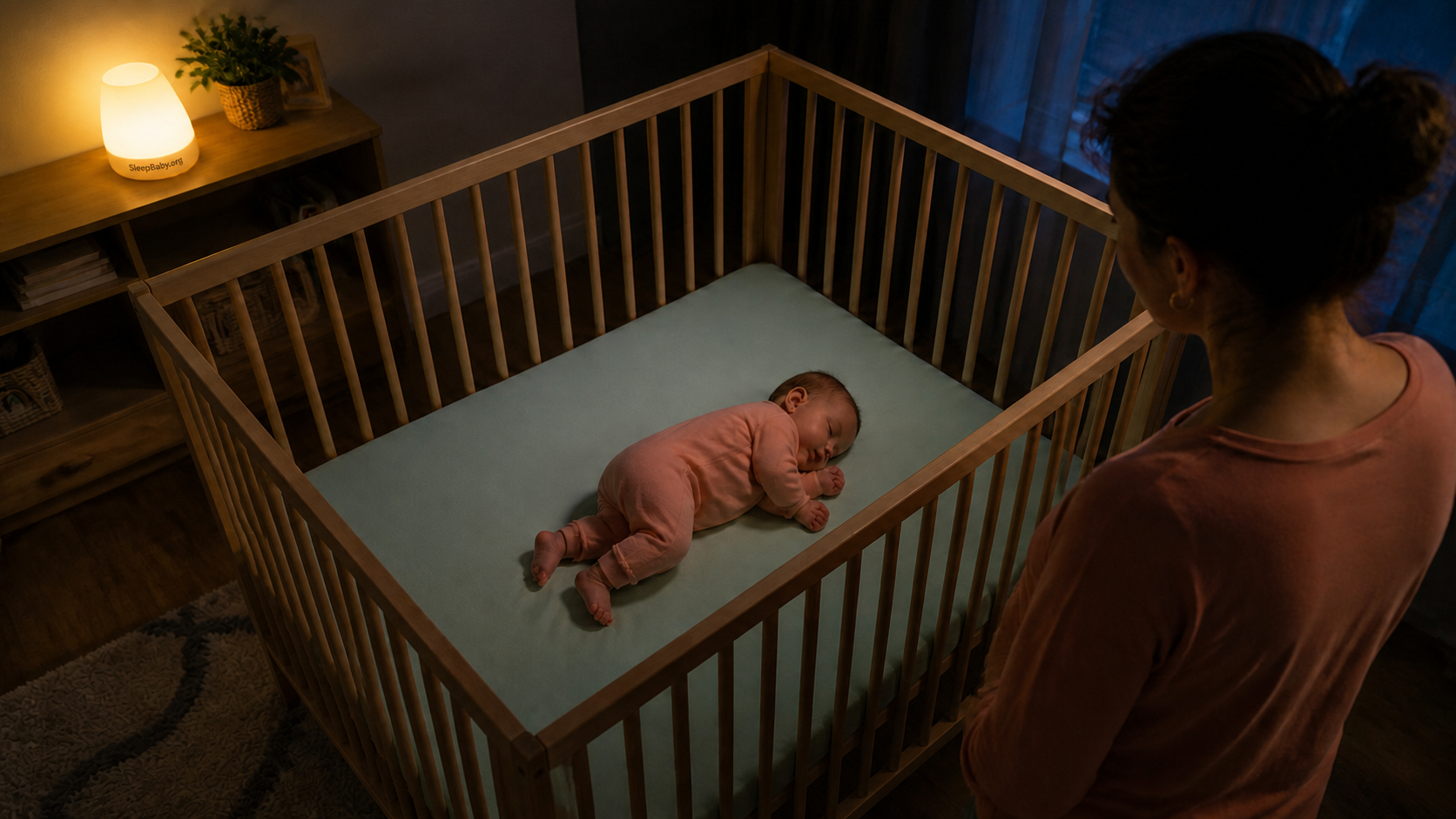
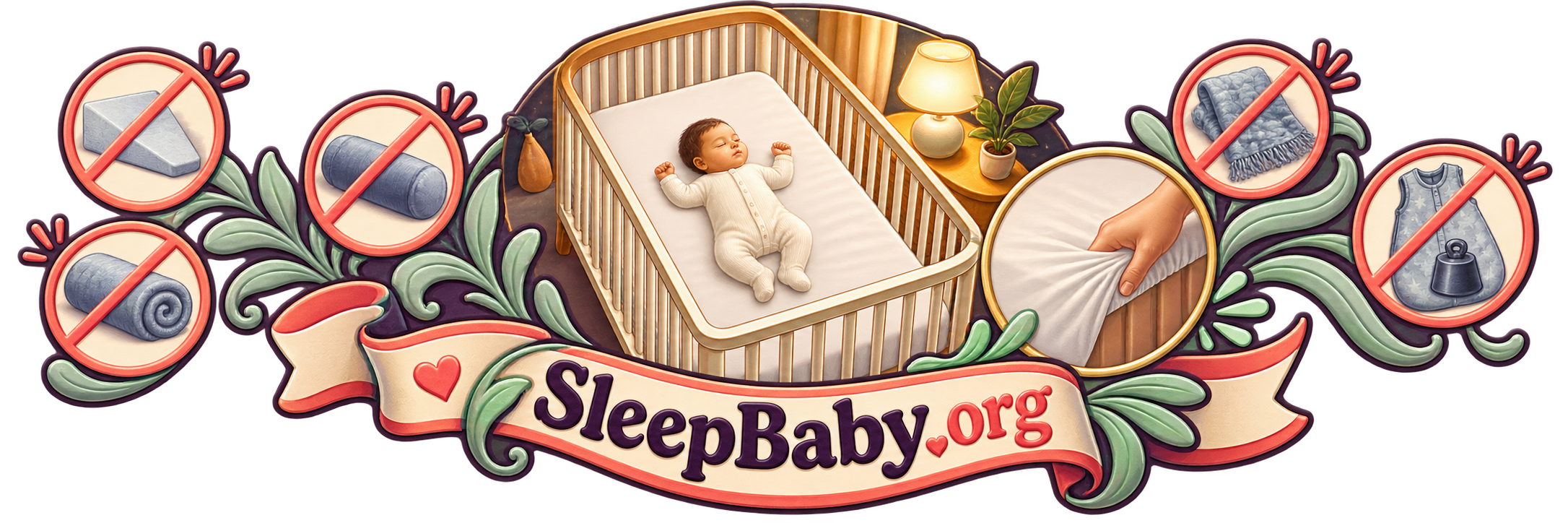
When you arrive, inspect the actual sleep equipment before using it. Follow the product’s instructions and age, size, and developmental limits. For infant sleep, use a firm, flat, non-inclined approved crib, bassinet, or play yard with its correctly fitted sheet; place your baby on their back and keep the space clear. Room-share on a separate surface. Do not add a pillow, folded towel, extra mattress, blanket, or travel lounger to make the setup “cozier.” AAP safe-sleep guidance applies away from home [3].
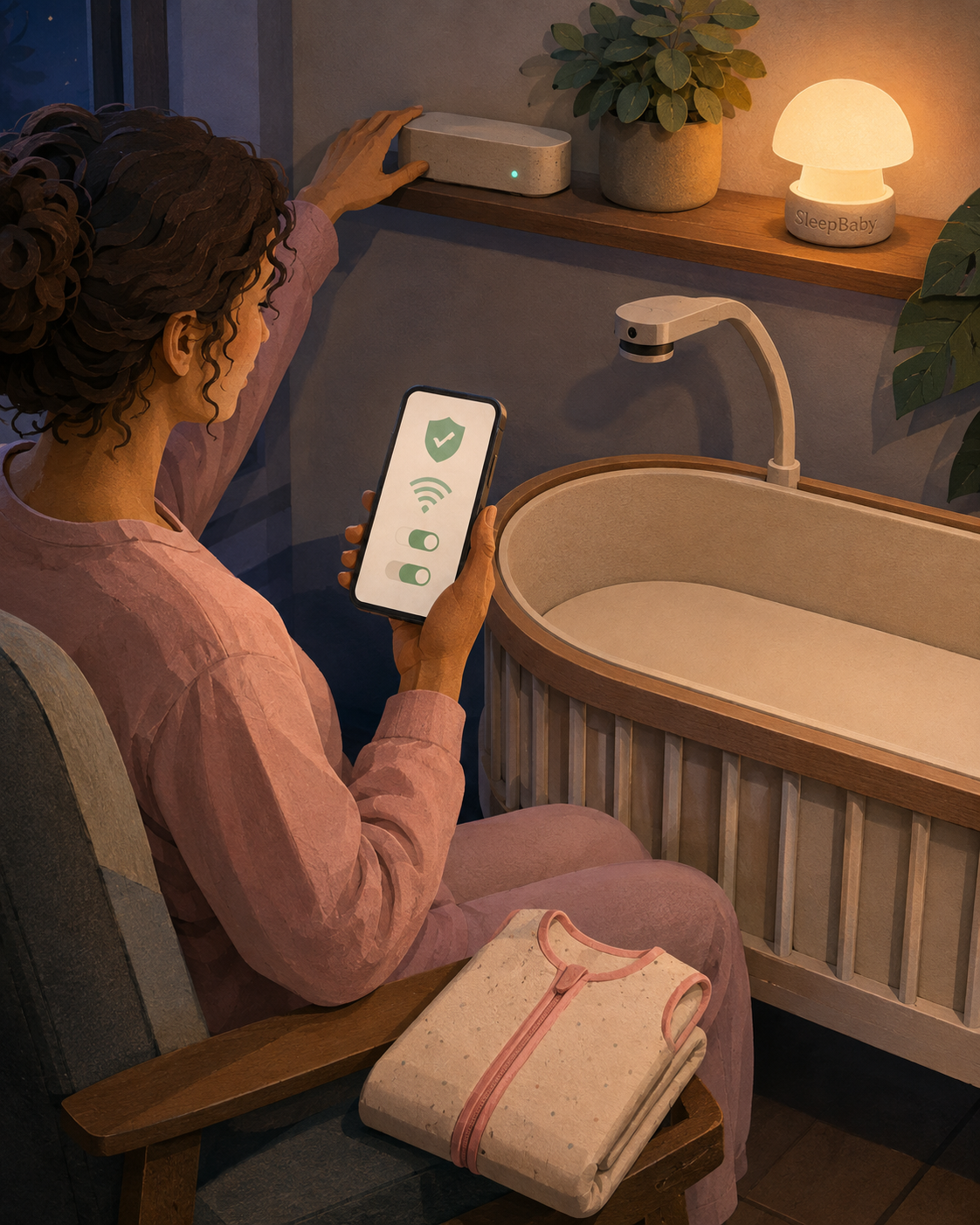
If the supplied equipment is damaged, unsuitable, or different from what was promised, resolve that before bedtime. I would rather spend time at reception arranging a suitable replacement than spend the evening trying to justify a makeshift bed. Bring the reservation details and equipment confirmation in a form you can access without hotel Wi-Fi.
Make the flight and airport transfer one plan
If you can choose, compare the entire journey: departure time, connection risk, arrival time, drive, and room access. A nonstop flight removes a transfer, but no departure time guarantees your baby will sleep. I would pay attention to how many difficult transitions a cheaper itinerary adds before deciding it is better value.
The FAA says the safest place for a young child on an airplane is an approved child restraint in their own seat. Check the car seat’s aircraft-approval label, your baby’s fit, the instructions, and the airline’s seating requirements before booking. A carrier or booster is not a substitute for an aircraft-approved infant car seat. The FAA explains restraint selection and installation [4].
Plan the destination car ride at the same time. Hawaii requires children under two to ride properly restrained in a rear-facing car seat with a harness. The Hawaii Department of Transportation explains the rule [5]. Confirm equipment before relying on a rental or transfer service. “We have seats” still leaves questions about the model, fit, condition, instructions, and availability when you arrive.
Divide the carry-on by use rather than by how attractive the packing cubes look. Keep the next feed, one diaper change, and spare clothes accessible without opening the main suitcase. Put the remaining supplies somewhere reachable for delays. An adult shirt belongs in that spare-clothes calculation; your baby’s outfit is rarely the only one involved.
Breast milk and formula can travel through U.S. security under special liquid rules. Declare the supplies and allow time for separate screening. Check current airport and airline instructions, especially with an international connection. Swallowing can help pressure-related ear discomfort; a bottle or pacifier may help when compatible with safe restraint and crew instructions. AAP flying guidance covers these details [1].
For a mainland U.S. domestic itinerary, TSA does not require identification for a child traveling with an adult, though the airline may require proof of age. International itineraries need a separate document check, including the baby’s passport and applicable entry requirements. Confirm the adults’ required identification as well; Hawaii being a U.S. state does not make every route there domestic.
Understand the time difference before changing bedtime
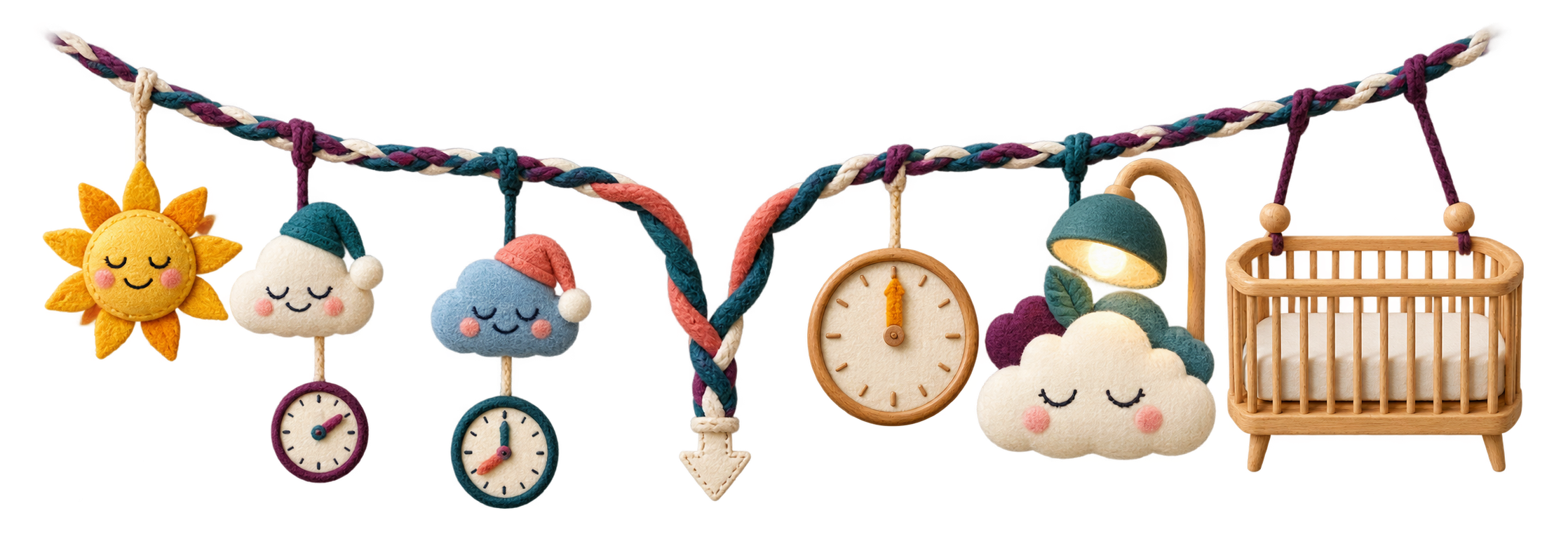
Hawaii stays on Hawaii Standard Time all year. It is two hours behind Pacific Standard Time and five behind Eastern Standard Time; when those mainland regions observe daylight saving time, the difference becomes three and six hours. The official visitor FAQ explains Hawaii’s clock [6]. Use your actual departure location and travel dates, especially if you are coming from elsewhere.
SAME MOMENT · DIFFERENT CLOCKS
What does a 7 p.m. bedtime look like in Hawaii?
Clock conversion only, not a prescribed sleep schedule. These examples use mainland daylight saving time.
During mainland standard time: 7 p.m. Pacific is 5 p.m. in Hawaii; 7 p.m. Eastern is 2 p.m. in Hawaii.
Use the difference to plan arrival and understand early tiredness. Respond to your baby rather than forcing the converted bedtime.
SleepBaby.org · Travel dates and departure location change the calculation.
This arithmetic explains why a late-afternoon arrival may feel like bedtime to a baby coming from the mainland. It does not predict exactly when your baby will sleep. A missed nap, a feed, an unfamiliar room, and the journey itself are also part of the picture. CDC notes that time-zone changes and disrupted schedules can affect children’s sleep [7].
I would plan the first evening around basic care: feed, clean clothes, sleep setup, and a short familiar routine. If your baby is clearly ready for sleep, do not keep them awake for hours to reach an impressive local bedtime. You can work toward a practical local rhythm over the following days without making the arrival evening a test.
A FAMILIAR BEDTIME, IN A DIFFERENT PLACE
Pack a little structure for the evening
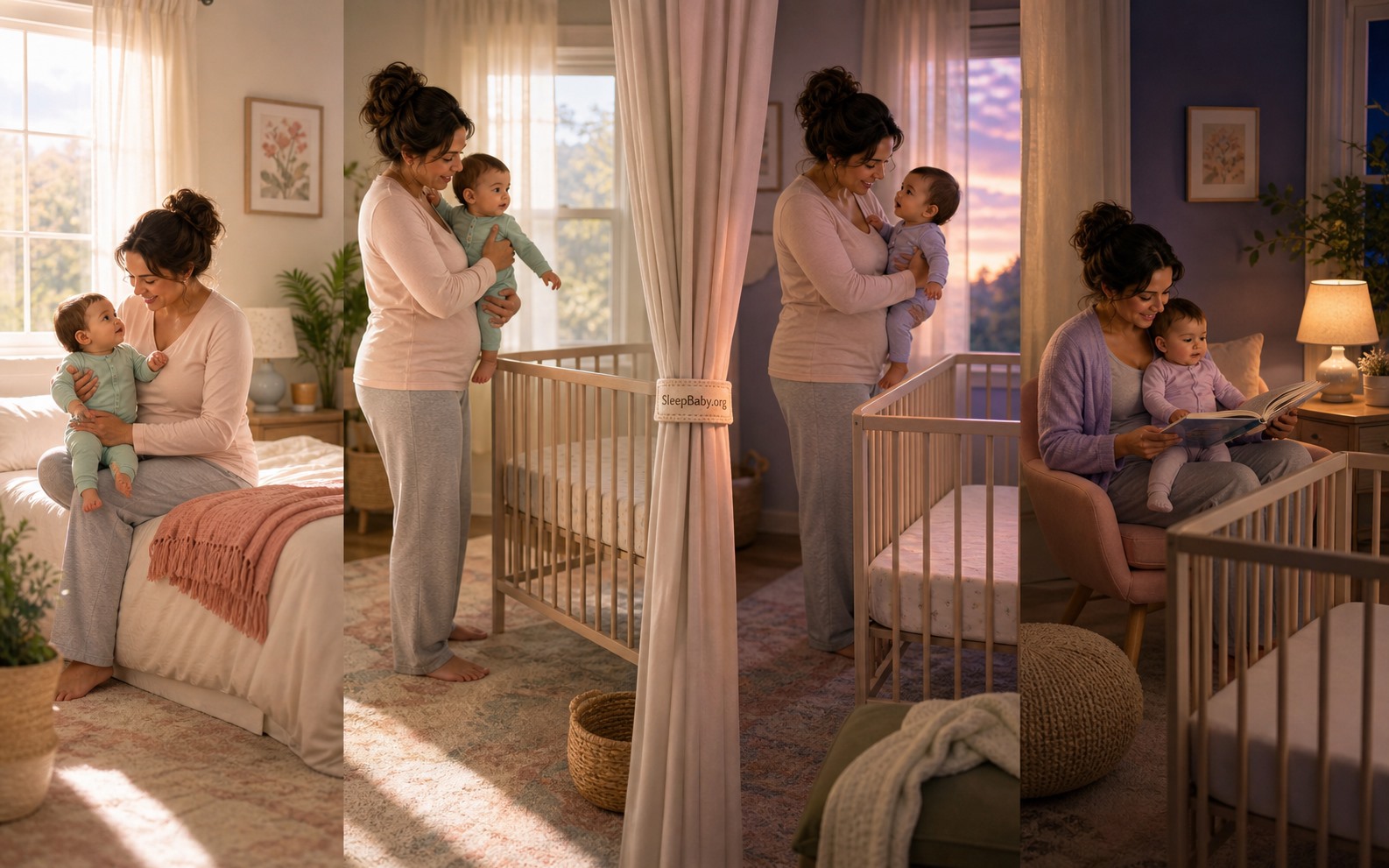
After the flight and a day of new sights, ordinary bedtime can feel unfamiliar too. The free Baby Sleep Miracle presentation lets you explore SleepBaby’s approach before deciding whether you want the optional digital guide.
The SleepBaby.org Workshop provides general baby-sleep guidance. It is not a Hawaii travel course, a jet-lag treatment, or a substitute for feeding, safe-sleep, or medical advice. Sleep changes on a trip can take patience; no purchase guarantees an easy first night.
$20 USD
One-time payment · Digital guide
Opens the SleepBaby.org Workshop’s Shopify checkout.
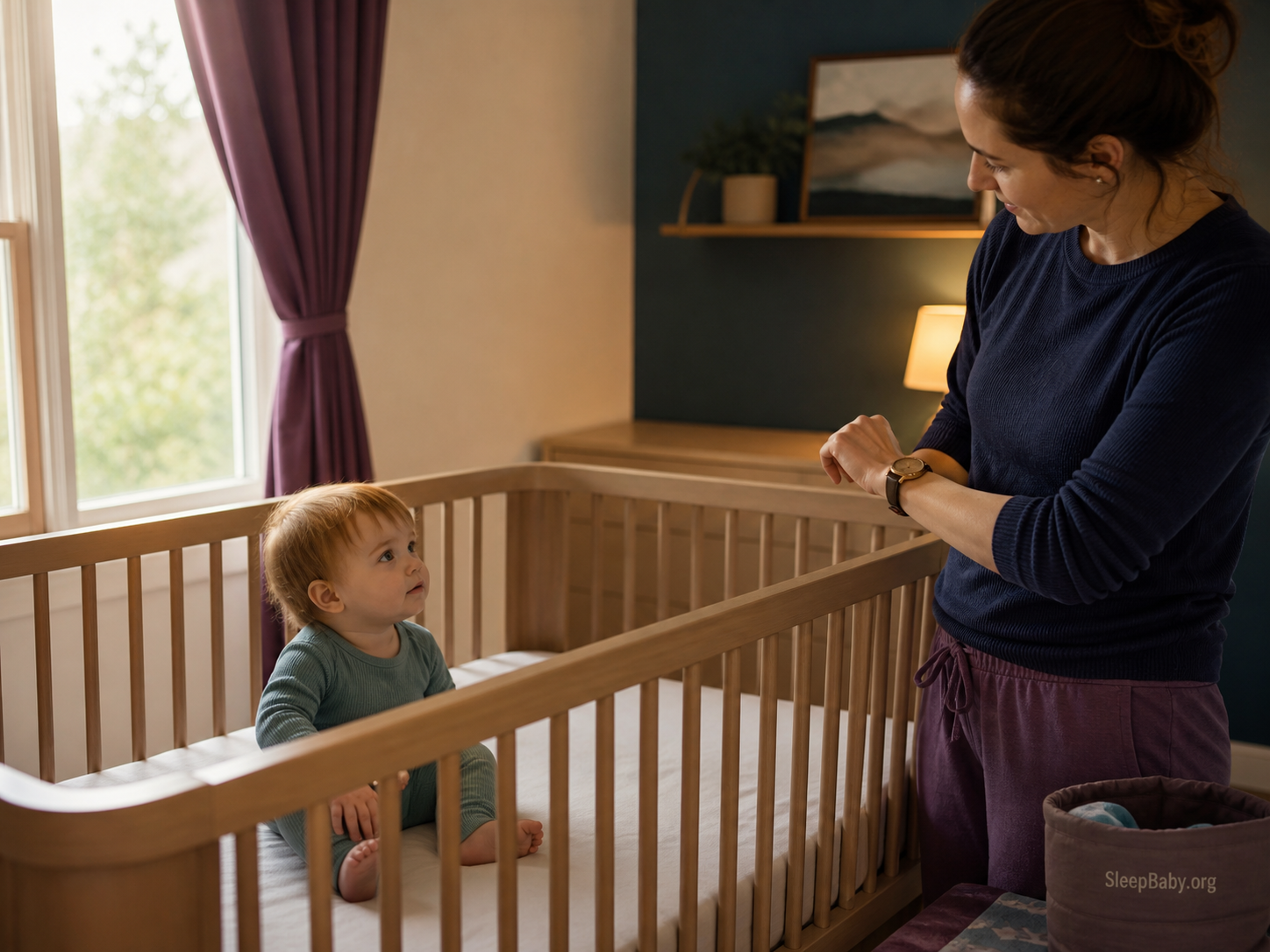
At a very early wake, keep care quiet and lighting low while you assess hunger, discomfort, and whether more sleep is possible. Once you decide the day has started, a gentle daytime outing can follow. Avoid a rigid light-treatment schedule or a rule that all babies must adjust by a particular day. For a short visit, an earlier local routine may be workable; for a longer stay, you may prefer gradually moving toward local meals and bedtime.
If you try a small timing change, observe the next nap and evening before adding another. I would judge it by whether your baby is feeding, settling, and coping reasonably, not whether the clock matches the home schedule perfectly. A tired baby is allowed an earlier bedtime. Our guide to earlier bedtime explains why keeping a baby awake later is not a reliable fix for early waking.
Do not start melatonin, sedating antihistamines, or another sleep product to manage the flight or time change. Discuss any medication question with your child’s clinician. The AAP says melatonin decisions require pediatric guidance [8]; an adult jet-lag recommendation is not an infant dosing plan.
Give the first full day one outing and an easy exit
The first morning is useful information. Notice when your baby is hungry, alert, and becoming tired. Keep the main activity close enough that leaving is simple. I would avoid making the first full day the one with a prepaid, all-day commitment.
A flexible first 24 hours
-
On arrival
Set up and inspect the sleep space, sort the next feed, and simplify dinner. -
First morning
Assess how the night went. Choose a nearby outing or stay close to the room. -
Before the next sleep
Return with time for care and settling. Drop the extra stop if the day is already hard. -
That evening
Repeat the familiar short routine and choose bedtime from the day you actually had.
This is a planning example, not an age-based feeding or nap schedule.
For subsequent days, put one outing on the calendar and leave the rest conditional. A second activity is something you can add when the day allows it. This is especially helpful when two adults have different vacation expectations: decide which outing matters most before a short nap turns every suggestion into a negotiation.
Try to protect a comfortable nap opportunity in the room when practical. If your baby falls asleep in a car seat, stroller, or carrier, move them to an appropriate flat sleep surface as soon as possible; those products should not become the planned hotel sleep space. Keep their face uncovered. The AAP includes this guidance for travel and everyday sleep [3].
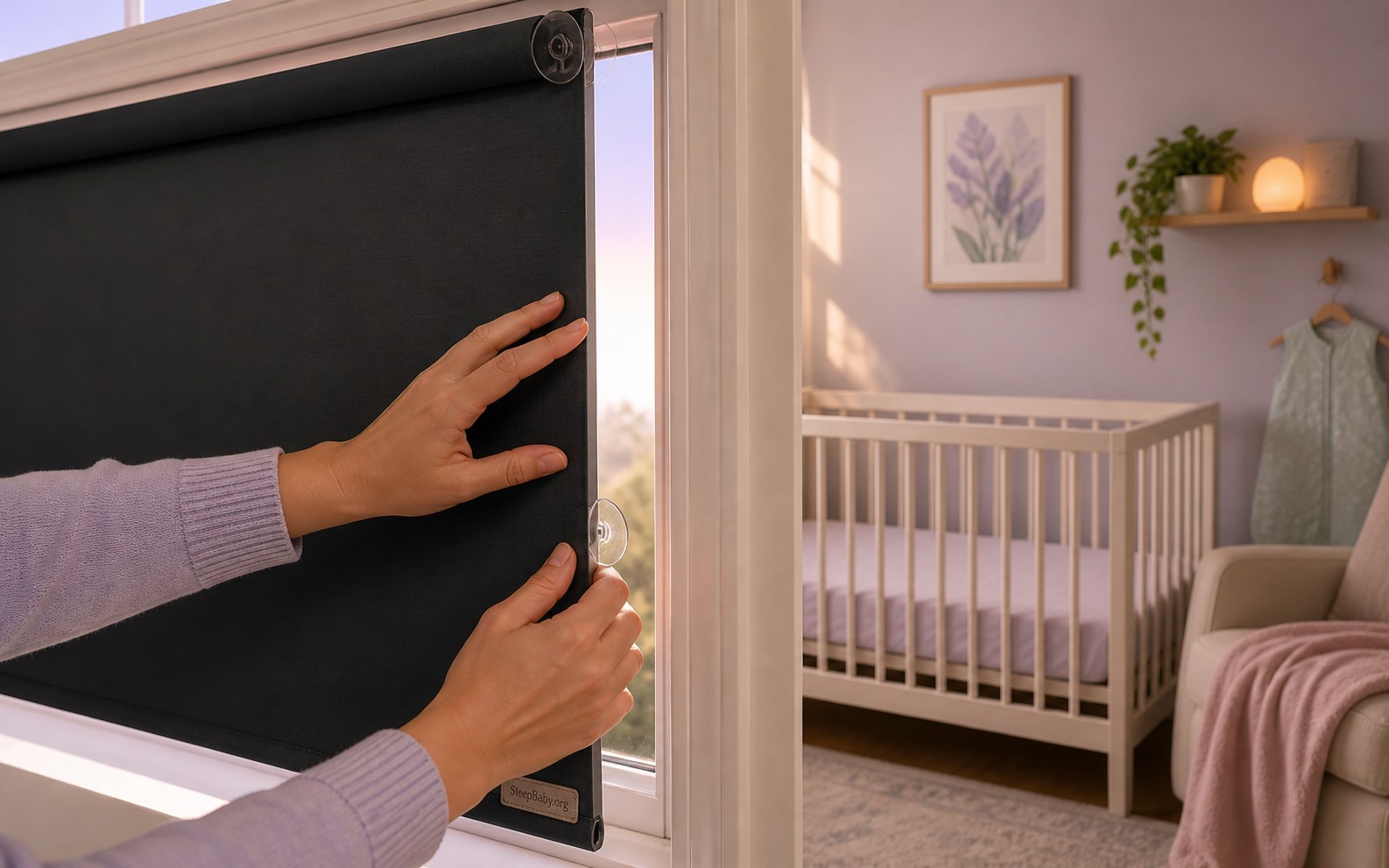
For a bright room, use its curtains and choose a sensible cot position away from window coverings and cords. Do not drape a blanket over the cot or stroller to create darkness. A darker nap environment can be useful without turning the sleeping space into a covered enclosure. Your goal is a usable room, not recreating every inch of home.
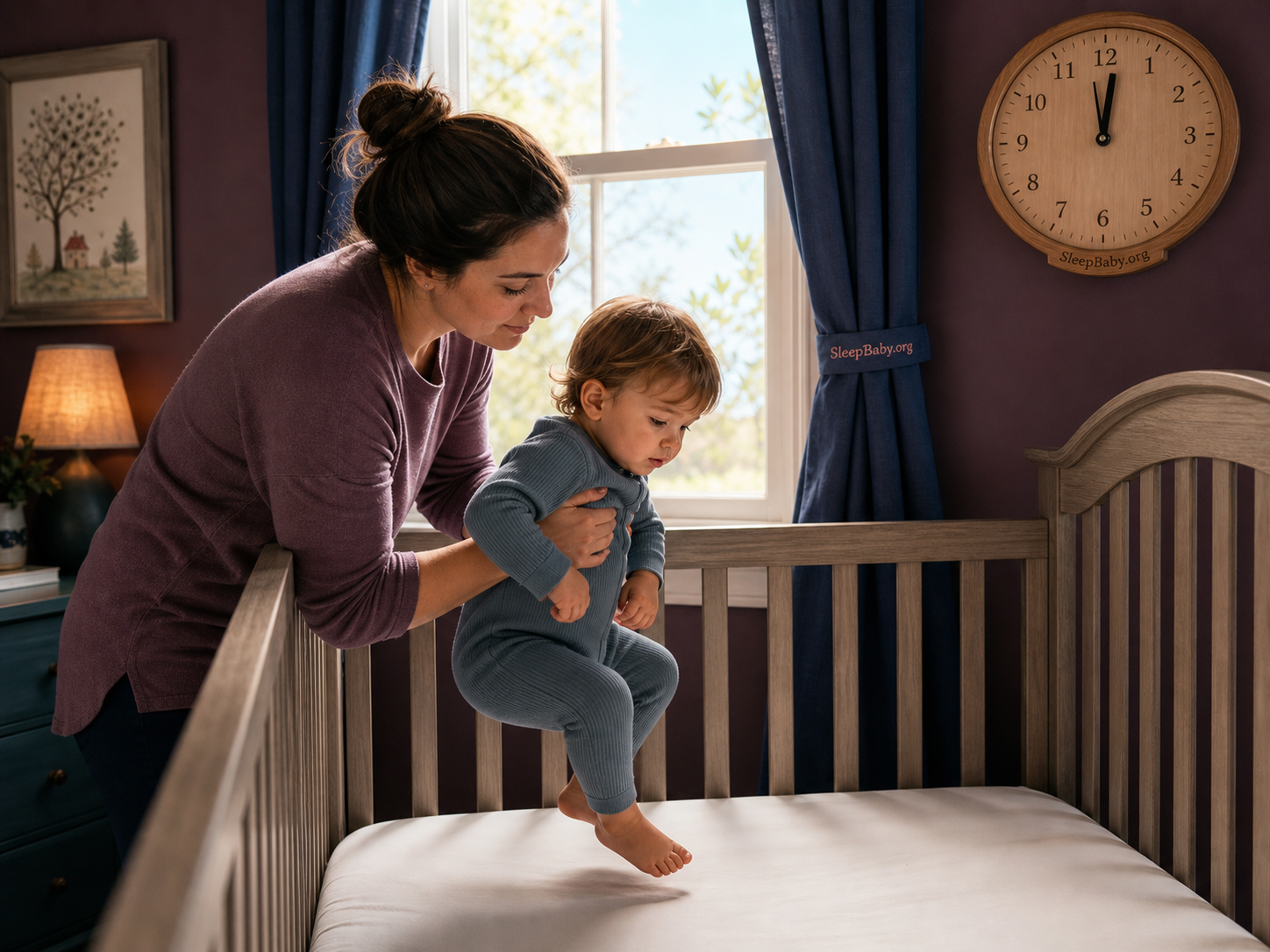
Keep one familiar bedtime sequence, such as feeding, changing, a short book, and settling. It can be brief. If the room is warmer than home, select clothing for the actual conditions rather than automatically adding the usual layers. A sleep sack is optional; familiar does not mean necessary when it is uncomfortable or unsuitable.
Plan beach time around shade, conditions, and leaving
For your first beach visit, think in terms of a short outing with an easy return. Choose a place with lifeguards, check current conditions and posted warnings, and ask the lifeguard about hazards. A beach nickname, sheltered-looking water, or an old family photograph cannot tell you what the ocean is doing today.
Keep a responsible adult watching your baby continuously near water. Avoid heavy shorebreak. Floats can overturn or drift, and lifeguards do not replace your supervision. Hawaii’s Department of Health explains family beach safety [9]. If conditions are uncertain, stay well away from the water or choose another activity. You do not owe the trip an ocean dip.
For babies under six months, prioritize staying out of direct sunlight, using shade and lightweight covering clothes with a brimmed hat. Ask your pediatrician about sunscreen use; AAP guidance allows a small amount on exposed areas when adequate covering is unavailable. For older babies, choose age-appropriate broad-spectrum protection and follow application instructions. AAP sun guidance covers clothing, shade, and sunscreen [10].
I would choose a shaded outing with a nearby indoor break over one dependent on making a small patch of sand comfortable for hours. Keep your baby’s face visible and the stroller ventilated; a blanket over its opening is not a good shade plan. If your baby is getting hot or distressed, head to a cooler place rather than extending the outing because you just finished setting up.
Agree on the exit before opening the beach bag
Choose who is watching the baby, where you will cool down, and how you will get back to the room. Keep feeds and dry clothes accessible.
The useful question is whether you can leave comfortably when your baby needs to. A shorter beach visit still counts.
BEFORE YOUR BEACH DAY
A minute with Hawaii’s ocean-safety guidance
This Hawaii Tourism video explains why lifeguards, current conditions, and visible hazards belong in the plan. It is general visitor guidance, not permission to take an infant into the water.
Takeaway: ask a lifeguard about today’s conditions, heed warnings, and choose a different plan when you are unsure.
Feed normally, and make cleaning supplies part of the plan
Keep your baby’s usual feeding approach. Travel is already introducing enough changes; I would not use it as the occasion to test several new foods or switch formula for convenience. Bring enough of your usual supplies for the journey and a realistic delay, then identify a reliable way to restock.
If you use bottles or pump parts, decide where you will clean, dry, and store them before booking the room. A decorative sink in a photograph doesn’t answer that question. Ask what refrigeration is available and whether it meets your needs; don’t assume a hotel minibar is suitable for storing expressed milk.
For formula, use safe water and the exact water-to-powder ratio on the container. Never dilute it to stretch supplies or respond to warm weather. CDC advises using prepared formula within two hours of preparation and within one hour of starting a feed. If feeding will not start within two hours, refrigerate the prepared bottle promptly and use it within 24 hours. Discard leftovers after feeding. Babies younger than two months, born prematurely, or with weakened immunity need extra preparation precautions. Read the CDC instructions and discuss your travel setup with your clinician [11].
Pack the items you need to follow those instructions, not just the powder. Ready-to-feed formula may reduce mixing steps if it already fits your baby’s feeding plan, but opened-container storage and handling still matter. Write a simple plan for the flight, arrival, and first morning rather than assuming you will sort it out at baggage claim.
Leave the biggest excursions off the infant itinerary
I would be cautious about choosing a long winding drive, remote hike, boat trip, or summit visit simply because it appears on every Hawaii list. Check the operator’s infant age rules, transport restraints, shade, access to care, and ability to leave. An activity can be excellent and still be the wrong fit for this trip.
Haleakalā’s summit environment is very different from the beach. The National Park Service describes rapidly changing weather, remote roads, cold conditions, and potentially delayed medical help. Read the park’s safety information before deciding [12]. CDC also notes that children can develop altitude illness and that young children may show nonspecific changes such as fussiness or poor appetite. Discuss high-elevation plans with your baby’s clinician. Early waking alone is not a reason to take an infant to a summit sunrise.
Check weather and access again before an outing. Stay on permitted routes, respect closures, and leave wildlife alone. If the appealing plan needs ideal conditions, have an alternative that doesn’t. A short walk followed by lunch near your room can still be the day you remember happily.
Before leaving home, save your pediatrician’s contact details, insurance information, and the location of nearby care. Seek medical advice promptly for poor feeding, unusual lethargy, markedly fewer wet diapers, persistent vomiting, or a baby who seems unwell; do not assume every change is jet lag. CDC’s child-travel guidance discusses illness and dehydration [7]. For breathing difficulty, unresponsiveness, or another emergency, call 911.
Pack for what you cannot easily replace
Prioritize the correctly fitted car seat, needed feeding supplies, medicines, documents, and a confirmed sleep arrangement. Clothes and ordinary toiletries are usually easier to solve than a missing specialized item. Keep essential medication and the next day’s necessities with you, not solely in checked luggage.
Then reduce duplication. If reliable laundry is available, fewer outfits may work. If a suitable cot is confirmed, you may not need to bring one. If your accommodation already has a kitchen setup that meets your needs, a suitcase full of feeding gadgets will not necessarily make the trip easier.
My final packing check would be physical: carry the bags you intend to take while the other adult handles the baby. Work out how the car seat, stroller, and luggage move together. If there is no other adult, test your own setup. This is when a supposedly convenient accessory sometimes reveals that it requires a third hand.
ONLY IF YOU NEED TO BRING A SLEEP SPACE
An Amazon travel-crib option for your Hawaii packing list
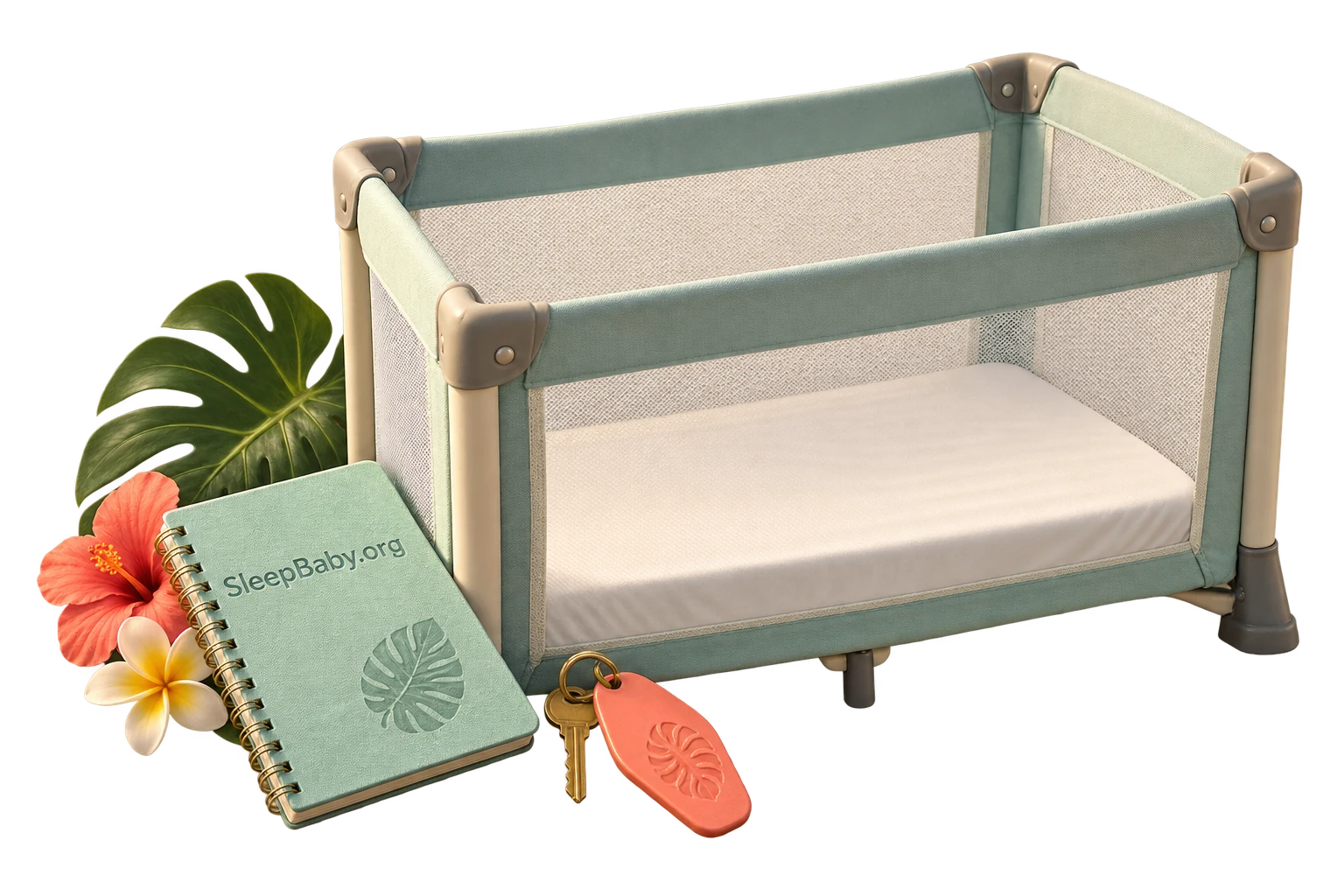
Guava Family Lotus Travel Crib with backpack carry bag is worth comparing if you will travel repeatedly and need your own portable sleep setup. Guava lists a weight of 13 pounds including the backpack. The carrying format may help with airport logistics, but you still need to account for every other bag.
Why this option: a travel-focused sleep space addresses the room-planning problem directly. I would compare its carrying weight and packed size with equipment you already own.
Check before buying: the exact crib package, current manufacturer instructions, height and developmental limits, recalls, seller, and airline baggage rules. Use only the specified mattress and compatible fitted sheet; do not add padding. A backpack shape does not guarantee cabin-baggage acceptance.
Skip it if: a suitable, reliable crib is confirmed at your accommodation or your existing travel cot meets your needs. Buying a new crib does not guarantee better sleep.
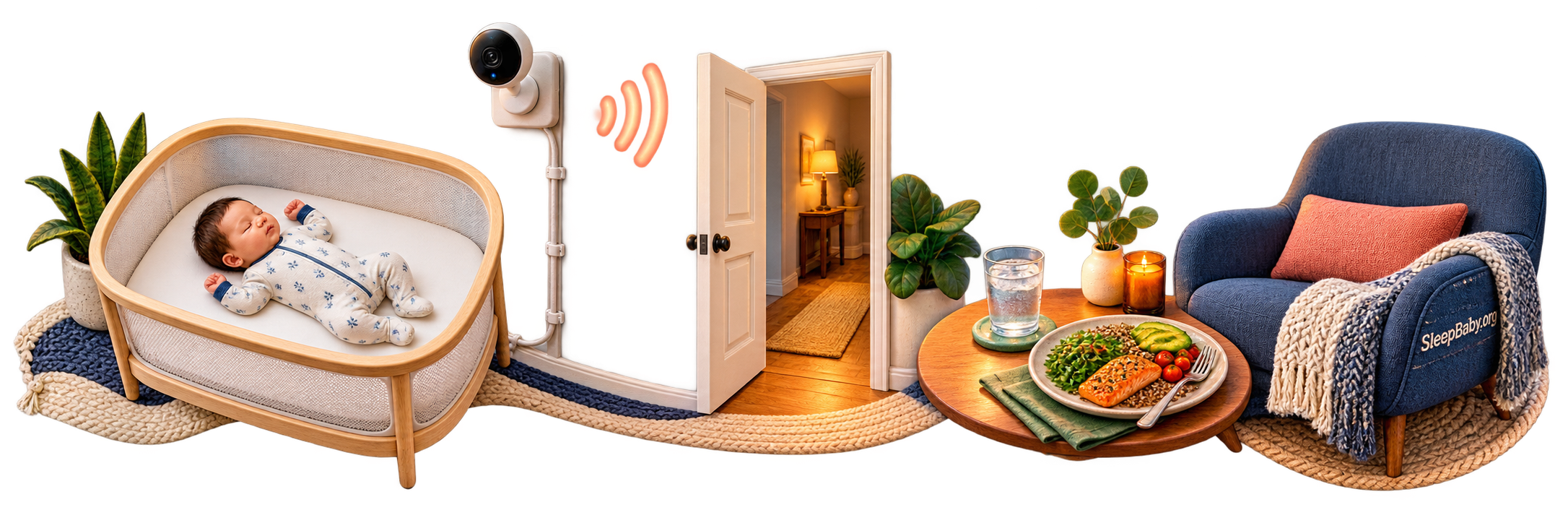
The illustrations show imagined travel equipment, not this product. See Guava’s dimensions and use details.
See the Lotus travel crib on Amazon
As an Amazon Associate, SleepBaby may earn from qualifying purchases.
Leave a little room for coming home
The return flight is another travel day, not the final line of the packing list. Keep clean clothes, feeding supplies, and a delay buffer for that journey too. If possible, leave the first day home lighter than usual so you aren’t trying to unpack, resume every commitment, and solve sleep at the same time.
Return to your familiar care and bedtime sequence, observe how your baby is doing, and make small adjustments instead of declaring a permanent sleep problem on the first night. Contact your clinician when symptoms or persistent difficulties need attention. A holiday does not cancel the usual reasons to seek help.
Your baby may not remember the coastline. You will remember carrying them into a new morning, or sitting together after an outing that was much shorter than planned. I would protect enough space for those moments. Before adding another reservation, make sure tomorrow still has a place to feed, a place to sleep, and permission to head back early.
Sources and references
Infant travel, Hawaii planning, safe sleep, and product facts checked September 20, 2026. Ask your child’s clinician about a specific concern.
- American Academy of Pediatrics: Flying with Baby
- Hawaii Tourism Authority: Hawaiian Islands
- American Academy of Pediatrics: A Parent’s Guide to Safe Sleep
- Federal Aviation Administration: Flying with Children
- Hawaii Department of Transportation: Child Passenger Safety Law
- Hawaii Tourism Authority: Frequently Asked Questions
- CDC Yellow Book: Traveling Safely with Infants and Children
- American Academy of Pediatrics: Melatonin and Children’s Sleep
- Hawaii Department of Health: Beach Safety for Families
- American Academy of Pediatrics: Sun Safety and Protection Tips
- CDC: Infant Formula Preparation and Storage
- National Park Service: Haleakalā Safety
- Hawaii Tourism Authority: Ocean Safety in Hawaii and Official Video
- Guava Family: Lotus Travel Crib Details
FOR THE EVENING AFTER THE OUTING
Let the last plan of the day be a simple one
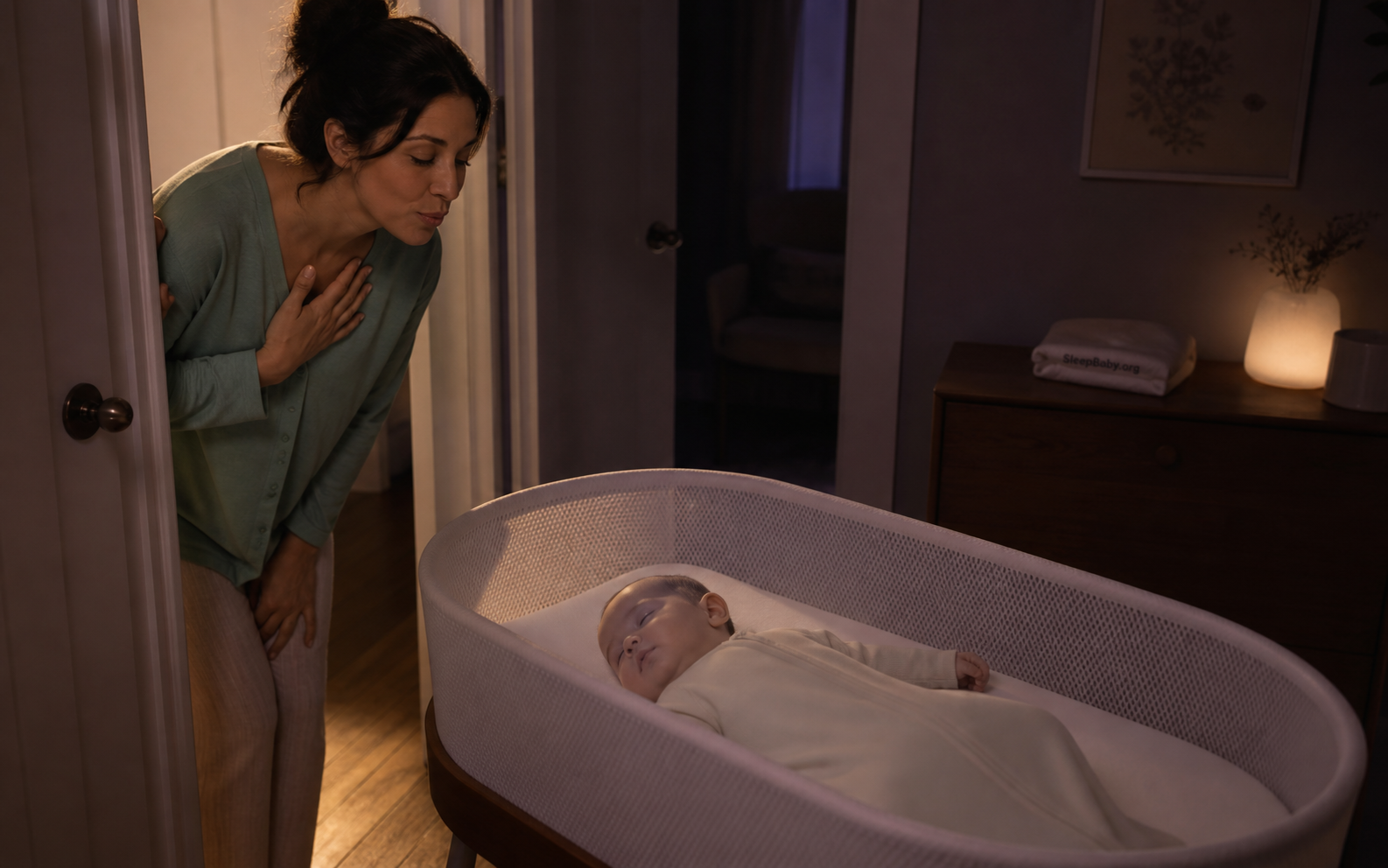
The beach bag is by the door, clean pajamas are ready, and the room can finally get quieter. If you want help thinking through everyday baby sleep, explore the free Baby Sleep Miracle presentation. Keep your baby’s needs and safe sleep at the center, wherever tonight happens.