
The bottle is beside the thermometer. Your baby finally looks drowsy, and now you are trying to understand what just happened: Did the ibuprofen make my baby sleep, or did feeling better simply make sleep possible? That difference matters, especially when the hour is late and “sleepy” can mean everything from peaceful relief to difficult to wake.
The answer before anything else
Ibuprofen is not a sleep aid and should never be given just to make a baby sleep
Ibuprofen treats pain and fever; it is not a sedative. A baby may rest after a correct, appropriate dose because discomfort eased, but sleep does not prove what was hurting and is not a reason to keep dosing. In the United States, do not give ibuprofen to a baby younger than 6 months unless the baby’s doctor specifically tells you to. If your baby is unusually hard to wake, cannot respond normally, has trouble breathing, turns blue or gray, has a seizure, collapses, or may have received an extra dose, treat that as a safety problem—not as successful sleep.127
I would not use the length of the nap as a home test for whether ibuprofen “worked.” I would look at the reason it was given, the baby’s age and current weight, the exact bottle and concentration, the measured amount, the time, and the baby’s condition now. That moves the night out of guesswork and into a sequence you can actually check.
Before we talk about bedtime, rule out the urgent lanes
There are moments when this article is not the right next tool. Call emergency services now if your baby is struggling to breathe, has blue or gray lips or skin, has a seizure, collapses, is unresponsive, or cannot be awakened in the way you normally can. Do not drive around the internet trying to decide whether deep sleep is a side effect.
If an extra dose may have been given, the amount is uncertain, a sibling may have reached the bottle, or you find medicine spilled with no reliable explanation, contact Poison Control right away in the United States at 1-800-222-1222 or use webPOISONCONTROL. You do not need to wait for symptoms, and you should not make the baby vomit unless a poison specialist specifically instructs you to.67
I am putting those boundaries high on the page because a parent asking whether medicine caused sleep may really be asking, “Is this amount of sleep normal?” The answer depends less on the clock than on responsiveness, breathing, color, feeding, hydration, and the reason the medicine was used.
Put tonight’s question in one of three lanes
When I feel the question getting tangled, I sort it by purpose and present condition. This is not a diagnosis. It is a way to keep a sleep problem from becoming a medicine decision—and to keep a medicine problem from being mistaken for a sleep victory.
THE GOAL IS SLEEP
Do not give ibuprofen
- There is no clear pain or fever reason.
- The hope is that medicine will make bedtime easier or extend a nap.
- The baby is simply overtired, off schedule, resisting a transfer, or waking often.
Next move: keep medicine out of the sleep plan. Check ordinary needs and use a nonmedical settling or schedule response.
THERE IS PAIN OR FEVER
Follow the exact medical and label path
- The baby’s age is eligible under the local label or a clinician gave specific instructions.
- You have the exact product, current weight, concentration, label, and supplied dosing device.
- You have checked other medicines for duplicate ibuprofen or another NSAID.
Next move: use only the directed amount for the real symptom, record the time, and reassess the baby—not merely whether sleep starts.12
SLEEPINESS IS UNUSUAL
Stop interpreting and get help
- The baby is much harder to wake or less responsive than usual.
- There may have been an extra dose, wrong concentration, or accidental access.
- Breathing, color, feeding, vomiting, urine output, or behavior is concerning.
Next move: use emergency services for emergency signs; use Poison Control for a possible dosing or ingestion error; call the baby’s clinician for concerning illness symptoms.

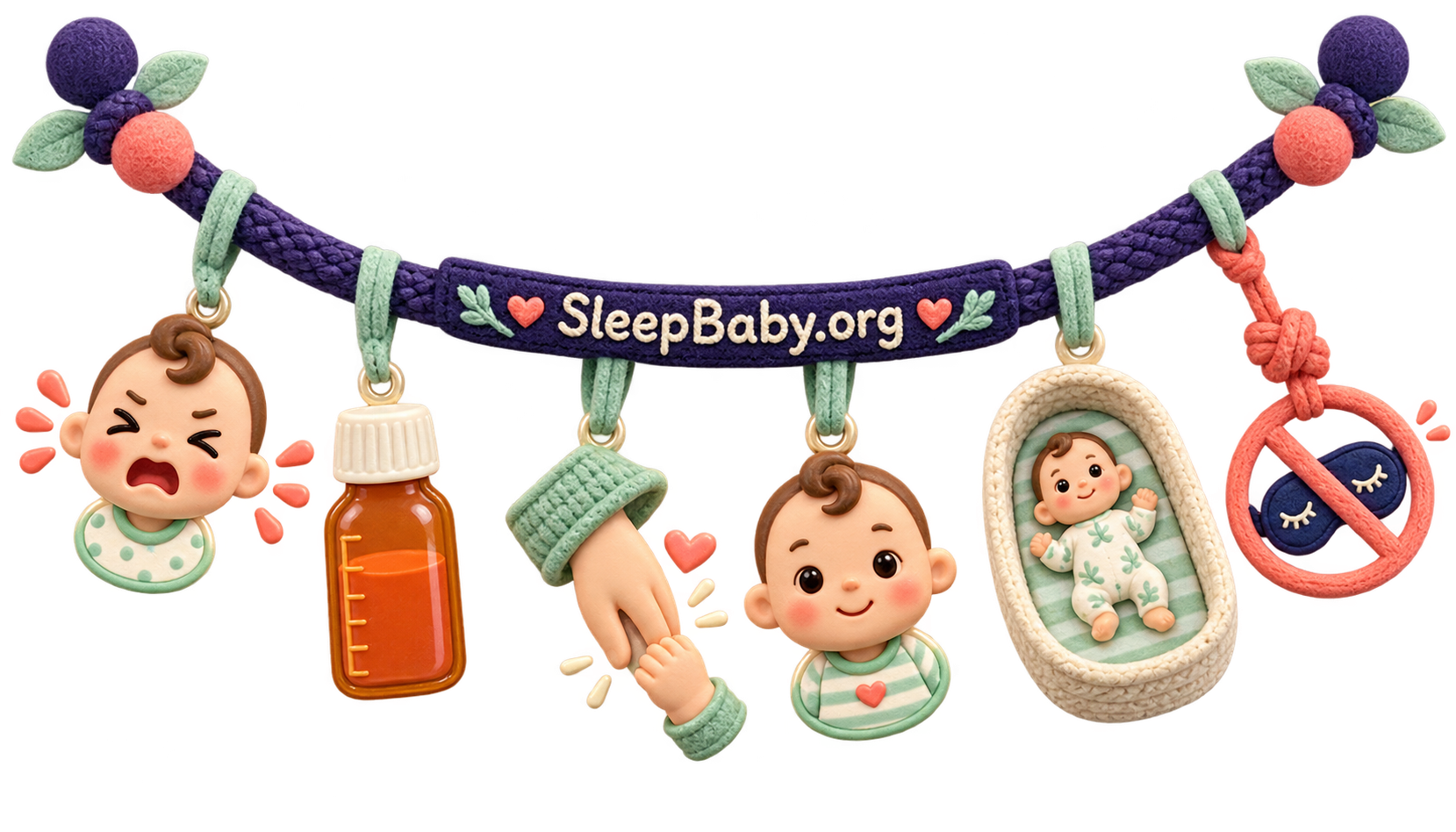
Why a baby may sleep after ibuprofen without ibuprofen being a sleep medicine
Pain and fever can make it hard to settle. If a correctly used medicine reduces that discomfort, a tired baby may finally be able to do what tired babies do: sleep. That is relief making room for sleep, not the drug acting as a bedtime sedative. The same principle applies when an adult rests after a headache improves; the rest does not turn the pain reliever into a sleeping pill.
The distinction protects you from two bad conclusions. The first is, “My baby slept, so ibuprofen must be a safe way to produce sleep.” It is not. The second is, “My baby slept, so the symptom must have been teething and everything is fine.” Sleep cannot identify the cause of pain or fever. A baby with an ear infection, a viral illness, post-vaccination discomfort, teething pain, or simple exhaustion may all sleep after being comforted. The response is one observation, not a diagnosis.
I also would not chase a minute-by-minute “kick-in time.” Products, symptoms, feeding, and individual circumstances differ, and a timer can create false confidence. Record when the dose was given, then watch the baby and follow the exact label or clinician plan. If pain or fever persists, worsens, or keeps returning, that is information for the clinician—not permission to shorten an interval or add another medicine on your own.
The age rule comes before the dose
In the United States, the American Academy of Pediatrics says not to use ibuprofen in children younger than 6 months unless the child’s doctor directs it. A current U.S. infant ibuprofen label likewise says to ask a doctor for babies under 6 months.12 That boundary matters because a search result, an older sibling’s bottle, or a friend’s experience cannot make a younger baby eligible.
Parents outside the United States may see different age cutoffs on local products or health-service guidance. That is not a reason to average the rules. It is a reason to use the label for the exact product in your hand and the advice of a clinician who knows the baby. Concentrations and directions can vary, even when the front of two packages looks similar.49
I would not copy an internet dosing chart into a late-night decision. Weight-based instructions depend on the exact concentration and product. If you cannot confidently answer “Which product is this?”, “What is my baby’s current weight?”, “What concentration does this label show?”, and “Which device came with it?”, pause and call a pharmacist or clinician. That pause is more useful than a guessed half-mark on a syringe.
01
Why?
Name the actual pain or fever reason. “To help sleep” does not qualify.
02
Who?
Confirm age eligibility, current weight, relevant health conditions, and clinician instructions.
03
What?
Read the active ingredient, concentration, warnings, expiry, and other medicines already given.
04
How?
Measure in milliliters with the supplied device, record the time, and follow the exact interval and maximum on the label or clinician plan.
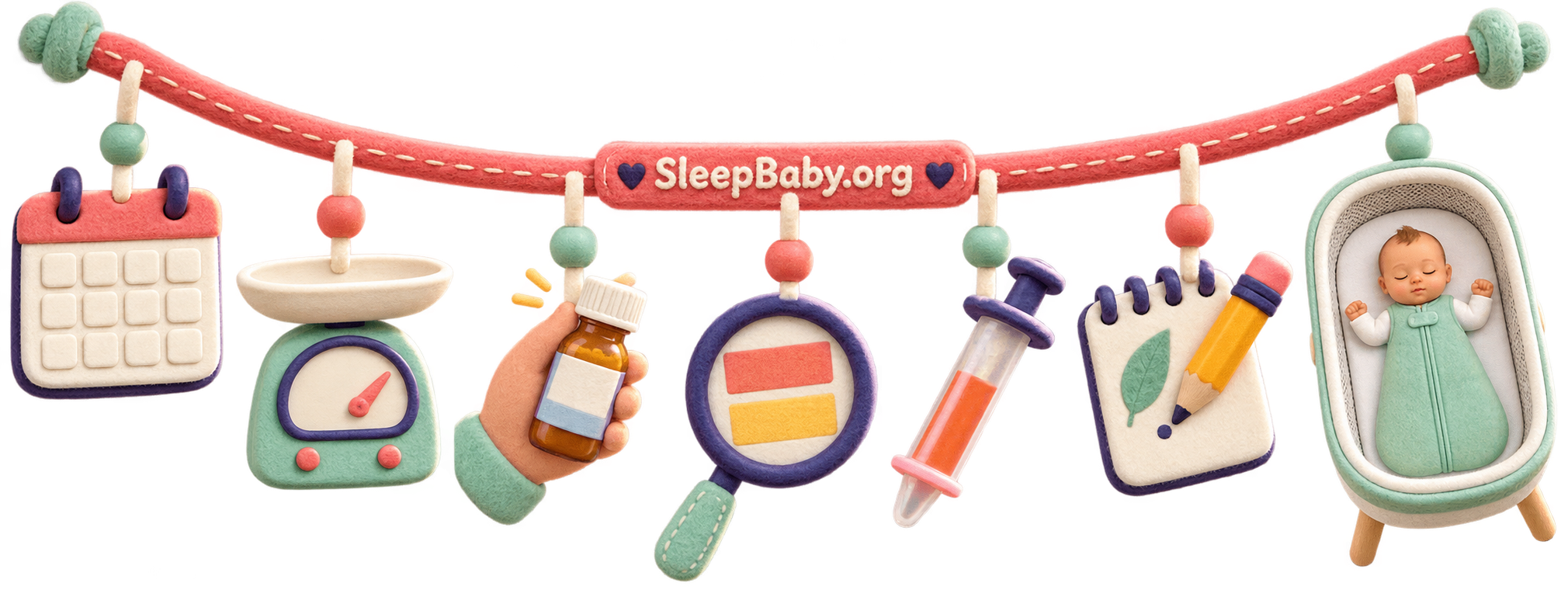
The 1:42 a.m. trap is treating the outcome as the purpose
A clearly labeled hypothetical Kacey-and-Benjamin scene—not a personal memory or medical evidence
The bottle, the bassinet, and the wrong conclusion
Picture me, Kacey, standing in a dim kitchen at 1:42 a.m. In this hypothetical, Benjamin has a real, clinician-understood pain reason, is old enough for the exact product, and has received the label-directed amount with its syringe. Later, hypothetical Benjamin is asleep. My tired brain offers a wonderfully convenient sentence: “Ibuprofen makes Benjamin sleep.”
That sentence skips every important step. Kacey did not give medicine because Benjamin needed sleep; Kacey gave it because hypothetical Benjamin had a valid symptom and the exact directions were followed. Benjamin may be sleeping because the room is dark, the feed is finished, the pain eased, and it is 1:42 in the morning. The sleep does not tell Kacey which factor mattered most.
So hypothetical Kacey checks what can actually be checked: Benjamin’s breathing and color look usual; the measured dose and time are written down; the bottle is recapped and put away; the bassinet is firm, flat, and empty. Kacey does not add a dose because Benjamin stirred, does not prop the mattress because he had medicine, and does not decide tomorrow night’s bedtime can begin with ibuprofen.
The scene is useful because it exposes the mental shortcut, not because Kacey or Benjamin proves a medical claim. The safer sentence is: “Benjamin had an appropriate pain-relief dose, looks normally responsive, and can now return to ordinary safe sleep.”

That is the reasoning I want available when fatigue starts flattening cause and effect. A medicine can be appropriate for a symptom without becoming part of the bedtime routine. A baby can sleep after relief without the nap serving as proof of safety. And a parent can notice improvement while still watching for the illness pattern that made the dose necessary.
Measure liquid medicine like the label matters—because it does
Infant and children’s liquid medicines can look familiar while having different concentrations or directions. Read the Drug Facts panel every time you use a new bottle. Match the active ingredient, concentration, age and weight directions, warnings, interval, and maximum. Check whether another fever, pain, cold, or combination product already contains ibuprofen or another NSAID. When you are unsure, ask a pharmacist before giving it.248
Use the device that came with that medicine and measure in milliliters. A kitchen teaspoon is not a dosing tool; household spoons vary. An oral syringe is generally the most accurate way to measure small liquid amounts. Bring the baby upright enough for safe administration, place the syringe gently along the inside of the cheek, and deliver slowly enough for swallowing. Do not aim at the back of the throat or squirt a full amount quickly.4
The label-to-crib handoff
Five jobs, kept separate
- Verify: correct baby, eligible age, current weight, real symptom, exact product, and no duplicate ingredient.
- Measure: use the supplied syringe or cup on a level, well-lit surface; recheck the mark before giving.
- Give: use a calm upright position and slow inside-the-cheek delivery; do not mix an uncertain amount into a whole bottle.
- Record and secure: note the medicine, amount, and time; relock the cap and put both bottle and device up, away, and out of sight.
- Return to sleep safely: once care is complete, place the baby on the back in the firm, flat, empty infant sleep space.

See the syringe angle and pace
AboutKidsHealth demonstrates how to give liquid medicine
A written dose direction tells you an amount; it does not show the hand position. This Hospital for Sick Children video is here for that narrow visual job. Your baby’s exact product label and clinician remain the authority for whether and how much to give.
Watch “How to Give Your Child Liquid Medicines” on YouTube.
Written takeaway: read the exact label, measure with the proper oral syringe, keep the baby supported, aim toward the inside of the cheek, and give the liquid slowly enough to swallow.
Reasons to pause before giving ibuprofen
“Old enough” is not the only suitability check. Ibuprofen can be a poor choice in some circumstances, and the warning label is not decorative. Ask a clinician or pharmacist before use when the baby is dehydrated or losing a lot of fluid through vomiting or diarrhea, has kidney disease, stomach or bleeding problems, has had an allergic reaction to ibuprofen, aspirin, or another NSAID, has asthma that may react to these medicines, or is taking another medicine that could interact.289
Dehydration deserves special attention because a child who has not been drinking or has lost a lot of fluid through vomiting or diarrhea may need a clinician’s advice before ibuprofen. If you are worried a baby is not taking in or keeping down enough fluid, pause and call rather than relying on fever medicine; the exact label and clinician must guide whether ibuprofen is appropriate.29
NHS guidance also says not to give ibuprofen for chickenpox unless a doctor recommends it. Local labels and public-health advice differ, so I would not translate one country’s permission into another country’s bottle. Use the instructions that belong to the child, product, and place you are actually in.9
Medicine does not change the safe-sleep surface
Once the measuring and comfort care are finished, the sleep rules return unchanged: place the baby on the back for every sleep, on a firm, flat, noninclined surface intended for infant sleep, with a fitted sheet and no pillows, blankets, positioners, bumpers, toys, or weighted objects.5 A fever does not make an incline safer. Teething does not make side sleeping safer. Reflux, congestion, or a dose of medicine does not turn a swing, car seat, adult bed, sofa, or caregiver’s chest into the planned overnight sleep space.
If you hold the baby during administration or comfort, stay awake and move them to the proper surface when you are done. I would prepare that surface before measuring anything so the last step of the handoff is obvious. The medicine bottle belongs secured away; the baby belongs alone in the clear sleep space.

Should I wake a sleeping baby for the next dose?
The label’s interval is not an automatic nighttime appointment. American Academy of Pediatrics guidance and the current infant label say a repeat dose may be given every 6 to 8 hours if needed. Whether this baby should be awakened still depends on the symptom and the exact clinician or label plan. I would not turn the earliest allowed interval into a standing dose when the need is uncertain.12
If the baby’s clinician gave a schedule after a procedure or for a specific condition, follow that individualized plan, including any instruction about waking. If the directions are unclear, call the clinician or pharmacist rather than improvising overnight; the AAP specifically advises asking when the amount, frequency, or duration is uncertain.4 Write down each dose so another caregiver can see what was given and when.
The useful reassessment is broader than the clock: Does the baby still appear to have the symptom? Is the baby feeding and urinating? Is the temperature or pain pattern improving, persisting, or worsening? Is the baby normally responsive? Repeated nighttime use without a clear plan is a reason to speak with the clinician, not a sleep strategy.
What if teething seems to be the reason?
Teething can make gums sore and sleep messy, but it should not become a blanket explanation for every fever or difficult night. The American Academy of Pediatrics notes that teething does not cause a true fever of 100.4°F (38°C) or higher.3 A true fever, a baby who looks ill, poor feeding, dehydration, vomiting, rash, or unusual sleepiness needs its own assessment.
If an age-eligible baby seems to have genuine teething pain, ask whether the exact label or the baby’s clinician supports ibuprofen for that symptom. That is still symptom care, not sleep medicine. Do not use a difficult bedtime or later sleep as proof that teething was the cause, and keep watching for the true-fever and illness signs above.123
If you find yourself reaching for ibuprofen most nights because sleep falls apart, bring the pattern to the pediatrician or dentist. Include how long it has lasted, what the gums look like, temperatures, feeding, wet diapers, other symptoms, and how often medicine was used. “It helps sleep” is less informative than “pain behavior eased, but the baby has needed it on five nights.”
When the problem is sleep rather than pain
If there is no pain or fever indication and the baby is simply waking often, resisting bedtime, or running on a new rhythm, put the medicine away. Check hunger, diaper, temperature of the room, light, noise, wake time, and the way the last nap ended. A recurring timing problem needs a timing response.
For that lane, our guide to building a flexible baby sleep schedule can help you organize morning light, age-appropriate awake time, naps, and a repeatable wind-down. I would use that only after the health question is settled; a schedule guide should never delay care for fever, breathing trouble, dehydration, pain, or unusual responsiveness.
If the only goal is sleep
Try the smallest nonmedical reset
- Keep lights low and the response boring enough that nighttime still feels like nighttime.
- Meet the real need—feed, diaper, temperature, closeness—without adding medicine “just in case.”
- Use one familiar settling cue, then place the baby on the back in the clear sleep space.
- Tomorrow, inspect the whole day rather than blaming one wake: morning start, naps, feeds, and the final awake stretch.
The dose is not finished until the medicine is put away
A bottle left on a nightstand “because another dose might be due” is still an accessible medicine. The CDC recommends putting medicines up, away, and out of sight after every use, relocking the safety cap, and not leaving them bedside for later.6 Keep the original label and child-resistant closure, and keep the dosing syringe with that exact bottle so it does not migrate to a different concentration.
I would make the storage step part of the medication log: give, record, recap, secure. If more than one adult is caring for the baby, the written record should show what was given and when; the storage location should be high and known to the adults but out of children’s sight and reach.

The questions that usually arrive after the baby falls asleep
Is sleepiness a normal side effect of infant ibuprofen?
Drowsiness is not the intended effect and should not be the goal. A tired baby may sleep when pain or fever improves, but unusual difficulty waking, limpness, poor response, abnormal breathing, or a dramatic behavior change is not something to explain away as a normal bedtime effect. Seek prompt help based on the symptoms and use Poison Control if a dosing error or ingestion may have occurred.
How quickly should ibuprofen make my baby sleep?
It should not be expected to make a baby sleep at all. Do not use an online onset time as a countdown to sedation or as permission to redose. The useful outcome is whether the indicated pain or fever is improving while the baby remains normally responsive. Follow the exact label or clinician plan and call if symptoms persist or worsen.
Can I give ibuprofen “just in case” before bedtime?
No. Give medicine for a real, appropriate symptom, not to prevent an imagined bad night. “Just in case” use makes it harder to notice the actual pattern, adds dosing risk, and can turn medicine into a sleep association for the adults even though it is not a sleep treatment.
Can I alternate ibuprofen and acetaminophen overnight?
Do not build an alternating plan from generic online advice. If a clinician wants your baby to use both medicines, ask for written directions that identify each exact product, amount, interval, and daily limit. If no such plan exists, call the clinician or pharmacist before combining products; the AAP advises asking whenever the amount, frequency, or duration is uncertain.4
What if my baby spits some of the dose out?
A generic article cannot tell how much was swallowed or whether any further amount is appropriate. Call a pharmacist or clinician with the exact product, concentration, amount attempted, time, and baby’s age and weight. For any later dose they advise, follow the exact directions and use the supplied device with slow inside-the-cheek delivery.24
What if my baby vomits after a dose?
Do not make the next-dose decision from a generic rule. Call the baby’s clinician or pharmacist with the exact product, dose time, vomiting time, age, weight, and current symptoms. Ongoing vomiting or concern that the baby is not keeping down enough fluid also matters because the infant label tells caregivers to ask a doctor when a child has not been drinking or has lost a lot of fluid.2
Could the medicine be masking an illness?
It can reduce pain or fever without treating the cause. That is why I would keep watching the whole baby: breathing, color, responsiveness, feeding, wet diapers, rash, vomiting, and the return of symptoms. Improvement is welcome, but it does not erase young-infant fever rules or warning signs.
When should repeated nighttime use trigger a call?
Call when you are unsure of the diagnosis, the baby needs medicine repeatedly or longer than the label allows, fever or pain keeps returning, the baby is worsening, feeding or hydration changes, or you are relying on medicine to get through bedtime. Bring the bottle and your written log so the clinician can see the exact product, concentration, amount, and timing.
A short plan for tonight
- Name the lane. Sleep goal, real pain/fever care, or unusual sleepiness/possible error.
- Escalate first when needed. Emergency services for emergency signs; Poison Control for a possible extra dose or ingestion; immediate pediatrician call for a baby 3 months or younger with a rectal temperature of 100.4°F (38°C) or higher.
- If medicine is appropriate, use the exact path. Confirm age, current weight, product, concentration, warnings, other medicines, supplied device, and written timing.
- Watch the baby, not just the nap. Relief may make sleep possible; normal breathing, color, responsiveness, feeding, and hydration are the more useful observations.
- Close the loop. Record the dose, relock and secure the medicine, and return the baby to a back, firm, flat, empty sleep space.
Now return to the bottle beside the thermometer. The baby is asleep, but you no longer need sleep to answer a medical question it cannot answer. You know why the medicine was—or was not—appropriate. You know what was measured. You know which changes would move the night into urgent help.
I would let ordinary, normally responsive sleep be ordinary sleep. I would never use ibuprofen to manufacture it. Relief can open the door to rest; it does not turn a pain reliever into a bedtime tool.
Once the medicine question is settled
Build the bedtime plan around sleep—not pain medicine
You separated relief from sedation, checked the safety lane, and returned the bottle to its proper place. If ordinary wakes are still unraveling the night, SleepBaby can help you shape the next practical step without turning medicine into a settling cue.
Sources
- American Academy of Pediatrics / HealthyChildren.org: Ibuprofen Dosing Table for Fever and Pain
- DailyMed: Infants Ibuprofen Concentrated Drops—current OTC Drug Facts label
- American Academy of Pediatrics / HealthyChildren.org: Fever and Your Baby
- American Academy of Pediatrics / HealthyChildren.org: How to Use Liquid Medicines for Children
- Centers for Disease Control and Prevention: Helping Babies Sleep Safely
- Centers for Disease Control and Prevention: Up and Away medication safety toolkit
- National Capital Poison Center / Poison Control: NSAIDs—ibuprofen and naproxen
- MedlinePlus: Ibuprofen
- NHS: Who can and cannot take ibuprofen for children






What viewers said10 comments · 4 replies+
Archived comments from the original Baby Sleep Miracle presentation. Not independently verified by SleepBaby.org; individual experiences vary.
Thank you so much for this video! I had no idea about the dangers of baby swings :O
Hi Mary-Ann. I have a question: Is method in any way similar to the ones recommended by Dr Bucknam, Dr. Weissbluth or Dr. Karp? We tried those but none of them help.
Hi Regina, thank you for your question. The short answer is no. The techniques I share in my guide are based on newest scientific research and this is why I have never seen any approach similar to the one I recommend.
This method really works! I tried it on my son Jesus and after just one week he went from waking up more than 5 times a night to waking up just once or twice. You are a lifesaver, Mary-Ann!
I'm truly impressed with how much information you share in your video. And all for free! I can feel that you truly care about mothers like myself, and that's hard to find these days. I have recommended your site to several of my friends already.
Mary-Ann, our child suffers from autism. Is your approach still suited?
Chloe, I made sure my method can be used with any child, even babies who are special like yours. Please note that I'm not a doctor and that I always advice to consult with your physician because nothing is more important than the safety and well-being of your love.
Hallo Mary-Ann, I'm from Germany. Do you have your guide in German?
Hello Heide, we do! Normally you should already see our video in German. If not, please contact our support so they can guide you
Thenk you for your answer, Mary-Ann!
I just completed your approach and I have to say, it worked almost too well. Yes, it took a bit of getting used to with your bedtime routine but the difference is huge. My son George used to take 1 hours to go down and now he's firmly asleep in no more than 10 minutes! You're the best!
It seems I'm the only man watching this video, lol! What you shared about the 'emotional backpack' made immediate sense to me and I can't wait to help my little girl Mila to unpack it!
Hey there, just discovered your site and this really sounds different. Just wanted to say thanks for sharing :)
For everyone who's still thinking about getting Mary-Ann's guide I want to advise you to go ahead. I wasn't sure myself but now I'm so thankful I invested in this program. It made a huge difference in our life as a family and yes, my baby girl does sleep through the night now.