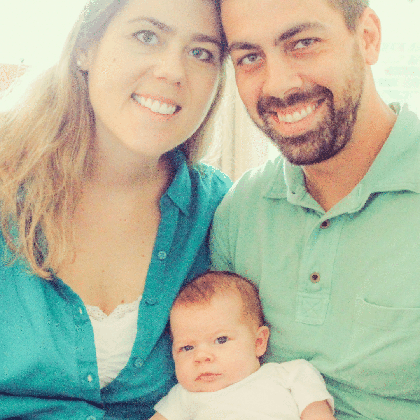

The burp cloth is still on your shoulder. Your baby has gone heavy and warm against you, eyes closed, while you wait for one last burp that seems to have missed its appointment. Now the question feels much bigger than it did before the feed: Can a baby sleep with wind, or do I need to wake them and start over?
The quiet answer first
A comfortable baby can usually sleep without producing a burp
If your baby is breathing normally, looks settled, fed normally, and has no concerning symptoms, you generally do not need to wake them solely to force out wind. A burp is not a safety clearance certificate. Put your baby down on their back on a firm, flat, level sleep surface with only a fitted sheet. Do not raise the mattress, use a wedge, or place anything on the baby’s chest or tummy. If your baby is uncomfortable, pause for a brief, gentle wind attempt while they are awake. If they seem unwell, have abnormal vomiting, feeding trouble, a swollen belly, breathing difficulty, fever, unusual sleepiness, or persistent severe distress, the question is no longer just about wind—contact a healthcare professional promptly.345
I would make the next decision from the baby in front of me, not from whether the room has heard a satisfying burp. Some babies announce swallowed air with the subtlety of a brass band. Others simply relax, pass gas later, and get on with sleeping. The important distinction is not burped versus did not burp. It is settled, uncomfortable, or unwell.
First decide which baby is in front of you
At night, ordinary uncertainty can begin dressing like an emergency. A useful way to lower the temperature is to sort what you see into one of three lanes. This is not a diagnosis. It is a way to decide whether to proceed with safe sleep, pause for simple comfort, or stop troubleshooting at home.
SETTLED
Let sleep happen
- Breathing looks easy and usual.
- Color and responsiveness are normal for your baby.
- The feed went normally and your baby looks relaxed.
- There is no repeated crying, forceful vomiting, or swollen belly.
Next move: place baby on the back in the prepared firm, flat, empty sleep space. You do not need to keep patting until a burp appears.
UNCOMFORTABLE
Pause and observe
- Fussing starts during or just after the feed.
- Your baby repeatedly pulls away, arches, clenches, or draws up the legs.
- They are gulping, clicking, coughing, or losing the seal during feeds.
- The same pattern returns often enough that you can describe it.
Next move: try one or two minutes of supported upright burping, then reassess. When awake, gentle bicycle legs or tummy massage may help. If the pattern repeats, discuss feeding mechanics and symptoms with your baby’s clinician or feeding professional.1
UNWELL
Get medical help
- Breathing is difficult, very fast, noisy, or the color looks blue, gray, or unusually pale.
- Vomit is green, yellow, bloody, or forceful/projectile; there is blood in stool.
- The belly is markedly swollen, the baby is difficult to wake, or the crying is severe and different.
- There is fever, poor feeding, fewer wet diapers, weight loss, or an acutely unwell appearance.
Next move: seek urgent medical advice according to the symptom and your local emergency system. Do not keep treating a concerning pattern as ordinary wind.56
The lane can change. A baby who was merely squirmy may settle after a pause; a baby whose vomiting becomes forceful or whose breathing changes has moved out of home wind troubleshooting. I would rather make that change explicit than bury every possibility under the word “gas.”

What “wind” actually means—and what it cannot tell you
Wind is simply air or gas in the digestive tract. A baby can swallow air while feeding or crying. Air near the top of the digestive system may come back as a burp; gas farther along usually leaves from the other end. Digestion also produces gas. That part is ordinary biology, not evidence that anything has gone wrong.12
The frustrating part is that babies have a small repertoire for many different problems. Hunger, fatigue, a fast milk flow, reflux, a wet diaper, constipation, illness, overstimulation, and swallowed air can all produce some combination of fussing, arching, grimacing, leg drawing, or crying. Passing gas during a crying spell does not prove gas caused the crying. Sometimes the crying caused more air swallowing. Sometimes the gas is merely present while something else is happening.
This is also why I would not spend an evening trying seven remedies in a row. If you burp, change the bottle, massage the tummy, switch formula, add drops, alter the breastfeeding parent’s diet, and delay bedtime all at once, you will have no idea what helped—or whether the baby was simply ready to settle. Start with the least disruptive observation: What happens during the feed, immediately after it, and at the next put-down?
The pattern is more useful than the noise. Notice whether fussing begins with a fast let-down, a bottle that empties very quickly, repeated clicking or coughing, a frantic hungry feed, a large volume, or lying flat while still awake after a feed. Then notice whether a brief pause changes anything. That gives a clinician or feeding professional something more useful than “very gassy.”
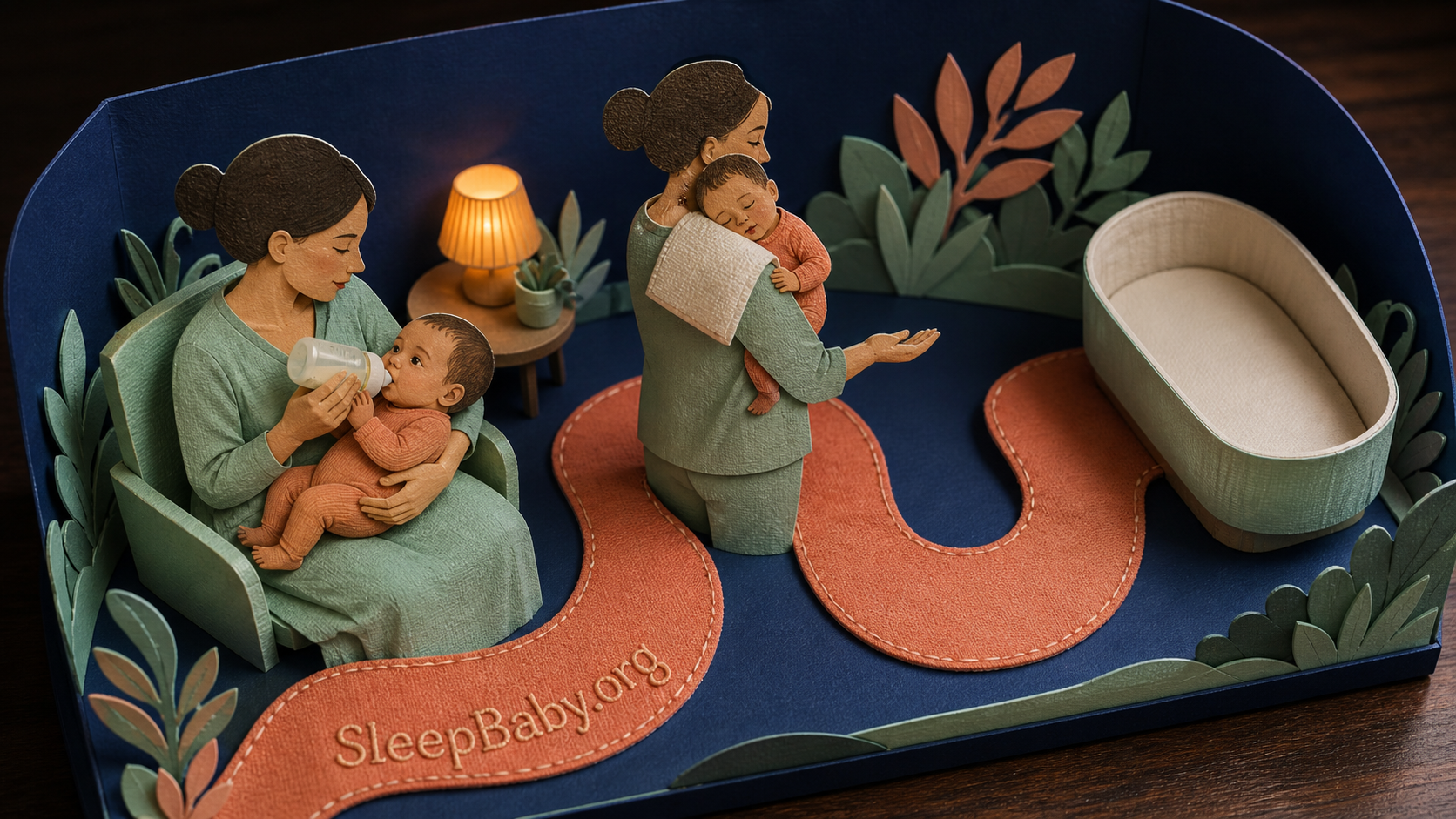

Use a short feed-to-sleep handoff, not an endless burp hunt
There is no universal rule that every baby must burp at a particular minute or after a particular amount of milk. The NHS advises following the baby’s cues: some need a pause during the feed, some after, and some appear fine without much help. Its practical limit is reassuringly ordinary—you do not need to spend ages winding a baby; a couple of minutes is enough.1
I like a four-part handoff because it keeps the feed, the comfort check, and safe sleep from becoming one long blurry ritual.
-
Feed. Support a comfortable latch or bottle position. Watch the pace. If your baby is gulping, coughing, clicking, leaking milk, or pulling away, pause instead of pushing through the fuss.
-
Pause. Hold the head and neck securely, keep the trunk comfortably straight, and try a gentle rub or pat in a supported burping position. Do this while you are awake and holding the baby—not by propping the baby in a sleep product.
-
Observe. Is the baby relaxed, breathing normally, and finished feeding? Or are they still repeatedly distressed, coughing, vomiting, or trying to feed? The observation decides the next step; the burp sound does not.
If your baby falls asleep midway through that sequence and looks comfortable, you can keep the pause brief and move to the safe sleep surface. For the narrower question of a baby who has already drifted off without burping, I would use our guide to what to do when a baby falls asleep and will not burp; it walks through that exact handoff without turning the missing burp into a crisis.
A hypothetical Kacey-and-Benjamin night
When the burp starts feeling like a receipt
Imagine me at 1:19 a.m. with Benjamin asleep against my shoulder, one hand supporting his head and the other patting with the weary determination of someone trying to restart a very small router. The room is quiet. His breathing is easy. The bassinet beside me is bare and ready. Nothing about him is asking for help, but I have decided the night cannot proceed until he produces one official burp.
That is the moment I would want Kacey-the-editor to interrupt Kacey-the-tired-parent: What information are you waiting for? If Benjamin were arching, coughing, pulling away, vomiting forcefully, or looking distressed, I would respond to those signs. If he were relaxed and asleep, I would stop treating a sound as the price of admission and put him down safely.
The hypothetical scene is not medical evidence, and it is not a claim about Benjamin’s real history. It performs one practical job: it shows how easily a reasonable feeding habit can become a compulsory nighttime ritual even after the baby has stopped asking for it.
That same mental check works at 1:19 p.m. too. Wind is not more dangerous because the lights are off. What changes at night is often our tolerance for uncertainty. We want one unmistakable sign that the feed is finished and the baby will stay asleep. Babies, with their legendary respect for administrative procedure, do not always provide one.


How to try for wind without fully waking a sleepy baby
If your baby looks uncomfortable and is still awake enough to handle, choose one supported position and keep the attempt gentle. More force is not more effective. A baby’s head and neck need support, and the throat should never be pressed.
Over your shoulder
Rest the baby’s chin on your shoulder while supporting the head and shoulder area. Keep the body comfortably straight, then rub or pat the back gently. A slow walk may help some babies settle.
Sitting on your lap
Face the baby away from you. Support the chest, chin, and jaw with one hand without pressing the throat. Lean the baby forward slightly and rub or pat the back with the other hand.
Across your lap while awake
Lay the baby tummy-down across your lap only while awake and directly supported. Keep the head higher than the chest, support the chin without throat pressure, and rub the back gently. This is a burping position, not a sleep position.
After a minute or two, reassess. If your baby has not burped but looks peaceful, you can stop. If they are alert and still uncomfortable, gentle bicycle-leg movements or a light clockwise tummy massage may be worth trying. Those are awake comfort measures. They do not belong inside the crib, and tummy-down soothing does not become permission for tummy-down sleep.1
See the hand support
UNICEF demonstrates three basic burping positions
Technique is easier to understand when you can see where the supporting hand goes. The video is included for that visual job—not because every baby must burp before sleep.
Watch “Baby basics: How to burp your baby” on YouTube.
Written takeaway: support the baby’s head, neck, chest, and jaw; avoid throat pressure; rub or pat gently; and stop after a brief attempt if your baby is comfortable.
If the wind keeps returning, inspect the feed before buying remedies
A repeated wind-and-sleep problem often starts earlier than bedtime. I would watch one complete feed in ordinary light if possible. Night is a poor laboratory: everyone is tired, the latch is harder to see, and a bottle that emptied “pretty quickly” can feel like the only available measurement.
During breastfeeding
Listen and look for a deep seal, rhythmic swallowing, and comfortable breathing. Clicking, repeated loss of suction, coughing, spluttering, pulling off at the start of let-down, or milk spraying quickly may mean the baby is working with a fast flow or a latch problem. Pause, let the baby recover, and consider changing position. If the pattern repeats, a lactation professional or pediatric clinician can watch a feed and help separate normal noise from a feeding issue.
I would not jump from one windy evening to eliminating dairy, soy, or half the refrigerator. A true milk-protein allergy is not diagnosed from gas alone; clinicians look for a broader pattern such as feeding pain, vomiting, blood or mucus in stool, eczema in some cases, and poor weight gain. Restrictive dietary or formula changes deserve individualized guidance, especially in a young infant.6
During bottle feeding
Watch the relationship between milk flow and the baby’s ability to suck, swallow, and breathe. A teat that flows too quickly can lead to gulping and more swallowed air. A very hungry baby may also drink frantically. Try a calmer start, responsive pauses, and a nipple flow suited to your baby’s feeding skill rather than choosing by age label alone. Keep the bottle positioned so the nipple remains filled with milk, but do not force the baby to finish a set volume.2
If a baby repeatedly coughs, chokes, turns blue or gray, has prolonged feeds, tires during feeds, cannot coordinate sucking and breathing, or is not gaining well, stop experimenting with bottles and seek clinical feeding advice. That is a different problem from an occasional missing burp.
Wind does not change the safe-sleep surface
This is the boundary I would keep fixed even on a difficult night: place an infant on the back for every sleep on a firm, flat, level surface intended for infant sleep, with only a fitted sheet. Keep pillows, blankets, toys, bumpers, positioners, wedges, and other objects out. Back sleeping remains the recommendation for babies who spit up or have reflux; healthy babies’ anatomy and gag reflex help protect the airway.34
While awake and held
- Pause the feed and support a gentle burp.
- Hold upright briefly if that is comfortable for both of you.
- Try gentle bicycle legs or tummy massage.
- Observe feeding pace, latch, nipple flow, vomiting, and comfort.
Never add for sleep
- No raised mattress, cot incline, wedge, nest, or positioner.
- No side or tummy placement to “help gas escape.”
- No rice bag, weighted object, heat pack, or pressure on the chest or tummy.
- No routine sleep in a swing, bouncer, car seat, carrier, or on an adult’s chest.
The old version of this article suggested keeping a windy baby’s head slightly elevated. That advice is removed because it conflicts with current safe-sleep guidance. The NHS specifically says babies with reflux should sleep flat on their backs and caregivers should not raise the head of the cot or Moses basket. The same rule applies when the worry is wind.5
A bag of rice or another weighted object on a sleeping baby’s chest can look like a clever substitute for a caregiver’s hand. It is not safe; it can create a suffocation hazard. The AAP’s answer is unambiguous: keep the sleep area empty.8 I would rather tolerate one more fussy transfer than solve a comfort problem by changing the physics of the crib.

Wind, colic, and reflux are not three names for the same thing
These words often get traded around during a hard evening, but they point to different observations.
- Wind
- Air or gas in the digestive tract. It may be swallowed during feeding or crying, released as a burp, or passed through the intestines.
- Reflux
- Stomach contents move back into the esophagus and sometimes the mouth. Spit-up is common in infancy, but pain, feeding problems, poor growth, blood, green vomit, or forceful vomiting need assessment.
- Colic
- A pattern of prolonged crying in an otherwise healthy young baby, usually beginning in the early weeks and improving with time. Wind may be present, but it does not establish the cause of the crying.
I would be cautious with any remedy sold as though these labels were interchangeable. The NHS does not recommend anti-colic drops, herbal remedies, or probiotic supplements as routine colic treatments because evidence of benefit is lacking.7 Simeticone may be used in some circumstances, but “my baby seems windy” is not enough information for me to choose a medicine, dose, or diagnosis on a parent’s behalf. Ask your pediatrician, pharmacist, health visitor, or other qualified clinician about your exact baby.
Gripe water deserves the same restraint. Formulas vary, evidence is limited, and a bottle marketed for “wind” can turn a symptom into a shopping category before anyone has looked at the feed. If the baby is comfortable, no remedy is needed. If the baby is repeatedly distressed, the useful next purchase may be none at all—the next useful step may be a witnessed feed or clinical assessment.
Why wind can feel worse at night even when it is not more dangerous
Night compresses the decision. During the day, a baby can squirm, pause, burp, and return to feeding without every movement threatening the only sleep window in sight. At night, one grunt can make a parent wonder whether putting the baby down will cause pain, reflux, choking, or a 22-minute encore.
Babies also have noisy active sleep. They may grunt, strain, lift their legs, flutter their eyelids, briefly cry out, and settle again without being fully awake. If breathing and color are normal and the baby is safely positioned, give yourself a moment to observe before scooping them up. Some “gas waking” is a parent hearing normal sleep noise and intervening just as the baby was cycling onward.
That does not mean ignoring sustained crying or discomfort. It means asking one clean question: Is my baby awake and asking for help, or am I reacting to noise from a sleeping baby? If the answer is unclear, watch the chest, color, body tension, and direction of the pattern for a brief moment. Breathing trouble or abnormal color is never a watch-and-wait exercise.
If your baby truly wakes upset soon after feeds, note the start of the feed, the amount or side, the pace, any coughing or clicking, whether there was spit-up or vomiting, how long upright holding lasted, and what soothed them. Two or three precise observations will help more than a week of writing “gas?” beside every wake.
What I would do tonight
- Keep the safe sleep space ready before the feed. Clear, flat, and nearby is easier to use when your arms are full and your judgment is tired.
- Watch the feed, not the clock. Pause if the baby gulps, clicks, coughs, loses the latch, or becomes fussy. Do not force the last ounces or minutes.
- Try one brief burping position. Support the head and neck; rub or pat gently. Stop after a couple of minutes if the baby is comfortable.
- Sort the baby into the right lane. Settled means safe sleep. Uncomfortable means simple awake comfort and observation. Unwell means professional help.
- Put baby down on the back. Firm, flat, level, fitted sheet only. Wind does not earn an incline or extra object.
- Write down a repeated pattern, not every noise. Feeding pace, distress, vomiting, stools, wet diapers, and growth matter more than the number of burps.
The questions that usually arrive after the lights go out
Does a baby need to burp after every feed?
No. Babies differ, and not every baby burps every time. Some breastfed babies swallow very little air. Some babies burp during a position change without assistance. If the feed is complete and the baby looks comfortable, I would not keep waking or patting solely to produce a sound.23
Should I wake a sleeping baby to burp?
Usually not if the baby is healthy, breathing normally, and settled. You may hold them upright briefly if that is already part of the feed, then transfer to the proper sleep surface. Newborn feeding plans can be different: some newborns need waking to feed because of age, jaundice, prematurity, weight, or a clinician-directed plan. That is a feeding requirement, not a wind requirement.
Can my baby sleep on the side or tummy to release gas?
No. Put an infant on the back for every sleep. Tummy-down positions may be used while the baby is awake and directly supervised—for example, across your lap during burping or during ordinary tummy time—but they are not sleep positions. Side positioning is unstable and is not the safe-sleep workaround for wind.4
Can I raise the crib mattress after a feed?
No. Keep it flat and level. Raising the cot head does not make infant sleep safer for gas or reflux and can create new hazards. Do upright holding only while the caregiver is awake; once sleep starts, the destination is the flat infant sleep surface.5
Can wind make a baby wake soon after being put down?
Discomfort from swallowed air may contribute for some babies, but a wake by itself cannot identify the cause. Hunger, reflux, a fast feed, temperature, active sleep, overtiredness, illness, or simply being transferred can look similar. I would use the feed-to-sleep pattern rather than naming every short wake “gas.”
When do babies grow out of wind?
There is no reliable birthday on which wind disappears. Feeding coordination, gut development, mobility, and the ability to burp or pass gas change across infancy, so many families notice improvement over time. Persistent or worsening distress should not be dismissed because someone said babies “grow out of it” by a certain month.
What if nothing seems to help?
Stop adding remedies and gather the pattern. Ask a clinician or feeding professional to review one feed, growth, vomiting, stools, wet diapers, and the timing of distress. Useful questions include: “Could you watch how my baby coordinates sucking, swallowing, and breathing?” “Does this look like ordinary spit-up, reflux needing assessment, or another feeding issue?” and “Which symptoms should make me seek urgent help?”
The burp cloth can rest when the baby can
Return to that quiet shoulder at the beginning. The cloth is still there. The bassinet is still ready. But the missing burp no longer has to carry the entire decision.
I would look at the baby: easy breathing, usual color, relaxed body, ordinary feed, no alarming vomiting or distress. If those things fit, I would put the baby down on the back and let sleep be sleep. If discomfort keeps repeating, I would move my attention earlier—to feeding pace, latch, nipple flow, and the exact pattern—rather than changing the crib. If the baby looks unwell, I would stop calling it wind and get help.
A burp can be useful. It is not a receipt. The safe-sleep surface is the part of the night that does not negotiate, and the baby’s whole condition—not one bubble of air—tells you what to do next.
Sources
- NHS Best Start in Life: Burping your baby
- Pregnancy, Birth and Baby: Burping and wind in babies
- American Academy of Pediatrics / HealthyChildren.org: Baby Burping, Hiccups & Spit-Up
- Centers for Disease Control and Prevention: Helping Babies Sleep Safely
- NHS: Reflux in babies
- American Academy of Pediatrics / HealthyChildren.org: Abdominal Pain in Infants
- NHS: Colic
- American Academy of Pediatrics / HealthyChildren.org: Is it safe to put a bag of rice on a baby’s tummy to help them sleep?
When one burp has become the whole bedtime plan
Build a calmer handoff for the rest of the night
You checked the feed, gave comfort a fair try, and kept the sleep surface safe. If the next wake still leaves you juggling hunger, timing, settling, and a burp cloth at 1 a.m., SleepBaby can help you choose the next useful step without changing six things at once.