The short answer
Wash the contact area, record the route, and let your baby’s age set the call boundary.
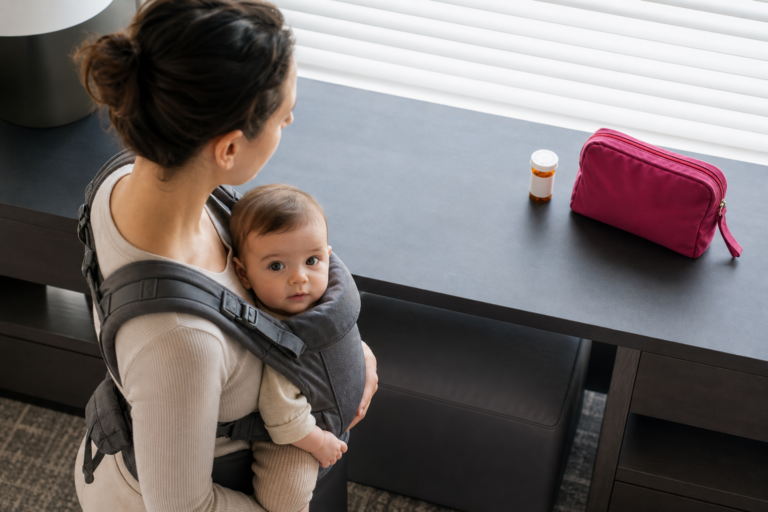
If your baby touched an active cold sore, stop the contact and gently wash the baby’s hand or other intact skin with mild soap and running water. Keep that hand away from the eyes and mouth until it is clean. If fluid reached an eye, begin rinsing immediately with clean water; do not rub it or add soap, sanitizer, cream, or unprescribed drops, and call the pediatric team now after rinsing. A freshly contaminated pacifier, bottle nipple, spoon, washcloth, or toy that then reached an eye, mouth, nose, or broken skin belongs in the same call-now lane.
Call now if the contact involved an eye, mouth, nose, broken or eczema-affected skin, a kiss, or fluid from the sore—or if your baby is in the first 6 weeks of life—even when your baby looks well. Seek same-day pediatric advice for a well baby more than 6 weeks through 3 months after direct active-sore contact, even when it appears confined to promptly washed intact skin. A measured temperature of 100.4°F (38°C) or higher in a baby 3 months old or younger needs immediate medical evaluation. Tell the clinician how it was measured; do not delay care to give fever medicine, wait for the temperature to fall, or repeatedly recheck it.6, 14
Call emergency services now for trouble breathing, blue or gray lips or tongue, a seizure, floppiness, unresponsiveness, extreme difficulty waking, or rapidly worsening illness. Do not wait for a blister: neonatal herpes can begin with nonspecific signs such as poor feeding, unusual sleepiness, irritability, or temperature change, and some babies never develop obvious skin sores.1, 4
Why this matters tonight: exposure is not a diagnosis, but this is not a moment for a home risk score. Wash what can be washed. Record what actually happened. Let age and route—not panic—set the next call.
If the stop signs feel hard to separate, SleepBaby’s guide to newborn fever and urgent warning signs gives the same fever, breathing, color, seizure, feeding, and responsiveness boundaries in one place. It supports—but never delays—the urgent action above.
I know the thought that arrives before the search query: Did one tiny touch just hurt my baby? That question can turn a three-second moment into a whole night of replaying fingers, faces, and fractions of an inch. I would rather help you turn the replay into useful facts.
The presence of a cold sore does not mean your baby has caught herpes. There is no reliable percentage that can tell a family the risk from one brief touch, and medical management after postnatal exposure is individualized. What matters now is the baby’s exact age, where the contact landed, whether saliva or lesion fluid was involved, whether skin was broken, and whether the baby has any symptoms. Those details are far more useful to the pediatric team than “it was probably nothing” or “it was definitely terrible.”9
What to do in the next five minutes
One calm sequence
Wash → Record → Call
-
Wash.
Move the baby away from the sore. Wash the exposed hand or intact skin gently with mild soap and running water. Do not scrub. Wash the exposed caregiver’s hands too, especially after touching the sore or applying medication. If fluid reached the eye, begin rinsing immediately with clean water; saline is also acceptable, but do not delay rinsing to find it. Do not rub or add soap, sanitizer, cream, or unprescribed drops. After rinsing, call the pediatric team now; direct eye exposure should not be watched at home without professional advice.11
-
Record.
Write down the baby’s age, the time, the exact body site, what touched what, whether the hand reached the eyes or mouth before washing, whether the sore was tingling, blistered, open, oozing, crusted, or healed, and what you did afterward. Six accurate lines beat a surveillance novel written from memory at 2 a.m.
-
Call.
Call now for a baby in the first 6 weeks after any credible direct contact between the baby and an active or suspected sore, fresh lesion fluid, or saliva from the affected mouth. At any age, call now if the route involved an eye, mouth, nose, broken or eczema-affected skin, kissing, direct lesion fluid, or a freshly contaminated pacifier, bottle nipple, spoon, washcloth, or toy that then contacted the baby’s eye, mouth, nose, or broken skin. Seek same-day pediatric advice for a well baby more than 6 weeks through 3 months after direct active-sore contact, even when the exposure was confined to promptly washed intact skin. For a baby older than 3 months with intact-skin-only contact, follow the age table below and call the same day if any detail is uncertain or symptoms appear.
Why this matters tonight: the sequence gets the baby clean, gives the clinician usable facts, and leaves fewer blanks for an exhausted mind to fill with frightening guesses.
Original SleepBaby.org Wash–Record–Call framework.
Washing is sensible first aid; it is not a proven post-exposure treatment and it cannot “cancel” contact that already happened. That is why the third step stays in the sequence. Do not keep washing until the skin is red, and do not use alcohol, hand sanitizer, hydrogen peroxide, bleach, essential oils, adult cold-sore medication, or someone else’s antiviral medicine on the baby. A clinician—not a bathroom cabinet—decides whether an examination, testing, or treatment is appropriate.

Here is the composite scene I kept in mind while building this guide: bedtime has already begun; the baby is in pajamas; someone notices the sore only after a small hand has reached up; the lullaby stops halfway through its first verse. At the sink, one adult holds a slippery wrist under warm water while another unlocks a phone with a damp thumb. Nobody in that kitchen needs a lecture on staying calm. They need an order of operations.
This is a clearly disclosed composite, not a real family’s medical story and not proof of an outcome. The useful part is the handoff: one person washes, one person writes, and the next adult with clean hands takes the baby. You are allowed to put your baby safely down for a minute, wash, write, and breathe.

Which kind of contact happened?
Cold sores are usually caused by herpes simplex virus type 1 (HSV-1). The virus spreads through oral contact, saliva, direct skin contact with an affected area, and sometimes recently contaminated objects. An active blister or open sore is especially concerning, but a cold sore can be contagious from the tingling stage until it is completely healed. The route matters because the eyes, mouth, nose, and broken skin are not the same barrier as truly intact skin.2, 8
The hand-to-contact-route map
Start where the sore—or the hand that touched it—landed.
- Intact hand or skin
- Do now: wash gently with mild soap and running water. Keep the hand from reaching the face until clean.
- Call boundary: a baby in the first 6 weeks still needs a call now. A well baby more than 6 weeks through 3 months needs same-day pediatric advice after direct active-sore contact, even when it appears confined to intact skin. Because HSV enters through mucous membranes or breaks in skin, contact confined to truly intact skin and washed before reaching the face is biologically lower concern than eye, mouth, nose, kiss, or broken-skin exposure. That is an inference about route, not a zero-risk guarantee.5
- Mouth or nose
- Do now: do not scrub or put soap or disinfectant inside the mouth, force water into the baby’s mouth, or induce vomiting. Remove the contaminated object and call now.
- Call boundary: treat this as mucosal exposure, including a hand that entered the mouth before it was washed.
- Eye or inner eyelid
- Do now: begin rinsing immediately with clean water; saline is also acceptable, but do not delay rinsing to find it. Do not rub, add soap, use adult drops, or apply cold-sore cream.
- Call boundary: after rinsing, call the pediatric team now. Direct eye exposure should not be watched at home without professional advice. Redness, swelling, watering, discharge, light sensitivity, or apparent eye pain needs urgent assessment.7, 11
- Broken, chapped, scratched, or eczema-affected skin
- Do now: rinse or wash gently without scrubbing the damaged area. Do not apply an adult remedy.
- Call boundary: call now. A broken skin barrier and eczema change the risk discussion, and widespread new blisters in a child with eczema need urgent care.2
- Kiss or direct lesion fluid
- Do now: stop further kissing or face contact; wash any exposed outer skin you can wash gently.
- Call boundary: call now at any age. If the baby is in the first 6 weeks, call now even if the baby looks well. Record where the kiss landed and whether the sore was open or wet.
- Pacifier, bottle nipple, spoon, towel, or toy
- Do now: remove the item. Wash or sanitize it according to the manufacturer’s normal instructions before reuse; launder washable cloth items.
- Call boundary: if it was freshly contaminated with saliva or lesion fluid and then contacted the baby’s mouth, nose, eye, or broken or eczema-affected skin, report that exact route and call now. The risk from one object is not precisely quantified.
Why this matters tonight: “touched a cold sore” is too broad for a useful decision. The route turns one frightening sentence into the facts a clinician can use.
SleepBaby.org original contact-route decision aid; educational, not diagnostic.
One easy detail to miss: a hand can begin in the “intact skin” lane and move into the “mouth” or “eye” lane a second later. If your baby touched the sore and then sucked their fingers or rubbed an eye before washing, tell the clinician the whole sequence. Do not edit the story toward the part that feels less scary.
The opposite is also true. If you know the touch was brief, landed on intact forearm skin, and the arm was washed before it reached the face, say exactly that. Precision is not minimizing. It is how you replace a foggy exposure with a usable one.
What counts as an “active” cold sore?
For prevention, treat a suspected cold sore as potentially contagious from the first tingling or burning sensation through blistering, weeping, crusting, and until the skin is completely healed. A crust is part of healing; it is not the same thing as fully healed. If nobody is sure whether the spot is actually a cold sore, avoid further contact and let the source person seek their own medical advice—but do not delay the baby’s call while waiting for the adult’s diagnosis or test.12
Do not pop, squeeze, repeatedly touch, or deliberately reenact the contact. If a clinician wants a photo or testing of the source lesion, they will tell you what is useful. The pediatric question is what happened to the baby—not whether anyone can settle the risk by experimenting at home.
Age changes how quickly I would call
Newborns have immature immune defenses, and postnatal HSV can become serious quickly. The first 4 to 6 weeks are the highest-risk period cited in neonatal guidance. Risk generally decreases with age, but there is no birthday on which eye exposure, direct lesion fluid, eczema, immune compromise, or a sick-looking baby becomes a wait-and-see problem.1, 4
The age-to-call boundary
Use the youngest applicable lane.
Birth through 6 weeks
If baby looks well: Call the pediatric team now for any credible direct contact between the baby and an active or suspected sore, fresh lesion fluid, or saliva from the affected mouth. Give the route, time, site, lesion stage, and washing details.
If symptoms appear: Get urgent or emergency assessment according to the symptom stop signs. Do not wait for blisters.
More than 6 weeks through 3 months
If baby looks well: Contact the pediatric team the same day after any direct active-sore exposure, even if it appears confined to intact skin. Call now for kissing, eye, mouth, or nose contact, lesion fluid, damaged skin, or a freshly contaminated object that reached the mouth or eye.
If symptoms appear: A measured temperature of 100.4°F (38°C) or higher in a baby 3 months old or younger needs immediate medical evaluation. Other concerning symptoms need urgent assessment now.
Over 3 months through 6 months
If baby looks well: Call now for the higher-concern routes above, immune compromise, significant eczema, or uncertainty about what happened. Follow the pediatric team’s monitoring plan.
If symptoms appear: Seek prompt care for fever with illness, new sores, eye symptoms, poor feeding, unusual sleepiness, breathing changes, dehydration signs, or rapid worsening.
Older than 6 months
If baby looks well: Neonatal disease is no longer the same age-specific concern, but call now for kissing, direct lesion fluid, eye, mouth, nose, broken or eczema-affected skin, or a freshly contaminated mouth or eye item. Avoid further exposure.
If symptoms appear: Call for eye symptoms, widespread blisters, dehydration, breathing trouble, neurological symptoms, or a child who looks seriously unwell.
Any age with immune compromise or significant eczema; any young infant born prematurely
If baby looks well: Use a lower threshold and call now after a higher-concern route. Tell the clinician the underlying condition and gestational age at birth.
If symptoms appear: Seek urgent assessment for new lesions or systemic illness.
If you are waiting for the pediatric office to return a call, do not interpret the table as permission to delay emergency care for a sick baby. Use the emergency stop signs at the top of this article. If your baby is in the first 6 weeks or had a higher-concern exposure and you cannot reach the pediatric team promptly, use the after-hours pediatric service or emergency department rather than waiting for the office to reopen.
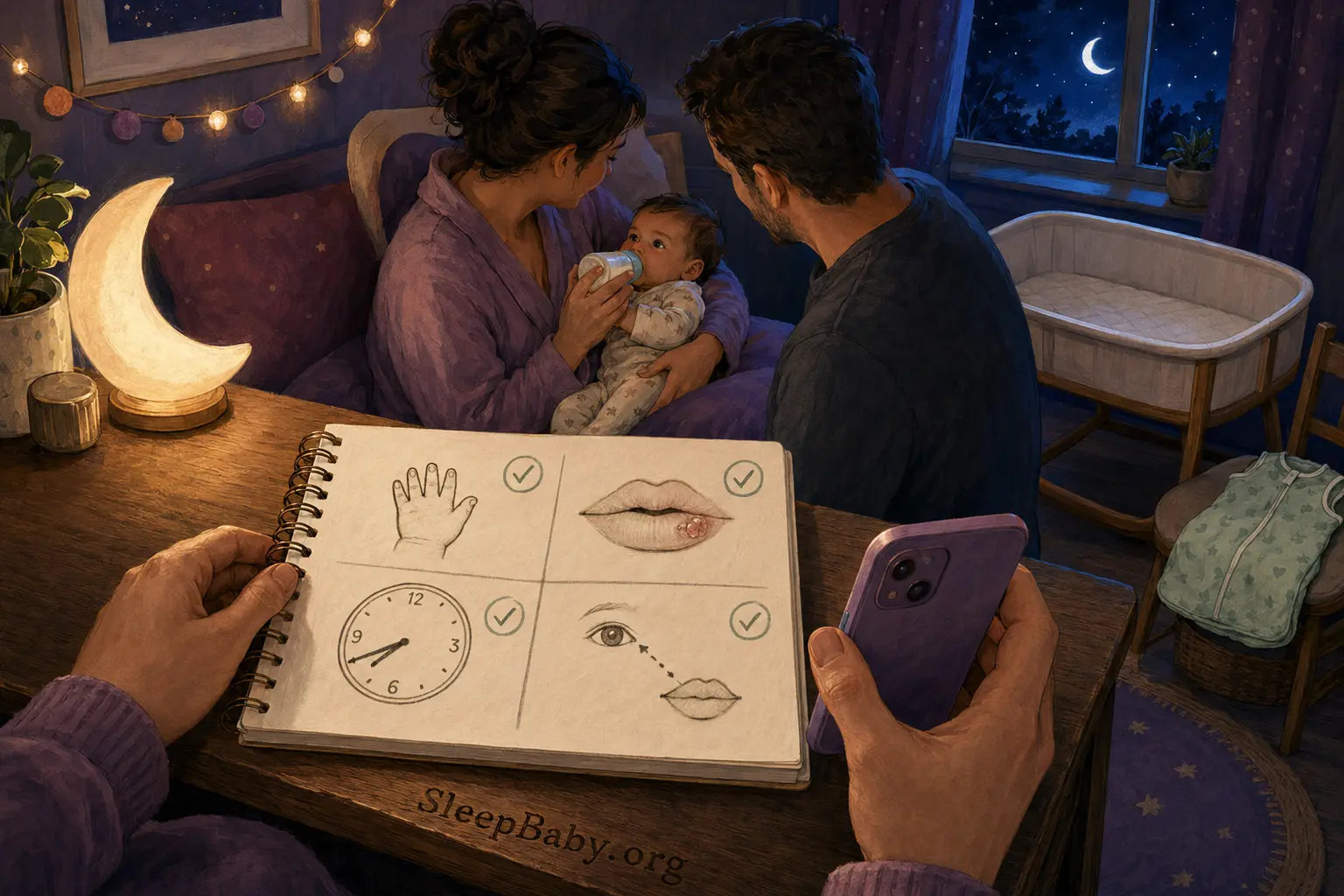
The phone-and-notebook moment is where panic can quietly become advocacy. You are not trying to sound medically fluent. You are saying, “My baby is 18 days old. At 7:40 p.m., their right hand touched an open cold sore. The hand may have reached the lips before I washed it at 7:42. Baby is feeding normally and has no symptoms.” That is a strong call because it is specific.

What to tell the pediatric team
Your six-line exposure note
Read this from the phone if your mind goes blank.
- Age and vulnerability: exact age in days, weeks, or months; weeks of gestation at birth; prematurity; eczema or broken skin; immune conditions.
- Time and duration: when it happened and, if known, how long contact lasted.
- Route and site: hand, arm, face, eye, mouth, nose, broken skin, kiss, breast lesion, or shared object.
- What happened next: whether the hand reached the face before washing; what was washed or rinsed; and when.
- The sore: suspected or confirmed cold sore; tingling, blistered, open/oozing, crusted, or fully healed.
- Baby now: temperature and how it was taken; feeding; wet diapers; breathing; alertness; skin, eye, or mouth changes.
Plain-language opener: “I’m calling because my baby may have had direct contact with an active cold sore. My baby is ___ old. The contact was ___ at ___. I washed/rinsed ___ after about ___. Right now I notice ___.”
Why this matters tonight: you can look at your baby instead of trying to remember the order of a frightening moment.
SleepBaby.org original six-line exposure note; educational, not diagnostic.
The clinician may ask about the birthing parent’s history of cold sores or genital HSV. Share what is known, but do not use a history of cold sores as a home guarantee that the baby is protected. Transferred antibodies vary with virus type, timing, and prematurity. They are context for a clinician, not a reason to skip the call.5
The pediatric team may advise observation, an examination, testing, or treatment depending on the exposure and the baby. There is no universal home algorithm for an asymptomatic baby after postnatal contact. A negative-looking skin check tonight also cannot rule out infection. Please do not order a home blood test or swab, use another person’s antiviral medicine, or wait for the source adult’s test before seeking advice.9
What symptoms should you watch for?
Symptoms after a first HSV exposure are often described as appearing 2 to 12 days later, but that range is not a home “all clear” timer. Neonatal illness can present in the first weeks of life, and a young baby may become unwell without a fever or visible blisters. Pay especially close attention during the next two weeks, follow the monitoring period the pediatric team gives you, and mention the exposure whenever seeking care during that window—even if the baby has just passed 6 weeks of age.4, 5, 13
A timeline with stop signs—not a countdown
Now, while you wait for advice, and during the monitoring window
-
Now: establish the baby’s ordinary baseline.
Note the most recent feed, usual alertness during care, current breathing and color, recent wet diapers, and any existing rash or eye irritation. Check responsiveness during ordinary feeds and care, and follow any clinician instructions about waking. Do not pinch, poke, or repeatedly stimulate the baby.
-
While you await a callback: keep ordinary care safe.
Feed normally unless a clinician says otherwise. Keep the baby’s sleep space clear, firm, flat, and separate, with baby placed on the back. Keep the phone nearby and ask another alert adult to share the night if possible.
-
Over the next days: watch for change, not perfection.
Notice poor feeding, repeated vomiting, fewer wet diapers, unusual sleepiness, irritability, a cry that is difficult to soothe or sounds different, fever or unusual coldness, mottled skin, blisters or sores, and eye redness, swelling, watering, discharge, or apparent pain.
-
At any point: obey the emergency stop.
Call emergency services for seizure, breathing difficulty, blue or gray color, floppiness, unresponsiveness, extreme difficulty waking, or rapid worsening. Get immediate medical evaluation for a measured temperature of 100.4°F (38°C) or higher in a baby 3 months old or younger.
-
After the commonly cited 2-to-12-day range: keep the clinician’s plan.
Do not declare the baby “cleared” from a calendar alone. Age, route, symptoms, and the pediatric team’s instructions matter more than the date box you want to check.
Why this matters tonight: good observation is a comparison with your baby’s normal—not constant surveillance that leaves every adult too exhausted to notice a real change.
SleepBaby.org symptom watchline; it does not diagnose HSV.
Do not wait for the “classic” cold-sore blister
New blisters or clustered sores on the skin, eye, or inside the mouth are urgent. But their absence does not clear a newborn. Neonatal HSV can look nonspecific at first: a baby who feeds less, is unusually sleepy or irritable, feels hot or cold, breathes differently, pees less, or simply is not responding in the usual way. The Canadian Paediatric Society notes that some infants with disseminated or central nervous system disease do not develop skin lesions. A 2026 UK and Ireland surveillance study likewise found that serious HSV disease in infants younger than 90 days frequently appeared without fever or skin, eye, or mouth lesions.4, 13
If you need a neutral way to document a new blister or skin change for the clinician, SleepBaby’s guide to photographing and describing a new skin finding explains lighting and scale. It cannot identify HSV; urgent symptoms still need urgent assessment.
I want to be especially direct here: ordinary newborn sleepiness and dangerous difficulty waking are not separated by an internet quiz. Check responsiveness during ordinary feeds and care, and follow any clinician instructions about waking. If the baby does not wake normally for a feed or is unusually hard to rouse, seek urgent medical advice now. Do not pinch, poke, or repeatedly stimulate the baby. If the baby is unresponsive, floppy, struggling to breathe, blue or gray around the lips or tongue, seizing, or worsening quickly, call emergency services.
For the mechanics of an ordinary feed-time check, see how to check whether a sleeping baby wakes normally. If waking is unusually difficult, do not keep trying techniques from an article—seek urgent medical advice now.
Eye contact deserves its own lane
HSV can infect the cornea. After possible eye exposure, do not wait for a skin blister beside the eye. Promptly report the route, and seek urgent assessment for redness, swelling, excessive tearing, discharge, apparent pain, unusual light sensitivity, or a baby who will not open the eye normally. Do not put adult antiviral cream, numbing drops, antibiotic drops, breast milk, or a home remedy in the eye. Eye treatment is clinician-directed.7
SleepBaby’s explainer on how to describe eye discharge and swelling may help you report what you see, but it is not eye-exposure first aid and cannot clear HSV. For this exposure, the pediatric or eye team—not a related article—sets the next step.

At night, observation should look less dramatic than fear suggests. A feed. A diaper. A glance at breathing and color in ordinary light. A note that says “woke for feed, sucked normally, wet diaper.” Then the baby returns to a safe sleep space. Love does not become more protective because you stare at the bassinet without blinking.
The tender truth is that you may still feel frightened after you make the right call. Action does not always switch off adrenaline. Let the plan carry what your feelings cannot put down yet.
How to watch tonight without creating a second safety problem
A possible exposure can make a caregiver want to hold the baby all night, keep the lights blazing, or improvise with a positioner or monitor. None of those choices diagnoses HSV, and exhaustion can create its own hazards. Unless the medical team gives different instructions, keep normal safe-sleep basics: place baby on the back on a separate, firm, flat, level infant sleep surface with only a fitted sheet.10
- Keep the phone charged and audible. Put the pediatric number, after-hours line, and emergency number where another caregiver can find them.
- Share the watch. If another healthy, alert adult is available, tell them the exposure facts and stop signs. A handoff is safer than one adult trying to stay awake by force.
- Observe during normal care. Notice whether the baby wakes and feeds as usual, has ordinary breathing and color, and makes the usual wet diapers. Follow any specific waking or temperature instructions the clinician gives.
- Do not add loose objects or incline the mattress. No towel rolls, wedges, pillows, blankets, positioners, or adult-bed monitoring.
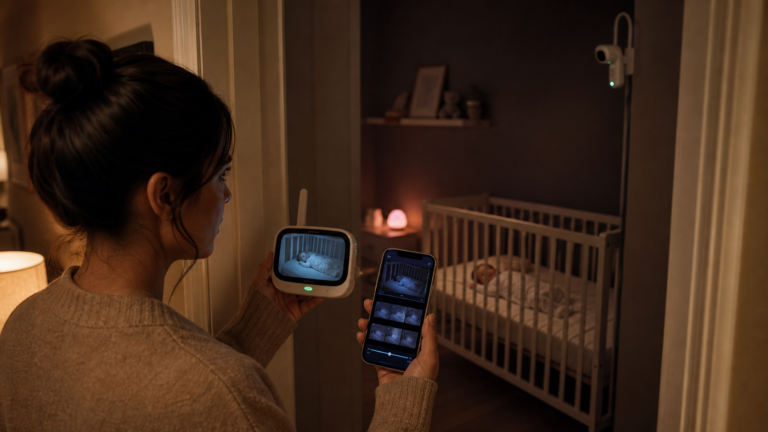
- Do not rely on a consumer monitor to clear illness. If your baby looks unwell or is hard to wake, use your eyes, the symptom stop signs, and professional care.
If you are so tired that you might fall asleep while holding the baby, place the baby in the separate sleep space and ask an alert adult to take over if possible. SleepBaby’s guide to keeping sleep flat and clear when a baby is sick explains why awake comfort measures do not change the firm, flat, empty sleep-space rule.
Prevent another exposure in the household
Once the immediate call is handled, make the boundary simple enough for a tired house to remember. A current cold sore means no kissing the baby. Wash hands before touching the baby and after touching the lesion or applying medication. Keep the sore covered when possible. Do not share pacifiers, bottle nipples, utensils, cups, towels, washcloths, toothbrushes, lip products, or anything else that moved directly from the affected mouth or sore toward the baby.1, 4
The no-kissing boundary
A warm sentence with a firm ending
“We are doing no kisses and no face contact while the cold sore is active. Please wash your hands before touching the baby, and do not share cups, towels, pacifiers, or utensils. We love you. The boundary stays.”
If the affected parent or essential caregiver must care for an infant under 6 weeks, Canadian guidance recommends a disposable mask until the lesion is healed, crusted, and dry, together with hand hygiene, lesion coverage, and no kissing. Other affected contacts should avoid direct care or mask if essential care cannot be avoided. Follow any stricter local instructions. A mask does not replace clean hands or the no-kissing rule.4
Why this matters tonight: a boundary written once is easier to follow during feeds, handoffs, and sleepy family visits than a new negotiation at every doorway.
The family group chat may briefly behave as if you introduced a constitutional amendment. Let it. You are not accusing anyone of being dirty or unloving; you are setting a temporary infection-control rule for a baby. Affection has dozens of routes that do not pass through an active sore.

If the baby’s primary caregiver has the cold sore
Essential care can continue with strict precautions: no kissing or nuzzling, meticulous handwashing, and lesion coverage when possible. If the affected parent or essential caregiver must care for an infant under 6 weeks, Canadian guidance recommends a disposable mask until the lesion is healed, crusted, and dry; follow any stricter local advice. Keep cold-sore medication and used tissues away from the baby. Wash hands before preparing a bottle, touching pump parts, handling a pacifier, or starting a feed.
A cold sore on the lip does not automatically mean breastfeeding must stop. CDC guidance says breastfeeding can continue when there are no lesions on the breast and active lesions elsewhere are fully covered. If there is a herpes lesion on a breast, do not nurse from that breast or feed milk expressed from that side until a clinician says the lesion has healed; feeding from the unaffected breast may continue with the affected area fully covered and careful hand hygiene.3
Do not let a patch or mask create false confidence. A cold-sore patch may help cover the lesion, and a mask can reduce accidental face contact, but neither makes kissing safe or replaces handwashing. Treat the sore as contagious until completely healed.
How much cleaning is enough?
Focus on objects that had fresh saliva or lesion contact. Use their normal manufacturer-approved cleaning method and launder affected cloth items. Ordinary household cleaning is enough elsewhere; nursery-wide disinfection is unnecessary. You do not need to fog the nursery, bleach the baby’s skin, throw away every toy, or keep the household awake disinfecting objects that never touched the sore or saliva.
The useful boundary is direct: mouth and lesion items stay separate; hands get washed; active sores stay away from the baby’s face and hands. Let the rest of the house remain a house.
The questions that usually arrive after the first call
Does washing mean my baby is definitely safe?
No. Prompt gentle washing is sensible contamination first aid and may remove material from the skin, but it is not proven HSV post-exposure prophylaxis and does not erase contact. That is why age, route, symptoms, and pediatric advice still matter.11
What if I did not wash right away—or only realized later?
Do not start repeated or harsh washing. Gently wash intact skin once if that is still needed, record how much time passed and whether the hand reached the eye, mouth, or nose, then use the same age-and-route call boundary above. A delay does not prove infection, and a later wash cannot erase earlier contact; the useful next move is an accurate call, not trying to scrub time backward.
What if the cold sore was crusted?
A crusted sore is healing but not necessarily completely healed. Prevention guidance treats cold sores as contagious from the tingling stage until they are fully healed. Record “crusted” rather than translating it into “inactive,” and let the clinician use that detail.12
What if the kiss was on the top of the head?
Contact with intact scalp is not the same route as a kiss near the eye, mouth, or nose, but call now at any age after an active-sore kiss. Say that it landed on intact scalp, and emphasize if the baby is in the first 6 weeks. Wash any exposed outer skin gently; do not call the scalp a guaranteed safe zone.
Can a baby be tested immediately after exposure?
Testing decisions depend on the baby’s age, route, timing, examination, and local pediatric or infectious-disease guidance. There is no useful home test and no reason to swab normal skin yourself. In a significantly exposed newborn, a clinician may consider examination, laboratory testing, or treatment even when the baby looks well; families should not start or withhold those steps on their own.9
What if the source person only suspects a cold sore?
Use “suspected cold sore” when you call. Avoid further kissing and contact while the lesion is assessed. The baby’s age and route do not become less important because the adult’s label is uncertain. Do not delay the pediatric call while waiting for a swab or appointment for the source person.
What if my baby seems sleepier tonight?
Newborns sleep a great deal, so compare this with your baby’s normal behavior: are they waking for feeds, sucking normally, responding during care, breathing comfortably, and making the expected wet diapers? “Unusually sleepy,” difficult to wake, floppy, poorly feeding, or not responding normally means seek urgent medical advice now; extreme difficulty waking or unresponsiveness is an emergency. If your baby is otherwise well and the clinician has cleared the immediate concern, the Baby Sleep library can help you rebuild the ordinary night without confusing illness signs with a routine problem.
What if my baby is older than 6 months?
The highest neonatal risk period has passed, but HSV can still infect children. Call now for kissing, direct lesion fluid, eye, mouth, nose, broken or eczema-affected skin, or a freshly contaminated mouth or eye item. Widespread blisters in a child with eczema, immune compromise, dehydration, neurological symptoms, or serious illness also needs prompt professional care. Age changes the discussion; it does not make an active sore a good kissing companion.
Watch: how neonatal HSV can present and why early care matters
This clinician-facing Royal College of Paediatrics and Child Health video explains the skin-eye-mouth, central nervous system, and disseminated forms of neonatal HSV; nonspecific signs such as poor feeding and lethargy; postnatal transmission from cold sores or herpetic whitlow; and why early clinical recognition matters. It is context, not personal triage, and appears after the complete written action plan so video is never the only source of safety guidance.
Written takeaway: neonatal HSV is rare but can appear as skin, eye, or mouth lesions—or as nonspecific changes such as poor feeding, lethargy, fever, or seizures. Good hand hygiene and no baby contact from an active cold sore or herpetic whitlow reduce postnatal transmission. A young or unwell baby needs clinical assessment, not a home diagnosis. The video does not determine the risk from your baby’s exact touch; the clinician uses age, route, skin integrity, and symptoms.
Not watching now? You already have the complete action path above. The normal watch link and creator details are included with the player.
When the phone is down and the room is quiet again
Give the rest of tonight one calm order.
A cold-sore scare can leave every ordinary stir sounding louder. Finish the pediatric plan first. Then, if your baby is well and you are trying to return to feeding, settling, and safe sleep without rebuilding the whole night, SleepBaby can help you choose one clear next step instead of twelve anxious ones. It is baby-sleep guidance—not medical care—and the article stays complete whether or not you click.
One last note before you close the tab
You cannot improve the past three seconds by punishing yourself for them. You can improve the next ten minutes: clean hands, accurate facts, the right call, and a safe place for the baby to sleep. If your gut keeps saying that your baby is not acting normally, use it as a reason to call—not as a reason to keep searching for a sentence that tells you not to.
The line I hope stays with you: do not make panic do the monitoring. Give that job to a written plan and the pediatric team.
Sources
- NHS — Neonatal herpes (accessed July 30, 2026).
- American Academy of Pediatrics — Cold Sores in Children (updated June 4, 2025).
- CDC — Herpes Simplex Virus and Breastfeeding (updated September 23, 2025).
- Canadian Paediatric Society — Prevention and management of neonatal HSV (accessed July 30, 2026).
- East of England Neonatal Network — Neonatal HSV guideline (June 2025).
- American Academy of Pediatrics — Fever and Your Baby (updated September 23, 2025).
- CDC — HSV keratitis (accessed July 30, 2026).
- World Health Organization — Herpes simplex virus (updated May 30, 2025).
- Pittet & Curtis — Postnatal Exposure to HSV, Pediatric Infectious Disease Journal (2020).
- NIH Safe to Sleep — Safe Sleep Environment (accessed July 30, 2026).
- Victoria Department of Health — Immediate exposure care (accessed July 30, 2026).
- NHS — Cold sores (reviewed February 19, 2024).
- Dudley et al. — HSV disease in infants younger than 90 days, Archives of Disease in Childhood (2026).
- East of England Community Health and Care NHS Trust — Cold Sores (accessed July 30, 2026).