
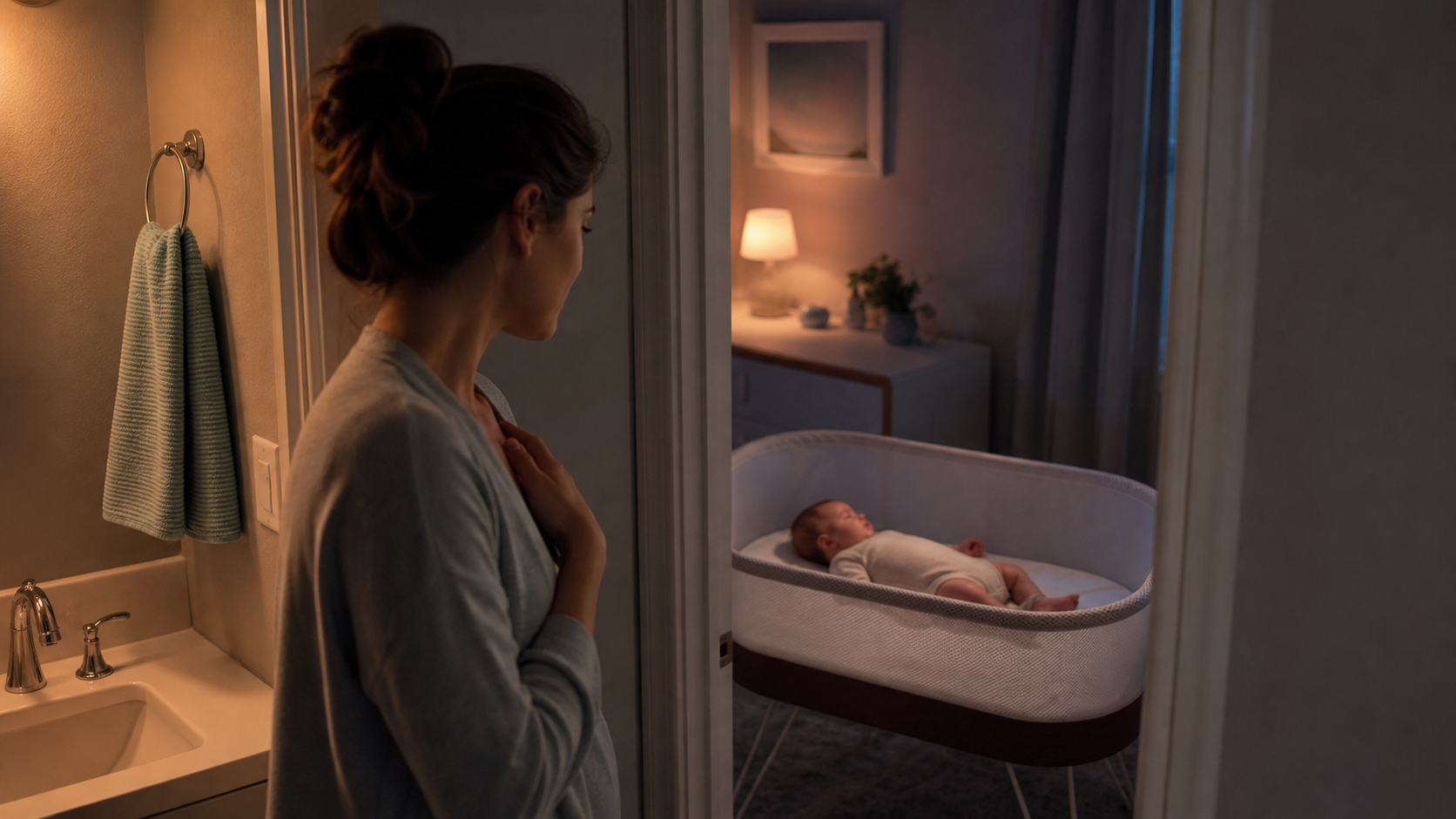
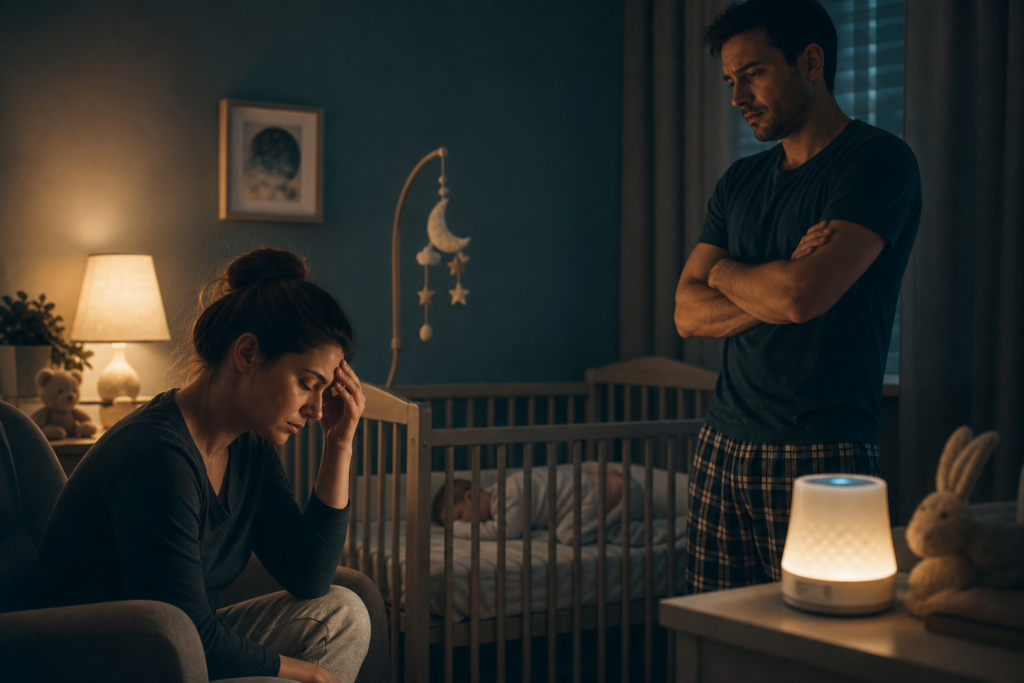
The nursery door is almost closed. Your baby has finally gone still, one cheek soft against the fitted sheet, and you lean over the rail for a goodnight kiss—then stop. Will I wake them? Is this safe? Am I somehow supposed to love this child from the hallway?
The short answer
A healthy caregiver’s brief kiss is usually okay, but a safely sleeping baby does not need one
It is usually reasonable for a healthy close caregiver with clean hands, no cold sore, and no contagious symptoms to give a brief kiss on the top or back of a baby’s head without changing the sleep setup. But sleep is not an infection shield, and there is no health or bonding benefit that requires waking a baby for a kiss. With a newborn—especially in the first six weeks—or a premature or medically vulnerable baby, I would use a stricter boundary: discourage visitor kisses, avoid the mouth, nose, eyes, face, and hands, and follow the baby’s clinician’s advice.
The safer question is not only Can I kiss the baby? It is: Who is kissing, how well are they, how vulnerable is this baby, where will the kiss land, and will the adult disturb a firm, flat, empty sleep space? If any answer feels uncertain, let the kiss wait until the baby is awake.
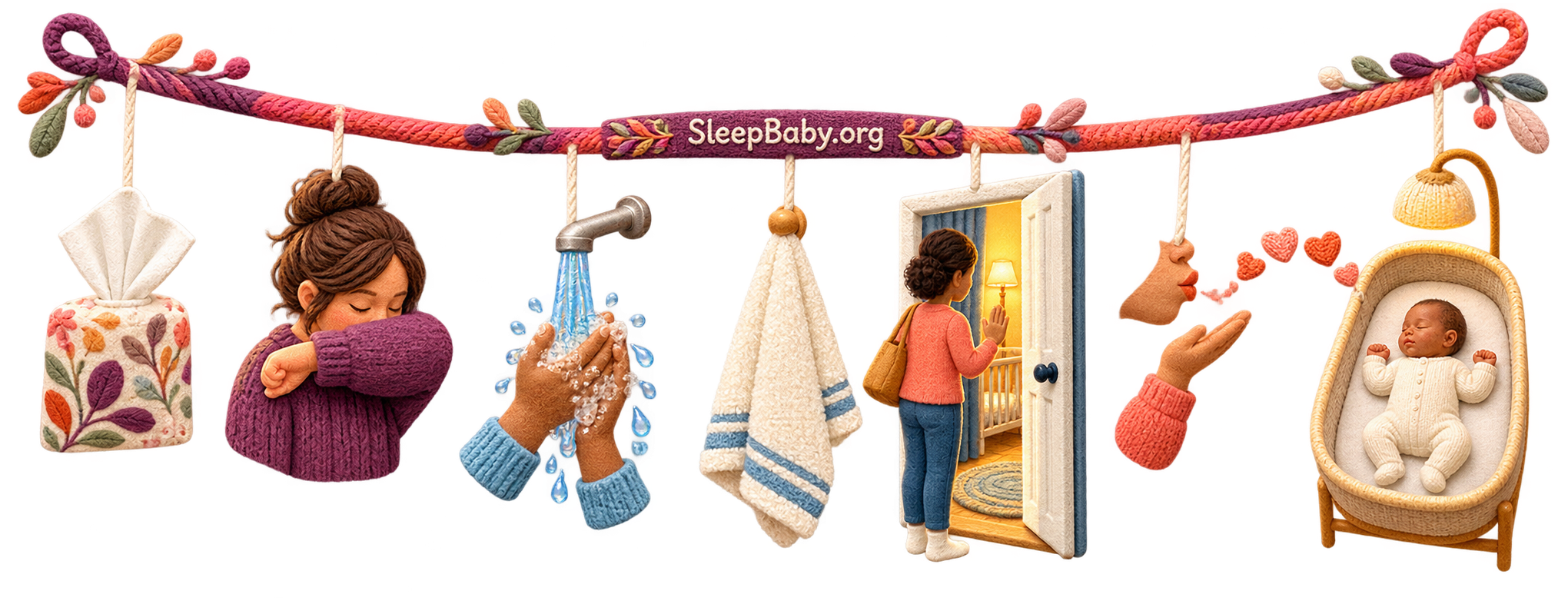
Being asleep changes the interruption question—not the germ question
A sleeping baby may stir when lips, hair, skin, the crib rail, or a sleeve brushes against them. Another baby may sleep through the whole operation while the adult freezes in place, suddenly convinced that breathing is too loud. That difference is about the baby’s state and temperament. It does not make a kiss medically cleansing or uniquely dangerous.
The infection route is the same whether the baby’s eyes are open or closed. Respiratory syncytial virus can spread through coughs and sneezes, direct contact, and contaminated hands or surfaces. The CDC specifically includes kissing a child’s face as a direct-contact route. Herpes simplex virus can pass from an active cold sore through a kiss, and very young babies can become seriously ill.[3][5]
That is why I would not build the rule around “deep sleep.” Parents cannot reliably identify a risk-free sleep stage from the doorway, and no particular stage turns off exposure. Build the rule around things you can actually know: the adult’s symptoms and cold-sore history, the baby’s age and health, the kiss location, and whether the baby remains on a safe surface.
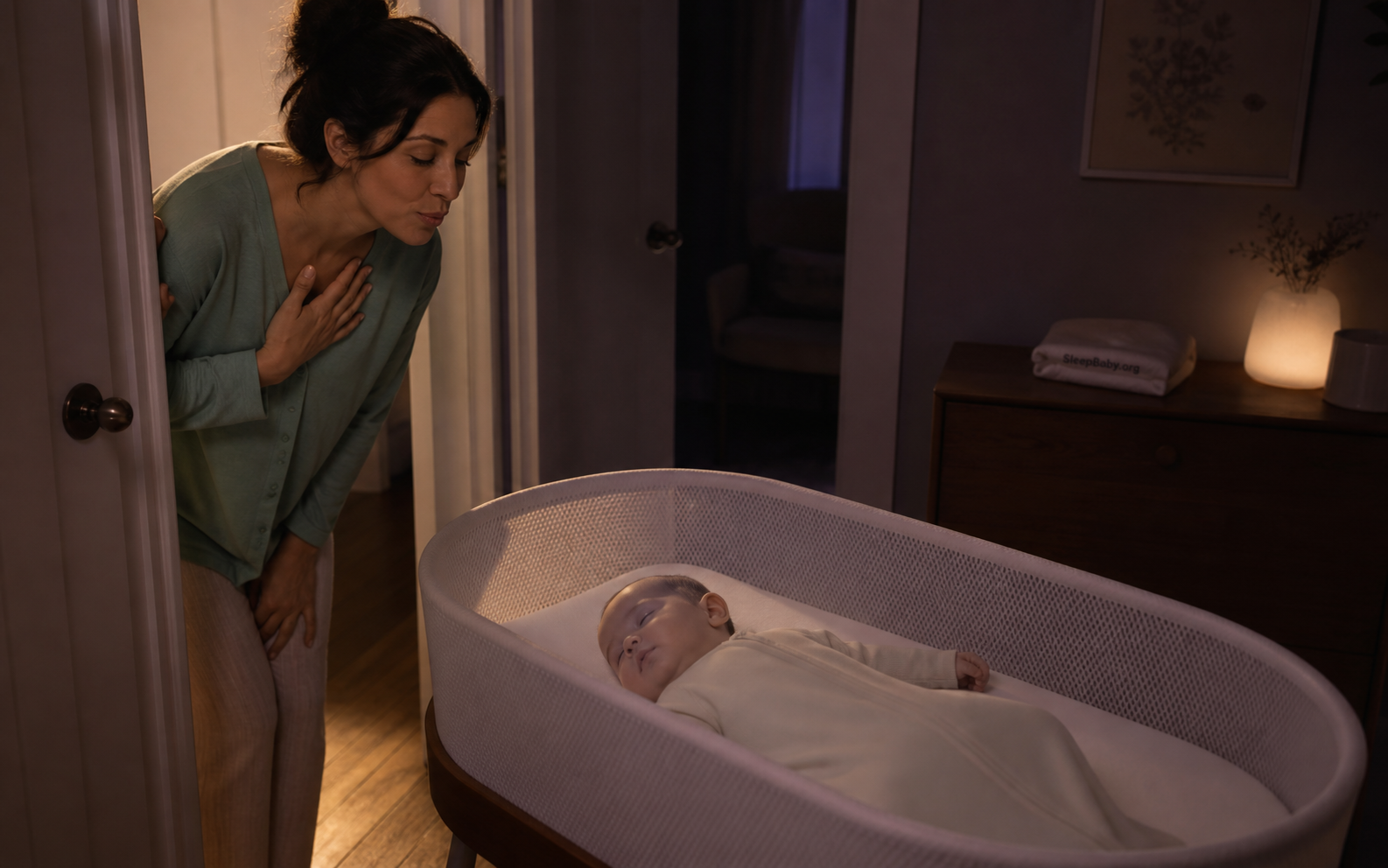
A clearly labeled composite scene
Kacey, Benjamin, and the kiss that can wait thirty minutes
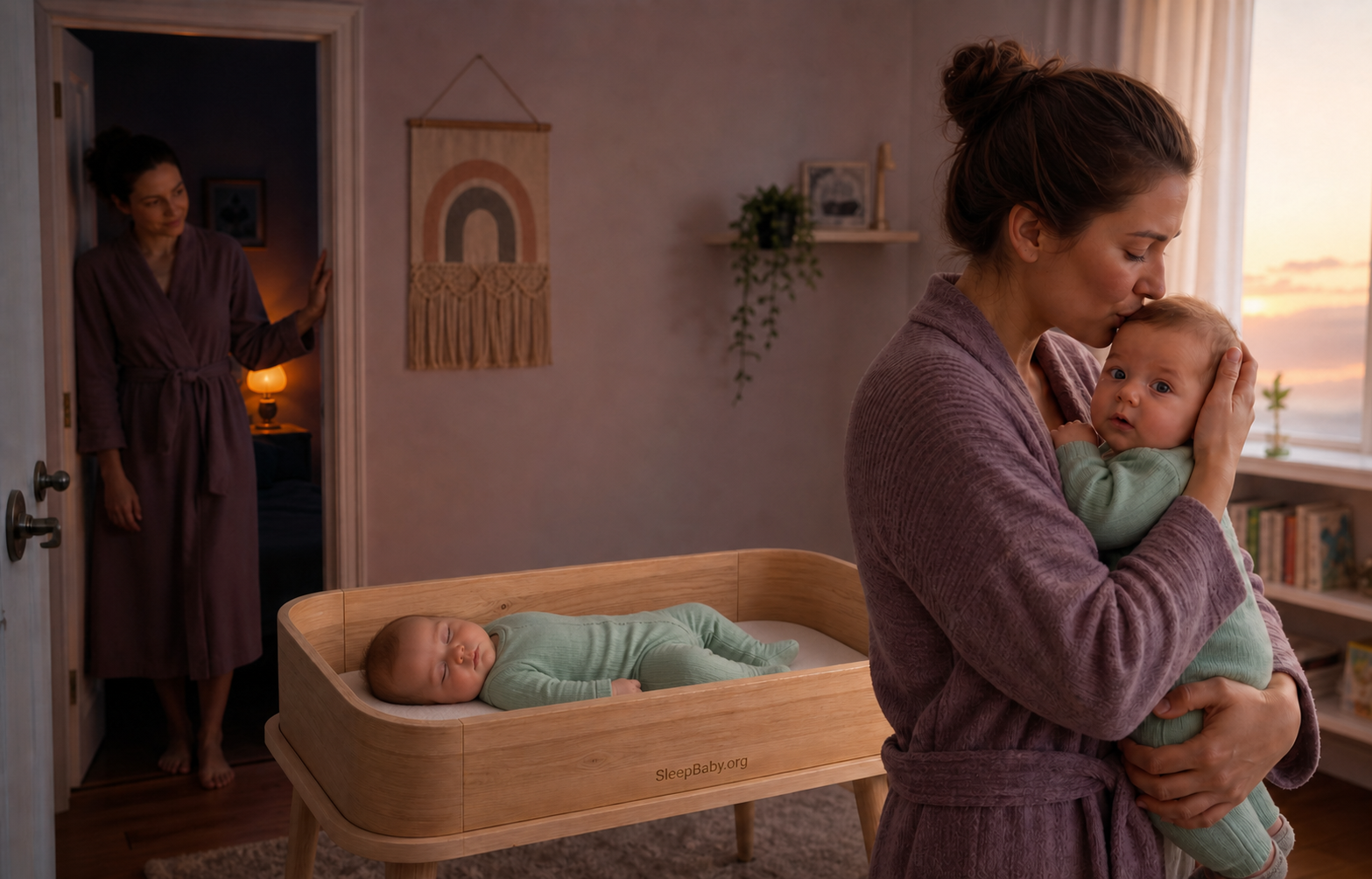
This Kacey-and-Benjamin scene is a composite illustration, not a claim about their real family or medical history. I picture Kacey at the doorway after a long bedtime, watching Benjamin’s shoulders finally loosen against the bassinet mattress. She takes one quiet step forward, then hears the floorboard give its tiny wooden opinion about the plan.
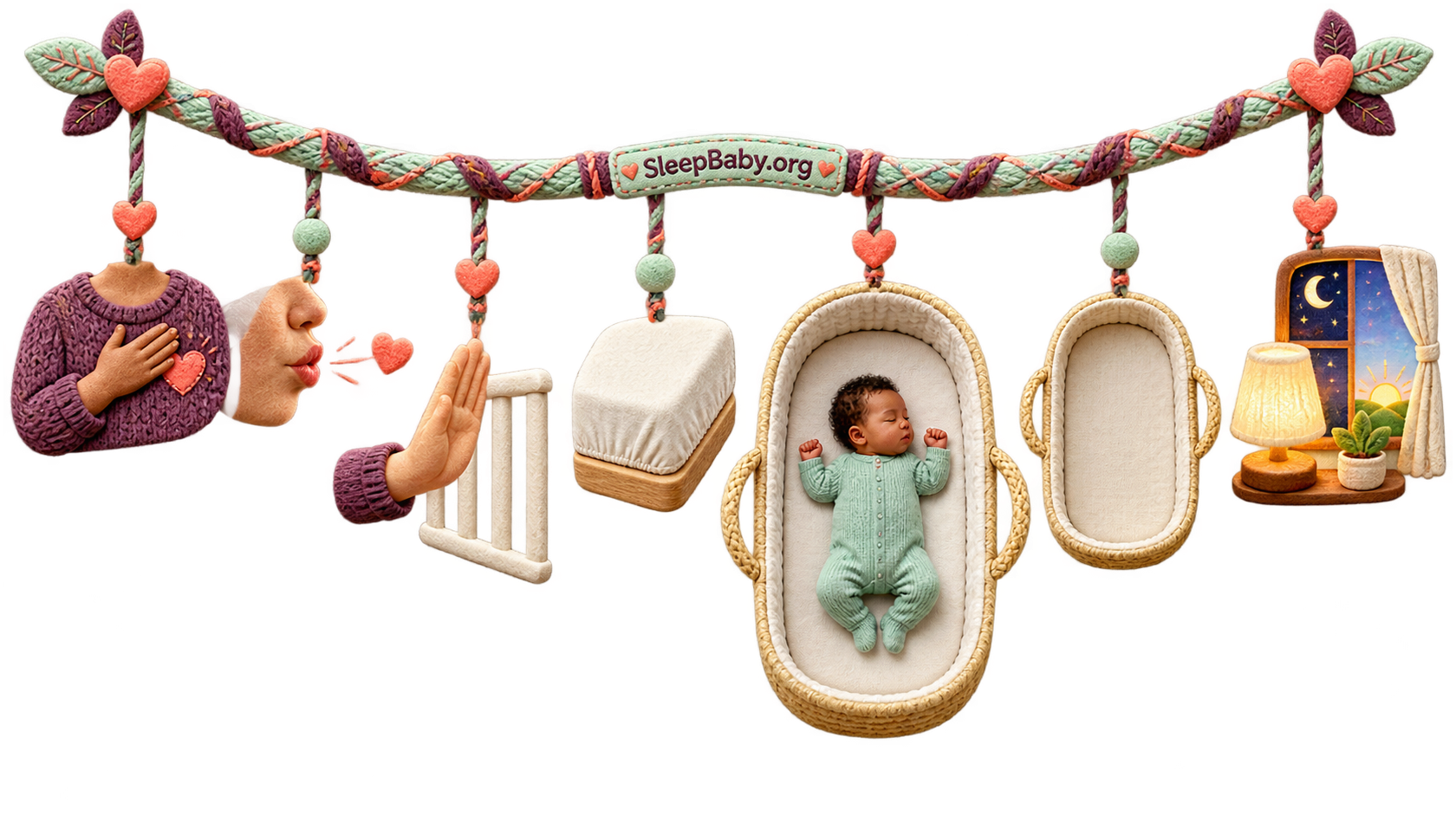
Composite Kacey stops. The kiss is for her, really; Benjamin is already warm, safe, and spectacularly unavailable for comment. She checks the room instead: he is on his back, the mattress is flat, the bassinet is empty, and nothing needs fixing. So she puts two fingers to her own lips, touches them to her heart, and backs away before the floorboard files a second objection.
Later, when Benjamin is awake, she kisses the top of his head and tells him good morning. The affection did not disappear because it missed the sleeping moment. It simply arrived when both of them could receive it.
That is the distinction I want to preserve for the parent standing in a real doorway tonight. You are not withholding love when you let a baby sleep. You are choosing a form of love that does not require the baby to prove they can sleep through your tenderness.
Pause at three thresholds
Health, vulnerability, and the sleep space decide the answer
1. Check the adult
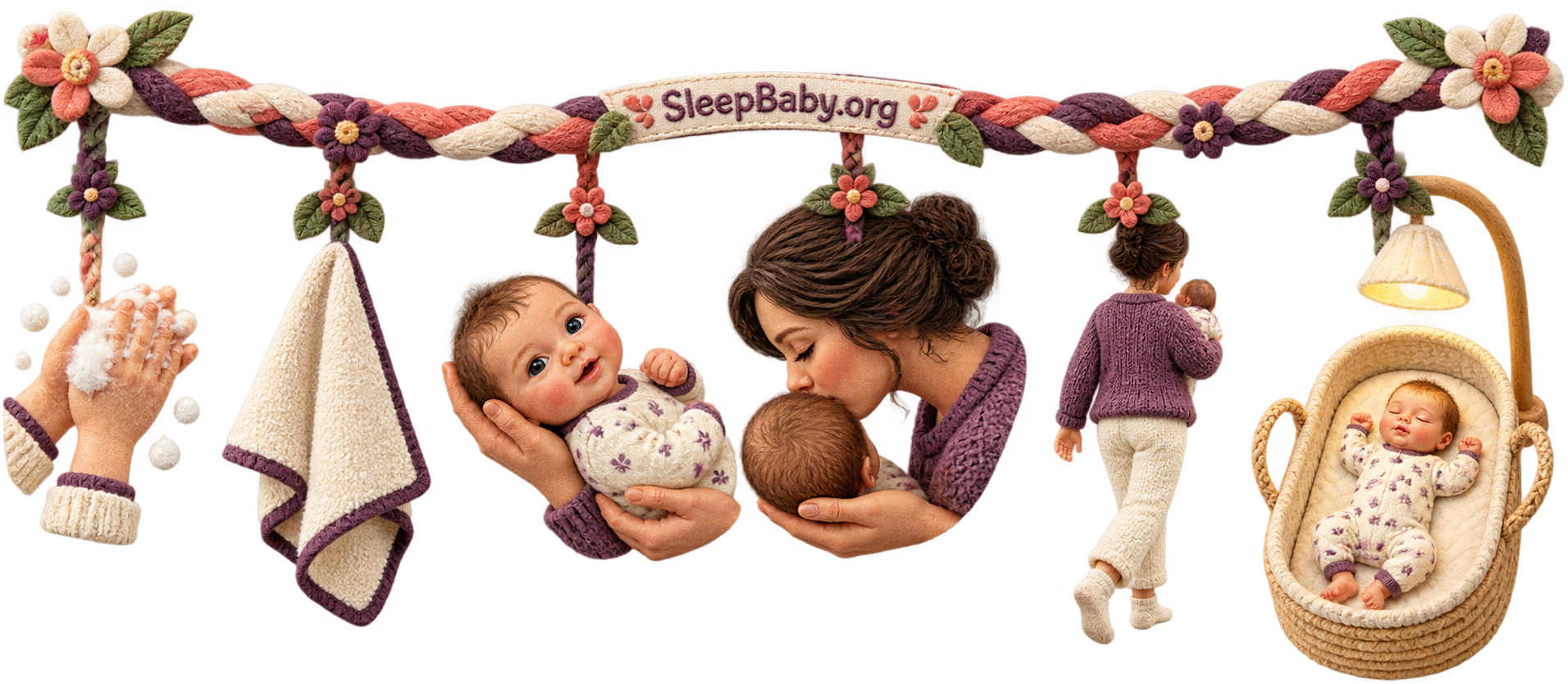
Any current or recent cold sore, tingling that may announce one, fever, cough, sore throat, runny nose, vomiting, diarrhea, rash, or known contagious illness means skip the kiss. Wash hands before handling the baby. Cover coughs and sneezes, and create distance while ill rather than relying on a different kiss location.[3][6]
2. Check the baby
A newborn, premature infant, or baby with a weakened immune system, chronic heart or lung condition, or an individual care plan deserves a more conservative boundary. For a newborn, keep visitor affection verbal and ask the clinician about any special contact limits. Age lowers some risks over time; it never makes an active cold sore a good reason to kiss.
3. Check the sleep space
Baby remains on the back on a firm, flat, level, approved infant sleep surface with only a fitted sheet. Do not climb into the crib, kneel on the mattress, lower a rail against product instructions, add a blanket or toy, pull the baby onto an adult bed, or fall asleep holding them. If the kiss requires an unsafe reach, the answer is no.[1][2]
SleepBaby.org decision rail: the kiss is optional; the health and sleep thresholds are not.
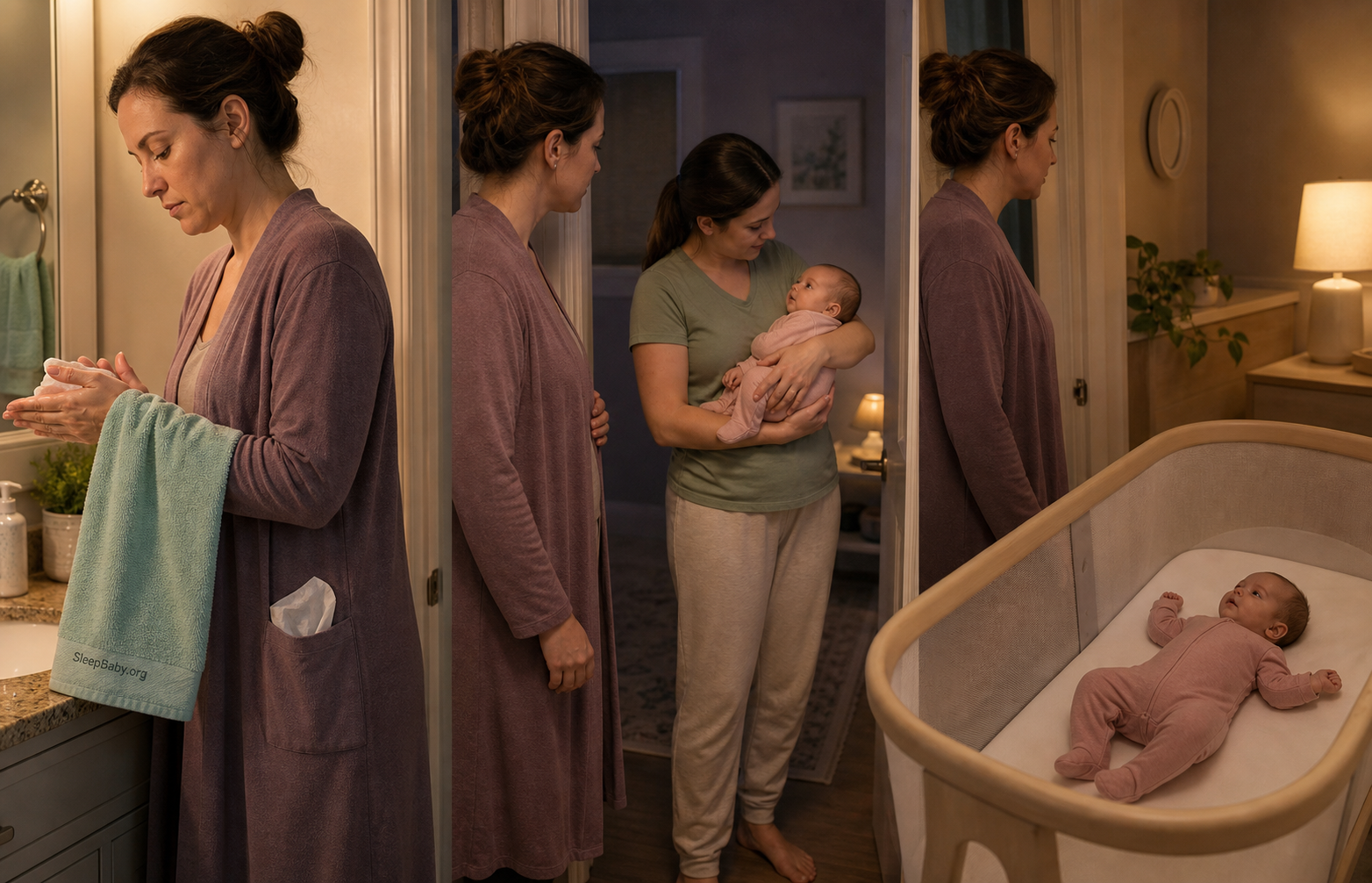
For newborns, make the circle of kissers very small
The NHS describes babies as particularly vulnerable to herpes in the first six weeks and advises discouraging anyone who is not a close family member or caregiver from kissing the baby. For a close caregiver, it names the top of the head as the safest location and advises avoiding the mouth, nose, and eyes. A person with a current cold sore—or a recent history of cold sores during this vulnerable window—should not kiss the baby.[3]
I would turn that into a household rule that is easy to follow, not a courtroom argument about who counts as “careful.” During the newborn weeks:
- Parents and essential caregivers: wash hands, stay away when ill, and use the top or back of the head only when well and when the baby’s care team has not given stricter advice.
- Visitors and extended family: admire, talk, sing, read, or wave; skip kissing, especially the face and hands.
- Anyone with a cold sore or warning tingle: no kissing and no touching the lesion before handling baby. Follow current clinical guidance about covering lesions and contact.
- Premature or medically fragile babies: use the hospital or pediatric team’s individualized rule, even if it is stricter than the family rule.
Hands matter because babies bring them to their mouths. “I only kissed the hand” is not a reliable workaround for a newborn. A kiss on the top of the head reduces proximity to the eyes, nose, and mouth, but it does not cancel illness or cold-sore restrictions.
The rule gets less restrictive, not careless
How age and health change the kissing boundary
| Baby’s context | A practical boundary | What does not change |
|---|---|---|
| First six weeks | Keep kisses to healthy close caregivers, use the top of the head, and discourage visitor kissing. Treat cold sores and illness as a firm no‑kiss boundary. | Clean hands, no face or hand kisses, and a separate safe sleep surface. |
| Older healthy infant | Family rules may broaden, but nobody with an active cold sore or contagious symptoms kisses the baby. Avoid waking the baby simply to show affection. | Respiratory and HSV transmission routes still exist; sleep remains back, firm, flat, and empty through the first birthday. |
| Premature, immunocompromised, or medically complex baby | Ask the neonatal or pediatric team for an individualized visitor and contact plan; use the stricter plan when family advice conflicts. | A product, sign, mask, or “quick kiss” cannot overrule the clinical plan. |
| Any baby when the adult is sick | Skip close face contact and kissing. Wash hands, cover coughs and sneezes, and have a healthy caregiver take close‑contact tasks when possible. | Being asleep does not reduce exposure. |
A cold sore changes the answer completely
A cold sore is not “just dry lips” around a newborn. Oral herpes can pass through direct contact, and neonatal herpes can become serious quickly. The NHS advises that people with a current cold sore should not kiss a baby and describes recent cold-sore history as a reason not to kiss during the newborn risk window. The American Academy of Pediatrics likewise warns parents and relatives with active cold sores not to kiss babies, especially newborns.[3][4]
Do not cover the sore and then treat the cover as permission to kiss. Do not kiss the back of the head “just once.” Do not put antiviral cream on the baby or share medicine. If the person with the sore is a parent or essential caregiver, get current advice from the baby’s clinician about safe contact, lesion coverage, hand hygiene, and feeding. A lesion on the breast or hand needs its own professional guidance; this article cannot decide that from a description.
After a possible exposure, watch the baby rather than the search results. Fever, poor feeding, marked irritability, unusual sleepiness, blisters or sores on the skin, around the eyes, or in the mouth, breathing changes, floppiness, or difficulty waking all need prompt assessment; emergency signs need emergency care. Neonatal herpes may not begin with an obvious blister, so a normal-looking lip does not prove there is no problem.[3]
A cold, RSV, flu, COVID-19, or whooping cough does not become harmless at bedtime
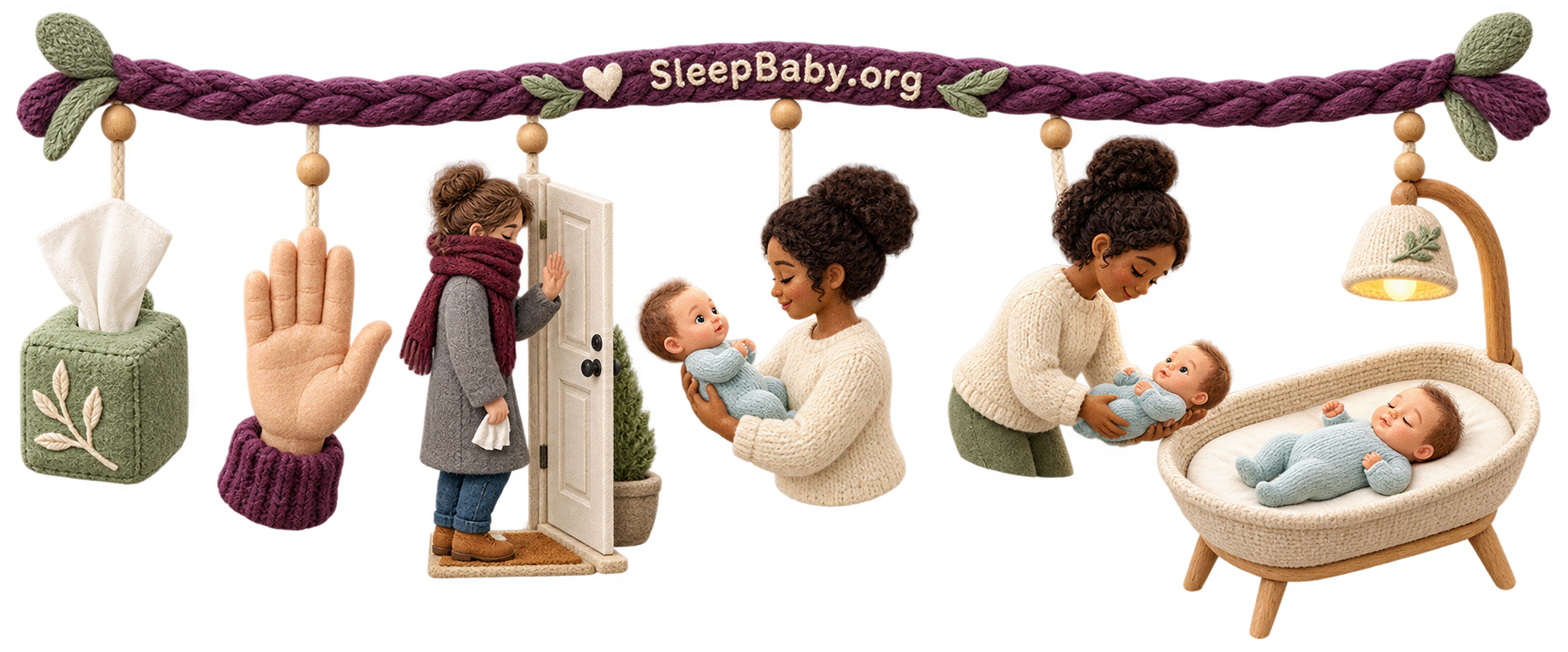
Respiratory viruses can move through droplets, close contact, hands, and surfaces. A kiss near the face adds proximity exactly where the baby’s eyes, nose, and mouth are. If you have fever, cough, sore throat, runny nose, vomiting, diarrhea, or another contagious illness, the affectionate choice is distance—not a faster kiss.
Wash with soap and water for at least 20 seconds, especially after blowing your nose, coughing, or sneezing. If soap and water are not available, the CDC recommends hand sanitizer with at least 60% alcohol. Cover coughs and sneezes, avoid close contact while sick, and clean the high-touch objects that actually need cleaning. Do not spray the sleeping baby, bedding, or nursery air with disinfectant.[5][6]
A mask may be one layer of a clinician- or public-health-informed plan, but it is not a license to kiss. Vaccination, ventilation, hand hygiene, staying home while ill, and choosing a healthy caregiver for close tasks each address a different part of risk. The right combination depends on the illness, the baby, and current guidance.
Say it before somebody leans in
A no-kissing rule can be kind and completely unambiguous
You do not need a medical lecture at the nursery door. Pick one sentence and use the same sentence with everyone:
“We’re keeping kisses to parents and caregivers for now. Please wash your hands, and you can talk to the baby from right here.”
If someone has a cold sore or symptoms, the sentence gets shorter: “We love you, and we’re not doing close contact while anyone is sick. We’ll try again when you’re well.”
If a relative argues that they kissed their own babies and everyone was fine, I would not debate their entire family history. Repeat the present rule: “This is what we’re doing for this baby.” A boundary does not become more accurate because it is delivered with a 14-slide presentation.
Offer a real alternative: read a short book while the baby is awake, sing from a little distance, talk to the baby, bring a meal, fold a basket of laundry, or hold the baby only when the parent invites it and the health rule is met. Connection has more than one doorway.
Optional help for the awkward doorway moment
A visible no-touching, no-kissing sign can say the first sentence for you
If the same boundary keeps arriving one reaching hand too late, consider this “Please Do Not Touch or Kiss Me” baby sign. It fits this situation better than a generic “baby sleeping” plaque because it names both contact behaviors you are trying to prevent. Hang it on the nursery door, diaper bag, or a stationary stroller before visitors arrive, then still say the rule out loud.
The sign does not prevent infection or replace handwashing, staying away while ill, lesion coverage, vaccination, or pediatric advice. Remove it from any occupied car seat, carrier, crib, bassinet, and moving vehicle; it never enters the sleep space. Buy it for communication, not as a germ shield.
As an Amazon Associate, SleepBaby may earn from qualifying purchases.
Affection never gets to edit the safe-sleep setup
For every sleep through the first birthday, place baby on the back on a firm, flat, level, approved infant sleep surface with only a fitted sheet. Keep pillows, loose blankets, bumpers, stuffed animals, positioners, wedges, and other objects out. If your baby can roll both ways and moves independently, continue placing them down on the back and keep the space bare; follow the pediatrician for a rare medical exception.[1]
Room-sharing makes a quiet check easier without putting the baby on the adult mattress. If you are deciding how long to keep that separate surface nearby, SleepBaby’s guide to room-sharing with a baby keeps “close” and “same surface” from becoming the same idea.
The biggest danger in this query may not be the kiss. It may be an exhausted adult lying down “for one minute” while hugging the baby, falling asleep on a sofa or armchair, or pulling the baby into bed because the crib rail feels too far away. If you feel drowsy, transfer baby to the separate safe surface and get another awake adult if one is available. Love is not measured by how long you can outlast sleep while holding somebody.
Do not leave a note, sign, cloth, photo, book, or parent-scented shirt in the crib. Do not close a sleeping baby’s mouth with your hand. If open-mouth breathing is persistent or arrives with snoring, pauses, noisy breathing, color change, feeding trouble, or illness, record what you observe and call the pediatrician rather than trying to reposition the jaw.
Will kissing a sleeping baby wake them?
It might. A face touch, hair against skin, a shift in light, a creaky rail, or the adult’s movement can be enough to turn a small stir into a full waking. It also might not. I would not promise that a “gentle” kiss protects a sleep cycle, because parents cannot see sleep architecture from the doorway and babies have an impressive talent for ignoring a barking dog while objecting to one quiet ankle.
If the baby is safely asleep and does not need care, let the moment stand. If you need to wake a newborn for a feeding plan, medication, or clinician-directed care, use the actual care plan—not a kiss as an unreliable alarm. SleepBaby’s guide to waking a sleeping baby gently and safely starts with whether the baby needs to wake and whether they can wake normally.
If a brief kiss wakes the baby, you have not damaged their sleep. Keep the room dim, avoid turning the wake into playtime, check the baby’s needs, and resettle with the same safe surface. If the real pattern is a newborn who repeatedly cannot settle, the broader guide for a newborn who will not sleep at night separates normal fragmented sleep from feeding, illness, and safety concerns.
When the kiss is not the right move
Choose affection that matches the threshold
Baby is safely asleep
Watch one breath, soften the room, and leave. A hand to your own heart, a whispered goodnight from the doorway, or saving the kiss for waking keeps the sleep intact.
Baby is awake and the caregiver is well
Use ordinary responsive affection within the baby’s age and care plan. With a newborn, favor the top of the head and keep face and hand boundaries clear.
The adult is sick or has a cold sore
Use voice, video, a wave, a note for later, or help that does not require close contact. Distance is temporary; an exposure cannot be taken back.
The baby needs care
Feed, change, comfort, assess symptoms, or follow the clinician’s plan while awake. Then return baby to the safe surface. Do not let a sweet ritual delay a real need.
What to do after a kiss you now regret
First, do not panic and do not punish the baby’s skin. A healthy caregiver’s ordinary kiss is not automatically an emergency. Write down what changes the decision: the baby’s age and medical context, whether the adult had a cold sore or symptoms, where the kiss landed, when it happened, and what the baby is doing now.
If there was an active cold sore, a possible herpes lesion, a newborn exposure, or a baby with special medical vulnerability, call the pediatrician promptly for individualized advice. If the adult later learns they had a respiratory infection, follow current clinician or public-health guidance and watch for feeding, breathing, temperature, alertness, and hydration changes. Do not start medicine, apply disinfectant, or use essential oils on the baby.
Get urgent help for fever in a baby under 3 months, breathing difficulty, blue or grey color, difficulty waking, seizure, floppiness, poor feeding, dehydration signs, a concerning blister-like rash, or a baby who simply seems seriously unwell. The job is not to identify the virus at home. The job is to notice when the baby needs assessment.
Questions that arrive after the nursery door closes
Can a mother kiss her sleeping baby?
Usually yes when she is healthy, has clean hands, has no current or recent cold-sore concern relevant to a newborn, uses the top or back of the head, and does not disturb the safe sleep setup. Being the mother does not make an active cold sore or contagious illness noninfectious. If baby is safely asleep, waiting until waking is also a complete expression of love.
Can a father or partner kiss a sleeping baby?
The same health, baby-age, location, and sleep-space rules apply. Biology does not make one healthy close caregiver’s kiss automatically safe and another’s automatically unsafe. For newborns, keep the circle small and follow the baby’s clinical plan.
Should grandparents kiss a newborn?
The conservative newborn rule is no visitor kissing, especially near the face and hands. Grandparents can talk, read, sing, help with meals or laundry, and hold the baby only when invited and well. A relationship does not need to begin with a kiss to be real.
Is the top of the head safer than the cheek?
For a newborn and a healthy close caregiver, NHS guidance names the top of the head as the safest place and advises avoiding the mouth, nose, and eyes. It is a lower-risk location, not permission for someone with a cold sore or illness to kiss.
What if my baby puts their hand in their mouth after a hand kiss?
That is why hand kisses are not a good newborn workaround. Babies commonly bring hands to the mouth and face. Keep kisses away from the hands during the stricter newborn period.
Can I kiss my baby if I feel a cold sore tingling but see no blister?
No. Treat the warning tingle as a reason to stop kissing and get current medical advice. Do not wait for a visible blister to create the boundary.
Does kissing a baby strengthen their immune system?
Do not deliberately expose a baby to germs through kissing. The source page’s claim that maternal kisses transfer germs to strengthen immunity is not a safe or evidence-supported instruction. Affection and responsive care matter; purposeful viral exposure is not a bonding tool.
Should I close my sleeping baby’s mouth?
No. Do not push the jaw or lips closed. Persistent open-mouth breathing, snoring, pauses, noisy breathing, color change, or feeding trouble belongs with the pediatrician. Breathing distress or blue/grey color is an emergency.
Can I sleep while hugging my baby?
No infant sleep surface becomes safe because the hold is loving. If you may fall asleep, place baby on the separate firm, flat, bare infant sleep surface and call in an awake adult when possible. Sofas and armchairs are especially hazardous sleep locations with a baby.[2]
Sources
- American Academy of Pediatrics / HealthyChildren: How to Keep Your Sleeping Baby Safe.
- American Academy of Pediatrics / HealthyChildren: Safe Sleep—Back is Best, Avoid Soft Bedding, Inclined Surfaces & Bed Sharing.
- NHS: Neonatal herpes (herpes in a baby).
- American Academy of Pediatrics / HealthyChildren: Cold Sores in Children.
- CDC: How RSV Spreads.
- CDC: Healthy Habits—Coughing and Sneezing.
- CDC: Herpes Simplex Virus and Breastfeeding.
- American Academy of Pediatrics / HealthyChildren: Fever—When to Call the Pediatrician.
- NHS: When to get urgent medical help for babies and children under 5.
- NICHD Safe to Sleep: Safe Sleep for Your Baby.
From the nursery doorway to the next waking
Let the sleeping kiss become an awake good morning
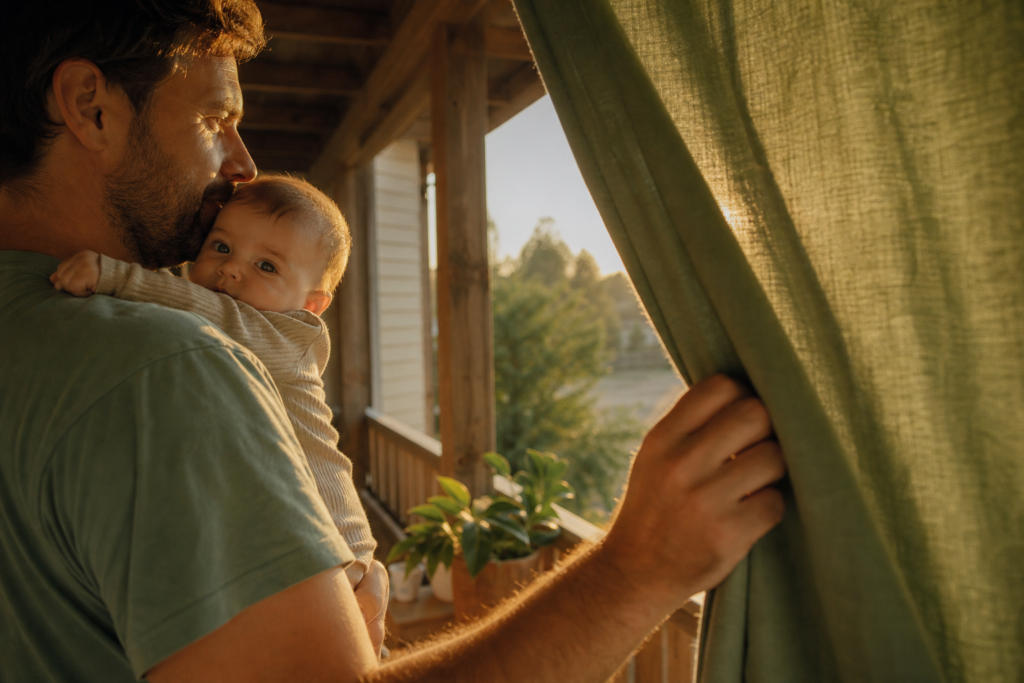
Back at the door, the baby is still safely asleep. You have already checked the part that matters: the adult is well, the baby’s vulnerability is respected, and the crib has not changed. The kiss can wait. If the wider night is what brought you here—frequent waking, hard transfers, uncertainty about what to try next—SleepBaby can help you make the next safe decision without turning affection into another sleep test.
The Workshop supports sleep-routine planning; it does not diagnose infection, replace individualized newborn guidance, or replace medical or emergency care.
Join the conversation
What would you add?
Share one useful detail or question about Baby Sleep. No name or email is needed.
Start the conversation. Share the detail you wish you had seen.