The feeding reminder vibrates. Your hand pauses over the zipper of a perfectly sleeping baby, and suddenly the quiet room feels like a test: Do I really have to wake them? Before you try anything, answer two questions: Does your baby need to wake, and can your baby wake normally?
The short answer
If your newborn has a feeding plan, has not yet regained birth weight, was born early, has jaundice or another medical concern, or your clinician told you to wake for feeds, follow that plan. Start gently: wait for lighter sleep if time allows, speak softly, touch the shoulder or feet, remove one layer, change the diaper, and offer the feed. A healthy baby who is growing and feeding well may often be allowed to sleep longer once their clinician agrees.
If your baby is unusually difficult or impossible to wake, seems limp or weak, cannot suck normally, has breathing or color changes, or simply seems acutely different, stop treating this as a sleep trick. Seek urgent medical help. Call emergency services if your baby will not wake, is not moving normally, has severe breathing trouble, or turns blue or gray.
I want to separate those paths immediately because “sleeping deeply” and “not responding normally” can look similar for a frightened ten seconds, but they are not the same problem. The internet loves a list of toe-tickling techniques. A tired parent needs the decision before the techniques.
SleepBaby.org · The original video
A little help
for the night ahead.
Take a moment to watch the original Baby Sleep Miracle presentation. Your article will be right here when you’re ready to keep reading.
Ready to get started?Take the next step with SleepBaby.
Help my baby sleep
Choose the right door before you wake your baby
Door 1: Let sleep continue
Your baby is healthy, feeds effectively, has reassuring diaper output, is gaining steadily, and your clinician has said you no longer need scheduled waking. The alarm can be silenced. This is not neglect; it is a plan that has changed because the baby has changed.
Door 2: Wake gently
A feeding or medical plan says it is time, or there is a practical reason you have already decided matters. Your baby stirs, changes expression, flexes, roots, opens their eyes, or otherwise responds normally as you begin.
Door 3: Get help
Your baby cannot be awakened normally, is unusually floppy or weak, is too weak to feed, has abnormal breathing or color, has a fever when very young, shows dehydration signs, or behaves markedly unlike themselves. This is an assessment problem, not a louder-waking problem.
SleepBaby.org teaching note: the safest first step is classification, not stimulation.
When should you wake a sleeping baby?
There is no single interval that fits every baby. In the first days and weeks, feeding is the most common reason to wake. The CDC notes that newborns may feed every one to three hours at first and that some sleepy babies need help waking so they can eat often enough. Your discharge instructions, pediatrician, midwife, or lactation professional may give you a more specific interval based on age, weight, feeding effectiveness, jaundice, prematurity, illness, or milk-supply concerns.
I would treat the clinician’s actual plan as the anchor—not the interval a friend remembers, not the longest stretch announced in a parenting group, and definitely not the number you found after searching “when can I stop waking” while holding a bottle in one hand. The useful question is not “What do babies do?” It is “What does this baby need until the next weight and feeding check says otherwise?”
Healthy babies who are feeding and growing well generally do not need to be awakened forever. The American Academy of Pediatrics explains that healthy, growing babies usually do not need routine waking for breast or bottle feeds. That permission depends on the whole picture: steady growth, effective feeding, and reassuring output—not the baby reaching a magical age overnight.
| Reason | What decides it | Best next move |
|---|---|---|
| Newborn feeding | Age, weight trend, feeding effectiveness, diaper output, discharge plan | Follow the clinician-directed interval until cleared to feed on demand |
| Prematurity, jaundice, illness, or poor gain | The baby’s individualized medical and feeding plan | Use the plan exactly and report difficulty waking or feeding |
| Daytime schedule | Age, total sleep, nap timing, bedtime effect, and family needs | Wake gradually at a chosen boundary; do not use newborn feeding rules as a generic schedule |
| Healthy baby sleeping comfortably | Normal breathing and color, expected responsiveness, feeding and growth established | Let sleep continue unless there is a clear reason to interrupt it |
Catch the edge of sleep instead of crashing through it
Babies move through different sleep and wake states. In deeper sleep, breathing is steady, the face is quiet, and the body may be very still except for an occasional startle or sucking motion. In lighter sleep, eyelids may flutter, the face changes, the fingers move, or the baby makes brief noises. The NHS describes light sleep and drowsiness as states closer to waking.
If the feeding plan gives you a small window, I would watch for that lighter edge before doing more. A baby whose mouth twitches, shoulders shift, or eyes move under the lids may need only your voice and a hand on the chest. Waiting five calm minutes can be gentler than spending those same five minutes escalating through a catalog of increasingly annoying ideas.
Do not wait when the schedule is medically important or when something seems wrong. “Catch lighter sleep” is a comfort technique, not permission to delay a necessary feed or ignore abnormal responsiveness.
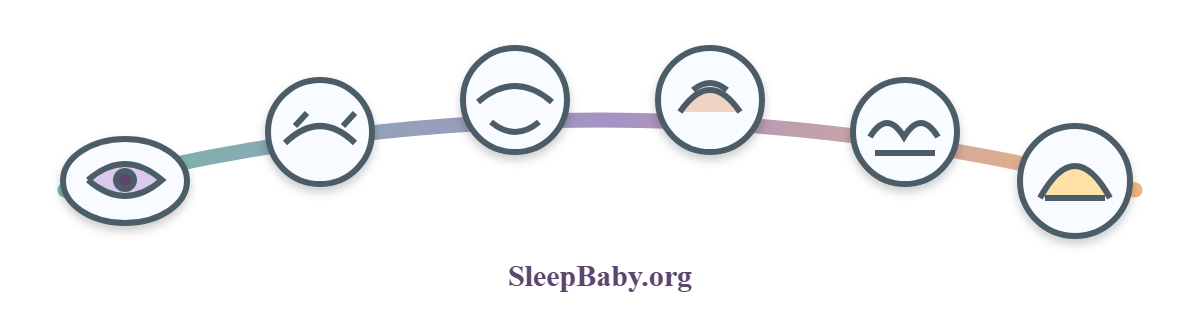
A tiny sleep-state decoder
- Still face, steady breathing, little movement
- Likely deeper sleep. If waking is not urgent, give the baby a few minutes and watch for change.
- Fluttering lids, mouth movements, small stretches, brief sounds
- A lighter state. Begin with voice and gentle touch.
- Eyes open but heavy, rooting, bringing hands toward mouth
- Often awake enough to offer a feed; crying is not the goal.
- No normal response, limpness, weakness, abnormal color or breathing
- Stop the decoder. Seek urgent help based on the severity of the signs.
Why one baby wakes with a whisper and another sleeps through a wardrobe change
Sleep state explains some of the difference. A baby in lighter sleep may stir when the floor creaks; the same baby in deeper sleep may barely react while you unzip pajamas and locate the diaper tabs by touch. Age matters too. Newborn sleep is distributed across many short periods, and a young baby can slide between sleepy feeding and sleep without ever giving you the crisp “awake” expression an older baby might.
Feeding itself also asks a lot of a newborn. Sucking, swallowing, and breathing must coordinate, so some babies tire before a feed is complete. Premature babies and babies being monitored for jaundice, illness, or weight gain may be especially sleepy and may have individualized instructions. I would not use those possibilities to diagnose the baby at home. I would use them as reasons to follow the written plan and report a repeated pattern of ineffective waking or feeding.
The distinction I keep in view
Ordinary sleepiness changes with state and stimulation. The baby eventually stretches, changes expression, gains tone, roots, protests, or feeds effectively.
Concerning sleepiness persists or comes with loss of function. The baby is much less responsive than usual, remains weak or floppy, cannot feed effectively, has abnormal breathing or color, or shows other illness or dehydration signs.
A single dramatic yawn is not the issue. The pattern—response, tone, feeding, breathing, color, output, and change from normal—is what I would describe when calling the clinician.
This is also why I do not grade waking by volume. A loud cry can mean a baby was startled past early cues; quiet rooting can mean the baby is perfectly ready to eat. What matters is whether the baby can travel from sleep into the normal functions the moment requires.
How to wake a sleeping baby gently: climb the Wake Ladder
Think in layers. Start with the smallest change that can do the job, pause long enough to see a response, and climb only if needed. The goal is not to produce a wide-eyed baby who would like to discuss the ceiling fan. The goal is a normally responsive baby who is awake enough for the reason you interrupted sleep.
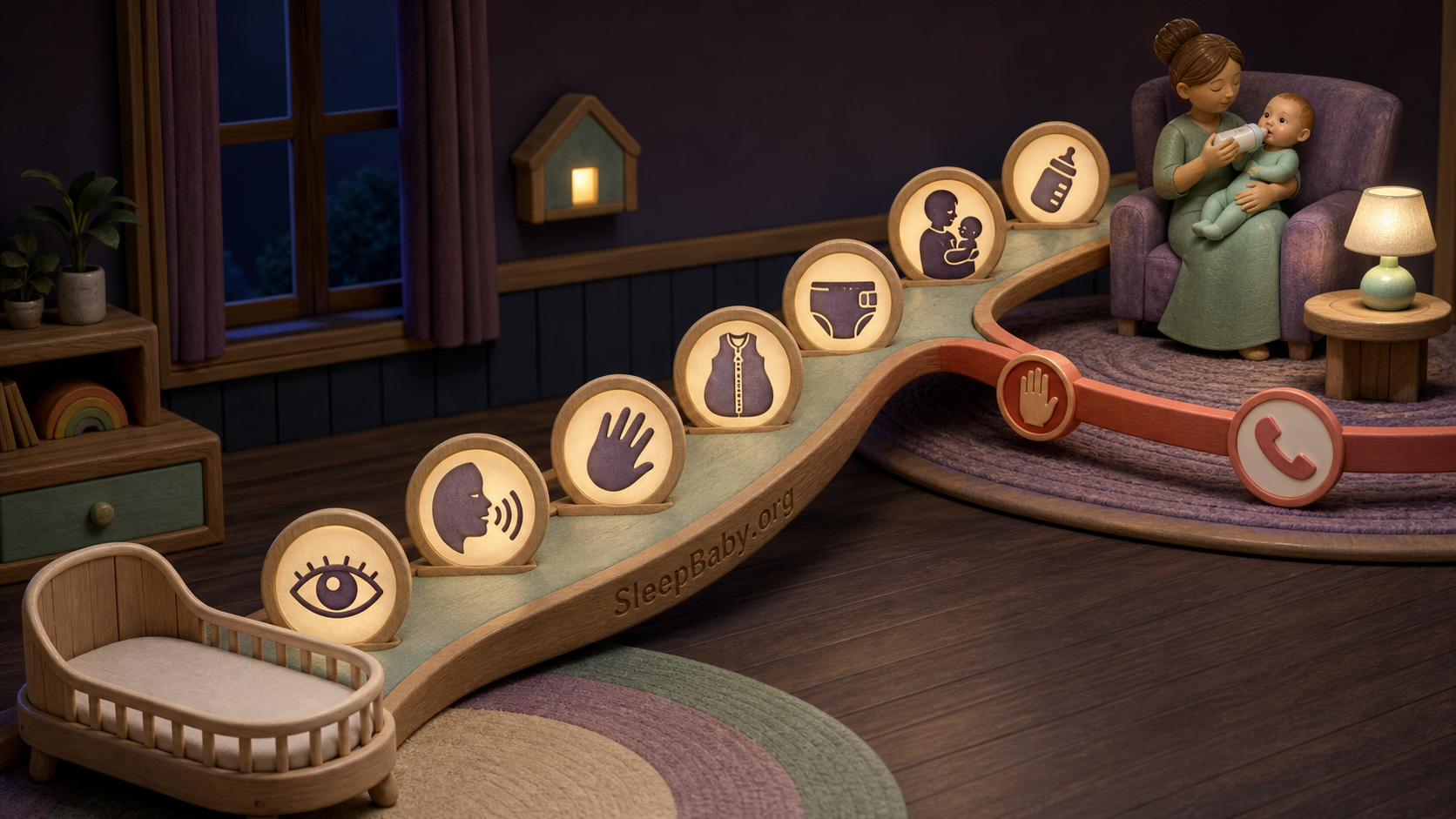
The SleepBaby Wake Ladder
- Look first. Check breathing, color, position, temperature, and whether your baby is already drifting toward lighter sleep.
- Add your voice. Say the baby’s name or speak in the ordinary quiet voice you use during care.
- Add gentle touch. Rest a hand on the shoulder or chest, stroke the back, rub the palms or soles, or flex the arms and legs naturally while supporting the baby.
- Change one comfort cue. Unzip the sleep sack or remove one clothing layer so the baby is comfortably less cozy—never cold.
- Change the diaper. Movement, fresh air, and a new position often bring a sleepy feeder closer to alertness.
- Reposition for the job. Lift the baby securely, hold upright against your chest, or move into the feeding position. Offer skin-to-skin if it is part of your feeding plan and you are awake and supervising.
- Stop rail: If normal voice, touch, changing, and repositioning do not produce a normal response—or your baby is weak, floppy, breathing abnormally, discolored, or too weak to feed—do not keep climbing. Get medical help.
Created for SleepBaby.org: a sequence for preserving calm without confusing force with effectiveness.

What “awake enough to feed” actually looks like
A baby does not have to reach full alertness before feeding. Some babies root, latch, and suck with their eyes mostly closed. Look for function: the body gains tone, the mouth searches, the latch is active, and you can hear or see a pattern of swallowing appropriate for that baby. Crying is a late hunger cue, not proof that your waking technique finally worked.
I would rather wake a baby to the level the feed requires than turn the room into noon. Keep lights low, keep your voice quiet, and avoid play. If the baby begins feeding but fades quickly, add small resets: rub the back or feet, change sides or feeding position, burp, or pause for a diaper change. Follow the feeding professional’s advice about breast compression, paced bottle feeding, supplementation, or other baby-specific steps.
If your baby repeatedly cannot stay awake long enough to feed effectively, takes very little, has fewer wet diapers, seems increasingly sleepy, or has not met the growth plan, contact the pediatric clinician or lactation professional. Technique is not a substitute for assessing intake.
A feed-ready check
- Color and breathing look normal for your baby.
- Your baby responds to voice, touch, changing, or repositioning.
- The body is not unusually limp or weak.
- Your baby roots or accepts the nipple or bottle teat.
- Sucking becomes active, with swallowing rather than only faint fluttering.
- You know what to do if the feed remains ineffective because the clinician’s plan is written down.
Clearly labeled composite scene
Kacey, Benjamin, and the difference one small response makes
Imagine me beside a sleeping Benjamin in a composite scene built from the exact worry behind this search. The timer says feed. He says, through the ancient language of a completely relaxed cheek, absolutely not.
I put a hand on his shoulder and say his name. One eyebrow moves. I unzip one layer. He stretches, turns his face toward my hand, and makes the tiny searching mouth of a baby who is technically objecting but has read the agenda. That sequence tells me something useful: he is sleepy, but he is responding normally.
Now change one detail. Imagine the same voice and touch produce no ordinary stirring; the body feels unusually floppy, the color is wrong, or Benjamin is too weak to suck. I do not congratulate myself for discovering “an extra deep sleeper.” I stop trying nursery tricks and get help.
That is why I care less about whether the eyes pop open and more about whether the baby can move from sleep toward normal responsiveness. This composite is not evidence and it is not a claim about a real event in Kacey’s family. It is a way to make the clinical distinction visible before you need it.

What not to do
Never shake a baby. Do not slap, pinch, flick, hold the nose, blow forcefully into the face, use cold water, place ice on the skin, or create a sudden fall sensation. Do not prop a bottle or leave a sleepy baby feeding unattended. More dramatic is not more effective, and a baby who needs forceful stimulation needs assessment.
Avoid bright overhead light and loud sound as your opening move. They may wake a healthy baby, but they can also turn a contained feed or schedule transition into a fully activated night. I use the least stimulation that achieves the caregiving goal because I also care about the handoff back to sleep.
Tickling the feet appears on nearly every list. Gentle rubbing is reasonable; relentless tickling is not a medical plan. If the baby does not respond normally, the answer is not to become more inventive.
Hard to wake is different: when to get help
Call emergency services now if your baby will not wake, is not moving normally, has severe trouble breathing, turns blue or gray, has a seizure, or you believe there is a life-threatening emergency.
Seek urgent medical care when your baby is much harder to wake than usual, unusually weak or floppy, too weak to suck, has repeated poor feeds, shows dehydration signs, has concerning vomiting, or is a very young infant who looks or acts abnormal. Fever in a baby under 3 months needs prompt medical guidance.
Trust the comparison with your own baby. “Different from their normal” is information. You do not need to prove a diagnosis before asking for help.
If you are waking an older baby from a nap
The medical stakes are usually different once feeding and growth are established, but the gentle sequence still works. Decide the boundary before entering the room: perhaps you are protecting bedtime, leaving for childcare, or preventing a late nap from swallowing the evening. Open the door, let ordinary household light enter gradually, speak, touch, then lift.
Give the baby a transition minute. Some babies wake cheerful; others surface looking as if they have been summoned to a meeting they did not schedule. Hold them, offer connection, and let alertness arrive before expecting immediate play or a meal. Waking at a chosen nap boundary is not the same as restricting needed total sleep. If you are repeatedly capping naps to rescue bedtime, review the whole schedule rather than fighting the same nap every day.
Open the room gradually.
Offer a familiar cue.
Stroke, then lift securely.
Allow a quiet cuddle before the next demand.
Make the next feeding decision easier before everyone is tired
Ask the clinician to make the stop point explicit: “What needs to be true before we can stop waking for feeds?” Write down the answer. It may involve regained birth weight, a growth trend, a number of effective feeds, diaper output, bilirubin follow-up, or another baby-specific marker.
I also want the plan to include a failed-feed branch: “If the baby will not wake enough to feed, how long should we pause, when should we retry, and when should we call?” That sentence turns a midnight improvisation into a decision you already made with someone who knows the baby.
The question to take to the clinician
“What exact signs tell us to keep waking, what signs let us stop, and what should we do if our baby cannot stay awake for the feed?”
Ask for intervals and escalation instructions in writing when the plan is complex.
SleepBaby practical pick · Amazon recommendation
A dimmable light for the wake-and-feed handoff
The TaoTronics VA-CL009 rechargeable dimmable baby night light fits this exact job because it gives you portable, adjustable visibility for checking color, unzipping a layer, changing a diaper, and settling into a feeding chair without switching on a harsh ceiling light.
I prefer this form for this situation over a sound machine, which helps maintain sleep but does not help you see; a fixed plug-in light, which cannot follow you; or a phone flashlight, which is directional, bright, and attached to a device begging to show you seventeen notifications. The practical reason to buy it is simple: one touch-controlled light can stay within the caregiving path from sleep space to diaper station to chair.
This is a visibility tool, not a treatment. It does not determine whether your baby should wake, make feeding medically effective, prevent SIDS, or guarantee an easier return to sleep. Affiliate Control will resolve any eligible Amazon destination with the configured owner tracking ID; no destination is active in this draft.
Return to sleep without undoing the safe-sleep basics
Once the feed, medicine, appointment, or schedule transition is complete, lower stimulation again. Keep the room dim, skip play, and use the same short phrase or motion that normally closes care. If your baby falls asleep while being held or fed, transfer them to their own firm, flat, noninclined sleep surface on their back, with the sleep space empty.
Do not leave a sleeping baby in a car seat, swing, bouncer, nursing pillow, sofa, or adult bed as the convenient ending to a difficult wake. Exhaustion makes “just for a minute” feel reasonable. I would rather make the safe transfer the final rung of the ladder every single time.
The safe return
Dim → quiet → feed or care complete → back on the back → firm, flat, empty sleep space.
The Wake Ladder is not finished when the baby opens their eyes. It is finished when the need is met and the baby is safely placed for the next sleep.
Common questions about waking a sleeping baby
Should I wake my newborn every two hours?
Some newborns need feeds about that often, but the exact interval may be counted from the start of one feed to the start of the next and can vary by feeding plan. Follow the instructions from the baby’s clinician or discharge team. Ask when the plan can change rather than assuming the same interval lasts indefinitely.
Can I change the diaper first?
Yes, when a diaper change is needed or useful for waking. Some families change first; others feed briefly, change when the baby becomes drowsy, then finish the feed. The better sequence is the one that supports effective feeding while keeping night stimulation low.
What if my baby sleeps through the whole diaper change?
A very sleepy baby may stay mostly asleep through familiar care. Look at the whole response: tone, movement, color, breathing, rooting, and ability to feed. If you cannot obtain a normal response or feeding is weak, follow the urgent guidance rather than repeating diaper changes.
Is it okay to use a wet washcloth?
A comfortably warm cloth during ordinary care is different from using cold water as a shock. I would use voice, touch, uncovering one layer, repositioning, and a diaper change first. Never make the baby cold or distressed to force alertness.
Should I fully wake my baby for a dream feed?
Many babies can feed while drowsy. The key is effective, safe feeding and normal responsiveness—not open eyes. Dream feeds are not required for every baby and should not override a clinician’s feeding advice or safe bottle-feeding practices.
When can I stop waking my baby to feed?
Ask the clinician who follows your baby’s growth. Regaining birth weight is often part of the conversation, but prematurity, jaundice, supply, feeding effectiveness, and the individual growth curve can change the answer. Get the stop criteria, not only a date.
Sources
- CDC: How Much and How Often to Breastfeed
- American Academy of Pediatrics: How Often to Breastfeed
- American Academy of Pediatrics: Sleeping Through the Night
- American Academy of Pediatrics symptom guidance: Breast-Feeding Questions
- NHS: Understanding your baby
- NHS: Helping your baby to sleep
The feeding reminder will still vibrate. Your hand may still pause over the zipper. But now the room is not asking one enormous question. It is asking two manageable ones: Does my baby need to wake, and are they waking normally? Once you know which door you are standing at, you can either let sleep keep doing its work, climb the Wake Ladder gently, or stop and get the help your baby needs.
From waking safely to sleeping calmly
Build a night that knows when to stir—and when to stay quiet
SleepBaby helps you turn the next hard-to-interpret moment into a calmer, safer plan for the whole night.
SleepBaby.org · The original video
A next step for
the next bedtime.
Still thinking about sleep? Watch the presentation here, then explore the SleepBaby program whenever you’re ready.
Ready to get started?Take the next step with SleepBaby.
Help my baby sleep