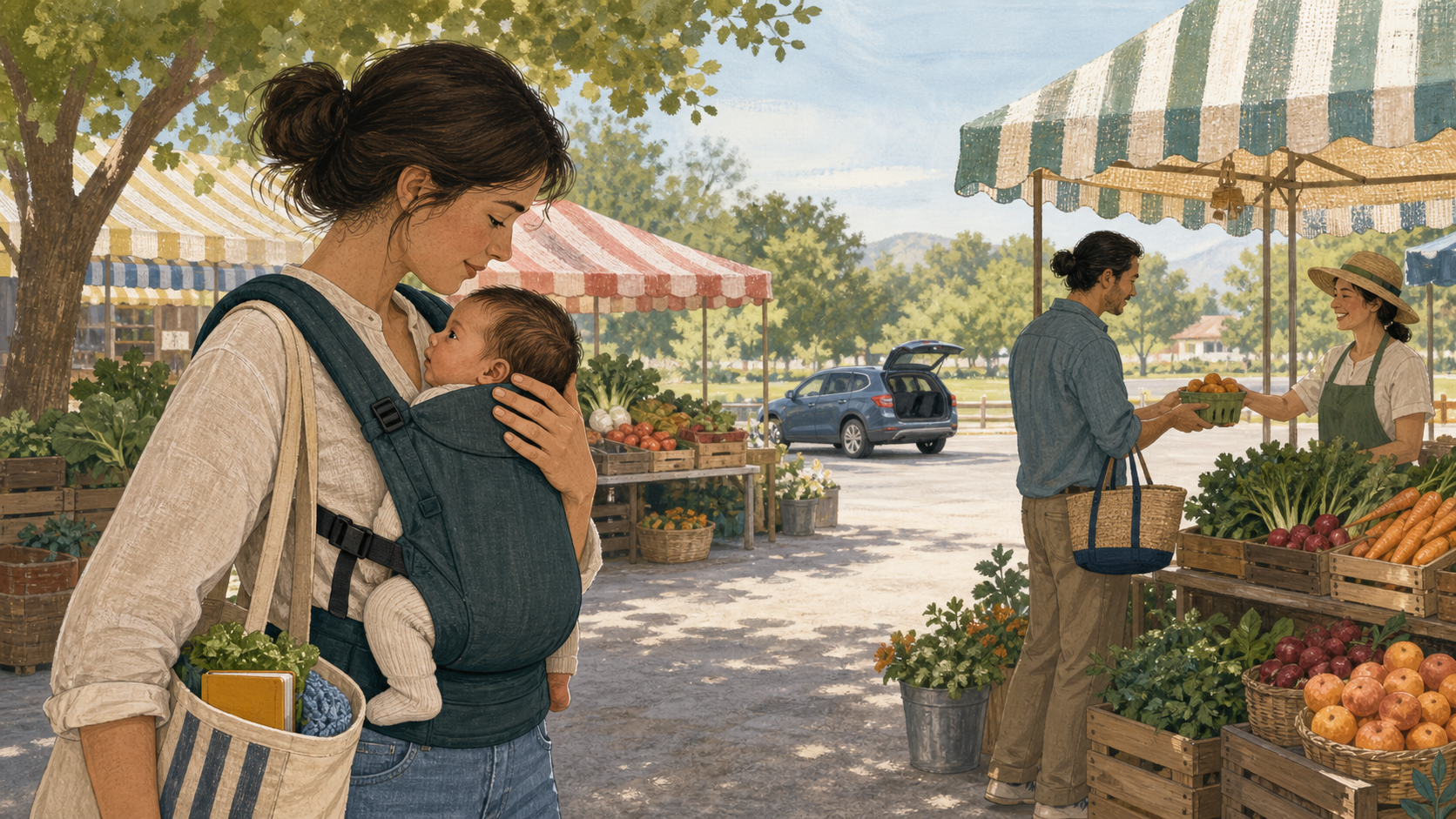
Taking a newborn to a farmers market can be a reasonable short first outing for some families, but there is no universal age when every baby is cleared to go. If your baby was premature, low birthweight, recently ill, has heart, lung, immune, or breathing concerns, or has been given specific restrictions, ask the baby’s clinician before using a market as a test run. For a healthy full-term newborn with no special restriction, choose an open-air market, a cool off-peak window, a shaded one-loop route, and an exit you can reach before the outing becomes work.
A farmers market looks almost comically uncomplicated from the kitchen table: buy peaches, admire flowers, go home. Then the newborn arrives, and “pop by” develops an airway check, a milk clock, a weather clause, and a stranger who would very much like to touch a tiny cheek. I would not measure success by how many stalls you visit. I would measure it by whether the baby stays cool and easy to see, feeding supplies stay clean, the adults can leave without debate, and everyone reaches home with enough calm left for the next sleep.
The useful question is not, “Can newborns go outside?” It is, “Is this baby, this market, and this particular morning a good match?” That distinction keeps a family from borrowing confidence from a sunny forecast when the baby, the caregiver, or the crowd is already saying no.
Choose today’s smallest workable visit
Go briefly, change the plan, or skip today
Go small
The baby is feeding and behaving normally, no one in the group is sick, the weather is mild, the market is genuinely outdoors, and you can park close enough to leave after one loop.
Change the plan
Go earlier, choose a smaller market, use curbside pickup, send one adult inside, or make the outing a ten-minute walk along the quiet edge instead of a full shopping trip.
Skip and call
Follow individualized restrictions. Stay home for a sick companion, a baby feeding or acting unlike themselves, unsafe heat or air, or a caregiver who is dizzy, in significant pain, or not ready for the walk.
Why this matters tonight: the shortest honest outing protects the baby’s next feed and sleep better than a longer trip everybody must recover from.
Very young infants can become seriously ill from respiratory infections, and younger age plus prematurity or certain heart, lung, or immune conditions can increase the risk of severe RSV illness. Some very young infants show reduced feeding, decreased activity, irritability, or pauses in breathing rather than a fever.[1] That is why the baby’s own history outranks somebody else’s cheerful story about taking a three-day-old to brunch.
There is no primary source in this research that supports a single “wait until X weeks” rule for every newborn. If your real concern is exposure to relatives rather than produce stalls, the crowd and sick-contact boundaries in this guide to taking a newborn to a family reunion offer the more relevant next decision. A market is not medically special. It is simply one environment you can make more or less manageable.
Choose the market before you choose the gear
Start with the place. Look for a market that is truly outdoors, not a packed hall with two open doors. Check the day’s heat, air quality, rain, wind, and UV conditions. Find out when the market is quietest, where you can park, whether the aisles are paved or deeply rutted, where the shade falls, whether there is a clean restroom, and how far the nearest calm feeding stop is from the exit.
Outdoor air generally allows virus particles to build up less than they do in crowded indoor spaces, but “outside” is not a force field.[2] A dense knot around a popular bread stand is still close contact. So is a line of friendly adults leaning over the stroller. I would choose the roomy edge of a modest market over the photogenic center of a famous one, especially for a first try.
Pick one purpose. Buy eggs from one known vendor. Collect a preordered produce box. Walk a shaded loop and leave. A newborn outing becomes easier the moment the shopping list stops behaving like a dare.
A route with an ending
Plan one shaded loop and keep the exit visible
- 1. Park for departure, not prestige. A close, legal space near the exit is worth more than the prettiest entrance when a feed or weather change ends the trip.
- 2. Begin along the quiet edge. Confirm shade, airflow, and aisle width before moving toward any busier stall.
- 3. Make the essential stop first. Buy the one thing that justified the outing while the baby and adults are still settled.
- 4. Use a stationary care point. Feed, reposition, or change the baby only after stepping out of traffic and stopping completely.
- 5. Leave on the first real signal. Do not add a bonus lap after the baby, caregiver, crowd, or weather changes the answer.
Why this matters tonight: a route with one job and one exit creates fewer delayed feeds, accidental carrier naps, and overtired decisions.
A SleepBaby.org route for leaving while the outing is still going well.
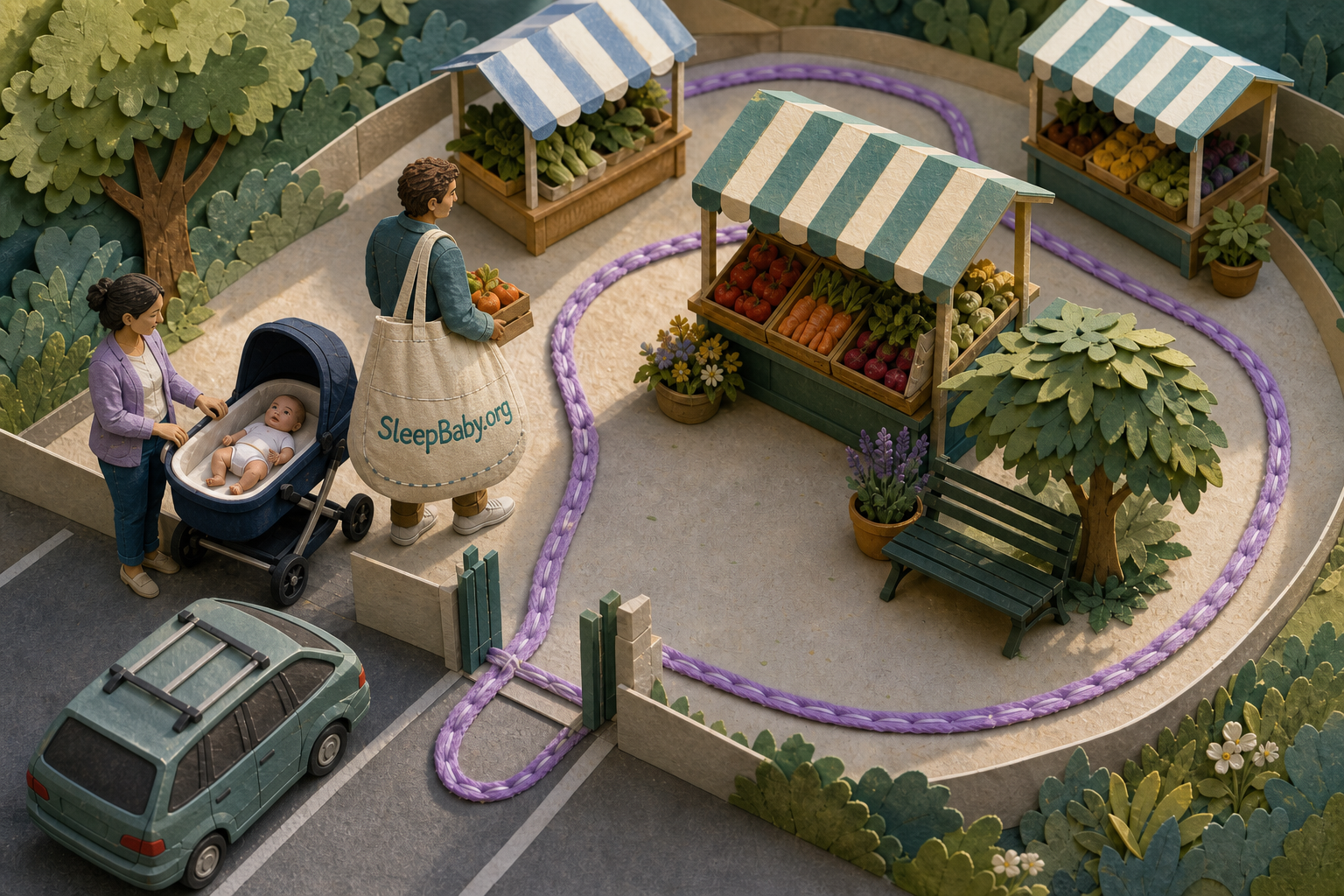
The one-loop plan is intentionally modest. If it feels too small to count as an outing, that is probably because adults have been taught that leaving home must produce a result. With a newborn, useful information is a result. You learn how the baby handles the carrier in warm air, whether the stroller fits the aisles, how long the parking-to-shade transition takes, and whether the adults can end the visit without negotiating with a bag of tomatoes.
Carrier or stroller: choose for this route and this baby
Neither tool wins automatically. A stroller can create space, carry supplies, and reduce body-to-body heat, but it can be awkward on gravel or in narrow aisles. A carrier keeps the baby close and can simplify rough ground, but it requires a correct newborn fit, a constantly visible airway, and more attention to shared body heat. The best choice is the one that fits the baby’s medical guidance, size, airway, the weather, the route, and the adult using it.
Match the tool to the route
The question each option must answer
| Decision | Carrier must prove | Stroller must prove |
|---|---|---|
| Airway | The face stays visible, the chin stays off the chest, the neck is supported, and fabric and the adult’s body do not cover the nose or mouth. | The newborn setup is manufacturer-approved, properly reclined, harnessed, and easy for the caregiver to observe. |
| Heat and sun | Shared body heat remains manageable and the adult can check the baby often without covering the face. | The canopy provides shade without turning the seat into an enclosed warm pocket; the visit still stays short. |
| Aisles and surface | The adult can walk safely on the actual surface and keep both hands available when needed. | The wheels fit the route without forcing the baby into crowds, potholes, curbs, or vendor displays. |
| Care and exit | The adult can stop, sit, remove or reposition the baby safely, and reach the car without a complicated transfer. | Care supplies stay organized, the brake is dependable, and the stroller can turn toward the exit immediately. |
Small-screen note: this is one contained horizontal scroll region. Swipe inside it to reach the final column, then continue down the page normally.
Why this matters tonight: secure positioning and fewer frantic transfers make it easier to return to a safe sleep surface instead of stretching an outing nap.
For a carrier, keep the baby’s neck straight, chin off the chest, face visible, and nose and mouth clear. Check often. Premature babies and babies with respiratory problems need individualized guidance before upright positioning devices, and babies younger than 4 months, low-birthweight babies, and babies with breathing concerns deserve extra care around sling positioning.[6][7] A carrier is only convenient while the airway remains boringly obvious.
For a stroller, use the manufacturer-approved newborn configuration and harness. Do not let a useful canopy become an excuse for extra time in heat. If you are comparing quick-errand setups, this guide to taking a baby to the grocery store explores many of the same aisle and equipment tradeoffs in a different environment.
Make a low-contact bubble without making a scene
The easiest boundary is a physical one: stay on the outer edge of the crowd, keep moving past congested stalls, and position the baby’s face away from curious passersby. The next easiest is a sentence delivered before a hand is already halfway into the stroller: “We’re doing no touching or kissing yet, but you can wave from here.” It is kind, clear, and complete. You do not owe the market a committee meeting about it.
Ask sick companions to stay home. Adults should wash hands with soap and water when available, especially before preparing a bottle or touching the baby’s face, pacifier, or feeding equipment. When soap and water are unavailable, hand sanitizer with at least 60% alcohol is an interim option for adults, not a way to clean a visibly dirty changing surface.[3]
An outdoor market can reduce airborne buildup compared with a crowded indoor errand, yet a tight checkout line can erase much of the practical advantage. If the aisle changes from roomy to shoulder-to-shoulder, use the crowd as information and leave. The decision framework in taking a baby into large crowds can help when the venue itself, rather than one busy stall, is the problem.
Shade is the plan; sunscreen is the backup detail
Babies younger than 6 months should be kept out of direct sunlight. Use reliable shade, cool protective clothing, and timing that avoids the harshest sun. The American Academy of Pediatrics notes that when shade and protective clothing are unavailable, sunscreen may be used on small exposed areas, but sunscreen is not permission to keep a newborn in direct sun or extend a hot visit.[4]
Check the forecast, local HeatRisk, and air quality before leaving. Dress the baby in loose, lightweight, light-colored clothing appropriate to the conditions, monitor closely, and never leave an infant in a parked car, even with the windows open.[5] For a newborn, “keep hydrated” means offering the baby’s usual breast milk or correctly prepared infant formula according to their normal feeding needs, not adding water or juice unless the baby’s clinician has given a specific instruction.
Keep shade ahead of the stroller
Three checks before one more stall
- Baby
- Face easy to see, airway open, skin and behavior reassuring, feeding pattern unchanged, clothing comfortable.
- Shade
- The next stretch is genuinely shaded and ventilated, not a bright exposed aisle reached after “just a minute.”
- Exit
- The car or home is still close enough that leaving now solves the problem rather than beginning another one.
Why this matters tonight: stopping before heat and overstimulation build is far kinder to the next feed and sleep than trying to repair both afterward.
If you need more stage-based ideas for shade and outdoor expectations, see taking a baby to the playground. For a busier event where heat and crowd movement happen together, the planning boundaries in taking a baby to a parade are the closer comparison.
The useful takeaway from this pediatric video: for a newborn younger than 6 months, shade and protective clothing are the plan; sunscreen is limited to small exposed areas only when shade and clothing are unavailable. The video does not make prolonged heat or direct sun appropriate.
If the player does not load, watch the American Academy of Pediatrics sunscreen video on YouTube.
Feed and change the baby with a clean side and a dirty side
Plan a stationary care stop before you need it. Feeding while weaving through a market invites spills, missed airway checks, and dropped equipment. Feeding in a moving car is not an option. Step out of foot traffic, sit or stand securely, settle the baby, and give the feed your full attention. If the calm place you expected is occupied or dirty, go back to the car with an adult present or go home.
For formula, wash hands and use clean, sanitized bottles and preparation surfaces. Prepared formula should be used within 2 hours of preparation and within 1 hour after feeding begins, and leftovers from a feed should be discarded. Babies younger than 2 months, premature babies, and babies with weakened immune systems need extra preparation precautions because powdered formula is not sterile.[8] Formula does not need to be warmed, which is one less market-day performance to stage.
Two zones in one small bag
Keep feeding gear away from diaper gear
Clean feed zone
- Prepared milk or formula stored for its actual time and temperature needs.
- Clean bottles, nipples, caps, cloths, and feeding supplies in a closed pouch.
- Adult hand-cleaning supplies reachable before the bottle is opened.
- A written or phone note for preparation and feed-start times when needed.
Closed dirty zone
- Diapers, wipes, a washable changing mat, and disposal bags in a separate module.
- Used diapers and soiled clothing sealed away from bottles and food.
- The changing surface cleaned or replaced before the next use.
- Hands washed or sanitized before returning to feeding equipment.
Why this matters tonight: a clean feed and a quick change reduce the kind of avoidable discomfort that follows a family into the next sleep window.
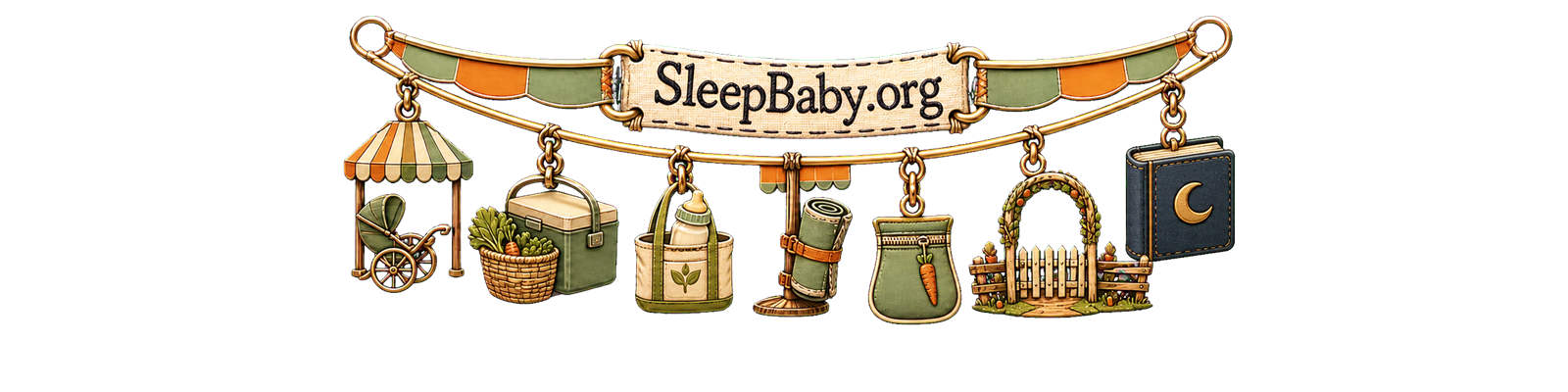
A SleepBaby.org care split for a place where dirt is charming until it reaches the bottle cap.
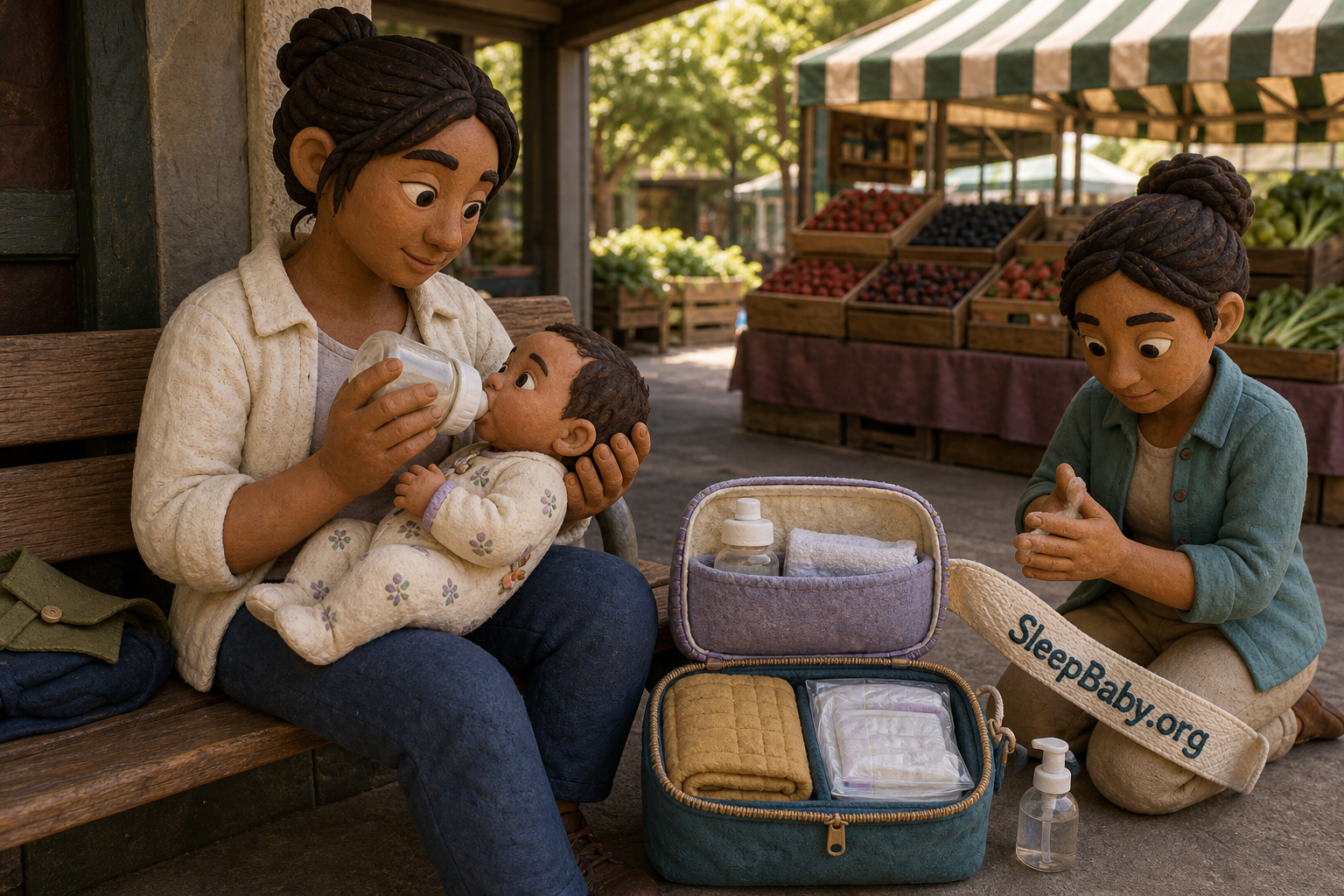
The FDA advises transporting milk, formula, or food with a cold source when required and keeping dirty diapers out of the compartment that contains bottles or food.[9] A wet bag or sealed disposal bag is useful; the important idea is separation, not owning a diaper bag with the square footage of a studio apartment.
The newborn is not a market sampler
A newborn’s food is breast milk or infant formula according to the family’s feeding plan. Do not offer water, juice, raw milk, produce samples, or other market foods. Fresh-squeezed juice sold by the glass may be unpasteurized, and raw milk can carry harmful germs. If an adult is buying dairy for the household, confirm that it is pasteurized and get perishables refrigerated promptly.[9][10]
Keep the stroller, carrier supplies, pacifiers, bottles, and diaper bag out of petting areas or animal pens. Healthy-looking farm animals can still carry germs. The CDC advises washing hands with soap and water after animal areas, keeping strollers and baby items out, avoiding food and drink there, and not allowing children younger than 5 to handle live poultry.[11] With a newborn, I would admire the goats from outside the boundary and let that be the entire goat chapter.
Market dogs deserve a similar practical buffer. Do not allow an unfamiliar animal to approach the baby’s face or equipment. The point is not to make the world sterile. It is to avoid adding optional close contact to an outing already asking the newborn to process heat, movement, noise, and feeding away from home.
Leave when one variable changes, not when all of them collapse
A good exit rule is chosen before the market. You do not need to diagnose the baby beside the mushroom stall. You need to notice that the plan no longer fits and leave.
The visit ends here
Three kinds of signal are enough
Baby signal
Airway position changes, the face is hard to see, feeding is reduced or different, activity drops, breathing concerns appear, the baby becomes unusually difficult to settle, or heat seems to be building.
Place signal
Shade disappears, air quality worsens, the aisle becomes dense, animals or dogs block the route, rain or wind changes, or the clean care stop is no longer usable.
Caregiver signal
Pain, dizziness, heavy fatigue, rising anxiety, a missed meal, or the feeling that one more stall matters more than the baby’s cues. The adult is part of the safety system.
Why this matters tonight: leaving on one clear signal prevents the familiar chain of late feed, accidental travel nap, overtired return, and adults wondering when the pleasant outing changed shape.
For a baby 3 months or younger, a rectal temperature of 100.4°F (38°C) or higher requires an immediate call to the pediatrician, even if the baby has no other symptoms.[14] Difficulty breathing, pauses in breathing, markedly reduced feeding or activity, or worsening illness also move the problem out of the outing-planning category. Leave, seek medical guidance promptly, and use emergency services for severe breathing difficulty, unresponsiveness, or another emergency. Do not wait for the shopping list to end.
The same principle applies to the environment. If crowd density suddenly changes, the exit is not an admission that you planned badly. It is the plan working. The best newborn outings have a quiet trapdoor built into them.
Use the car seat for travel, not for destination sleep
For the drive, use a properly installed rear-facing car seat at the manufacturer’s correct recline angle, with the harness snug and the baby’s chin not slumped to the chest. A baby may sleep in a correctly installed seat while the vehicle is moving and the baby is supervised, but stop the car safely before feeding. The parked car can be an attended exit and care base; it can never become a hot waiting room.[12]
Once you arrive home or at another destination, move a sleeping baby from the car seat, stroller, sling, or carrier to a firm, flat, non-inclined sleep surface as soon as possible. Place the baby on their back and keep the sleep space clear of loose objects.[13] Travel equipment solves travel. It does not become safer sleep furniture because the baby finally looks peaceful.
Bring the evening back to ordinary
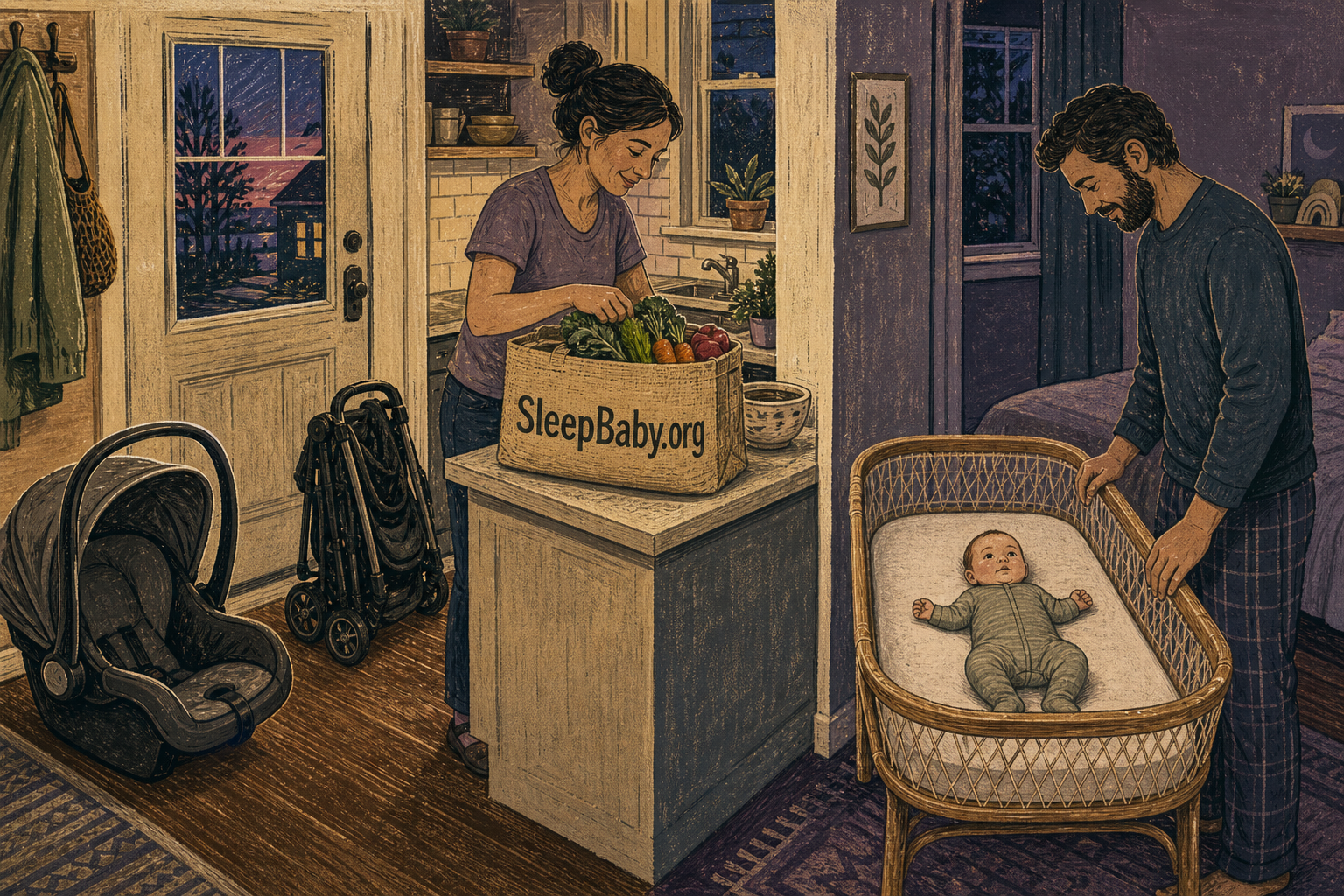
After the market, unpack perishables, wash adult hands, put feeding supplies where they belong, and let the outing be over. If the baby slept briefly in transit, do not perform elaborate nap mathematics in the driveway. Return to the familiar feeding and sleep cues you already use. Dim the stimulation. Watch the baby. Offer the next normal sleep opportunity safely.
A newborn may need a feed, a change, a quiet cuddle, or simply less scenery. The adults may need water, food, and ten minutes without deciding anything. That is not a failed adventure. It is the part of taking a newborn somewhere that glossy outing photos politely crop away.
The market’s most useful lesson is not whether your stroller can clear the honey stand. It is how your family notices change. You chose a small route, protected the baby’s airway and shade, separated clean from dirty, and left before the day demanded heroics. Those same skills – noticing cues early, reducing friction, and using a familiar sequence – are the bones of a calmer night.
Sources
- CDC: RSV in Infants and Young Children
- CDC: Cleaner Air and Respiratory Virus Prevention
- CDC: Hygiene and Respiratory Virus Prevention
- American Academy of Pediatrics: Sun Safety
- CDC: Infants and Children and Heat
- American Academy of Pediatrics: Baby Carriers
- CPSC: Safe Babywearing and Sling Airway Warning
- CDC: Infant Formula Preparation and Storage
- FDA: Food Safety Once Baby Arrives
- FDA: The Dangers of Raw Milk
- CDC: Farm Animals and Germs
- American Academy of Pediatrics: Car-Seat Travel
- American Academy of Pediatrics: Safe Sleep
- American Academy of Pediatrics: Fever and Your Baby
When the market bag reaches the counter
Let one small outing become a gentler return home
A farmers market asks a newborn to move through light, voices, motion, feeds, and a dozen tiny transitions. SleepBaby can help you use the same cue-led thinking at night: notice early, simplify the next step, and bring the baby back to a familiar sleep rhythm without asking the whole day to have gone perfectly.