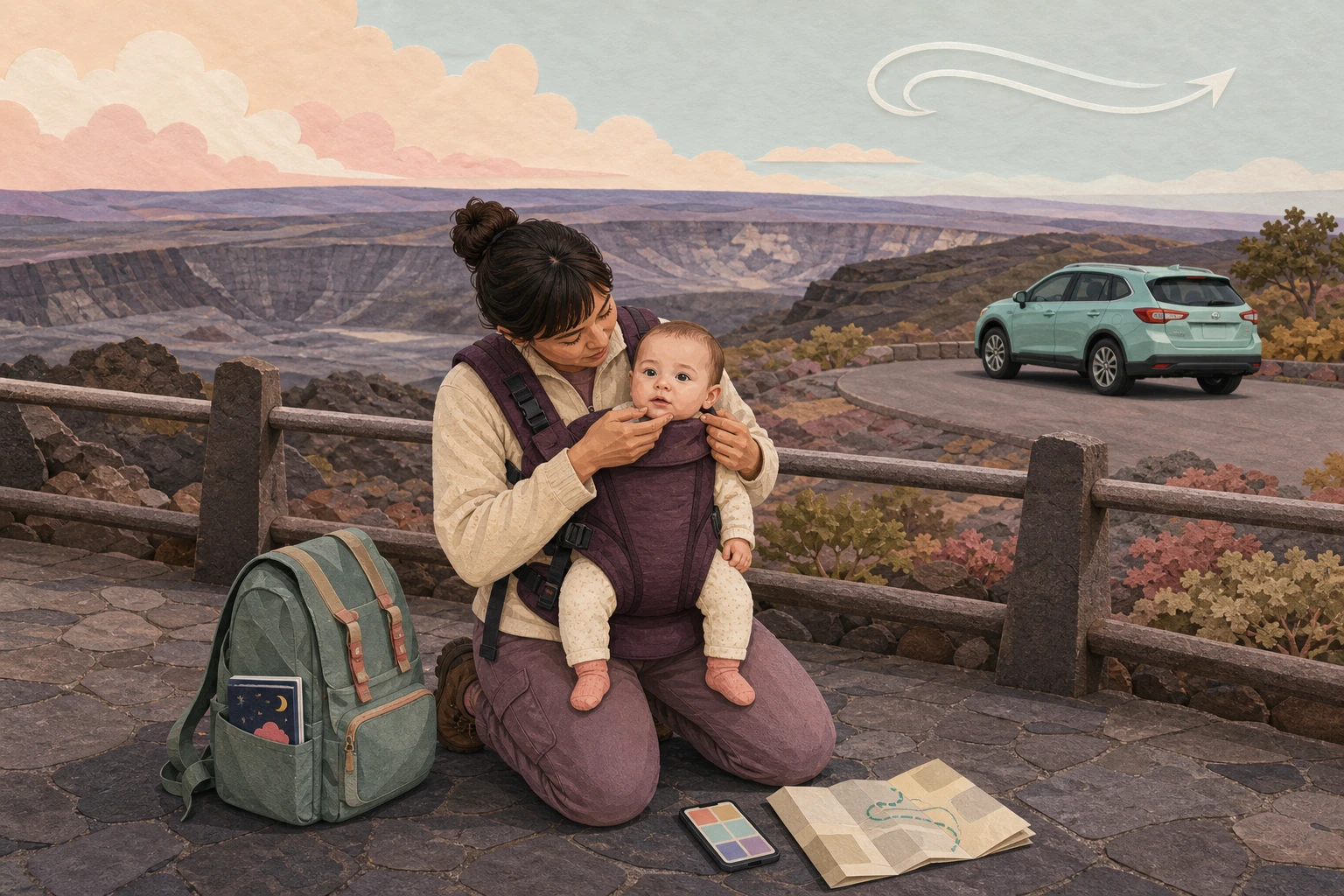
Sometimes, yes: a baby can visit a managed volcanic landscape when the exact destination and route are officially open, current activity and nearby air data are reassuring, the weather and road out are workable, the ground is marked and stable, and the whole visit can end quickly. A closure, ashfall, poor or uncertain air, an affected-area warning, unstable terrain, a compromised road, or a baby who is unwell changes the answer to another place or another day. That is not overcaution. It is the plan doing its job. NPS volcano safety guidance and official volcano updates both make clear why the answer has to stay tied to present conditions.
A mask or stroller canopy does not make volcanic gas acceptable for an infant. Ordinary masks do not protect against sulfur dioxide, respirators generally do not fit babies, and loose fabric introduces its own airway problem. For a baby, the useful controls are distance, cleaner air, a suitable official route, and leaving—not a smaller version of adult gear. USGS guidance on vog and USGS ash guidance support that boundary.
Before I care how close the crater looks in somebody else’s photo, I want to know how quickly this baby can be moved to cleaner air and onto a usable road. Volcanoes are very good at looking like scenery while wind, gas, heat, access, and topography quietly change the question. A quiet baby is not an air-quality reading.
The green, yellow, and red guide below is SleepBaby’s conservative synthesis of official guidance. It is not an agency alert level, medical clearance, or permission to ignore park staff. Current observatory updates, closures, ranger instructions, local air, and your child’s healthcare professional still outrank a general article.
Check four live sources before you buckle the car seat
The order matters. Volcano activity is not the same thing as visitor access. Visitor access is not the same thing as clean air at your overlook. Reassuring air at one monitor is not the same thing as a clear drive out. You are building one decision from four different kinds of information, and no single green-looking screen gets to answer for the other three.
1. Read the observatory update for the actual volcano
Start with the official volcano observatory or geological agency. Look for the latest timestamp, current activity description, named hazards, and any forecast language. Read the words, not only a color or label. In the United States, the USGS ground alert system describes volcanic activity—from typical background activity through hazardous eruption—but it is not a baby-specific visitor rating and it does not decide whether a park road or overlook is open. USGS alert-level definitions
If the update names a hazard affecting the area you planned to visit, stop there and change the plan. A forecast window is not a promise, and an update can change between breakfast and arrival. Open it again if the drive is long or the mountain’s behavior changes.
2. Check the exact site’s conditions—not the park name
Next, open the destination operator’s current conditions page. Check the specific road, parking area, trail, overlook, visitor service, construction notice, and closure that your day depends on. “The park is open†can coexist with one closed road, one restricted summit area, full parking, or a ranger instruction that makes your planned visit impossible. For HawaiÊ»i Volcanoes National Park, that handoff lives on the current conditions page; another destination will have its own official equivalent.
A barrier is not an invitation to find a better angle. If a ranger redirects you, the family itinerary changes. No carrier, stroller, reservation, long drive, or already-promised photo gets a vote against a closure.
3. Look at air where you will actually stand
Volcanic air is local. Check the closest relevant official monitor and note sulfur dioxide and fine-particle readings separately when both are available. Then compare the monitor’s location with your intended viewpoint and the wind. At HawaiÊ»i Volcanoes National Park, the NPS air-monitor page reports provisional location-specific sulfur dioxide and PM2.5 data. A reading from a different side of the park is information, not a protective bubble around your route.
An offline or distant monitor creates uncertainty. It does not create permission. Local ash, haze, odor, a plume moving toward the visitor area, or a ranger warning can contradict an otherwise reassuring screen. Smell and visibility are not required before air matters, either; do not wait for the landscape to look dramatic.
4. Check weather, heat, visibility, roads, and the exit
Last, check the conditions that determine whether you can stay comfortable and leave promptly: wind direction, heat, rain, visibility, road restrictions, construction, parking, and the actual route back to cleaner air. Ash can reduce visibility, cover road markings, and reduce traction, so “the car is close†is not enough if the road itself may be compromised. USGS guidance on ash and roads
Name the retreat before you go: which road, which direction, which lower-exposure stop, and which adult handles navigation while the other watches the baby. If leaving would require repacking half the vehicle, retracing rough ground, or debating whether conditions are “bad enough,†the plan is not yet reversible.
Before the car seat clicks
Four checks, in order
Each station answers a different question. Stop when one answer makes the outing unsuitable; do not shop the other screens for reassurance.
-
01 · Activity
Ask: What is the volcano doing, and which hazards are named?
Stop for: an official hazard affecting your visitor area or an update you cannot interpret confidently.
-
02 · Access
Ask: Is the exact road, parking area, route, and overlook officially open?
Stop for: a closure, evacuation, ranger redirection, or route you cannot keep short and stable.
-
03 · Air
Ask: What do the closest relevant SO2 and PM2.5 sources show?
Stop for: unhealthy air, ash, contradictory local signs, or a missing/distant monitor that leaves material uncertainty.
-
04 · Exit
Ask: Can weather, roads, visibility, parking, and the adults support a quick retreat?
Stop for: a compromised road, worsening weather, unsafe heat, or a plan that takes too long to abandon.
Tonight connection: a yellow check is permission to choose the calmer backup before the outing consumes the energy you needed for the drive home and evening.
On the real morning, this can look unglamorous: one adult squinting at a live monitor while the other checks the baby’s visible face, and a wind shift turning a diaper change into a two-adult operation. That ordinary coordination is more useful than optimism. If the checks point toward a smaller day, you can plan a shorter national-park outing without asking the nap schedule to outrank safety.

Gas, vog, and ash are three reasons not to improvise
Volcanic air is not one substance. Sulfur dioxide is a gas released by volcanic activity. Vog forms when that gas reacts in the atmosphere and contributes to sulfate aerosol particles. Ash is fragmented volcanic material; its finer particles can enter the lungs, while falling or resuspended ash can also affect eyes, skin, roads, and visibility. The practical point is not to turn parents into volcanologists. It is to stop treating every hazy thing as the same problem with the same gear. USGS vog FAQ
Emissions, wind, weather, distance, and topography all change exposure. A plume can move downwind. Gases can collect in low-lying areas. A viewpoint farther from visible lava is not automatically cleaner than a managed area with better wind and monitoring. And a pause in visible eruptive activity does not promise the absence of gas, vog, ash, unstable ground, or changing conditions. CDC volcano guidance
Babies deserve a more conservative answer because they are not small adults with smaller protective equipment. Their respiratory systems are still developing, they cannot move themselves away, and they cannot tell you that the air is irritating their throat or making breathing feel different. EPA guidance identifies infants and children as more vulnerable to smoke and volcanic ash for those reasons. EPA child-health guidance
That is why “the baby seems fine†cannot carry the whole decision. Keep checking the face, breathing, color, temperature, feeding, and behavior, but do not wait for a symptom to validate a bad air reading or an official warning. A baby being quiet is not an air-quality reading.
What is in the air changes the response
Gas, particles, and the baby plan
Sulfur dioxide gas
- What it is
- A volcanic gas that can irritate the respiratory system.
- Why location changes it
- Emissions, wind, weather, distance, and low terrain can change where it concentrates.
- Baby plan
- Avoid or leave affected air and follow officials toward a cleaner location.
- What does not solve it
- An ordinary mask, stroller cover, improvised cloth, or the appearance of distance.
Vog and fine particles
- What it is
- Volcanic smog involving sulfur dioxide and sulfate aerosol particles.
- Why location changes it
- Wind, weather, emissions, and topography can make conditions very different across one region.
- Baby plan
- Use the closest relevant official data, shorten exposure, and relocate when conditions are poor or uncertain.
- What does not solve it
- One distant “good†monitor, lack of obvious haze, or a baby who happens to be quiet.
Falling or resuspended ash
- What it is
- Fragmented volcanic material, including fine particles that can enter the lungs.
- Why location changes it
- Wind can carry it; traffic and cleanup can lift settled ash again; roads may lose visibility and traction.
- Baby plan
- Keep the baby in a non-ashy environment and leave or shelter as officials direct.
- What does not solve it
- An infant respirator, open-air diaper stop, or waiting beside a compromised road.
Tonight connection: cleaner air comes before rescuing a car nap, stretching the outing to bedtime, or protecting a schedule.
A mask is not the infant plan
Some general ash instructions discuss face coverings for people who cannot avoid ash. That does not translate into “put a mask on the baby and continue.†Ordinary paper, cloth, and surgical masks do not protect against sulfur dioxide gas. Respirators generally do not fit infants, can add breathing resistance, and are not permission to stay in hazardous air. The baby plan is to avoid exposure, follow official shelter instructions away from ash when directed, or relocate to cleaner air. An April 2025 Hawaiʻi Department of Health warning—issued during a specific Kīlauea pause—also noted that a mask that may reduce some ash exposure does not protect against sulfur dioxide and often does not fit children. Hawaiʻi Department of Health vog warning
I would not improvise with a wet cloth, essential oil, blanket over a stroller, or a parked car. None turns volcanic gas into ordinary outdoor air, and a cover can make it harder to see the baby’s face or manage heat. If the air question requires a gear hack to make the visit feel acceptable, the answer is already pointing toward distance or another day.
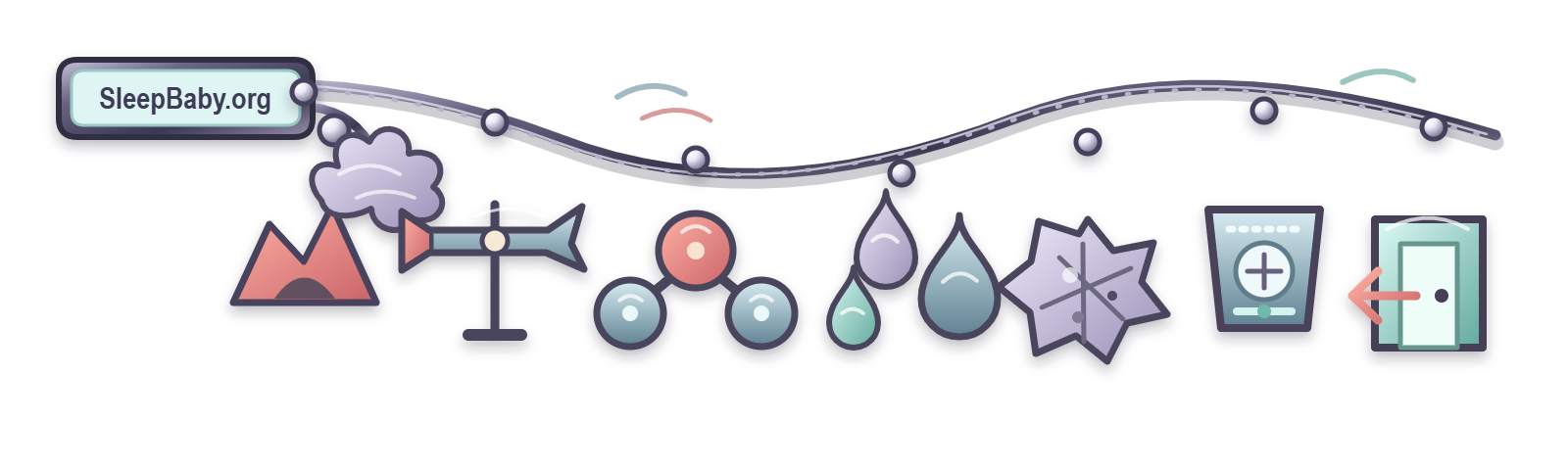
Decide green, yellow, or red before you unload
This decision aid is a conservative SleepBaby synthesis of the official evidence above. It is not the USGS alert system, a park status, or individualized medical advice. Its purpose is to stop one reassuring detail from overruling three inconvenient ones.
Green is an “all†answer, not an average. Yellow means uncertainty is material enough to make the day smaller. Red means stop or leave. The branches do not earn points, and you cannot trade a packed diaper bag for bad air.
SleepBaby.org conservative synthesis
Choose the next action before the view
Current official instructions always win. Color is repeated in words and actions so the choice does not depend on hue.
Green · all gates pass
Proceed only with a short, reversible visit
- The exact site, road, parking, route, and overlook are officially open.
- The latest official update names no hazard affecting that visitor area.
- Relevant air data are available and reassuring, with no contradictory local ash, haze, odor, plume, or ranger warning.
- Weather, heat, visibility, wind, and roads support the visit and exit.
- The baby is well; marked stable ground, shade, a clear airway, and frequent checks are practical.
- A named retreat route and lower-exposure backup exist.
Action: keep it short and leave while every gate still passes.
Yellow · one material uncertainty
Pause, shorten, relocate, or choose another day
- Activity is elevated without a direct visitor-area prohibition.
- Wind shifts; the monitor is distant/offline; haze or air remains uncertain.
- Heat, weather, parking, crowds, or roads make the retreat less reliable.
- The route is longer, rougher, or less reversible than planned.
- The itinerary is high-elevation or overnight.
- The infant is very young or has a relevant health concern that needs individual guidance.
- The adults cannot leave without debate, repacking, or difficult backtracking.
Action: choose the lower-risk version; yellow never means “add more gear.â€
Red · do not begin or leave now
Create distance and get help when needed
- Closure, evacuation, ranger direction, or official warning affects the area.
- Ash is falling or air is unhealthy.
- The baby has rapid or difficult breathing or another concerning symptom.
- The plan enters gas-prone low ground, a vent, fumarole, crack, cliff, lava, or closed/unstable terrain.
- Visibility is poor or ash compromises the road.
- The baby is unwell or there is no credible retreat.
Action: leave for cleaner air, follow park staff, and contact emergency or medical help when the situation warrants it.
If one condition is yellow, the day is yellow. If one condition is red, the day is red. That sounds almost insultingly simple until everyone is dressed, the car is packed, parking finally appears, and somebody says, “But we already drove this far.†Distance already driven is a fact about the morning. It is not a safety criterion.
Yellow can mean a visitor-center stop that is officially available, a shorter maintained overlook with acceptable air, a lower-elevation alternative, or lunch and a return another day. It can also mean calling your child’s healthcare professional before a meaningful high-elevation trip or taking a very young infant into a setting that leaves you uneasy. You do not need to promote uncertainty to red before you are allowed to make the day smaller.
Red is less negotiable. Move away from exposure or unstable terrain. Follow ranger or emergency instructions. For rapid or difficult breathing or another concerning symptom, seek urgent help rather than trying to name the cause from a list. A mask, nap, better photograph, or second refresh does not belong between the baby and cleaner air.
An open park is not one continuous safe surface
A national park can be open while one road, trail, overlook, summit area, or visitor service is closed. An overlook can be maintained while the ground beyond its rail contains cracks, sharp lava, unstable edges, hidden tubes, cliffs, vents, or fumaroles. “Open†applies to a specific place and use. It is not a smooth blanket spread over the whole volcanic landscape.
For a baby visit, stay on the officially open, marked route. Closures, barriers, ranger directions, and maintained rails are absolute. Do not step around a barrier because other visitors did, move onto rough ground for a quieter feeding spot, or assume a carrier makes a cliff edge more reasonable. The carrier changes how you move a baby on suitable ground; it does not upgrade the ground. NPS safety guidance
Volcanic terrain also asks you to look beyond the obvious lava. Sharp rock can cause falls. Steam vents and fumaroles are not family photo props. Weather and visibility can change quickly. Low areas can collect gas. The crowd ahead of you may have checked different information, may be heading somewhere else, or may simply be wrong. Other families are not an official condition source.
Read the ground in pairs
Managed visitor area versus no-go terrain
The left side describes infrastructure that may support a short visit when every other gate passes. The right side ends that route.
- Officially open
- The exact destination and use appear open on the current official source.
- Closure or ranger redirection
- Do not enter, cross, wait beside, or look for an unofficial route around it.
- Marked stable surface
- A maintained path or overlook where footing and boundaries are clear.
- Crack, vent, fumarole, or unstable lava
- Outside the baby plan regardless of footwear, carrier, or visible crowd.
- Maintained rail or barrier
- A clear stopping point that keeps the family on visitor infrastructure.
- Cliff or unprotected drop
- No approach for a better view, a photo, or a less crowded pause.
- Short, reversible access
- The car and verified exit remain reachable before conditions or baby needs escalate.
- Long or unclear retreat
- A route requiring difficult backtracking, repacking, or debate when air or weather changes.
- Ranger-visible, rule-following route
- The family remains where help, boundaries, and official direction are legible.
- Unofficial shortcut or crowd trail
- Popularity does not make the terrain stable, permitted, monitored, or suitable for a baby.
Tonight connection: the route that leaves enough time and adult attention for a calm exit is safer than the route that extracts the final possible view.
The most protective family decision may happen before anyone reaches the famous viewpoint. Maybe the wind moved. Maybe parking pushed the walk beyond the short route you planned. Maybe the baby’s face feels hot in the carrier, the monitor is unavailable, or the only adult who can drive is already depleted. None of those details has to become a crisis before it matters.
A beautiful family memory is allowed to end in the parking lot. Sometimes the memory is the overlook. Sometimes it is the moment two adults looked at the same information, turned the car toward the easier road, and did not require the baby to prove that leaving was necessary.
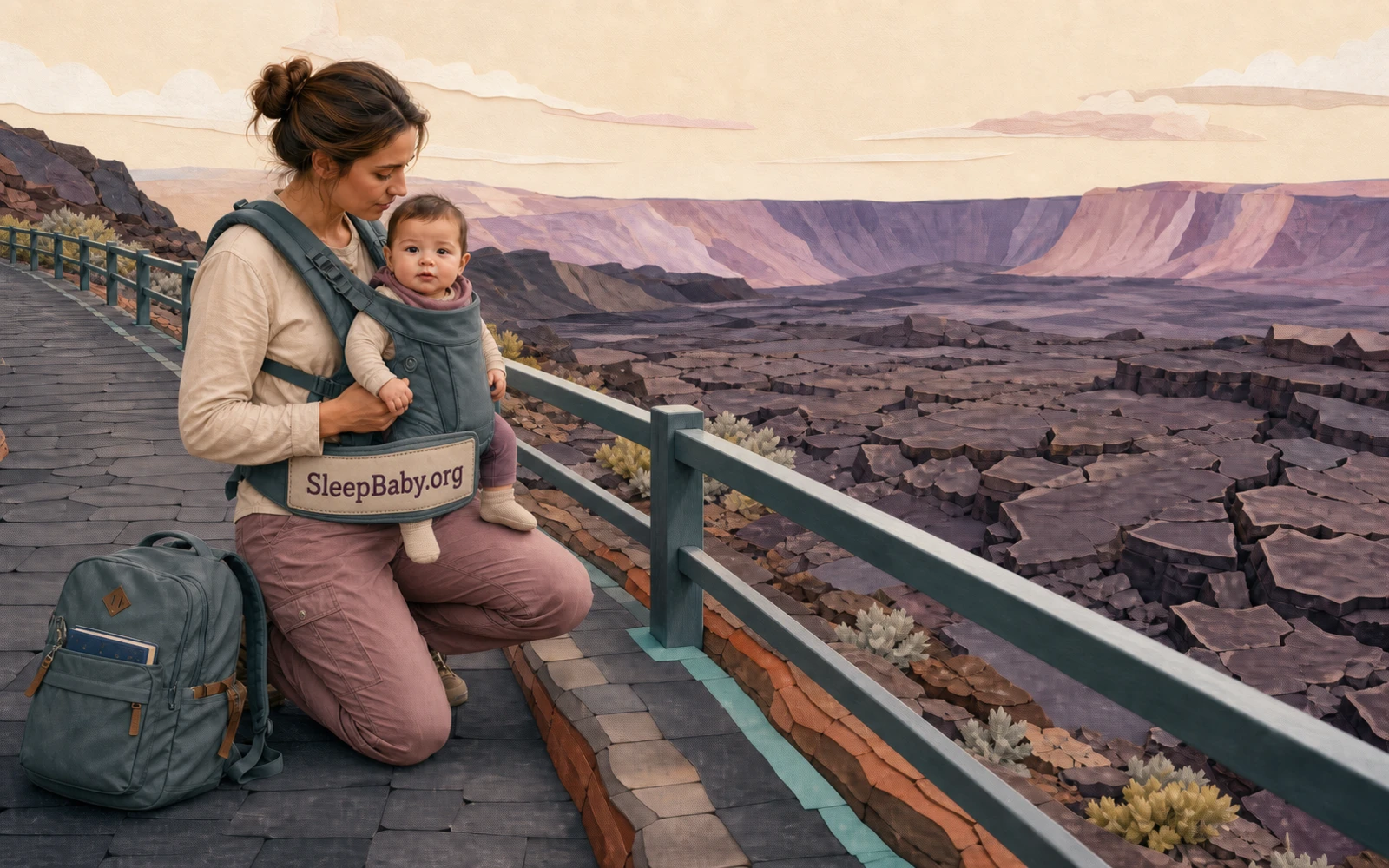
Plan the route out before the route in
An exit plan is not “the car is over there.†It is the road you will use, the direction you will drive, the lower-exposure place you can reach, and the exact moment you will stop trying to make the original itinerary work. Decide those things while everyone is calm. Once the wind changes, a road notice appears, or the baby needs attention, you want a plan—not a family committee meeting beside a lava field.
Start with the parking position. Back into a legal space when that is allowed and useful, keep the exit lane clear, and do not unload more than the adults can repack quickly. Save or screenshot the official route and alerts in case service disappears, but refresh live information whenever service is available. Name an alternate stop away from the affected area. “We will figure it out in the car†is too vague when ash can reduce visibility and traction, hide road markings, or make a road impassable. USGS road guidance is a useful reminder that proximity to a vehicle is not the same thing as a usable escape route.
The car is transportation, not guaranteed clean air, shade, or a volcanic waiting room. Never leave a baby in a parked vehicle, even for a quick look, a photo, or a second adult’s “two minutes.†If the vehicle has been sitting in heat, cool it before securing the baby. If air or ash makes the parking area unsuitable, follow official instructions and move toward the safer location rather than lingering with doors open while you reorganize.
Use an age-appropriate restraint that is correctly installed before the day begins. Do not feed the baby in a moving vehicle, loosen the harness for comfort, or improvise a sleep position because the retreat feels urgent. The best emergency car-seat adjustment is usually the one you did not have to make on the shoulder of an unfamiliar road. If crying is likely to make the driver less safe, decide in advance who can sit near the baby, where a legal stop exists, and what the driver will do if concentration slips. This guide to handling a baby who hates the car seat can help with that ordinary part of the plan; it does not change a closure, air warning, or need to leave.
Split the adult jobs. One adult handles the map, official updates, keys, and driving. The other keeps the baby’s face visible, watches breathing, color, temperature, feeding, and behavior, and says when the outing is over. With one adult, make the visit correspondingly smaller: a stable official stop, easy parking, minimal gear, and no route that depends on checking a phone while carrying the baby. I would rather have a modest plan that one adult can reverse than an impressive plan that needs three uninterrupted hands.
Set a hard turnaround trigger before reaching the headline view. It might be a wind shift toward the visitor area, an air monitor going offline, visible ash, worsening heat, a parking change that lengthens the route, the baby becoming unwell, or the adults losing enough energy that the return no longer feels simple. The trigger is not a prediction that something terrible will happen. It is the point where the safety margin has become smaller than the outing deserves.
When the plan changes
Keep every link in the exit chain usable
This is an action sequence, not a diagnosis. If an official tells you to do something different, follow that instruction.
-
Notice the change. Use the official warning, air or weather change, road problem, unstable ground, baby symptom, or lost retreat margin as information—not something to debate away.
-
Stop the outing. Do not add one last viewpoint, diaper stop, picture, feed, or data refresh before beginning the retreat.
-
Move away. Create distance from affected air, unstable terrain, heat, or the controlled area as officials direct. Do not use a mask or canopy to justify staying.
-
Secure the baby for transport. Keep the airway visible during the handoff and use the correct vehicle restraint before the car moves.
-
Use the verified route and get help when needed. Follow park or emergency directions; call for urgent help when breathing, heat illness, injury, or immediate danger is a concern.
The small luxury here is not a perfect schedule. It is leaving with enough adult attention left to drive safely, transfer the baby correctly, and make the next decision without panic. A route stays reversible only while the people using it still have the capacity to reverse it.

Check the actual elevation, not the word volcano
A volcano can be beside the sea, around 4,000 feet, or part of a much higher itinerary. The mountain’s drama does not tell you its elevation; the itinerary does. Before applying high-altitude advice, look up the elevation where the baby will spend time, the elevation where the baby will sleep, how quickly you will ascend, how long you will stay, and how easily you can descend.
This distinction matters because a managed visit near KÄ«lauea’s summit area, roughly 4,000 feet, is not the same exposure as driving to or sleeping at a destination around 8,000 feet or higher. CDC travel guidance treats sleeping altitude, ascent rate, duration, and prior response as important variables and notes that altitude illness can occur below commonly discussed thresholds. Eight thousand feet is therefore not a magic safety line, and four thousand feet is not a universal clearance. They are clues about two very different plans. CDC high-altitude guidance
A short day visit followed by sleep at a lower elevation is generally less stressful than staying high overnight. That does not make the day trip automatically suitable: air, heat, roads, terrain, infant health, and the ability to descend still matter. It simply means “Will we sleep there?†is one of the first questions I would ask, not a footnote after the hotel is booked.
Age and health history change how conservatively to plan. CDC guidance calls for special caution and medical input before meaningful ascent with an infant under six weeks. A baby with a respiratory or cardiac condition, a history that makes travel more complicated, or a recent illness also deserves individualized advice from the child’s healthcare professional. A general article cannot clear a particular infant for a particular mountain.
Preverbal babies do not report headache or nausea. Changes in appetite, irritability, pallor, sleep, or behavior can be nonspecific, which is exactly why a parent should not try to diagnose altitude illness from one sign at an overlook. Unexplained concerning symptoms at elevation are a reason to stop ascending, descend or relocate as official clinical guidance advises, and seek medical help—not to wait for a tidier pattern. CDC guidance for infant and child travel
Prior adult experience is useful for logistics but cannot stand in for the baby’s response. “I have done this drive before†tells you that the road once existed under different conditions. It does not answer how quickly this infant ascended today, where the family will sleep tonight, or whether a subtle behavior change deserves attention. This is one of those questions where humility is practical equipment.
The itinerary supplies the altitude facts
Six questions before a meaningful ascent
These rows organize a conversation with official travel guidance and, when appropriate, the baby’s clinician. They do not calculate a risk score.
- Ask
- What is the destination elevation?
- Why it matters
- The word “volcano†does not reveal the altitude exposure.
- Safer planning response
- Verify the exact visitor area, not the summit’s maximum height.
- Ask
- Where will the baby sleep?
- Why it matters
- Sleeping high creates a different plan from returning lower after a day visit.
- Safer planning response
- Prefer a lower sleeping elevation when the itinerary allows.
- Ask
- How fast is the ascent?
- Why it matters
- A rapid drive can change elevation faster than the gentle-looking road suggests.
- Safer planning response
- Avoid an ambitious ascent and build in an easy descent.
- Ask
- How long will the baby remain high?
- Why it matters
- A short reversible visit and an overnight stay are not equivalent.
- Safer planning response
- Keep the visit shorter than the adults’ ambition.
- Ask
- How young and how well is the baby?
- Why it matters
- Very young age and relevant health history call for more caution.
- Safer planning response
- Seek individualized guidance before travel when age or health raises concern.
- Ask
- Are there unexplained concerning symptoms?
- Why it matters
- Preverbal signs can be vague and should not be diagnosed at the viewpoint.
- Safer planning response
- Stop ascending, descend or relocate, and get medical guidance.
Tonight connection: sleeping lower is an altitude decision first. The familiar bedtime that follows is useful, but it cannot make a high overnight plan safer.
Heat, sun, weather, feeding, and babywearing
The safest route on a map can still become the wrong baby route at noon, in wind, or after rain. Volcanic parks often expose families to several conditions at once: bright sun on dark ground, shade that is farther away than it looked, a sudden cool gust, a hot parking area, and a surface that becomes awkward when one adult is carrying a baby and the other is carrying everything the baby might conceivably need before college.
Plan for heat and sun before the parking lot
Choose a cooler time when official conditions and access allow it. Build the visit around reliable shade, light loose layers, frequent checks, and enough adult water and energy to leave. Babies depend on caregivers for cooling and hydration decisions, and infants and young children are among the groups at higher risk from heat. Never leave a baby in a parked vehicle. If you suspect heat illness, end the outing and seek medical attention; immediate danger or serious symptoms call for emergency services or park staff. CDC heat guidance for infants and children and NPS heat-illness guidance
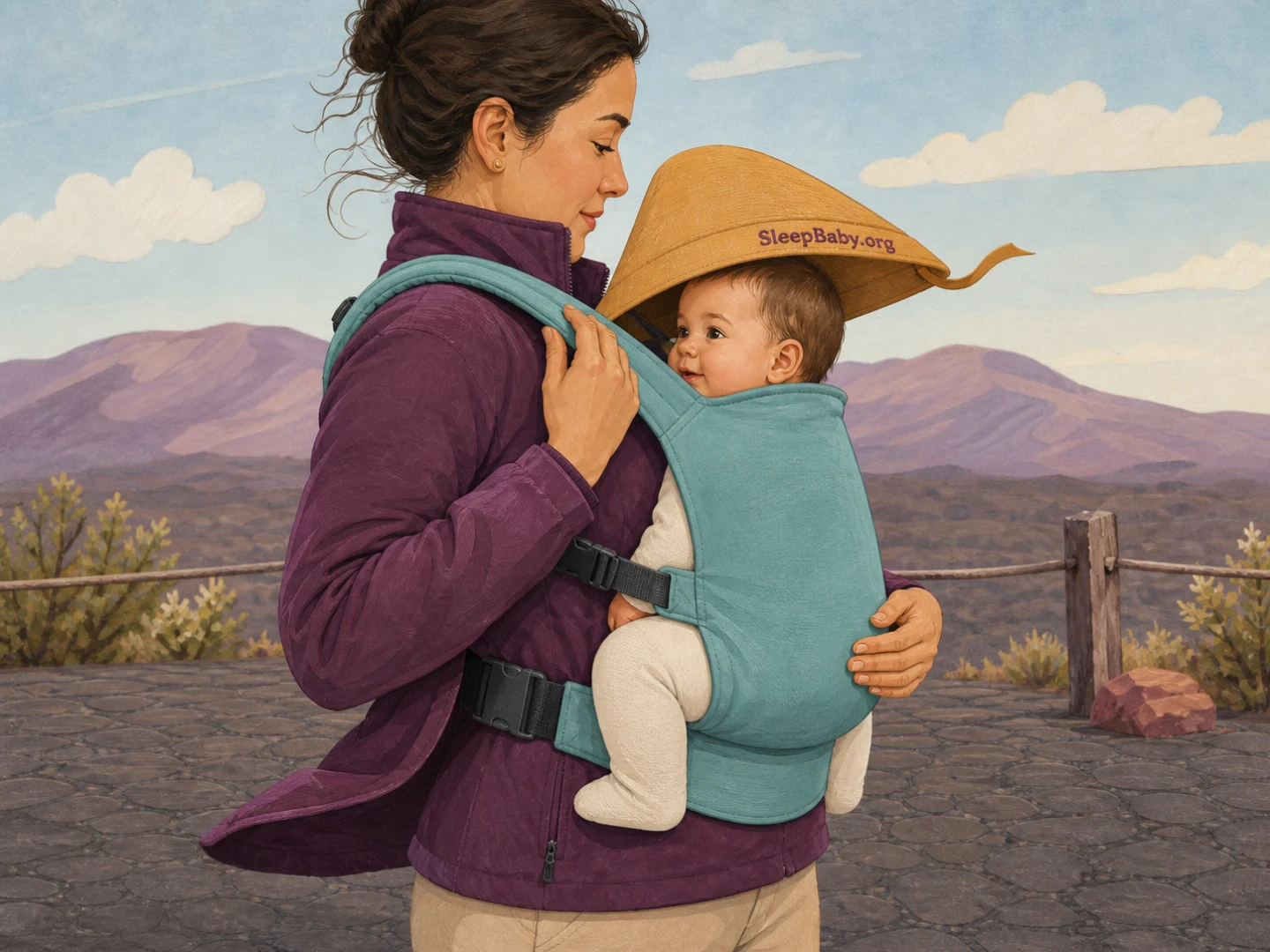
A stroller shade or carrier hood can reduce direct sun only when it is used as designed and the baby’s face and airflow stay clear. It does not cool volcanic air, filter gas, or make a hot route suitable. Check the baby rather than admiring the gear: visible face, unobstructed nose and mouth, normal color, temperature, feeding, and behavior. If the baby’s skin feels increasingly hot, the baby becomes unwell, or the adult carrying the baby is overheating, turn around. The last half mile is not a moral obligation.
Let wind and rain change the route
Wind can redirect a plume, pull at a carrier cover, chill a damp baby, lift settled ash, or make footing harder. Rain can reduce visibility and turn a manageable surface slippery. Keep covers away from the baby’s face, do not zip or drape the carrier into an improvised bubble, and do not continue merely because the weather layer is technically in the bag. If conditions make it hard to see the baby’s face or place your feet, they have already changed the outing.
The precise human detail here is often small: one hand holding a hat, one hand checking a strap, the map trying to leave without you, and the baby needing a feed at exactly the moment the wind makes every loose item mobile. That is not poor planning. It is a reason to choose a route with a stable pause point rather than asking the family to perform roadside choreography on sharp ground.
Choose the carrier or stroller from the route facts
A carrier can help on an officially open, stable route when it fits the baby and caregiver, provides appropriate support, keeps straps secure, and leaves the baby’s face visible with the nose and mouth unobstructed. Very young babies—especially those under four months in sling-style carriers—need particular care and frequent checks. A sleeping baby still needs a visible, clear airway. American Academy of Pediatrics carrier guidance
A stroller may be the calmer choice on a level, maintained, barrier-protected route where park rules and surface conditions make it genuinely usable. It may be the wrong choice on loose rock, steps, narrow paths, steep grades, or a route that requires lifting it around obstacles. Neither tool makes closed ground legal, filters air, removes a cliff, or creates traction. Choose the tool that leaves the adults most able to watch the baby and leave promptly; sometimes that means choosing the visitor center or roadside plan instead of the trail.
The ground chooses the gear
Match mobility to the exact visitor route
This is not a product ranking. Start with the route fact, then choose the smallest plan that keeps the airway, footing, and exit workable.
- Route fact
- Level maintained path, clear barriers, room to turn
- Feasible option
- A route-suitable stroller or correctly fitted carrier
- Non-negotiable check
- Baby remains visible; brakes, straps, surface, and park rules all work
- Change-plan trigger
- Crowding, blocked passage, roughening ground, heat, or worsening air
- Route fact
- Short stable path with steps or limited stroller access
- Feasible option
- Correctly fitted carrier, if the adult can maintain safe footing
- Non-negotiable check
- Face and airway visible, secure support, frequent checks, legal route
- Change-plan trigger
- Loose rock, fall exposure, wind, adult fatigue, or obscured face
- Route fact
- Closed, unstable, ashy, steep, exposed, or difficult to reverse
- Feasible option
- Neither carrier nor stroller fixes the route
- Non-negotiable check
- Respect closures and current hazard instructions
- Change-plan trigger
- Already present: choose the shorter managed or indoor alternative if suitable
- Route fact
- Adults are depleted or one caregiver cannot manage gear and updates
- Feasible option
- Visitor center, roadside view, or another day
- Non-negotiable check
- A suitable legal place with acceptable air and a simple exit
- Change-plan trigger
- The plan needs more hands, attention, or stamina than the family has
Tonight connection: the lower-effort option protects the adults’ ability to leave and the baby’s capacity to settle later. It never purchases permission for hazardous ground or air.
Choose a stable place for feeds and diapers
Plan feeds and diaper changes around a legal, stable, lower-exposure location before you arrive. Do not feed a baby in a moving vehicle. Do not step onto rough or closed ground to escape a crowd, and do not open every car door in ash or poor air to build a changing station. If the suitable place is no longer suitable, leave for the backup. A hungry baby deserves a safe pause, not an ingenious one.
Pack in exit order. Keep the car-seat area ready; place the carrier or stroller where it can be reached without unloading the vehicle; keep diapers, wipes, feeding supplies, light layers, sun protection, adult water, a charged phone, power, offline official information, and the backup destination accessible. Pack for wind and temperature changes without packing loose fabric that might cover the baby’s face. The goal is not to carry a tiny expedition store. It is to remove the reasons adults are tempted to stay in the wrong place while searching for one buried item.
Leave now, and know when the problem is medical
Leave for cleaner air and follow ranger or emergency instructions when conditions worsen. Do not wait for the baby to prove that the air, heat, terrain, or altitude is a problem. If the baby has rapid or difficult breathing, appears seriously unwell, or there is immediate danger, call emergency services or park staff for urgent help.
Volcanic gas, vog, ash, heat, altitude, ordinary illness, and distress can produce overlapping or nonspecific signs. This is not the place to diagnose the cause from a checklist. Move away from the hazard, tell responders what changed and where you have been, and contact the child’s healthcare professional for symptoms or individual guidance. For suspected altitude-related illness, stop ascending and descend or relocate according to clinical guidance. For suspected serious heat illness or breathing difficulty, treat the situation as urgent.
Follow an evacuation, closure, or ranger direction immediately. An official instruction does not need to match the family’s air app before it counts. If ash compromises visibility or traction, do not race onto a road that officials have restricted; use the directed route or shelter instructions and call for help if you cannot leave safely.
Do not stop to fit a mask to the baby, cover the stroller, finish a feed in the affected area, wait for a nap, take the photograph that explains why you came, or refresh the same data until it becomes reassuring. Those are understandable impulses from adults trying to recover control. The useful control is distance, a safer location, and professional help when the baby’s condition or the environment calls for it.
The moment to stop guessing is not after you have identified the perfect cause. It is when the baby or setting has crossed from “we can keep observing safely†into “we need distance or help.†Calm action is not an overreaction. It is what the whole reversible plan was built to make possible.

Give the day a backup ending
Abandoning the headline view can feel like wasting the drive, especially after the bottles, layers, carrier, snacks, map, and mysterious quantity of tiny socks have crossed half an island or an entire state. That feeling is real. It is also sunk cost wearing hiking shoes. The drive does not become more worthwhile because the family spends longer in unsuitable conditions.
A backup ending might be an officially open visitor center, a ranger program away from the affected area, a lower-elevation scenic stop with acceptable air and stable access, or an indoor museum or geology exhibit. Check that the alternative is actually available and suitable that day. An indoor building is not automatically clean air, and a car is not automatically a refuge. Current local directions still decide whether either place belongs in the plan.
The backup may also be ordinary: a meal, a stable diaper change, a short walk somewhere else, and a return another day. If two adults want different versions, one adult may view briefly while the other stays with the baby only when both locations are genuinely suitable, the arrangement is agreed, nobody is stranded, communication works, and the plan can reunite quickly. “You wait in the car†is not a safe default in heat, ash, or uncertain air.
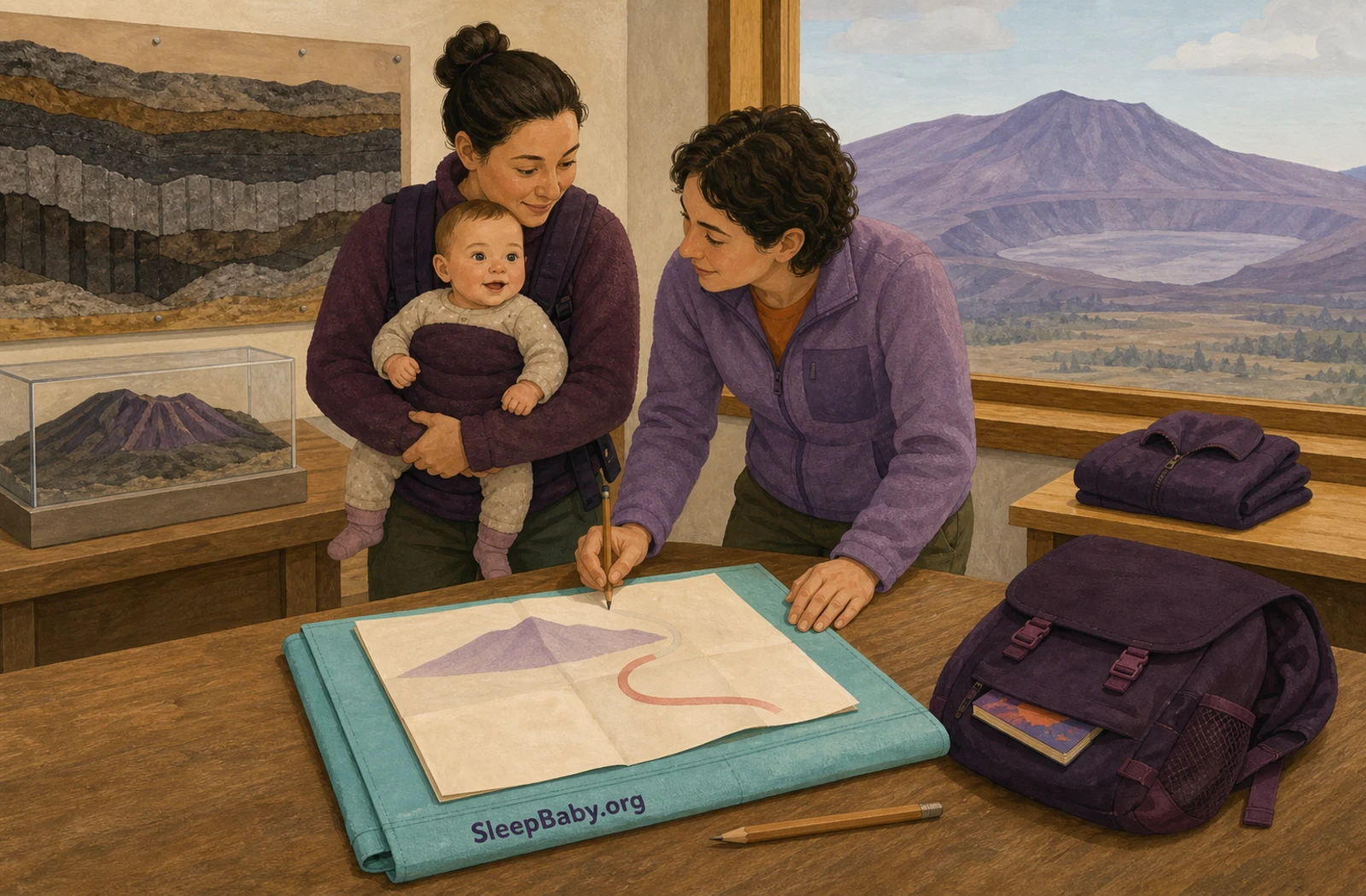
I think the changed-route pencil mark on the map deserves more credit than it gets. It is evidence that the adults used new information instead of demanding that the day obey the brochure. Babies do not need every family memory to contain the famous view. They need the adults to notice when the better memory is lunch, a geology display, and everybody still having enough patience to get home.
Call that a successful volcano day. You checked the mountain, protected the baby, and left the destination available for a future version of the family. The missing photograph is not proof that nothing happened.
Bring a very big day down gently
Safety and cleaner air come first. Once the family is genuinely away from the hazard and the baby is well, the outing may still show up in the evening: a car nap, a late feed, bright sun, wind, unfamiliar voices, adult adrenaline, or a bedtime that no longer resembles the one on the refrigerator. None of that needs to be corrected with a second ambitious plan.
If the drive home becomes a car nap, keep the baby correctly restrained while the vehicle is moving and treat the nap as information about the day, not sabotage. This guide to what to do when a baby falls asleep in the car before bedtime can help you decide what matters next. On arrival, move the baby out of the car seat rather than using it as the continuing sleep space; if the transfer is the hard part, use these ideas for waking and moving a sleeping baby gently.
Choose one or two familiar cues. Lower the light and household volume. Offer the baby’s normal feed when appropriate. Use the familiar, age-appropriate safe sleep space. Repeat the small piece of the routine the baby recognizes best—a book, song, sleep sack, or brief cuddle—without trying to recreate every missed minute. The mountain day was already full of inputs. Bedtime can be deliberately boring.
Let the real baby outrank the timer. If watching the clock is making every yawn feel like a test, the discussion of wake-window anxiety may help loosen the grip. A flexible first-year sleep schedule can provide a useful normal-day shape without pretending travel, weather, or a changed plan will always fit it.
Do not make a late outing later to “fix†the nap, and do not keep the baby awake as repayment for sleep in the car. If bedtime comes earlier, later, or in two attempts, respond to the baby in front of you. If the baby is breathing rapidly or with difficulty, unusually difficult to rouse, or appears seriously unwell after the outing, seek urgent medical help. For other concerning changes, stop treating it as a schedule question and contact the child’s healthcare professional.
An abandoned visit does not need to be redeemed with a perfect bedtime. The gentler ending is allowed to be a feed, familiar pajamas, a dim room, and two adults admitting that the safest decision also took energy. The volcano can remain enormous. Home can become small again.
Sources
- NPS: Hawaiʻi Volcanoes safety
- NPS: current park conditions
- NPS: park air monitors
- USGS: KÄ«lauea updates
- USGS: volcano alert levels
- USGS: volcanic smog FAQ
- USGS: protection from ash
- USGS: ash on roads
- CDC: volcano safety
- EPA: children, smoke, and ash
- Hawaiʻi DOH: April 2025 vog health warning
- CDC Yellow Book: high altitude
- CDC Yellow Book: infant travel
- CDC: heat and children
- NPS: heat illness
- AAP: baby-carrier safety
After the mountain day
Bring the evening back to something familiar
Changed plans, car sleep, bright wind, and the adrenaline of turning around can follow everyone home. You do not need a perfect reset. Start with a safe familiar sleep space, one recognizable cue, and a gentler plan built for the baby who actually came back from the volcano day.