
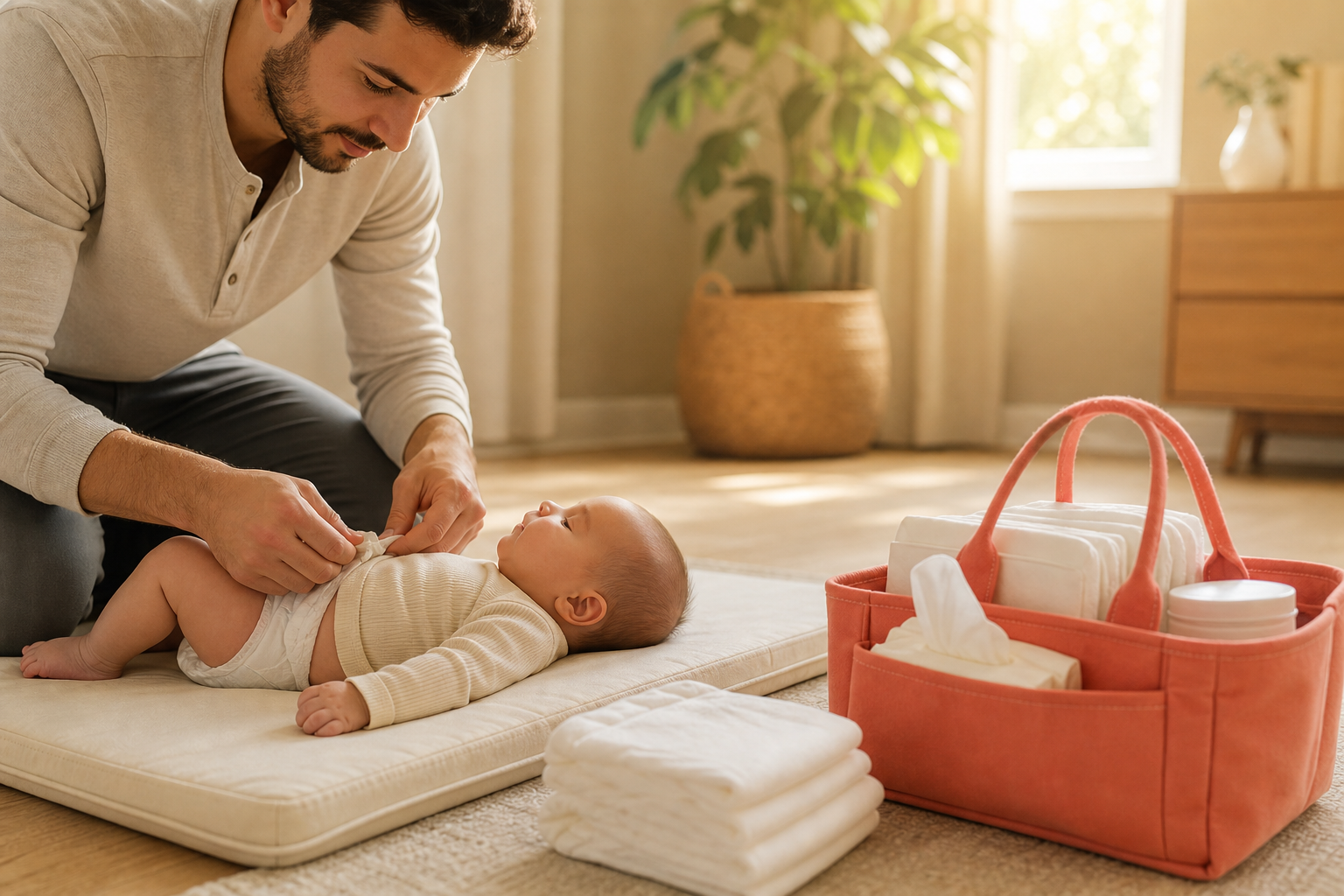
Baby Poops During Sleep Training: Pause and Change
If your baby poops during sleep training, pause the timer, change calmly, reset the bare sleep space, and resume only if your baby is well.
If your baby poops during sleep training, pause the timer, change calmly, reset the bare sleep space, and resume only if your baby is well.
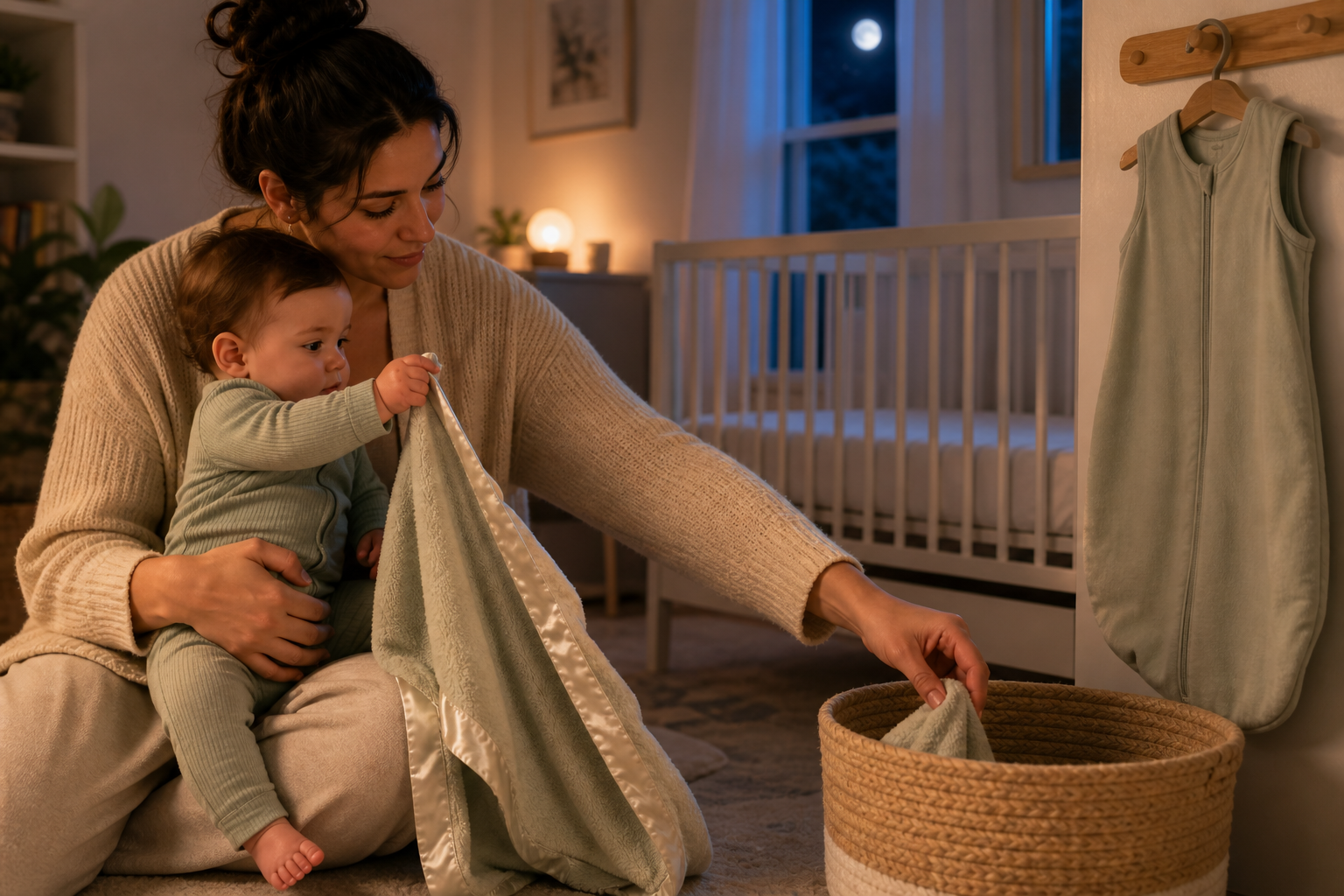
A favorite blanket can be a normal comfort attachment. Learn the first-year bare-crib rule, what to do tonight, and when the attachment’s function deserves a closer look.
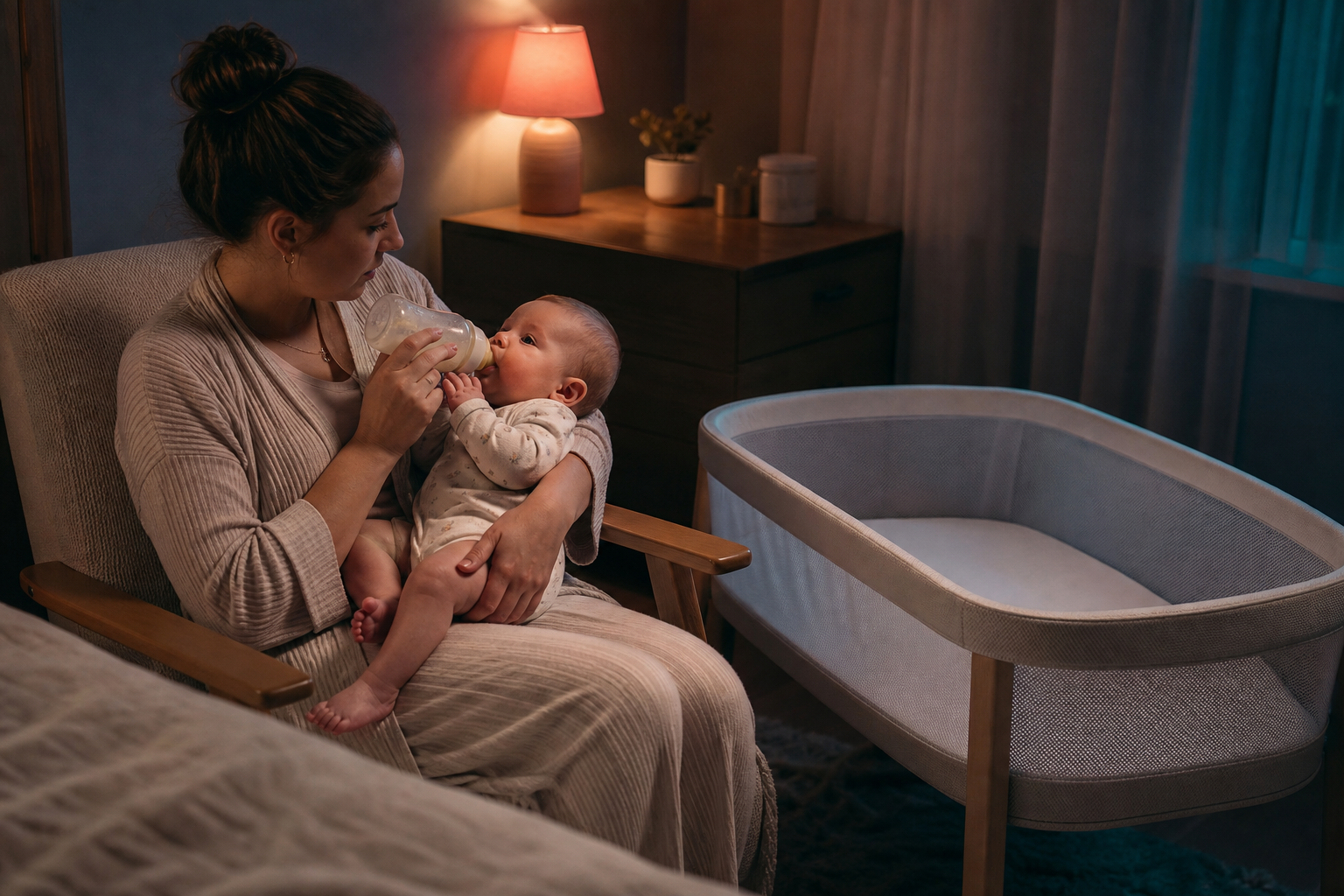
A baby who wakes mainly to eat may be signaling a real feeding need, a learned feed-to-sleep pattern, or both. Use growth, whole-day intake, feeding behavior, and the safe return to decide whether to feed, pause, or call.
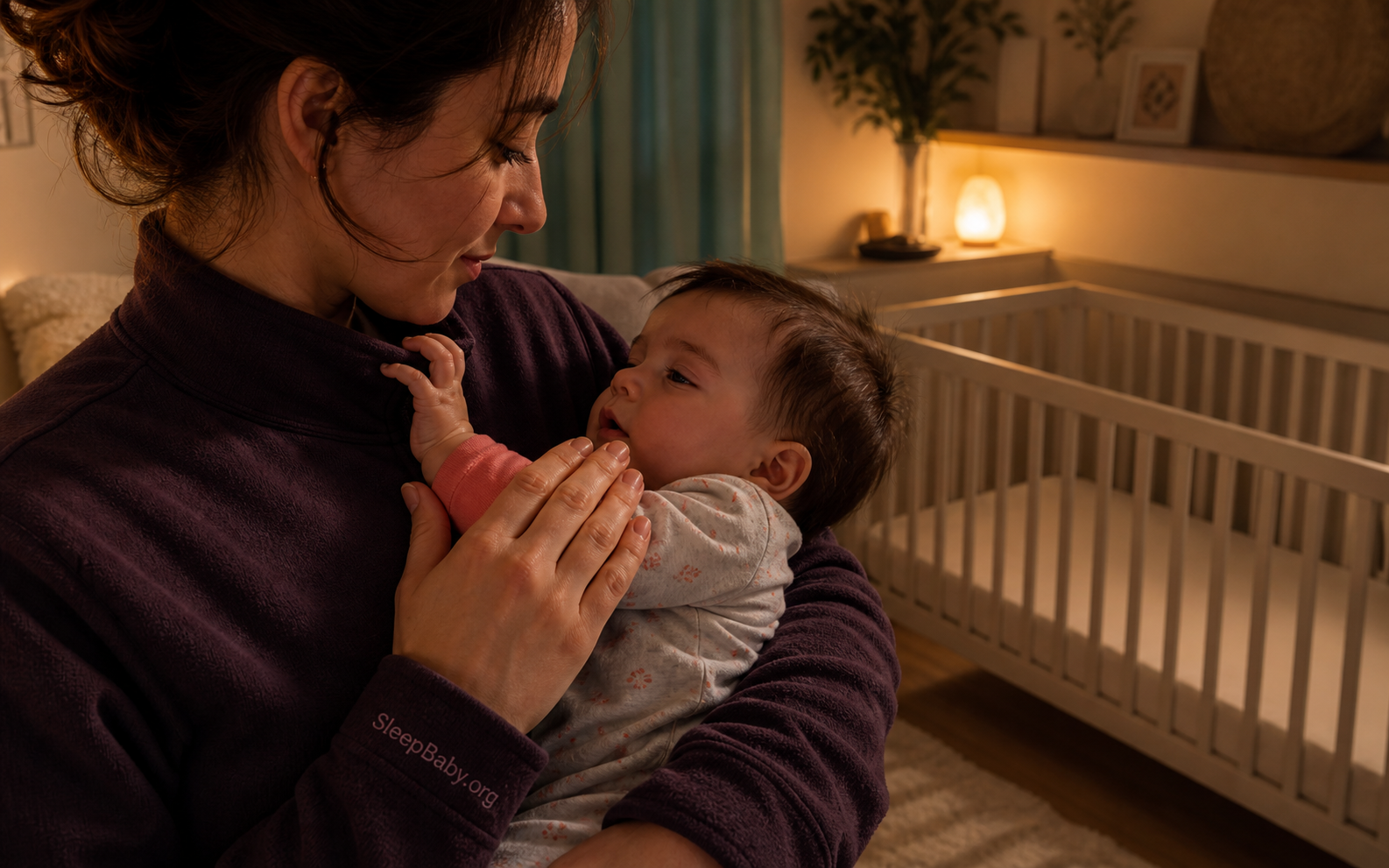
Your baby is almost asleep, their breathing has finally slowed, and then one tiny hand finds the same square inch of your neck again. The pinch is astonishingly precise. You are trying to stay soft and boring while your skin… Read More »Baby Pinches When Falling Asleep? A Gentle-Hands Reset
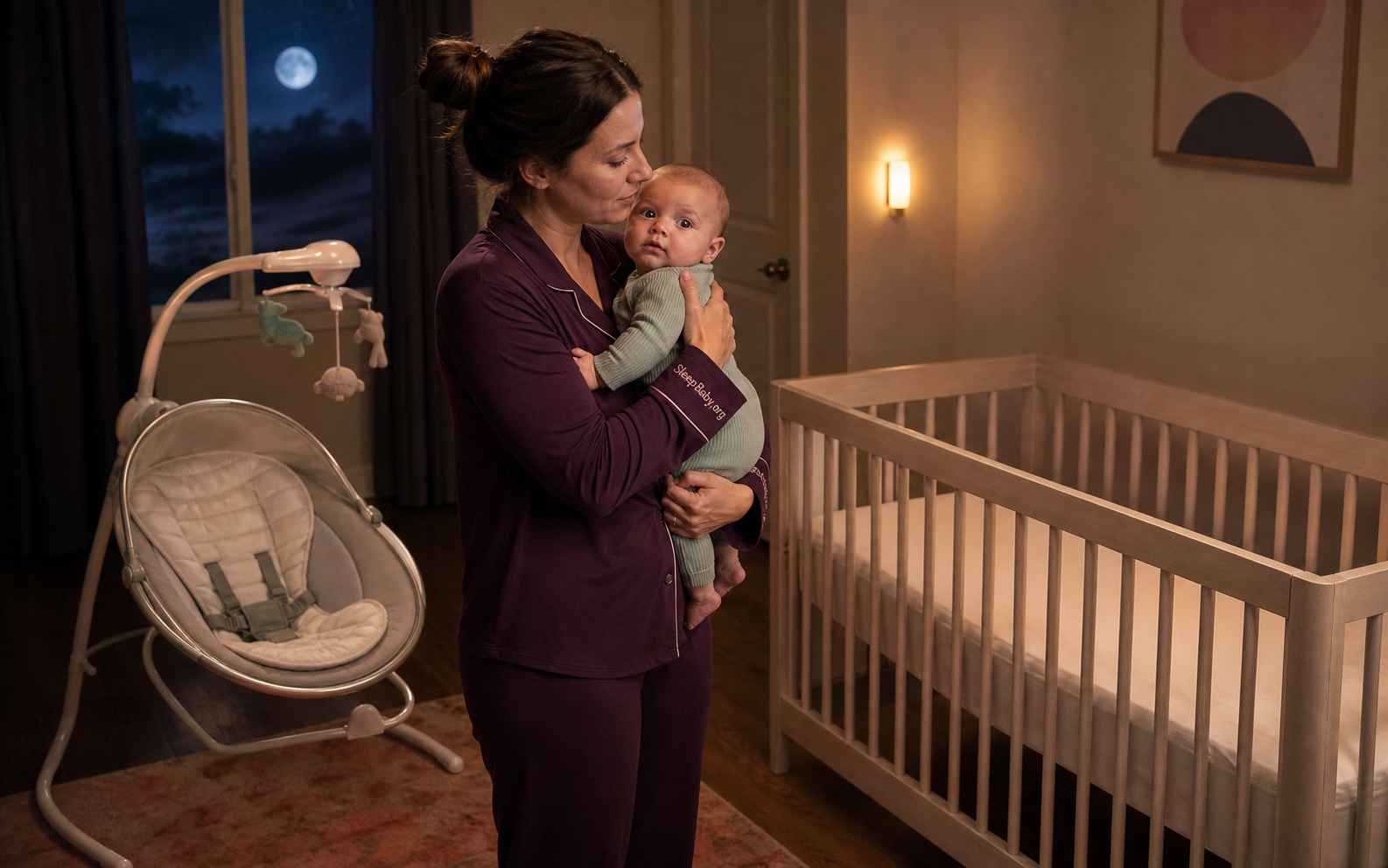
A clear right-now safety answer, a gentle motion-to-still handoff, and a plan for the nights when every crib transfer wakes the baby.
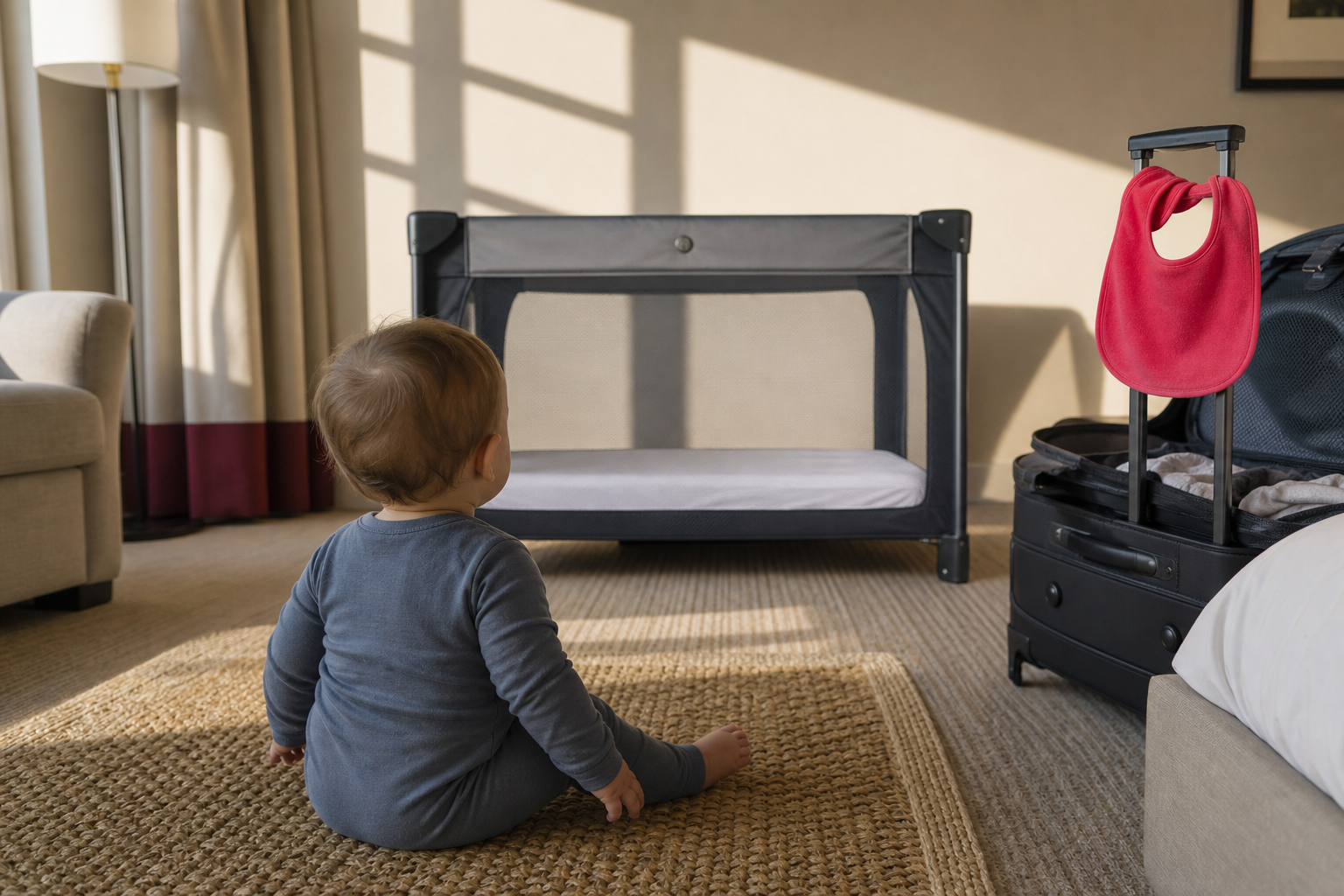
A baby should not nap with any bib on. Remove it now, check breathing and color, then complete the handoff to a bare, flat infant sleep space.
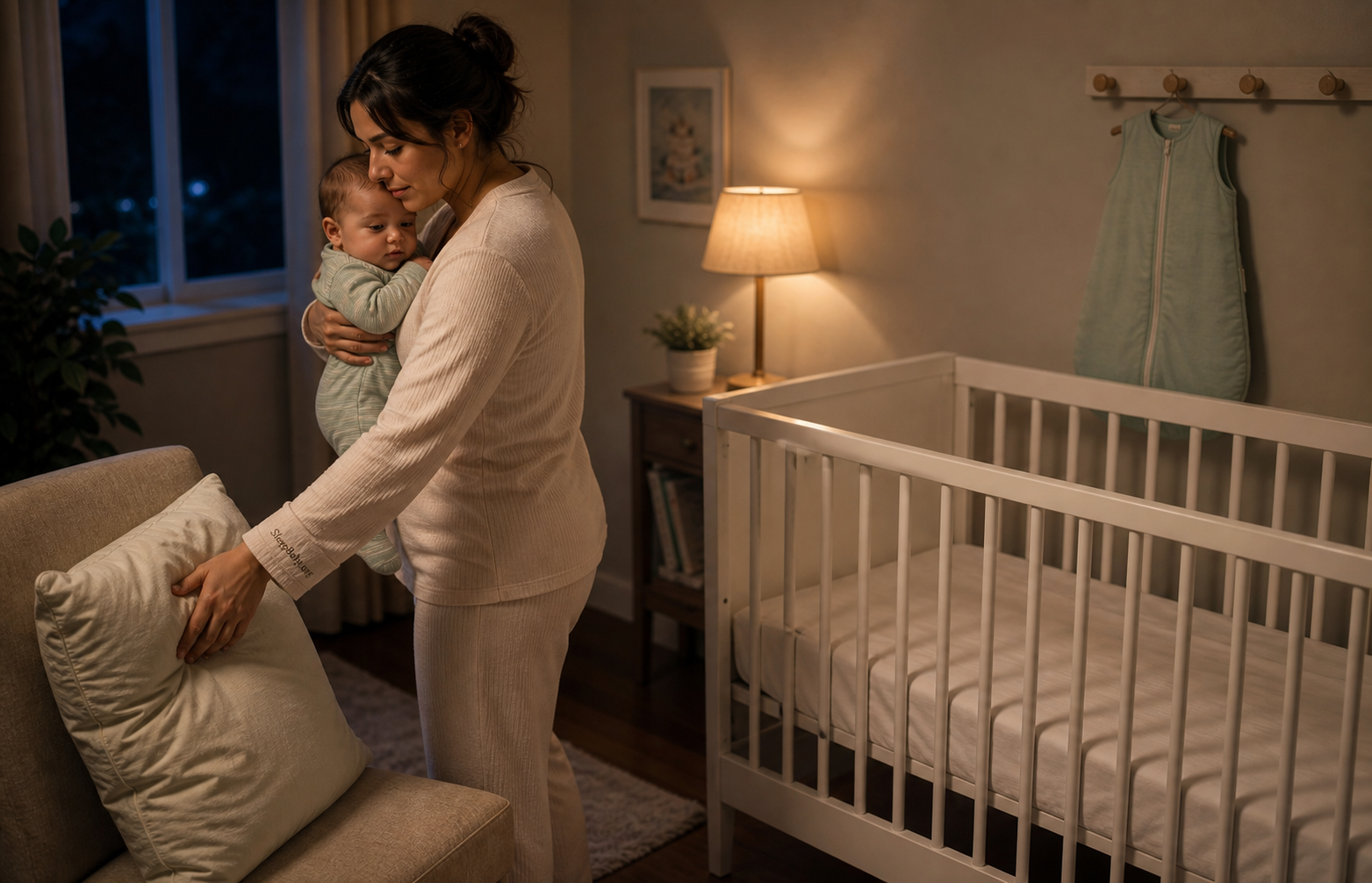
The answer you need before the next transfer If your baby likes to sleep on a pillow, remove it for every sleep during the first year You can see the little hollow where your baby’s cheek has settled, and for… Read More »Baby Likes to Sleep on a Pillow? What to Do Now

If your baby will sleep only in your arms, use the Safe-Closeness Bridge to protect adult alertness, keep comfort, and make one safer bassinet landing.
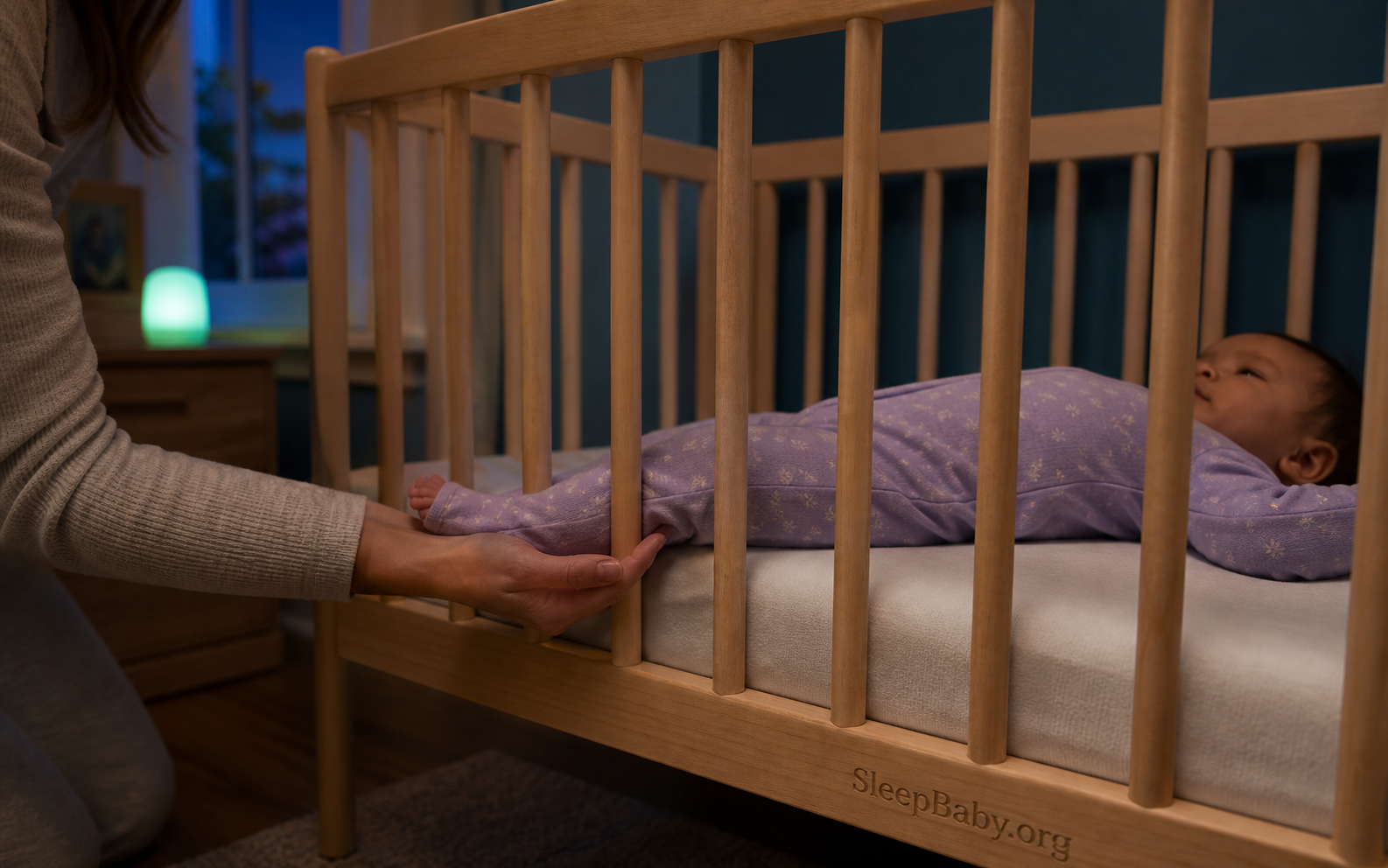
Free the foot gently, check for injury, inspect the exact crib, and keep the sleep space bare—without bumpers, liners, or improvised padding.
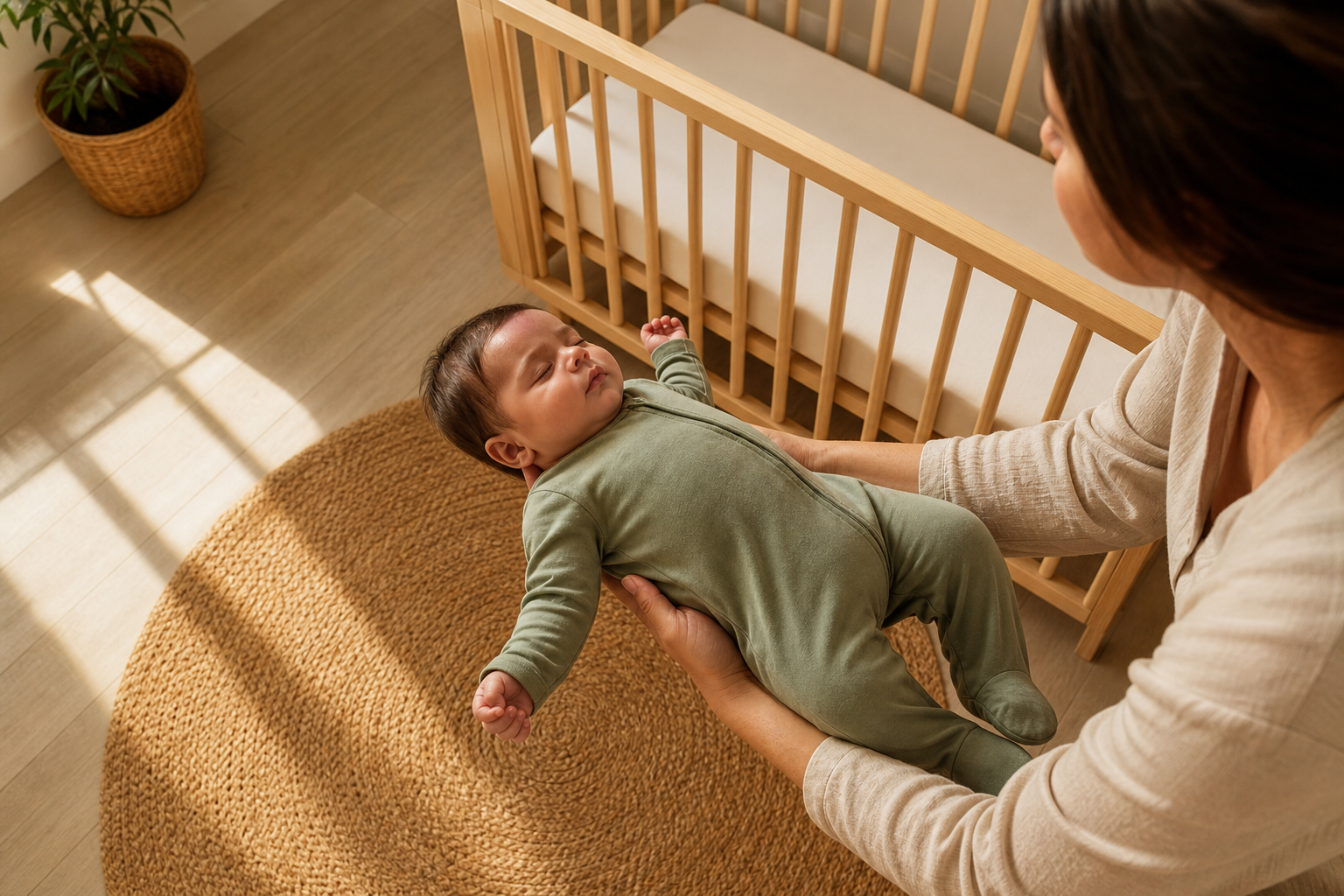
Learn when an ordinary floor-play doze needs a calm transfer, when sleepiness after a fall needs urgent care, and how to prepare the next safe infant sleep space.