
The answer while the timer is still glowing
Poop pauses sleep training
If you know or strongly suspect that your baby pooped during a sleep-training interval, pause the timer and change the diaper promptly. Keep the room dim, gather what you need before you begin, clean stool away gently, let the skin dry, use the barrier routine already appropriate for your baby when needed, fasten a clean diaper, and return your baby to their back in a firm, flat, level, bare infant sleep space. [1][2][5]
Meeting a hygiene, feeding, pain, or health need is not a sleep-training failure. Stool should not stay against the skin just to preserve a check-in time. Once your baby is clean, comfortable, breathing normally, and otherwise well, you may return to the calm response you had already chosen. If your baby seems ill, has abnormal stool, or is difficult to wake, the timer stays off and the medical question comes first.

The timer is not the patient
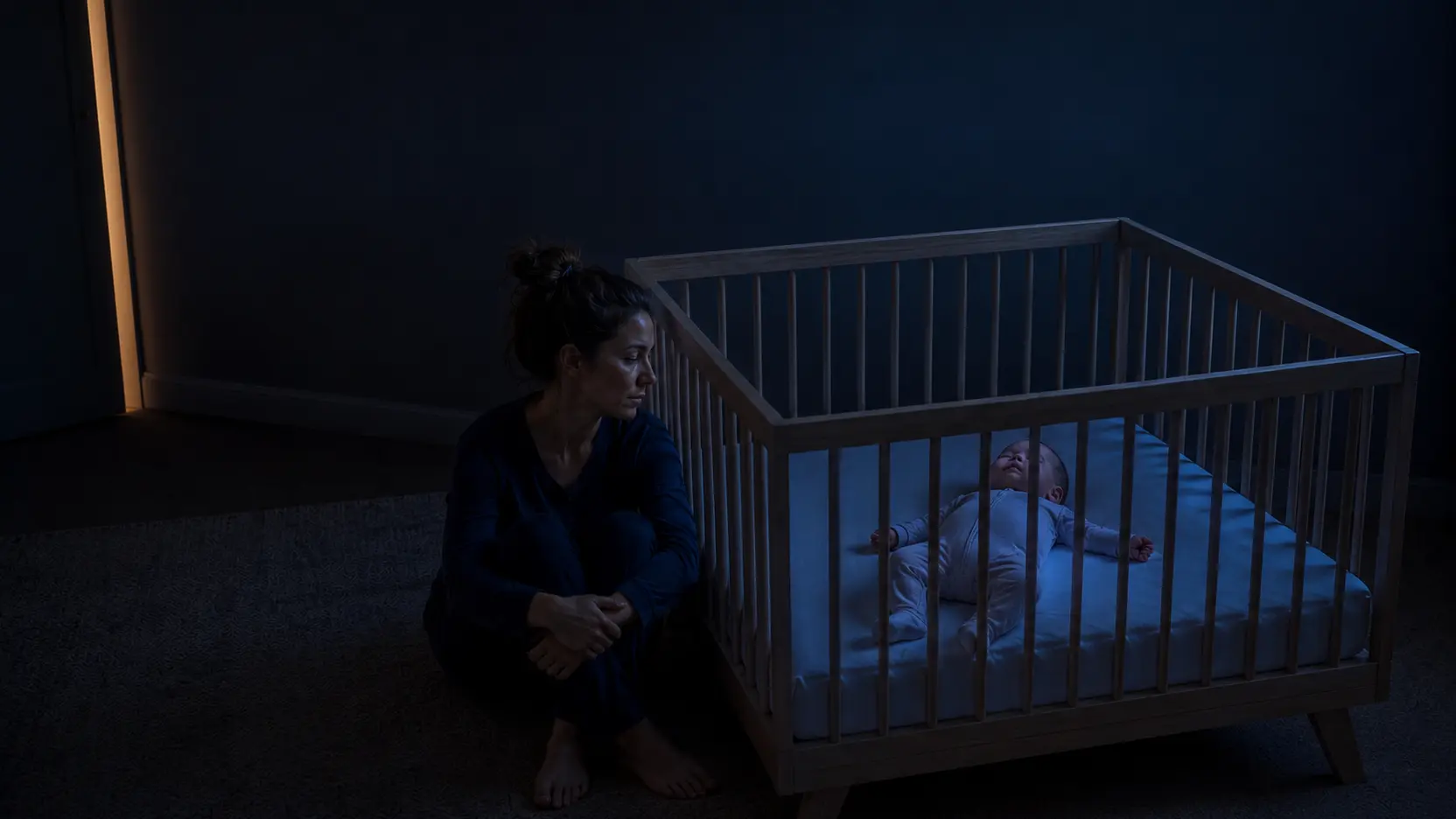
The moment usually arrives with insulting precision. You have started an interval, the monitor is finally quiet enough to hear yourself think, and then there is either an unmistakable smell or the tiny series of noises that makes you lean toward the screen like a detective whose entire case has become strangely personal.
The private question beneath “my baby pooped during sleep training” is often: If I go in, have I taught my baby that crying changes the plan—and if I do not go in, am I ignoring a real need? I would make that question smaller. You are not deciding whether care and consistency are enemies. You are deciding whether there is enough evidence of stool to justify a brief, calm check and, when stool is present, a prompt change.
A sleep method is a tool for responding to bedtime resistance or night waking. It is not authority to postpone hygiene, feeding, pain, illness, breathing, or responsiveness. Behavioral sleep approaches are also context-dependent; one strategy is not automatically suitable for every infant or every night. [7] That is why I treat the change as a pause inside the plan, not a referendum on the plan.
The right-now sequence
Pause. Change. Reset. Resume—if baby is well.
- Pause the interval. Stop counting while you meet the physical need.
- Change promptly. Use the lowest useful light, minimal conversation, gentle cleaning, and a clean diaper.
- Reset the sleep space. Put wipes, creams, changing pads, towels, and the dirty diaper outside the crib. Return your baby to their back on the fitted sheet of a firm, flat, level sleep surface.
- Resume only when it still fits. If your baby is comfortable and otherwise well, return to the same calm sleep response. If something about the stool, skin, feeding, temperature, breathing, or behavior concerns you, keep the plan paused and get the right help.
This four-step sequence is a practical memory tool, not a studied treatment and not a promise about sleep outcomes. Its job is simply to keep a necessary change from turning into either neglect or a fully lit 2 a.m. social event.

A hypothetical Kacey-and-Benjamin night
When the smell answers before the monitor does
Imagine hypothetical Benjamin is the baby in this scene. The timer reads six minutes and forty-two seconds. I am standing just outside the nursery, trying not to turn one ordinary interval into constitutional law, when the diaper cue arrives with absolutely no respect for the schedule.
I would pause the clock. I would not spend the next three minutes arguing with myself about whether opening the door creates a “bad habit.” I would take the clean diaper and prepared wipes to the floor mat, keep the light low, and tell hypothetical Benjamin one quiet sentence: “I’m changing you, then it’s back to sleep.” That sentence is not magic. It is a handrail for the adult whose brain has temporarily become 70 percent timer.
After the clean diaper, I would close the changing station, put every supply outside the crib, place him on his back in the empty sleep space, and use the calm response I had already chosen—provided he looked comfortable and well. The useful consistency is not pretending the poop did not happen. It is meeting the same need in the same boring way each time.
This scene is explicitly hypothetical. It does not describe Kacey’s or Benjamin’s verified history, age, product use, symptom, diagnosis, advice, or result, and it is not evidence. I use it because the hardest part of this question is often not the diaper. It is the fear that responsive care has somehow made you inconsistent. It has not.
Poop gets a change; uncertainty gets a brief check
If you can smell stool, see it, or have another strong reason to believe it is there, act. The National Health Service recommends changing wet or soiled diapers promptly, and both NHS and American Academy of Pediatrics guidance emphasize keeping skin clean and dry. Stool is irritating to skin, so a known dirty diaper is not the place to practice waiting out a clock. [2][3][4]
A grunt, squirm, or brief cry is not a stool test. Babies make an astonishing range of nighttime noises while doing absolutely nothing that requires a changing table. If you are unsure and concern is reasonable, use the least stimulating check that gives you enough information: pause, approach quietly, notice odor, look at the diaper when needed, and check how your baby appears. I would not repeatedly undress a comfortable baby because of sound alone, and I would not use one nighttime poop to diagnose constipation, food intolerance, reflux, infection, or a teething effect.
Known or strongly suspected stool
Pause and change
Remove stool gently, dry the skin, use the established barrier routine when appropriate, and return to safe sleep only after the physical need is handled.
Urine only or no clear evidence
Use context, not panic
Leakage, skin irritation, discomfort, newborn care, diaper instructions, and an individualized clinician plan can all change the answer. There is no sleep-training prize for leaving a baby uncomfortable, and no need to stage a full change for every sleepy noise.
What I want you to notice is evidence, not mythology: stool consistency and color, whether this is a new pattern, feeding and drinking, wet diapers, vomiting, fever, rash, and how your baby behaves between stools. Timing alone is weak evidence. A bowel movement at 1:17 a.m. is inconvenient, but it is not a diagnosis wearing a watch.

Make the change physically safe before making it sleepy
A low-stimulation change is still a real diaper change. The goal is not speed at any cost. The goal is to remove stool thoroughly without turning on every light, starting a conversation, or creating a fall hazard.
Set out the clean diaper, wipes or cotton and water appropriate for your baby, a disposal option, clean clothing if needed, and the barrier product already part of your care plan before you place the baby on the changing surface. Use the lowest light that lets you see the skin and clean effectively. If your baby rolls, reaches, or launches sudden midnight escape attempts, a changing mat on the floor is often the simplest safe answer. On an elevated surface, keep one hand on the baby continuously and never turn away, even when a strap is present. [2]
The dim-room change map
Prepared, supported, clean, dry, closed
- Prepared: everything you need is within adult reach before the baby is on the mat.
- Supported: use the floor when practical or keep continuous hands-on contact on an elevated surface.
- Clean: wipe gently but thoroughly, including skin folds, without repeated scrubbing.
- Dry: pat or air-dry before closing the clean diaper. Trapped moisture can add irritation.
- Closed: fasten the diaper, put away every supply, wash your hands, and leave the crib bare.
For routine irritation, common guidance includes frequent changes, gentle fragrance-free cleaning, air drying, and a thick barrier such as zinc oxide or petrolatum when appropriate. [3][4] I would follow the product directions and the skin-care plan you already trust rather than introduce three new treatments in the dark. If the skin is raw, worsening, spreading, blistered, crusted, oozing, pus-filled, bleeding, very painful, or paired with fever, contact your child’s clinician. The separate diaper-rash guide for skin patterns, barrier care, and call thresholds can help you organize that next question without turning this sleep article into a diagnosis.

AAP dermatologist demonstration
Clean gently, dry fully, then protect the skin
This American Academy of Pediatrics video belongs after the immediate change decision because it demonstrates the skin-care part of the job. It does not diagnose a rash or decide whether a baby is well enough to return to sleep.
Article-specific takeaway: remove stool without repeated rubbing, let the skin dry, and use a protective barrier when appropriate. If the rash is severe, unusual, infected-looking, or not improving, use clinician guidance rather than adding more friction or more products.
If the player does not load, use the AAP diaper-rash care page.
One useful tool for the one-handed part of the change
The advice “keep one hand on the baby” becomes much less charming when a refill pack insists on contributing four wipes at once. I prefer a product recommendation to solve that exact physical snag rather than decorate the nursery around it.

Age and context decide whether there is a plan to resume
A newborn’s frequent feeding and diaper needs are not bedtime resistance. Young infants wake often, and night care should stay responsive, calm, and quiet. The AAP’s parent guidance separates newborn sleep from the sleep habits families may begin shaping in older babies; it also keeps back sleep as the destination for every sleep. [1] I would never use an older-infant sleep-training script to delay feeding, diaper care, weight-gain support, or an individualized medical plan.
For a healthy older infant whose family has chosen a timed check-in or another behavioral approach, known stool still pauses the method. The practical difference is that, after the baby is clean and comfortable, there may be a familiar response to return to. That could mean the same phrase, the same brief check, the same settling support, or simply placing the baby back down and leaving according to the plan. The article cannot tell you whether a particular method is appropriate for your child; age, development, feeding, health, temperament, and family capacity all matter. [7]
If your baby has active diaper rash, diarrhea, repeated nighttime stool, feeding concerns, poor growth, a medical condition, or instructions from a clinician, those details outrank generic sleep advice. I do not use the timing of one stool to diagnose a problem, and I would not change milk intake, add solids early, delay feeds, or try supplements or teething remedies to move a bowel movement to a more convenient hour.
Newborn or young infant
Feeding, diaper care, safe sleep, growth guidance, and responsiveness come first. There may be no behavioral plan to resume.
Healthy older infant
Pause for stool, change calmly, reset the bare sleep space, and resume the chosen response only if baby is comfortable and well.
Rash, diarrhea, illness, or special plan
Follow the care plan and call thresholds. Sleep coaching does not get a vote over medical needs.
If it happens night after night, change the question—not the diaper rule
A second or third bedtime poop can make the whole routine feel suspicious. It is tempting to assume your baby has discovered the one biological loophole in the plan and is now using it with the strategic precision of a tiny labor negotiator. I would still separate the immediate decision from the pattern question. Tonight’s known stool gets changed. The repeated timing can be observed afterward, when nobody is balancing a clean diaper on one knee.
Write down only the facts that would help you or a clinician see a meaningful change: roughly when the stool happened, whether it was formed, soft, or very watery, whether the color was ordinary for your baby, recent feeding or diet changes, vomiting or fever, the number of wet diapers, skin condition, and how your baby behaved before and after. A short factual note is more useful than a theory such as “sleep training causes poop,” “teething causes diarrhea,” or “this food must be the problem.” Timing can show you a pattern; it cannot identify the cause by itself.
Review the pattern in daylight
Keep, prepare, ask—without trying to schedule a bowel movement
- Keep the care rule: known stool gets a prompt change every time.
- Prepare the handoff: do a normal diaper check before the routine, stage supplies outside the crib, and agree on the same caregiver sentence.
- Ask a better question: is the stool itself different, is the baby uncomfortable or unwell, is skin breaking down, or is this simply inconvenient timing?
- Bring facts to the clinician: describe consistency, color, frequency, hydration clues, feeding, vomiting, fever, rash, and behavior rather than asking the sleep method to explain a digestive change.
I would not reduce milk, delay a needed feed, introduce solids early, add a supplement, or repeatedly wake a sleeping baby for speculative “preventive” changes in an attempt to move the poop. Those changes can create new feeding or sleep problems without answering why the pattern changed. If your baby is otherwise well and the stool looks ordinary, keep the response low-key and consistent while you watch what happens over several nights. If diarrhea, abnormal color, pain, poor drinking, fewer wet diapers, vomiting, fever, marked lethargy, or a severe rash appears, stop treating it as a scheduling puzzle and call.
This is also a useful moment to examine whether the plan has enough room for real life. A method that can work only when no baby needs feeding, cleaning, comfort, or medical attention is not a durable family system. You do not have to prove commitment by making the plan brittle. The better test is whether every caregiver can meet the need promptly, keep the room calm, protect safe sleep, and know which signs mean the night is no longer about training.
Return to the crib without turning care into a performance
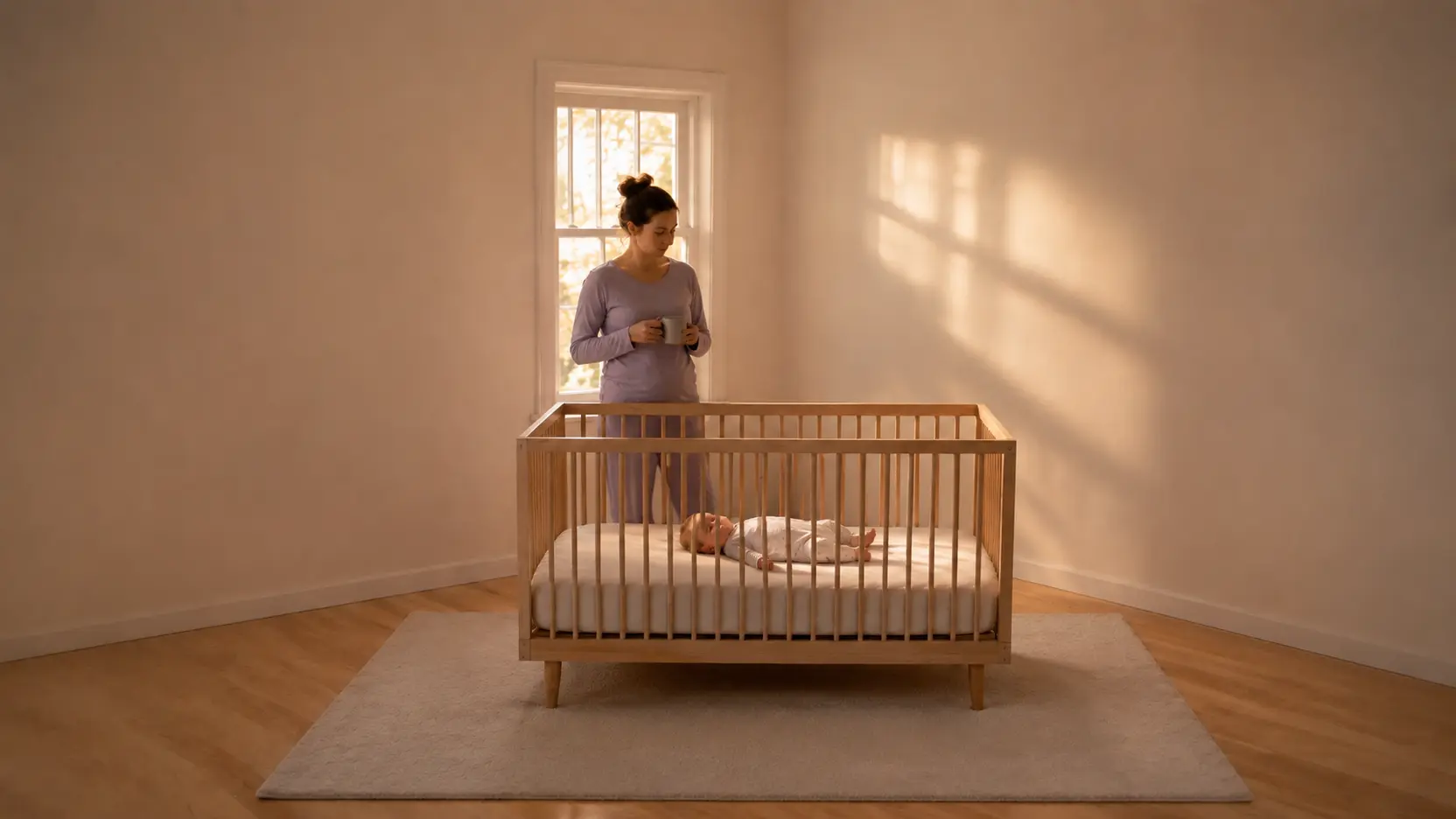
Once the change is finished, make the room boring again. Close the diaper, remove changing supplies from the sleep area, wash your hands, and use one familiar line such as, “You’re clean; it’s sleep time.” Then place your baby on their back in the separate crib, bassinet, portable crib, play yard, or bedside sleeper approved for infant sleep, with a firm, flat, level surface and only a fitted sheet. Wipes, creams, towels, changing pads, toys, positioners, and loose bedding stay out. [5]
I would not restart the timer from the exact second it stopped as if the baby were a delayed microwave. Choose the response that makes sense after the need has been met. Some families restart an interval; some use a brief reassuring check; some offer more support because the baby is fully awake. What matters is that the care remains calm and the safety boundary remains fixed. A necessary diaper change does not obligate you to entertain, feed without hunger cues, introduce a new sleep prop, or abandon every part of your plan.
The handoff sentence
“Poop pauses the plan; we change calmly, reset the crib, then resume if baby is well.”
Put that sentence in the caregiver notes. It is more useful at 2 a.m. than six paragraphs about whether responding will “confuse” the baby. Consistency means the same need receives the same dependable care—not that a timer outranks the child.
If crying continues after stool, skin, feeding, temperature, illness, and comfort have been considered, the next question may be method fit rather than diaper timing. This guide to what to review when crying continues after the physical need is handled takes that separate question without pretending every wake has the same cause.
Commerce-free medical exit
When the poop pattern matters more than the sleep pattern
One ordinary soft stool during a sleep-training interval usually calls for a diaper change, not a theory. The question changes when stool becomes very watery or unusually frequent, contains blood or pus, looks black or tarry outside expected newborn meconium, or is pale or chalky. Repeated vomiting, severe pain, fever with diarrhea, poor drinking, fewer wet diapers, dry mouth, unusual sleepiness, confusion, or a baby who simply looks unwell also moves the problem out of the sleep lane. [2][6]
Call your child’s clinician promptly about those signs. Use a particularly low threshold for advice when diarrhea affects a newborn, premature baby, or infant under 12 months because dehydration can progress quickly. Follow the clinician’s instructions about feeding and fluids; do not dilute formula, restrict milk, add solids, or use an anti-diarrheal medicine based on this article.
Skin can change the plan too. Contact a clinician for a rash that is very painful, worsening after two or three days of appropriate care, spreading, blistered, crusted, pus-filled, oozing, bleeding, or accompanied by fever. [3][4] The article cannot distinguish irritation from yeast, bacterial, allergic, or another rash by timing alone.
Use emergency services for abnormal breathing or color, limpness, unresponsiveness, a seizure, or a baby who is extremely difficult to wake. In that moment, there is no timer to resume.


The clock means something different now
At the beginning, the timer was glowing and the smell felt like a test of whether you could be consistent. Now the sequence has a cleaner shape. Pause when stool is known or strongly suspected. Change the diaper promptly and safely. Reset the empty sleep space. Resume a calm response only if your baby is comfortable and well.
I want you to carry one distinction back to the crib: a boundary is not the same thing as rigidity. The safe-sleep boundary stays firm. The hygiene boundary stays firm. The medical exits stay firm. The behavioral method is the flexible tool that fits around them.
You may still end up with a very awake baby staring at you as if the diaper change were an invitation to discuss the night’s agenda. That is inconvenient information, not evidence that you should have left the stool in place. Care did not erase your consistency. Care defined what your consistency is for.
Sources
- American Academy of Pediatrics / HealthyChildren.org: Getting Your Baby to Sleep
- National Health Service: How to change your baby’s nappy
- American Academy of Pediatrics / HealthyChildren.org: Common Diaper Rashes & Treatments
- National Health Service: Nappy rash
- NICHD Safe to Sleep: Safe Sleep Environment for Baby
- National Institute of Diabetes and Digestive and Kidney Diseases: Symptoms & Causes of Diarrhea
- American Academy of Sleep Medicine: Practice Parameters for Behavioral Treatment of Bedtime Problems and Night Wakings in Infants and Young Children