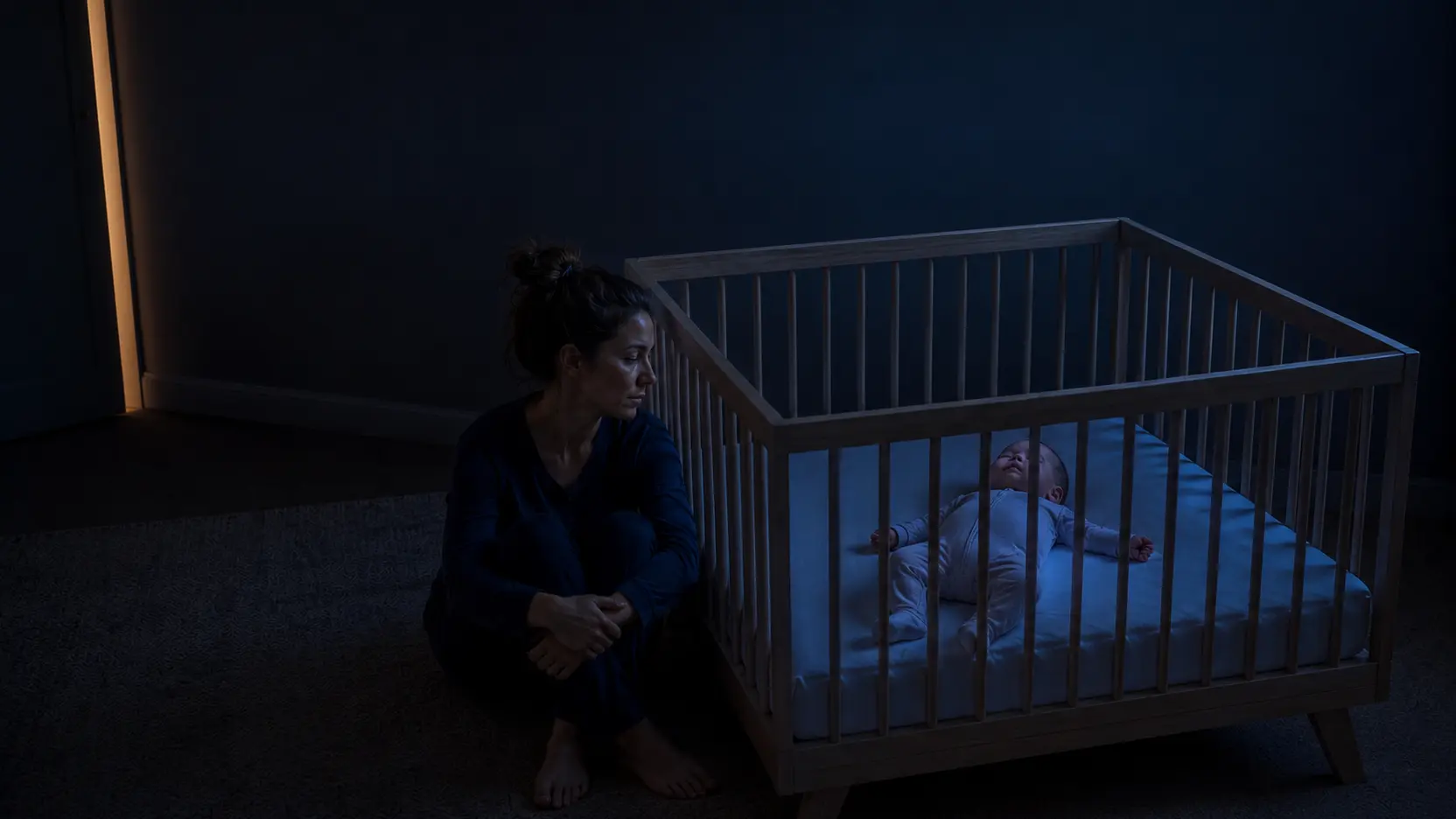

If your baby will sleep only in your arms and you can feel yourself getting drowsy, the next step is not another settling technique. Put your baby on their back in a separate, firm, flat, level, noninclined infant sleep space with only a fitted sheet, or wake another adult to take over. Do not settle onto a couch or armchair with the baby; those are especially dangerous places to fall asleep together.
Wanting your warmth, movement, smell, and heartbeat does not mean your baby is spoiled, and it does not prove you have created a permanent bad habit. The useful question is smaller: How can I keep the closeness my baby needs while changing the surface—and the adult plan—before exhaustion makes the decision for me?
I would separate tonight into two jobs. First, make the next five minutes safe. Then, when the adult holding the baby is fully awake, practice one realistic arms-to-surface landing. You do not have to turn every nap and bedtime into an independence exam. One protected practice is enough to learn something.
If your eyes are closing, the decision is already made
Contact sleep can be a warm, connected part of family life while the caregiver is awake and alert. It stops being a reasonable plan when the person holding the baby is fighting sleep. At that point, love looks less like enduring and more like changing the setup.
The Adult Alertness Gate
Fully awake
Hold, feed, rock, or cuddle if you want. Keep checking your own alertness, not only whether the baby is asleep.
Fading
Stop trying to “push through.” Place the baby on their back in the ready sleep space or wake the next adult now.
Unable to stay awake
Use the separate infant sleep space immediately. Never move to a sofa or armchair to get more comfortable with the baby.
SleepBaby.org field rule: adult drowsiness is a setup signal, not a willpower challenge.
If you accidentally fall asleep with the baby in an adult bed, move the baby back to their separate sleep space as soon as you wake. The goal is not to shame an exhausted person after the fact. It is to make the safer destination easy to reach before the next feed or cuddle begins.
Why arms work so well—and why that is not a character flaw
Arms give a baby several cues at once: pressure, warmth, a familiar voice, motion, and rapid help when something feels wrong. A separate bassinet or crib is intentionally quieter and less stimulating. From the baby’s point of view, the transfer can feel like five reassuring signals disappearing at the same time.
That does not mean you must preserve every cue forever. It means the transfer is easier to understand when you stop treating it as a contest between “good independent sleep” and “bad contact sleep.” I prefer a bridge: preserve one or two familiar cues while changing the surface. Your voice can continue. A brief hand on the baby’s chest can continue while you are awake. The same short song can continue. The sleep surface, however, becomes separate, firm, flat, level, bare, and intended for infant sleep.
Do not put a shirt, blanket, pillow, positioner, stuffed animal, or other caregiver-scented object into the infant sleep space. Familiarity can travel through sound, touch before placement, and a repeated sequence. It does not need to travel as a loose object beside the baby’s face.
The private fear under this search is often, “Did I make my baby need me too much?” I would replace that with a question you can actually use: “Which part is my baby asking for—food, relief, closeness, timing, or help through the landing?” Once you know which job you are solving, you can stop changing six things at once.

The Safe-Closeness Bridge
I use this sequence when “put the baby down” sounds laughably incomplete. It keeps closeness in the plan without confusing closeness with a shared sleep surface.
Five spans, one safe destination
- Pass the alertness gate. Contact sleep continues only while the adult is fully awake. Drowsiness triggers a safe landing or an adult handoff.
- Check the need. Look at feeding, diaper, temperature, pain or illness clues, timing, and age before assuming the transfer is the whole problem.
- Carry the cue, not an object. Keep your voice, one brief song, calm hands, or a familiar short routine. Keep clothing, pillows, toys, positioners, and loose bedding out of the sleep space.
- Protect one landing. Choose one nap or bedtime attempt. Set up the destination first, comfort the baby, place them on their back, and pause before deciding what the movement means.
- Return without surrender. If the attempt fails, comfort the baby and change the adult plan. Consistency means returning to the safe destination over time—not repeating transfers until everyone is frantic.

Notice what the bridge does not demand. It does not demand that a newborn fall asleep independently. It does not require you to withhold comfort. It does not promise that one successful transfer will repeat tomorrow. It gives you a sequence that still works on an imperfect night.
Is this a need problem or a landing problem?
A baby who sleeps in arms but wakes in the bassinet may be reacting to the transfer. A baby who suddenly cannot settle anywhere may be telling you something else. I would look for the pattern before I start lengthening routines or changing schedules.
| What you notice | What I would check first | What to do tonight |
|---|---|---|
| Baby roots, feeds briefly, then wakes hungry again | Feeding effectiveness, frequency, wet diapers, and growth concerns | Feed responsively and contact the pediatric clinician if intake, output, or growth concerns are present |
| Baby arches, coughs, seems painful, breathes differently, or cannot settle even in arms | Illness, discomfort, breathing, fever, and other new symptoms | Pause sleep experiments and use the health boundaries below |
| Baby is calm in arms and wakes at the same point in the lowering motion | Transfer timing, startle, temperature change, and how long the descent takes | Practice one slower, close-to-your-body landing with the sleep space ready first |
| Baby wakes soon after every placement but is otherwise well | Age, total sleep pressure, nap timing, and whether the attempt has become overstimulating | Stop after the protected attempt, comfort, and revisit timing rather than repeating a dozen transfers |
This table is an observation tool, not a medical screen. A parent can have a “landing” problem and a feeding or health concern at the same time. If your baby’s behavior changed suddenly, the new symptoms matter more than the fact that arms are currently working.
What changes with your baby’s age
For a newborn
Newborn sleep is irregular. Many newborns wake frequently, feed often, and settle most easily with a body nearby. I would not treat a newborn’s need for help as a failed sleep skill. The priorities are feeding, growth, safe placement, responsive comfort, and a workable adult fatigue plan.
For this age, “practice” may mean one calm placement after feeding while the baby is already asleep, followed by reassurance from beside the bassinet. If the baby wakes, you have learned that this was not an easy landing—not that you must continue until the baby complies.
For a baby around four months or older
The American Academy of Pediatrics’ consumer guidance presents putting a baby down drowsy but awake in the section for babies about four months and older. Even then, I would treat it as an option, not a developmental requirement. Some babies tolerate it; others become more alert the moment their back touches the mattress.
You can experiment with placing an older infant down a little earlier in the settling sequence, staying close, and offering calm reassurance. Or you can practice a fully asleep transfer first and work on timing later. The safe-sleep rules do not change based on which settling method you choose.
When the pattern changes suddenly
A baby who usually accepts the bassinet and abruptly wants constant holding may be hungry, uncomfortable, ill, or going through a temporary change. Look at the whole baby: feeding, wet diapers, temperature, breathing, skin color, responsiveness, vomiting, stool, pain signals, and what happens when they are awake.
There is no honest universal promise that babies “outgrow” arms sleep between three and six months. Nighttime sleep consolidates unevenly across the first year. A better measure is whether the family’s current pattern remains safe and sustainable, and whether the baby can gradually experience the separate sleep space without every attempt becoming a crisis.

Choose one protected practice, not an all-night test
The fastest way to make a transfer feel impossible is to attempt it at every sleep while both people become more upset. I would protect one attempt—the first bedtime landing, one daytime nap, or whichever sleep usually offers the calmest beginning.
One Protected Practice
- Choose the sleep before it begins. Do not decide while your eyes are closing.
- Prepare the destination. Use a safety-standard crib, bassinet, portable crib, or play yard with its intended firm, flat surface and fitted sheet only.
- Meet obvious needs. Feed, burp if needed, change the diaper, and check comfort without building a forty-minute obstacle course.
- Keep one familiar cue. Use the same brief song, phrase, or calm hand before and after placement.
- Lower slowly and pause. Keep the baby close to your body during the descent, place the bottom and torso with control, then support the head onto the mattress.
- Stop before overload. If the attempt escalates, comfort the baby and use the safer adult plan. You can practice again at the next chosen sleep.
Do not add soft padding to make the mattress feel more like your body. Do not incline the mattress or use a sleep positioner. The legal infant sleep surface may feel spare because it is designed to be spare.
If your baby wakes specifically during the descent, the detailed guide to why a baby wakes during the lowering motion can help you isolate the physical transfer. If the baby rejects the bassinet even before the landing begins, use the separate plan for what to try when a newborn refuses the bassinet.
When the transfer wakes your baby every time
First, make the descent boring. Have the sleep sack on if you use one and it is correctly sized. Turn on the established room cue before you begin. Place the bassinet close enough that you are not holding the baby at arm’s length over a rail. Move steadily rather than stopping halfway because you heard one tiny snuffle.
Second, watch the exact wake point. Does the baby startle when your chest moves away? When the head changes angle? When the mattress touches the back? Ten seconds after placement? Those are different clues. A wake at first contact may be a temperature or startle transition. A wake after a minute may be lighter sleep or a need that was not fully met. A wake after twenty minutes may have little to do with your lowering technique.
Third, keep your response predictable without making it rigid. You might pause with a calm hand while fully awake, use the same short phrase, and give the baby a moment to reorganize. If crying escalates, pick up and comfort. Responsive care and gradual practice can coexist.
I would also resist changing bedtime, naps, feeding, sound, swaddle or sleep sack, room temperature, and transfer method on the same night. That produces a lot of activity and almost no useful information. If timing seems to be the larger issue, build a flexible rhythm before a rigid schedule, especially while sleep is still changing quickly.


Build the adult plan before the next long hold
A safe bassinet does not solve exhaustion by itself. Somebody still has to notice when alertness is slipping. I would make the adult plan specific enough that it works without a midnight committee meeting.
Two adults available
- Choose a shift boundary before the feed begins.
- Use plain language: “I am fading; I need you awake now.”
- The receiving adult confirms they are awake before taking the baby.
- Keep the separate sleep space ready beside the active caregiver.
Solo caregiver tonight
- Prepare the crib or bassinet before sitting down.
- Feed or cuddle away from a couch or armchair.
- Set a personal alertness threshold: first head dip, repeated blinking, or losing track of time.
- At that threshold, place the baby safely even if the baby wakes.
“The baby will wake if I put them down” can be true and still not change the safety boundary. A waking baby on a separate infant sleep surface is a problem you can respond to. An adult falling asleep with a baby on a couch or chair is a risk you cannot monitor once sleep takes over.
If every daytime nap currently happens in arms
You do not have to convert the entire day at once. Keep contact naps only when the holding adult is fully awake, alert, and able to remain that way. Choose one daytime sleep for the protected landing and let the other naps be guided by safety, feeding, the baby’s needs, and the caregiver’s actual capacity. A practice plan that leaves you afraid to blink is not a workable plan.
I would choose the nap with the strongest sleep pressure and the fewest competing needs—not automatically the first nap because somebody online called it “easiest.” Prepare the bassinet or crib, use the familiar cue, make one calm attempt, and note what woke the baby. If the baby wakes immediately, comfort them and decide whether another safe attempt makes sense while you are alert. If not, end the experiment. The information is still useful.
For a solo caregiver, it may help to separate baby sleep practice from adult rest. The practice happens while you are awake. Your own rest requires the baby to be on the separate safe surface, even if that produces a shorter nap. If exhaustion is accumulating, ask a trusted adult for a specific block of alert care rather than a vague promise to “help sometime.” The request can be plain: “I need you responsible for the baby from 1:00 to 2:30 while I sleep.”
This is also where I would stop counting a contact nap as either success or failure. It is one way a baby slept with an awake caregiver. The separate-surface attempt is another piece of practice. You are building options, not grading affection.

Amazon recommendation · Keep the safe landing within reach
HALO BassiNest Swivel Sleeper 3.0 bedside bassinet
For an appropriate newborn who settles in arms and wakes during the long reach into a distant sleep space, this bedside bassinet is a more exact fit than a generic sound machine or sleep sack. Its lowering wall and 360-degree positioning are designed to make bedside access easier while the baby still sleeps on the bassinet’s own separate surface. A sound machine can carry a cue but cannot create that destination; a travel crib provides a separate surface but its floor-level design is less directly matched to repeated bedside lifts.
The persuasive reason to consider it is practical, not magical: shortening the physical arms-to-surface distance can make repeated safe landings simpler while preserving closeness. It does not prevent SIDS, cure contact sleep, guarantee a transfer, or replace an awake caregiver.
Use it only within the manufacturer’s current age, weight, developmental, assembly, placement, pad, and fitted-sheet instructions. The lowering wall is an access feature, not permission for bed sharing. Never add padding, a positioner, loose bedding, or a caregiver-scented garment.
See the HALO BassiNest 3.0 on Amazon
As an Amazon Associate, SleepBaby may earn from qualifying purchases.
Previously available Amazon browsing paths, preserved
As an Amazon Associate, SleepBaby.org may earn from qualifying purchases.
A one-minute reset before the next transfer
NICHD Safe to Sleep
Safe Sleep for Your Baby — 60 Seconds
Before practicing a transfer, use this one-minute reset to see the difference between keeping a baby close and sharing the baby’s sleep surface.
Takeaway: Close describes where the caregiver is. Separate, firm, flat, level, and bare describe where the baby sleeps.
When constant holding is a health clue, not a sleep project
Stop experimenting with transfers and seek emergency help now if your baby has severe trouble breathing, turns blue or gray, is unresponsive or very hard to wake, or has a seizure. Those are not wait-and-see sleep problems.
Contact your pediatric clinician promptly for breathing changes, repeated vomiting, signs of dehydration, poor feeding, fewer wet diapers, unusual limpness, significant pain, or a sudden behavior change that worries you. A baby younger than three months with a temperature of 100.4°F (38°C) or higher needs immediate pediatric contact.
I would also call when your baby can settle only upright and seems painful, when feeding is consistently difficult, or when you cannot tell whether the behavior is ordinary contact seeking or illness. You do not need to diagnose the reason before asking for help. Bring the useful observations: when the change began, temperature, feeding, wet diapers, breathing, vomiting, stool, and what happens both in arms and on the separate surface.
The point of this boundary is not to make ordinary closeness sound medical. It is to keep a sudden, whole-baby change from being buried beneath another round of sleep advice.
What progress can look like without forcing independence
Progress may be one safe landing before the baby needs help again. It may be a partner taking over before the first adult becomes drowsy. It may be noticing that hunger—not the mattress—was driving the wake. It may be abandoning drowsy-but-awake because it makes your four-month-old furious and choosing a calmer fully asleep transfer for now.
I would judge the plan by three questions: Is the baby’s sleep destination safe? Is the adult plan sustainable enough to prevent unsafe dozing? Are we learning one useful thing from the practice instead of escalating everybody?
Back at 2:08 a.m., the baby may still wake when placed down. The changed understanding is that waking does not mean the safe landing failed. The landing did its first job: it moved sleep away from an adult body that was losing alertness. You can comfort, feed, call for help, or try again when fully awake. The bridge is allowed to carry you back and forth.
Sources
- American Academy of Pediatrics: Sleep-Related Infant Deaths—Updated 2022 Recommendations
- NICHD Safe to Sleep: Safe Sleep Environment for Baby
- HealthyChildren.org: Safe Sleep—9 Ways to Reduce a Baby’s Risk of SIDS and Suffocation
- Centers for Disease Control and Prevention: Providing Care for Babies to Sleep Safely
- U.S. Consumer Product Safety Commission: Firm, Flat Infant Sleep Surfaces
- HealthyChildren.org: Getting Your Baby to Sleep
- Sleep Medicine Reviews: The Consolidation of Infants’ Nocturnal Sleep Across the First Year
- HealthyChildren.org: Fever—When to Call the Pediatrician
- HALO Sleep: BassiNest Swivel Sleeper 3.0 Product Information
- Amazon: HALO BassiNest Swivel Sleeper 3.0 Product Identity