
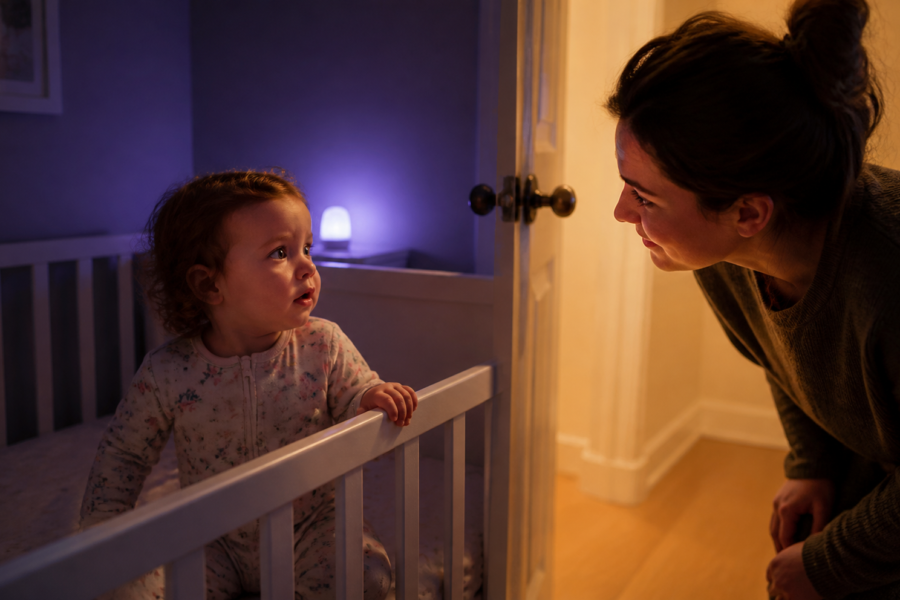
Baby Wakes Up Panicking: What Frightened Night Wakings Can Mean
When your baby wakes up panicking, first check breathing, responsiveness, body signs, timing, and recovery. Learn how to respond safely and when to seek care.
Read the guideSleepBaby.org parent library
Clear, reassuring guides for the questions parents search at 2 a.m., plus a simple next step when bedtime still feels impossible.

See the complete step-by-step plan we recommend for exhausted parents.
Open the sleep-help experienceBrowse the library
Latest guidance
When your baby wakes up panicking, first check breathing, responsiveness, body signs, timing, and recovery. Learn how to respond safely and when to seek care.
Read the guideA realistic three-week-old sleep rhythm built around feeding, safe sleep, newborn warning signs, gentle day-night cues, and a calmer plan for each wake-up.
Read the guideBuild a realistic nap schedule for a 3-year-old, know when quiet time fits better, and adjust bedtime using the pattern across the whole day.
Read the guideA flexible 15-month-old sleep schedule with one-nap and two-nap examples, readiness signs, transition steps, safety boundaries, and a seven-day reset.
Read the guideLearn when a sleeping baby truly needs waking, how to use a gentle step-by-step Wake Ladder, and when unusual difficulty waking needs prompt help.
Read the guideA useful sleep schedule for a 2-month-old is a flexible feed-awake-sleep rhythm. Learn what to observe, what can move, and which feeding and safe-sleep boundaries stay firm.
Read the guideUse this flexible 10-week-old sleep schedule to shape feeds, naps and nights around your baby's cues without forcing a rigid clock.
Read the guideA very dim red or amber light can help with nighttime care, but darkness remains the clearest sleep cue. Brightness, distance, duration, and safe placement matter more than the color label.
Read the guideBabies develop sleep-like states in the womb, especially late in pregnancy. Learn what fetal quiet means and when movement changes need a call.
Read the guideMost pre-sleep movement is ordinary settling, motor practice, or comfort-seeking. Read breathing, color, responsiveness, symmetry, consequences, and daytime behavior together.
Read the guide