
Baby Sleep
17-Month-Old Sleep Schedule: One Nap or Two?
A realistic 17-month-old sleep schedule can use one nap or a short two-nap bridge. Read the midday hinge, rescue short naps, and place bedtime.
Read guideThe SleepBaby blog
Baby won’t settle? Naps keep shifting? Start with the question in front of you.
108 guides
A realistic 17-month-old sleep schedule can use one nap or a short two-nap bridge. Read the midday hinge, rescue short naps, and place bedtime.
Read guide
Build a flexible 16-month-old sleep schedule from total sleep, nap readiness, and the day your toddler actually had—not one rigid clock chart.
Read guide
A 13-month-old may still need two naps or may be moving toward one. Use total sleep, a three-day pattern, and one small timing change to find the better fit.
Read guide
At 2:28 p.m., the second nap can begin to feel like a referendum on your entire household. Your baby is standing at the crib rail, delighted with the room, while you…
Read guide
A flexible two-nap day When the clock starts bossing everyone around At 2:14 p.m., the second nap can feel less like a nap and more like a referendum on every decision…
Read guide
A baby who hits or taps his head while settling may be using a rhythmic sleep movement. Check injury, breathing, pain, responsiveness, and daytime changes before deciding whether to observe, call,…
Read guide
Remove any blanket covering your baby's face, reset to a bare infant sleep space, and use practical comfort alternatives that keep the head uncovered.
Read guide
A mobile baby may independently sleep knees-tucked or bottom-up. Learn the safe response, rolling rules, crib checks, and when the posture needs care.
Read guide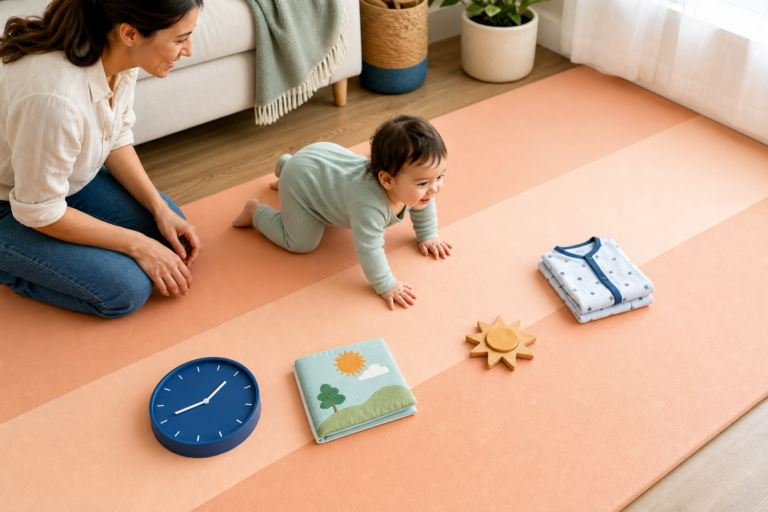
A practical 9-month-old sleep schedule usually uses two naps, 12–16 total hours, protected feeds, and bedtime placed from when nap two actually ends.
Read guide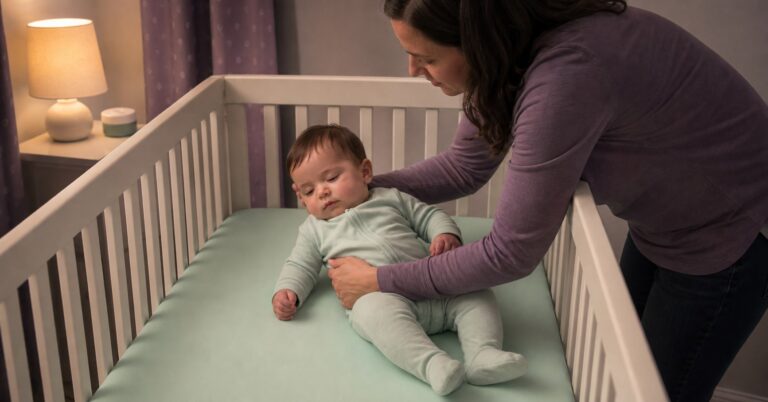
If your baby independently sits up in an empty crib, check breathing, head position, movement, and crib setup before repeatedly laying them down.
Read guide
A flexible 15-month-old sleep schedule with one-nap and two-nap examples, readiness signs, transition steps, safety boundaries, and a seven-day reset.
Read guide
Most pre-sleep movement is ordinary settling, motor practice, or comfort-seeking. Read breathing, color, responsiveness, symmetry, consequences, and daytime behavior together.
Read guide