Yes, you can usually take a baby house hunting. The important part is to treat every property as un-childproofed, because it is. Keep your baby contained or within arm’s reach, scan the entrance before you step inside, bring feeding and diaper supplies that do not depend on the seller’s counters or water, and leave when you cannot keep control around stairs, a pool, pets, smoke, dust, or a crowded room.
That is the safety answer. The practical answer is that you also need to see the house.
Trying to read a floor plan while your baby tries to eat the listing sheet is a very specific kind of multitasking. It can leave you with twenty-seven photos of a kitchen faucet and no memory of whether the main bedroom shares a wall with the garage. The goal is not to make your baby disappear from the process. It is to give one adult clear ownership of baby safety at every moment, then give each decision-maker an honest chance to look.
A showing is only a showing. Your quick scan cannot prove that a house is safe, code-compliant, lead-free, structurally sound, or right for your family. It can tell you whether it is controlled enough to enter today, what deserves a question, and what should be saved for an appropriately qualified professional later.
Before the showing, remove decisions from the doorway
The easiest tour with a baby is the one you partly complete before arriving. Use listing photos, a virtual tour, a floor plan, and a short call or message to eliminate properties that cannot meet your non-negotiables. This is not about judging a house from its glamour shots. It is about preserving your attention for the houses that still have a real chance.
Before you book, decide on three things the home must have or must be able to become. Perhaps those are a bedroom on the same level, a workable entrance, and a safe route from parking to the front door. Your list will be different. Keep it short enough that you can actually use it while holding a diaper bag.
Ask the agent about conditions that affect the visit itself:
- Is this a private showing or a busy open house?
- Are there steep exterior steps, active renovations, loose pets, or an unfenced pool area on the tour route?
- Is there a safe place to park a stroller without blocking an exit or scraping through occupied rooms?
- Will everyone need to remove shoes or wear disposable shoe covers?
- May you step outside and re-enter if the baby needs a reset?
You are not asking the agent to certify safety. You are deciding what gear and adult choreography the property requires. A narrow, three-story townhome suggests a different plan than an empty one-level house with a level entry. An active renovation may suggest no visit with the baby at all.
Time the appointment with the baby you actually have, not the imaginary baby who eats precisely on schedule and regards car transfers as a soothing hobby. If possible, start after a feed and diaper change, leave breathing room between houses, and cap the number of consecutive showings. Three focused visits often reveal more than seven visits completed by adults whose brains have turned into warm oatmeal.
Pack a small tour kit rather than the entire nursery:
- the containment option you have already practiced using;
- one clean changing pad and enough diaper supplies for the outing;
- the baby’s normal feed setup, plus a way to track preparation and feeding times when needed;
- a sealable bag for soiled items;
- hand-cleaning supplies;
- water and a snack for the adults;
- a phone note with your three non-negotiables and your questions; and
- permission, agreed in advance, to leave.
That last item matters. You do not owe a property a complete walkthrough when the conditions are wrong. A calm exit is a useful decision, not a failed showing.
The doorway pause
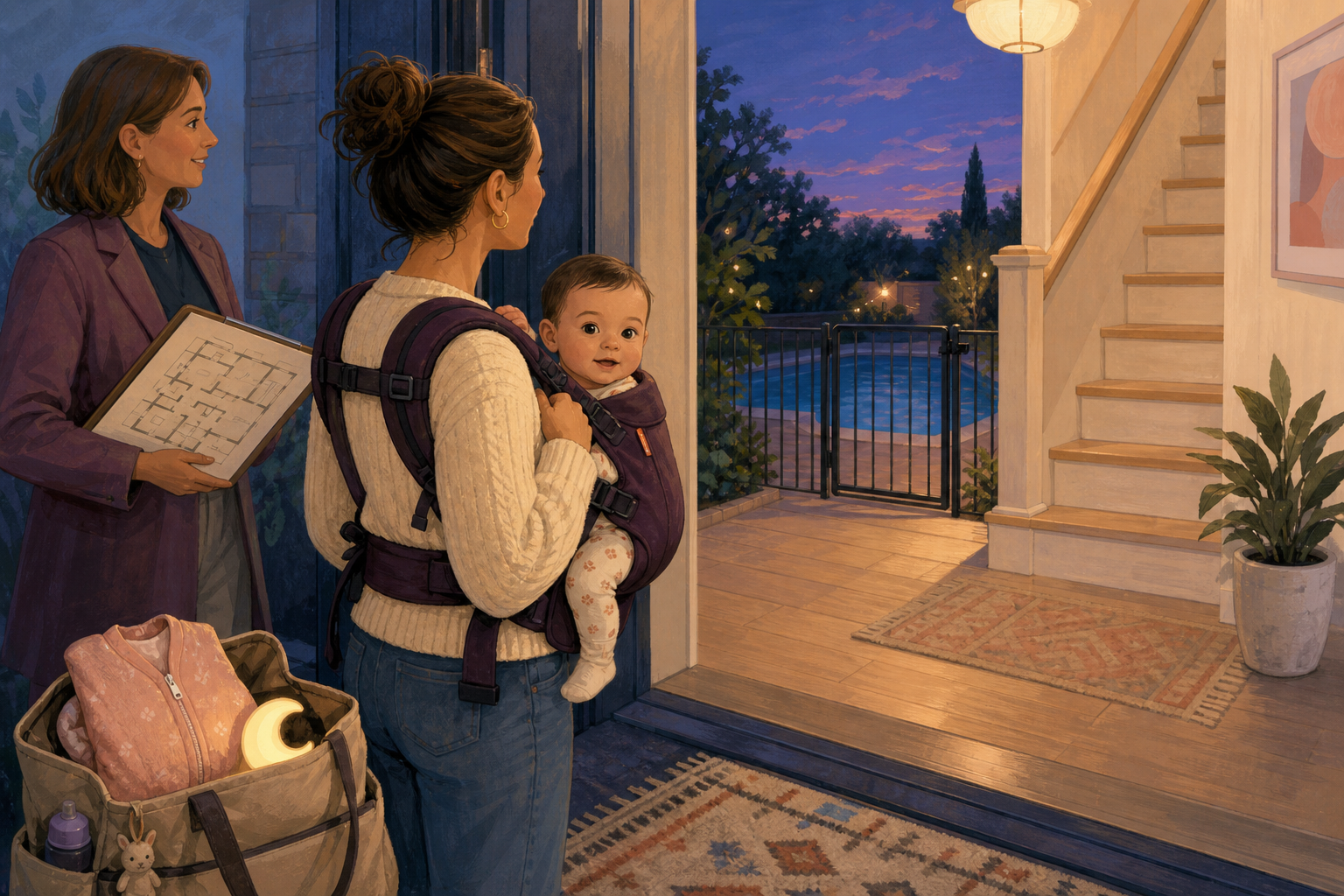
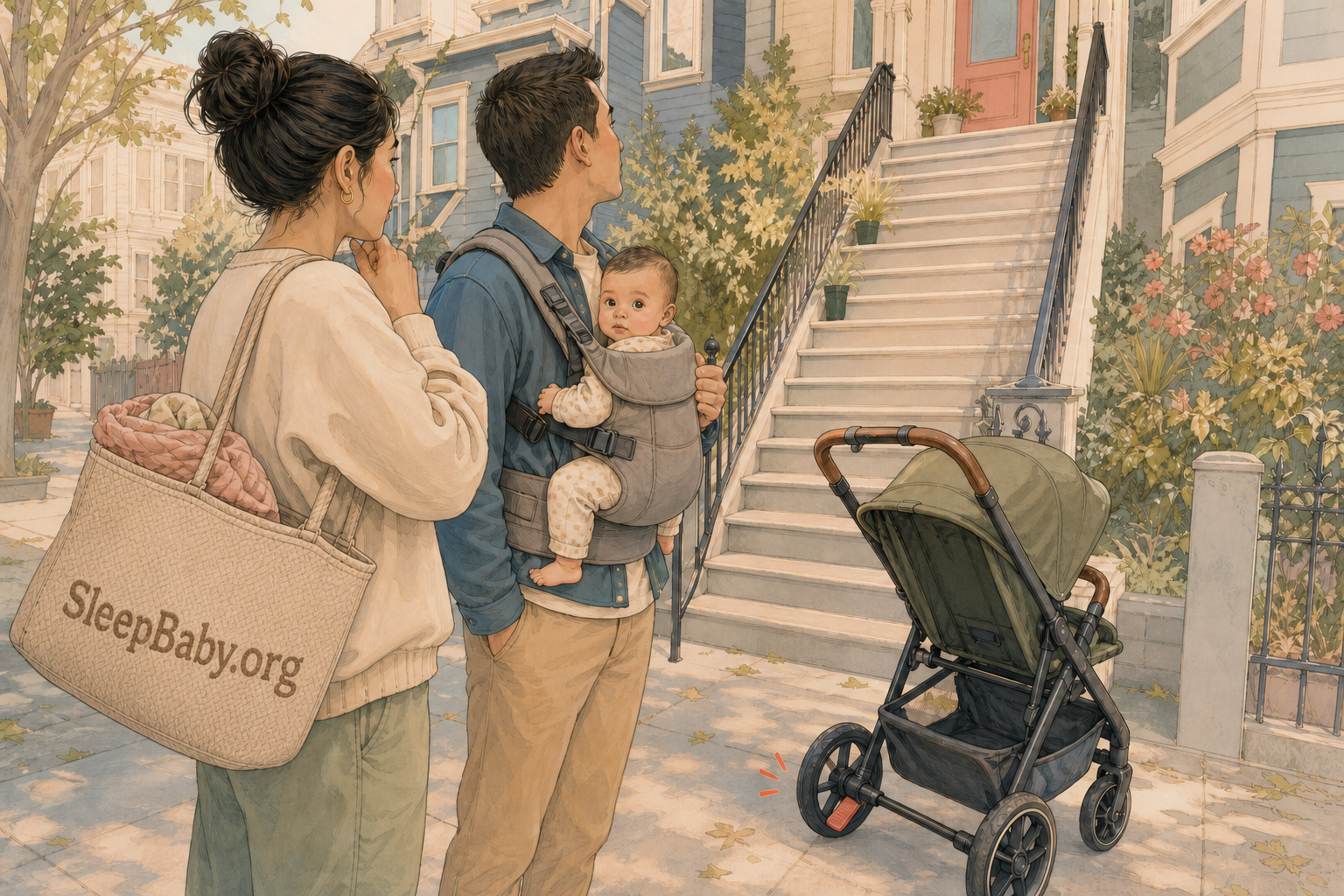
At the front door: the 60-second containment check
Pause before the agent opens the door. The minute you spend here is not wasted tour time; it prevents the first five minutes from becoming a scramble.
-
Contain first. Secure the baby in the chosen carrier or stroller before the door opens, or name the adult who is holding the baby. Fasten what should be fastened and set the stroller brake whenever it is parked. Do not put the baby down on an unfamiliar floor while everyone sorts keys, shoe covers, and introductions.
-
Look through the opening. Notice an immediate staircase or landing, an open basement door, construction materials, smoke or a strong odor, a loose animal, a crowd pressing toward the entrance, and any direct route to water. You are looking for conditions that change whether you can maintain control—not conducting an inspection from the doormat.
-
Choose a clean route. Decide where the stroller can move or wait without blocking an exit. If shoe covers are required, one adult handles those while the other stays fully responsible for the baby. This is not the moment for both adults to bend down and hope the stroller brake understands teamwork.
-
Name the exit. Know which door you will use if the baby needs to feed, be changed, or get away from noise. If a pet, crowd, dust, or open stair makes the first route unmanageable, stay outside and ask for a different entry or another appointment.
-
Start only when one adult owns baby safety. The handoff should be spoken, not assumed: “I have the baby; you look first.” Tiny sentence, enormous reduction in the “I thought you had them” category of family logistics.
Topic-to-tonight connection: A contained, unhurried entrance limits the sensory pileup that can follow the family into the car, the next nap, and bedtime. You are not promising a perfect schedule. You are simply declining to begin the tour at full volume.
SleepBaby.org · threshold containment sequence
Carrier, stroller, or two-adult swap?
There is no universally best setup. Choose based on the property, your baby’s needs, and the adults’ actual capacity that day. The detail that changes my answer is whether one adult can keep full control of the baby without sacrificing the family’s only careful look at the house.
Choose for this doorway
Compare the route, the baby, and the adult—not the gear labels
On a small screen, swipe the table sideways to compare all three options.
| What the tour presents | Carrier | Stroller | Two-adult swap |
|---|---|---|---|
| Stairs and split levels | Often easier than lifting a stroller, if the wearer is steady and can use the rail without carrying other items. | Usually awkward; park only with permission in a safe place that does not block an exit. Never improvise stair handling. | Strong option: one adult stays with the baby while the other views the level, then they switch. |
| Narrow rooms or a crowded open house | Keeps the baby close, but the wearer needs space to turn without bumping walls, people, or hot drinks. | May be hard to maneuver and can become a trip or exit obstruction. | Often gives the looking adult the clearest pass through the space. |
| Baby’s age and airway needs | Positioning must keep the face visible, nose and mouth clear, neck straight, and chin off the chest. Check frequently. Ask a pediatric clinician about baby-specific concerns, especially for a young infant or a baby born early or with respiratory issues. | Useful containment when awake and properly secured, but it is not a tour-day sleep surface. | Lets the holding adult focus on positioning and cues instead of examining cabinets. |
| Adult balance, pain, or mobility | Use only if the wearer can move, bend, and climb safely. Bend at the knees rather than folding at the waist over the baby. | A level, accessible route may make this the easier choice. Brakes still matter when parked. | May be safest when one adult cannot comfortably wear or push through the property. |
| Feeding or a diaper need | Plan to step out and remove the baby safely rather than attempting an acrobatic fix while walking. | Provides a contained pause, not a changing or feeding surface. | One adult can take the baby to the preselected private place while the other pauses the tour. |
| Fast exit | Efficient if already fitted and the wearer keeps hands free. | Efficient only if the route remains level and clear. | Best when both adults know the handoff and meeting point before entering. |
Topic-to-tonight connection: Choose containment for the showing, not as a way to manufacture a nap. A carrier or stroller can help you move through the house while the baby is awake and monitored; it does not become the sleep plan merely because the real crib is several zip codes away.
SleepBaby.org · house-tour containment comparison
The American Academy of Pediatrics’ carrier guidance is especially useful here: keep the baby’s face visible, make sure the nose and mouth are not covered, keep the neck straight and the chin off the chest, and check often. If positioning slips while you lean over a low cabinet or squeeze past a doorway, stop looking and fix the baby first.
If the carrier has not been adjusted since the baby grew, test it at home. If the stroller is coming, make sure it fits in the car with the rest of the tour kit. Showing day is an expensive time to discover that the carrier strap is twisted, the stroller brake sticks, and the diaper-bag zipper now requires two hands and a small negotiation.
Tour the house in two passes, not one blur
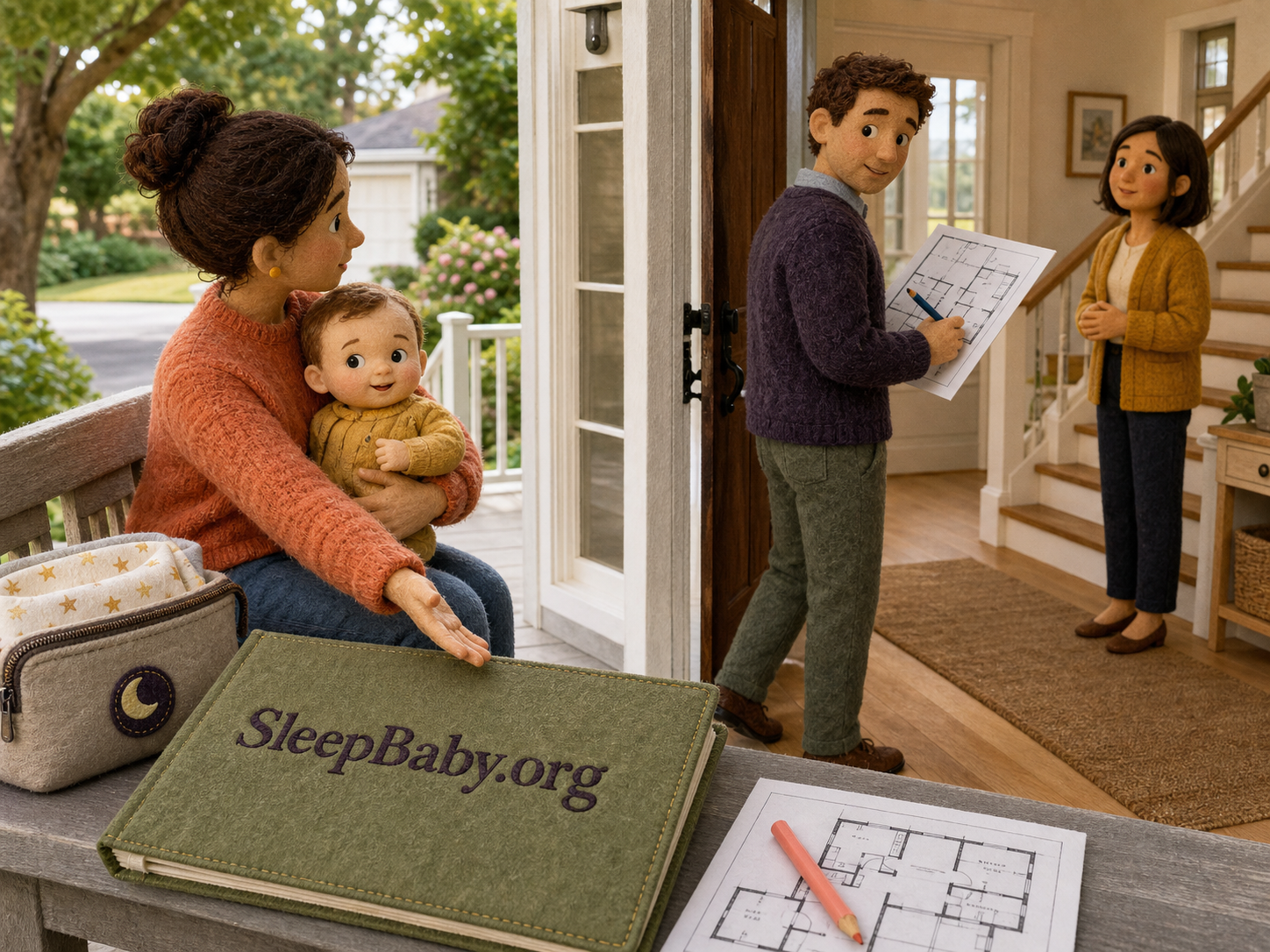
When two adults are present, the most useful method is simple: one adult looks while the other owns the baby, then they swap. It can feel slower than moving as a group. In practice, it is often faster because the looking adult is allowed to form a complete thought.
One floor plan, two clear looks
First pass, second pass, outside reset
-
Room 1 · Adult B looks
First pass: layout and immediate fit
Adult A keeps full responsibility for the baby. Adult B follows the agent through the main route and answers only the large questions: Does the layout work? Can everyone reach the spaces that matter? Are the deal-breaking constraints present? Take a small, permission-based photo set of floor-plan relationships rather than documenting every faucet. -
Room 2 · Roles switch
Second pass: switch roles
Regroup in a clear area or outside. Say the handoff aloud. Adult B takes the baby; Adult A views the spaces that matter most and checks the first adult’s impressions. The point is independent attention, not two people collecting the same close-up of a pantry shelf. -
Front walk · Compare
Outside reset: decide what deserves more
Once everyone is out, set the stroller brake or hold the baby securely, then compare notes. Record three items: what worked, what may be a problem, and what requires a question or professional follow-up. Feed, change, or settle the baby before driving if needed. -
Solo route · Focus
Shorten, contain, return if earned
Tell the agent you will be doing a focused first look. Keep the baby in the safest practiced containment option, scan only your non-negotiables and the main circulation route, and skip low-value details. If the house survives that pass, schedule a second look with support or arrange an appropriate professional review. Solo does not mean you must perform two adults’ jobs simultaneously.
Topic-to-tonight connection: The outside reset protects the next feed and nap from becoming an afterthought, and it keeps one overstimulating tour from swallowing the entire day. The house gets a fair look; the baby gets a clear owner.
SleepBaby.org · two-pass house-tour route
When houses are farther apart, plan the driving segments with the same care as the rooms. If the route includes a routine errand, this guide to taking a baby through a car wash can help you think through the transition without turning the car into an all-purpose holding zone.
Handle feeds and diaper changes without borrowing the house
A showing is someone else’s home, a staged property, or an active worksite. None of those is a dependable clean feeding or changing station. Bring a setup you know how to use and decide before arrival where you would go: your parked car when conditions are safe and private, a nearby family room or other suitable public facility, or home between visits.
Ask before using any space. Do not change a baby on a seller’s bed, sofa, kitchen counter, or floor. A portable changing pad protects both your baby and the property, but it does not turn every surface into a good choice. If there is no suitable place, leave. The house will still be there after the diaper situation has stopped being theoretical.
For formula, plan the feed rather than improvising with unknown tap water or a listing agent’s kettle. The CDC’s preparation and storage guidance says prepared formula should be used within two hours of preparation and within one hour after feeding begins. If feeding has not started, refrigerate prepared formula promptly and use it within the CDC’s stated window; discard leftovers from a bottle after a feed. Follow the baby’s clinician and the product instructions for your specific setup.
A simple phone timer can remove mental arithmetic from a noisy open house. Label or separate what is ready from what is used, and do not top off or save a partly used bottle for the next property.
Clean hands before preparing food and after a diaper change. The CDC’s handwashing guidance favors soap and clean running water; hand sanitizer is useful when those are not available, but visibly dirty hands still need proper washing when you can access it. Pack what helps you bridge the gap, then wash at the next suitable place.

Plan for naps without turning travel gear into a crib
It is reasonable to place showings near a baby’s usual wakeful stretch. It is not reasonable to expect the day to obey the calendar with courtroom precision. Build margins around the feed or nap that most affects your baby’s comfort, and let less important timing flex.
If your baby falls asleep in a car seat, stroller, carrier, or sling, the AAP’s safe-sleep guidance advises moving the baby to a firm, non-inclined infant sleep surface as soon as possible after travel or use. A sitting device does not become a crib because the agent is still explaining the roof age. Keep the guidance proportionate: finish the necessary travel, then make the transfer rather than extending device sleep to protect the tour schedule.
If a necessary transfer means waking the baby, how to wake a sleeping baby gently offers a calmer next step and explains when unusual difficulty waking deserves medical attention. For baby-specific safe-sleep or breathing concerns, especially with prematurity or respiratory history, ask the baby’s pediatric clinician.
The best tour is not the one where the nap survives perfectly. It is the one where the adults remember what they saw and the baby never has to audition an unknown floor with their mouth. That is a more useful standard than preserving every minute on the schedule while everyone becomes steadily less able to make a good decision.
Separate “leave now” from “ask later”
An unfamiliar house contains two different kinds of information. Some conditions affect whether you can safely control the baby during this visit. Others are questions about living there and belong in disclosures, due diligence, or an evaluation by the appropriate professional. Mixing those categories either makes parents panic over everything or tempts them to dismiss something important because the showing felt calm.
Sort the clue before it follows you home
Leave now, ask now, note for inspection
On a small screen, swipe the decision lanes sideways. Each lane answers a different kind of question.
| Leave now or stay outside when… | Ask the agent now when… | Save for the appropriate professional when… |
|---|---|---|
| You cannot keep the baby away from an open stair, landing, pool route, active tools, loose pet, heavy crowd, smoke, or visible renovation dust. | A door, gate, pet, work area, or alternate route might be secured before you enter. | You need to know whether stairs, rails, windows, pool barriers, electrical systems, paint, structure, or another feature meets current requirements or is suitable for your family. |
| The only available place for the baby is an unfamiliar floor, seller’s furniture, or another surface you would not knowingly use. | You need permission to park a stroller, take specific photos, open a non-private feature, or step out and re-enter. | A visible clue raises a question about code, lead, moisture, structural condition, remediation, or long-term safety. A showing cannot settle it. |
| The carrier position cannot be maintained, the adult wearing it feels unstable, or the stroller cannot move or park without blocking the exit. | A shorter route or second appointment would let each adult look while one person controls the baby. | You need advice that depends on the baby’s age, airway, medical history, or feeding needs, or on the property’s legal, contractual, or technical facts. |
Topic-to-tonight connection: Sorting the notes now reduces the bedtime loop of “Did we miss something?” without pretending a three-column list can replace a home inspection or a pediatric clinician.
SleepBaby.org · showing-hazard decision lanes
Pools and water access
If the tour route gives a child direct access to a pool or spa and you cannot maintain complete control, do not enter that area with the baby. The U.S. Consumer Product Safety Commission’s pool-barrier guidance describes barriers and self-closing, self-latching access as layers of protection; none replaces adult supervision.
Observe the route and ask questions, but do not announce that a fence “passes code” because it looks tall or a latch seems high. Requirements differ, conditions change, and a qualified local professional is the right person to evaluate compliance and function. Your immediate job is simpler: decide whether the baby can be kept entirely away from the water during this visit.
Stairs, windows, cords, cabinets, and tip-over risks
The CPSC’s childproofing guide identifies familiar hazards such as stairs, accessible window-covering cords, windows and landings, unsecured cabinets, and furniture or appliances that can tip. In a showing, containment is the response. Do not test gates, pull on furniture, open private cabinets, or assume a device works because it is present.
Notice how your family would move through the home, photograph relevant features with permission, and make a future-safety list. A house that needs childproofing is not automatically a bad house; nearly every home needs age-specific changes. The useful distinction is between work you can plan and a visit you cannot safely complete today.
Peeling paint, construction, and dust
The Environmental Protection Agency notes that homes built before 1978 are more likely to contain lead-based paint, and that deteriorating paint and renovation dust can create hazards—often around windows, doors, stairs, railings, and porches. You cannot diagnose lead by looking, and a brief tour cannot prove its absence.
If work is active or dust and paint debris are visible, keep the baby out of the area. Do not allow floor play or prepare a feed there. Ask to reschedule when the route is clean and controlled, and request the appropriate records or professional evaluation through your normal real-estate process. This is a boundary, not a declaration that exposure occurred.
Smoke, strong odors, and crowded rooms
Smoke or a strong odor may have many causes; you do not need to identify the cause while standing in the foyer. Step out if the air is uncomfortable or the baby cannot be kept away from the source. Note what you noticed and direct the factual property question to the agent and the relevant professional.
Crowding is similarly practical. If adults are backing toward stairs, strangers are leaning into the stroller, or you cannot see the baby’s face in the carrier, leave and request a quieter appointment. The home may be perfectly viewable at another time. Today’s open house is not the only possible version of the property.
See enough to make the next decision—not every decision
House hunting gets faster when each visit has one job: decide whether this property deserves the next layer of attention. You do not need to solve furnishing, childproofing, inspections, offers, and the first night of sleep before leaving the driveway.
Use a small capture system:
- Three non-negotiables. Mark each yes, no, or uncertain.
- One floor-plan photo set. With permission, capture the relationships you will forget: stairs to bedrooms, kitchen sightlines, entry-to-parking route, and any major level change.
- One question list. Separate questions the agent can answer from matters for disclosures or qualified professionals.
- One leave threshold. Decide that loss of safe control ends the visit, even if the best room is still upstairs.
Do not let one adult quietly become the default baby holder for every promising property. If both adults share the decision, both need a real look. If one adult is the sole decision-maker, that person still needs moments of full attention; a second appointment or support person is not an indulgence when the purchase is this consequential.
Also notice what daily life would demand. Where would you set down the bags while keeping the baby contained? Can you move from the car to the entrance in rain? Would bedtime require repeated stair trips? Those are not inspection findings, and they do not decide the house alone. They are the ordinary-friction details that photos rarely volunteer.
Reset before the next house—or before home
The most revealing notes often appear once you are outside and nobody is trying to explain quartz countertops. Give yourselves five quiet minutes before driving.
Meet the baby’s immediate need first: feed, diaper, comfortable temperature, or a calmer hold. Then record each adult’s independent impression before negotiating it into one shared answer. “I could not safely manage those stairs while carrying the baby” is different from “I disliked the stairs,” and the distinction helps later.
If the day has shifted a nap, resist turning the evening into a repair operation. Watch the baby in front of you and return to the household’s usual rhythm where you can. If one tour-day nap runs unexpectedly long, this guide to a baby napping longer than usual can help you sort ordinary variation from reasons to call a clinician.
Stop adding showings when the adults are no longer retaining details or the baby needs a proper reset. The next property deserves alert decision-makers, and your evening deserves something gentler than two depleted adults comparing blurry photos at bedtime.
Sources
- American Academy of Pediatrics, HealthyChildren: How to Keep Your Sleeping Baby Safe: AAP Policy Explained
- American Academy of Pediatrics, HealthyChildren: Baby Carriers
- U.S. Consumer Product Safety Commission: Childproofing Your Home, Publication 252
- U.S. Consumer Product Safety Commission: Safety Barrier Guidelines for Residential Pools
- U.S. Environmental Protection Agency: Protect Your Family from Sources of Lead
- Centers for Disease Control and Prevention: Infant Formula Preparation and Storage
- Centers for Disease Control and Prevention: About Handwashing