If your toddler keeps flushing the toilet, the handle is probably doing exactly what toddlers love: one small action creates a loud sound, fast motion, a disappearing act, and a perfect reset. That does not make the habit convenient, and it does not mean you have to stand through twelve ceremonial flushes. It does mean the most useful response is usually a clear one-flush rule, supervised bathroom access, and another small job that gives your child a safe ending.
I know the sound that brings a parent down the hallway at record speed: flush, two quiet seconds, then flush again. A toilet handle can feel like a toddler slot machine. Push, roar, swirl, reset. The goal is not to deliver a lecture more fascinating than the toilet. It is to make the bathroom sequence short, predictable, and pleasantly boring.
The hallway-to-bathroom answer
Use one rule your toddler can finish
What not to do: do not keep flushing to test a clog, turn the toilet into a long negotiation, or treat one repetitive habit as a diagnosis.
SleepBaby.org · The original video
A little help
for the night ahead.
Take a moment to watch the original Baby Sleep Miracle presentation. Your article will be right here when you’re ready to keep reading.
Ready to get started?Take the next step with SleepBaby.
Help my baby sleepWhy the flush is so hard to leave alone
Bathroom learning asks a young child to coordinate body signals, memory, planning, words, clothing, handwashing, and a sequence of unfamiliar equipment. The American Academy of Pediatrics describes toilet learning as a multi-skill developmental task, and even notes that some children are frightened by flushing.1 Other children land at the opposite end of the spectrum: they want to make the noise happen again and again.
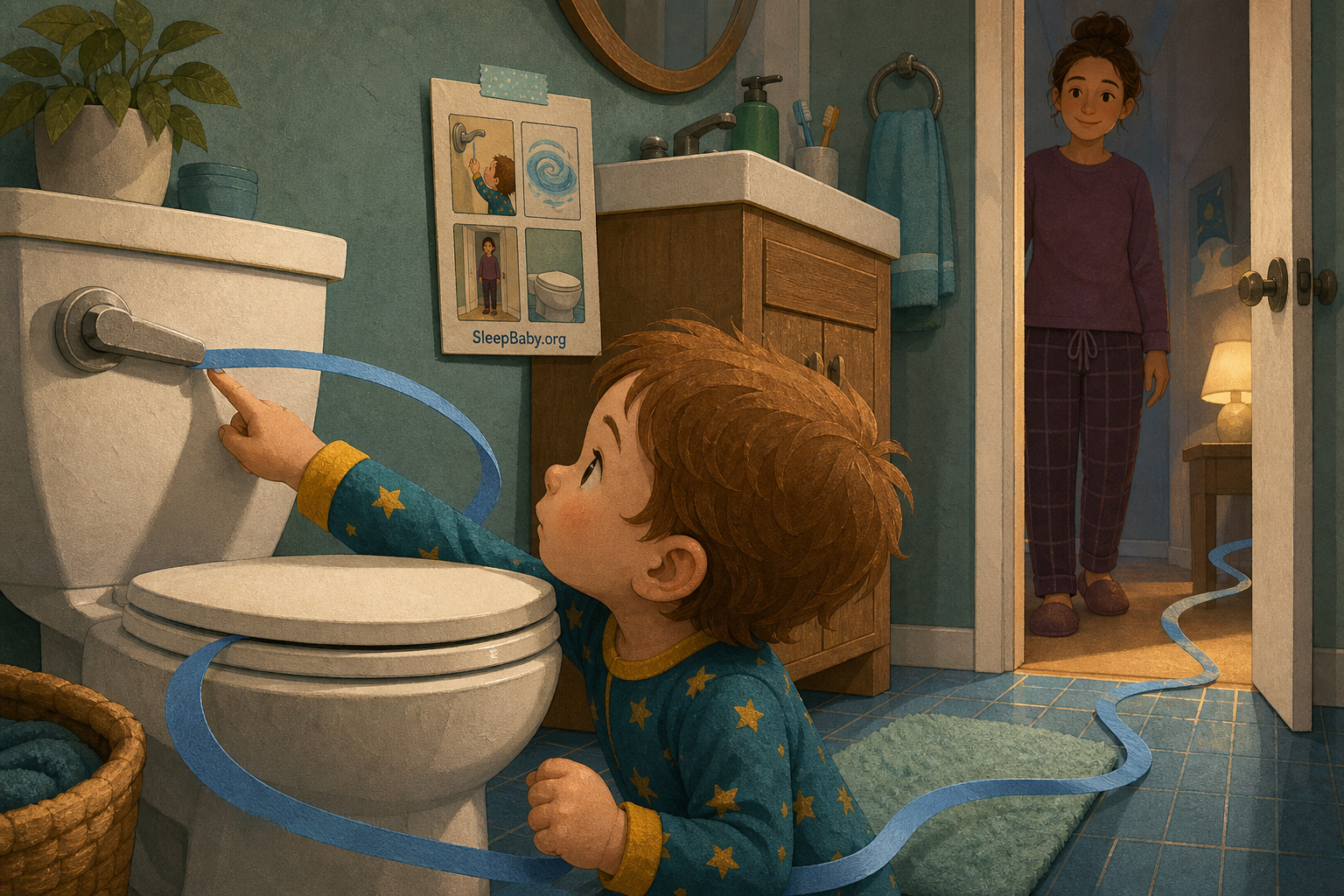
The repetition can serve several jobs at once. Your child may be studying cause and effect. They may like the low rumble and quick whirl. They may enjoy being the person who controls a powerful household machine. They may have learned that a flush produces an immediate parent appearance. Or the action may have become the final square in a routine that now feels incomplete without repeating it.
None of those possibilities requires you to guess your child’s inner motive before setting a boundary. Watch what happens just before and after the flush. That pattern usually tells you which part of the loop needs a safer replacement.
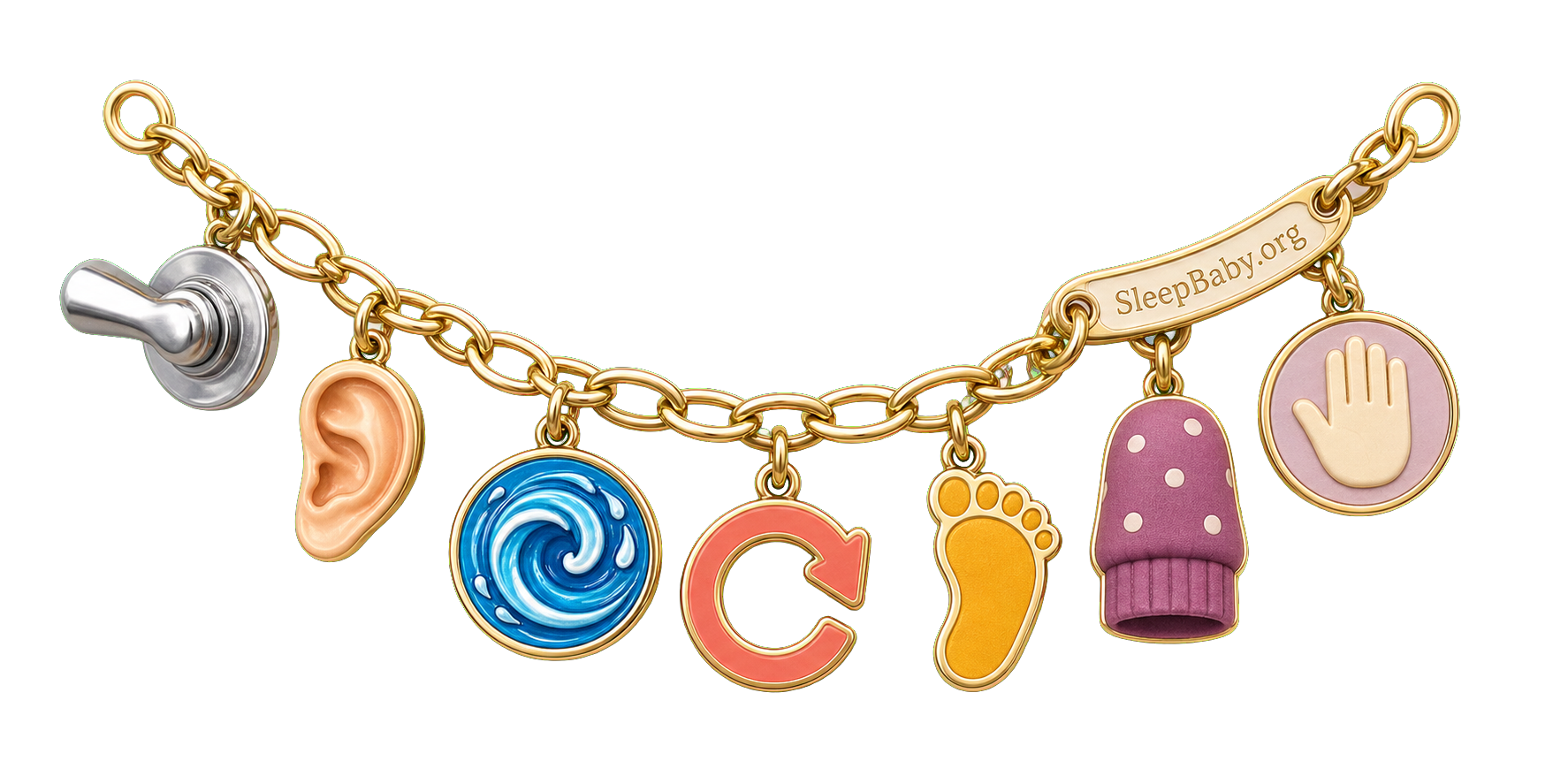
Cause-and-effect decoder
The five-second reward loop
- 1ReachThe handle invites a small, doable action.
- 2RoarThe sound arrives immediately and fills the room.
- 3SwirlWater and objects move in a dramatic pattern.
- 4ArrivalAn adult may appear with big energy.
- 5ResetThe handle is ready to produce the whole show again.
Why this helps: remove one payoff, then offer a safe job that has a visible finish.
SleepBaby.org behavior map
Start with the one-flush bathroom plan
Choose the rule before the next bathroom trip, not while your child is already gripping the handle. Keep the words identical for several days. Many toddlers around 30 months can follow simple routines and two-step directions, though development varies and tired children are not famous for showing their best executive function.7 A short sequence is easier to learn than a fresh explanation every time.
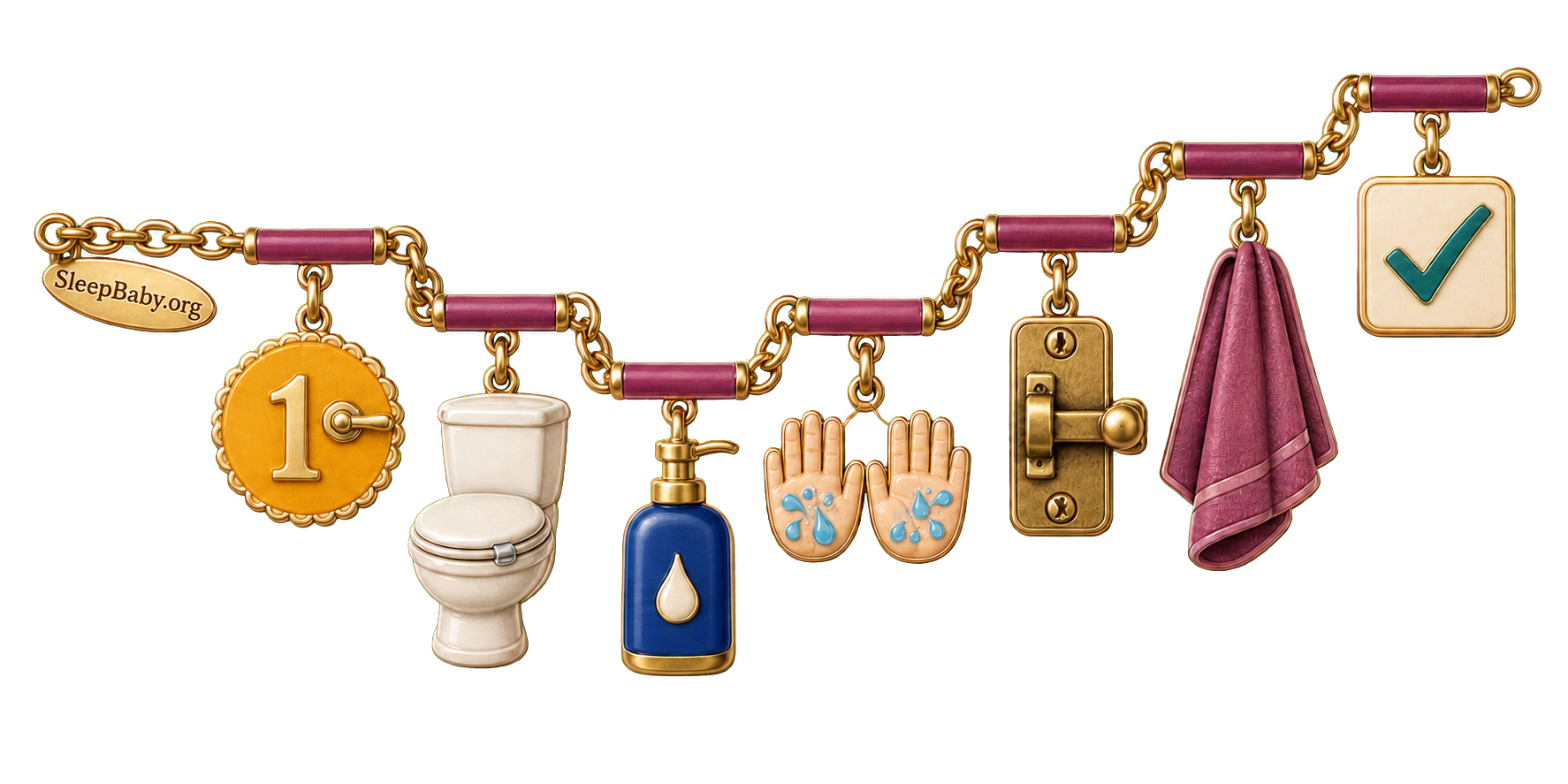
Four squares, one finish
The one-flush routine
- Use the toiletPee or poop first. The flush belongs to actual toilet use.
- Flush onceSay “one flush” as the child presses, then move on immediately.
- Lid and handsClose the lid, wash hands, and dry them. These are finishing jobs.
- Leave togetherTurn off the light, close the door, and begin the next named activity.
SleepBaby.org one-flush sequence
The AAP recommends positive words, predictable routines, and specific praise during toilet learning.2 So praise the finish, not your child’s personality: “You flushed once and came with me,” or “You closed the lid and washed your hands.” That tells the child exactly what worked.
If your toddler reaches for a second flush, block the handle calmly and repeat one sentence: “Flushing is finished.” Then point to the next square or move to the next job. Avoid adding five questions, a warning countdown, a debate about the water bill, and an emotional speech. All that attention can become part of the machine.
What if my toddler melts down when I stop the second flush?
Hold the limit and make room for the feeling. “You wanted another flush. You are mad. Flushing is finished.” Help your child leave, then reconnect outside the bathroom. A strong protest does not mean the boundary is wrong. It means the old loop ended before your child wanted it to.
If interruption causes intense distress in many routines, across settings, or for long periods, note the broader pattern and bring it to your child’s pediatrician. For more help thinking about rigidity rather than one isolated bathroom habit, see what it can mean when a toddler is very particular.
Use a script that fits the moment
The rule stays the same, but the shortest useful words change depending on what is happening. These scripts are intentionally plain. Say them in your own natural voice, then let your body do the rest of the teaching by blocking access, pointing to the next step, or leaving the room together.
“You already flushed. Flushing is finished. Close the lid or I will help.”
Block the handle while offering the finishing choice. Both options move away from a second flush.
“The bathroom is for toilet and washing. Play is in the other room. I will help you leave.”
Do a quick hazard check, escort the child out, and secure access. Save the discussion for later.
“Yes, you do the one flush after the toilet. Then I will point to the next square.”
Protect the child’s competence while keeping the number nonnegotiable.
“That was another flush. I will be the flusher next time. Now hands and out.”
Do not demand an apology for the water. Make the next boundary easier to enforce.
What if the flushing happens only when I am busy?
That pattern suggests the adult arrival may be part of the reward. It does not mean your toddler is plotting against you. They have simply found a reliable button for bringing a grown-up close. Make the unsafe behavior produce a brief, neutral response: secure the bathroom, state the rule, and leave together. Then build small doses of warm attention into predictable moments that do not require a toilet alarm: two minutes of floor play before you start dinner, a named helper job, or a cuddle after the bathroom routine is complete.
Do not ignore a young child in an unsafe room. “Give it no attention” is not a bathroom safety plan. The useful distinction is between low-drama intervention and no intervention. You still move quickly. You just avoid adding a show.
What if another caregiver allows unlimited flushing?
Agree on the reason before you argue about technique. The rule protects bathroom safety, plumbing, water, and a routine the child can understand. Put the four steps on one small card and use the same phrase: “One flush, lid, hands, out.” Grandparents, babysitters, and child-care staff do not need the whole behavior theory. They need the exact boundary and what to do after it.
Public restrooms are different enough to deserve a preview. Automatic toilets can flush loudly before a child is ready. Covering the sensor temporarily with your hand or a removable note while you assist may reduce surprise, then uncover it when your child is standing back. Never leave anything attached to public equipment, and do not promise there will be exactly one flush if the sensor controls the machine. In that setting, the goal is calm exit and handwashing rather than handle practice.
Change the room so you do not have to police the handle all day
A boundary is easier to teach when the environment backs it up. Keep the bathroom door closed, use an age-appropriate childproof door solution that adults can open quickly, and keep the toilet lid down. Do not leave a toddler alone in the bathroom because the room contains water, cleaning products, medicines, razors, cords, and hard surfaces in addition to the toilet.
CDC notes that drowning can happen quickly and silently whenever a child has access to water, and Safe Kids Worldwide specifically recommends keeping toilet lids and bathroom doors closed.34 This is not a reason to panic every time your child enters the bathroom. It is a reason to make access intentional.
- When you are supervising toilet use: let the child complete the one-flush sequence with you.
- When the bathroom is not in use: lid down, hazards secured, and door closed or access controlled.
- When another caregiver takes over: give them the same one-sentence rule so the toilet does not have two sets of laws.
- When the child is newly toilet learning: balance access with safety by using scheduled check-ins or accompanying them rather than making the toilet mysteriously forbidden.
Repeated flushing also uses real water. WaterSense-labeled toilets use 1.28 gallons per flush or less, while the federal standard is 1.6 gallons per flush.6 Ten extra flushes could therefore use roughly 12.8 to 16 gallons, depending on the toilet. That number is useful for adult motivation. It is not likely to persuade a two-year-old more than the whirlpool does.
Replace the job, not just the motion
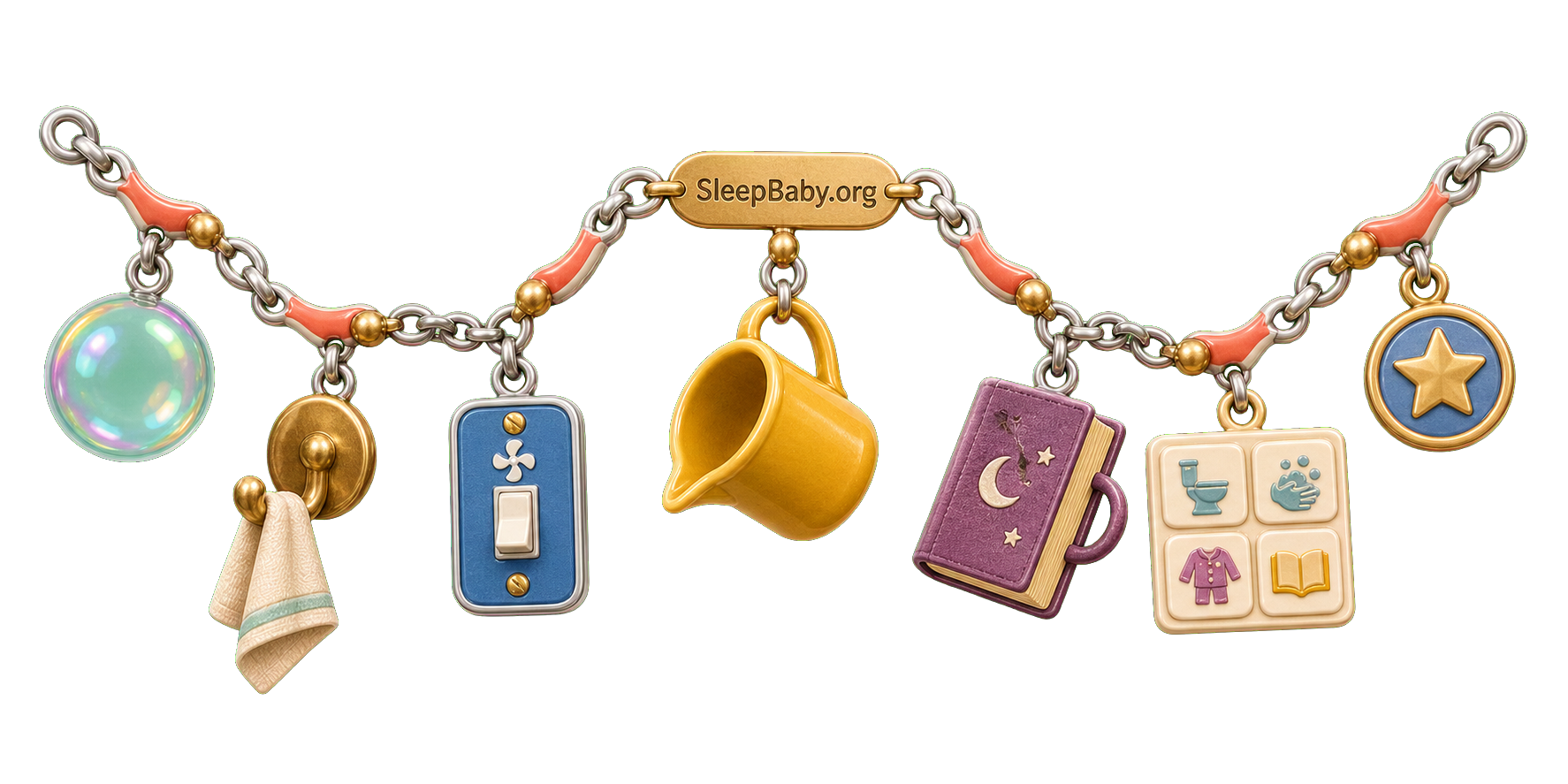
If you only remove the handle, your toddler may keep looking for the sound, control, repetition, or parent response it provided. Offer one replacement that matches the likely job and has a clear finish. Keep it small. You are not opening a bathroom amusement park.
Does repeated flushing mean autism?
No single flushing habit can tell you that a child is or is not autistic. CDC includes repetitive behaviors, strong interests, difficulty with change, and sensory differences among possible autism characteristics. It also makes clear that some people without autism can show some of the same characteristics.5 Diagnosis depends on a broader developmental picture, especially social communication and patterns that affect daily life.
If the toilet is your child’s one spectacularly interesting machine, and they otherwise connect, communicate, play, adapt, and develop in ways that feel typical for them, treat the flushing problem in front of you. If you also notice loss of language or another skill, limited social back-and-forth, several intense repetitive patterns, major distress with ordinary changes, or behavior that makes daily life hard across settings, contact the pediatrician. You do not need to wait until you are certain. Developmental screening is a conversation, not an accusation.
A single strong interest can still be intense. The same distinction comes up when a baby is fascinated by wheels: the useful question is not whether one interest appears on a list. It is how the whole child communicates, plays, adapts, and functions.
Watch, ask, or act
Put the concern in the right lane
SleepBaby.org decision lane
If your toddler flushed an object or the water is rising
Move the child out of the bathroom first. If the bowl is rising, do not flush again to see whether the problem cleared. Close the lid if that can be done without contact with overflowing water. If you know where the toilet’s water-supply valve is and can reach it safely, turn it clockwise to stop incoming water. Otherwise, leave the area controlled and call a plumber.
Do not pour chemical drain cleaner into the toilet, mix cleaners, let a child watch nearby, or dismantle plumbing based on a quick online trick. If the missing item is a battery, medication, sharp object, cleaning pod, or something that may have been mouthed or swallowed, treat the exposure question separately from the plumbing question. In the United States, call Poison Control at 1-800-222-1222 or use poison.org. Call 911 for trouble breathing, collapse, seizure, or another emergency.
Once the immediate problem is stable, avoid turning the incident into a dramatic family legend in front of the child. Repair the access problem, return to the same one-flush rule, and give objects a different disappearing game: put blocks into an opaque bag, post toy letters through a box slot, or drop bath-safe toys into a dry bucket outside bathroom time.
How to keep flushing from becoming bedtime’s encore
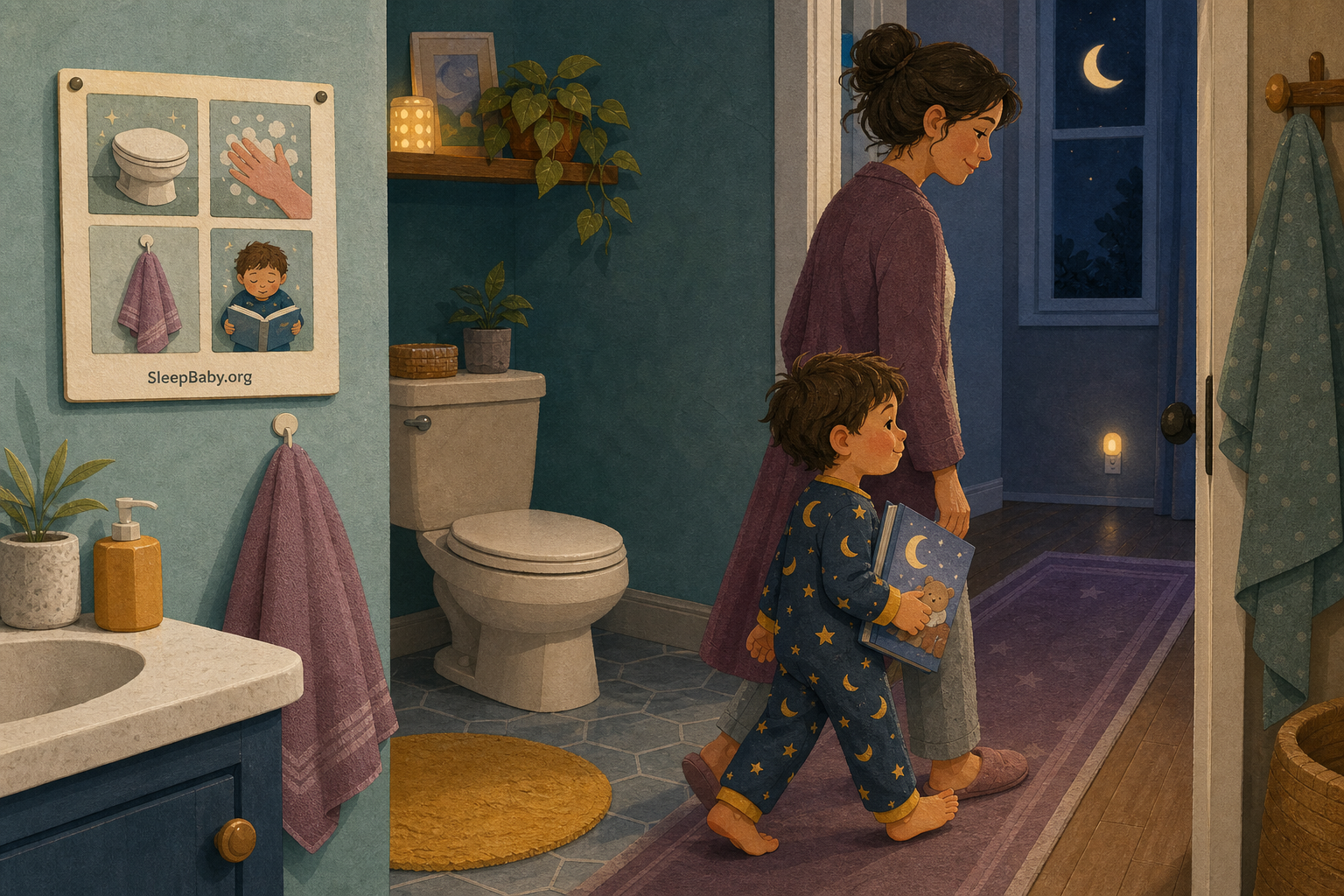
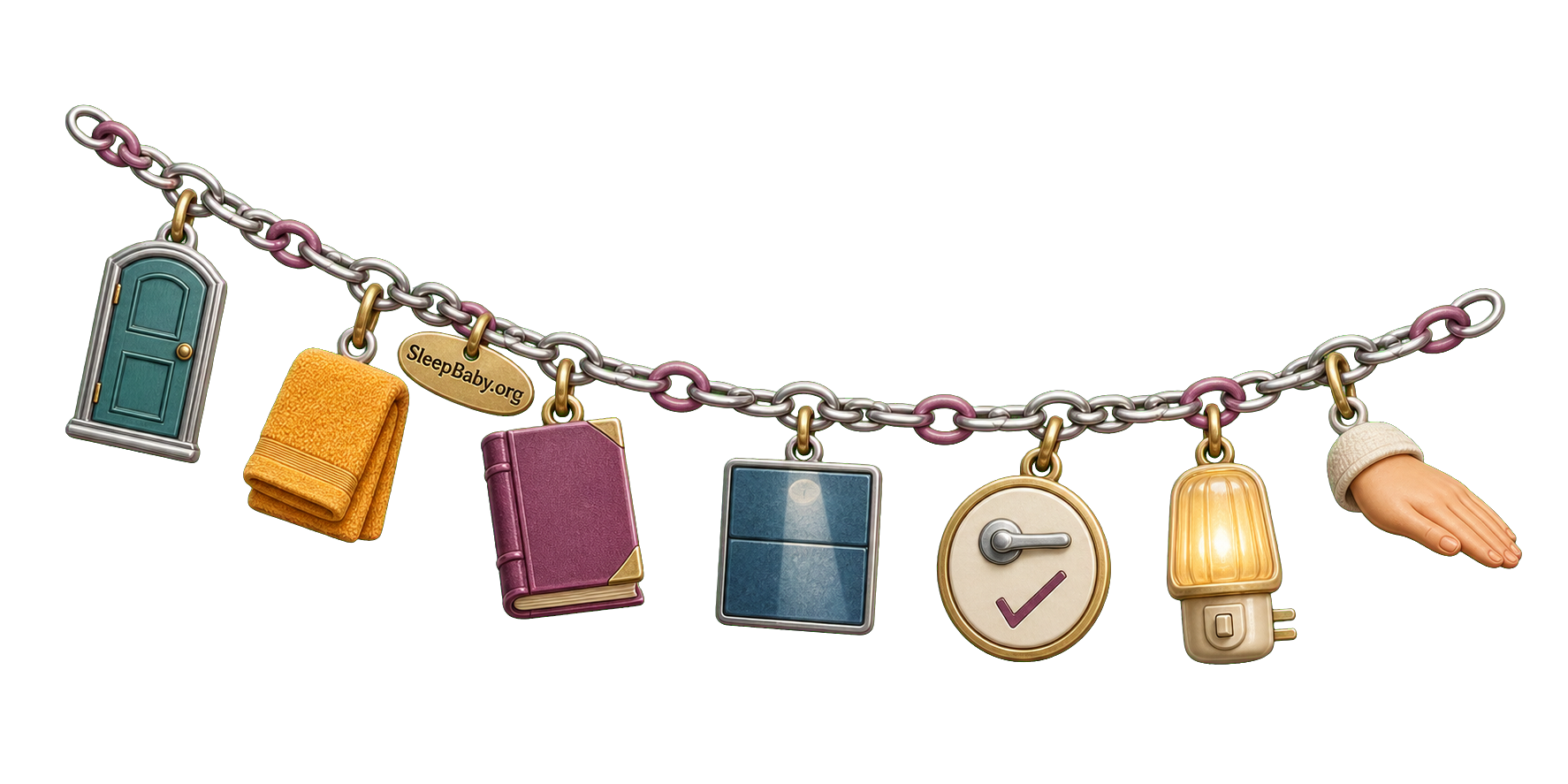
Many bathroom loops grow teeth at bedtime because the child is tired, the parent is trying to move quickly, and one more flush delays the next separation. Make the last bathroom trip an exact bridge, not an open-ended stop.
- Announce the sequence before entering: “Toilet, one flush, hands, book.”
- Bring the next object with you, such as the bedtime book or pajamas, so the transition is visible.
- Use the same one-flush script and do not reopen the bathroom for a performance flush.
- If your child genuinely needs the toilet again, supervise a functional trip and repeat the same short closeout.
If repeated bathroom requests are part of a much larger bedtime delay pattern, track the whole sequence for three nights: last drink, toilet trip, lights out, and each return. Often the useful change is not a stronger toilet rule. It is moving the final drink earlier, giving enough calm connection before lights out, or making the entire bedtime order more predictable.
A seven-day reset without a seven-day battle
You do not need a complicated behavior chart to learn whether this plan is working. For one week, keep the rule and environment steady enough to see a pattern.
Use one line in your phone notes with four facts: time, what happened immediately before the bathroom visit, how many extra-flush attempts happened, and what helped the child leave. Do not record every facial expression or try to score a toddler’s attitude. You are looking for a practical pattern. Repeats clustered before dinner may point to a bid for connection while adults are busy. Repeats during every transition may mean the routine itself needs a clearer ending. Repeats only at bedtime may be serving delay more than fascination.
Share the short pattern with the pediatrician if you are worried. “It happens three times a day and stopping it causes a 20-minute panic across several routines” is more useful than “They are obsessed with the toilet.” Concrete observations protect the child from labels and help the clinician ask better questions.
- Days 1 and 2: introduce the four-step routine, supervise every bathroom visit you can, and count repeat attempts without scolding.
- Days 3 and 4: notice the strongest payoff. Is your child watching the water, seeking the handle, repeating the order, or checking whether you arrive?
- Days 5 through 7: use one matched replacement job and give specific praise for completing the bathroom sequence.
Success does not have to mean zero attempts by day seven. Look for a shorter protest, fewer unsupervised entries, more willingness to complete the next step, or faster recovery when you block the handle. If nothing changes, tighten access and simplify the routine before adding more words or bigger consequences.
Questions parents ask about repeat flushing
Should I use a toilet lock?
An age-appropriate toilet-lid lock can be one layer when your child is not actively toilet learning, but adults need to operate it easily and everyone in the home needs to use it consistently. If your child is learning to use the toilet, controlling the bathroom door and accompanying visits may preserve access more clearly. A product is not a substitute for supervision or securing cleaners and medicines.
Should my toddler lose flushing privileges?
You can press the handle yourself for a while if your child cannot yet stop at one. Present it as a temporary safety boundary, not humiliation: “I will flush today. You can try one flush again tomorrow.” Keep offering the rest of the routine so the bathroom still ends with competence.
What if my child is afraid of flushing but also keeps trying it?
Curiosity and fear can coexist. Let the child stand farther away, warn before the sound, and give them control over one predictable flush when they are ready. Do not force a frightened child to press the handle. Talk with the pediatrician if fear blocks toilet use, causes stool withholding, or contributes to constipation.
Is repeated flushing a sensory-seeking behavior?
It can provide strong sound, vibration, visual movement, and predictability, but the behavior alone cannot identify a sensory condition. You can still respond to the observed need by lowering surprise, offering another safe cause-and-effect activity, and discussing a broader pattern with the pediatrician or an appropriate clinician.
When should I get help for the behavior itself?
Ask the pediatrician when the habit comes with skill loss, developmental concerns, severe distress, injury risk, toileting pain, constipation, urinary symptoms, or disruption that persists across home and child care despite consistent access control. Call a plumber for recurring clogs, weak flushing, leaks, or overflow. Those are different problems and deserve different experts.
Evidence shelf
Sources
- American Academy of Pediatrics: Potty Training Readiness, Thinking, Language, and Developmental Milestones
- American Academy of Pediatrics: Potty Training, 12 Tips to Keep the Process Positive
- CDC: Drowning Prevention
- Safe Kids Worldwide: Water Safety at Home
- CDC: Signs and Symptoms of Autism Spectrum Disorder
- U.S. EPA WaterSense: Residential Toilets
- CDC: Milestones by 30 Months
SleepBaby.org · The original video
A next step for
the next bedtime.
Still thinking about sleep? Watch the presentation here, then explore the SleepBaby program whenever you’re ready.
Ready to get started?Take the next step with SleepBaby.
Help my baby sleep