Start with the nap pattern, not a brand-new schedule
If your baby won’t sleep at daycare, ask the caregiver to record the nap offer, settling time, actual sleep, waking trigger, last feed, and after-nap mood for three to five comparable daycare days. Keep the infant safe-sleep setup fixed, share two or three portable cues from home, and change only the clearest mismatch. After pickup, choose bedtime from the nap that actually happened and the baby in front of you, not from the day you hoped would happen.
- Protect the fixed layer: back to sleep, firm and flat approved surface, fitted sheet only, and an empty infant sleep space.
- Give daycare useful clues: morning wake, feeds, sleepy behavior, what helped settling, and what ended the nap.
- Make one small decision: adjust one cue or nap offer, then compare several ordinary days unless a safety or health concern needs action sooner.
A daycare report that says slept 12 minutes has the emotional weight of a tiny ransom note. It is technically information. It is not nearly enough information.
I know the mental sprint that can begin in the parking lot: Should bedtime be at five? Will that cause a 4 a.m. party? Is the room too loud? Is the schedule wrong? Is the whole care arrangement wrong? Before the diaper bag has stopped sliding off your shoulder, one short nap has somehow been appointed judge of the entire family.
Let us take that job away from it. One nap is a clue. A repeated pattern is more useful. Your baby’s breathing, feeding, comfort, alertness, and total day matter more than whether a daycare nap resembles the one that happens at home.

Daycare sleep can be different without being wrong
Home and daycare are not duplicate laboratories. At daycare there may be different light, room noise, voices, smells, transitions, feeding timing, and a caregiver who is also responding to other children. The commute may shift the morning. A five-minute car doze may take the edge off the first nap. The caregiver may notice sleepy behavior at a different point than you do. Your baby may simply stay awake because another baby’s socks have become the most compelling documentary of the year.
None of that proves daycare is careless. It also does not mean you have to shrug and accept a miserable pattern. It means the useful question is specific: where does this nap stop working? Does your baby never settle? Fall asleep quickly but wake at the room transition? Reach the nap hungry? Wake content after a brief sleep? Arrive home unraveling? Each answer leads somewhere different.
Total sleep gives context without turning one nap into a grade. The American Academy of Sleep Medicine recommends 12 to 16 hours across 24 hours for infants 4 to 12 months and 11 to 14 hours for children 1 to 2 years, including naps.1 Those are broad population ranges, not a command for one exact daycare nap. The advisory does not give a duration target for babies younger than 4 months, whose sleep and feeding patterns vary especially widely.
I care more about the whole picture than a beautifully rounded nap total. Is your baby feeding normally? Waking with their usual energy? Getting through the evening without looking ill or deeply distressed? Is the trend improving, flat, or worsening? A spreadsheet cannot answer those questions for you, but it can help you notice them.
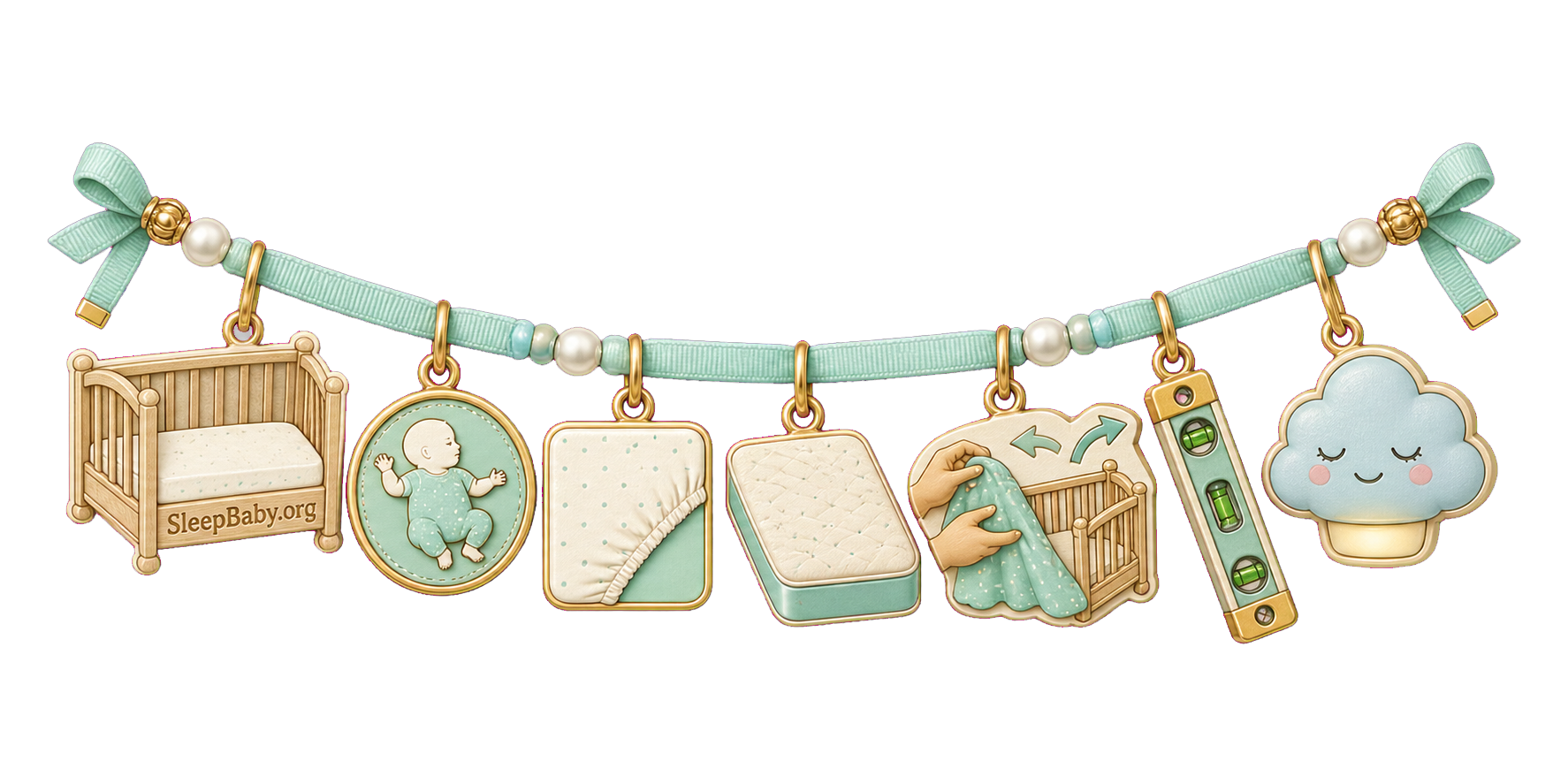
Keep the infant safe-sleep layer fixed
Nap troubleshooting is flexible. Infant safe sleep is not.
For babies up to age 1, current American Academy of Pediatrics guidance says to place the baby on the back for every sleep, use a firm and flat approved sleep surface with a fitted sheet only, and keep soft objects and loose bedding out of the sleep area. Weighted blankets, weighted swaddles, and other weighted sleep products do not belong in or near the infant sleep space.2 NICHD’s Safe to Sleep guidance adds the same plain test: the surface should be firm, flat, and level, and the crib should remain empty.3
That means no blanket, pillow, stuffed animal, bumper, positioner, wedge, lounger, or parent-scented shirt in an infant crib, even if the object feels familiar and even if a longer nap would make the evening easier. A wearable sleep sack may be an option if it is unweighted, fits correctly, and the center permits it. A pacifier may be an option if your baby uses one and the center’s labeling and sleep policy allow it; it should not be tied or clipped to the baby’s clothing during sleep.
If your baby falls asleep in a car seat or stroller, those are not regular sleep spaces. Use the car seat correctly during travel, then move the baby to a firm, flat, safe sleep surface as soon as practical after the trip.23 Do not ask a caregiver to trade a safer setup for a darker, softer, more familiar one.
Watch the fixed layer in 60 seconds
This one-minute video comes from the Eunice Kennedy Shriver National Institute of Child Health and Human Development. It is here because the visuals make the empty-sleep-space rule easy to check. It is not a replacement for the written guidance or your center’s current policy.
Watch Safe Sleep For Your Baby on YouTube if the embedded player is unavailable or not useful with your assistive technology.
Written takeaway: daycare nap timing can bend; back sleep, a firm and flat surface, and an empty infant sleep space do not. The video’s key points remain consistent with current AAP and NICHD guidance.6

Give daycare the portable version of the routine
Your caregiver does not need a theatrical reenactment of the nursery. They need the smallest safe parts of home that can survive a busy room.
Choose two or three cues with a clear job: the same short phrase, the same order of diaper and sleep sack, one brief song, or a minute of quieter holding before the crib. If the center cannot use white noise, darken the room, rock for twenty minutes, or follow an exact minute on your app, that is not automatically resistance. Group care has staffing, supervision, safety, and licensing constraints. Ask what they can repeat consistently.
This is the thread I want between settings: not identical wallpaper, not identical clock time, but a recognizable ending. Babies can encounter different caregivers and still be met with a calm, repeatable sequence. HealthyChildren.org specifically recommends routines that can be used in different places and suggests talking with child-care providers about daytime alertness and sleep concerns.4
Send five useful facts, not a miniature operations manual
1. Today started
Share the real morning wake time and whether the commute included any sleep, even a tiny doze.
2. Feeding context
Share when the last feed ended and whether it was typical, distracted, smaller, or uncomfortable.
3. Portable cues
Name the two or three permitted cues that matter most, such as the sleep sack, phrase, or short song.
4. What to record
Ask for nap offer, settling support, actual sleep, what woke the baby, and the mood after waking.
5. What is unusual
Mention illness, vaccines, teething discomfort, travel, medication, or a sharply different night without diagnosing the nap.

Here is a message that respects the caregiver’s experience and still asks for enough detail:
We are trying to understand the nap pattern before changing the schedule. For the next few daycare days, could you note when the nap was offered, how long settling took, when sleep actually started and ended, what seemed to wake the baby, and how they seemed afterward? Today started at 6:25, the last feed ended at 8:10, and our most portable cues are the sleep sack, the phrase “time to rest,” and one short song. Please use what fits your room and tell me what seems to work there.
The sentence tell me what seems to work there matters. You are not hiring the caregiver as a pair of hands for your home schedule. You are asking them to become a second observer of the same child.
Use three to five comparable days before changing everything
A good nap log is short enough that someone can complete it while caring for actual children. It should separate the nap offer from the sleep itself. “Nap: 9:30 to 10:00” can mean thirty minutes asleep, thirty minutes trying to settle, or twelve minutes asleep plus eighteen minutes of cheerful crib conversation. Those are three different stories.
On a small screen: this table scrolls sideways as one contained region; the page still scrolls normally up and down.
|
Record |
What to write |
What it may clarify |
|---|---|---|
|
Morning start |
Wake time, commute sleep, and anything unusual overnight |
Whether the first daycare nap began from the day you assumed it did |
|
Feeding |
Last feed time, whether intake was usual or unusual, and obvious discomfort |
Whether hunger, distraction, or discomfort overlaps the settling attempt |
|
Nap offer |
When the wind-down began, cues noticed, and support used |
Whether the problem appears before sleep or after sleep begins |
|
Actual sleep |
Best estimate of sleep start and wake time |
Whether the nap is absent, delayed, brief, late, or longer than expected |
|
Waking |
What seemed to wake the baby and whether waking was calm, hungry, startled, or distressed |
Whether room activity, transfer, feeding, comfort, or ordinary variation deserves attention |
|
After the nap |
Alertness, feeding, play, and mood during the next stretch |
Whether the clock says “short” while the baby says “workable,” or both say the day is unraveling |
Compare the same nap across ordinary daycare days when possible. Monday after a red-eye flight, Tuesday after vaccines, and Wednesday after a peaceful night are not interchangeable data points. If a health or safety concern appears, stop collecting evidence and act on that concern. The log is a decision aid, not permission to wait through a red flag.
Read the pattern, not just the total minutes
Your baby never settles
Look at what happens before the crib. Was the nap offered after a much earlier wake than the caregiver knew about? Did a feed land inside the wind-down? Does the transition from play to sleep happen abruptly? Is the baby calm but alert, or already escalating?
Try one portable cue or one modest timing adjustment based on the record. Do not hand over six new instructions at once. If the center’s room is brighter or busier than home, ask what lower-stimulation transition is realistic rather than insisting that a group room become a blackout cave.
Your baby falls asleep, then wakes after a short nap
The clock cannot tell you the cause by itself. Look at transfer, hunger, room activity, waking mood, and the rest of the day. A short nap is not automatically a failed nap, especially if your baby wakes calm, feeds normally, and remains comfortable. Our guide to understanding very short baby naps goes deeper into the before, landing, waking, and after clues.
If your baby wakes distressed and still appears sleepy, ask what one permitted resettling attempt looks like in that room. The answer may be a hand on the chest, a brief pickup, a repeated phrase, or simply a little quiet time. It may not be the same support you use at home, and it does not have to be.
The nap happens, but much later than expected
Separate a one-off busy morning from a repeated schedule mismatch. If the room follows a group nap, ask when individual infant schedules change and what flexibility exists. If your baby is transitioning into a toddler room, the answer may be less individual than it was before. That calls for an honest home-and-daycare plan, not a secret campaign to keep the baby awake all weekend.
The daycare nap is long or ends late
A late nap can leave a baby genuinely alert at the usual bedtime. That is not misbehavior and does not always mean the nap should be capped. Ask what the center is allowed to do, look at total sleep and morning obligations, and decide whether a somewhat later bedtime is more realistic on those days. A calm later bedtime can be kinder than beginning a ninety-minute bedtime battle because the clock says 7:00.
There is no daycare nap, but home naps are fine
Give the observation plan room to speak. A new environment, a different settling sequence, an early commute, or a room transition may be enough to explain the split. Keep home naps safe and responsive. Do not deliberately make home sleep worse in hopes that exhaustion will force daycare sleep. The goal is not to make the baby equally tired everywhere.
Change one variable, then let it produce evidence
When sleep is rough, changing everything feels productive. It also makes the result unreadable. Choose the clearest candidate:
- Timing: move one nap offer modestly earlier or later because the record repeatedly points that way, not because a generic chart scolded you.
- Transition: add one brief, permitted cue before the crib and keep the rest stable.
- Feeding coordination: review whether the usual feed and nap are colliding, without pressuring intake or putting a bottle in the sleep space.
- Environment: ask about a quieter crib location or calmer lead-in if the room can safely support it.
- Home recovery: adjust the evening after the daycare nap you actually received.
Then hold the other flexible pieces steady long enough to compare. Safety is the exception: an unsafe sleep practice is not an experiment to monitor. Health is the other exception: a baby who seems ill, feeds poorly, breathes differently, or is unusually hard to wake needs attention, not a longer trial.
If wake-window math is making every handoff feel like a failed exam, stop treating the minute as the verdict. A range can help orient you; the baby’s recent sleep, behavior, feeding, and real day still make the decision.

Choose pickup-to-bedtime from what actually happened
At 4:47 p.m., you may be receiving a baby, three containers, one damp bib, and a nap report that requires forensic interpretation. This is not the ideal time for a twelve-step evening protocol. Use the smallest plan that fits the evidence.
On a small screen: swipe this single table sideways to compare the whole row.
|
What happened |
Look at the baby now |
A workable evening |
Avoid |
|---|---|---|---|
|
No nap or a very brief nap |
Fading, frantic, clumsy, or repeatedly trying to settle |
Feed as needed, keep connection quiet, shorten the routine, and consider an earlier bedtime |
A stimulating errand tour or keeping the baby awake to “build pressure” |
|
Short nap, but baby is comfortable |
Alert, feeding normally, and handling the evening |
Use the familiar routine and stay open to a slightly earlier bedtime if tiredness gathers |
Forcing a rescue nap solely because the total looks untidy |
|
Brief car sleep during pickup |
Notice when it happened, how long it lasted, and whether the baby wakes refreshed |
Use the car seat correctly for travel, move to a safe sleep surface after travel if sleep will continue, and reassess bedtime |
Leaving the baby to continue routine sleep in a parked car seat |
|
Long or late daycare nap |
Bright, playful, and not yet ready for the usual bedtime |
Keep lights and activity calm, complete the routine, and allow a later sleep time if needed |
Turning bedtime into a contest the baby is not biologically ready to win |
|
Sleep change plus a health concern |
Breathing, feeding, color, comfort, temperature, hydration, and responsiveness come first |
Call the pediatric clinician or seek urgent help according to the symptoms |
Explaining the whole change as “just overtired” |

An earlier bedtime is not a punishment for a bad nap day, and a later bedtime is not surrender. Both are timing tools. Our guides to recognizing when an earlier bedtime may help and handling sleep close to bedtime can help with the two most common pickup dilemmas.
Home and daycare do not have to match perfectly
Keep the home routine predictable because it helps your baby know what comes next, not because daycare must copy it down to the minute. You might use the same phrase and sleep sack in both places while the caregiver uses a different song. Your baby might accept patting at daycare and feeding followed by cuddling at home. Different settings can have different workable supports.
On non-daycare days, follow the baby’s actual sleep needs rather than rehearsing deprivation. If the baby needs a restorative home nap, offer it safely. If a weekend nap runs differently, that does not erase what daycare is learning. Consistency is most useful at the level of sequence and response; rigidity at the level of every minute can make the whole household serve a chart.
Keep drop-off brief and clear. A predictable goodbye may be kinder than a long, uncertain loop. Then let the caregiver begin the next ordinary activity. At pickup, ask for the five facts before asking whether the nap was “good.” Good is a conclusion. Nap offer, sleep start, wake time, waking trigger, and mood are evidence.
Know when the conversation is about care, not just sleep
Short naps alone do not prove poor care. A deeper conversation is reasonable when the pattern remains difficult, reports are too vague to guide a change, your baby appears distressed around sleep, or the center cannot explain its routine and safety policy.
Ask plain questions:
- Where does my baby sleep, and what is in the sleep space?
- Are babies placed on their backs for every sleep unless there is a documented medical direction?
- How do you record the nap offer, actual sleep, checks, and waking?
- What settling support is permitted in this room?
- What happens if a baby falls asleep in a stroller or car seat?
- When do room schedules become group-based rather than individual?
- Which requests are limited by your written policy or local licensing rules?
Listen for a specific answer that matches the room. You are not asking for perfection. You are asking whether the adults can describe what they do, follow safer practices, notice the child, and work with you on a reasonable observation plan.
If you are still choosing care, our daycare tour guide shows what to notice, ask, and confirm beyond a polished brochure. If a center dismisses safe-sleep concerns, uses an unsafe infant sleep surface, puts loose objects in the crib, or gives reports that repeatedly conflict with what staff describe, treat that as a care-quality issue rather than a schedule puzzle.
Know when to stop troubleshooting the schedule
Bring a persistent pattern to your pediatric clinician when sleep disruption comes with loud or habitual snoring, breathing pauses or gasping, unusual breathing effort, pain, repeated vomiting, a meaningful feeding change, fewer wet diapers, poor growth, or a sharp change in alertness or behavior. HealthyChildren.org recommends discussing sleep problems with the child’s pediatrician and specifically flags snoring, sleep apnea, and loud or heavy breathing as concerns worth recognizing.4
Get urgent medical help for trouble breathing, ribs pulling in with breaths, severe difficulty waking, or blue or gray lips or face. HealthyChildren.org identifies struggling for each breath, retractions, markedly fast or noisy breathing, and blue color as reasons for prompt or emergency assessment.5 In the United States, call 911 for a life-threatening emergency; elsewhere, use the local emergency number.
The bedtime calculation can wait. A breathing, color, feeding, hydration, or responsiveness concern gets the first call. For a fuller symptom-oriented boundary, see when to worry about a baby not sleeping.
Questions parents ask after the first rough daycare week
How long does it take a baby to adjust to daycare naps?
There is no reliable universal deadline. Some babies show a clearer settling pattern quickly; others take longer, especially when the room, caregiver, schedule, feeding, and commute all changed at once. Use three to five comparable days to locate the problem, then look for gradual movement in settling, mood, or total sleep rather than demanding one perfect nap by a certain date.
Should home naps happen at the same time as daycare naps?
They do not have to match exactly. Keep a familiar sequence and respond to the wake time, feeding, and sleep that actually happened. If daycare follows a group schedule, home may remain more flexible. The useful overlap is a recognizable wind-down and safe sleep setup, not identical clock times.
Should I change daycare because my baby barely naps there?
Not because of nap length alone. Look at safe-sleep practices, responsiveness, communication, the accuracy of daily reports, your baby’s overall well-being, and the center’s willingness to try a reasonable adjustment. Unsafe sleep, dismissive responses to safety questions, or consistently unreliable care deserves faster action than an ordinary short-nap pattern.
Can I send a lovey or blanket so my baby feels at home?
Not for an infant sleep space. For babies under 1, keep pillows, blankets, stuffed toys, and other loose objects out of the crib. Ask about a properly fitted unweighted sleep sack, a labeled pacifier, and a short verbal routine if those fit your baby’s needs and the center’s policy. Older children have different rules, so ask the program what applies to the exact room and age.
What if daycare moves my older baby or toddler to one nap?
Ask when the change happens, whether any transition flexibility exists, what the child actually does during the group nap, and how the rest of the day looks. Do not assume that one nap is automatically wrong or automatically right from age alone. Watch total sleep, morning wake, nap timing, bedtime settling, mood, and functioning, then bring a persistent concern to the pediatric clinician.
Will an earlier bedtime cause an earlier morning?
It is not guaranteed either way. After a very poor nap day, an earlier bedtime can give an exhausted baby a workable chance to sleep. After a late or long daycare nap, a later bedtime may fit better. Choose from the whole day, make a modest change, and watch the pattern rather than treating bedtime as a lever with one predictable output.
The plan for tomorrow is small on purpose
Tonight, write down the morning wake, the last feed before care, and the two portable cues you want to share. Tomorrow, ask for the five nap facts. At pickup, choose the evening from the baby you receive. Repeat long enough to see a pattern, then change one thing.
Your baby does not need two identical sleep worlds. They need adults who exchange useful information, keep the safety layer fixed, and make the next decision from evidence instead of blame. That is a quieter project than “fix daycare naps.” It is also one you can actually begin.
Sources
- American Academy of Sleep Medicine: Child Sleep Duration Health Advisory.
- American Academy of Pediatrics: How to Keep Your Sleeping Baby Safe.
- NICHD Safe to Sleep: Safe Sleep Environment.
- American Academy of Pediatrics: Healthy Sleep Habits.
- HealthyChildren.org: Breathing Trouble.
- NICHD: Safe Sleep for Your Baby video text alternative.
For the ride home after the tiny nap report
Daycare can keep its schedule. Home can still feel like a landing.
The SleepBaby workshop helps you build a calmer, flexible home sleep rhythm around the baby and household you actually have. It cannot control the daycare room, but it can help the evening stop feeling like emergency math.