AI can draft a toddler bedtime story, but a grown-up must finish the job
AI bedtime stories for toddlers can be useful when a parent creates the draft before the bedtime wind-down, reviews every line, removes personal information, and then reads the approved story in their own voice with the screen put away. Do not hand a toddler an open chatbot. Do not let an unreviewed story improvise at lights out. A fluent answer can still be frightening, false, unsafe to imitate, much too long, or simply wrong for the child beside you.
For tonight, keep the experiment small. Let your toddler choose one gentle character, one tiny problem, and one safe return cue. Ask for a short story with one ending. Read it alone first. Cut anything odd. Then close the device and make the human part – the pause, the cuddle, the fox voice that mysteriously sounds Welsh tonight – the part your child remembers.
AI is not a sleep treatment, a babysitter, or an authority on your child. It is closer to a box of magnetic story words: sometimes handy, sometimes surprising, and never the person responsible for what reaches a toddler’s ears.
Why an instant story feels like rescue at the exact tired minute
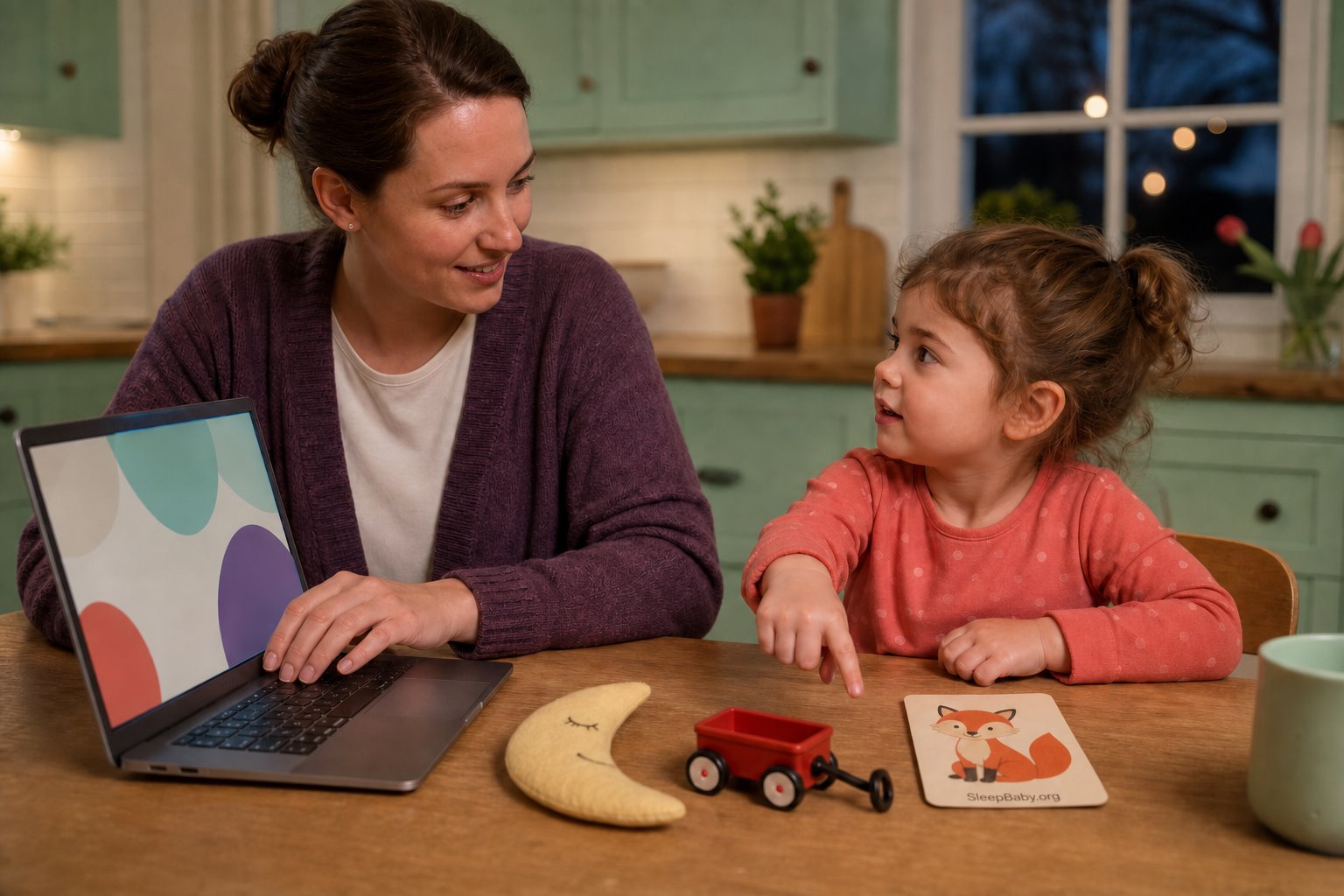
A toddler can request a moon fox, a red wagon, a song about spoons, and a plot that explains why the blue cup went to the dishwasher. The adult imagination, meanwhile, may have used its final spark finding the missing pajama shirt. A generator can turn three peculiar ingredients into a beginning, middle, and end before somebody asks for water again.
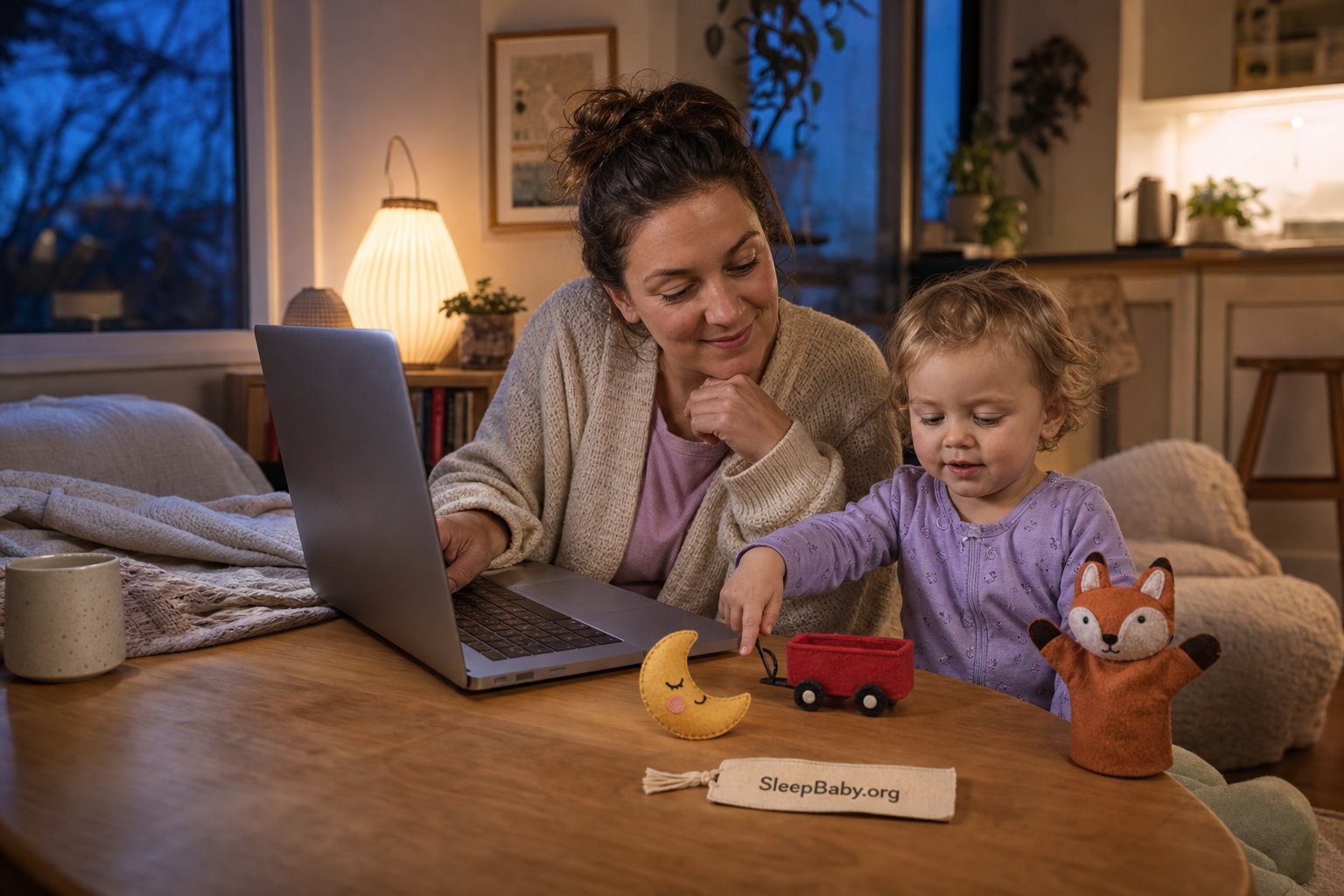
In one clearly labeled editorial composite, I am at the kitchen table at 7:12 p.m., one pajama sleeve still missing, while a toddler requests a moon fox and a red wagon. I can feel exactly why an instant draft looks like rescue. I can also feel how quickly relief turns into another job if the story arrives with a frightening twist, a private detail, or six bonus chapters nobody ordered.
That relief is real. So is the temptation to press play on whatever arrives. Polished sentences create a false sense that somebody thoughtful has checked the story. In reality, the system does not know which ideas frighten your child, which family details should stay private, which facts are wrong, or when a silly scene has become too exciting for sleep.
The useful goal is not to automate closeness. It is to spend less adult energy building a plot and more adult attention noticing the child. If the tool makes you stare at a screen, negotiate endless versions, or edit frantically in bed, it has stopped saving energy and started borrowing bedtime.

The Three-Token Story Spark: give the story safe ingredients, not a child’s identity
The easiest prompt is also the most private. Your toddler supplies three low-risk story tokens. You supply the boundary around them. None of this requires a legal name, birthday, school, address, photo, voice sample, diagnosis, or daily schedule.
One gentle friend
Choose a fox, bus, moon, sock, snail, or entirely invented creature. A family nickname can work, but a fictional name is even easier to keep private.
One toddler-sized problem
The wagon squeaks, the star cannot find its hat, or the fox feels shy. Skip peril, villains, secret-keeping, getting lost, medical themes, and separation at bedtime.
One familiar return
Ask for the same moon phrase, breathing line, or safely-home image each night. Novelty can sparkle inside a landing the child already recognizes.
SleepBaby.org Three-Token Story Spark: one friend, one small problem, one safe return.
A prompt can be specific without being identifying: “A moon fox helps a red wagon stop squeaking and returns home under three quiet stars.” That gives the generator plenty to work with. Adding a toddler’s full name, preschool, street, favorite teacher, medical history, or exact bedtime does not make the plot more loving. It only places more information into a system that does not need it.
If your child chooses a high-energy idea, keep the token and soften the action. A rocket can float instead of blast. A dinosaur can look for slippers instead of chase anyone. A storm can become rain tapping on a safe window. The child still gets to recognize their idea without carrying its loudest version into bed.
The developmental value lives in the back-and-forth
Stories create little openings for a child to point, predict, repeat, disagree, laugh, and look back at the grown-up. Research comparing electronic and print books found differences in parent-toddler interaction, including less collaborative conversation around electronic books in the study setting.[1] That does not make every screen or digital story identical. It does support a practical choice: let the device be the drafting station rather than the star of bedtime.
Harvard’s Center on the Developing Child describes “serve and return” as the responsive exchange in which a young child signals and an adult notices and answers.[6] A story gives that rhythm somewhere to play. Your toddler points at the fox. You name the feeling. They make the wagon squeak. You put the squeak into the next sentence. The useful loop is between two people, not between a toddler and a prompt box.
A generator cannot reliably see the child’s shoulders tighten, notice that the moon picture has become scary, or understand that a long silence means sleepiness rather than a request for more plot. The adult can. You can skip a paragraph, repeat the one good line, answer a question, or end early. That editorial freedom is not a flaw in the story. It is the reason the story can fit this child tonight.
Generate earlier so the screen does not become the bedtime event
A randomized clinical trial found that removing toddler screen use in the hour before bed was feasible and produced modest preliminary improvements in sleep-related outcomes.[2] One study does not make every device moment the same, but it gives families a sensible direction: draft before the wind-down, then let the screen leave.
The American Academy of Pediatrics keeps its family media guidance centered on the child, the quality and context of content, adult participation, and what media may crowd out.[3] For an AI story, those questions become concrete. Is this child easily frightened by talking objects? Is the content gentle and accurate? Is the tool replacing conversation? Is one more generated version crowding out sleep? Can the grown-up explain what is pretend?
Choose an adult-only creation cutoff before pajamas or toothbrushing. Save, print, or copy the approved version. Close the chatbot instead of leaving a glowing promise of unlimited sequels within reach. At bedtime, use the same short physical sequence you would use with a familiar book: settle, read, pause, close, and move to the next cue.
If I were using the tool in that room, I would keep the laptop with me, read every line alone, print one approved page, and let my own tired fox voice carry it to bed. The page can come along. The generator, account, notifications, and refresh button do not need an invitation.
If the tool requires the child to remain on-screen for the story to work, it is the wrong setup for this job. A bedtime story should survive a dead battery, a lost connection, and an adult deciding that the laptop is done for the evening.
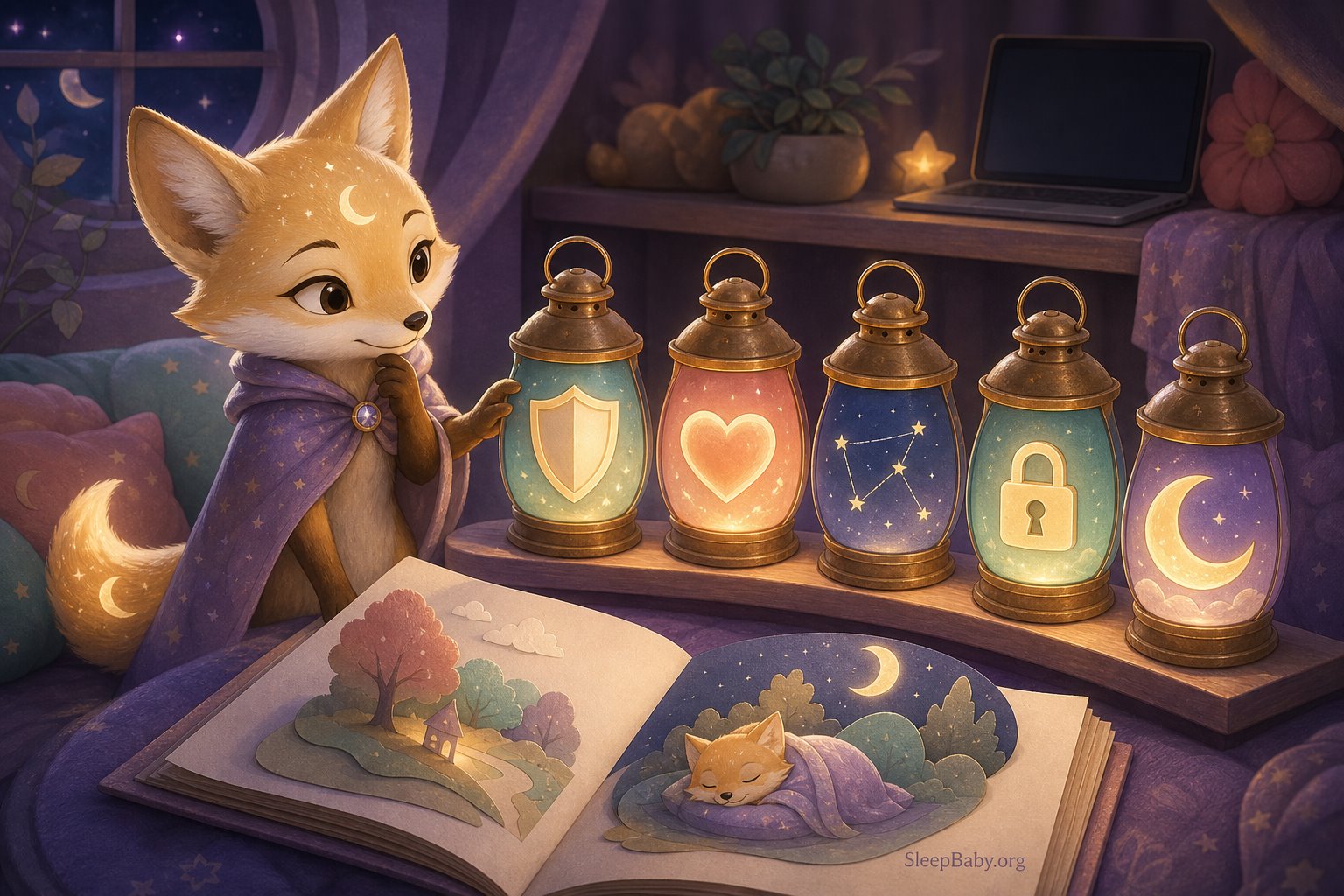
The Five-Lantern Parent Preview: read every line through five little lights
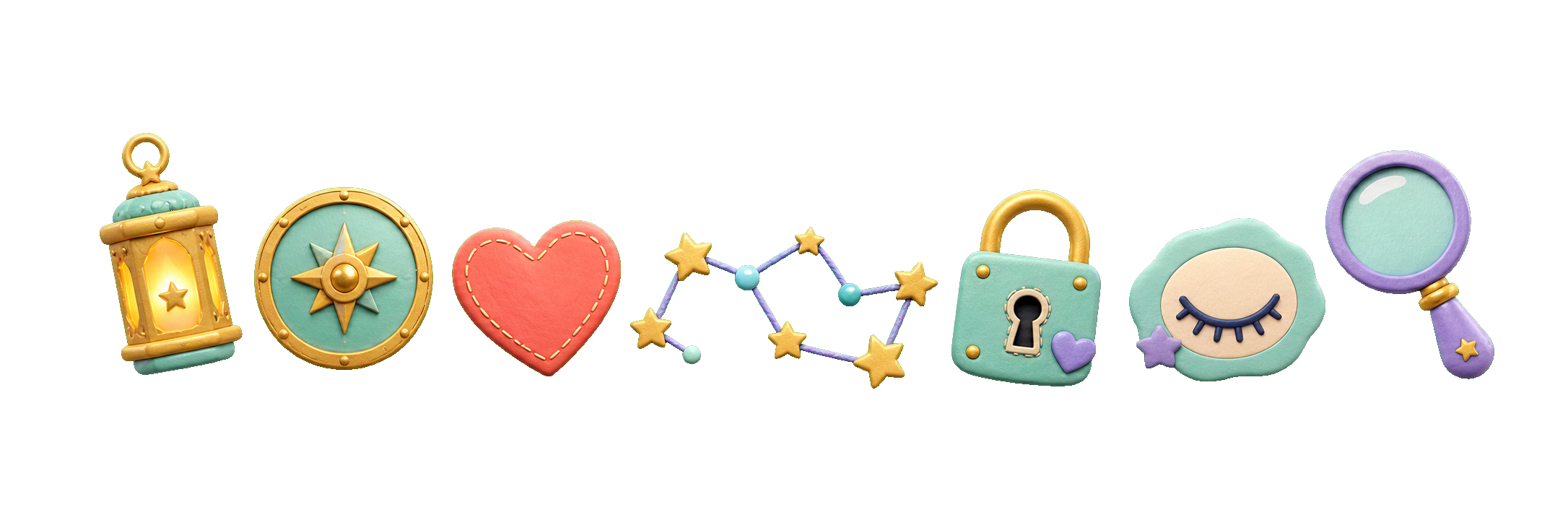
A story that sounds gentle in the first paragraph can turn abruptly. Review the complete draft, including the ending, before a child hears any of it. These five lanterns are not a score. Every one must stay lit.
Safety light
Remove choking, climbing, wandering, medicine, weapons, unsafe sleep, fire, secret-keeping, or instructions a toddler could imitate. Watch for harmless-sounding actions too: a character leaving home alone, hiding under furniture, eating a mystery berry, or tying a cord.
Feeling light
Remove abandonment, trapped characters, scary transformations, humiliation, punishment, death, and conflict too intense for this child tonight. A brave ending does not cancel ten frightening paragraphs that came before it.
Truth light
Check factual claims and body advice. If a story says medicine is candy, all animals like hugs, or a child should keep a secret from a parent, rewrite it. Imagination can be wild without teaching a dangerous rule.
Privacy light
Delete names, birthdays, addresses, schools, clinicians, diagnoses, schedules, photographs, voices, and other identifying details. Use “a little fox,” a made-up town, and a fictional family instead.
Sleep light
Shorten the story, soften the verbs, reduce exclamation points, and give it one complete ending. A cliffhanger is very good at selling tomorrow’s chapter and rather poor at ending tonight.
SleepBaby.org Five-Lantern Parent Preview: safe, gentle, accurate, private, and ready to end.
If you do not have time to read the whole output, do not use it tonight. “It looked cozy near the top” is not a review standard. Pick a familiar book, sing the two songs you already know, or tell a three-sentence story from the tokens. The fallback does not need to be novel to be successful.
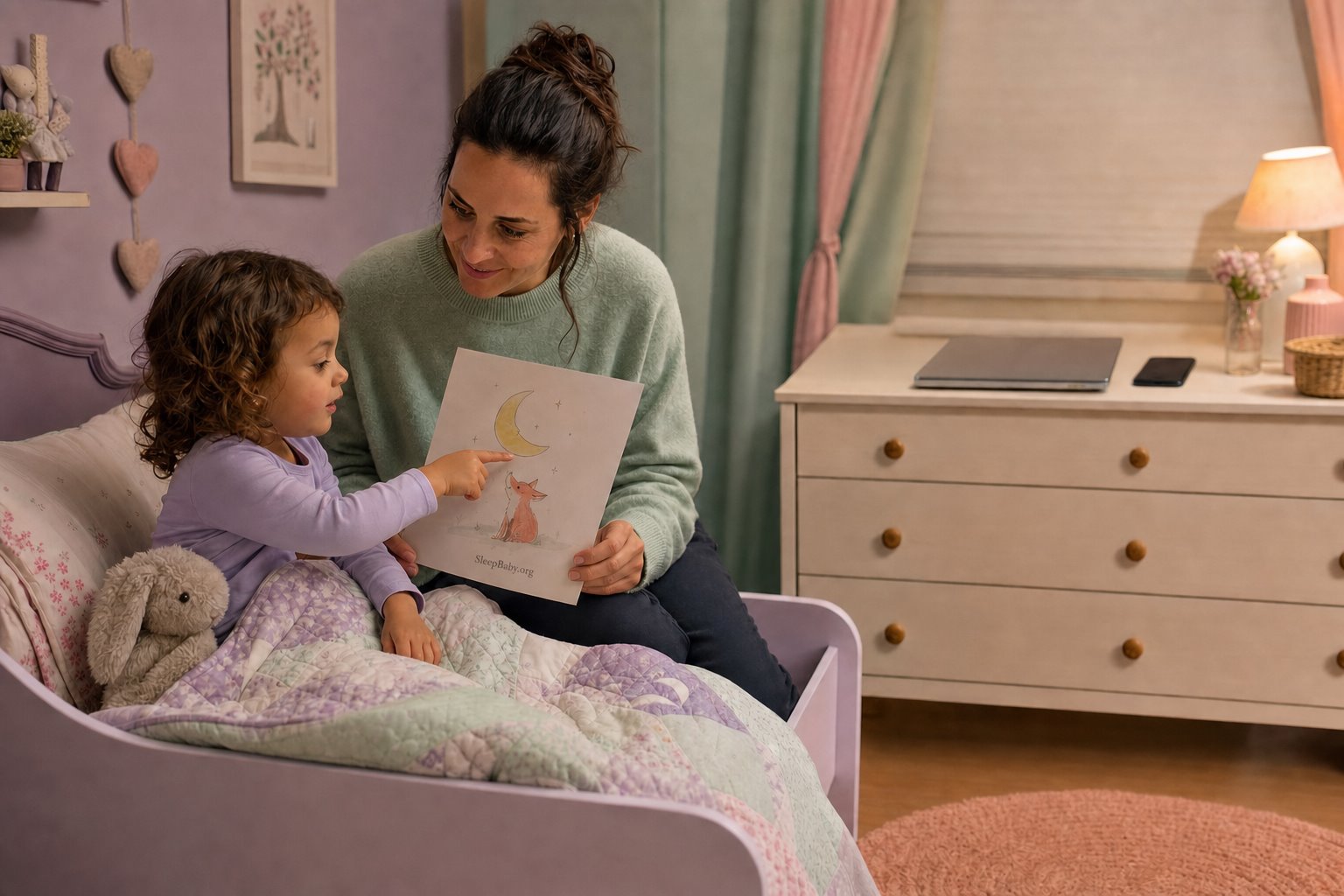
Personalized does not have to mean personally identifiable
A story can feel wonderfully specific with low-risk details. The hero loves yellow boots. The wagon says “beep-beep.” The family looks for the moon after dinner. None of that requires a full legal name, exact age, home address, preschool, face, voice, health history, or daily route.
Use an adult-controlled account. Read the service’s privacy, retention, training, sharing, and deletion choices before entering anything. Do not assume a cheerful children’s theme means a product was designed for unsupervised toddler use. If the policy or settings are unclear, keep personal data out and use a blank fictional character.
The National Institute of Standards and Technology’s AI Risk Management Framework and its generative AI profile emphasize identifying, measuring, and managing risks instead of trusting an output because it sounds confident.[4][5] At home, that becomes a modest habit: share less, review more, keep the account with the adult, and maintain a no-AI fallback.
Instead of a full name and school
Use a fictional character and place. Change “Maya Chen from Oak Street Preschool” to “Mimo the moon fox from Buttonwood Hollow.” The story keeps a hero and loses the identity trail.
Instead of a diagnosis or fear history
Describe the scene, not the child’s record. Ask for “a gentle story about a fox who hears a surprising sound and asks a trusted grown-up for help.” Do not turn private clinical information into prompt decoration.
Instead of a photo or voice sample
Choose a made-up look and read it yourself. A purple scarf, silver paws, and your ordinary bedtime voice provide more than enough personalization.
Instead of an exact routine and address
Use a generic landing. “The fox goes home, washes up, and rests under the moon” is safer than a map of when and where your family sleeps.
Before sending a prompt, imagine it printed on a card left in a public library. If a stranger could identify the child or learn something private, take that detail out. The story will not miss it.
Choose the tool by its exits, not its sparkle
A friendly fox icon and a bedtime color palette do not tell you how a service handles data or whether it is appropriate for a young child. Before making a story, look for the boring controls. Boring is beautiful when it lets a parent understand the account, limit what goes in, save only what is useful, and leave without losing the bedtime plan.
The grown-up controls the account
The toddler does not need a login, profile, chat history, or direct microphone access. Keep prompting, settings, purchases, and deletion controls behind the adult’s device and judgment.
The service explains its data choices
Look for readable information about retention, model training, sharing, deletion, and account history. If you cannot tell what happens to a prompt, act as though it may persist and keep personal information out.
The approved story can leave the app
A printable page, copied text, or adult-read version makes the screen optional. Be cautious when the story only works through autoplay, an animated feed, or a microphone that keeps listening.
Stopping is simple
You should be able to close the generator after one story. Endless recommendations, surprise sequels, streaks, and “make it again” buttons are engagement features, not bedtime requirements.
Paid does not automatically mean private, and free does not automatically mean unsafe. Marketing labels do not replace reading the current terms and settings. Policies also change, so revisit the service before sharing anything new rather than relying on what a review said months ago.
Voice cloning and child-photo features are unnecessary for a good bedtime story. Your toddler already knows your voice. A made-up fox does not need the child’s face. Choosing not to upload those materials is not missing the magic; it is keeping the magic in the room.
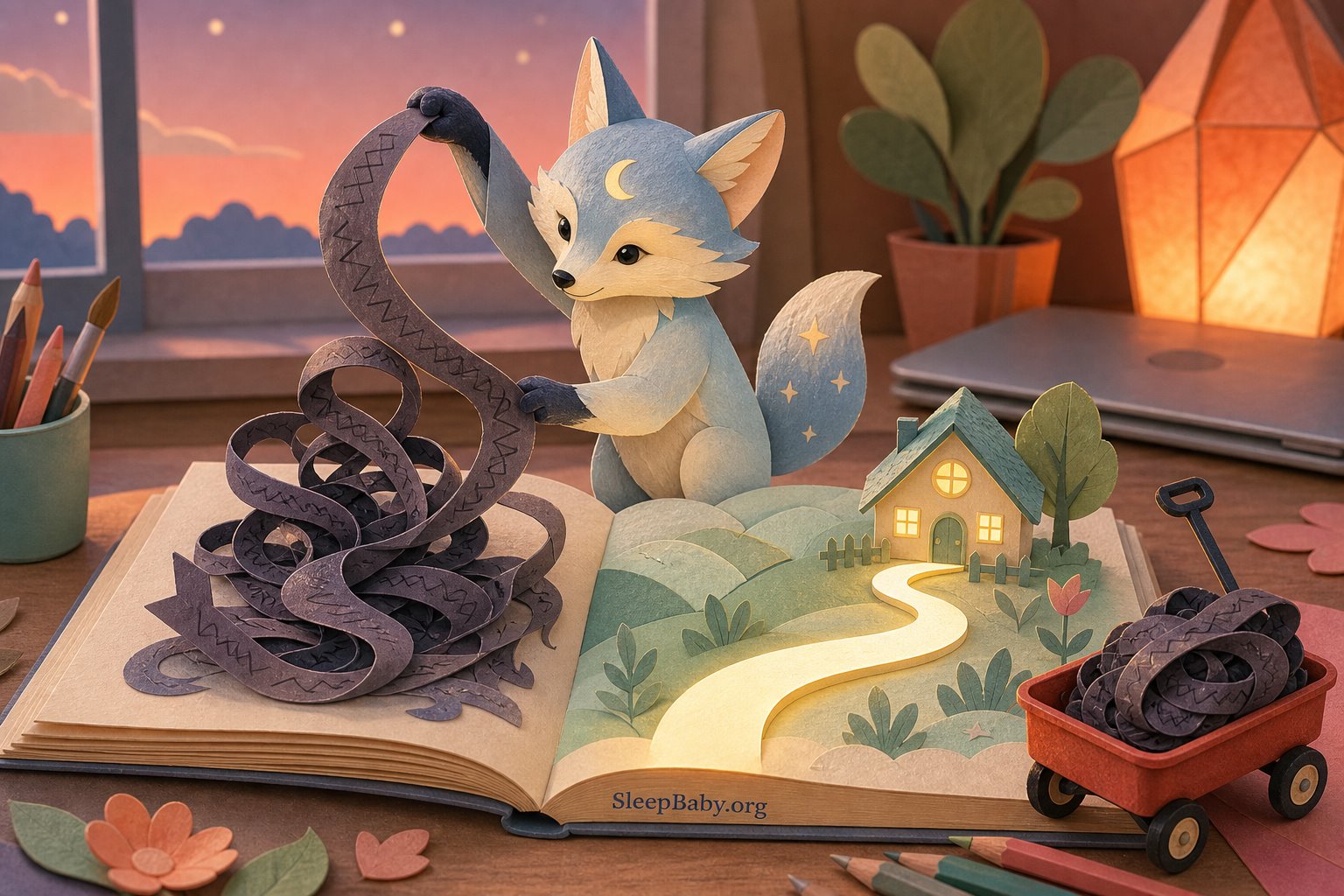
If the story gets weird or scary, stop the plot
Generated text can introduce a threat, a confusing moral, an inappropriate phrase, or a sudden tonal turn. You do not need to defend the machine or complete its narrative. Stop and say, “That part did not feel right. In our version, the fox is safe and goes home.” Then switch to a familiar song, a known printed story, or a two-sentence ending you make yourself.
If your toddler keeps asking whether the scary event is real, answer simply and truthfully. Name what was pretend. State what is safe right now. Avoid inventing elaborate reassurance that creates five new worries. A repeated concern is information about tomorrow’s story choices, not a demand for an even more detailed sequel tonight.
Delete outputs that contain private information or content you do not want saved, using the service’s available controls. If the system keeps producing material outside your boundary, stop using it for bedtime. A product does not earn another chance merely because the interface looks friendly.
Never ask a generated story to diagnose a child, explain a symptom, prescribe a sleep plan, or replace professional help. A polished paragraph is not an assessment. When fears, nightmares, distress, or sleep problems are persistent or affecting daily life, the pediatrician or an appropriately licensed child health professional is the better next conversation.
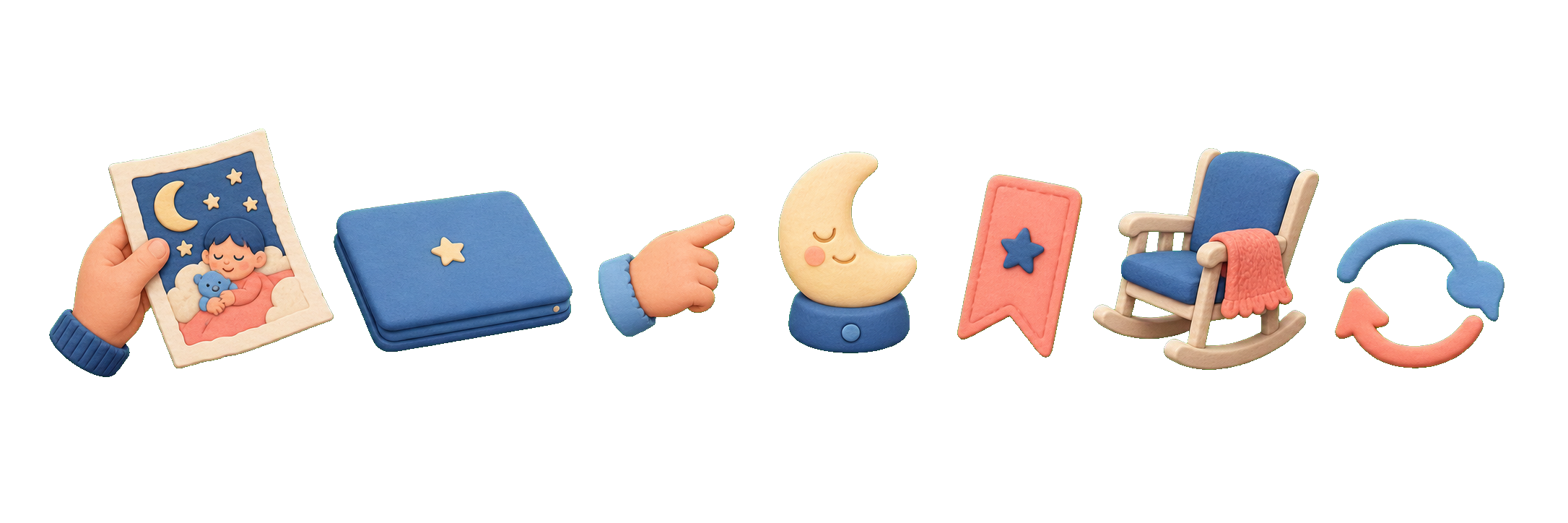
The Screen-to-Story Handoff: let the tool leave before the story begins
A clean handoff prevents a useful drafting tool from becoming an endless bedtime machine. Keep the same five stages even when the story is only three sentences long.
SleepBaby.org Screen-to-Story Handoff: create, preview, park, tell, return.

A safer prompt you can adapt
Write a calm 300-word bedtime story for a toddler. The hero is a fictional moon fox. The small problem is finding a squeaky red wagon. Everyone stays safe. Use simple sentences. Include no villains, peril, secrets, medical advice, brand names, or instructions to climb, hide, eat an unknown object, or leave home. End once, with the fox safely home and the same quiet moon phrase repeated. Do not ask for or include personal information.
Treat the result as raw material. Replace unnatural phrases. Cut repeated lessons. Check every fact. Remove any action your child might imitate unsafely. If the story has six side characters, three moral speeches, and a surprise parade, trim with cheerful ruthlessness.
You can also skip generation and use the prompt yourself. One sentence introduces the friend. One sentence solves the tiny problem. One sentence brings everybody home. Toddlers often love repetition that an exhausted adult has incorrectly diagnosed as insufficient production value.
Keep a small folder of two or three reviewed favorites. Label each with the tokens and the calm ending, not the child’s private information. When a network fails, an account changes, or the new output is dreary, a known safe story is ready.
The One-Story, One-Landing Map: set the limit before a refresh button appears
Choices happen before creation
Offer fox or bus, moon or rain, red wagon or yellow boots. Once the tokens are chosen, the menu closes.
One reviewed story is enough
Do not regenerate because the first paragraph was not dazzling. Edit the safe draft or use a familiar fallback. Bedtime is not an audition.
The landing never changes
Close with the same phrase, cuddle, song, or lights-out step. The story may vary; the route into sleep stays recognizable.
SleepBaby.org One-Story, One-Landing Map: choose once, tell once, land the same way.
If the child rejects the story, say, “Not this one tonight,” and move on. That is not a failed intervention. It is useful feedback and a chance to protect the routine from a negotiation with infinite content.
If your child prefers familiar pages, our guide to a baby or toddler who is obsessed with books explains why repetition can be part of the pleasure. To fit one story into a predictable evening, use the sequence in our sleep routine for a 3-year-old. If you are comparing screen-free audio players with interactive tools, see our parent guide to Yoto and Toniebox at bedtime.

Know when the clever tool is making bedtime harder
Watch the actual evening, not the promise of personalization. If generation adds bright-screen time, adult editing stress, repeated requests, conflict, or delay, it is not helping bedtime even if the prose is adorable. A useful tool should be able to disappear without taking the routine with it.
Pause the experiment when your child becomes distressed by generated content, starts demanding endless versions, tries to use the chatbot alone, or treats the screen as necessary for settling. Return to known books, oral stories, songs, and the ordinary bedtime sequence. You can revisit the idea later, or never. There is no developmental requirement to use AI at bedtime.
Keep a firmer boundary around sensitive subjects. Do not ask a generator to produce a therapeutic story about trauma, grief, anxiety, toileting, pain, illness, family conflict, or a frightening event and assume the output is treatment. A clinician who knows the child can help decide whether and how a story belongs in that conversation.
The simplest success test is almost boring: the child heard one safe story, the grown-up stayed available, the screen went away, and bedtime continued. If the tool cannot support that quiet ending, close it.
Watch the back-and-forth that gives a story its value
Creator: Center on the Developing Child at Harvard University. Watch “Serve and Return Interaction Shapes Brain Circuitry” on YouTube.
Why it is here: the video makes responsive back-and-forth visible. It does not endorse a particular AI product or claim that generated text improves toddler sleep.
Takeaway if you cannot watch: the child’s signal and the adult’s warm response create the meaningful exchange. The generated draft is only a prop for that human turn-taking.[7]
Let the tool strike a match; keep your voice as the lantern
The machine may supply a moon fox in seconds. You supply the safe edit, the perfectly unnecessary wagon squeak, the pause when your toddler points, and the steady ending that means the day is done.
Create earlier. Share less. Read everything. Close the screen. Then tell one small story all the way home.
When a clever story still leaves bedtime feeling tangled
Keep the magic human and build a calmer landing
A generated fox can fill a blank page, but it cannot read your child’s tired signals or redesign the rhythm around them. SleepBaby can help you turn the real clues – timing, connection, protest, and settling – into a gentler bedtime plan that still works when every screen is closed.