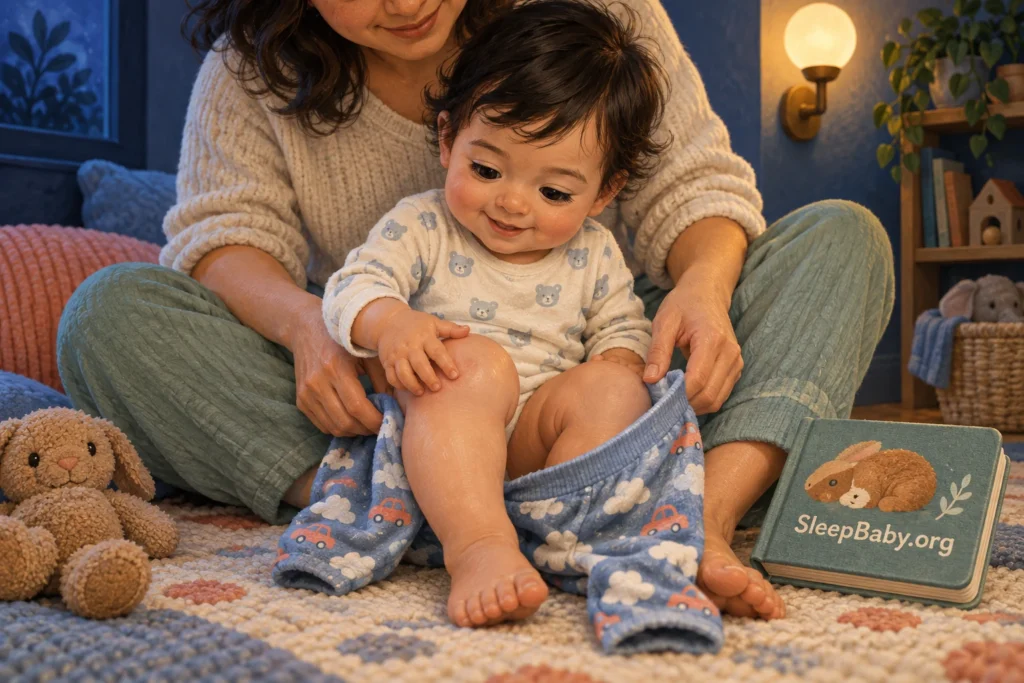
A toddler who is scared of the potty is not automatically stubborn, unready forever, or responding to failed parenting. The fear may be about a hard or painful bowel movement, falling in, dangling feet, the flush, the splash, an unfamiliar bathroom, lost control, or too much pressure. Stop forcing sits. Check for pain and withholding first, make the setup feel physically secure, and rebuild familiarity in steps small enough that your child can stay calm.
If constipation symptoms last more than two weeks, do not improve with home care, or keep feeding the fear, contact your child’s clinician. Blood in the stool or rectal bleeding, abdominal bloating, constant abdominal pain, vomiting, or weight loss need prompt medical evaluation. Those are not signs to solve with a stricter potty routine. The National Institute of Diabetes and Digestive and Kidney Diseases lists those boundaries for children with constipation.
I would look at two things before I looked at willingness: Did something hurt? and Did the toilet feel safe? An adult toilet is ordinary from adult height. From toddler height, it can look like a cold porcelain canyon with a very enthusiastic sound system. Your child does not need a lecture about how harmless it is. They need you to notice which part feels unsafe and change that part first.
SleepBaby.org · The original video
A little help
for the night ahead.
Take a moment to watch the original Baby Sleep Miracle presentation. Your article will be right here when you’re ready to keep reading.
Ready to get started?Take the next step with SleepBaby.
Help my baby sleepWhat changes the next step
Four fears can look like the same refusal
Start with the pattern that best fits today. More than one can be true, and none of these tiles is a diagnosis.
Pain or withholding
Hard or painful stool, hiding, clenching, tiptoeing, rocking, or asking for a diaper can mean the body is protecting itself.
First move: make stool comfort and medical guidance the priority.
Sensory or balance fear
Noise, glare, smell, splash, a cold seat, dangling feet, unfamiliar paper, or fear of falling can make the room feel unpredictable.
First move: change the room and support the body.
Pressure or autonomy
Repeated questions, surprise sits, escalating rewards, or visible adult urgency can make saying no feel like the only control left.
First move: remove the contest and offer small real choices.
Change or regression
A move, new sibling, illness, travel, daycare change, or one frightening bathroom can make a familiar skill feel unsafe again.
First move: restore predictability and return to the last calm step.
Why this matters tonight: choosing the right first move is kinder than carrying an unsolved bathroom battle into dinner, pajamas, and bed.
Original decision structure by SleepBaby.org
Potty fear is real even when the toilet is safe
Young toddlers do not experience a bathroom as a building inspector would. They may understand that the toilet takes waste away without understanding where it goes. They may hear suction, imagine being pulled in, dislike seeing part of their body disappear, or feel exposed when clothes come off. The American Academy of Pediatrics notes that fear of flushing, suction, falling in, or losing a body part can be genuine to a young child.
That is why reassurance works better when it is concrete. “The toilet cannot pull your body in. Your feet will stay on the stool. You can get up whenever you want. We will flush after you leave.” Four plain sentences give the child more usable safety than ten rounds of “There is nothing to be afraid of.”
Readiness is not one birthday. Body awareness, staying dry for stretches, getting clothes up and down, understanding the sequence, communicating a need, and wanting to participate may arrive on different timetables. AAP readiness guidance separates physical, cognitive, motor, emotional, and social readiness for exactly this reason. A child can know what the potty is for and still be emotionally unwilling to sit today.
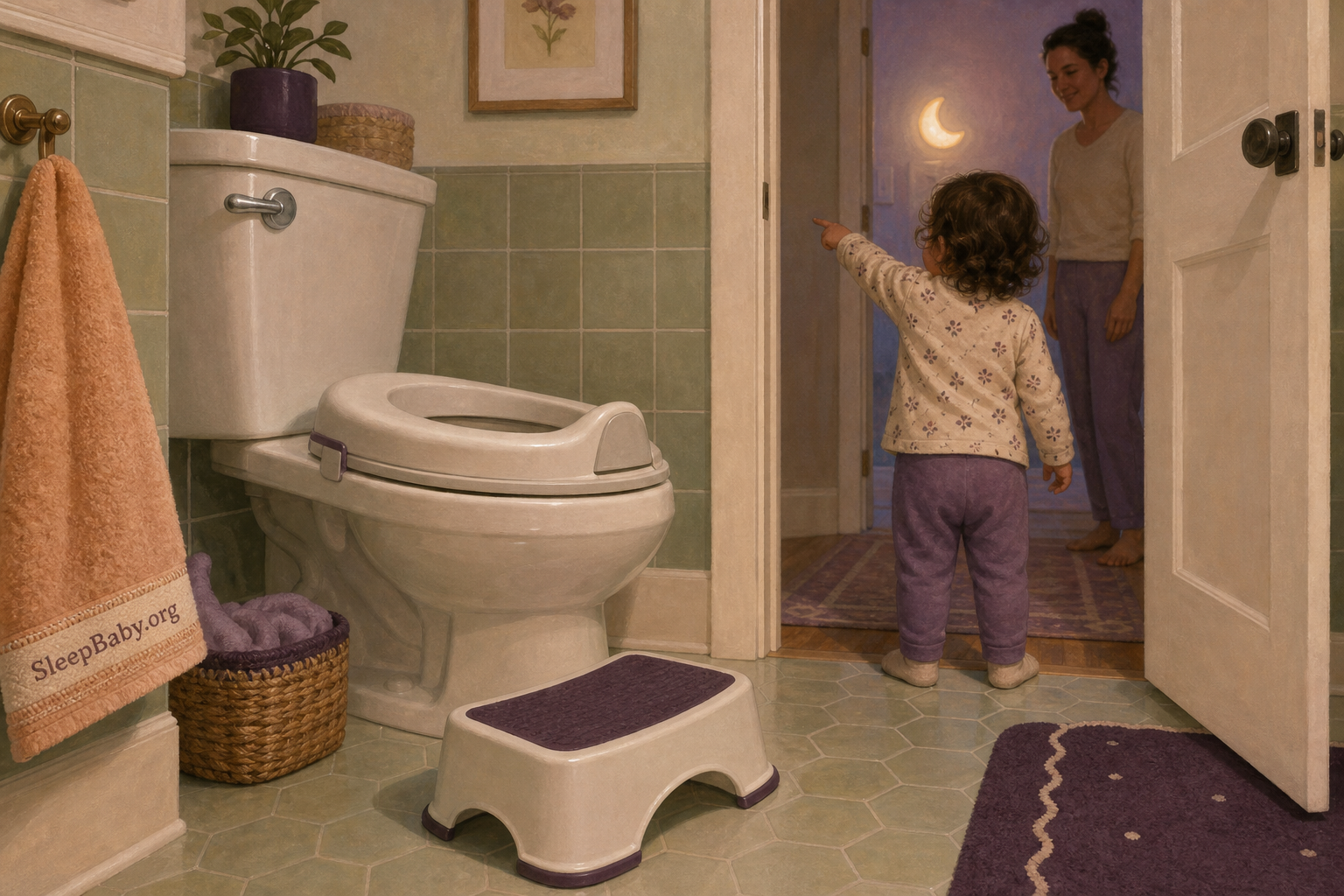
Walk the bathroom at toddler height
The specialist bowel-and-bladder charity ERIC describes toilet anxiety triggers across sound, light, smell, touch, balance, body signals, unfamiliar spaces, and painful stooling. Their toilet anxiety guidance is a useful reminder that “the potty” may actually mean six separate problems. Do one slow lap through the room before adding another behavioral strategy.
Make the room answerable
Seven pieces of bathroom friction you can actually change
- Seat
- Use a stable child-sized potty or a reducer that does not shift. Let the child press and wiggle it before sitting.
- Feet
- Support both feet on a broad, steady surface. Dangling legs can make balancing and bearing down feel less secure.
- Sound
- Warn before flushing. Let the child leave first, cover ears, or choose who flushes. Skip loud hand dryers when possible.
- Splash and water
- Name the worry without teasing. A child who fears splash needs predictability, not a surprise demonstration.
- Light and smell
- Soften glare, use ventilation, and avoid strong sprays or fragrances that make the room more intense.
- Clothes
- Practice easy waistbands away from urgency. Cold air and a rushed tangle of pants can become part of the fear.
- Privacy and exit
- Keep the door position predictable. Stay close without crowding, and make it clear that the child can get up.
Sleep connection: a bathroom that feels less startling asks for less recovery afterward, especially during the last trip before pajamas.
A secure seat and supported feet are not bribes. They change what the body has to do. AAP toilet-learning guidance recommends a child-sized potty and notes the value of physical security. The NHS constipation guide for children also recommends supported feet and a calm routine.
If the flush is the whole problem, do not insist that your child “practice being brave” while seated. Let them stand in the doorway, flush with you, or leave before you flush. Later, fear sometimes turns into fascination; if that happens, a separate calm one-flush plan can keep the cause-and-effect game manageable. Fear of the flush and delight in the flush are different problems. Treat them differently.
When pressure becomes part of the fear
Toilet learning lands at the exact age when “I do it” and “You cannot make me” are both active research projects. A toddler may want the pride of independence and still refuse the setup an adult chose. If every bathroom visit begins with bargaining, counting, reminding, pleading, or announcing who else can use the potty, the child may start protecting control rather than noticing body signals.
The American Academy of Pediatrics’ emotional-readiness guidance recommends backing off when a child is resisting or crying and warns that pressure can contribute to withholding and constipation. This is not surrender. It is removing the part of the situation that adults accidentally made louder.
Offer choices that are both acceptable: the small potty or the reducer; the door open or nearly closed; the blue book or no book; flush now, after leaving, or let the adult flush. Do not offer a choice that is really a disguised command. “Do you want to sit now or in two minutes?” is not reassuring when sitting is the frightening part.
Warm recognition can be useful. “You told me before it felt too scary—that helped me know to stop.” Praise communication, approaching the bathroom, helping set the stool, or trying one calm step. I would keep rewards modest and tied to effort, not escalate the prize until the child produces urine or stool. The bathroom does not need its own prize economy.
Check for the pain–withholding loop before practicing harder
One painful bowel movement can teach a child that the next one is dangerous. The child holds it. The stool sits longer and can become harder. The next bowel movement hurts more, which makes holding feel even more necessary. This loop can look like refusal, hiding, a stiff little dance, crossing legs, rocking, tiptoeing, clenching, or suddenly asking for a diaper.
NIDDK includes hard, dry, or lumpy stool; painful or difficult bowel movements; infrequent stool; bloating; and withholding postures among constipation signs. A 2025 observational study also found associations between functional constipation and behaviors such as refusing to defecate, hiding, or asking for a diaper. An association does not diagnose your child or tell us which came first. It does tell us not to dismiss those behaviors as simple misbehavior.
Comfort before performance
What to do when stool may hurt
Pause the push
Do not force sitting while bowel movements are painful or clearly being withheld. A training pause can protect trust while comfort is addressed.
Support ordinary care
Offer the fluids and fiber-rich foods that fit your child’s usual medical and feeding guidance. Keep movement and meals predictable rather than turning food into a cure.
Ask before medicine
Do not start a laxative, suppository, enema, or stool-softening product unless your child’s clinician has recommended it.
Know the prompt-evaluation signs
Blood, abdominal bloating, constant abdominal pain, vomiting, or weight loss need prompt medical evaluation. Worsening illness or a child who seems acutely unwell deserves urgent medical help.
Night boundary: discomfort that interrupts settling or wakes your child belongs in the health picture. A bedtime routine cannot treat constipation.
The NIDDK treatment guide advises taking a break from toilet training until constipation stops and says not to give a child laxatives unless a doctor recommends them. For a fuller look at food, fluids, symptoms, and when to call, use our toddler constipation guide. Keep the red-flag list above in view; an internal article does not replace your child’s clinician.
Build familiarity without requiring a sit
When pain has been addressed—or when pain does not appear to be the driver—the next job is not “get a pee in the potty.” The next job is to let the bathroom become boring enough that the child’s nervous system has room to learn. Start below the fear, not at the point where the fear becomes visible.
A calmer way back
Seven steps, with permission to stop at any one
- 1Name the safety rule. “You do not have to sit. We are just making the bathroom feel easier.” Keep that promise.
- 2Visit while fully clothed. Put away a towel, place the stool, choose toilet paper, or read one short book near the doorway. Leave while everyone is still calm.
- 3Let the child inspect the equipment. Touch the seat, press the reducer, move the stool, and decide where the potty lives. Stability should be felt, not merely promised.
- 4Practice a clothed touch or sit only if invited. One second counts. Feet stay supported. The child gets up immediately when they say they are done.
- 5Give control over the flush. Choose no flush, adult flush, child flush, ears covered, or flush after leaving. Never spring the sound as a test.
- 6Offer one predictable invitation. A natural transition—after waking or after a meal—works better than asking every few minutes. “Potty is available” is enough.
- 7Advance from calm, not from the calendar. Repeat a tolerable step until it feels ordinary. If distress spikes, return to the last step that felt safe.
Protect the evening: end practice before it turns into a negotiation. The last bathroom visit of the day is not the place to make up for every missed attempt.
ERIC recommends breaking toilet-related tasks into small, predictable steps and recognizing effort rather than demanding an unrealistic outcome. AAP guidance similarly steers families away from punishment and power struggles. Small does not mean manipulative. Small means the child can actually learn while staying regulated enough to notice what happened.
If your toddler will only poop in a diaper
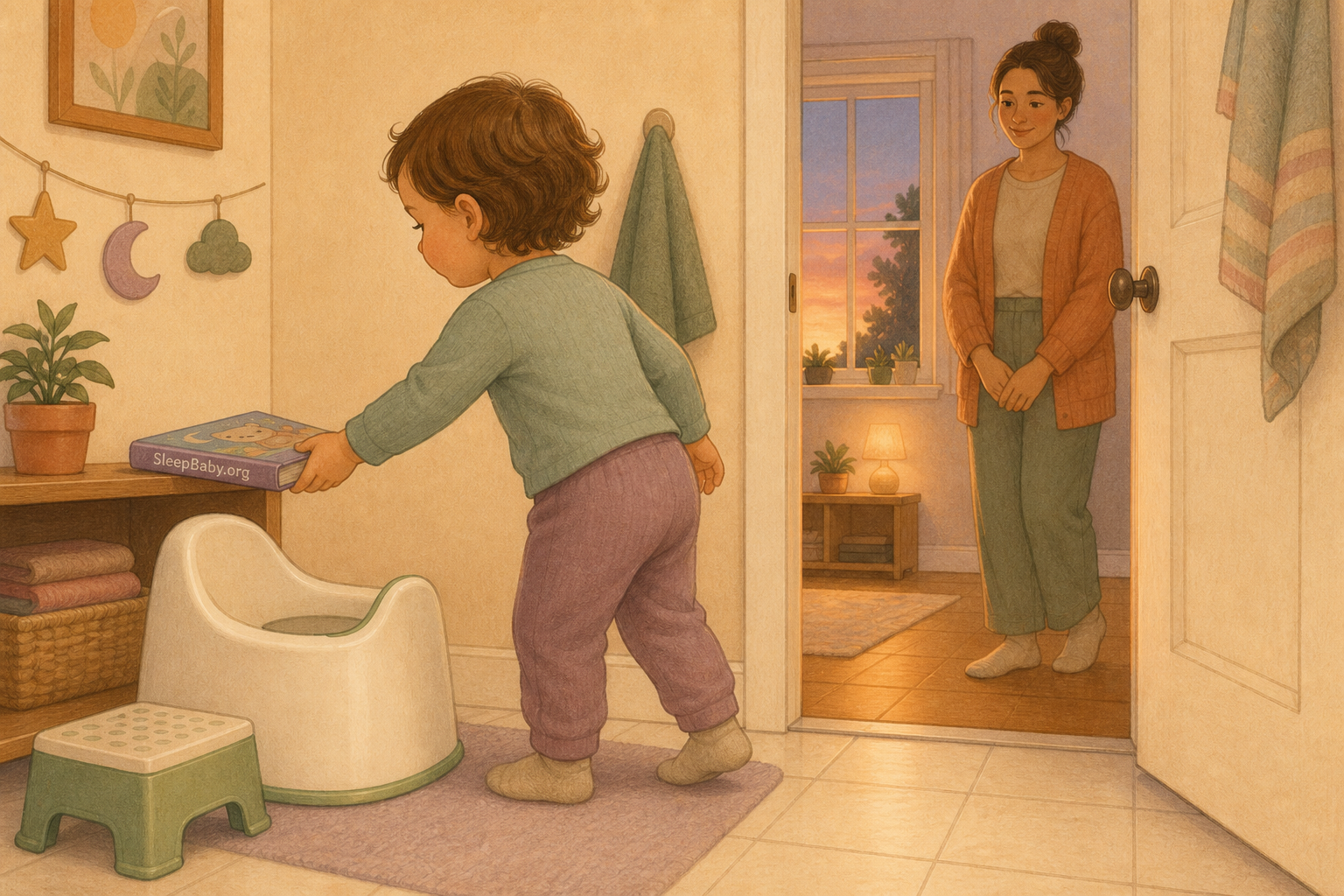
A diaper request tells you where the child currently feels able to release. It does not prove laziness, manipulation, or a behavioral disorder. Ask whether bowel movements hurt, whether your child hides or clenches, whether the toilet feels unstable, and whether removing clothes or losing the familiar squatting position makes the body feel less secure.
Older prospective research found that stool refusal and withholding often traveled together, and another study found more constipation and painful bowel movements among stool refusers without finding broader behavior or compliance problems. Those studies are from 1997 and cannot dictate one universal plan. Their most useful contribution is quieter: do not turn a pain-linked or fear-linked pattern into a character judgment.
Keep dignity in the bridge
What can move gradually—and what should not become a battle
Can move gradually
- Where the diaper change happens, only as tolerated
- How close the child comes to the bathroom
- Whether a clothed sit or foot support feels possible
- Who flushes and when
Should not become leverage
- Withholding the diaper as punishment
- Holding the child on the toilet
- Shame, teasing, public comparison, or photos
- Home medication experiments without clinical guidance
What changes the plan: repeated pain, withholding, constipation, a prolonged pattern, severe distress, or disruption across childcare and ordinary family life is a reason to involve the pediatrician rather than invent a more forceful bridge.
You do not need to announce a deadline. Keep stool comfort central, let the bathroom become familiar, and move only one part of the routine at a time. If progress requires your child to feel cornered, it is not progress worth borrowing against trust.
Regression after a change is not erased learning
A child who used the potty last month may refuse after a move, a new sibling, illness, travel, daycare change, family stress, or one frightening public bathroom. The AAP discussion of emotional toilet-learning problems notes that young children may not be able to explain the fear and that regression can follow major change.
Return to the last step that still feels familiar: the home potty, the same foot stool, the same short phrase, or simply telling you after the fact. Keep cleanup neutral. One accident does not need a family meeting. A string of distressing accidents, pain, urinary symptoms, constipation, or loss of other skills deserves a clinician’s attention.
When childcare is involved, agree on the smallest shared plan rather than asking the child to manage two competing campaigns. Tell the caregiver what the child calls the potty, what currently scares them, whether stool has been painful, what foot support is available, and which phrase signals an easy exit. Ask for facts at pickup—whether the child approached, sat, urinated, had a bowel movement, appeared to withhold, or seemed uncomfortable—not a verdict about cooperation.
Home and childcare do not need identical furniture or clock times. They do need the same emotional rule: no restraint, no shame, no surprise flush, and no public play-by-play. If the child uses one setting but not the other, compare sound, seat stability, privacy, timing, and adult pressure before deciding the skill has vanished. That comparison often reveals a fixable piece of the environment.
If predictability has become your toddler’s safety rail in many parts of the day, our guide to toddler rigidity around routines can help you practice tiny changes without pathologizing every preference. The potty plan should stay specific to toileting; it should not become a diagnosis for the whole child.
Public bathrooms need their own plan
A child who uses the potty at home may freeze in a public restroom. The seat is different, the room echoes, automatic flushing can fire without warning, hand dryers roar, stalls feel cramped, and adults nearby may be hurrying. That is a new environment, not proof that the home progress was imaginary.
Bring only what genuinely helps: a familiar reducer if practical, a compact foot-support option where safe, spare clothes, and one simple phrase. Cover an automatic sensor only if it can be done safely and without interfering with the fixture; otherwise let the child leave before flushing. Do not trap the child in a stall for a lesson. If using a diaper or waiting for a calmer location is the least distressing safe choice that day, ordinary life has not been defeated.
Know when to stop guessing
What to do now, what to watch, and when to call
Do now
- Stop forced sits and surprise flushes
- Check stool comfort and withholding behavior
- Secure the seat and support both feet
- Choose one tiny, predictable practice step
Watch over ordinary days
- Which exact sound, sensation, or transition starts distress
- Whether stool is hard, painful, or unusually infrequent
- Hiding, clenching, rocking, or diaper requests
- Whether a calmer setup reduces fear
Call the clinician
- Constipation lasts beyond two weeks or home care is not helping
- Pain, withholding, urinary discomfort, or severe fear keeps returning
- The pattern disrupts eating, sleep, childcare, or family life
- You cannot tell whether this is fear, pain, constipation, or another concern
Seek prompt medical evaluation
- Blood in stool or rectal bleeding
- Abdominal bloating or constant abdominal pain
- Vomiting
- Weight loss or a child who appears acutely unwell
Bring useful notes, not a verdict: when the fear started, stool frequency and texture, pain, withholding postures, urine symptoms, appetite, vomiting, abdominal symptoms, recent changes, and what happens in different bathrooms.
Original caregiver decision aid by SleepBaby.org
What progress actually looks like
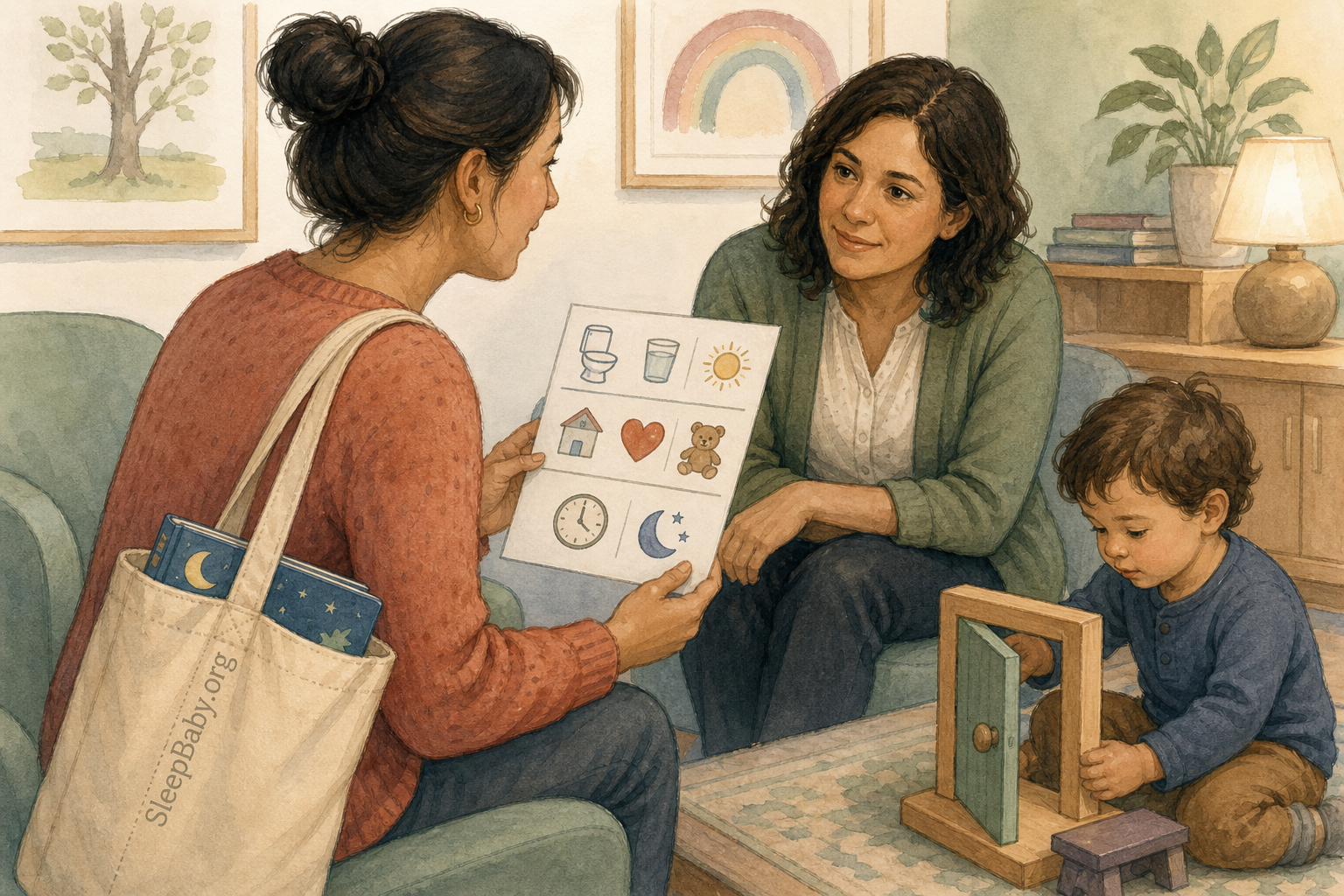
Progress may be telling you before hiding. It may be entering the bathroom without crying, putting feet on the stool, sitting clothed for one breath, letting you flush after they leave, having a softer bowel movement, or recovering from an accident without shame. Urine or stool in the potty is one outcome, not the only evidence that safety is returning.
I would rather see a child take one honest calm step than complete a sit while frozen, bargaining, or trying not to cry. The body learns from the whole event. If the lesson is “Adults listen when I say this hurts or scares me,” you have not delayed toilet learning. You have made learning possible.
Keep the language plain. “Your body will tell you.” “The potty is available.” “Feet on the stool.” “You can get up.” “We will clean it together.” Then let the subject go. A toddler does not need the bathroom to become the family’s most frequently scheduled podcast.
A four-minute expert conversation
What toilet anxiety can look like—and how pressure can soften
ERIC Nurse Sunni and Head of Family Services Sarah explain toilet anxiety and healthier toileting habits. Use the captions or transcript control if you prefer to read. The video supports the gradual, pressure-aware approach above; it does not diagnose pain or replace your child’s clinician.
If the player does not load, watch “EHP – Toilet Anxiety – Short version” on Vimeo. Creator: ERIC, The Children’s Bowel & Bladder Charity.

Let toilet learning have an ending each day
Potty fear does not need to own the evening. Choose a last low-pressure bathroom opportunity, keep it brief, and close the subject afterward. If your toddler says no and there is no urgent health or hygiene issue, move to the next familiar part of the routine. If the day has become so scrambled that naps and bedtime are drifting too, a flexible two-year-old sleep rhythm can help you steady the rest of the day without pretending a schedule treats toilet fear.
The honest sleep connection is caregiver and child capacity. Pain can interrupt sleep. A frightening bathroom struggle can leave everyone activated. A calmer handoff can protect the last part of the day. But potty progress is not a sleep cure, and a baby sleep workshop is not medical care. Keep the constipation and pain questions with your child’s clinician.
Sources
- AAP: Emotional Growth Needed for Toilet Training
- AAP: Emotional Issues and Potty Training Problems
- AAP: The Right Age to Potty Train
- AAP: How to Tell When Your Child Is Ready
- NIDDK: Symptoms & Causes of Constipation in Children
- NIDDK: Treatment for Constipation in Children
- NHS: Constipation in Children
- ERIC: Toilet Anxiety and Toilet Phobia in Children
- Pediatrics: Toilet Training and Stool Toileting Refusal
- Pediatrics: Behavioral Characteristics of Stool Toileting Refusal
- JPGN: Toilet-Training Behaviors and Functional Constipation
When bathroom fear follows everyone toward bedtime
Let the rest of the night feel softer
A hard potty moment can leave a toddler clingy and a parent braced for one more negotiation. The SleepBaby.org Workshop helps you put naps, bedtime, night waking, and caregiver capacity into a calmer order—without claiming that a sleep plan treats constipation or toilet fear. Keep the medical questions with your child’s clinician; let the workshop help you steady the part of the evening that remains.
SleepBaby.org · The original video
A next step for
the next bedtime.
Still thinking about sleep? Watch the presentation here, then explore the SleepBaby program whenever you’re ready.
Ready to get started?Take the next step with SleepBaby.
Help my baby sleep