The tiny offering, the germ question, and the clean way to answer both
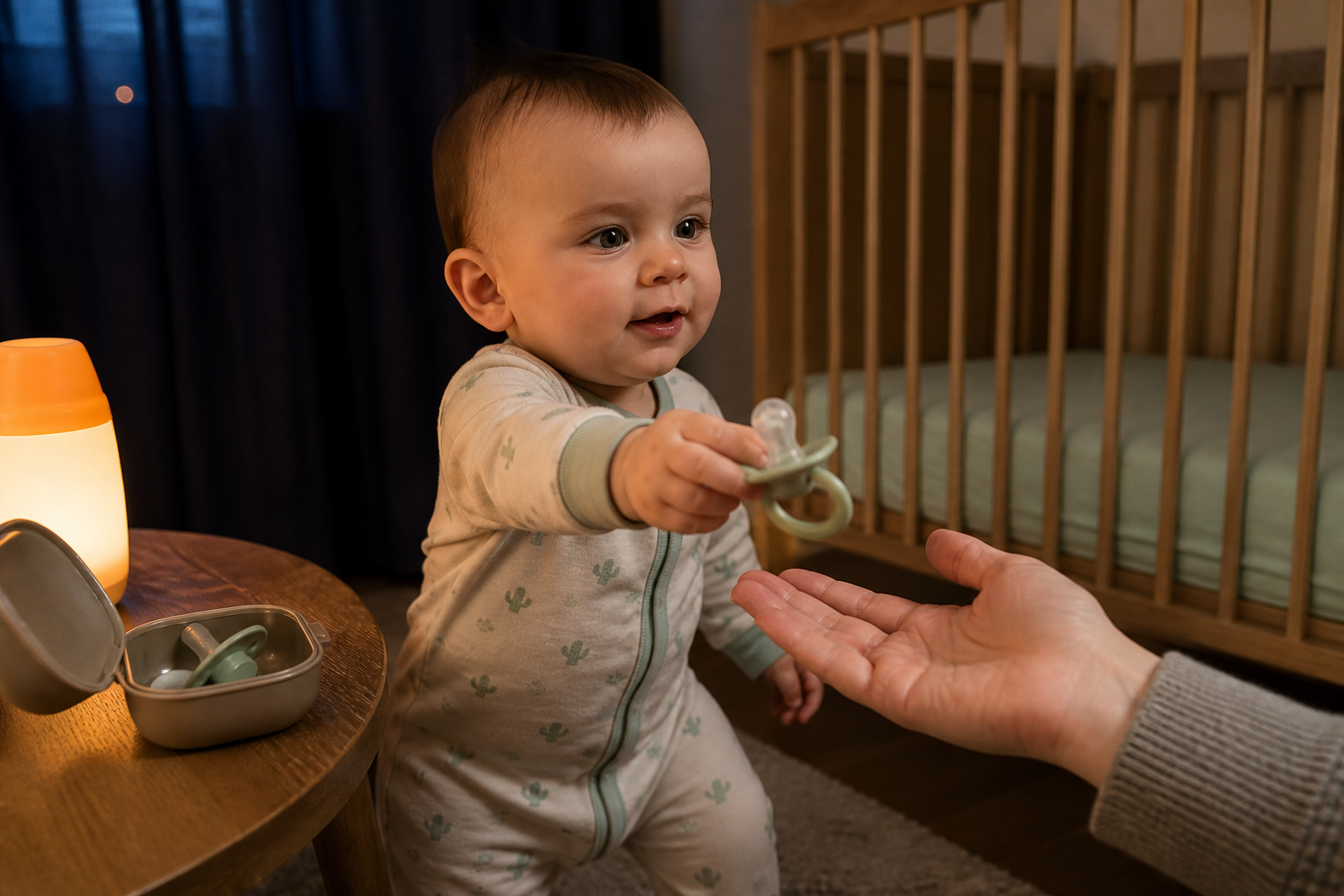
Your baby pulls the pacifier out, studies your face, and presses the wet end toward your mouth with the solemn generosity of someone sharing the last bite of dessert. It is funny. It is intimate. Then your parent brain catches up: Wait—am I supposed to take that?
A baby who offers you a pacifier is often exploring your reaction, copying a back-and-forth exchange, or turning a familiar object into a social game. It does not prove one fixed intention, and it is not a developmental test. Receive the connection with your hand rather than your mouth, swap in a clean spare, and clean the used pacifier according to its instructions.
If you already put it in your mouth once, I do not want you spiraling through every germ you have ever met. Saliva sharing is worth preventing, especially when someone is ill or the baby is very young or medically vulnerable, but one ordinary accidental share is usually a cue to wash, reset, and pay attention—not proof that you harmed your baby.
I am going to hold the emotional and practical questions together here: what the gesture may mean, why the hygiene boundary still matters, what to do in the moment, how pacifiers fit into safe sleep, and when the details make a pediatric call sensible.
SleepBaby.org · The original video
A little help
for the night ahead.
Take a moment to watch the original Baby Sleep Miracle presentation. Your article will be right here when you’re ready to keep reading.
Ready to get started?Take the next step with SleepBaby.
Help my baby sleep
What your baby may be doing when the pacifier comes toward you
Babies learn by repeating actions and watching what changes. A pacifier is especially interesting because it already has a strong role in your baby’s day. It appears during settling, comfort, travel, waiting rooms, and sometimes sleep. When your baby removes it and offers it to you, the object suddenly becomes part of a conversation.
The honest language is may. Your baby may be copying the way people pass objects. They may be testing whether you will make the same sucking motion. They may enjoy the surprised face you made the first time. They may be practicing release and retrieval. They may simply be finished with the pacifier and have discovered that your hand is a reliable storage shelf.
I would not tell you that the gesture definitely means “I love you,” even though it can feel wonderfully affectionate. I also would not strip all meaning from it. The useful truth sits in the middle: your baby is doing something with you, not merely with the object. The shared attention, eye contact, pause, smile, or repeat request can make the exchange feel connected without requiring us to read a full adult intention into it.
Context gives you better clues than one dramatic handoff:
Looks like social play
Your reaction is the main event
- Your baby watches your face before and after the offer.
- The pacifier comes back toward you as soon as you return it.
- There is smiling, vocalizing, or an expectant pause.
- The exchange repeats even when your baby is not trying to settle.
Looks more practical
Your hand is the nearest landing place
- Your baby turns away or reaches for another toy immediately.
- The offer happens when feeding, play, or movement begins.
- The pacifier is dropped into any available hand or surface.
- Your baby does not seek the exchange again after you take it.
Neither pattern is a diagnosis, and the behavior is not a required milestone. Development is judged from a much wider picture over time. If you have concerns about communication, movement, hearing, play, connection, or a loss of skills, bring those specific observations to your pediatrician rather than asking the pacifier to carry the whole question.
A composite Kacey-and-Benjamin moment
I could accept the gift without accepting the germs
This is a clearly labeled composite scene built from common family moments. It is not a claim about a specific event in Kacey’s or Benjamin’s biography, and it is not medical evidence.
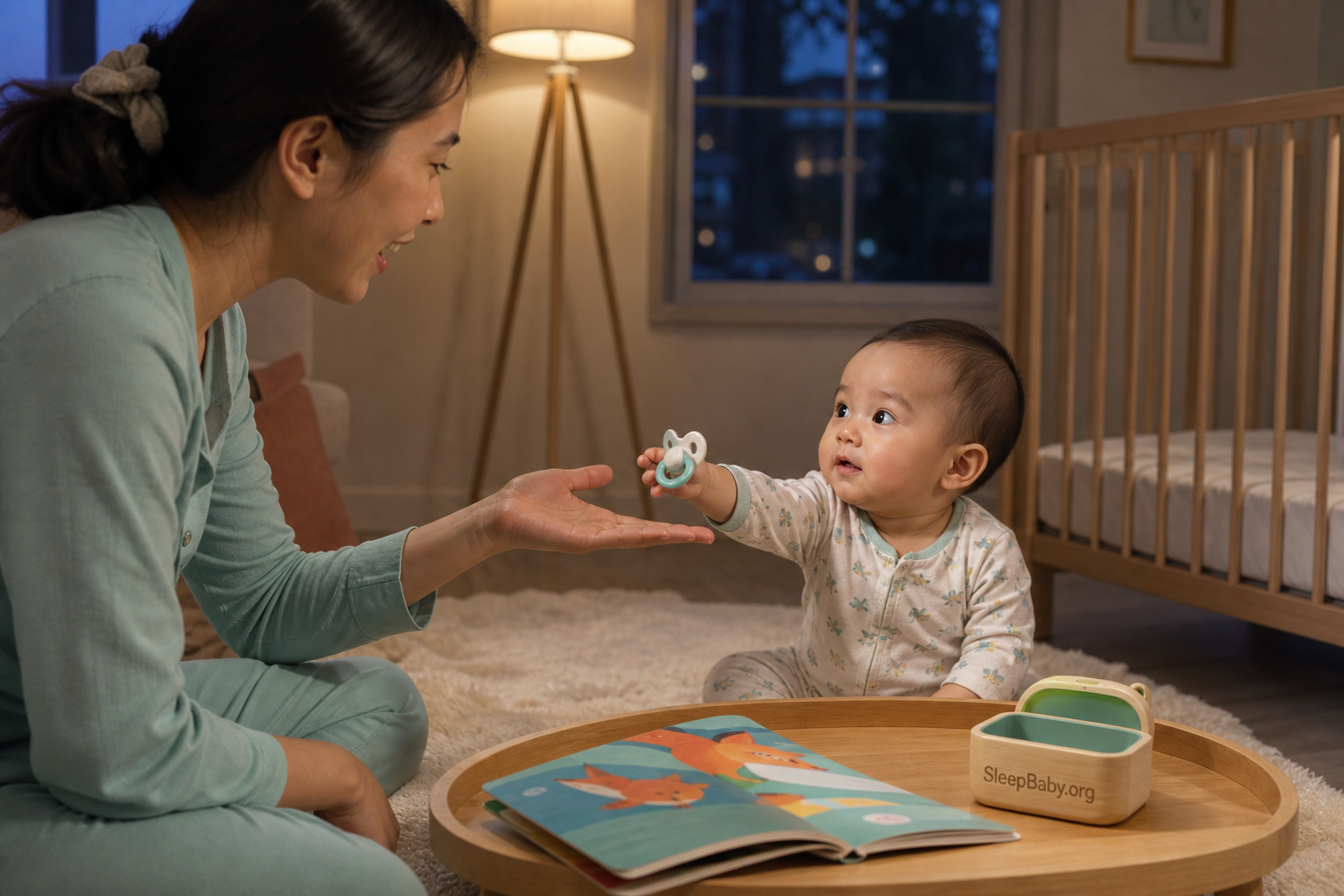
In the scene I picture, Benjamin is awake in pajamas, the room is dim, and the crib behind us is still beautifully boring: fitted sheet, nothing loose, no pacifier clip trailing across the mattress. He pulls the pacifier from his mouth and holds it against my lips. His eyebrows lift. He is waiting.
My first instinct is to perform the joke because his whole face has asked for it. Instead, I open my palm, let him place the pacifier there, and say, “You gave it to me. Thank you.” Then I tap the clean case beside us and offer the spare. He studies the swap for half a second, accepts it, and immediately tries to give me that one too.
I laugh, because the invitation was real even though I changed the choreography. I did not have to reject Benjamin’s bid for connection. I only had to keep the boundary attached to the object instead of attaching it to him: I will play this game with you; I will not put the mouthpiece in my mouth.
That distinction is the heart of the article. Warmth and hygiene are not competing parenting styles. You can be responsive without making shared saliva the price of responsiveness.
One gesture, two questions
The relationship question
How do I answer the bid?
Look at your baby, receive the pacifier with your hand, copy the rhythm of giving and returning, and narrate simply: “You gave it to me. Now I give you the clean one.” Your face, voice, and turn-taking carry the connection.
The hygiene question
Where does the used pacifier go?
Into a designated used-item cup or compartment until it can be cleaned—not into your mouth, a sibling’s mouth, a pocket full of lint, or back into the clean-pacifier case while damp or dirty.
Separating the questions prevents the two common overreactions. You do not need to turn the exchange into a germ emergency, and you do not need to pretend saliva is irrelevant because the gesture was sweet.
The clean-spare handoff: four moves you can use tonight
-
Receive with an open hand
Give your baby a clear landing place. If the pacifier is pressed toward your mouth, gently redirect the hand to your palm. A calm movement works better than a startled “yuck,” which can accidentally turn the reaction into the funniest game in the house.
-
Name the exchange
Use one short sentence: “Pacifier for Mama’s hand,” “You gave it to me,” or “That one is used; here is the clean one.” The words are not a hygiene lecture. They make your response predictable.
-
Offer a clean spare if your baby still wants one
Keep a second pacifier that matches the age, size, shape, and product instructions your baby already accepts. A spare is useful only if it is actually clean and your baby will use it. If your baby is done, you do not need to return anything.
-
Separate used from clean
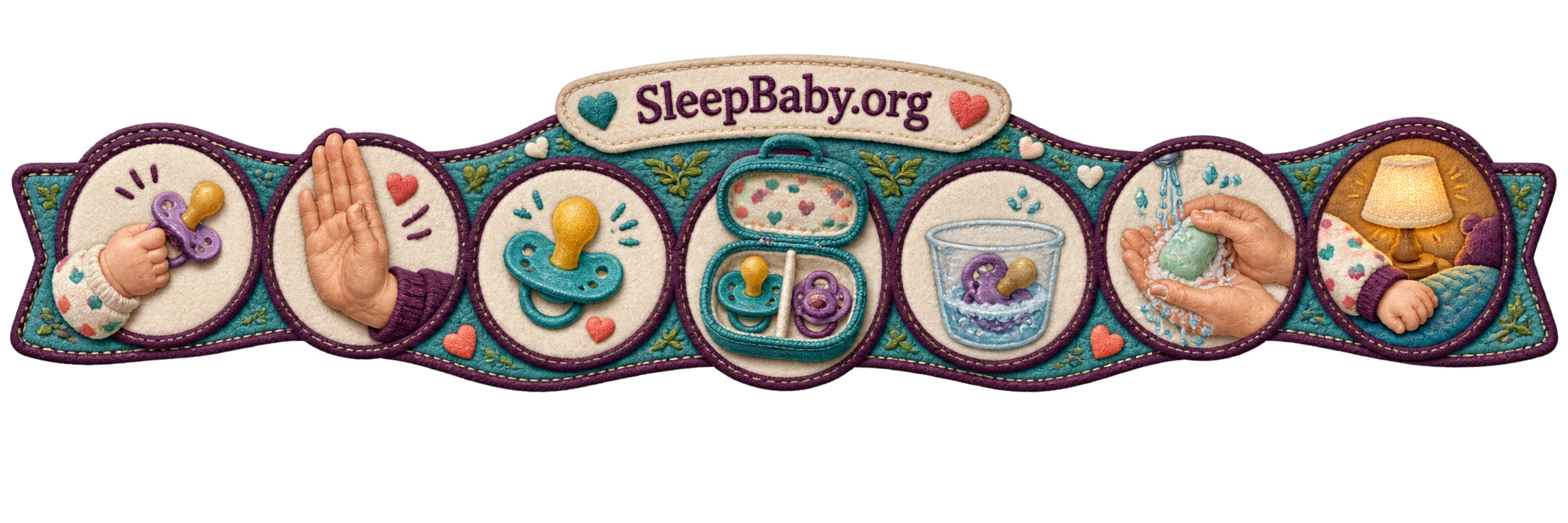
Place the used pacifier in a washable cup or a clearly separate case section. Clean, rinse, and dry it according to the manufacturer before it rejoins the clean supply. That one tiny system prevents the 2 a.m. question, “Wait—which one fell on the floor?”
I like this plan because it does not depend on perfect memory. It turns the safest response into the easiest response: hand, phrase, spare, used cup. The game can repeat ten times without requiring ten trips to the sink or ten rounds of parental mouth-cleaning.
A category-native pick for the clean-spare routine
My Amazon pick: MAM Comfort Baby Pacifiers 3–12 Months, 2 Pack with Sterilizer Carry Case
If your baby is in the labeled 3–12 month range and accepts this shape, the MAM Comfort two-pack with its carry/sterilizer case fits this exact problem: one pacifier can be available while the used one waits to be cleaned. That is more directly useful here than a countertop sanitizer that adds equipment, and safer for sleep planning than buying a clip or plush attachment that should not go into an infant sleep space.
The persuasive reason to buy is the built-in redundancy. A clean spare at the bedtime station makes the no-mouth-sharing choice easy when you are tired. Check the current package, age label, condition, and cleaning instructions before use; do not switch from a shape your baby needs for a medical or feeding reason without asking the relevant clinician. No pacifier treats illness or replaces safe-sleep practices.
See the MAM Comfort 3–12 Month two-pack on Amazon
As an Amazon Associate, SleepBaby may earn from qualifying purchases.
Why pediatric and dental guidance says not to clean a pacifier with your mouth
Saliva is part of ordinary family life, but it is not sterile. The American Academy of Pediatrics advises against putting a baby’s pacifier in a caregiver’s mouth before returning it. The American Academy of Pediatric Dentistry similarly recommends minimizing saliva-sharing behaviors, including orally cleaning a pacifier, because cavity-associated microbes can move mouth to mouth.
That does not mean every shared pacifier causes a cavity or infection. Transmission requires the organism to be present, and exposure is not the same as illness. Risk also changes with the baby’s age and health, the caregiver’s health, how often sharing happens, and what happens afterward. This is why I use a prevention frame rather than a blame frame: avoid the repeatable exposure because the avoidable route adds no benefit.
There is one study parents often meet while searching. A small observational birth cohort of 184 infants reported an association between parental mouth-cleaning of pacifiers and lower rates of some allergic outcomes. It did not randomly assign families, prove that pacifier sucking caused the difference, or establish that mouth-cleaning is the preferred hygiene practice. An interesting association does not cancel current pediatric and dental advice to avoid saliva sharing.
If someone online cites that study as proof that you should suck your baby’s pacifier, you can hold a more careful answer: research on microbial exposure and allergy is complex; one observational study is not a personal prescription; and a clean spare is a simple way to preserve the baby’s routine without turning an adult mouth into a cleaning tool.
How to clean, dry, store, and replace pacifiers without inventing a universal schedule
The product instructions matter because pacifiers are made from different materials and are not all approved for the same heat, dishwasher, microwave-case, or sterilizing method. Start there. If the directions are missing, use the manufacturer’s current product page or contact the company rather than guessing that a method safe for one pacifier fits another.
01
Before first use
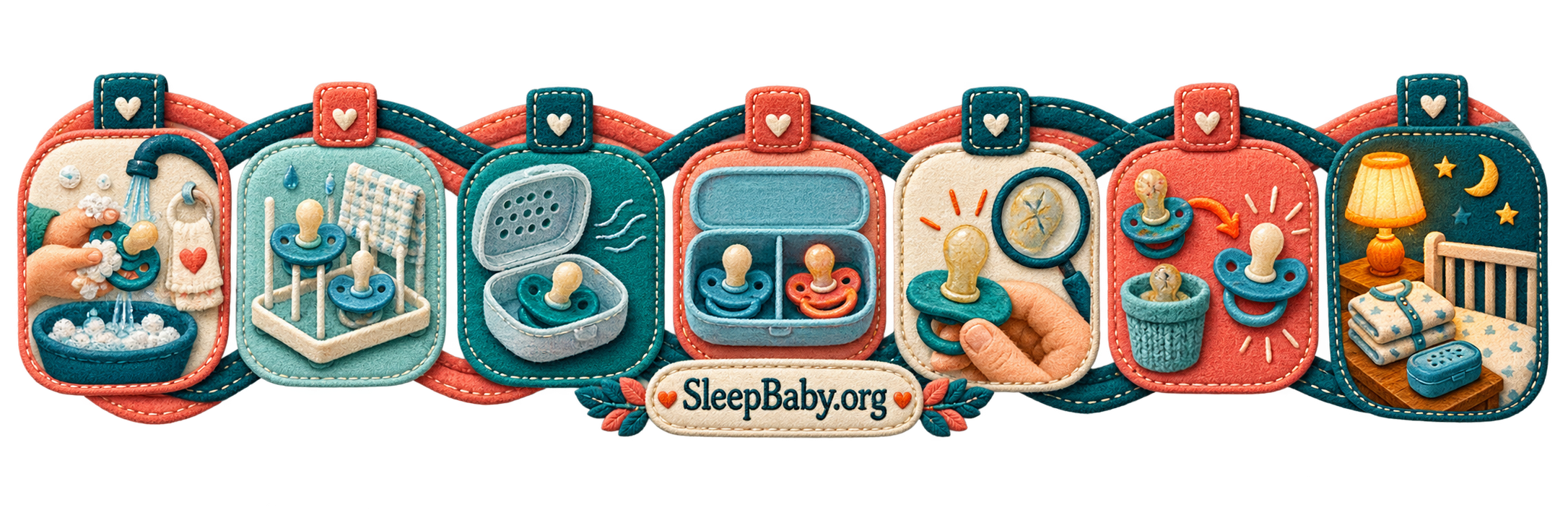
Use the maker’s first-use cleaning or sterilizing method. Allow the pacifier to cool, remove any trapped water as directed, and inspect the nipple, shield, handle, and seams before it reaches your baby.
02
After a mouth-share, floor drop, or visible soil
Move it to the used container. Wash your hands. Clean the pacifier with the approved method instead of wiping it on clothing, rinsing it in a questionable sink, or using your mouth.
03
Dry before clean storage
Place it on a clean surface or drying rack and let it dry as instructed. A closed case is helpful for transport, but sealing a damp, dirty pacifier beside clean ones defeats the system.
04
Inspect every time
Pull and look for tears, cracks, stickiness, swelling, weak seams, trapped debris, or a damaged shield. Replace a worn pacifier according to the maker’s interval or sooner when damage appears.
HealthyChildren emphasizes frequent cleaning in the first six months, when immune defenses are still developing, and routine soap-and-water cleaning for older babies when the product permits. The CDC also advises careful hand hygiene and cleaning of items that enter an infant’s mouth, with additional caution for very young or medically vulnerable infants. Those principles support a plan; they do not create permission to ignore the exact pacifier’s instructions.
Do not dip a pacifier in honey, sugar, syrup, juice, medicine, or another sweet substance to improve acceptance. Do not improvise one from a bottle nipple. Choose an intact, age-appropriate pacifier with a shield that cannot fit entirely into the mouth and ventilation openings, and replace it when it is damaged.
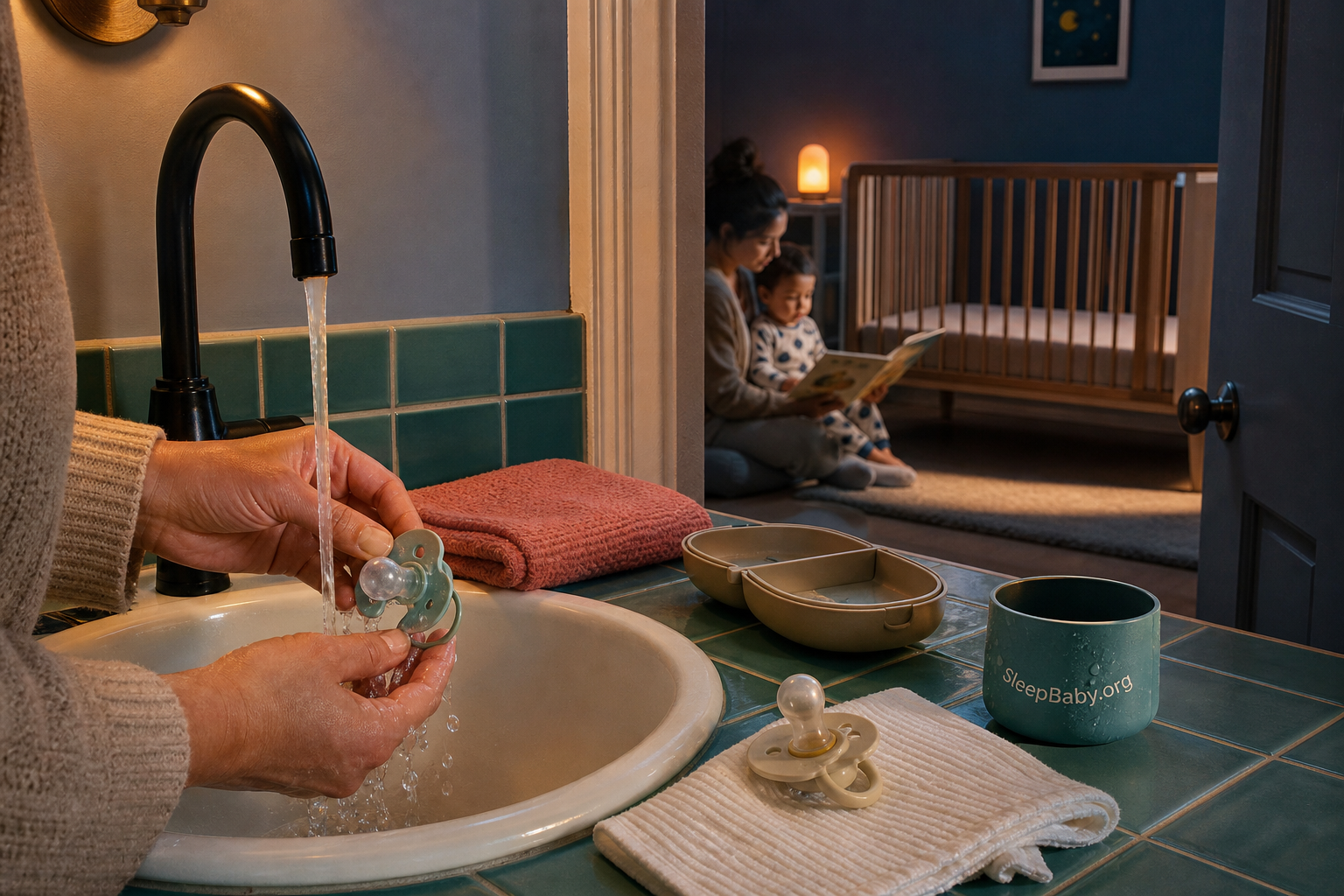
Watch one cleaning technique, then check your own product
NUK manufacturer demonstration: cleaning pacifiers and feeding items
This manufacturer video demonstrates its boiling and drying process. I am including it as a visual technique demonstration, not as evidence that every pacifier tolerates the same method. Pause before copying it and confirm the instructions for the pacifier in your hand.
Takeaway for this article: a repeatable wash-and-dry station is more useful than mouth-cleaning; the approved heat, timing, and case method still come from your pacifier’s manufacturer.
Pacifiers at naps and bedtime: the safe-sleep rules do not change
The American Academy of Pediatrics recommends offering a pacifier at nap time and bedtime because pacifier use during sleep is associated with a lower risk of sleep-related infant death. The protective mechanism is not fully understood, and the pacifier is one layer—not a substitute for placing baby on the back on a firm, flat, noninclined sleep surface with no loose bedding or soft objects.
You do not need to force the pacifier. If your baby refuses it, move on. If it falls out after your baby is asleep, you do not need to put it back. The sleep space should contain the pacifier by itself, not a pacifier attached to clothing, a cord, a clip, a blanket, a stuffed animal, or a plush “lovey.” A product being sold for sleep does not override safe-sleep guidance.
If your baby is breastfed, AAP guidance is to wait until breastfeeding is well established before routinely introducing the pacifier. “Established” is better judged by effective latch, comfortable and adequate milk transfer, and appropriate weight gain than by treating one calendar day as universal. If feeding is painful, weight gain is uncertain, or you have been told to wake for feeds, ask the baby’s clinician or lactation professional how pacifier use fits the feeding plan.
If the pacifier has become the only way your baby returns to sleep and you are replacing it every few minutes, the problem is not solved by clipping it on or adding an attachment. Work on the broader settling pattern while preserving the bare sleep space. Our guide to settling a baby who resists the bassinet without adding unsafe sleep props gives you a safer next path.
For newborns, feeding questions come before convenience
A newborn may seem calmer with a pacifier, but calm is not the same as fed. In the early weeks, repeated sucking can sometimes mask feeding cues or stretch the time between feeds if adults use it automatically whenever the baby roots, mouths, or fusses. Before offering it, pause long enough to ask when the baby last fed, whether the feed was effective, and whether the baby is following the weight-gain plan.
That does not make pacifiers forbidden for every newborn. It means the individual feeding context matters. A baby who is gaining well and feeding effectively may use one differently from a sleepy newborn with jaundice, a premature baby conserving energy, or a baby whose clinician has set a wake-to-feed schedule. Follow the plan attached to your baby rather than a blanket internet rule.
If nights currently feel like a loop of feeding, pacifier replacement, and guessing, start with a newborn night-sleep plan that protects feeding and safe sleep. The goal is not to make a newborn sleep through hunger. It is to distinguish hunger, contact, discomfort, and ordinary newborn wakefulness so the pacifier is not asked to answer every signal.
If “sharing a pacifier with Mom” really means your baby uses nursing for comfort
Parents sometimes use the same phrase for a different experience: the baby finishes active feeding but wants to remain latched, or wakes as soon as the breast is removed. That is not the same hygiene question as passing a silicone pacifier between mouths. Comfort sucking at the breast can be normal, especially in early infancy, during growth and illness, or when closeness is doing part of the regulation work.
You do not have to label every quiet suck as manipulation or a bad habit. Look for active swallowing, milk transfer, breast comfort, diaper output, weight gain, and whether the pattern is sustainable for you. If you want to unlatch after feeding, break the seal gently with a clean finger and offer another responsive cue: holding, rocking, skin-to-skin while awake, or the pacifier when it fits the feeding plan.
Ask for lactation or pediatric help when nursing hurts, nipples are damaged, feeds are unusually long without effective swallowing, the baby is hard to wake for feeds, diaper output drops, or weight gain is a concern. The goal is not to win a contest between “human pacifier” and “independent baby.” It is to protect feeding while widening the ways your baby can settle.
The same boundary applies to siblings, grandparents, and daycare
A toddler may pop the baby’s pacifier into their own mouth before you can cross the room. A grandparent may clean one the way they were taught decades ago. Daycare may have five identical pacifiers on five hooks. This is where a simple system beats a long lecture.
- Label pacifiers and cases for the individual child.
- Keep each child’s clean supply separate.
- Use one obvious cup or pouch for items waiting to be washed.
- Tell caregivers plainly: “Please do not clean it in your mouth; use the spare and put this one in the used cup.”
- Ask childcare providers how pacifiers are labeled, cleaned, dried, stored, and kept out of other children’s mouths.
If another child briefly mouths the pacifier, follow the same calm process: remove, clean, separate, and consider the children’s health context. Do not shame either child. Babies and toddlers are not violating a social contract; adults are building the environment that makes the clean choice easier.
Five well-meant fixes that create a new problem
“I only put it in my mouth for a second” becomes the regular cleaning plan
Duration is not the useful distinction. If it is dirty enough to need cleaning, use an approved cleaning method. If it is not, an adult mouth adds exposure rather than removing it.
The clean case becomes a damp used-pacifier box
Separate clean from used. Dry before storage. Wash the case itself. A beautiful organizer cannot compensate for mixing every stage together.
A clip or plush attachment is used to stop nighttime losses
Convenience does not make an attachment appropriate for infant sleep. Offer the loose pacifier and leave it out if it falls away after sleep begins.
Every offer is interpreted as profound affection
Enjoy the connection without demanding a meaning. Sometimes your baby is playing; sometimes your palm is simply nearby. Both can be delightful.
One accidental share becomes a week of panic
Use the health context and actual symptoms to decide what happens next. Prevention is sensible; catastrophizing is not a treatment.
When to call the pediatrician
Most pacifier-offering is a behavior question, not a medical problem. Call when the surrounding facts change the question:
- Your baby is a newborn, premature, immunocompromised, medically fragile, or following a special infection-prevention plan, and another person mouthed the pacifier.
- The person who shared it had an active cold sore, fever, vomiting, diarrhea, significant respiratory illness, or another known contagious infection.
- Your baby develops fever, poor feeding, unusual sleepiness, breathing difficulty, dehydration signs, a spreading rash, mouth sores, or behavior that feels markedly different.
- The pacifier is damaged, a piece is missing, or you think your baby may have choked on or swallowed part of it.
- Painful feeding, poor milk transfer, reduced diaper output, or weight concerns make it unclear when pacifier use is appropriate.
- You see broader developmental concerns or a loss of skills beyond this one playful exchange.
Bring the simple facts: age, health conditions, who mouthed the pacifier, whether that person was ill, when it happened, how the pacifier was cleaned, and what symptoms you see. That gives the clinician something useful to assess. “I am a terrible parent” is not a clinical detail and does not belong in your evidence packet.
Quick answers
Pacifier-sharing questions parents ask at 2 a.m.
Does my baby offering me a pacifier mean they love me?
It can be part of a warm social exchange, especially when your baby watches your face and repeats the game. We cannot prove the baby’s exact intention from one gesture. You can receive it as connection without putting the mouthpiece in your mouth.
Can I rinse a dropped pacifier with water and return it?
Use the pacifier’s instructions and the cleanliness of the water and surface to guide you. For a very young or medically vulnerable infant, use the more protective plan from your clinician. A clean spare is often the simplest immediate answer.
Should I sterilize a pacifier after every use?
There is no one schedule for every material, age, and health situation. Follow the maker’s method, clean frequently in early infancy, and use extra care when the baby is premature, immunocompromised, or medically fragile. More heat is not automatically safer if it damages the pacifier.
Can siblings share pacifiers if they are not sick?
Keep pacifiers individual. People can carry cavity-associated bacteria and other germs without obvious symptoms, and sharing makes clean-versus-used tracking impossible. Label, separate, and wash.
Is a pacifier safe in the crib?
An unattached pacifier can be offered at naps and bedtime. Do not attach it to clothing, a cord, clip, blanket, stuffed animal, or plush item during sleep. If it falls out after your baby is asleep, you do not need to replace it.
Sources and evidence notes
What this guidance is built on
- American Academy of Pediatrics: Baby Pacifiers & Thumb Sucking — selection, cleaning, inspection, and safe use.
- American Academy of Pediatrics: Why It’s Important to Take Care of Baby Teeth — avoiding caregiver-mouth pacifier cleaning and mouth-to-mouth transfer of cavity-associated bacteria.
- American Academy of Pediatric Dentistry: Oral Health in Child Care Centers — minimizing saliva-sharing behaviors.
- CDC: Preventing Cronobacter in Infants — hand hygiene and cleaning items that enter an infant’s mouth, with extra care for vulnerable babies.
- American Academy of Pediatrics: 2022 safe-sleep recommendations — pacifier use at sleep, no attachments, and the full bare-sleep-space context.
- CDC: Important Milestones by Six Months — the broader developmental context for object exploration and social interaction; not a diagnosis from one gesture.
- Pediatrics: Pacifier cleaning practices and risk of allergy development — a small observational study discussed with its limits, not used as a mouth-cleaning recommendation.
Keep the connection; simplify the next choice
Build a bedtime that still works when the pacifier hits the floor
The sweetest part of the exchange was never the shared mouthpiece. It was your baby’s pause, your answer, and the tiny back-and-forth between you. Keep that. Then make the practical layer almost boring: one clean spare, one used cup, one bare sleep space, and one sentence every caregiver can repeat.
SleepBaby.org · The original video
A next step for
the next bedtime.
Still thinking about sleep? Watch the presentation here, then explore the SleepBaby program whenever you’re ready.
Ready to get started?Take the next step with SleepBaby.
Help my baby sleep