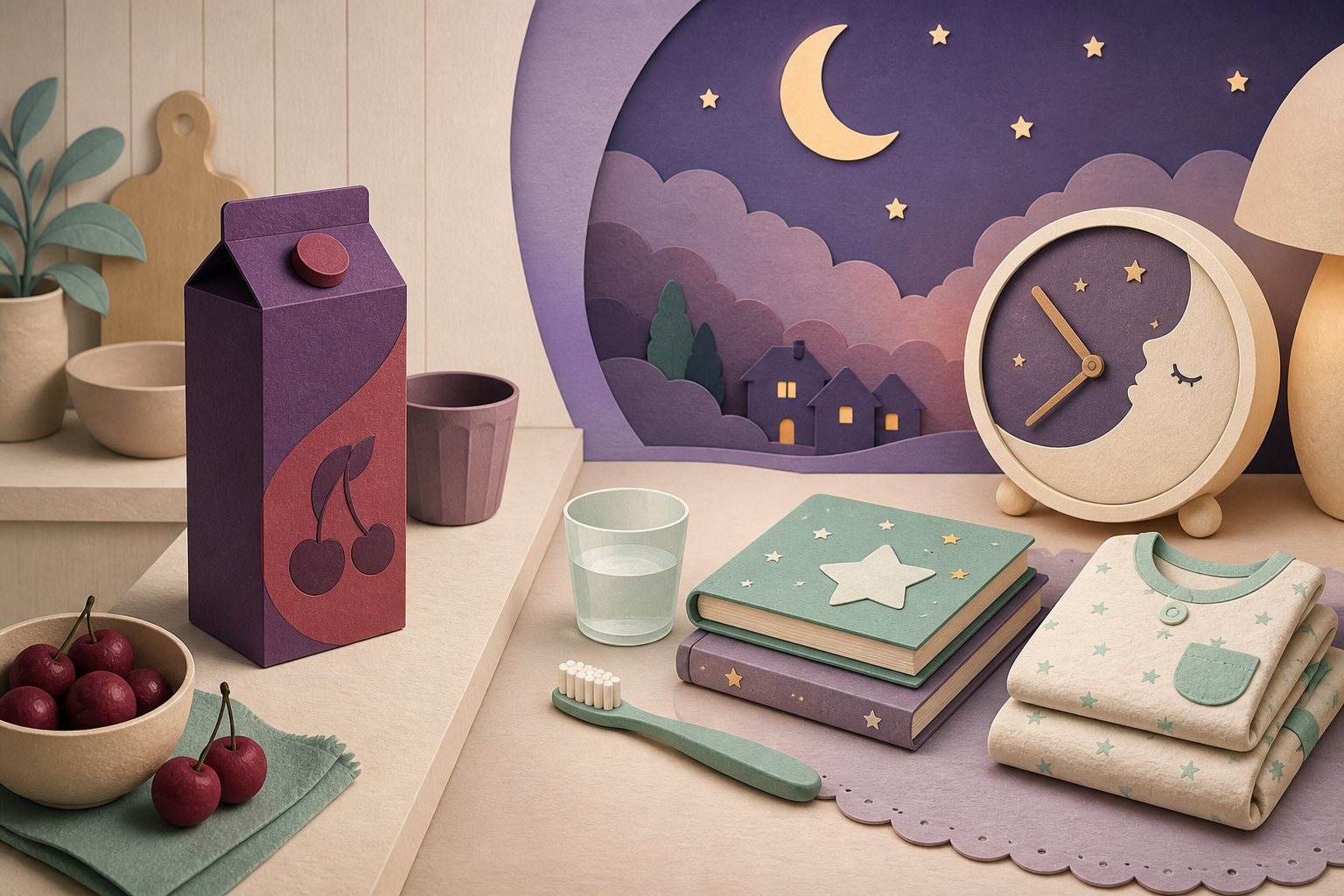
Tart cherry juice is not a proven sleep treatment for toddlers, and there is no evidence-based toddler sleep dose. Tart cherries contain melatonin and other compounds that researchers have studied in adults, but that does not turn a bottle of juice into a measured pediatric sleep aid. If your child is old enough for juice, a small serving can be an ordinary food choice. It should not become the thing everyone believes must happen before sleep.
If you arrived here with a purple bottle in one hand and a bedtime problem in the other, I understand the appeal. The carton looks simpler than sorting out a nap that ended at 4:38 p.m., a second wind, three requests for the blue cup, and a child who appears personally offended by pajamas. But the useful question is not “Does cherry contain melatonin?” It is “Has this product been shown to help toddlers sleep, in a dose we know how to use safely?” Right now, the answer is no.
The bottle-versus-bedtime answer
Food is not the same as treatment
Why this matters tonight: a sleep cue should still work when the carton is empty.
Why the tart cherry claim sounds more settled than it is
The claim has a neat three-step shape: tart cherries contain melatonin; melatonin helps regulate sleep timing; therefore tart cherry juice makes children sleepy. The first two ideas have some truth in them. The conclusion is where the bridge disappears.
Melatonin is a hormone the body uses as part of its day-night timing system. Finding a small amount of melatonin in a food does not tell us how much reaches a particular child, whether the amount is consistent from carton to carton, whether it arrives at the right biological time, or whether it changes sleep in a useful way. Cherry variety, growing conditions, processing, concentration, serving size, and storage can all change what is actually in a product. “Contains melatonin” is chemistry information. It is not a dosing instruction.
The most useful adult tart-cherry trial for understanding the gap was genuinely interesting—and genuinely tiny. It enrolled adults older than 50 with insomnia. Eleven people were randomized, three were excluded after sleep apnea was found, and eight completed the study. They drank 240 mL of juice twice a day for two weeks. The researchers saw an increase in sleep time, but that study cannot answer whether a toddler benefits, what a child-sized serving would be, or whether repeating juice at bedtime is a good trade. The paper also reported that the melatonin in the studied juice was very small and explored other possible mechanisms. In other words, even the adult finding was not a clean “cherry melatonin did it” story.2
The evidence ladder
Three rungs are not one answer
- A compound exists in cherries.That tells us what may be present, not what dose a child receives.
- A very small adult pilot found a signal.That is a reason for more research, not permission to shrink an adult serving for a toddler.
- Toddler evidence is missing.Without pediatric efficacy, safety, and dosing data, the honest answer stays “not established.”
Sleep connection: when the evidence stops on rung two, move the experiment to the routine—not the serving size.
SleepBaby.org evidence translation
The juice rules do not become sleep-dose rules
The American Academy of Pediatrics recommends no fruit juice for infants under 12 months. For children older than 12 months, its parent guidance says a 4-ounce serving with a meal may be reasonable, favors whole fruit, and says juice should not be offered at bedtime. It also gives a daily limit of 4–6 ounces for children ages 1–6.1 Those numbers describe an upper boundary for juice as food. They do not tell you how much tart cherry juice to give for sleep.
That distinction matters because a daily limit can sound like a recommended amount when it is not. You do not need to fill a four-ounce cup because the limit exists. If your toddler enjoys a little tart cherry juice and is otherwise old enough for juice, put it with a meal, use an open cup, and count it with the rest of the day’s juice. You can also skip it entirely. Whole fruit usually brings fiber and a slower eating pace that juice does not.
Age and cup check
What the guidance means at bedtime
On a narrow screen, swipe this table sideways. The page itself stays put.
| Age or situation | Food guidance | Sleep-treatment meaning |
|---|---|---|
| Under 12 months | No routine fruit juice. | Do not use tart cherry juice for sleep. |
| Older than 12 months | A small serving with a meal may fit; whole fruit is preferred. | Still no established sleep dose or proven bedtime benefit. |
| After toothbrushing | Water is the simple drink. | Do not make juice the final sleep cue or leave it in bed. |
| Concentrate, gummy, or supplement | Not interchangeable with an ordinary food serving. | Ask the child’s clinician; do not invent a dose from an adult label. |
Why this matters tonight: the age limit tells you where juice may fit in food life. It does not turn the cup into medicine.
Why bedtime timing matters to teeth and habits
Juice brings naturally occurring sugar and acid into the mouth. The problem is not that a single sip is morally bad; the problem is repeated exposure, especially when a child nurses a cup through the bedtime routine or takes it to bed. The American Academy of Pediatric Dentistry prefers water for hydration and recommends minimizing early exposure to sweet-tasting drinks as part of protecting oral health.5
I would separate the food decision from the sleep decision. If you serve juice, do it with a meal. Then the kitchen closes, teeth get brushed, and the bedtime drink is water. That order removes two complications at once: the teeth are not bathing in juice after brushing, and the child does not learn that a particular flavor is the tollbooth between “one more book” and sleep.
If your toddler already expects the purple cup, do not turn its disappearance into a midnight constitutional crisis. Move it earlier by ten or fifteen minutes every few nights, shrink the amount if it fits the child’s food plan, and pair the change with a stable replacement cue: water, the same song, the same two books, the same goodnight phrase. The goal is not to win a beverage argument. The goal is to make bedtime portable again.

Juice, concentrate, powder, gummies: the label changes, the evidence does not
A concentrate can contain more cherry material in less liquid. That makes it more concentrated; it does not make it better studied in toddlers. The same is true for powders, capsules, gummies, and “sleep blend” products. Once a product is being measured at bedtime for a promised effect, you are no longer making a casual fruit choice. You are treating a symptom, and that deserves a real reason, a known product, and professional guidance.
Even pediatric melatonin itself has unresolved questions about dose, timing, long-term use, and who benefits. NCCIH recommends working with a health care provider when considering melatonin for a child.3 The American Academy of Sleep Medicine similarly advises parents to talk with a pediatric health professional before giving melatonin or any supplement, and it notes that many sleep problems are better managed by changing schedules, habits, or behavior.4 Cherry juice does not get to leap over those questions because the front label has fruit on it.
The pantry sorter
What kind of decision are you making?
- A few cherries or a little juice with a meal
- That is a food decision. Use age-appropriate guidance and your child’s usual allergy and feeding plan.
- A measured bedtime serving to cause sleep
- That is a treatment decision. Toddler efficacy and dosing have not been established.
- Concentrate, gummy, capsule, powder, or blend
- That is a concentrated-product decision. Bring the exact label to the pediatrician or pharmacist before using it.
Sleep connection: if the plan needs a measuring spoon and a promise, pause before making it part of the routine.
SleepBaby.org decision aid
Allergy and medication questions deserve a real label check
Cherry is a food, so a child with a known cherry or related fruit allergy should not be used as the family test case. If a new food or drink is followed by hives, swelling, repeated vomiting, coughing, wheezing, trouble breathing, unusual sleepiness, or collapse, stop and seek urgent medical help. Trouble breathing, facial or tongue swelling, or collapse is an emergency.
For medication questions, resist the internet’s favorite move: producing a confident interaction list without child data. Instead, show the pediatrician or pharmacist the exact product and ingredient panel. This matters most when the product is concentrated, blended with herbs or melatonin, or being considered for a child who takes regular medicine or has a clinician-managed condition. “It is made from fruit” is not enough information to clear every formulation.
If the child simply ate cherries safely before, that history is useful—but it still does not establish a sleep effect. Food tolerance and treatment evidence answer different questions.
Name the sleep problem before choosing a fix
“My toddler is not sleeping” can describe five very different nights. One child objects to the transition into bed but sleeps steadily once the door closes. Another lies awake for an hour after a late nap. Another falls asleep easily and wakes at 1:20 a.m. asking for the exact conditions that were present at bedtime. A fourth wakes for the day before anyone has made peace with dawn. Tart cherry juice is too blunt an answer for all four, and it can distract from the detail that actually changes the plan.
Before you add anything to the cup, write down what is happening in plain language: the time the nap ended, when lights went out, roughly when sleep began, what woke the child if you know, what helped them settle, and how they seemed in the morning. You are not building a laboratory in the hallway. You are giving yourself enough information to stop treating every rough night as the same problem.
The sleep-problem sorter
Start with the pattern, not the pantry
The fight is before sleep
Look at the transition: screens, unfinished play, a long bargaining loop, and whether the routine has a clear ending. Keep the final steps short and repeatable.
Sleep starts very late
Compare nap end, lights-out time, and actual sleep onset. Test one small timing change while the wake time and bedtime sequence stay steady.
Waking is the main problem
Record when waking happens and what the child needs next. Keep the response calm and predictable; do not add a sweet drink as the new requirement for returning to sleep.
Morning arrives painfully early
Note bedtime, nap timing, room light, household noise, and total sleep across the day before pushing bedtime in either direction.
Breathing, pain, itching, thirst, or unusual daytime sleepiness is in the picture
Move this out of the pantry-experiment category. Call the pediatrician and describe the symptom and pattern. Trouble breathing or a severe allergic reaction needs urgent help.
Why this matters tonight: the right first change depends on which part of the night is actually breaking.
SleepBaby.org pattern map
The pattern may not hand you a perfect answer after one night, and that is fine. What it gives you is a fair experiment. If the child is simply not ready for sleep after a late nap, adding juice does not move the nap. If the child cannot breathe comfortably, a calmer routine does not replace an evaluation. If the struggle is the handoff from play to bed, the useful work is making that handoff boring, kind, and recognizable—not finding a drink powerful enough to overpower it.
A seven-night experiment that tests sleep instead of juice
When sleep is messy, parents often change six things in one heroic evening: new drink, earlier bed, no nap, lavender bath, blackout curtains, and a promise that everyone will be calm. By night three, nobody knows which change helped and the blackout curtain is hanging from one hook. A better experiment is smaller.
For seven nights, keep the morning wake time within the same 30-minute window, keep the bedtime steps in the same order, and change only the variable most likely to be causing trouble. For many toddlers, that is nap timing or the gap between nap and bed. For others, it is a fast screen right before pajamas, a long bargaining loop, or bedtime moving by an hour from one night to the next.
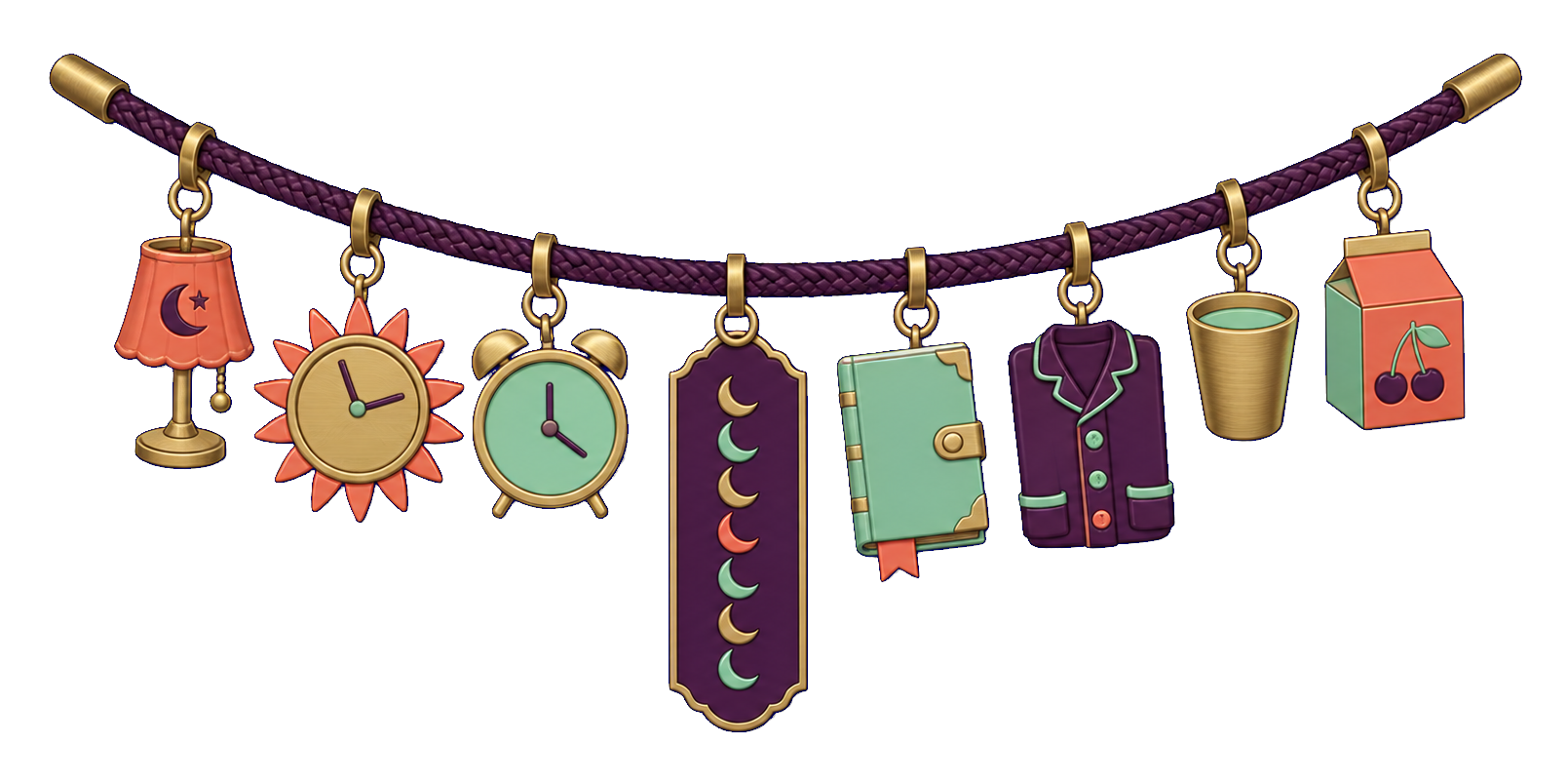
The seven-moon reset
One variable, seven nights, five notes
- 1Morning wake
- 2Nap end
- 3Lights out
- 4Sleep onset
- 5Night wakes
Why this matters tonight: patterns become visible when the routine stops moving underneath you.
SleepBaby.org routine map
Use the child’s actual age and total 24-hour sleep as context. Our flexible 2-year-old sleep schedule can help you judge whether the nap and bedtime are crowding each other. If audio stories are part of the routine, the Yoto or Toniebox bedtime guide shows how to keep the routine—not the device—in charge. And if the next trend arrives in patch form, the sleep patches for kids guide uses the same evidence-first filter.
Watch the routine lesson from the pediatric source
The American Academy of Pediatrics’ “Smart Solutions for Safe and Sound Sleep” video is useful here because it pulls the focus back to repeatable sleep habits and a safe sleep environment—not a trendy ingredient. Watch for the pieces you can repeat in your own house, then choose one small change for the seven-night test.
If the juice seems to work, ask what else changed
A child may sleep better on the first cherry-juice night. That can be real without proving the juice caused it. Maybe bedtime was later. Maybe the nap was shorter. Maybe everyone committed to a calmer sequence because this was “the experiment.” Maybe the child was recovering from several rough nights and naturally had an easier one. Sleep varies. One good night is a lovely night, not a clinical trial.
If you want to learn from the result, keep the routine stable and remove only the juice. If sleep stays the same, you have your answer without turning the drink into a dependency. If sleep worsens repeatedly when the juice disappears and improves when it returns, bring the log and product label to the pediatrician rather than increasing the amount. A repeatable pattern deserves a careful look; it still does not create a home dosing protocol.
Also notice the direction of the problem. If tart juice causes belly pain, reflux, loose stool, extra urination, or a toothbrushing fight, it may make the night worse even if the child likes the taste. The best bedtime intervention should not create a second bedtime problem.
When to stop experimenting and call the pediatrician
Stop guessing here
The symptom changes the plan
- Loud habitual snoring, gasping, breathing pauses, or very heavy breathing during sleep
- Sleep trouble lasting weeks or clearly disrupting daytime behavior, growth, eating, or family safety
- Pain, persistent reflux symptoms, chronic congestion, severe itching, restless-looking legs, or unusual thirst and urination
- A suspected allergic reaction after cherry or a blended product
- A child who got into melatonin, gummies, concentrate, or another supplement without supervision
- Any situation in which the exact product conflicts with a medication or clinician-managed diet
Emergency boundary: trouble breathing, facial or tongue swelling, collapse, blue or gray color, or inability to wake normally needs emergency help now. For an accidental supplement ingestion in the United States, contact Poison Control at Poison.org or 1-800-222-1222.
Sleep connection: a drink cannot solve an airway, pain, allergy, or medical problem. The useful next step is the right evaluation.
AAP sleep guidance specifically tells parents to recognize snoring, sleep apnea, and loud or heavy breathing as sleep problems worth discussing, and to talk with the child’s pediatrician about persistent sleep trouble.6 That is not meant to make every restless night frightening. It is permission to stop auditioning pantry products when the pattern is asking for a clinician.
Frequently asked questions
How much tart cherry juice should I give a toddler for sleep?
There is no evidence-based toddler sleep dose. Do not convert the adult study’s serving, a social-media recipe, or a product label into a child dose. If your child is old enough for juice, follow ordinary food guidance; if you are considering it as treatment, talk with the pediatrician.
What time should a toddler drink tart cherry juice?
There is no proven treatment time because the treatment itself has not been established. AAP guidance says juice should not be given at bedtime. If an age-appropriate child has juice as food, serve it with a meal rather than after toothbrushing or in bed.
Does tart cherry juice contain melatonin?
Tart cherries can contain melatonin, but the amount is small and variable. The presence of melatonin does not make a serving standardized, pediatric, or proven to improve toddler sleep. The small adult pilot explored mechanisms beyond melatonin as well.
Is tart cherry concentrate better than juice?
It is more concentrated, not better established for toddlers. Concentration makes casual dose guessing less appropriate. Bring the exact ingredient label to the child’s clinician or pharmacist before using it for a sleep effect.
Can I dilute tart cherry juice?
Diluting changes the amount of juice and sugar per sip, but it does not create a proven sleep dose. It can also stretch sipping time, which is not helpful for teeth if the cup follows a child through the bedtime routine.
What if my toddler asks for a drink after brushing?
Offer water. If true hunger is a pattern, move a balanced snack your child already eats safely to before toothbrushing, then close the kitchen. Keep the boundary predictable and pleasantly uninteresting.
Can tart cherry juice be used with melatonin?
Do not stack products on the assumption that one is “only food.” Pediatric melatonin already requires thoughtful dose and timing guidance. Ask the pediatrician about the exact juice, supplement, ingredients, and reason you are considering them.
What should I try tonight instead?
Keep the usual safe sleep space, turn screens off an hour before bed, use the same short sequence, write down nap end and lights-out time, and make one 15-minute schedule adjustment if timing looks off. Then hold the rest steady long enough to see a pattern.
Evidence shelf
Sources
- American Academy of Pediatrics: Where We Stand—Fruit Juice
- Losso et al.: Pilot Study of Tart Cherry Juice for Insomnia and Mechanisms
- NCCIH: Melatonin—What You Need To Know
- American Academy of Sleep Medicine: Melatonin Use in Children and Adolescents
- American Academy of Pediatric Dentistry: Nutrition and Dietary Counseling Policy
- American Academy of Pediatrics: Healthy Sleep Habits