The short answer: do not tape your toddler’s mouth shut for sleep. Mouth taping has not been shown to be safe or effective for toddlers, and sealing the mouth can be especially dangerous when a child’s nose is blocked or their breathing is already compromised. An open mouth, regular snoring, gasping, pauses, or restless sleep is not a behavior to physically correct; it is a clue to observe and, when persistent, discuss with your child’s clinician.
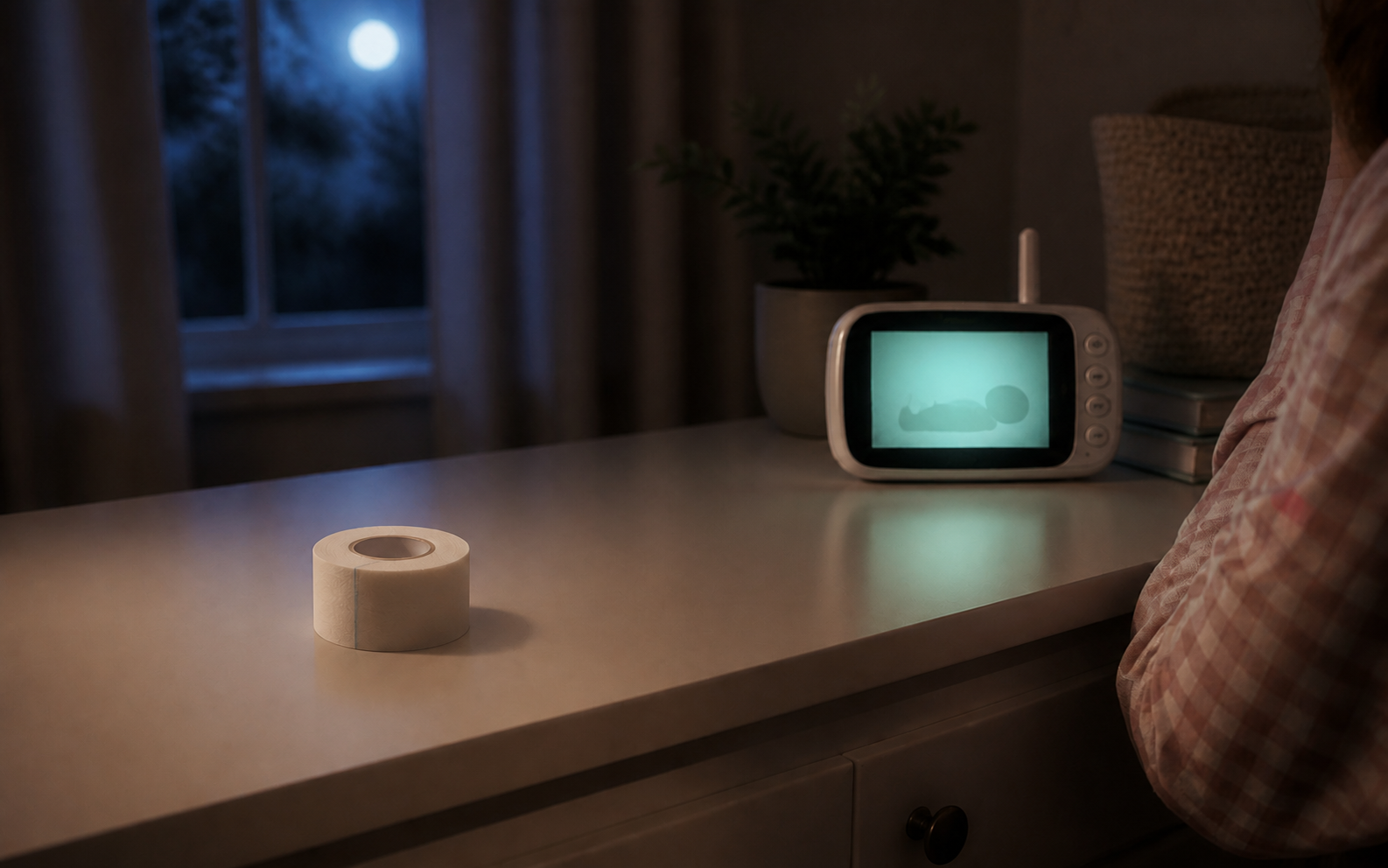
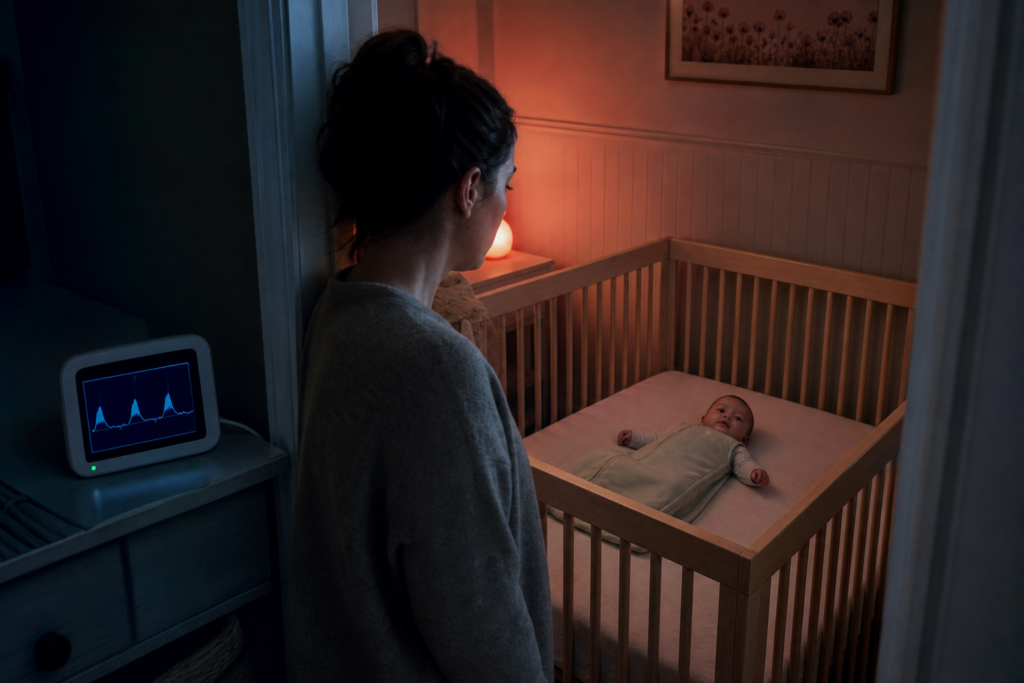
The tape roll is sitting beside the toddler monitor because the idea sounds almost insultingly simple: mouth open, close mouth, problem solved. I understand why an exhausted parent pauses there. You are not trying to chase a trend. You are trying to decide whether the small square of light on the monitor is showing an ordinary sleeping child or a child working harder to breathe.
That private question matters more than the hack. The useful next move is not to test an adhesive. It is to watch the breathing pattern without changing it. I want you to leave this page knowing what I would watch, what I would write down, and when I would stop observing and call for help.
Why mouth taping is not a toddler sleep fix
The evidence commonly used to promote mouth taping is thin and overwhelmingly adult. A 2025 systematic review found just ten small studies totaling 233 participants and concluded that the evidence does not support mouth taping as a general treatment for sleep-disordered breathing. The reviewers also flagged potential harm when nasal obstruction is present. A small preliminary study often shared as proof involved adults with mild obstructive sleep apnea—not toddlers. I would not stretch adult preliminary evidence across that developmental gap, and I would not ask a toddler’s airway to carry the uncertainty.
That distinction is the whole hinge. A toddler may sleep with an open mouth because of congestion, enlarged tonsils or adenoids, allergies, anatomy, or another breathing issue that deserves assessment. Tape cannot tell you which reason is present. It simply removes an alternate path for airflow.
Keep the airway question bigger than the sleep hack. Do not use tape, adhesive strips, chin straps, or another device intended to hold a toddler’s mouth closed during sleep.
What to watch instead: Look, Listen, Daytime
For one ordinary night, collect observations rather than performing an experiment. I would rather hand a pediatrician three plain details than hand a toddler a product built around an unproven assumption.
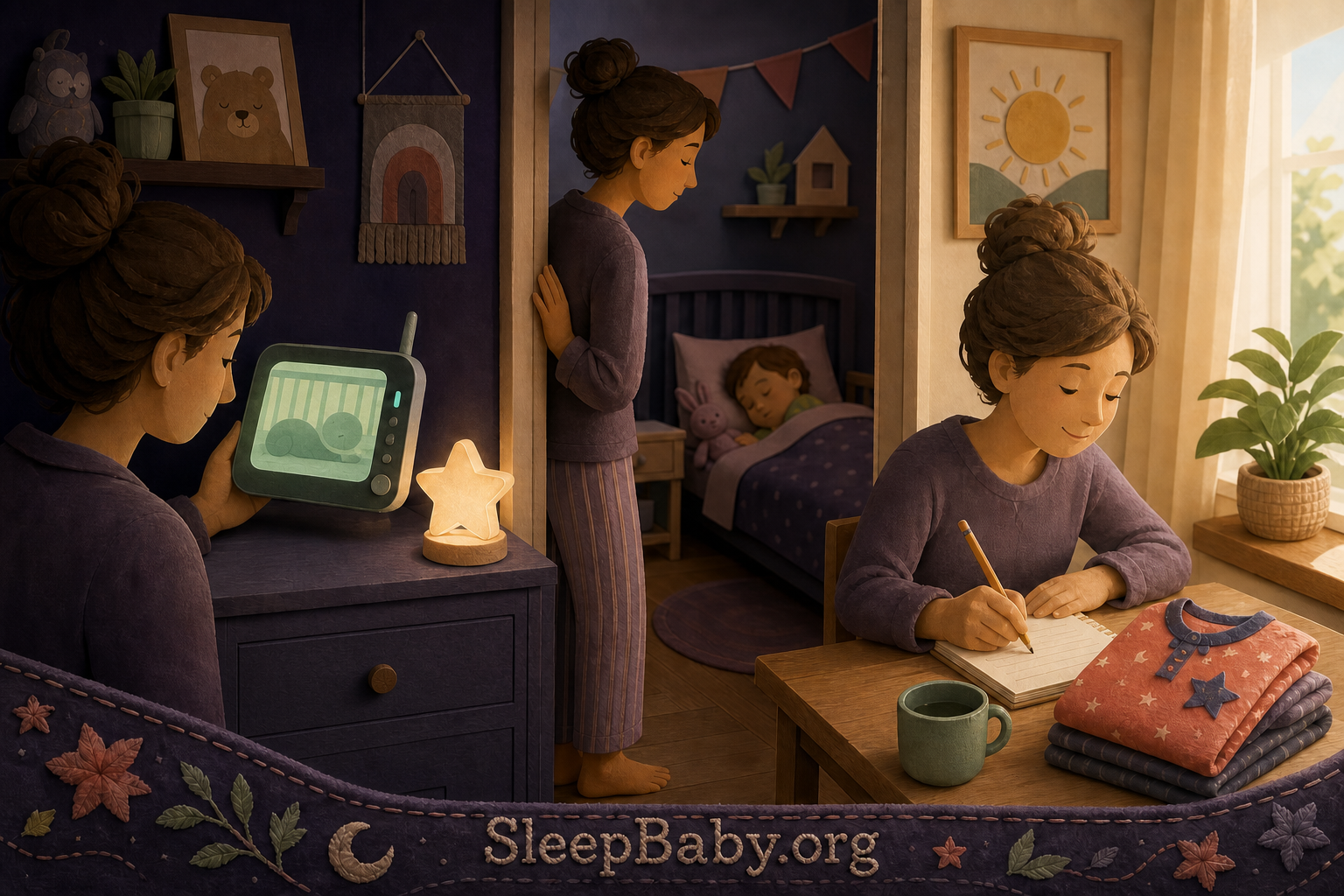
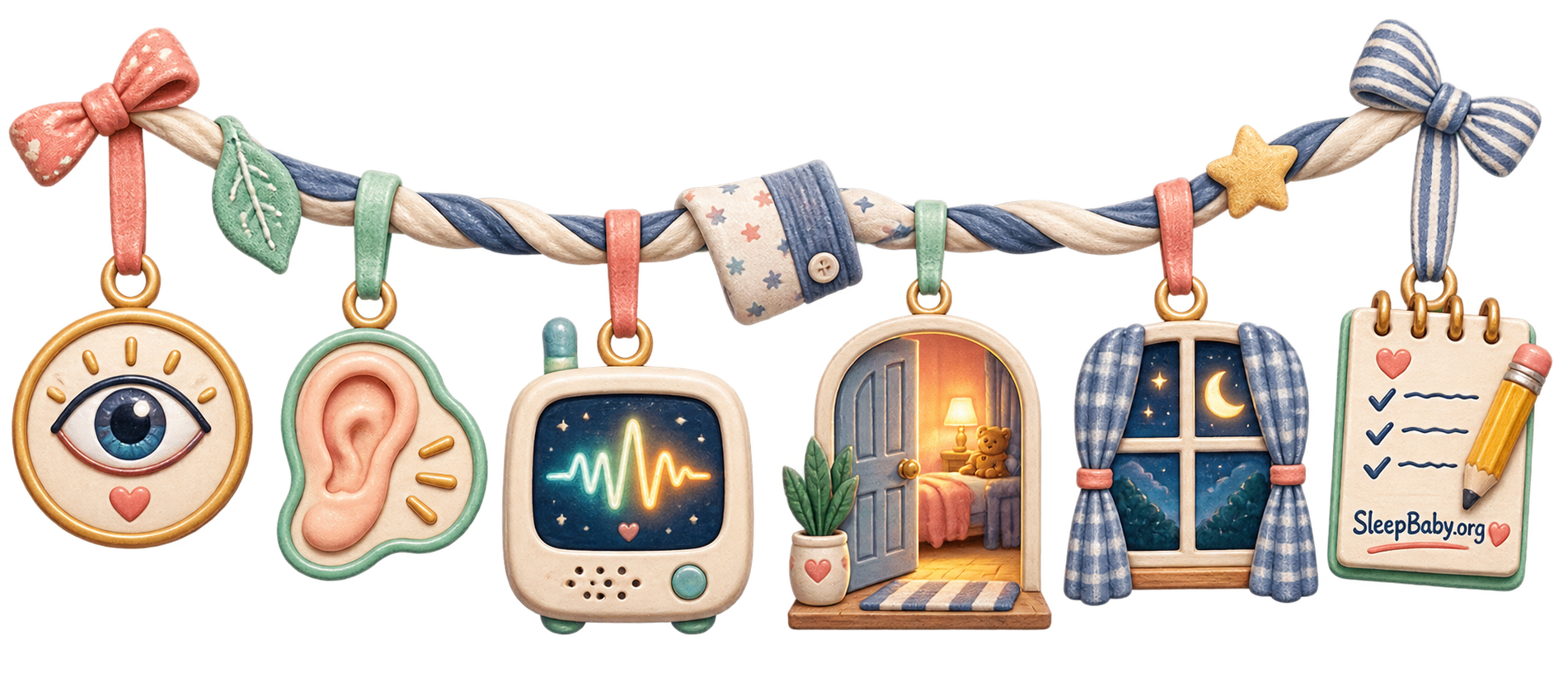
A one-night breathing snapshot
Write down only what you actually observe. If it is safe to do so, a short video of the breathing pattern can help a clinician understand what you mean. A video is information, not a home diagnosis.
The Kacey-and-Benjamin pause before fixing the visible thing
Composite scene: I picture Kacey and Benjamin standing over the monitor, both staring at the same open mouth but asking different questions. I can feel the pull to solve what is visible. Benjamin asks why it is happening. That second question changes the night: we keep the tape on the dresser, and I note the snoring pattern, the stuffy nose, and what waking looks like in the morning.
I use that pause because tired brains love visible fixes. But an open mouth is the messenger, not necessarily the problem. When we stop trying to silence the messenger, we can gather the details that point toward the right kind of help. I do not need to diagnose the breathing from the monitor; I need to preserve the airway, notice the pattern, and carry honest observations forward.
When to call the pediatrician
Bring persistent mouth breathing or regular snoring to your child’s pediatric clinician, especially when you also notice gasping, witnessed pauses, chronic congestion, restless sleep, unusual positions, sweating, difficult mornings, daytime sleepiness or irritability, headaches, attention changes, or growth concerns. I would bring the pattern, not a verdict: what I saw, what I heard, how often it happened, and what daytime looked like. Pediatric sleep teams assess the breathing pattern and may consider oxygen, heart rate, airflow, effort, and sleep quality rather than guessing from one symptom.
This does not mean every open mouth signals obstructive sleep apnea. It means repeated breathing clues deserve a cause-focused conversation. Depending on the history and exam, a pediatrician may recommend an ear, nose, and throat evaluation or pediatric sleep testing.
Get urgent or emergency help for breathing difficulty, blue or gray color, severe pulling in around the ribs or neck, choking, inability to wake normally, or prolonged breathing pauses. Do not delay emergency care to record a video or try a sleep product.
What if it is “just” a stuffy nose?
A blocked nose is a reason not to seal the mouth, not a reason to make the tape stronger. Follow your child’s clinician’s age-appropriate guidance for congestion and ask about symptoms that persist, recur, or disrupt sleep. I would rather tolerate an unfinished-looking answer tonight than turn adult social-media advice into toddler airway care.
The American Academy of Sleep Medicine has called mouth taping a dangerous viral sleep trend and recommends evidence-based care that addresses the cause of sleep problems. That is the unglamorous answer, but it is also the kinder one: understand the breathing before trying to control it.
Your plan for tonight
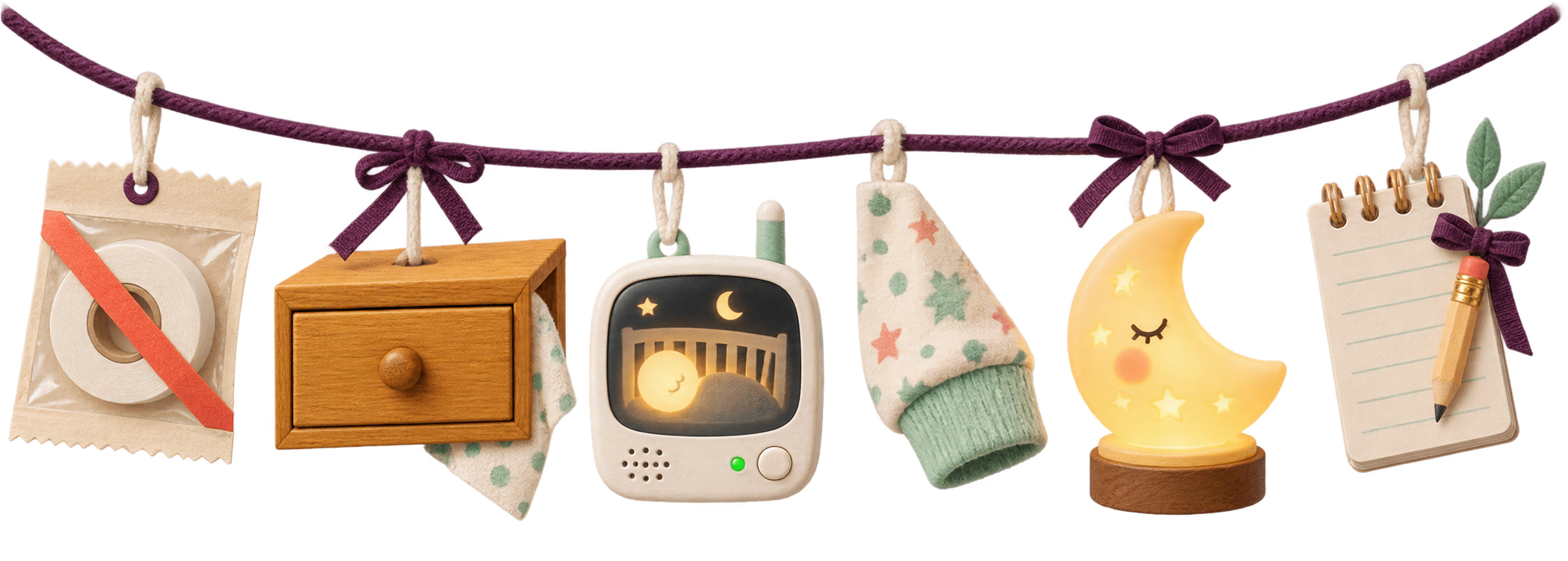
- Put the tape away.
- Use Look–Listen–Daytime to record the pattern without changing it.
- Contact the pediatrician for persistent symptoms or concerning combinations.
- Use urgent or emergency care for the red flags above.
Back at the monitor, the roll is still beside you—but now it is unused. I have not handed you a trick that promises control. I have handed you a safer way to read the night. The open mouth has stopped being a tiny problem you must close and become a useful question you know how to carry forward.
For the questions that get louder after bedtime
Trade the viral fix for a calmer next step
When the monitor keeps pulling your eyes back to the same small detail, SleepBaby helps you sort what to notice, what can wait, and what deserves a real conversation.
Sources
- Systematic review of mouth taping and sleep-disordered breathing
- Preliminary adult study of mouth taping in mild obstructive sleep apnea
- Cambridge University Hospitals Children’s Sleep Service
- NHS Healthier Together: snoring and obstructive sleep apnoea
- American Academy of Sleep Medicine on viral sleep trends





What viewers said10 comments · 4 replies+
Archived comments from the original Baby Sleep Miracle presentation. Not independently verified by SleepBaby.org; individual experiences vary.
Thank you so much for this video! I had no idea about the dangers of baby swings :O
Hi Mary-Ann. I have a question: Is method in any way similar to the ones recommended by Dr Bucknam, Dr. Weissbluth or Dr. Karp? We tried those but none of them help.
Hi Regina, thank you for your question. The short answer is no. The techniques I share in my guide are based on newest scientific research and this is why I have never seen any approach similar to the one I recommend.
This method really works! I tried it on my son Jesus and after just one week he went from waking up more than 5 times a night to waking up just once or twice. You are a lifesaver, Mary-Ann!
I'm truly impressed with how much information you share in your video. And all for free! I can feel that you truly care about mothers like myself, and that's hard to find these days. I have recommended your site to several of my friends already.
Mary-Ann, our child suffers from autism. Is your approach still suited?
Chloe, I made sure my method can be used with any child, even babies who are special like yours. Please note that I'm not a doctor and that I always advice to consult with your physician because nothing is more important than the safety and well-being of your love.
Hallo Mary-Ann, I'm from Germany. Do you have your guide in German?
Hello Heide, we do! Normally you should already see our video in German. If not, please contact our support so they can guide you
Thenk you for your answer, Mary-Ann!
I just completed your approach and I have to say, it worked almost too well. Yes, it took a bit of getting used to with your bedtime routine but the difference is huge. My son George used to take 1 hours to go down and now he's firmly asleep in no more than 10 minutes! You're the best!
It seems I'm the only man watching this video, lol! What you shared about the 'emotional backpack' made immediate sense to me and I can't wait to help my little girl Mila to unpack it!
Hey there, just discovered your site and this really sounds different. Just wanted to say thanks for sharing :)
For everyone who's still thinking about getting Mary-Ann's guide I want to advise you to go ahead. I wasn't sure myself but now I'm so thankful I invested in this program. It made a huge difference in our life as a family and yes, my baby girl does sleep through the night now.