
Baby Sleep Regression Stages: A Pattern-First Guide
Baby sleep regression stages are loose windows, not diagnoses. Use repeated clues, real needs, safe sleep, and one bounded change to choose tonight’s response.
Read the guideBrowse the Parent Library
Understand common baby and toddler sleep regressions by age, including possible signs, typical timing, developmental changes, and practical ways to cope. These guides help families adjust routines without promising instant fixes and explain when prolonged sleep disruption or related symptoms merit professional advice.
Baby sleep regression stages are loose windows, not diagnoses. Use repeated clues, real needs, safe sleep, and one bounded change to choose tonight’s response.
Read the guideThe monitor says 1:38 a.m. Your six-month-old, who recently gave you a respectable stretch, is now on wake-up number three and practicing a full-body crib maneuver that appears…
Read the guideA 9-month sleep regression is a rough-patch label, not a diagnosis. Sort connection, new skills, timing, and health before changing everything.
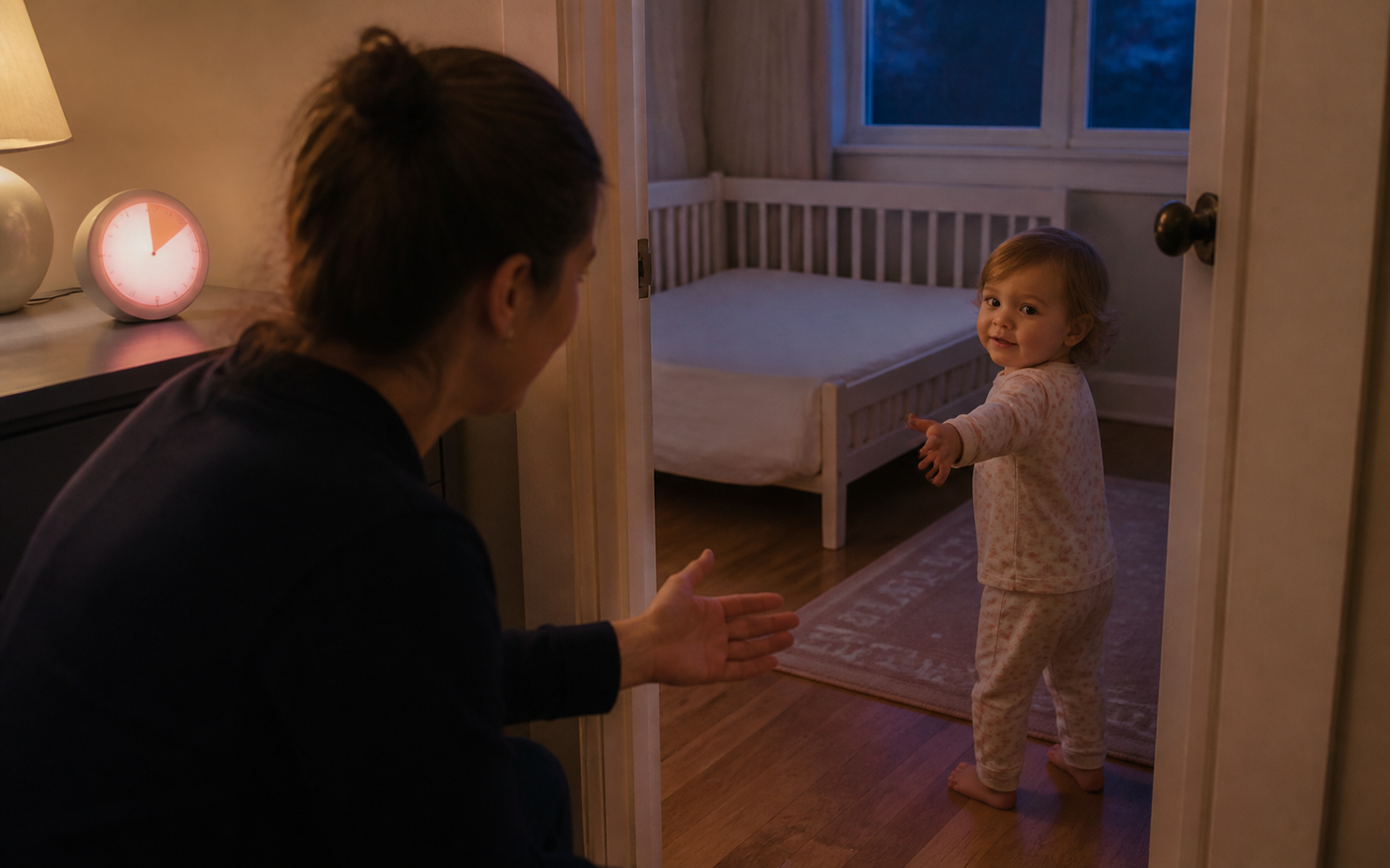
Read the guideWhen an 18-month-old suddenly fights bedtime, wakes overnight, or refuses a nap, use the Doorway Test, a three-day pattern, and one calm change at a time.
Read the guideThere usually is not a formal one-month sleep regression. Check feeding and health first, protect every safe-sleep reset, and expect newborn rhythms to stay irregular for now.
Read the guideSEVEN MONTHS, SUDDENLY AWAKE Baby Sleep Regression at 7 Months: What Changed and What Helps A rough patch around seven months is common, but “7-month sleep regression” is…
Read the guideA pattern-first guide to separation, new motor skills, schedule pressure, discomfort, safe sleep, and one calm change at a time during an 8-month sleep regression.
Read the guideA practical, evidence-based guide to 20-month sleep disruption, bedtime resistance, night waking, nap timing, and the calm changes worth testing.
Read the guideAn 11-month sleep regression is a pattern, not a diagnosis. Decode standing, separation, nap resistance, and night waking before changing the whole schedule.
Read the guideA fart after waking is a clue, not proof that gas caused the wake. Rewind the feed, check the whole baby, and know when to call.
Read the guide