The tiny hat is not nighttime insurance
Can a baby sleep with a hat?
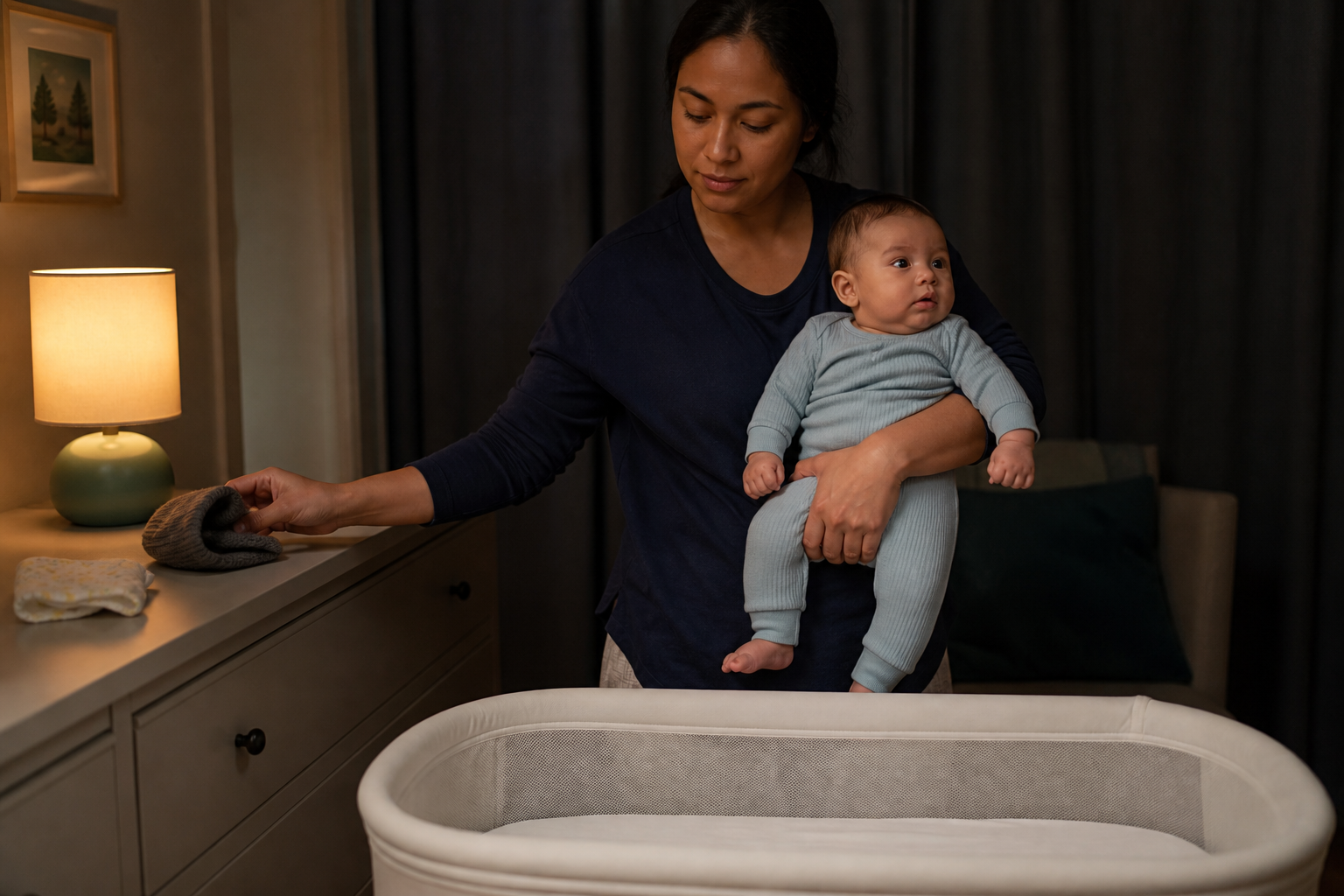
The hat is still on, your baby is finally asleep, and one hand is hovering over that soft little cuff because removing it feels suspiciously like volunteering to restart bedtime. Take the hat off for indoor sleep. Babies should sleep with their head and face uncovered because a hat can hold in heat and can shift. Use fitted sleepwear chosen for the room instead. The brief hat your newborn wore after birth—or one used under a specific NICU or clinical plan—is a supervised exception, not a home-sleep rule.
I understand the question underneath the question: if you remove the warm thing, how do you know your baby will not become too cold? You do not have to guess from chilly fingers or bundle the head. Check the room, feel the chest or upper back, and change one fitted layer if needed. That is a calmer and safer way to answer the warmth question.
Why the answer is no, even when the room feels cool
The American Academy of Pediatrics advises against putting hats on babies indoors except in the first hours after birth or in the neonatal intensive care unit. The NIH Safe to Sleep guidance is equally direct: keep a baby’s head and face uncovered, avoid overheating, and take indoor hats off. Health Canada says the same thing in language I appreciate for its lack of wiggle room: babies do not need hats indoors, and hats can make them too hot.
A sleeping baby cannot tell you that the hat has become too warm. The hat can also move from where you placed it. Safe sleep asks us to remove avoidable variables near the head and face, not to engineer a hat that seems less likely to shift.
This does not mean cold is imaginary. It means the solution belongs somewhere else: room conditions and properly fitted sleep clothing. If you are comfortable in the room, that is useful context. If your baby needs more warmth, add an appropriate fitted clothing layer or a correctly sized, nonweighted wearable blanket. Keep the sleep surface firm, flat, level, and empty except for its fitted sheet.
What to do right now
Hat off. Trunk check. One change.
- Hat off: remove the hat when you come indoors and before every nap or night sleep, even if your baby has dozed off.
- Trunk check: feel the chest or upper back. Hands and feet often feel cooler and do not reliably describe core comfort.
- One change: if the trunk feels hot or sweaty, remove a layer. If it feels comfortably warm, stop. If your baby seems genuinely cool, adjust the room or add one suitable fitted layer, then reassess.
I would resist changing the thermostat, pajamas, sleep sack, and every opinion you have ever held about winter in the same ten minutes. One change lets you see what actually helped.
But the hospital put a hat on my newborn
Yes—and that memory is exactly why this question feels contradictory. Immediately after birth, a care team may use a hat briefly to help a newborn conserve heat. A premature or medically vulnerable baby may also have individualized temperature support in a monitored setting. Those decisions happen with clinical assessment and supervision.
A clearly labeled composite Kacey-and-Benjamin moment: Imagine me standing beside Benjamin’s bassinet after the ride home, looking at the knit hospital hat as if it had been issued with permanent authority. He is asleep. The diaper bag is still half open on the floor. Taking the hat off feels, emotionally, like removing protection.
But the useful distinction is not “the hospital did it, so it must always be safe.” It is “the hospital used it for a short, supervised job that no longer applies.” In the bassinet at home, care looks different: Benjamin’s head stays uncovered, the surface stays bare, and warmth comes from the room and fitted clothing. This composite scene is not medical evidence; it is a picture of why a sensible parent can hesitate.
If your baby’s clinician has given a specific temperature plan because of prematurity, low temperature, illness, or another medical circumstance, follow that plan and ask exactly when the hat should come off. Do not extend a short-term instruction on your own.
How can I tell whether my baby is too hot or too cold?
Start with the trunk. The CDC lists sweating and a hot chest as signs a baby may be too warm. The back of the neck or upper back is also useful. A comfortably warm, dry trunk is reassuring. Cool hands and feet are common and should not automatically trigger another layer.
Read the baby, then the room
| What you notice | What to do |
|---|---|
| Chest or upper back feels comfortably warm and dry | Leave the fitted sleep clothing alone. No hat is needed. |
| Hot chest, sweating, flushed or hot skin | Remove the hat and an excess layer, move to a comfortable room, and reassess. |
| Cool hands or feet but comfortable trunk | Do not add a hat based on extremities alone. |
| Baby seems cold at the trunk or the room is genuinely cold | Use one suitable fitted layer or correctly sized sleep sack and address the room safely. |
| Baby is difficult to wake, breathing abnormally, blue or gray, having a seizure, or seriously unwell | Call emergency services now. Clothing adjustments are not the priority. |
A room thermometer supplies context, not a diagnosis. It cannot tell whether a baby has a fever, whether breathing is normal, or whether the baby is medically well. If your baby is younger than 3 months and has a rectal temperature of 100.4°F (38°C) or higher, contact the baby’s clinician immediately. Do not bundle a feverish baby or try to “sweat it out.”
What should my baby wear instead of a hat in a cold room?
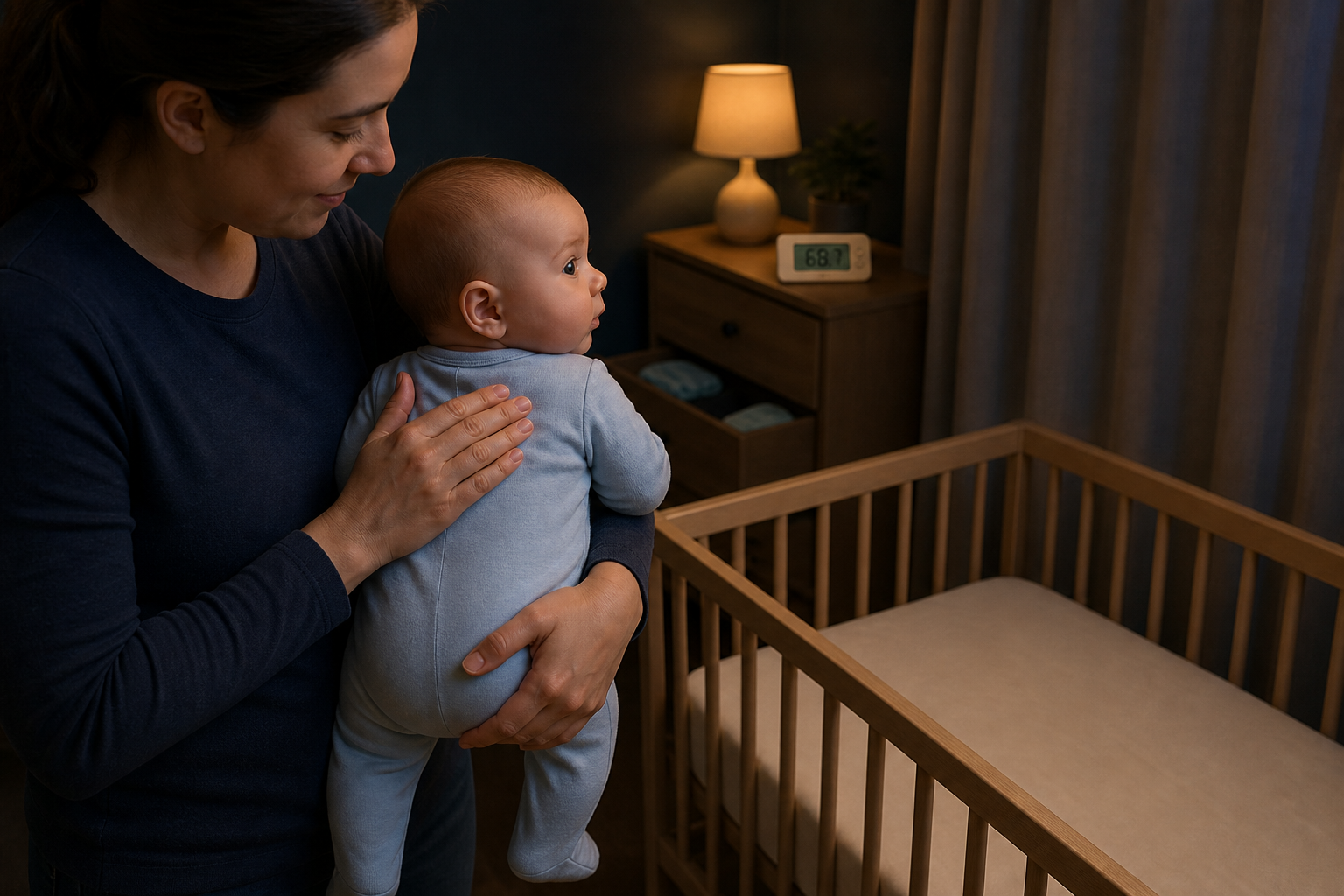
Choose simple, fitted sleepwear for the actual room. The AAP’s general guide is no more than one layer beyond what an adult would wear comfortably in the same environment. That is a starting point, not permission to ignore your baby’s trunk or a manufacturer’s fit guidance.
A correctly sized, nonweighted sleep sack can add warmth without introducing a loose blanket. The neck and arm openings must fit so your baby’s head cannot slip inside. Do not stack two sleep sacks, use weighted sleepwear, add a hood, or put a loose blanket in the crib. More fabric is not automatically more care.
For a genuinely warm room, the answer may be less clothing. This guide to what a baby can wear in a genuinely warm room walks through the same trunk-first check without turning one thermostat number into a universal prescription.
If the room is so cold that ordinary fitted sleepwear cannot keep your baby comfortable, address the room safely. Keep the crib away from heaters, radiators, fireplaces, hot-water bottles, electric blankets, and direct blasts of hot air. A space heater creates burn, fire, cord, and overheating hazards and should never become a crib-side solution.
What if my baby falls asleep outside, in the stroller, or in the car?
A weather-appropriate hat can have a daytime job while your baby is awake outdoors. The sleep answer changes when you come indoors or enter a warm vehicle: remove the hat and extra outerwear, even if your baby is asleep. The NHS explicitly advises taking hats and extra clothing off indoors or in a warm car, bus, or train—even if that wakes the baby.
A stroller, carrier, swing, or car seat is not a substitute for the baby’s regular firm, flat sleep space. When travel ends, move a sleeping baby to an approved infant sleep surface as soon as practical. Do not cover a stroller with a blanket to create shade or warmth; it can reduce airflow and hide heat signs.
Camping does not create a hat exception. If the conditions are too cold for safe fitted clothing and an appropriate infant sleep setup to work, the plan—not the baby’s head—needs to change.
When this is no longer a clothing question
Call emergency services if your baby is difficult to wake, is unresponsive, has severe trouble breathing, has blue or gray coloring, has a seizure, or collapses. Move a baby with possible heat illness to a cooler place while help is coming, but do not delay the call to compare layers.
Call your baby’s clinician promptly if your baby seems ill, feeds poorly, has significantly fewer wet diapers, is unusually drowsy, or has a concerning measured temperature. A baby younger than 3 months with a rectal temperature of 100.4°F (38°C) or higher needs immediate clinician guidance.
If ordinary warmth caused red bumps or damp skin, remove excess layers and keep the safe-sleep surface bare. The safe-sleep reset after a baby gets too warm can help with the nonemergency skin-care distinction, but it should never delay help for breathing, responsiveness, fever, or severe heat symptoms.
The situations that make a hat seem reasonable
“The nursery is colder at 4 a.m.”
That can be true. A room near an exterior wall may lose heat overnight, and the thermostat in the hallway may not describe the corner where the crib sits. Measure the room if that uncertainty keeps sending you back to the dresser. Then choose fitted sleep clothing for the coolest ordinary part of the night rather than adding a hat after bedtime.
I would also look for a draft, an open vent, or a crib positioned too close to a cold window. Move the crib only if the new position remains clear of blind cords, drapery, heaters, unstable furniture, and anything the baby could reach. “Warmer corner” is not useful if it creates a different hazard.
“My baby’s hair is damp, but the room is cool.”
Damp hair can mean the clothing combination is holding more heat than the room number suggests. Feel the chest or upper back, remove the hat, and reduce an excess layer if the trunk is hot or sweaty. Fabric, humidity, illness, and the baby’s own heat all matter. The thermostat is evidence; it is not a verdict.
“The hat fell off by itself.”
Do not put it back on. Remove it from the sleep surface completely. A loose hat does not become harmless because it is no longer on the head; it becomes an unnecessary object near the baby’s face. Return the crib or bassinet to fitted-sheet-only simplicity.
“My newborn scratches their face without a hat.”
A hat is not a face-scratch solution for sleep. Keep nails safely trimmed or filed and ask your pediatric clinician about persistent skin irritation. Avoid accessories with ties, straps, loose parts, or fabric that can migrate toward the nose and mouth. Some fitted sleepers have fold-over cuffs, but they should fit properly and should not be used to hide swelling, rash, or another reason the baby is rubbing.
“The hat helps cover a medical mark or head-shape concern.”
Leave the head uncovered for sleep and ask the baby’s clinician about the underlying concern. A hat does not treat head shape, protect a birthmark from crib contact, or replace a prescribed device. If a specialist has prescribed cranial orthosis wear, follow the exact device plan; do not add a hat beneath or over it unless the treating team specifically instructs you to do so.
Change the warmth source, not the uncovered-head rule
Useful changes
- Confirm the room conditions where the baby actually sleeps.
- Use simple, fitted sleepwear appropriate for that room.
- Choose a correctly sized, nonweighted wearable blanket if another layer is needed.
- Recheck the chest or upper back after making one change.
- Keep the baby’s regular clinician plan when medical circumstances alter ordinary guidance.
Changes that add risk
- Putting the hat back on after the baby falls asleep.
- Using a hooded garment, tied bonnet, headband, or loose accessory.
- Adding a loose or weighted blanket to the crib.
- Doubling sleep sacks or using one too large at the neck and armholes.
- Moving the crib beside a heater, radiator, fireplace, or accessible cord.
Quick answers for naps, winter, and newborn sleep
Can a baby wear a hat for a supervised contact nap?
Take it off indoors. Supervision does not make overheating desirable, and adults sometimes become drowsy during contact naps. Stay awake, keep the baby’s face visible and airway clear, and move the baby to their separate safe sleep surface if you may fall asleep.
Should a baby sleep in a hat during winter?
No, not for indoor sleep. Winter changes room conditions and the fitted clothing you may choose; it does not change the need for an uncovered head and face. Remove outdoor hats and bulky outerwear when you enter the house or a warm vehicle.
Can a newborn sleep in a hat after coming home?
Routine home sleep should be hat-free. The hat used immediately after birth was for a brief, supervised transition. If your newborn has trouble maintaining temperature, was premature, or was discharged with individualized instructions, call the baby’s care team to clarify the exact plan rather than extending hospital practice by assumption.
What about a thin cotton cap?
The material does not change the recommendation. Thin, breathable, snug, handmade, sentimental, or apparently secure are all still hats. The simplest boundary is easier to use at 2 a.m.: indoors and asleep means the head stays uncovered.
Should I wake my baby to remove the hat?
Remove it, even if your baby stirs. The NHS specifically says to remove hats and extra clothing when coming indoors, even if that means waking the baby. A brief resettle is preferable to leaving an avoidable heat and head-covering risk in place for the rest of the sleep.
Watch the sleep-space reset
CDC: Safe Sleep for Babies
This short CDC overview shows the clear sleep surface that still matters after the hat comes off: back placement, a firm flat mattress, and no loose objects around the baby.
Takeaway: use fitted clothing for warmth, keep the head uncovered, and let the bare crib—not a hat—carry the sleep-safety job.
A practical room check
My pick for checking the room without adding anything to the baby
The ThermoPro TP49 digital indoor thermometer and hygrometer fits this exact situation because it answers an environmental question: is the room warmer or cooler than you thought? I prefer that job to buying another wearable “solution.” The display sits outside the crib and gives you context before you adjust fitted pajamas or a sleep sack; it does not touch your baby, cover the head, or add an object to the sleep surface.
Buy it if your thermostat is elsewhere, the nursery changes temperature overnight, or you keep second-guessing the room. It is a more useful fit than a hat because it helps you change the environment while preserving the uncovered-head rule. It does not measure body temperature, diagnose fever, guarantee comfort, or replace checking your baby’s chest and behavior.
Check the ThermoPro TP49 on Amazon
As an Amazon Associate, SleepBaby may earn from qualifying purchases.
The next time the hat is still on
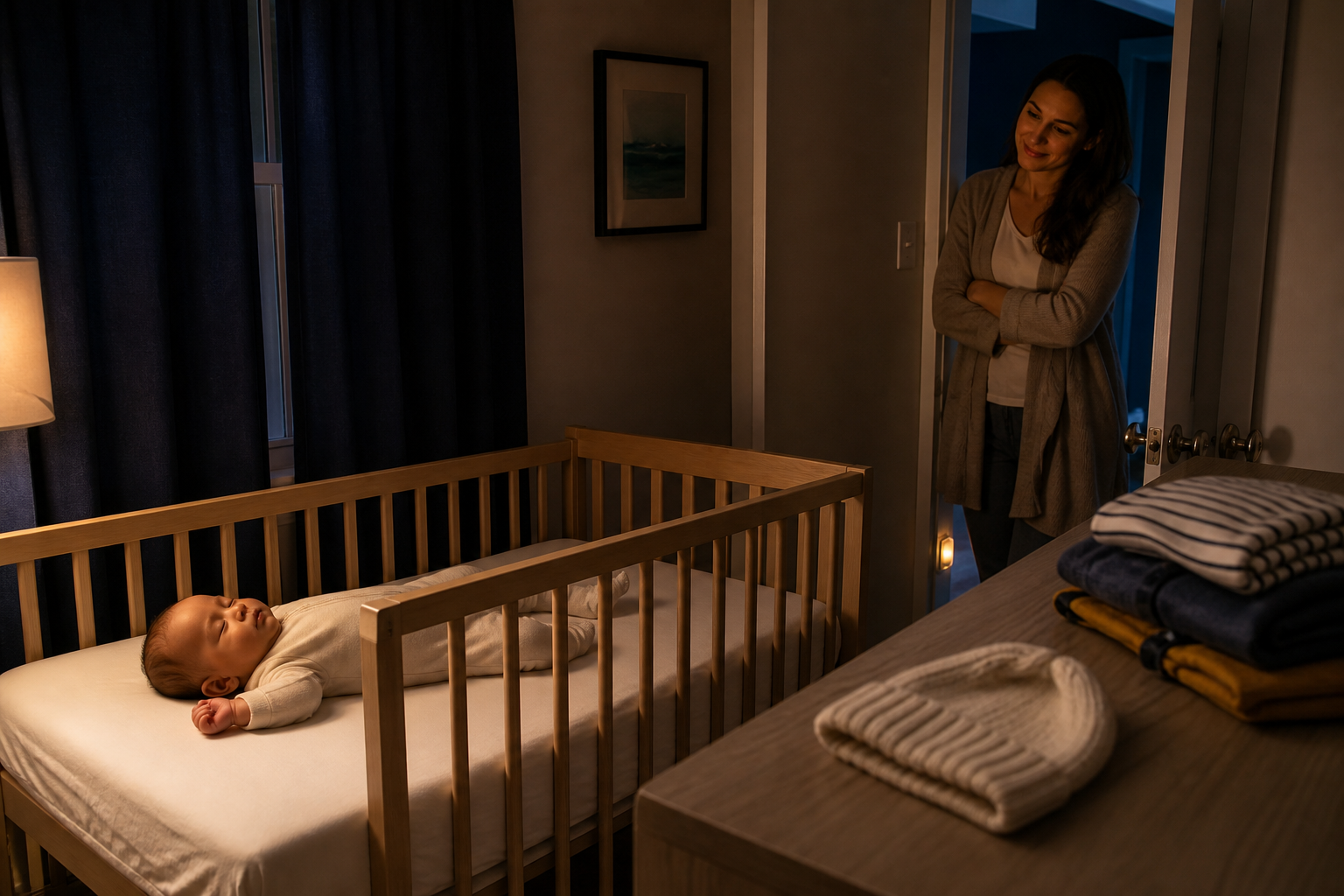
You do not need a perfect nursery temperature before you can make one safe decision. Remove the hat. Put your baby on their back on the firm, flat, empty sleep surface. Feel the chest or upper back. Then make one sensible change only if the baby or room tells you one is needed.
That hovering hand from the beginning has a different job now. It is not taking warmth away. It is clearing the head and face, then checking the part of the baby that gives you better information. I would let that small reset carry the night: hat off, trunk comfortable, crib bare.
Make tonight’s sleep question smaller
When clothing, room temperature, feeds, and wake-ups start blending into one anxious nighttime puzzle, SleepBaby.org helps you identify the one variable that matters next without promising a perfect night.
Parent conversation
Leave a comment