
Hot room · tiny outfit · one useful check
Yes, a baby can sleep in just a diaper when the room is genuinely hot
You have already put the pajamas back in the drawer. The fan is moving warm air around the room, your baby is wearing one diaper, and now the empty sleeper on the changing table looks less like clothing and more like an accusation.
Diaper-only sleep can be reasonable in genuinely hot conditions if your baby’s chest or upper back feels comfortably warm—not sweaty, hot, or unusually cool—and you keep every other safe-sleep rule unchanged. Start every sleep on the back, on a firm, flat, level, approved surface covered only by a fitted sheet. Keep the sleep space empty and the head and face uncovered. A diaper does not make an unsafe surface safe, and pajamas do not repair one either.
The private question is rarely just, “Are pajamas required?” It is: Am I preventing overheating, or have I left my baby cold because I panicked at the thermostat? I would answer that with the room, the baby’s trunk, and a one-layer adjustment—not with a universal chart copied from a product label.

Use the room, the baby, and the next check—not one magic number
Room temperature matters, but it is only the beginning. The same number can feel different in a humid room, near a sunny window, under strong air-conditioning, or after the house has held heat all afternoon. Your baby’s age, health, recent fever, and ability to regulate temperature also matter. That is why the most useful answer is a short decision sequence rather than a rigid “above X degrees, remove everything” rule.
The clothing decision
Three observations before you change a layer
- Read the room: notice the actual nursery conditions and whether they are rising, falling, humid, drafty, or different from the rest of the home.
- Read the baby: feel the chest or upper back. Look for sweating, flushed or hot skin, damp hair, or unusual discomfort. Do not let cool hands or feet make the entire decision.
- Change one thing and recheck: remove or add one light layer, allow the baby to settle, then reassess. Do not rebuild the whole sleep setup around one anxious touch.
I like this sequence because it keeps a tired adult from treating the dresser as a roulette wheel. You do not need to cycle through diaper, bodysuit, pajamas, sleep sack, back to pajamas, and then conduct a 1:40 a.m. textile summit. Make one proportionate change and look again.
NIH Safe to Sleep guidance tells caregivers to dress babies for the room and watch for overheating signs such as sweating, flushing, hot skin, or a hot chest. The American Academy of Pediatrics gives a practical general guide: babies usually need only one layer more than an adult would wear comfortably in the same environment. Neither source requires pajamas as a category. Both point you back to appropriate clothing for the conditions.

When diaper-only sleep makes sense—and when it does not
Diaper-only sleep makes the most sense when the room is truly hot, your baby’s trunk feels comfortably warm, there are no illness concerns, and adding clothing would likely overbundle the baby. NHS hospital heat guidance explicitly notes that, during very hot conditions, a newborn may sleep in only a diaper with no bedding. That is a conditional answer for heat, not a permanent uniform.
It does not make sense to strip a baby down simply because the outdoor forecast is dramatic while the nursery is cool. Air-conditioning, fans, shade, insulation, and nighttime temperature drops can change the room quickly. A baby who felt comfortable at bedtime may need another light layer later; a room that began pleasant may hold heat. The decision belongs to the conditions your baby is actually sleeping in.
I would also change the question when a baby was born prematurely, has a medical condition that affects temperature regulation, is very young and unwell, or has received individualized clothing or temperature guidance. In those situations, the clinician’s plan outranks a general sleep article. The same is true when a baby has a fever or seems ill. Clothing adjustments can improve comfort; they do not explain away illness.
What would change my answer?
- Hot room, comfortable chest, baby otherwise well
- Diaper-only sleep can be a reasonable light-clothing choice. Recheck as conditions change.
- Cool or rapidly cooling room
- Add one appropriate light layer or a nonweighted wearable blanket; keep loose blankets out.
- Sweaty, flushed, hot chest, damp hair
- Remove a layer, cool the environment safely, and reassess the baby rather than adding sleep products.
- Fever, breathing difficulty, unusual lethargy, poor feeding, fewer wet diapers, or baby seems unwell
- Stop treating this as a wardrobe question and seek medical guidance appropriate to the symptom and age.

Where to feel—and why cold hands can mislead you
Hands and feet often feel cooler than the baby’s trunk. If you use them as your main thermometer, you can end up adding layers to a baby whose body is already warm. Feel the chest or upper back with the back of your hand. You are looking for comfortably warm skin, not heat, sweat, or clamminess.
Do the check without waking yourself into a new hobby. One calm assessment after a clothing change is useful. Touching the baby every six minutes until neither of you sleeps is not more accurate. If the room is changing significantly, recheck when it makes sense—after the air-conditioning cycles off, after the evening cools, or when you are already attending to the baby.
A 20-second comfort check
- Feel the chest or upper back.
- Notice sweat, damp hair, flushing, or hot skin.
- Notice whether the room has changed since the last check.
- Adjust one light layer if needed.
- Keep the head uncovered and the sleep space empty.
Skin temperature is also not the same as a measured fever. If your baby seems unwell or you are concerned about fever, use the temperature-taking method recommended for your baby’s age and contact the pediatric team when indicated. Do not keep removing clothes and waiting for a concerning temperature to disappear.

The clothing can shrink to one diaper; the safe-sleep rules do not
A hot night can tempt parents to improvise: a towel under the baby to catch sweat, a muslin draped nearby, a cool gel pad, a pillow that claims to breathe, or a fan positioned where cords and moving parts enter the sleep area. Do not solve temperature by adding hazards.
- Place your baby on the back for every sleep.
- Use a firm, flat, level sleep surface in an approved crib, bassinet, or play yard.
- Use only a fitted sheet—no loose blanket, towel, pad, positioner, pillow, toy, bumper, or weighted item.
- Keep the head and face uncovered; no indoor sleep hat.
- Keep cords, fans, and cooling equipment outside the sleep space and follow manufacturer placement instructions.
- Room-share without bed-sharing, especially for young infants.
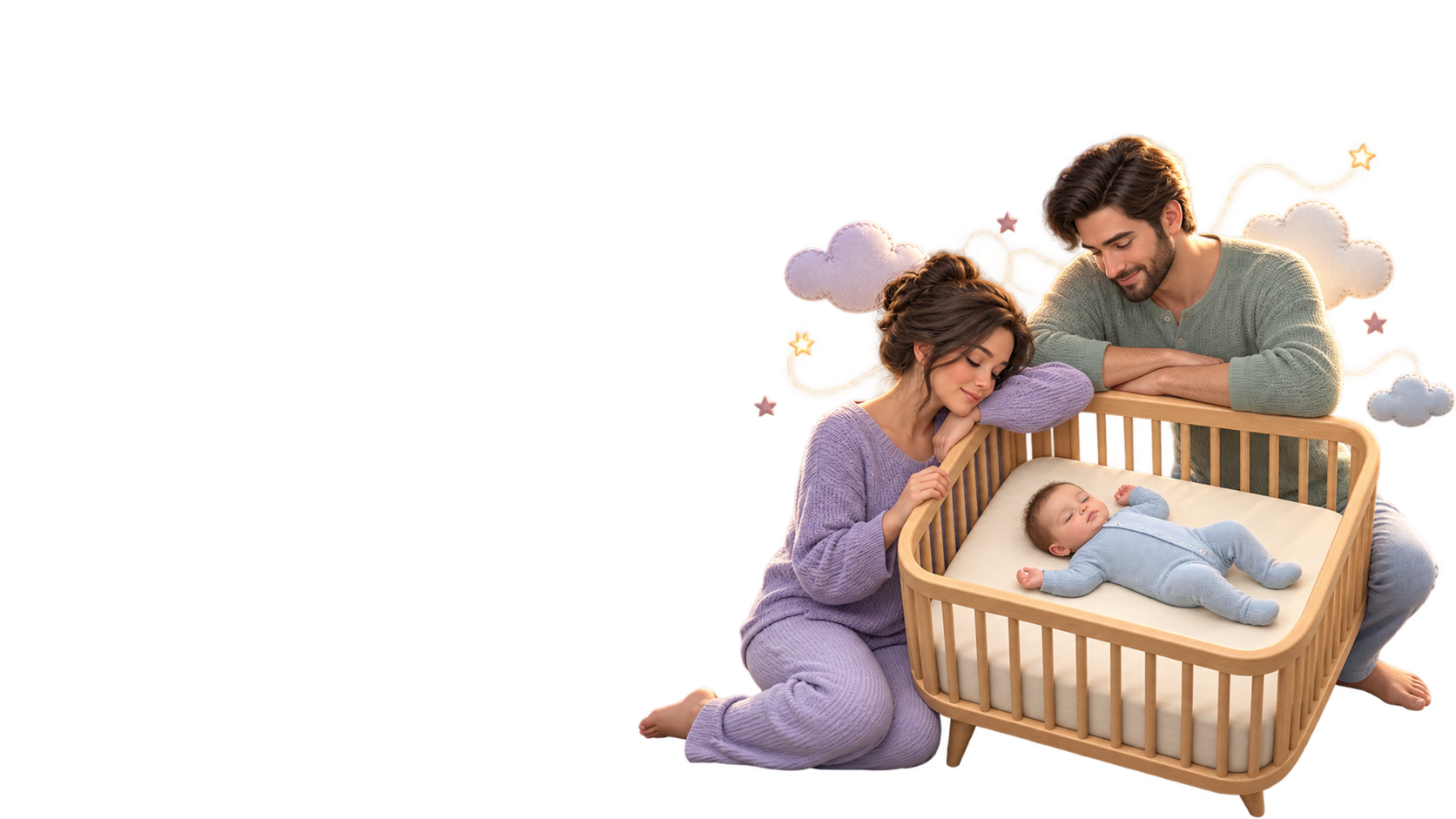
The empty crib may look almost aggressively empty when the baby is also wearing almost nothing. That visual sparseness is not neglect. It is the point: temperature is managed with the room and appropriate clothing, not loose objects around the baby.

The 2 a.m. doubt usually arrives after you already made a reasonable choice
A clearly labeled hypothetical Kacey-and-Benjamin scene
Imagine I have put hypothetical baby Benjamin down in only a diaper on a genuinely hot night. At 2:06 a.m., I look at the folded sleeper on the chair and become convinced it has developed professional opinions about me. Benjamin’s chest feels comfortably warm. His skin is dry. The room is still hot. He is breathing normally on his back in an empty bassinet. Nothing in that evidence asks me to dress him because my anxiety found a garment.
In the same hypothetical scene, if the air-conditioning has finally cooled the room and his upper back now feels cool, I add one light layer. I do not declare the original choice a failure. The conditions changed, so the answer changed. This scene is invented to show the decision; it is not a claim about Benjamin or any real child.
That is the distinction I want a parent to keep: good nighttime care is responsive, not clairvoyant. You are allowed to make the best clothing choice for 9 p.m. and adjust it at 2 a.m. The baby does not need one outfit to win the whole night.


Cool the environment without turning the crib into a cooling project
Use ordinary room-level measures: close blinds before direct sun heats the space, ventilate when outdoor conditions make that useful, use air-conditioning safely, and circulate air without aiming equipment or cords into the sleep space. Follow local heat advice and equipment instructions. Never cover a stroller, bassinet, or crib with a blanket or muslin to block light or create shade; fabric can trap heat and reduce airflow.
If you use a fan, keep it stable and out of reach, with the cord secured away from the baby. A fan is not permission to add heavy clothing, and diaper-only sleep is not permission to aim strong airflow directly at the baby. You are trying to create a comfortable room, not stage a weather event over the mattress.
Humidity can change how a room feels, but you do not need to chase one perfect humidity number to decide whether your baby needs pajamas. Look at the full picture. A room reading gives context. The baby’s trunk and behavior tell you how that context is landing.
Optional practical pick · destination inactive
When the nursery changes faster than your guess
If your baby’s room runs much hotter or cooler than the rest of the home, the Temp Stick WiFi Temperature & Humidity Sensor can answer the practical post-search question: did the nursery actually change after I left? It measures room temperature and humidity and can send configurable alerts. That is a stronger fit here than another sleep sack, wellness monitor, or decorative nursery gadget because it observes the variable this article asks you to notice without touching the baby or entering the sleep space.
Consider it if room conditions fluctuate, you want remote readings, and a basic local thermometer has not been enough. Skip it if a simple room thermometer already answers the question. It does not measure body temperature, diagnose illness, prevent overheating or SIDS, replace checking your baby, or make an unsafe sleep setup safe.
SleepBaby may earn from qualifying purchases after Affiliate Control verifies and activates the exact eligible destination.
Plan for the room you will have later, not only the room you have now
A hot bedtime does not guarantee a hot dawn. Air-conditioning may catch up, an evening breeze may arrive, or a closed nursery may become warmer after the rest of the home cools. That is why I would rather make one modest choice and schedule one sensible recheck than dress a baby for every possible hour at once.
Before bed, notice what usually changes the room: western sun, an upstairs location, a thermostat setback, a portable air-conditioner that cycles off, or a door that will be closed after you leave. None of those details produces a universal clothing formula. They tell you whether the current diaper-only choice is likely to remain reasonable or whether you should place an appropriate light layer nearby for a later change.
If the room stays hot and the trunk stays comfortably warm: leave the clothing alone.
If the room cools and the trunk feels cool: add one fitted, age-appropriate light layer and recheck.
If the trunk is hot, sweaty, or flushed: reduce heat exposure and reassess the room rather than adding anything.
If the baby seems ill or difficult to wake: leave the clothing experiment behind and seek medical guidance.
This is also where a room reading can be useful without becoming the boss of the nursery. A number can confirm that the room changed. It cannot tell you whether a particular baby is ill, comfortable, or safely positioned. The measurement and the hands-on check have different jobs.
Age and health history can narrow your margin for guessing
A healthy full-term baby and a baby born prematurely may not regulate temperature in exactly the same way. A very young newborn, a baby with low birth weight, or a baby whose clinician has given a specific temperature or clothing plan deserves that individualized plan. The general diaper-only answer should never overwrite discharge instructions or advice based on a real medical history.
For every age, the sleep surface remains firm, flat, level, and empty, and the baby begins sleep on the back. As mobility develops, stop swaddling when the baby shows signs of attempting to roll. A diaper-only night does not create a reason to swaddle more tightly, add a weighted garment, or use positioners to keep the baby still.
Skin needs context too. A diaper waist or leg opening that leaves deep marks, irritated skin under trapped moisture, or a fastening that has become too tight is a fit question, not evidence that pajamas are required. Use a correctly sized diaper and address persistent rash with the pediatric clinician. Do not dust the sleep area with loose powder, add absorbent pads beneath the baby, or improvise a barrier that changes the mattress surface.
Make the caregiver handoff about evidence, not preference
Two loving adults can look at the same diaper-only baby and see opposite dangers. One remembers being cold at night. The other has just walked upstairs and feels overheated. Neither adult’s body is a nursery thermometer, and neither memory is the baby’s upper back.
I would make the handoff specific: “The room was hot at bedtime. The baby’s chest felt comfortably warm and dry. Please check again after the air-conditioning has run.” That sentence preserves the reason for the choice and names the next action. “I thought the diaper was fine” invites the next adult to restart the argument.
If someone adds a layer, record what changed. If someone removes one, record what they observed. You do not need a formal log; a short note or message is enough. The goal is not surveillance. It is to prevent a sleepy caregiver from stacking changes—lower thermostat, stronger fan, extra sleeper—without knowing what the previous person already did.
For childcare or a relative’s home, explain the invariant rules too: back to sleep, approved empty sleep space, no hats indoors, no loose blankets, no weighted sleep products, and no covering the sleep space to block light. Clothing can adapt to the room. Those boundaries do not.
When the hot room is temporary: travel, outages, and heat waves
A hotel room, a power outage, or a heat wave can remove the routines that usually make bedtime easy. Start by choosing the coolest safe room available and reducing heat at the room level. Keep the approved portable crib or bassinet uncovered and away from direct sun, heaters, unsafe cords, and unstable fans. Never use a car seat, swing, lounger, sofa, or adult bed as a cooler substitute for the usual sleep space.
If you move the sleep space, recheck the whole setup. Is it still firm, flat, level, and empty? Is the portable crib assembled according to its instructions? Are cords and blind pulls out of reach? In disruption, adults tend to solve the most visible problem and miss the new one they created. A cooler corner is not better if the sleep surface there is unsafe.
During a power outage, avoid bringing fuel-burning generators, grills, or similar equipment indoors or near openings. Carbon monoxide is odorless and dangerous. Follow local emergency guidance, and leave for a reliably cooler location when the home cannot be kept safe. Diaper-only clothing can reduce one layer of insulation; it cannot make dangerous environmental heat acceptable.
Travel also changes what “usual” means. A thermostat display may not match the crib area, sunlight may hit the room differently, and unfamiliar ventilation may cycle unpredictably. Check the place where the baby actually sleeps and perform the same trunk check after settling. You are carrying the decision method with you, not one outfit rule.
Four common traps that make a simple clothing decision harder
- Treating a chart as a prescription. Temperature and clothing charts can offer a starting point, but garment materials, room airflow, humidity, and individual babies differ. Use the baby and the actual room to confirm the starting choice.
- Judging by hands and feet alone. Cool extremities can coexist with a comfortably warm trunk. Check the chest or upper back before adding insulation.
- Changing several variables at once. If you lower the thermostat, aim a fan, and add pajamas together, you will not know which adjustment helped. Make one safe change, then recheck.
- Trying to compensate with unsafe objects. Loose blankets, chilled packs, wet cloths, sleep positioners, covered bassinets, and weighted products do not belong in the sleep setup. Solve room and clothing questions without altering the safe surface.
The thread through all four traps is uncertainty. When uncertainty rises, we are tempted to do more. The safer move is usually smaller: observe the room, feel the trunk, change one ordinary layer, and preserve the sleep-space rules you already know.
What if I am worried the baby is too cold?
Start with the trunk and the room. If the chest or upper back feels cool and the room has cooled, add one appropriate light layer. A fitted bodysuit, sleeper, or nonweighted wearable blanket may be useful depending on age, rolling status, fit, and conditions. Follow the garment instructions. Keep loose blankets out of the sleep area.
Do not use a hat for indoor sleep or pile on layers because hands and feet feel cool. And do not treat a cold-feeling, unusually sleepy, poorly feeding, or unwell baby as a clothing puzzle. Newborns and young infants can become ill quickly. If your baby’s temperature, alertness, breathing, color, or feeding concerns you, contact the pediatric team promptly.
The clothing decision should remain small. One layer. Recheck. If the baby still seems uncomfortable despite a reasonable room and clothing adjustment, ask what else might be going on rather than constructing a heavier and heavier outfit.

When this stops being a sleep-clothing question
Seek urgent medical guidance for a young infant with a fever according to your pediatric team’s age-specific instructions. Get emergency help for trouble breathing, blue or gray color, a seizure, or a baby who cannot be awakened. Promptly contact a clinician for unusual lethargy, poor feeding, repeated vomiting, signs of dehydration, markedly fewer wet diapers, or a baby who simply looks very unwell.
Heat illness is not diagnosed by counting clothing layers. If a baby has been exposed to significant heat and becomes unusually sleepy, difficult to wake, weak, poorly feeding, vomiting, breathing abnormally, or otherwise concerning, move to a cooler environment and seek appropriate medical help. Do not wait for a wardrobe change to prove it worked.
Call rather than experiment when temperature discomfort appears alongside illness, breathing, color, feeding, hydration, or alertness changes. The safe answer is not another sleep product.
Watch the sleep space, not a clothing formula
Keep the safe-sleep foundation unchanged on a hot night
Diaper-only sleep can answer a heat-and-clothing question, but it does not change where or how a baby sleeps. This American Academy of Pediatrics video reinforces the separate, firm, flat, empty sleep-space rules that still apply.
Takeaway: adjust ordinary fitted clothing to the room and the baby; never compensate with a loose blanket, hat, cushion, or altered sleep surface.
A simple plan for tonight
- Check the actual room and whether it is likely to change overnight.
- Dress your baby lightly for those conditions; diaper-only can be appropriate when the room is genuinely hot.
- Place the baby on the back in the usual firm, flat, level, empty sleep space.
- Feel the chest or upper back after the baby settles.
- Change one light layer if needed, then recheck.
- Escalate illness or breathing concerns instead of troubleshooting clothes.
Write that on a note if two caregivers keep reversing each other’s decisions. “Room, chest, one layer” is more useful than a midnight debate about whether feet count as reliable witnesses. It also makes the handoff clear: the next adult checks the same evidence instead of restarting the internet.
For the next warm-room check
The empty sleeper is not judging you
Look at the room. Feel your baby’s chest or upper back. Change one layer if the evidence asks you to. SleepBaby helps you make the next safe decision without turning every hot night into a new parenting doctrine.
Sources
- NIH/NICHD Safe to Sleep: Ways to Reduce Baby’s Risk
- NIH/NICHD Safe to Sleep: Safe Sleep Environment
- American Academy of Pediatrics: How to Keep Your Sleeping Baby Safe
- Gloucestershire Hospitals NHS Foundation Trust: Looking After Your Newborn Baby in Extreme Temperatures
- Ideal Sciences: Temp Stick Product Specifications (product identity and room-sensor features only)