
The short answer
Most babies start baby food at about 6 months, when developmental readiness signs line up. Breast milk or infant formula still does most of the nutritional heavy lifting through the first year. Begin with a soft, safe texture and a small offer—often 1 or 2 tablespoons—then let your baby’s hunger, fullness, and feeding skills decide what happens next.
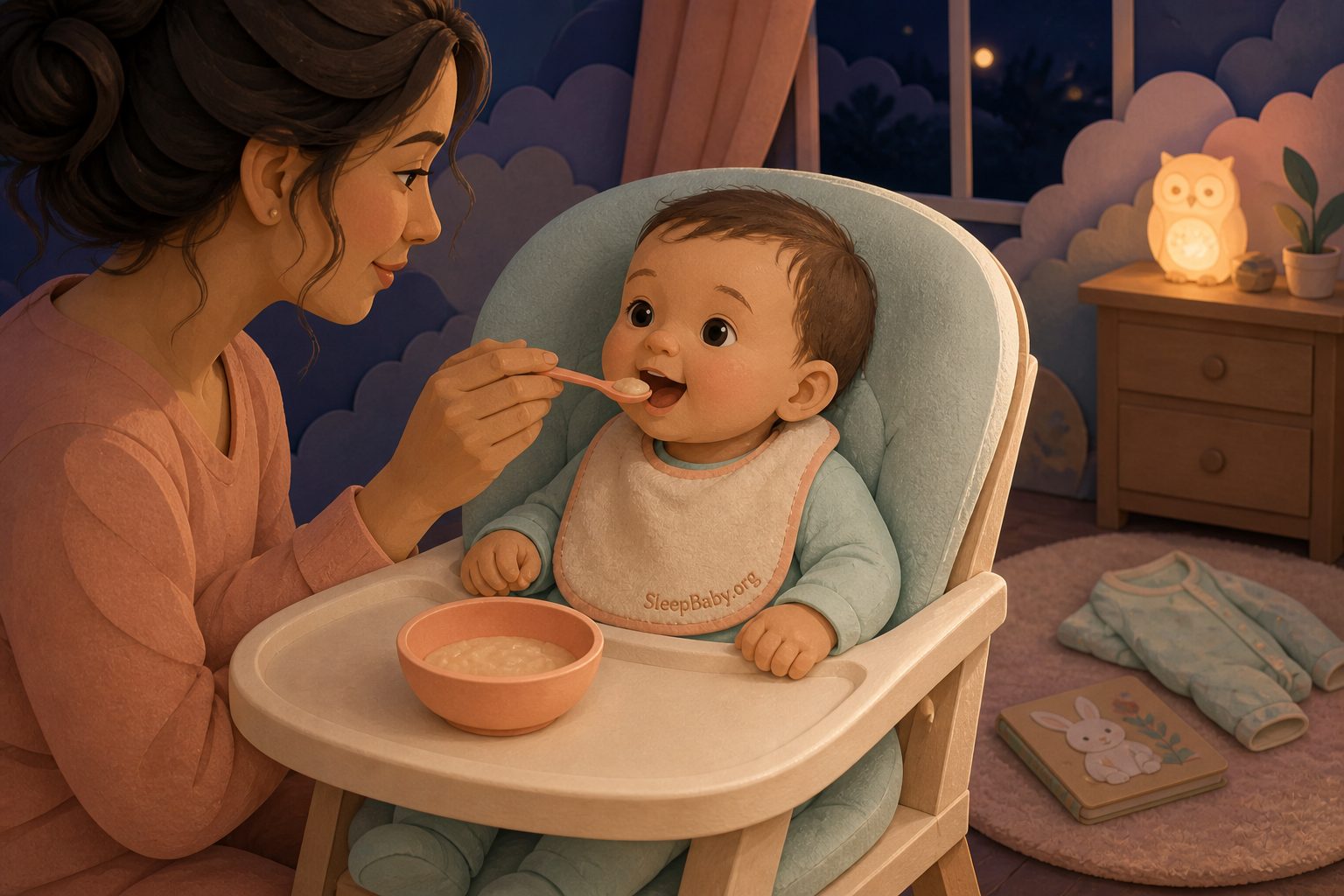
The date on the calendar is only half the answer. The other half is the baby in the high chair: steady head, supported upright body, mouth opening for the spoon, and food moving backward to swallow instead of returning immediately to the chin. A six-month birthday does not flip a hidden switch. It simply tells you that it is time to look closely.
I would also put one worry down right now: the first bowl is not a nutrition final. If half a teaspoon of oatmeal reaches the mouth and the rest makes a determined new life on the bib, that can still be a successful meal. Early solids are feeding and learning at the same time. They matter for iron, zinc, texture, allergens, variety, and family eating—but they do not need to replace milk or produce a clean bowl.
Starting solids at 6 months begins with readiness, not a jar label
The CDC’s current infant-feeding guidance places the usual starting point at about 6 months and advises against starting before 4 months. “About” is doing useful work there. A baby born early, a baby with low tone or oral-motor concerns, or a baby whose growth plan is being watched may need an individualized start.
The high-chair readiness gate
Look for the four skills that make the first bite safer
- Body: Baby can sit upright with support and stay stable enough to eat without slumping sideways or folding forward.
- Head: Head and neck control are steady throughout the feeding, not just for the first cheerful thirty seconds.
- Mouth: Baby opens when food is offered and can bring objects toward the mouth with purpose.
- Swallow: Food moves from the front of the tongue toward the back and is swallowed, rather than being pushed out every time.
What does not prove readiness by itself: watching you eat, waking more at night, being a large baby, taking a big bottle, or reaching a particular weight. Interest is lovely. The feeding skills are what change the answer.
SleepBaby.org teaching note: choose a calm, alert window—not the exhausted edge of bedtime—so you can watch the skill instead of rushing the spoon.
If those skills are not lining up near 6 months, do not turn lunch into a daily exam. Keep milk feeds going and bring the question to the well-baby visit. If your baby was premature, use the plan from the clinician who knows whether corrected age and feeding development should change the timing.
Baby food is a texture, not a product category
Baby food can come from a jar, a pouch squeezed into a bowl, or the same ingredients the family is eating—prepared without unsafe shapes, excess salt, honey, or other infant hazards. It can be spoon-fed, offered on a preloaded spoon, or picked up by a baby who has the necessary skill. Purees are not a moral failure, and self-feeding is not a personality test.
The commercial words Stage 1, Stage 2, and Stage 3 describe a manufacturer’s texture system. They do not diagnose your baby’s readiness. One brand’s “Stage 2” may resemble another brand’s “Stage 3,” while a fork-mashed family food may fit your baby better than either. I would rather know what the food does when pressed with a fork than what number is printed on the lid.
The fork-and-finger test
Cooked food should be soft enough to mash easily. Remove pits, bones, tough skin, and hard pieces. Avoid round coins, hard raw chunks, whole nuts, thick sticky spoonfuls, and any shape that can plug the airway. “Healthy” does not cancel geometry.
A simple baby food builder for balanced first meals
There is no required first food. Still, there is a smarter way to plan than rotating banana, applesauce, and sweet potato until the freezer looks like a tiny orange paint store. Around 6 months, babies—especially babies receiving human milk—need dependable sources of iron and zinc from complementary foods. Those nutrients deserve a regular seat at the table.
Screenshot-worthy feeding tool
Build the tray: one anchor, one color, one skill
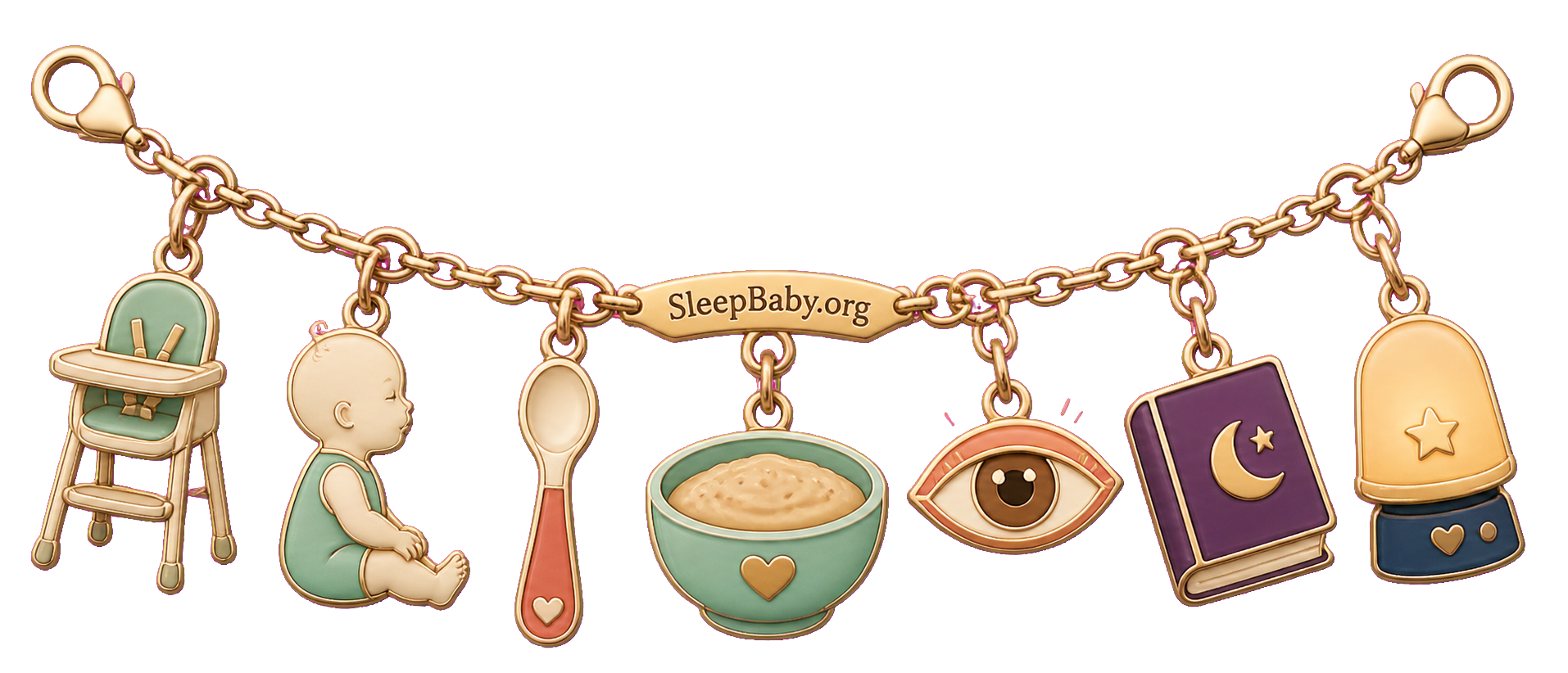
1. Iron or zinc anchor
Iron-fortified oat cereal, pureed or finely mashed meat, lentils, beans, well-cooked egg, tofu, or carefully prepared low-mercury fish.
2. Produce color
Soft-cooked broccoli, carrot, squash, peas, pear, peach, berries prepared safely, banana, or avocado. Variety wins; fruit does not “ruin” vegetables.
3. Current texture skill
Smooth, mashed, lumpy, finely chopped, shredded, or soft finger food—whichever form your baby can manage safely today.
Useful rule: you do not need all three pieces at every first meal. Use the builder across the day and week. The job is balanced exposure, not a miniature restaurant plate at 6:07 p.m.
Created for SleepBaby.org • The night connection: an easy meal formula lowers evening decision noise without pretending food is a sleep treatment.
Baby food ideas that teach more than sweetness
Try iron-fortified oatmeal thinned to a manageable texture with breast milk, formula, or water; lentils mashed with soft-cooked carrot; plain full-fat yogurt with mashed pear; well-cooked egg mashed with avocado; finely prepared chicken with sweet potato; or soft beans with a vitamin-C-rich fruit or vegetable. These are combinations, not recipes with mandatory measurements. Keep each ingredient recognizable while you are still learning how your baby responds.
When using infant cereal, rotate oat, barley, and multigrain rather than relying only on rice cereal. When using yogurt or cheese before 12 months, choose pasteurized, unsweetened forms. Cow’s milk and plant-based milk alternatives should not replace breast milk or formula as the main drink before 12 months.
And when the question becomes very food-specific, let it stay specific. A family meal such as lasagna needs its own ingredient and texture check. Round processed meat needs the separate cautions in the guide to preparing hot dogs for children. Popcorn is a later-childhood choking question, not a first-food idea. A hub is most useful when it knows what belongs elsewhere.
Baby food by stage: follow the skill, use age as a map
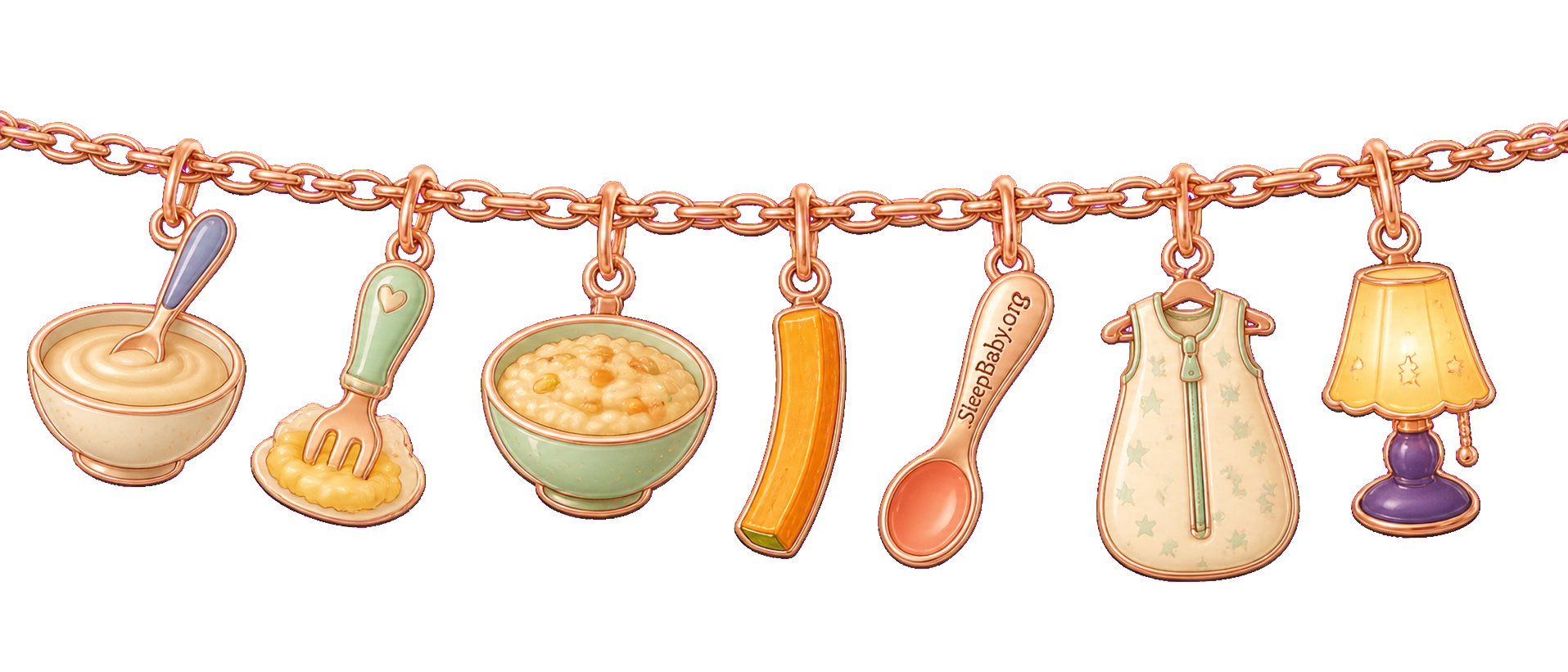
This chart is an orientation, not a promotion schedule. A baby can spend longer in one row, use foods from two rows at once, or move differently after a feeding evaluation. The important direction is from manageable texture toward more variety and chewing practice—not from one jar number to the next.
| Stage | What you see | Texture to offer | Portion orientation |
|---|---|---|---|
| Ready to begin often around 6 months |
Stable supported sitting, head control, opening for food, and swallowing | Smooth puree, soft mash, or safely thinned infant cereal; advance when comfortable | Start with 1 or 2 tablespoons; stop at fullness cues |
| Building texture and variety often 7 to 9 months |
Managing thicker mash, soft lumps, and some soft finger foods | Thicker mashed, finely chopped, shredded, or soft graspable food suited to skill | Small offers from more than one food group; add more when baby asks |
| Toward soft family foods often 9 to 12 months |
Improving chewing, finger feeding, cup practice, and interest in shared meals | Soft chopped or shredded family foods modified for salt, bones, hardness, and shape | Modest child-sized offers with normal day-to-day variation |
Do not stay on perfectly smooth puree simply because it is tidy. As your baby shows the ability to manage food, gradually offer thicker and lumpier textures. Texture learning can include coughing, gagging, or spitting while the skill develops, but that is not permission to ignore distress. Persistent difficulty, repeated choking, wet or gurgly breathing during meals, or a feeding that regularly exhausts your baby deserves a clinical conversation.
Baby food portion sizes: use the bowl as an offer, not a contract
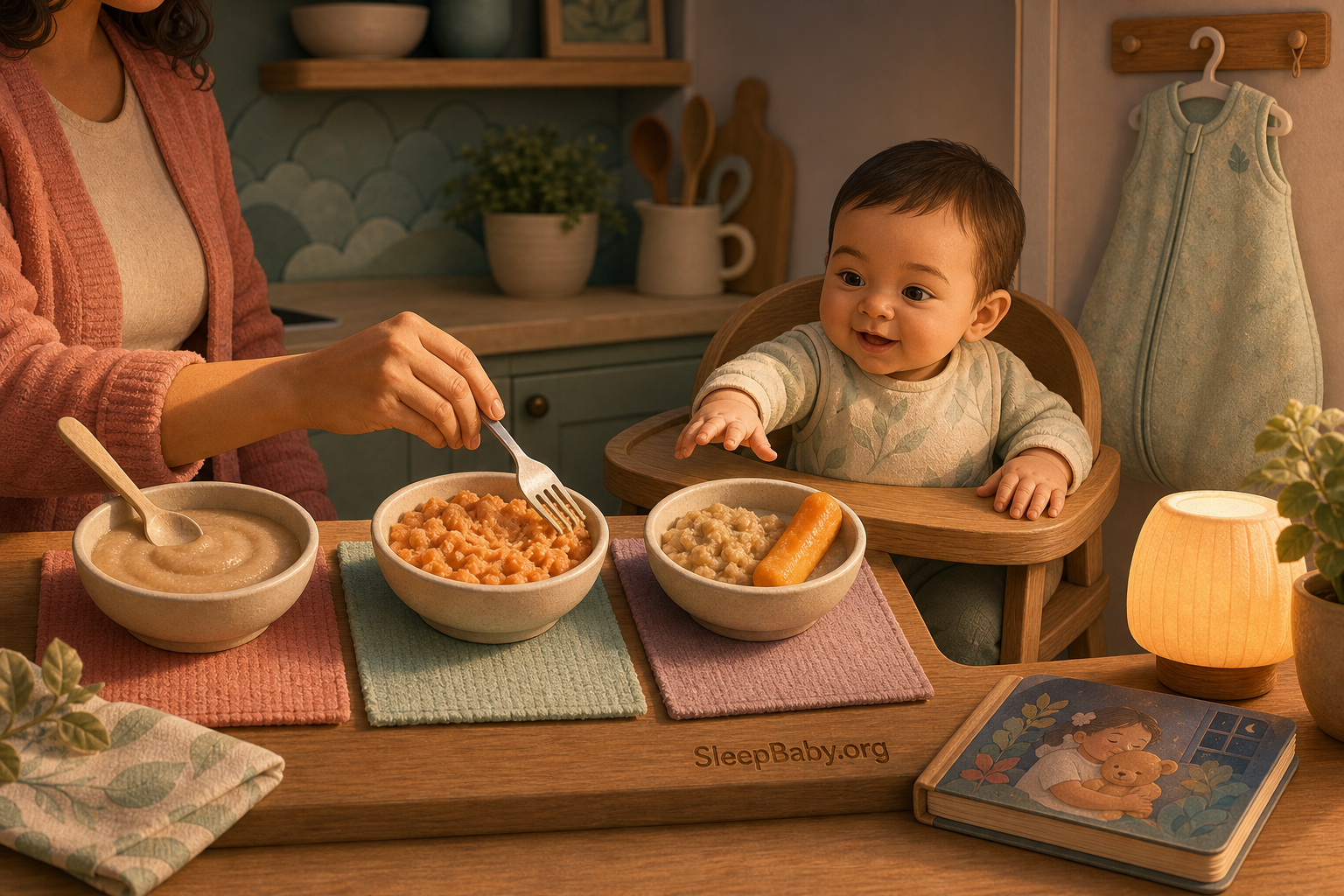
The CDC suggests beginning with 1 or 2 tablespoons of food. That is a sensible starting amount because a new eater’s stomach is small and the meal is still mostly practice. It is not a daily target, and it is definitely not a reason to sneak in three more spoonfuls after the mouth has closed.
The responsive portion dial
Offer small, then read the baby—not the tablespoon
Keep going gently
- opens for the spoon or reaches for food
- leans toward the tray
- gets excited and signals for more
The meal is finished
- closes the mouth
- turns the head away
- pushes food away or loses interest
The clean bowl is not the grade. The next safe bite, the milk feed that still happened, and the calm return to the evening routine are the useful evidence.
SleepBaby.org connection: respecting the stop cue protects the feeding relationship and keeps dinner from becoming an overtired contest.
Some babies want two tastes and are done. Some suddenly eat what looks like an astonishing amount of lentils and then ignore them on Thursday. Look at growth, milk intake, energy, diapers, skills, and the pattern over time—not one dramatic lunch. If you are worried that your baby eats very little, seems to be replacing most milk feeds early, or has slowed growth, bring the actual pattern to the pediatrician instead of trying to solve it with a larger spoon.
If solids are becoming far more exciting than milk, use the separate guide to understand why a baby may prefer food and how to protect milk intake. This article keeps that boundary brief so it can stay focused on safe starting, textures, and portions.
Introduce common allergens without turning the kitchen into a lab
Once your baby is developmentally ready, current guidance does not support delaying common allergenic foods simply to prevent allergy. Egg, peanut, dairy, wheat, sesame, soy, fish, and shellfish can enter the rotation in infant-safe forms. The word safe applies to texture as much as ingredient: whole nuts and thick spoonfuls of nut butter are choking hazards.
- Choose one new allergen in an age-appropriate form when baby is healthy, alert, and you have time to observe.
- Offer a small taste. Peanut butter can be thinned into cereal, puree, yogurt, breast milk, or formula and offered by spoon—never as a sticky glob.
- Watch and record. Stop the food and call the pediatrician for a suspected reaction. Breathing trouble, swelling involving the mouth or tongue, collapse, or a severe rapidly developing reaction needs emergency care.
- Keep tolerated foods in the routine in developmentally appropriate forms rather than treating the first taste as a one-time checkbox.
A baby with severe persistent eczema, egg allergy, or an immediate reaction to another food belongs on a clinician-guided peanut pathway. The NIAID parent summary explains why high-risk timing and method may differ. This is where I would stop improvising and ask the pediatrician for a specific plan.
Choking prevention lives in the shape, seat, and supervision
The ingredient list can be perfect and the shape can still be wrong. Choking risk rises with foods that are hard, round, slippery, sticky, tough, or the right diameter to block an airway. That is why grapes are cut, hard produce is cooked, meat is made tender, bones are removed, and whole nuts wait.
The three-part safety check
Shape it. Seat them. Stay.
- Shape it
- Cook, mash, chop, shred, or slice to the developmental skill. Remove pits, seeds, bones, tough skin, hard chunks, round coins, and sticky globs.
- Seat them
- Use a stable high chair or safe upright seat. No eating while lying down, crawling, walking, riding in a stroller, or bouncing along in the car.
- Stay
- An adult stays close enough to see and respond. A monitor, mirror, sibling, or quick turn toward the sink is not direct supervision.
Created for SleepBaby.org • Do the first texture practice while everyone is awake enough to notice what is happening.
A calm meal is not merely nicer; it makes observation easier. Keep toys and screens out of the feeding space, offer manageable amounts, and do not rush another bite into a mouth that is still working. Parents and regular caregivers should learn infant choking first aid from a qualified course before they need it.
If your baby coughs or chokes repeatedly during breast, bottle, or solid feeding, do not just keep making the food thinner and hoping. That pattern may need a feeding or swallowing evaluation. The separate article about milk entering the airway can help you name the concern for the clinician, but it does not replace an individual assessment.
Food safety rules that belong beside the high chair
Babies are more vulnerable to foodborne illness, and tiny portions are not exempt from ordinary kitchen rules. Wash hands and surfaces, keep raw animal foods separate, cook foods safely, and refrigerate prepared food promptly. If the spoon went from the baby’s mouth into the storage jar, the leftovers in that jar are no longer clean storage food.
- No honey before 12 months, raw or cooked into food, because of infant botulism risk.
- No unpasteurized milk, juice, yogurt, or cheese.
- No cow’s milk or plant milk as the main drink before 12 months. Breast milk or infant formula remains the appropriate milk source.
- No juice before 12 months, and skip foods with added sugars.
- Keep sodium low by using unseasoned or lightly seasoned family-food portions before salting the shared dish.
- Choose lower-mercury fish and remove every bone.
When a baby grabs something that was not part of the meal, the decision changes from nutrition to exposure, choking, and contamination. Use the separate steps for a baby who ate something off the floor instead of trying to stretch a meal plan into first aid.
A first-solids routine that stays flexible
Choose one alert window when your baby is neither frantic with hunger nor collapsing toward sleep. Offer the usual milk feed according to your established routine; then create a short, low-pressure food opportunity. Sit together. Offer one iron- or zinc-rich food and perhaps one familiar fruit or vegetable. Stop at the first clear fullness cues.
Over the next meals, widen variety and texture instead of chasing volume. Introduce one new ingredient at a time initially when you need to see whether it causes a problem. Once a food is tolerated, bring it back. Repeated neutral exposure is more useful than turning the third refusal into a family referendum on peas.
As skill grows, move from thin to thicker textures, then to soft lumps, finely prepared foods, and safe finger foods. Let spoon feeding and self-feeding coexist if that works for your family. Keep the safety rules steady while the method stays flexible.
What the first week can look like without becoming a seven-day program
On the first few opportunities, your useful questions are very small: Did baby stay upright? Did the texture move safely? Did baby open for more or turn away? Did the food seem comfortable afterward? You are not required to serve breakfast, lunch, and dinner on day one. A brief daytime practice when both of you are calm gives you more information than a complicated menu offered to an overtired baby.
Begin with a small amount of one food, especially when you need to identify a reaction. Keep an iron- or zinc-rich option in the early rotation rather than spending weeks on fruit alone. As tolerated foods accumulate, combine them: oatmeal with pear, lentils with carrot, egg with avocado, yogurt with a familiar fruit. A combination is easier to interpret when its ingredients are not all strangers.
Use the CDC’s conservative approach of spacing brand-new single ingredients at first when reaction attribution matters. That does not mean postponing every common allergen for months. Once readiness is established and your baby’s risk pathway is clear, introduce allergens in safe forms and bring tolerated ones back. If severe eczema, egg allergy, or a prior reaction changes the risk, pause the home plan and get the pediatrician’s instructions before peanut.
By the end of the week, success may look like three accepted foods, a slightly thicker mash, and a baby who has discovered that a spoon is also a percussion instrument. It may also look like one accepted food and several polite refusals. Keep milk feeds steady, stop at fullness, and try again without pressure. The direction matters more than the speed.
Jar, pouch, or homemade: choose by the feeding job
Jars can make a single ingredient easy to identify. Homemade food can bring family flavors and textures into the plan. Pouches are convenient for travel, but squeezing puree straight into the mouth hides the food’s color, smell, and spoon practice; when practical, put it in a bowl. Check every label for age-appropriate ingredients, added sugar, sodium, allergens, and storage directions. Cost, time, culture, and access are real feeding variables. Safety and nutrient variety matter more than whether the puree arrived in glass or from your blender.
Pause the experiment and call for help when the pattern changes
Contact your baby’s clinician for poor weight gain, very low intake, food refusal that persists across textures, pain with eating, repeated vomiting, hives or another suspected allergy, severe eczema before peanut introduction, or regular coughing and choking during feeds.
Use emergency care for breathing trouble, collapse, severe swelling, blue or gray color, or suspected choking. Safety is not the place to wait for the next meal and collect more data.

Watch the cues, not the clock
The AAP’s practical first-food walkthrough
The American Academy of Pediatrics covers when to start, what to offer, positive mealtimes, and the fullness cue parents are most tempted to negotiate with.
Takeaway: readiness and responsive feeding matter more than finishing a serving. Offer; observe; stop when baby says stop.
Written fallback: use the readiness gate and portion dial above, or open the official AAP video on YouTube.
What starting baby food can—and cannot—do for sleep
Starting solids can change the shape of the evening. There is a high chair to wipe, a new food to remember, and possibly a pea lodged in a place that seems architecturally impossible. It can also help the day feel more predictable as family meals take form. None of that means solids are a sleep remedy.
Putting cereal or other solids in a bottle does not make a baby sleep longer and can raise choking risk. A baby who starts waking more is not automatically asking for oatmeal. Keep new-food practice in a calm, alert window, preserve normal milk feeds, and let the bedtime routine remain familiar. If sleep changes after a new food, look for discomfort or an allergic reaction—but do not assume every ordinary night waking was caused by dinner.
Sources
- CDC: When, what, and how to introduce solid foods
- CDC: How much and how often to feed
- CDC: Hunger and fullness cues
- CDC: Choking hazards and prevention
- CDC: Foods and drinks to avoid or limit
- American Academy of Pediatrics: Introducing common food allergens
- NIAID: Peanut allergy prevention guidelines for parents
- World Health Organization: Complementary feeding guideline for ages 6 to 23 months
- FoodSafety.gov: Food safety for children under five
When the spoon is down for the night
Keep first-food practice from swallowing bedtime
A new texture, a new allergen, and a tired baby do not need to share the same ten minutes. Move food practice earlier, keep the familiar milk feed and wind-down cues, and let bedtime stay boring in the best possible way. If the larger sleep rhythm still feels scrambled, SleepBaby can help you find the next calm step without asking cereal to do a sleep plan’s job.
Build a calmer post-dinner bedtime
Sleep support does not replace pediatric, allergy, nutrition, or feeding-therapy care.