A NEWBORN NIGHT THAT NEEDS TWO DIFFERENT QUESTIONS
“Not sleeping” can mean an alert baby who will not settle—or a jaundiced newborn who is too sleepy to wake and feed normally. Those are opposite pictures, and the second needs urgent attention.
The search often happens with a hospital bracelet still sitting on the dresser, one burp cloth over the arm of a chair, and a phone brightness turned down because the room has finally become quiet even though the baby has not. The literal question is, “Why won’t my jaundiced baby sleep?” The private question is harder: Am I watching ordinary newborn chaos, or am I missing something that should not wait until morning?
I want to make that question smaller and more answerable. Start with the baby’s condition, not the number of minutes awake. Can your baby be roused in the usual way? Are they breathing comfortably? Can they latch or take a bottle effectively? Are wet and dirty diapers following the plan your care team gave you? What was the last measured bilirubin, and when is the next check? Once those pieces are clear, we can talk about settling. Before that, a sleep trick is simply the wrong tool.

“Not sleeping” has two meanings in a jaundiced newborn
Awake, responsive, and hard to settle
Your baby opens their eyes, responds to touch and voice, moves normally, breathes comfortably, and feeds with their usual strength—but keeps waking or stays alert after the feed. This may reflect ordinary newborn sleep, hunger, gas, a wet diaper, bright light, frequent handling, hospital disruption, or the repeated feed-check-change rhythm of jaundice care.
This picture still deserves same-day clinical guidance because the baby has jaundice, especially if the wakefulness is extreme or new. Yet it is different from a baby who cannot be awakened normally. The useful next move is to confirm the medical and feeding plan, then use quiet newborn settling without delaying care.
Unusually sleepy, difficult to wake, or unable to feed
This is not a sleep-schedule problem. Jaundice can occur alongside poor intake, dehydration, infection, or bilirubin levels that need treatment. A baby who is hard to wake, will not feed, has a weak suck, is floppy or stiff, arches, has abnormal eye or body movements, cries in an unusual high pitch, or looks seriously ill needs urgent assessment.
Do not keep escalating home wake-up techniques. Do not shake, jostle, chill, or repeatedly startle the baby. Get medical help. The goal is not to win a contest against sleep; it is to find out why the baby is not responding normally.
I would say the distinction aloud to another adult in the room: “The baby is awake but not settling,” or “The baby is not waking normally.” Those sentences sound almost identical when everyone is exhausted. Clinically, they point in different directions.
The triage staircase: decide how quickly to get help
This is an observation tool, not a diagnosis and not a substitute for the baby’s clinician. Use it to decide whether you should stop reading and act.
NOW
Emergency assessment
- Baby is unresponsive or unusually difficult to wake.
- Baby will not feed, cannot sustain sucking, or has become markedly weaker.
- Breathing is fast, labored, grunting, or pulling in beneath the ribs; color is blue, gray, or markedly pale.
- Body is floppy, very stiff, arched, jerking, twitching, or showing strange eye movements.
- There is a seizure, a high-pitched inconsolable cry, or a seriously unwell appearance.
- Temperature is 100.4°F (38°C) or higher in a baby under 3 months; with jaundice, follow urgent local guidance for low temperature as well.
- No wet diapers, or another clear sign of significant dehydration.
TODAY
Same-day clinician contact
- Baby with jaundice will not sleep at all or has a new, striking sleep-wake change.
- Feeding is weaker, shorter, less frequent, painful, or difficult to complete.
- Wet or dirty diaper output is below the care team’s expectation.
- Yellow color is worsening, deepening, or moving farther down the body.
- Jaundice appeared in the first 24 hours, returned, or is lasting beyond the expected review point.
- Urine is dark or stool is pale, chalky, gray, or cream-colored.
- The next bilirubin check, weight check, feeding review, or follow-up plan is unclear.
AFTER THE PLAN IS CLEAR
Support a calm return to sleep
If your baby has been assessed or you have spoken with the care team, is responsive, is feeding effectively according to the plan, has reassuring output, and has no urgent sign, use low light, a necessary diaper change, a calm burp, brief supervised contact, and a return to the separate empty bassinet or crib.
The staircase prevents two common mistakes. One is treating every broken newborn night as a medical emergency. The other is treating a medical change as merely bad sleep. I would rather make one clear phone call than spend three hours rearranging white noise while the actual question remains bilirubin, feeding, or hydration.

Bilirubin is measured; it is not guessed from sleep or skin
Jaundice is the yellow color caused by bilirubin building up in the blood. Bilirubin comes from the normal breakdown of red blood cells. A newborn’s liver may need time to become efficient at processing it, which is why some degree of jaundice is common. Common does not mean self-diagnosing.
The American Academy of Pediatrics recommends that bilirubin assessment and follow-up account for the measured bilirubin, the baby’s age in hours, gestational age, and neurotoxicity risk factors. The distance between the measured level and the phototherapy threshold helps determine when another measurement or follow-up is needed. Feeding adequacy, weight trajectory, family support, and other clinical findings also affect the plan.
This is why two babies who look similarly yellow may receive different instructions. One may need ordinary follow-up and feeding support. Another may need a repeat bilirubin within hours, phototherapy, or hospital care. A baby may also look less yellow in one room and more yellow beside a window because light and skin tone change what the eye perceives. NICE specifically advises clinicians not to rely on visual inspection alone to estimate bilirubin.
I would keep three details where the nighttime caregiver can find them without scrolling through a discharge portal:
- the last bilirubin value and the baby’s age when it was taken;
- the exact date, time, and place of the next check;
- the feeding and wake-up instructions for this baby.
Those details are not a home treatment plan by themselves. They are the handoff that prevents the night from becoming a chain of guesses. If any part is missing, call the nursery, midwife, pediatric office, hospital line, or other service named in the discharge instructions.
Why might a jaundiced newborn be awake and unsettled?
Jaundice itself does not create one predictable sleep pattern. The surrounding care can fragment sleep, and ordinary newborn biology already treats day and night as loose suggestions.
Frequent or scheduled feeds
Many jaundiced newborns need frequent feeding, and some need to be awakened because they do not cue reliably. The AAP describes adequate feeding as an important part of preventing and managing hyperbilirubinemia related to low intake. Breastfed newborns are generally offered the breast on demand at least eight times in 24 hours, but the exact schedule for a jaundiced baby belongs to the care team. Bottle-feeding plans are also individualized.
If a feed takes time, includes a diaper change, then requires another attempt because the baby dozed too soon, the “night waking” may be the necessary care cycle itself. That is frustrating without being mysterious.
Phototherapy and monitoring
Phototherapy exposes skin to a prescribed type and dose of light so bilirubin can be changed into forms the body can eliminate more easily. Depending on the treatment setup, the baby may be under overhead lights, on a fiber-optic blanket, or receiving intensified treatment. Temperature, hydration, and bilirubin may be checked repeatedly. Feeding and cuddling breaks may be limited by the medical plan.
Bright treatment light, eye protection, handling, heel pricks, feeds, diaper care, and an unfamiliar cot can make sleep look nothing like the quiet stretch imagined at home. The answer is not to shorten treatment independently. Ask the neonatal team what can be clustered, what can happen under the lights, and what comfort is safe for the level of treatment your baby needs.
Hunger or ineffective milk transfer
A baby may appear to feed often while transferring little milk. Watch and listen for active swallowing, sustained sucking, breast softening when relevant, and the output and weight pattern the care team expects. Pain, shallow latch, repeated slipping off, clicking, a feed that never becomes active, or a baby who cannot stay awake to suck deserves skilled feeding help. More time at the breast is not always the same as more milk in the baby.
Ordinary newborn causes
A wet or dirty diaper, gas, temperature discomfort, a startle, hunger, a need to burp, or simple newborn alertness may keep an otherwise well baby awake. These possibilities become reasonable settling questions only after urgent signs and the jaundice plan are accounted for.

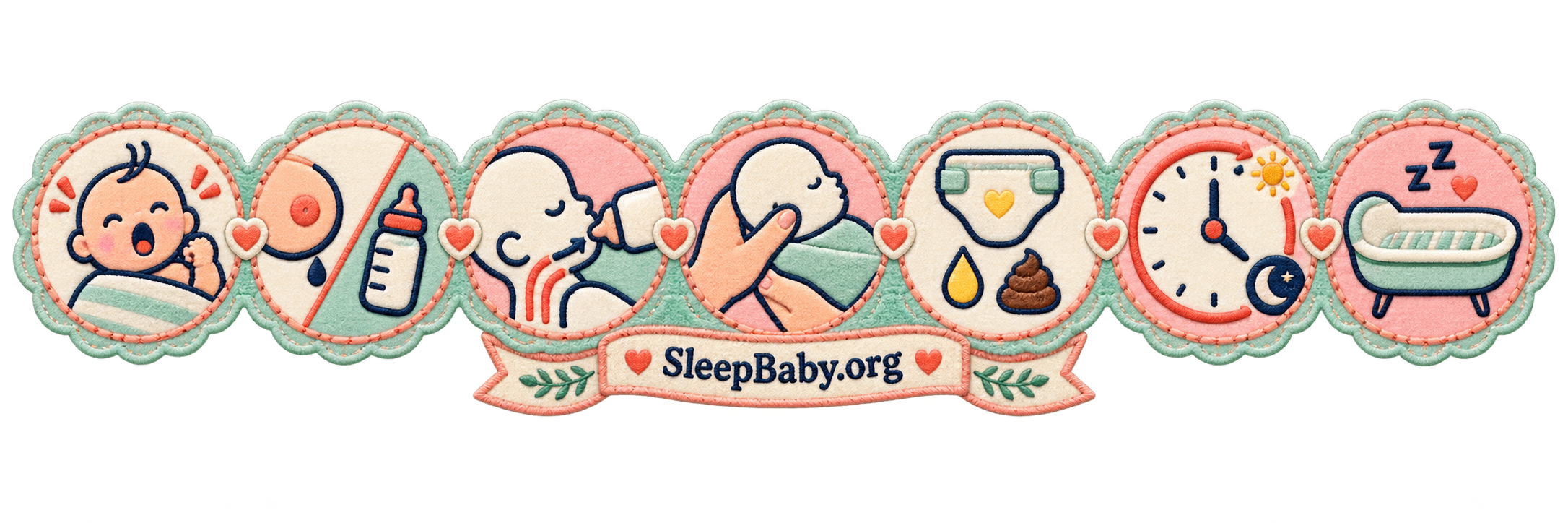
Do not count only feeds; look for evidence that feeding is working
The phrase “feed more” can land like an accusation when you are already feeding around the clock. The more useful question is whether the baby is taking enough milk effectively and whether the feeding plan fits the measured bilirubin and weight pattern.
Before the feed
- Can the baby be awakened in the expected way?
- Does the baby show rooting, hand-to-mouth movement, or another usual feeding cue?
- Is breathing comfortable enough to coordinate sucking and swallowing?
- What did the care team say about the longest interval between feeds?
During the feed
- Is sucking active rather than only fluttery or occasional?
- Can you hear or see swallowing?
- Does the latch or bottle seal remain stable?
- Does the baby repeatedly fall asleep before effective intake begins?
- Does the baby look comfortable, or are breathing and color changing?
After the feed
- Does the baby seem more settled or remain frantic and hungry?
- Are wet and stool diapers progressing as expected for age and feeding method?
- Is weight moving as the clinician expects?
- Can the baby return to the safe sleep surface without looking unwell?
A single feed cannot answer every question. The pattern across feeds, diapers, weight, alertness, and measured bilirubin is what the team needs. If you are uncertain, ask for a feeding observation. A lactation consultant, midwife, neonatal nurse, pediatrician, or feeding clinician can watch the whole process and help distinguish a sleepy-but-effective feed from one that is not transferring enough milk.
Do not give water or sugar water to lower bilirubin. The AAP specifically advises against oral water or dextrose water for preventing or reducing hyperbilirubinemia. Do not start, stop, or change supplementation based only on an internet article. Decisions involving expressed milk, donor milk, or formula should be made with the family and care team after discussing the baby’s needs.
How do I wake a jaundiced baby for a feed?
First, use the interval and method your clinician gave you. An online timetable cannot see gestational age, weight change, milk transfer, bilirubin trend, hemolysis risk, or the reason your baby was discharged with a particular plan.
If your baby responds normally and the plan says to wake for a feed, begin gently:
- Look at breathing, color, position, and ordinary movement before touching.
- Use a calm voice and slightly increase the light—enough to see the baby, not enough to turn the room into morning.
- Place a warm hand on the shoulder, chest, back, hand, or foot and give the baby time to respond.
- Unwrap one layer while supervising, change a needed diaper, or hold the baby upright with full head and neck support.
- Offer the feed when rooting or active mouth movement begins. The goal is effective feeding, not bright-eyed conversation.
Our guide to gentle ways to wake a sleeping baby gives the sequence in more detail. Its medical exit matters most here: if your baby cannot be roused normally, is limp, feeds poorly, or behaves unlike themselves, stop climbing through stronger tricks and seek help.
Never shake a baby. Avoid rapid jostling, repeated startling, cold baths, blowing forcefully in the face, or treating wakefulness as something to force at any cost. A baby who needs increasingly aggressive stimulation is giving you medical information.
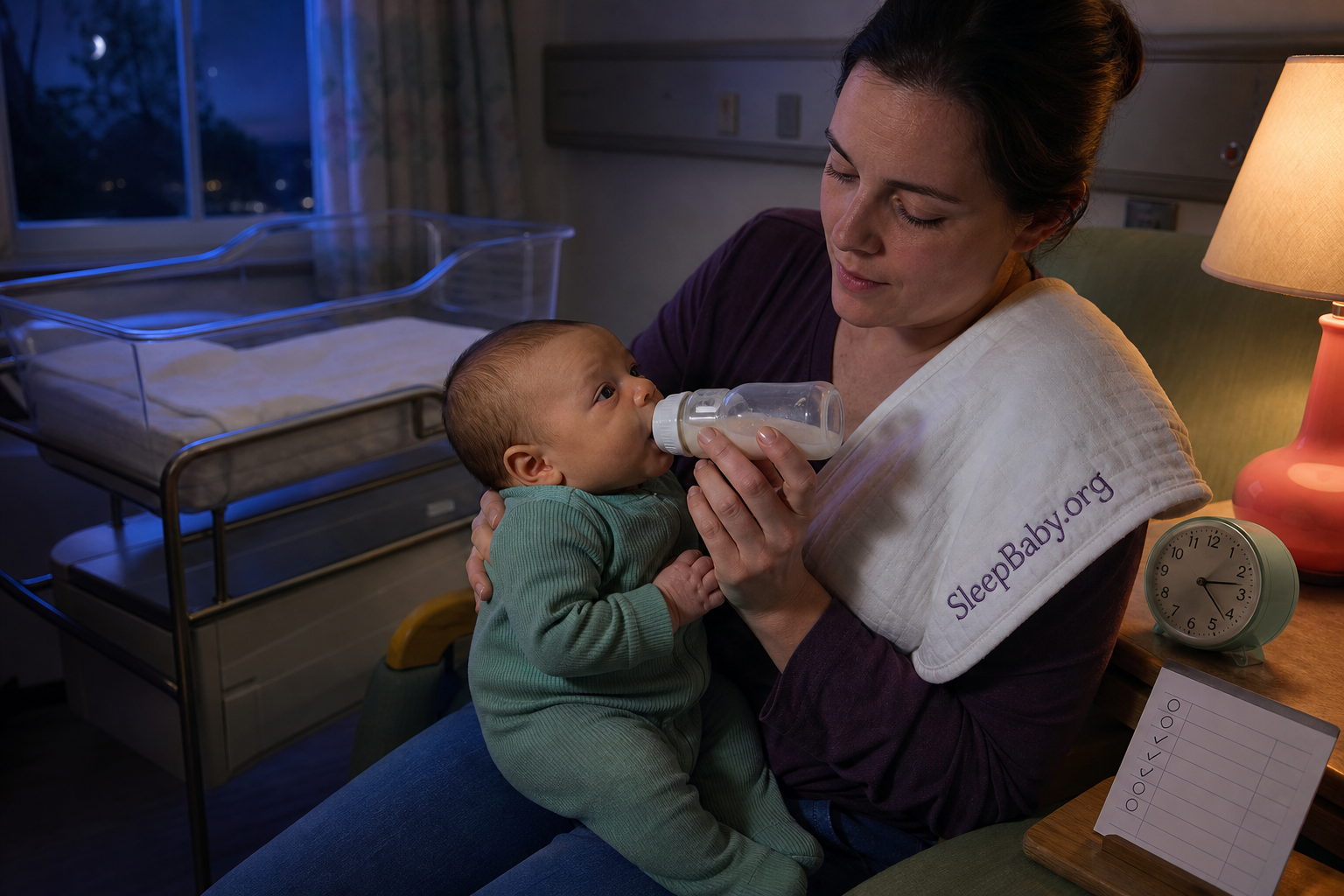
A CLEARLY LABELED HYPOTHETICAL KACEY + BENJAMIN SCENE
The note I would leave beside the bottle
Imagine Benjamin as the newborn in this scene; this is a hypothetical illustration, not a claim about his medical history and not clinical evidence. It is 1:36 a.m. The lamp is low, the feeding chair has one clean cloth over its arm, and my brain is trying to compress an entire discharge conversation into the phrase “wake him and feed him.”
I would not hand the next caregiver a vague instruction like “Keep an eye on him.” At that hour, an eye has very limited administrative capacity. I would write four lines:
- Next feed due: the exact time from the clinician’s plan.
- What an effective feed looked like: active swallowing, how long it stayed active, and any difficulty.
- Latest diaper: wet, stool, or both, with the running output pattern.
- Next bilirubin/weight contact: the exact appointment or call time.
Then I would say the part the note cannot carry: “Benjamin woke with voice and touch, his breathing looked normal, and he fed with his usual strength,” or “Benjamin was much harder to wake and could not stay active at the feed.” The observation changes the next action. It also keeps two tired adults from arguing about whether “sleepy” means cozy, expected newborn drowsiness or a baby who is not responding normally.
That is the practical job of the scene. Not to turn Kacey or Benjamin into evidence, and certainly not to borrow a diagnosis for storytelling. It shows how a family can pass along the details a medical team actually needs while the house is quiet and everyone’s working memory has gone home for the evening.
If your baby is under phototherapy, follow the light plan—not a sleep plan
Phototherapy is medical treatment delivered with specific equipment, light wavelengths, intensity, distance, exposure, and monitoring. It helps convert bilirubin into forms the baby can eliminate. It is not the same as putting a baby beside a sunny window, carrying them onto a porch, switching on a blue household bulb, or buying a consumer “therapy” lamp.
The team decides whether treatment is needed from the bilirubin level and the baby’s clinical context. They also decide whether treatment can pause for feeds and cuddles, whether a fiber-optic blanket can continue during contact, and how closely temperature, hydration, and bilirubin must be checked. During intensified phototherapy, breaks may be restricted because time under the lights matters.
Ask practical questions:
- Can feeding happen under or beside the treatment device?
- How long may this baby be out from under the light?
- Which eye protection and positioning rules apply?
- What output and temperature changes should be reported?
- When is the next bilirubin level, and what happens if it rises?
- What rebound follow-up is planned after phototherapy stops?
Parents often worry that a baby sleeping poorly under the lights means the treatment is failing. Sleep quality does not measure treatment response. Bilirubin testing does. A baby may be disrupted by care yet improving biochemically, or appear quiet while still needing close monitoring. Let the measured trend answer the treatment question.
If home phototherapy has been prescribed, use only the equipment and schedule supplied by the treating service. Do not improvise the distance, cover the device, place loose items around the baby, or change the plan because the baby seems tired. Call the home-phototherapy team when the equipment, feeding, temperature, hydration, or baby’s behavior does not match the instructions.

Once the medical plan is clear, use a very small settling loop
An otherwise responsive newborn may still refuse to settle after the necessary feed or treatment interruption. This is where I would deliberately make the night boring—not to withhold care, but to avoid adding a new show after every wake.
- Complete the prescribed care. Finish the effective feed, required supplement, medicine only if prescribed, bilirubin treatment step, or diaper change.
- Check one physical need. Burp if needed, straighten clothing, verify a clean diaper, and check that the baby is not too hot or cold.
- Lower stimulation. Dim ordinary room light, speak quietly, and reduce movement. Phototherapy instructions override the desire for darkness.
- Offer brief supervised comfort. Hold, rock, or use skin-to-skin only while the adult is fully awake and the medical plan allows it.
- Return to the separate sleep surface. Place baby on the back in an empty, firm, flat, level crib, bassinet, portable crib, or play yard that meets safety standards.
If your baby stays calmly awake in the bassinet, you do not have to manufacture sleep by adding layers of stimulation. Newborns can have quiet alert periods. Stay nearby, observe, and respond to cues. If the baby escalates, recheck hunger, breathing, temperature, diaper, comfort, and the clinician’s plan rather than starting a sleep-training method.
Our guide to a safe plan for an otherwise well newborn who will not settle can help with that ordinary loop after the jaundice and feeding questions have been cleared. It should never be used to step around a bilirubin recheck or a concerning change in alertness.
Protect the exhausted adult during repeated wake-feed-resettle cycles
A jaundice feeding plan can divide the night into pieces so small that no piece feels like sleep. Adult fatigue then becomes a safety issue, not a badge of commitment.
Move feeds away from sofas and armchairs when you may doze. Those surfaces are particularly dangerous for infant sleep. Set up the baby’s separate empty bassinet before the feed so the safest transfer is also the easiest movement. If another adult is available, split the work by task: one person feeds while the other records output, washes equipment, calls the care line, or handles the safe transfer. The person with the medical instructions should not be the only person who knows them.
If feeding occurs in an adult bed and you might fall asleep, remove pillows, loose sheets, blankets, and other items from the baby’s area before the feed, then return the baby to the separate sleep surface as soon as you wake. This is risk reduction for an exhausted moment, not a recommendation to share the bed.
Do not let a nursing pillow, lounger, rolled towel, phototherapy blanket, or positioner become a sleep surface after the adult nods off. Feeding-support products are used only for awake, supervised feeding according to their instructions. The crib stays empty.
Why the follow-up plan is different for different babies
A bilirubin number does not sit alone. The AAP treatment graphs use gestational age and neurotoxicity risk factors because the same measured level can carry different meaning in different newborns. The trend matters too: how quickly bilirubin is rising, how close the value is to the treatment threshold, whether treatment has already occurred, and whether rebound is possible after phototherapy.
Tell the clinician if your baby was born before 38 weeks, had jaundice in the first 24 hours, has bruising or a scalp blood collection from birth, has a blood-group incompatibility or positive direct antiglobulin test, may have hemolysis or G6PD deficiency, has a sibling who needed phototherapy, is losing more weight than expected, is not feeding effectively, or has illness or infection concerns. You do not need to determine which factor applies by yourself. The care team uses birth and laboratory records alongside what you are seeing now.
Skin tone deserves a direct mention. Jaundice may be harder to recognize visually in darker skin, and changes in room light can mislead anyone. Look at the whites of the eyes and gums when advised, but do not let a reassuring glance cancel a scheduled measurement. The same is true in the other direction: a warm lamp can make skin look more yellow without proving the bilirubin rose. Measurement protects families from both false reassurance and unnecessary panic.
Jaundice in the first day is different
Visible jaundice in the first 24 hours requires prompt evaluation because it is more likely to have a cause that needs investigation. Do not wait to see whether sleep improves. Contact the newborn team or pediatric clinician immediately according to your discharge instructions.
Jaundice that lasts needs the right kind of review
Many babies improve over the first one to two weeks, and jaundice can last longer in premature or breastfed babies. Persistent jaundice is not automatically dangerous, but it should not be labeled “breast milk jaundice” at home without assessment. Dark urine that stains the diaper and pale, gray, white, or chalky stool can point toward a different problem and need prompt review. Keep a photo or stool sample if the clinician requests it, but do not delay the call while trying to create perfect evidence.
The feeding language matters: low intake is not a failure of breastfeeding
The 2022 AAP guideline uses the term suboptimal intake hyperbilirubinemia for jaundice associated with too little milk intake in the early days. That wording is more accurate than blaming breastfeeding itself. The pattern often peaks around days three to five and may appear alongside excess weight loss, fewer stools, or signs that milk transfer is not yet effective.
Breast milk jaundice is a different pattern: bilirubin remains elevated longer even though milk intake and weight gain are adequate. It is usually not harmful, but the diagnosis belongs to a clinician who has considered the timing, growth, feeding, stool and urine color, and laboratory context. The two phrases sound similar enough to create unnecessary guilt and enough confusion to change care incorrectly.
I would refuse the false choice between protecting breastfeeding and protecting the baby. Good jaundice care does both whenever possible: skilled latch and transfer assessment, frequent feeding, weight and output review, measured bilirubin follow-up, and individualized supplementation when the benefits outweigh the risks. A parent may need help with positioning, pumping, expressed milk, donor milk, or formula. None of those decisions can be reduced to a moral scorecard.
If supplementation is recommended, ask what to give, how much, how often, for how long, how to protect milk supply if that is a goal, and what finding will change the plan. If it is not recommended, ask what signs confirm that current intake is adequate. Clarity is kinder than leaving a family to improvise at 3 a.m.
For bottle feeding, use the amount and frequency recommended for your baby, hold the baby in a supported position, pace the feed when advised, and watch the baby rather than forcing the bottle empty. Report coughing, color change, breathing difficulty, repeated vomiting, inability to coordinate sucking and swallowing, or a major drop in intake.
What happens to sleep after phototherapy stops?
Stopping phototherapy means the measured bilirubin has reached the team’s stopping criteria. It does not always mean the whole newborn night immediately becomes predictable. The baby may still need frequent feeding, a repeat bilirubin, a weight check, or follow-up for rebound. The AAP bases rebound testing on factors such as how early phototherapy began, gestational age, hemolysis risk, the bilirubin at stopping relative to the threshold, and feeding and weight gain.
Ask for the next step before leaving the unit or ending home treatment. “Follow up tomorrow” should become a place, time, contact, and test. Know whom to call if the baby becomes harder to wake, feeds less effectively, has fewer diapers, looks more yellow, or develops another illness sign overnight.
Some babies sleep more after a disruptive hospital stretch; others remain wakeful because the feeding rhythm continues. Neither pattern proves that bilirubin is safe or unsafe. Continue the prescribed feeding plan and scheduled check. If the baby is responsive and well but the household rhythm is upside down, rebuild darkness, quiet, and ordinary newborn cues gently. Do not hold the baby awake during the day to force a better night, and do not skip a medically required feed to protect a longer stretch.
Seven questions that make the next clinical call more useful
- What was the last bilirubin level, at what age in hours, and how far was it from the treatment threshold?
- When and where does the next bilirubin or clinical check need to happen?
- How often should this baby feed, and what is the longest permitted interval overnight?
- What signs tell us the feed is effective, and who can observe one if we are unsure?
- What urine, stool, and weight pattern do you expect from this baby right now?
- Which changes mean same-day contact, and which mean emergency care?
- If phototherapy is used, what are the break, feeding, equipment, temperature, and rebound-testing instructions?
I would report facts rather than trying to sound medically fluent: “She took 30 milliliters, then would not suck again,” “I heard active swallowing for six minutes,” “He has had two wet diapers since discharge,” “She woke with touch but not voice,” or “His stool is pale.” The care team can interpret those details. You do not need to arrive with your own bilirubin theory.
SEE THE MEDICAL QUESTION CLEARLY
A pediatric hospital explains newborn jaundice
St. Louis Children’s Hospital answers the parent questions behind the yellow color: what jaundice is, how clinicians assess it, and why home observation never replaces professional care.
Takeaway: use the video to understand the vocabulary, then use your baby’s measured bilirubin, feeding, output, alertness, and follow-up plan to decide what happens tonight. Watch on YouTube if the embedded player is unavailable.

What I would not use to solve this night
- No sunlight treatment. A window, porch, or bright room cannot deliver measured medical phototherapy and may delay effective treatment.
- No water or sugar water. These do not safely lower bilirubin and can interfere with appropriate feeding.
- No consumer blue-light substitute. Household lamps and wellness devices are not bilirubin treatment.
- No sleep-training experiment. Do not stretch feeds, withhold response, or prioritize an independent-sleep goal during an active newborn jaundice or feeding concern.
- No inclined sleep. Wedges, raised mattresses, loungers, swings, nursing pillows, and positioners are not safe newborn sleep surfaces.
- No visual diagnosis. Yellow color and sleep behavior cannot replace a bilirubin measurement.
- No independent feeding overhaul. Make breast milk, donor milk, expressed milk, formula, or supplementation decisions with the baby’s team.
- No repeated forceful waking. A baby who cannot be roused normally needs assessment, not stronger stimulation.
The internet loves a home fix because a home fix is emotionally tidy. Jaundice is better served by a measured baby, an effective feeding plan, a known follow-up time, and a clear threshold for help.
A practical settling tool—after the medical plan
Yogasleep Hushh Portable White Noise Sound Machine
When your baby has been assessed, fed according to the clinician’s plan, and returned to a safe sleep surface, the Yogasleep Hushh can provide one consistent low-volume cue through repeated wake-feed-resettle cycles. I prefer this fit to a projector or plush sleep aid here: it adds no bright visual stimulation, can stay completely outside the empty bassinet, and moves easily between the feeding chair and a room-sharing sleep setup. Keep it away from the baby and use a conservative volume. It does not treat jaundice, lower bilirubin, replace feeding help, or make an unwell newborn safe to manage at home.
See the Yogasleep Hushh on Amazon
As an Amazon Associate, SleepBaby may earn from qualifying purchases.

Quick answers for a jaundiced newborn night
Can jaundice make a baby sleepy?
Jaundiced newborns may be sleepy, and unusual lethargy or difficulty waking is a warning sign. A baby who cannot be awakened normally or cannot feed needs urgent assessment. Sleepiness alone cannot show the bilirubin level.
Can jaundice make a baby not sleep?
A jaundiced baby may be awake because of hunger, frequent feeds, handling, monitoring, phototherapy, gas, or ordinary newborn sleep. The CDC’s archived parent guidance lists a jaundiced baby who will not sleep at all as a same-day reason to contact the doctor. Marked wakefulness is not proof of severe bilirubin, but it deserves clinical context.
Should I wake my jaundiced newborn to feed?
Follow the individualized plan from your clinician. NICE recommends frequent breastfeeding and waking if necessary, while the AAP emphasizes at least eight feeds in 24 hours and effective intake. The exact maximum interval depends on this baby’s age, gestation, weight, feeding, output, bilirubin, and risk factors.
Does more feeding cure jaundice?
Effective feeding can help when low intake contributes to rising bilirubin, but some babies need phototherapy or other medical treatment. “More” is not enough if milk transfer is poor. Follow the measured bilirubin and feeding plan.
Can I use sunlight instead of phototherapy?
No. Sunlight is not controlled medical phototherapy and introduces temperature and sun-exposure risks. Use only prescribed treatment equipment under the care team’s directions.
What if my baby sleeps after every few sucks?
Try the gentle waking sequence within the care plan, then ask for feeding help if the baby cannot sustain active sucking or swallowing. If the baby is unusually hard to wake, weak, or feeding poorly, seek urgent assessment rather than repeatedly stimulating at home.
When does newborn jaundice go away?
Many cases improve over the first one to two weeks, and breast milk jaundice can last longer in a baby who is otherwise feeding and growing well. Timing alone cannot identify the cause. Jaundice lasting beyond the expected window, worsening color, dark urine, or pale stool needs clinician review.
Return to the bassinet with a handoff, not a guess
The room may look the same as it did at the beginning: low lamp, burp cloth on the chair, hospital bracelet on the dresser, bassinet waiting. What changes is the question.
You are no longer asking the clock to tell you whether the baby is safe. You are checking response, breathing, feeding, output, measured bilirubin, and the next follow-up. If any urgent sign appears, you act. If the care plan is clear and the baby is well, you complete the necessary feed and return them to the empty sleep space.
That is the distinction I want left in the room after the phone screen goes dark: sleep is something to support after the medical questions are answered; it is not the test that answers them.
Sources
- American Academy of Pediatrics: Clinical Practice Guideline Revision—Management of Hyperbilirubinemia in the Newborn Infant 35 or More Weeks of Gestation
- American Academy of Pediatrics: Jaundice in Newborns
- NICE: Jaundice in newborn babies under 28 days—recommendations
- NHS: Jaundice in babies
- NHS: Newborn jaundice treatment
- CDC archive: What are Jaundice and Kernicterus?
THE NEXT CLEAR SLEEP STEP
Keep the medical handoff beside the safe sleep space
Write down the feeding plan, latest output, next bilirubin check, and urgent signs. Then make the back-to-sleep transfer simple: baby on the back, empty firm flat surface, caregiver free to rest until the next planned check.
This sleep guidance supports the plan your newborn team gives you; it does not replace bilirubin measurement, feeding assessment, or urgent care.