The short answer
Pack one labor hospital bag by person, not one giant bag of maybes
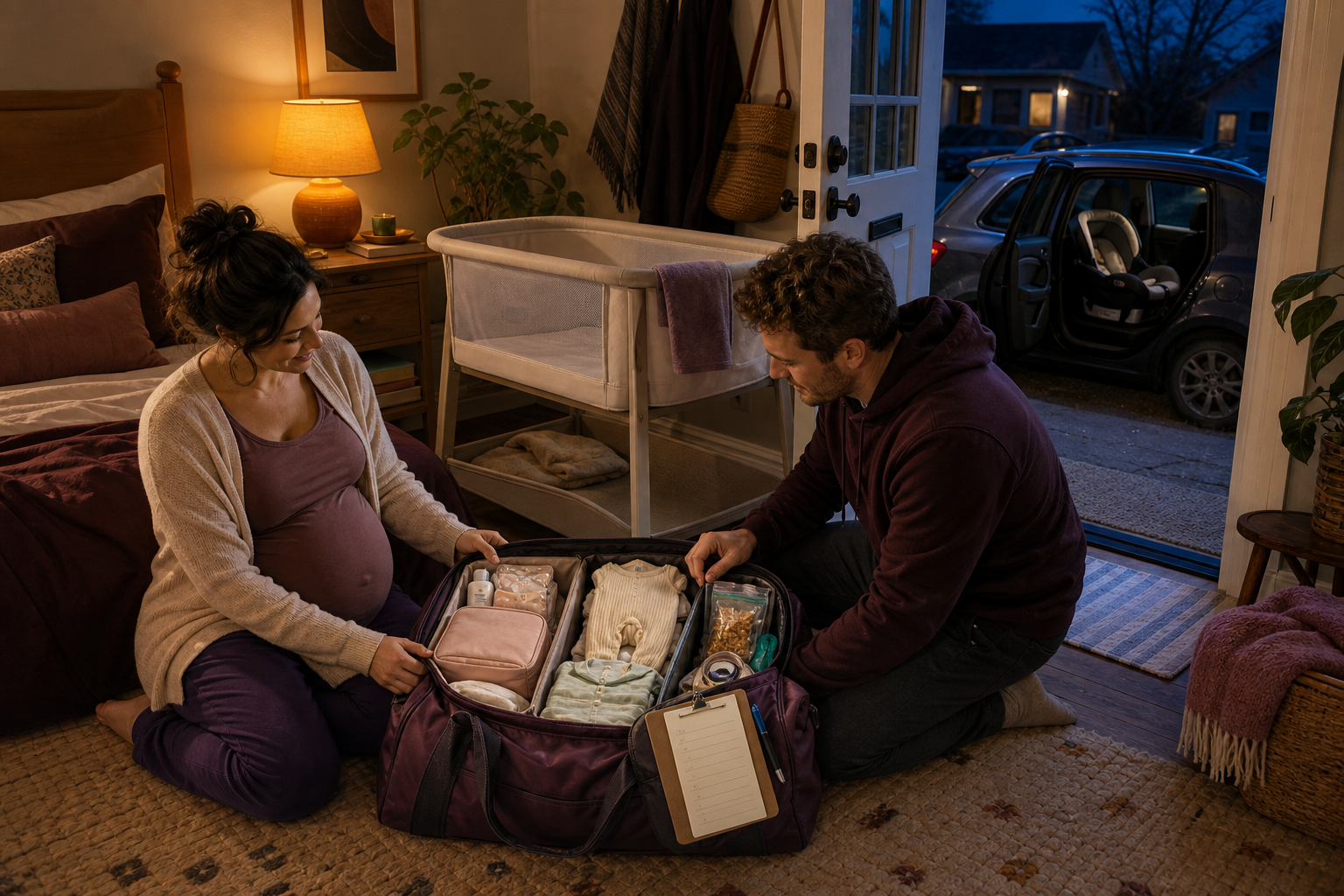
A practical hospital bag checklist has four groups: the birthing parent, the baby, the partner or support person, and genuinely optional items. Aim to have most durable items packed around 35 to 37 weeks, or earlier if your care team recommends it. Attach a short door list for the phone, glasses, current paperwork, and anything you still use every day.
Before buying or packing more, check what your hospital supplies and what its current rules allow. Postpartum supplies, diapers, feeding equipment, medicines, food, visitors, partner stays, parking, and storage all vary. The infant car seat belongs on the departure-readiness list, installed rear-facing in the back seat; it does not belong inside the bag.
The open bag has a way of making one tiny sock feel like a referendum on whether you are ready to become a parent. It is not. Readiness is not measured in newborn outfits, and the zipper does not award extra points for a portable fan, three robes, and a charger that fits every phone except yours.
What I would do first is give every item an owner and a job. The birthing parent needs labor, recovery, hygiene, and going-home basics. The baby needs a very small trip-home kit. The support person needs their own overnight and logistics pouch. Everything else has to earn its space. That turns “what to pack in a hospital bag” from a shopping problem into four manageable decisions.
The four-compartment plan
Give every item a person and a purpose
These compartments can be four packing cubes, two small bags, or four sections of one suitcase. The structure matters more than the luggage.
Birthing parent
Documents, labor and recovery clothes, personal care, approved medicines, phone, and going-home outfit.
Baby and ride home
A few simple layers, one going-home outfit, weather protection, and a correctly installed rear-facing car seat outside the bag.
Partner or support person
Their clothes, prescriptions, food plan, charger, parking method, household handoff, and modest rest item.
Optional and last-minute
Comfort items that truly help, plus the short list of daily-use things added on the way out.
The packing rule: if an item has no owner, no immediate job, and no hospital approval, it can probably stay home.
SleepBaby.org packing map · Four owners, one calmer final check

When to pack a labor hospital bag
There is no medically perfect packing week. Current maternity guidance lands in a practical window: the NHS suggests having a bag ready at least three weeks before the due date, UCLH recommends packing by 35 weeks, and Johns Hopkins advises packing several weeks ahead with a list for last-minute items. ACOG’s useful instruction is simpler still: pack and leave the bag handy.
For many families, that means making the hospital-policy call and gathering documents around 32 to 34 weeks, then having most of the bag finished around 35 to 37 weeks. If your clinician recommends earlier readiness, use the earlier date. If you are already beyond that window, do not panic-pack the entire nursery. Start with identification, phone, charger, basic clothing, toiletries, baby going-home clothes, and car-seat readiness.
The zipped-bag timeline
-
First: download or request the hospital’s current list. Confirm supplies, medicines, food, support people, parking, arrival, and bag limits. -
Next: add durable clothing, toiletries, document folder, baby outfit, and the support person’s separate items. -
Before the final weeks: install the rear-facing car seat, check the route and after-hours entrance, and make sure someone else knows where the bag is. -
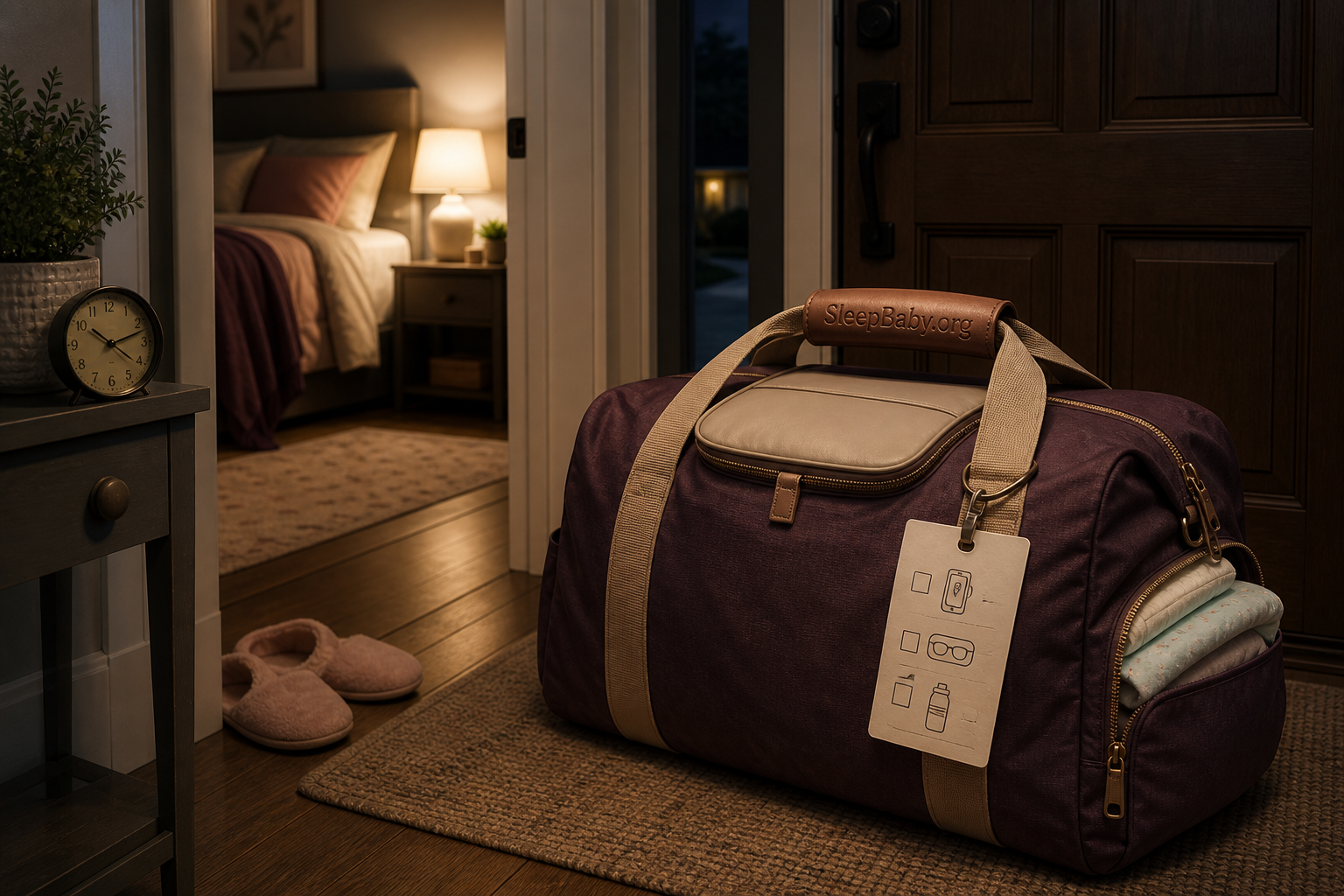
At the door: use one short list for the phone, glasses, keys, current paperwork, approved medicines, water, and allowed snacks.
If you are wondering whether tightening is practice contractions or labor, use the separate guide to Braxton Hicks contractions versus real labor and call your maternity team according to your own plan. The bag should be waiting for the decision; it should never make the decision.
Call before you collect
What to ask your hospital before you pack
A local hospital list can save more space than another shopping tab. Ask these questions once, write down the answers, and mark the policy-dependent items in the printable list below.
Supplies and feeding
- Are pads, disposable underwear, peri-care items, or cold packs supplied?
- Are diapers, wipes, hats, blankets, bottles, formula, or pump equipment supplied?
- Should any feeding items come from home?
Medicines and people
- Should personal prescriptions come in original containers, or is a current list enough?
- May a support person stay overnight, eat in the room, or bring bedding?
- What are the current visitor and photography rules?
Arrival and storage
- Which entrance is used after hours, and where should the driver park?
- Which identification, registration, or insurance details are required?
- How much storage is available, and is there a bag-count limit?
Medication boundary: bring an accurate medication and allergy list. Ask whether the hospital wants any personal medicines brought with you. Do not stop, start, hide, share, or self-administer a medicine against clinician or hospital instructions.
What the birthing parent actually needs
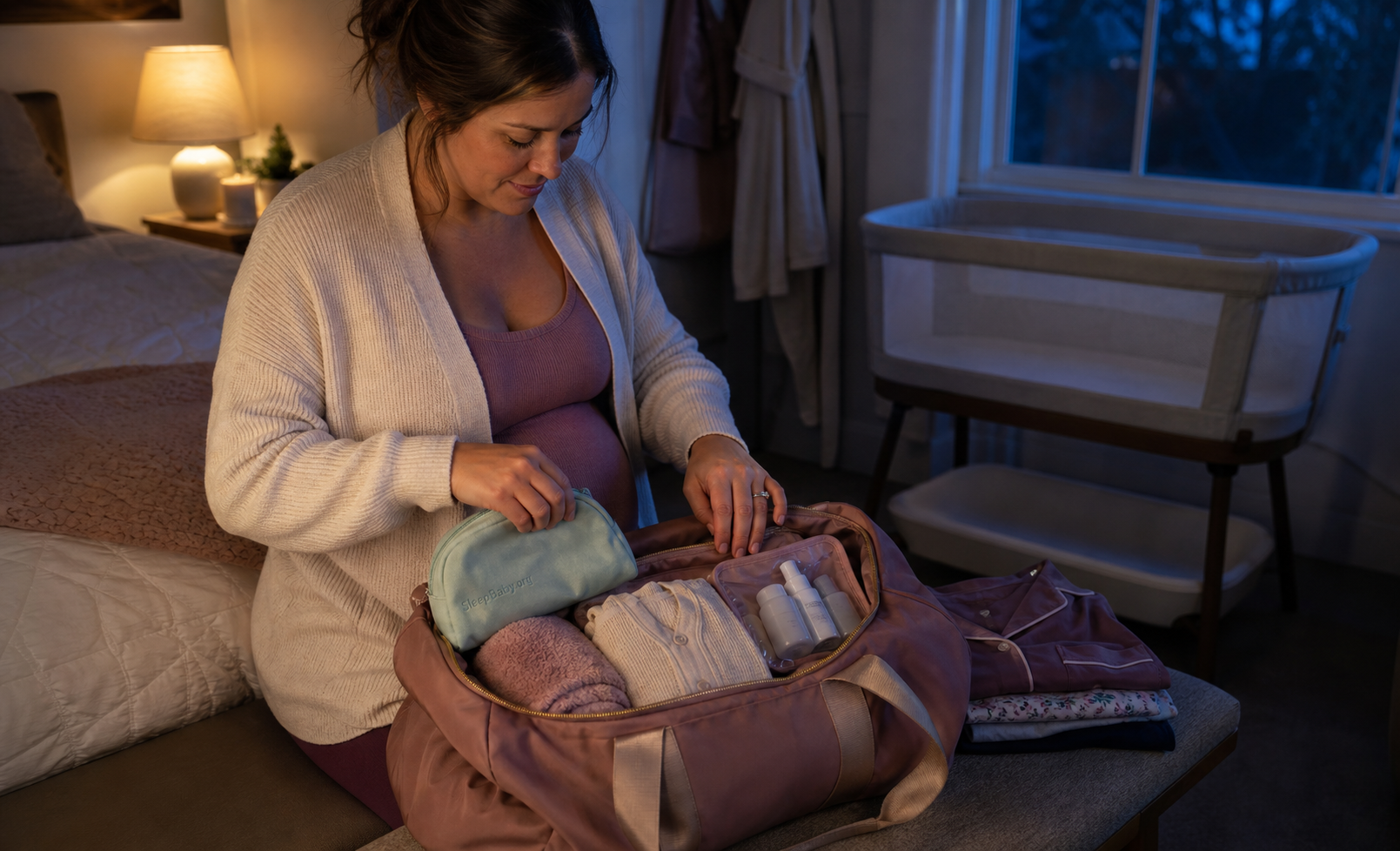
Start with the things that identify you, help the care team care for you, and get you through an ordinary overnight stay. Then add comfort. That order protects the essentials from being buried beneath the pillow you may or may not use.
Documents and communication
- Photo identification and requested insurance or registration details.
- Prenatal or maternity notes if your care system asks you to carry them.
- A concise preferences summary, if requested.
- Current medication and allergy list.
- Care-team numbers saved in the phone.
Clothes for labor and recovery
- Loose nightwear or labor clothing if you want your own.
- Robe, socks, and nonslip slippers or slides.
- Comfortable underwear and feeding-support bras or tops that fit your plans.
- A loose, weather-appropriate going-home outfit.
- Small bag for used clothing.
Personal care and daily use
- Toothbrush, toothpaste, deodorant, lip balm, hair ties, brush or comb.
- Glasses, case, and contact-lens supplies if used.
- Phone and long charging cable.
- Hearing, mobility, sensory, or communication aids you routinely use.
- Water bottle and snacks only if the unit allows them.
Keep private information private. Put documents in one closed folder or a secure phone location, not on an outside luggage tag. The printable checklist below names categories; it does not ask you to write policy numbers, patient numbers, addresses, passwords, or medical-record identifiers where someone else can see them.
A complete birth-preferences worksheet does not belong inside this packing article. Carry the concise version your facility requests, but keep decisions about labor, delivery, newborn care, and contingencies in the separate birth-plan job. That page is not yet live, so this article will not send you to a broken link.

What to pack for the baby: a small trip-home kit
The baby needs much less than the open suitcase suggests. Pack a few size-appropriate bodysuits or sleepers, one going-home outfit, and a season-appropriate hat or outer layer. One practical size backup is useful; an entire newborn wardrobe is still an entire newborn wardrobe.
Add a muslin or burp cloth if your unit asks for one. Bring diapers, wipes or cotton, bottles, formula, or pump parts only according to the hospital’s current guidance and your care plan. Feeding supplies are not a place for “just in case” pressure or brand recommendations.
A light blanket can be useful for carrying the baby outdoors or placing over the secured harness after buckling, if needed for the weather. It does not go under the harness, and it is not loose sleep-space bedding.
Ready outside the bag
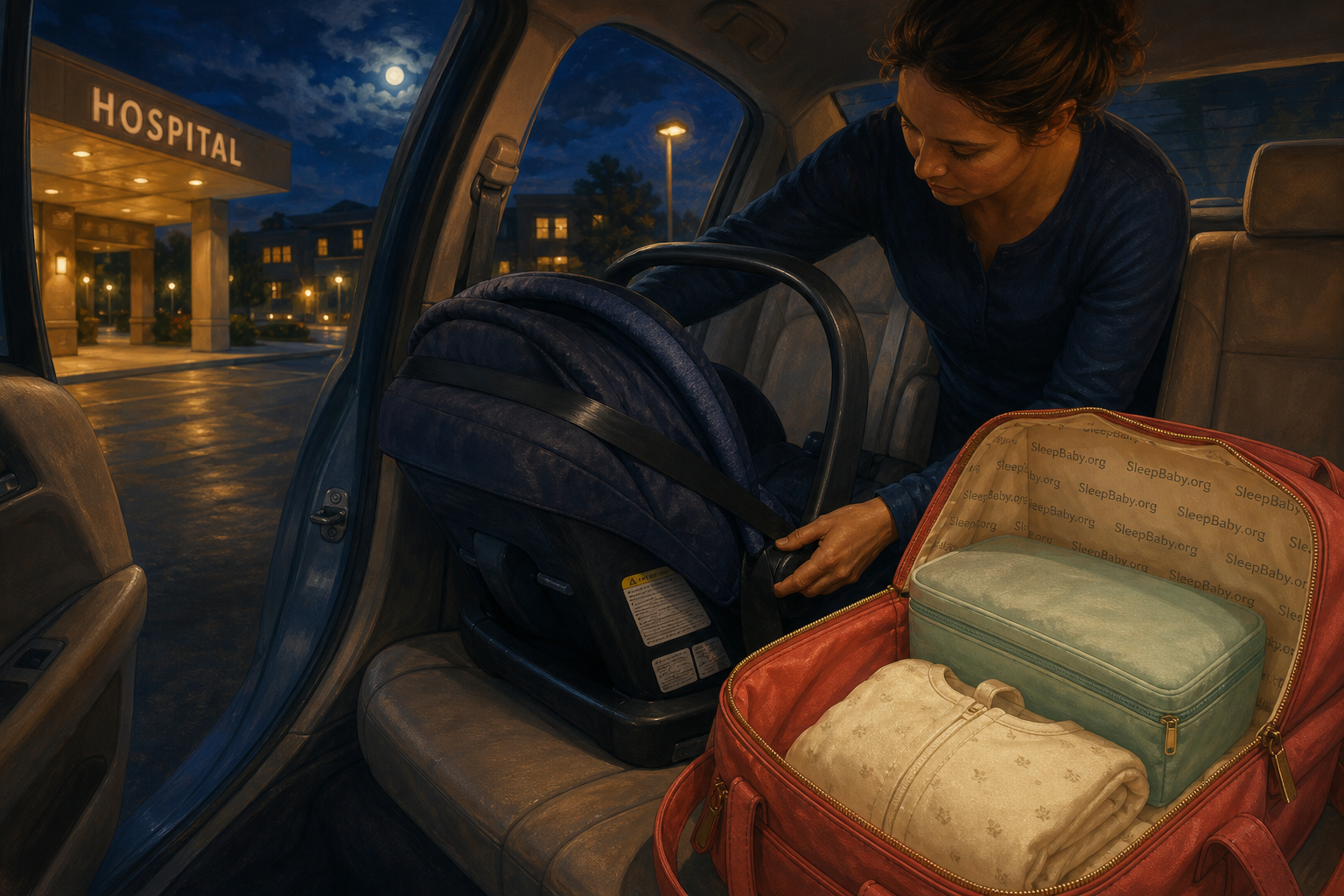
The five-point rear-facing car-seat check
- Use an appropriate rear-facing seat in the back seat and read both the seat and vehicle manuals.
- Set the recline angle according to the seat instructions.
- At the belt path, the installed seat should not move more than one inch side to side or front to back.
- Keep harness straps flat and snug, with the chest clip at armpit level.
- Do not place bulky coats, padded outfits, or blankets under the harness.
For seat-specific help, use NHTSA guidance, both manuals, or a certified child-passenger-safety technician. This checklist cannot confirm compatibility or installation from a description.
Keep the child rear-facing until the car-seat manufacturer’s rear-facing height or weight limit is reached. The seat is a departure requirement, not a sleep destination after travel. Once the ride ends, move a sleeping baby to a firm, flat, level sleep surface as soon as practical.
What the partner or support person needs
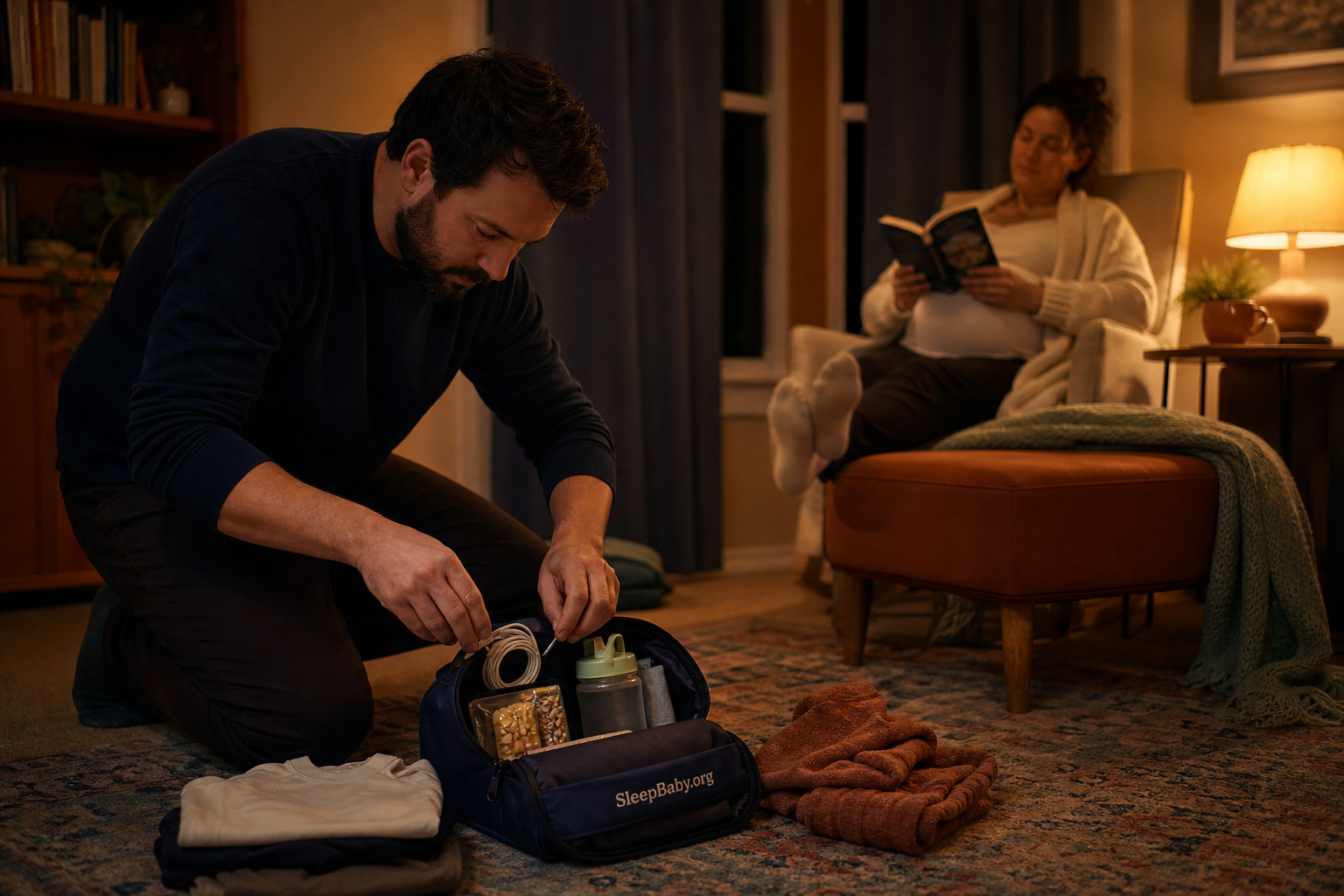
The support person gets a separate bag because the long charger should not have to support the whole family emotionally. Their essentials are simple: a change or two of comfortable clothes, toiletries, their own prescription medicines, glasses or lens supplies, phone, charger, allowed snacks, and a plan for parking and overnight food.
Add keys, payment method, household or pet-care notes, important contacts, and any requested identification. If the unit allows overnight stays, a modest pillow, eye mask, or light layer may help. If there is a birth pool, ask whether the support person needs swimwear and where wet items go. None of those rules should be guessed from another hospital’s list.

Optional comfort items that may earn the space
Comfort is not frivolous, but it should be personal. A familiar pillow in a distinctive case, eye mask, lip balm, small approved fan, music, a printed photo, camera, book, or downloaded entertainment may make a long stay feel more human. Choose the two or three things you actually use when you are tired, not the things a stranger arranged beautifully beside a beige suitcase.
Nothing in this section changes labor outcomes, recovery, feeding, or infant sleep. It is allowed to be useful simply because it helps you rest, focus, or feel like yourself.
What to leave at home
- Jewelry, sentimental valuables, watches, and large amounts of cash.
- Candles, open flames, or unapproved heating and electrical devices.
- Duplicate outfits and excess luggage that make room changes harder.
- Nonessential electronics you do not want to track or charge.
- Supplements, medicines, feeding products, or equipment the care team has not approved for use.
- Bulky newborn layers intended to sit beneath the car-seat harness.
If you have an induction, planned cesarean, or a longer drive
A scheduled admission makes the calendar easier, but it does not create one universal bonus list. Ask for the exact arrival time, entrance, registration process, food or fasting instructions, medication plan, expected stay, and support-person rules. Follow those instructions over any general checklist online.
For a longer drive, prepare the transport pieces sooner: fuel or charge the vehicle, confirm the route and backup driver, install the car seat, arrange care for children or pets, and keep the bag where it can be loaded quickly. Do not use distance, contraction timing, or whether this is a first baby to calculate your own departure time. That decision belongs with your maternity team.
If your clinician advises earlier readiness, finish the bag earlier without treating that advice as a prediction. Preparation is allowed to be boring. In fact, boring is the dream: the bag sits untouched, the door list stays clipped to the handle, and nobody has to search for a contact-lens case under pressure.
The personal needs a generic checklist can miss
A useful labor hospital bag should make your ordinary needs easier to communicate, not ask you to become a generic patient for the weekend. If you use hearing aids, glasses, mobility equipment, a communication device, a breathing device, sensory supports, or another daily aid, ask the hospital what should come with you and how it will be stored, powered, cleaned, or labeled. Put the charger or consumable supplies beside the aid now instead of trusting your future self to remember both halves.
Write down allergies, medication details, access needs, and the name of the person who can help explain your usual setup. Request an interpreter through the hospital rather than asking a child or untrained visitor to translate medical decisions. If religious clothing, modesty, dietary practice, hair care, or a meaningful ritual item matters to your stay, ask how the unit can support it and whether any object has a safety restriction.
This is also where a small backup plan helps. Keep essential phone numbers somewhere the support person can find them if your phone battery dies. Save the hospital address and after-hours entrance before the drive. If a document lives only in a portal, confirm that you can sign in without a password reset that depends on the laptop you wisely left at home.
See the packing rhythm
How a midwife turns a list into one manageable bag
If the open-bag stage still feels abstract, this NHS midwife walkthrough shows how a short essentials list becomes a packed bag without turning preparation into a shopping project. The video is older, so your hospital’s current written list controls supplies and rules.
Takeaway: use the video for the packing rhythm, then use your own hospital’s current list for supplies, medicines, food, visitors, and arrival rules.
Print, save, or screenshot
The complete person-by-person hospital bag checklist
Key: ☐ pack · [?] ask the hospital · [door] add last · [car] ready outside the bag
Birthing parent
- Requested identification and registration or insurance details
- Prenatal notes and concise preferences summary, if requested
- Current medication and allergy list
- Loose labor or recovery clothes
- Robe, socks, nonslip footwear
- Underwear and feeding-support garments that match your plan
- Loose going-home outfit
- Toothbrush, toothpaste, deodorant, lip balm, hair care
- Glasses case or contact-lens supplies
- Small dirty-laundry bag
- [?] Pads, disposable underwear, peri-care items, cold packs
- [?] Personal medicines in original containers
- [door] Phone, long charger, current documents, glasses
Baby and trip home
- A few bodysuits or sleepers
- One season-appropriate going-home outfit
- Hat or light outer layer for the weather
- Muslin or burp cloth if requested
- Light blanket for carrying or use over a buckled harness
- [?] Diapers, wipes, cotton, feeding supplies
- [car] Appropriate rear-facing seat installed in the back seat
- [car] Both manuals checked; correct recline and secure belt path
- [car] Harness flat and snug; no bulky layer underneath
Partner or support person
- Requested identification
- Change of clothes and toiletries
- Their prescription medicines and glasses supplies
- Phone and charger
- Parking method, keys, route, backup transport plan
- Child, pet, household, and contact handoff notes
- [?] Allowed snacks, drinks, and overnight food
- [?] Pillow, eye mask, bedding, swimwear, or overnight access
Optional and leave home
- Familiar pillow in a distinctive case
- Eye mask, music, approved fan, book, or downloaded entertainment
- Camera or meaningful focal object
- [?] Electronics or comfort devices the unit restricts
- [door] Keys, water, allowed snacks, daily-use aids
- Leave: jewelry, valuables, large cash, candles, excess luggage
- Leave: unapproved medicines, supplements, appliances, and feeding products
The final door list
Phone charger glasses keys current folder approved medicines water or allowed snacks car-seat check
SleepBaby.org printable checklist · No download, email, or shopping cart required

Hospital bag checklist FAQ
Is a suitcase, backpack, or duffel best?
Use the smallest familiar bag that keeps categories visible and fits the hospital’s storage rules. Wheels can help if the bag is heavy; a backpack can free both hands; two small bags can keep the support person’s items separate. There is no medically superior luggage shape.
Should we bring one bag or two?
One compact parent-and-baby bag plus one small support-person bag is often easier than one overloaded suitcase. If the hospital limits luggage, use one bag with separate cubes. Keep optional items in a car tote only when the weather, parking, and security situation make that safe.
What does the hospital usually provide?
There is no reliable universal answer. Some hospitals provide postpartum pads, disposable underwear, peri-care supplies, diapers, wipes, blankets, bottles, formula, or pump equipment; others ask families to bring certain items. Check the current list for your exact birth location.
What changes for a planned cesarean?
Comfortable loose clothing and easy footwear still matter, but the important differences are facility-specific arrival, fasting, medicine, mobility, wound-care, and length-of-stay instructions. Ask the surgical and maternity team for the exact list instead of adding products based on a generic cesarean packing post.
When should the bag go in the car?
Keep it wherever it is secure, easy to reach, and known to the person who may load it. A hot, freezing, or theft-prone vehicle may be a poor storage place for medicines, electronics, documents, or toiletries. The car seat can be installed in advance; the bag can wait near the exit.
What if we forget something?
Identification, medical information, a way to communicate, basic clothing, and a safe ride home matter. Most forgotten comfort items can be brought later or skipped. If urgent care is needed, leave the bag behind and follow the care team’s instructions.
Sources
- NHS: Hospital bag checklist
- ACOG: How to Tell When Labor Begins
- Cleveland Clinic: Hospital Bag Checklist
- UCLH: What to bring to hospital
- Johns Hopkins Medicine: Labor and Delivery
- NHTSA: Car Seats and Booster Seats
- NHTSA: How to Install Rear-Facing Car Seats
This guide offers general preparation information and does not replace instructions from your obstetric clinician, midwife, hospital, pharmacist, vehicle manual, or car-seat manufacturer.
Close the zipper, lower your shoulders
Let the packed bag hold one bedtime worry for you
The bag cannot promise how birth will unfold. It can do one quieter job: keep the documents, clothes, small baby outfit, and support-person plan from circling your mind every time the room goes dark. Clip the door list to the handle. Tell one other person where everything is. Then let preparation have a stopping point.
If pregnancy discomfort or an unsettled schedule is making that stopping point hard to find, the separate pregnancy sleep schedule guide covers the rest job. Packing ahead does not guarantee sleep; it simply means you do not have to repack the same question tonight.