
Skip the viral “flipped baby” sleep technique
Do not turn, toss, jerk, rapidly rotate, or invert a baby as a sleep hack. “Flipped baby” is a social-media label, not a recognized pediatric sleep method, and there is no established sleep benefit worth adding an avoidable handling, drop, or head-and-neck movement risk. Keep your baby’s head, neck, and body supported during soothing. When sleep begins, place your baby on their back in a separate, firm, flat, level, bare infant sleep space.
This is different from a baby who rolls over independently in the crib. You start every sleep on the back; once a baby can roll both ways on their own, Safe to Sleep® says they may remain in the position they choose after that back-first start. [3]
Why a ten-second clip can feel like a lifeline at 2 a.m.
The viral version usually arrives without the hour that came before it. You see a baby go quiet. You do not see the second feed, the damp shoulder of a pajama top, the bassinet transfer that failed twice, or the parent searching with one eye open while the other eye has resigned from night duty.
In the clearly disclosed composite scene I used while building this guide, a parent is standing beside a bare bassinet with a safely supported, wide-awake baby in both arms. A phone offers a dramatic movement that supposedly “resets” the baby. The clip is short, confident, and edited around the quiet moment. The parent’s hope is not foolish. It is exhausted.
I understand the seduction of an instant switch. When a baby has been crying against your collarbone for forty minutes, “do this once” sounds kinder than “observe a pattern for three nights.” But a visible pause is not proof of comfort, safety, or better sleep. A startled, disoriented, or overwhelmed baby may also become still for a moment.
A viral clip can borrow ten seconds of quiet. It cannot borrow safety from the next frame.


The Claim–Body–Night Check
Judge the hack by what happens to the baby—not by the edit
1. What exactly is being claimed?
“It made the baby quiet” is an observation. “It helps babies sleep” is a treatment claim. “It is safe” is a safety claim. Those are three different promises, and one short clip cannot establish any of them.
2. What does the baby’s body have to tolerate?
Look beyond the smile, music, and jump cut. Does the movement require abrupt acceleration, unsupported head or neck motion, inversion, a precarious grip, or a caregiver repeating the stunt while tired? If yes, the cost is already too high for an unproven sleep payoff.
3. What happens after the clip ends?
Where will the baby sleep? What caused the waking? Can another caregiver repeat the plan safely? A technique that ends without a firm, flat, level sleep surface and a realistic response to hunger, discomfort, illness, timing, or normal infant waking has not solved the night.
SleepBaby.org Claim–Body–Night Check: no sleep promise outranks safe handling.
What “flipped baby” appears to mean—and what this article will not demonstrate
Current trend coverage uses the phrase for videos in which a caregiver turns, flips, rotates, or briefly inverts a baby and presents the movement as a way to interrupt crying or trigger sleep. There is no standardized maneuver, age, speed, grip, or clinical protocol behind the name. That inconsistency is part of the problem: viewers may imitate whatever version reached their feed.
I will not provide a step-by-step description, body angle, grip, or “gentler” variation. A safety article should not become the clearest tutorial for the behavior it is asking families to skip. The useful information is the decision boundary: do not use acrobatic or forceful handling to make a baby quiet or sleepy.
The American Academy of Pediatrics explains that babies cannot fully support their relatively heavy heads and states that it is never safe to shake, throw, hit, slam, or jerk a child. [1] That guidance is about abusive head trauma; I am not labeling every parent who copied a foolish video as abusive. I am using the body fact that matters: an infant’s developing head-and-neck control makes forceful movement a terrible candidate for a bedtime experiment.
If the only way to make a technique sound acceptable is to keep changing what “flip” means, retire the technique. Gentle repositioning with full support is ordinary caregiving. A viral stunt is not.


A quiet baby is not the same as a helped baby
Parents naturally use the signals available to them: crying stops, eyelids lower, muscles loosen, the room becomes survivable again. Those signals matter. They just need interpretation.
A baby may become quiet because a gentle sway, sucking, familiar voice, or close contact meets a real need. A baby may also pause because a movement was startling or unfamiliar. Without evidence showing safer sleep, a lower-risk alternative, and an age-appropriate protocol, the pause cannot carry the entire conclusion.
The authoritative pediatric sources reviewed for this article recommend gentle, supported soothing: holding, quiet singing or humming, a pacifier when appropriate, calm walking or rocking, checking feeding and diaper needs, keeping a simple diary, and asking the child’s doctor when crying or sleep patterns raise concern. [2] None recommends tossing, jerking, inversion, or rapid flipping as a sleep intervention.
Do not ask, “Did the baby stop?” Ask, “Was the baby supported, comfortable, safe, and still headed toward a standards-aligned sleep space?”
That longer question is less glamorous. It is also much more useful at 2 a.m.
The Five-Risk Reality Check
What an edited clip can hide
| Hidden issue | Why it matters | Safer decision |
|---|---|---|
| Head and neck control | Infants have developing neck strength and relatively large heads. Sudden back-and-forth motion can injure the brain, and forceful handling is never a calming tool. [1] | Support the head, neck, and body; use slow, ordinary caregiving movements. |
| Grip and drop risk | A tired hand, squirming baby, slippery clothing, or repeated attempt can turn a stunt into a fall. | Keep two secure points of support and avoid any maneuver that depends on speed, momentum, or inversion. |
| Startle mistaken for calm | Brief stillness after a surprising movement does not establish relaxation or improved sleep. | Look for normal color, easy breathing, responsive movement, relaxed expression, and a settling pattern that lasts. |
| The real need goes unchecked | Hunger, a wet diaper, temperature, overstimulation, reflux symptoms, illness, pain, or ordinary developmental waking can remain. | Use a needs check before changing technique; call the pediatrician for persistent or concerning patterns. |
| Unsafe destination | A baby who becomes sleepy still needs a safe infant sleep surface. | Place baby on the back in a separate, firm, flat, level, bare crib, bassinet, portable crib, play yard, or bedside sleeper. [4] |
The Missing-Frames Test
Five questions the video cannot answer for you
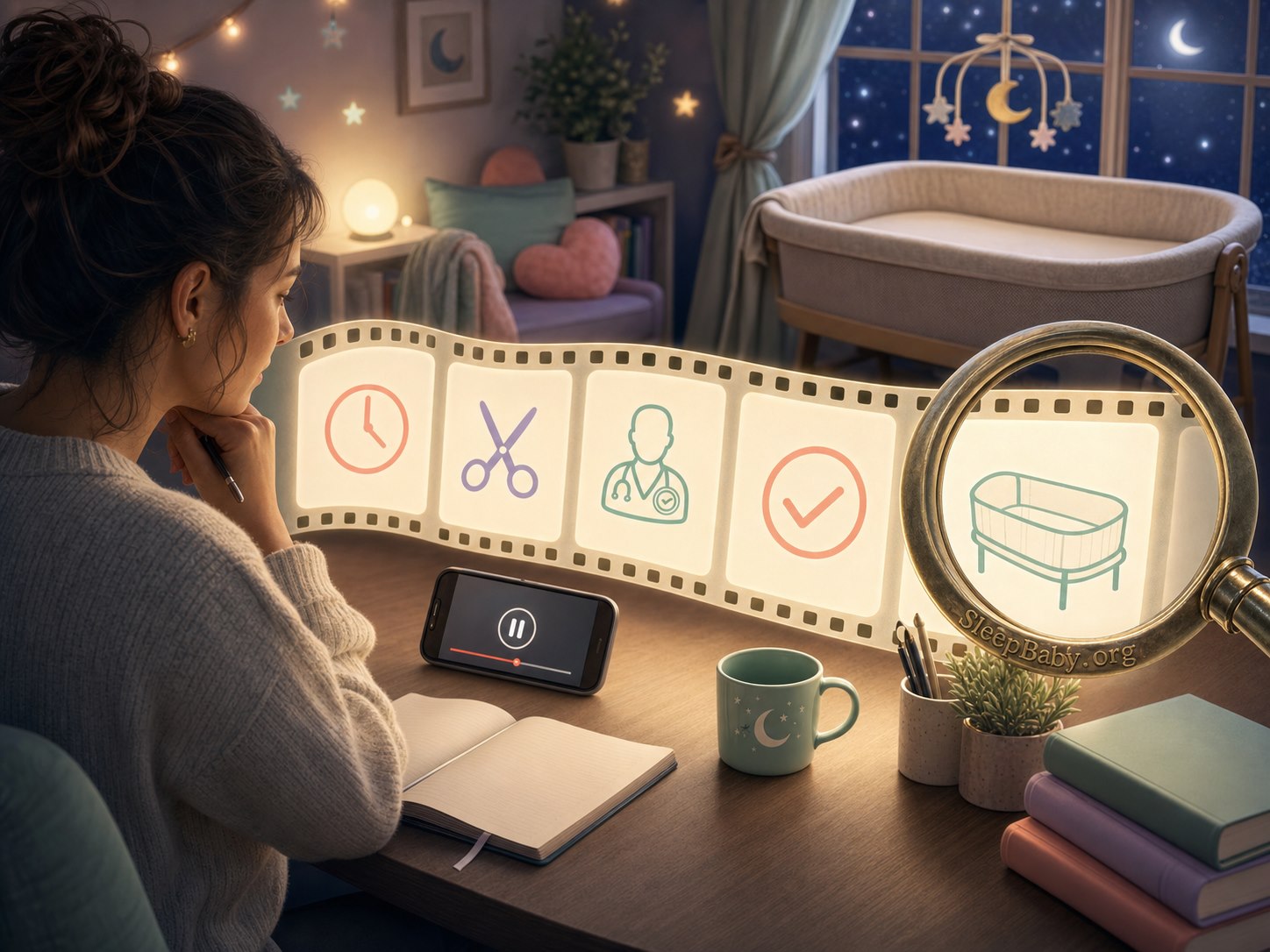
A social clip is built to show the moment that looks most convincing. A parent decision needs the frames on both sides of it. Before copying any baby-sleep trend, ask these questions in order:
- What happened before recording? Was the baby fed, burped, changed, already falling asleep, or simply pausing between cries? If the ordinary need was met off-camera, the stunt may be receiving credit for timing.
- What was removed from the edit? Did the baby cry, spit up, startle, arch, lose head support, or need several attempts? A smooth ten-second cut can hide a clumsy minute.
- Who defined the method? Is the creator a pediatric health professional speaking within their scope, or a confident parent naming a movement after it appeared to work once? Lived experience can be valuable; it cannot create a pediatric protocol.
- What outcome was actually measured? Quiet for a moment, asleep for five minutes, safer sleep, longer total sleep, and fewer night wakings are not interchangeable outcomes. If the clip does not define the result, do not let the caption define it for you.
- Where did the baby sleep afterward? The real endpoint is not the adult’s arms or the last frame. It is the baby placed on the back in a separate, firm, flat, level, bare sleep space—or a medical evaluation when the baby’s behavior suggests something is wrong.
This test works because it changes the object of attention. You stop trying to decide whether the creator looks trustworthy and start asking whether the claim is complete. Kind people can share unsafe ideas. Beautiful babies can appear in weak evidence. A sincere caption can still skip the part that matters.
SleepBaby.org Missing-Frames Test: before → edit → authority → outcome → safe destination.
Give every caregiver the same one-minute boundary
A trend is easier to stop when the alternative is already written down. Put this in the family text thread, on the babysitter note, or beside the routine:
“We do not flip, invert, toss, jerk, or use startling movements to settle the baby. Please support the head, neck, and body; check feeding, diaper, temperature, and illness clues; then use slow rocking, walking, humming, or the pacifier if appropriate. Start every sleep on the back in the bare crib or bassinet. If you feel overwhelmed, put the baby safely in the crib and call us.”
That script is intentionally unexciting. It does not ask a tired grandparent to remember a branded method, a numbered jiggle, or an angle from a video. It gives them the boundary, the replacement, and the exit when frustration rises.
If someone already saved the viral clip, you do not have to win a debate about whether the creator meant harm. Say, “I know the quiet moment looks convincing. We are using the pediatric safe-handling and safe-sleep route instead.” Then send the plan, not the stunt.
If “flipped” means your baby rolled in the crib, the answer is different
This phrase can create an accidental collision between an unsafe handling trend and a normal developmental milestone. A baby rolling from back to tummy is not performing the viral technique.
For every nap and night, place your baby wholly on their back. The back position is recommended through the first year, including for babies with reflux. [3] If your baby can roll from back to stomach and stomach to back independently, you do not need to spend the night repeatedly turning them. Keep the crib bare and let them choose their position after you placed them down on the back. If they can roll only one way, Safe to Sleep® says you may reposition them to the back when you notice a tummy roll.
Stop swaddling for sleep when rolling begins. Do not use a positioner, rolled towel, wedge, weighted product, or loose bedding to prevent movement. The sleep space should remain firm, flat, level, and covered only with a fitted sheet. [4]
If your question is really about getting a sleeping baby out of an unsafe seat, use the calm transfer plan in Can a Baby Sleep in a Bouncer? The memorable route there is Notice → Lift → Flat—not flip, startle, or wait for a deeper doze.

The Gentle Reset Ladder
Use the smallest safe step that matches the clue
- Pause the feed, not the baby. Put the phone face-down. Check breathing, color, temperature, responsiveness, and whether the cry sounds unusual. If something looks medically wrong, skip the ladder and seek care.
- Check the ordinary needs. Hunger cues, a wet or soiled diaper, trapped air, clothing, room temperature, overstimulation, and illness are more useful clues than a trend name.
- Lower the room. Dim bright light, reduce voices and screens, and make the next five minutes boring in the most loving possible way. Bedtime does not need a finale.
- Choose one gentle motion. Hold the baby securely, support the head and neck, and use slow walking, rocking, humming, or steady contact. Stop if the baby appears distressed or the movement is making you tense.
- Use sucking when appropriate. Feed for hunger; otherwise consider a pacifier if it is safe and appropriate for your baby. Do not force it.
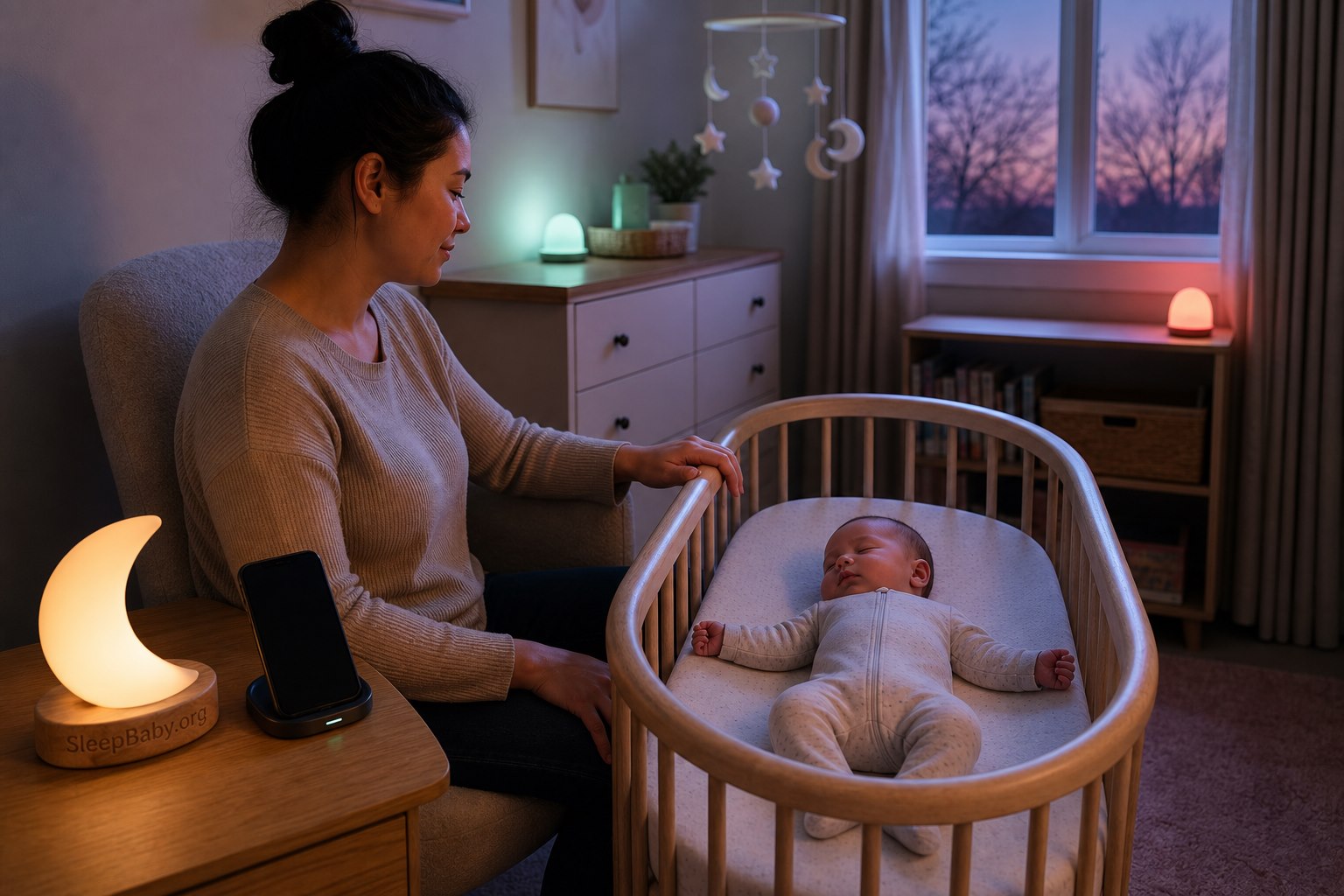
- Finish on the safe surface. When your baby is ready for sleep, place them on the back in the prepared separate crib or bassinet. If the transfer wakes them, the destination remains the same.
- Tag in another calm adult. If frustration is climbing, place the baby safely in the bare crib and step away briefly, or ask a trusted caregiver to take over. A crying baby in a safe crib is safer than a frantic adult attempting a stunt. [1]
SleepBaby.org Gentle Reset Ladder: observe → meet the need → soothe gently → back to the safe surface.
When “nothing works” is actually a pattern worth bringing to the pediatrician
A sleep hack becomes most tempting when the same difficult moment repeats. Instead of collecting more dramatic techniques, collect better clues for two or three days.
- Before the crying
- Note the last feed, nap, wake time, diaper, room temperature, illness symptoms, and where the routine changed.
- During settling
- Record the baby’s body position, breathing, color, spit-up, arching, rubbing, pulling, sweating, and which gentle response helped or made things worse.
- During the night
- Track how often waking happens, how long it lasts, whether there is loud snoring, gasping, pauses, repeated vomiting, fever, poor feeding, or an unusual cry.
- The next day
- Notice wet diapers, alertness, feeding, mood, and whether the baby returns to their usual self.
Bring the notes to your baby’s clinician if crying is persistent, feeding is poor, vomiting repeats, weight gain is a concern, breathing looks difficult, a fever occurs in a young infant, sleep changes suddenly, or your instincts say the baby is not acting normally. A log does not diagnose the problem. It gives the clinician a cleaner starting point.
If closeness is the only setting that seems to work, Why Does My Baby Sleep Better in My Bed? separates the comforting bundle of touch, voice, warmth, and quick response from the adult mattress, then rebuilds those cues around a separate infant sleep surface.
What to do if someone already tried the technique
First, stop. Do not repeat the movement to “check” whether it was done correctly. Settle your baby with the head, neck, and body supported and observe them closely.
If the baby was dropped, struck their head, had rapid forceful back-and-forth movement, lost consciousness, or may have a neck injury, contact a medical professional promptly even if the clip made the event look small. Babies and toddlers can be harder to assess because they cannot describe dizziness, vision changes, or pain.
Go to the emergency department right away after a hit or jolt if an infant will not stop crying and cannot be consoled, will not nurse or eat, vomits repeatedly, looks very drowsy or cannot be awakened, has unequal pupils, has a seizure, behaves unusually, or loses consciousness. [5] Call emergency services for severe breathing trouble, a seizure, unresponsiveness, or loss of consciousness.
This section is a no-joke zone. If your baby does not look right to you after an unsafe movement, your observation matters. Tell the clinician exactly what happened rather than softening the description out of embarrassment. Accurate details help care.


Watch the safe destination—not the stunt
Creator: Safe to Sleep® campaign, Eunice Kennedy Shriver National Institute of Child Health and Human Development. Watch “Clear the Crib to Reduce the Risk of Sleep-Related Infant Death” on YouTube.
Why it is here: an unsafe demonstration would turn this article into a tutorial. This official public-health video shows the part every settling attempt must reach: a clear infant sleep space.
Takeaway if you cannot watch: place baby on the back on a firm, flat, level sleep surface with only a fitted sheet; keep soft, loose, and weighted items out.
The questions parents usually ask next
Could a very gentle version be safe?
Ordinary slow repositioning with full head, neck, and body support is caregiving, not a sleep technique. Once the claim depends on turning, flipping, inversion, speed, momentum, or a startle response, there is no reason to keep negotiating with it. Choose a gentle soothing method that does not need a disclaimer.
What if my baby laughs?
A laugh does not establish that a maneuver improves sleep or removes physical risk. Babies may enjoy many types of awake, age-appropriate play. Bedtime handling should still remain supported, predictable, and calm.
Is this the same as vestibular input?
No internet label should substitute for an individualized recommendation from a qualified pediatric professional. If your child seems to seek intense movement or has developmental, muscle-tone, reflux, feeding, or sensory concerns, ask the pediatrician whether an occupational or physical therapy evaluation is appropriate. Do not translate a general sensory term into an unsupervised sleep stunt.
What if my baby will not sleep on the back?
Continue placing your baby on the back for every sleep and discuss persistent difficulty with the pediatrician. Do not use stomach placement, side placement, wedges, positioners, or a viral handling technique to force sleep. The guide to crib canopy safety includes a useful clear-circle approach for checking everything around the infant sleep space.
Will skipping the trend mean more crying tonight?
Possibly. Safe choices do not promise a silent baby on command. They give you a repeatable route through the crying without asking a small body to absorb an unnecessary risk. That is not failure. That is caregiving with the edit turned off.
Let the phone be the thing you flip
Face it down. Keep your baby upright or cradled with full support. Check the ordinary needs. Make the room smaller, dimmer, and quieter. Use one gentle response long enough to learn whether it helps. Then finish on the back in the bare crib or bassinet.
The tender truth is that your baby does not need you to invent a trick impressive enough for the algorithm. They need your hands to stay trustworthy when both of you are tired.
Let the viral clip end with you. Let the night continue with support, observation, and the safest boring plan in the room.
When the phone offers a stunt and your arms need a plan
Flip the phone down; keep the next step gentle
A difficult bedtime does not need a dramatic trick. It needs a small sequence that still makes sense when you are tired: notice the clue, meet the need, choose one calm response, and return to the safe sleep surface. SleepBaby can help you turn the real pattern behind the crying into a bedtime plan your whole household can repeat.