

The best breastfeeding position is not a pose you win by copying perfectly. It is the one in which you are supported, your baby is close and untwisted, and the latch feels comfortable while milk is moving. Some feeds will settle into cradle hold in thirty seconds. Others begin with three pillows, a footstool, and the realization that your shoulder has been trying to live beside your ear.
There is no universal winner among breastfeeding positions. Cross-cradle gives you more control while a baby is learning. Football hold can keep pressure away from a cesarean incision. Laid-back nursing lets your body carry more of the baby’s weight. Side-lying may reduce strain during a night feed, but it comes with a firm safe-sleep boundary. The name of the hold matters less than what your bodies are doing inside it.
If you searched for the best breastfeeding positions or practical nursing positions, start with the quick chooser below. Then use the same latch-and-transfer check in every hold. A new arrangement can help. It cannot diagnose low milk supply, fix every painful latch, or replace someone skilled watching a full feed when things are not working.

Before choosing a hold, build the position from the parent outward
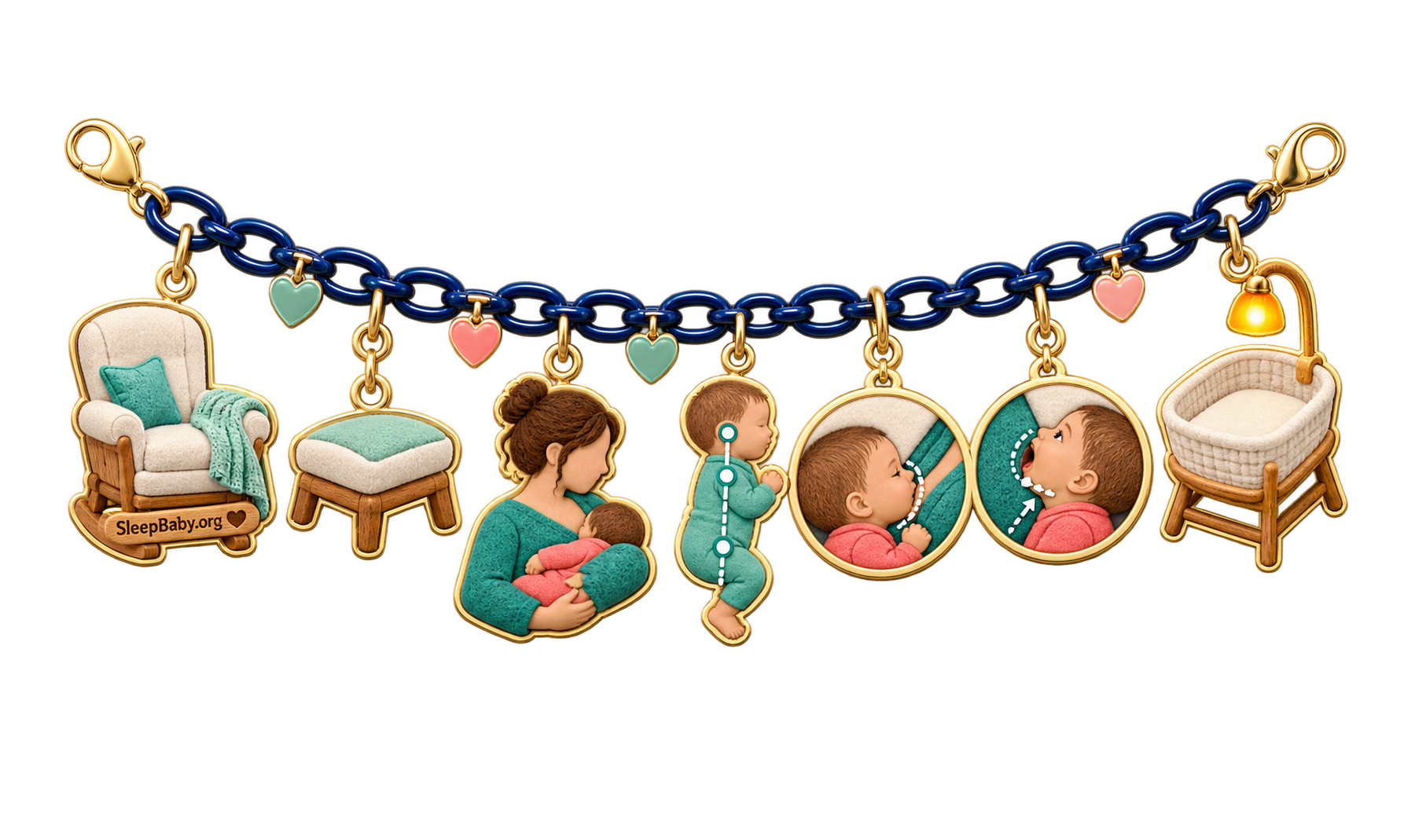
I would fix the chair before I tried to fix the baby. Sit or recline where your lower back is supported. Let your feet reach the floor or a stable footrest. Bring a pillow under your arm if it keeps the baby’s weight from pulling on your neck, but do not use a pillow as a substitute for holding the baby securely.
Now turn your baby toward you. Imagine one soft line running through the ear, shoulder, and hip. If the belly points at the ceiling while the face turns toward the breast, your baby is feeding with a twisted neck. Turn the whole body instead. Keep the baby’s chest close enough that you are not carrying their weight at the ends of your forearms.
Begin with the baby’s nose level with the nipple. That small starting position leaves room for the head to tip back and the mouth to open wide. Brush the upper lip, wait for the yawn-shaped opening, and bring the baby in promptly with the chin leading. Support the shoulders and neck; avoid pushing the back of the head, which can make a baby pull away.
The alignment compass
Check four points before adding another pillow
-
1. Parent
Back supported, shoulders down, elbows resting, feet stable. Bring baby up; do not fold your body down for the whole feed.
-
2. Baby
Chest close, hips tucked in, ear-shoulder-hip aligned, and enough neck freedom to tip the head slightly back.
-
3. Approach
Nose starts near nipple. Wait for a genuinely wide mouth, then bring baby to breast with the chin arriving first.
-
4. Feed
Chin touches, lips turn outward, cheeks stay full, jaw moves deeply, and swallowing follows the early quick sucks.
What changes my mind: a position that looks tidy but remains painful or produces little swallowing is not a good position for this feed.
SleepBaby.org original teaching framework. It helps organize a feed; it does not replace an individualized feeding assessment.
Which breastfeeding position should you try first?
Choose for the problem in front of you, not for the hold you think experienced parents are supposed to use. If you need to see the latch, use a hold that gives your hand more control. If your incision or perineum hurts, move weight away from it. If your arms are doing all the work, let a reclined surface support more of the baby.
| Try this hold | Often useful when | Watch for |
|---|---|---|
| Cross‑cradle | Baby is learning to attach; you want a clear view and more shoulder control. | Do not push the back of the head or grip the neck tightly. |
| Cradle | Latch is becoming consistent and you want an easy everyday hold. | Baby’s head can drift into the elbow before the mouth reaches nipple height. |
| Football or clutch | You want weight off an incision, need a close view, or are positioning twins. | Baby can slide too far behind you or curl with chin pressed to chest. |
| Laid‑back | Your arms are tired, skin‑to‑skin helps, or milk flow feels forceful. | Recline rather than lying flat, and keep baby’s airway visible. |
| Side‑lying | Sitting is painful or a night feed needs less strain. | Pillows and loose bedding near baby; caregiver drowsiness; safe transfer after feeding. |
| Upright or koala | An older baby has sturdy trunk control or both bodies prefer a vertical approach. | Do not assume upright positioning treats reflux or another medical problem. |
Cradle and cross-cradle: similar silhouettes, different control
More guidance
Cross-cradle hold
- Support baby with the arm opposite the breast you are offering.
- Place your palm across the upper back and shoulders, with fingers supporting the neck.
- Turn baby’s chest and hips toward you; keep the nose at nipple height.
- Use the breast-side hand to shape or support the breast well behind the areola if helpful.
- Wait for the wide mouth, then bring the shoulders in so the chin reaches first.
Best job: seeing the mouth and controlling the approach while a baby learns or relatches.
More familiar
Cradle hold
- Place baby’s head along the forearm on the same side as the breast.
- Support the back and hips so the whole body faces you.
- Lift baby to breast height before the head settles deep into your elbow.
- Keep the lower arm from being trapped awkwardly between your bodies.
- Use your opposite hand for breast support or to steady baby’s body as needed.
Best job: an everyday hold once baby can attach without much steering.
If cradle feels natural but the latch keeps landing shallow, switch to cross-cradle for the first minute. Once the baby is deeply attached and feeding steadily, you can slide into cradle without breaking the latch. The hold is allowed to evolve mid-feed; nobody is grading the choreography.
Football or clutch hold: keep baby beside you, not behind you
In football hold, the baby rests along your side under the arm on the same side as the breast. This can keep the baby’s weight away from a cesarean incision, give you a close view of the mouth, and leave room to position twins. It can also go sideways—literally—when the baby’s hips drift behind your back and the chin folds toward the chest.
- Place a firm support beside you so the baby reaches breast height without your shoulder lifting.
- Tuck the baby’s body along your ribs, with feet pointing behind you and hips close to your side.
- Support the shoulders and neck in your palm. Let the head tilt back slightly rather than pushing it forward.
- Keep the baby’s nose level with the nipple, wait for a wide mouth, and draw the shoulders in.
- After attachment, check that the neck remains long, the chin is not pressed into the chest, and your wrist is not carrying the whole feed.
For twins, simultaneous football holds can be practical, but learning one baby’s latch at a time is reasonable. Extra hands from a lactation professional or support person can help you arrange bodies and pillows before both babies are hungry. A photo of a symmetrical tandem feed is not the standard; effective feeding and a parent who can breathe are.

Laid-back breastfeeding: let the surface carry some weight
Laid-back nursing means semi-reclined, not flat. Support your head, shoulders, and back so you can see your baby. Place the baby tummy-down against your front, with the face near the breast and the body supported by yours. Use your arms as guardrails rather than asking them to suspend the baby in midair.
This position can make room for skin-to-skin contact and may feel useful when milk arrives quickly, because the baby is not lying entirely below a strong flow. That is an option, not a guarantee. If your baby coughs, sputters, repeatedly pulls away, or struggles through feeds, ask for feeding help rather than assuming gravity has solved the cause.
After a cesarean birth, angle the baby across your chest or to one side so the abdomen and incision are comfortable. Protect the healing body without letting the baby slide into a position where the nose or mouth is covered. You should be able to see the face and respond throughout the feed.
Side-lying breastfeeding: a feeding position, not a safe-sleep plan
Lie on your side with your head and back supported. Place your baby on their side facing you, tummy-to-tummy, with nose level to nipple and ear, shoulder, and hip aligned. Use your free hand to guide the shoulders toward you as the mouth opens. Keep your arm and any pillow away from the baby’s face.
A rolled support behind the baby may help during setup only while you are awake and watching. Remove it when the feed ends. Do not leave a baby propped on the side for sleep.
If you might fall asleep during a feed
Avoid feeding on a couch or armchair, where an accidental sleep can be especially dangerous. Reduce loose pillows and blankets near the baby, ask another awake adult to stay nearby when possible, and set up the baby’s separate sleep space before the feed.
When the feed ends—or as soon as you wake after an accidental doze—place your baby on their back in a separate crib or bassinet with a firm, flat sleep surface. Side-lying breastfeeding is not an endorsement of bed-sharing.
Upright or koala hold: useful when the baby can stay supported
In an upright variation, the baby straddles or sits against your thigh or hip while facing the breast. Support the upper back and shoulders, keep the head free to tip slightly back, and bring the body close. This is often easier with an older baby who has more trunk control. A younger baby needs much more complete support.
Upright positioning may simply feel better for a particular dyad. Do not turn that preference into a treatment claim. It does not diagnose or cure reflux, swallowing dysfunction, airway trouble, or forceful milk flow. Repeated coughing, color change, breathing difficulty, arching with distress, or poor growth belongs with the baby’s clinician and a skilled feeding assessment.

Match the hold to the body and the feed—not a diagnosis
After cesarean birth
Try football, side-lying, or laid-back with the baby angled away from the incision. Support your movement and follow your own postoperative guidance. New or worsening pain, drainage, fever, or concern about the incision needs medical advice.
Larger breasts
A rolled towel beneath the breast can lift its weight, and a C-hold well behind the areola can help present the breast. Keep fingers away from the latch zone and confirm the baby’s nose remains clear without pressing the breast down near the nostrils.
Forceful let-down
Laid-back positioning may let the baby approach flow differently. If your baby repeatedly sputters, comes off gasping, or cannot coordinate the feed, seek help. Do not reduce feeds or use a supply treatment based on a web article.
Twins or multiples
Football holds can create space for two babies, but individual latch practice is not a failure. Position one baby safely before adding the second, and get hands-on help if maintaining both airways, bodies, and latches feels precarious.
The latch-and-transfer traffic light works in every nursing position
A hold is only the scaffolding. The feed still has to transfer milk. I would watch the baby, listen for swallowing, and pay attention to what your body is telling you. The angle can be beautiful and the latch can still be shallow.
Signature teaching tool
Stay, reset, or get help?
Stay with the feed
- Mouth is wide and lips are turned outward.
- Chin rests against the breast and cheeks stay rounded.
- Early quick sucks change to deeper jaw movement and swallowing.
- Tugging is comfortable and does not remain sharply painful.
Pause and reset
- Pain continues beyond the first moments or worsens.
- Lips curl inward, cheeks dimple, or clicking repeats.
- Baby slides onto the nipple or keeps losing the breast.
- Nipple comes out flattened, creased, blanched, cracked, or bleeding.
Get skilled help
- Repeated resets do not improve comfort or attachment.
- There is little swallowing or baby tires before feeding effectively.
- Diaper output, jaundice, alertness, or weight trajectory is concerning.
- Either parent or baby has symptoms that need medical evaluation.
One feed cannot prove supply. Intake is a pattern built from swallowing, feeding behavior, diaper output, and weight checks—not breast softness, pumping volume, or how long a baby stays attached.
SleepBaby.org original decision tool, based on official latch and newborn-feeding guidance.
Watch the whole body, not just the mouth
See several breastfeeding positions used with real babies
Global Health Media Project demonstrates the shared alignment points, then shows semi-reclined, cross-cradle, cradle, underarm, side-lying, and twin positions. Bodies differ, so use the video to notice principles—not to force your feed into an identical shape.
Takeaway: the hold may change, but close contact, a straight body line, free head movement, and a deep comfortable attachment keep returning. If your feed stays painful or ineffective, a video is the beginning of troubleshooting—not the final word.

What to do when the latch hurts or keeps slipping
Do not spend the whole feed trying to tolerate a painful attachment. Slide a clean finger into the corner of the baby’s mouth to break suction, then reset. Pulling the baby straight off can injure the nipple further.
-
1. Unlatch gently
Break suction at the mouth corner. Check the nipple for a crease, flattened edge, blanching, crack, or bleeding.
-
2. Rebuild your base
Settle your back and feet, bring baby closer, and turn the whole body toward you. Remove a pillow if it is pushing baby too high.
-
3. Change the approach
Move nose to nipple, wait longer for the wide mouth, and bring shoulders in chin-first. Try cross-cradle if you need more control.
-
4. Stop repeating
If pain or ineffective feeding persists, arrange hands-on help. More retries are not automatically more virtuous.
A lactation consultant, breastfeeding counselor, midwife, nurse, pediatric clinician, or other trained professional can watch the whole feed: positioning, attachment, sucking, swallowing, and the baby’s response. That observation is different from diagnosing a problem from a photograph of a nipple or a thirty-second clip.
What a position change cannot tell you
Positioning can improve comfort and access. It cannot, by itself, tell you whether a baby has a tongue-tie, whether milk supply is low, whether jaundice needs treatment, or why weight gain is slow. Those questions need the whole history and an examination or observed feed.
If your baby becomes too sleepy to feed effectively, use our separate guide to a baby who falls asleep while breastfeeding. This article stays with body position and latch because sleepy feeding has its own causes and escalation decisions. Likewise, if a clinician has told you to wake a newborn for nutrition, follow that individualized plan; our gentle waking guide can support the mechanics without changing the medical instruction.
Do not judge transfer by the clock alone. Some babies feed efficiently in a shorter time; others need longer. A baby staying attached for an hour does not prove a full feed, and a ten-minute feed is not automatically inadequate. Swallowing, behavior after feeds, age-appropriate diapers, and weight trajectory matter more.
When to get breastfeeding or medical help
Stop guessing here
Match the concern to the right kind of help
Arrange feeding support promptly
Attachment remains painful, nipples are damaged, baby repeatedly slips or clicks, swallowing is hard to detect, or no hold is sustainable. Early hands-on help can protect comfort and feeding while the cause is assessed.
Call the baby’s clinician promptly
You are worried baby is not getting enough, baby is hard to wake for feeds, swallowing is minimal, jaundice is increasing, diaper output is lower than expected for age, weight continues to fall after day 5, or birth weight has not returned on the expected clinical timeline. A newborn intake concern deserves an individualized assessment.
Get maternal medical advice
A breast becomes hot, swollen, red or darker than the surrounding skin, or sharply painful—especially with fever, chills, aches, or flu-like symptoms. Position changes do not replace mastitis care. NHS guidance advises medical review if symptoms are not improving within 12 to 24 hours of home care.
Use emergency care now
Call emergency services for breathing trouble, blue or gray color, unresponsiveness, severe weakness, or a baby who looks very ill. Do not continue changing positions while an infant is struggling to breathe.

For night feeds, plan the safe handoff before you get sleepy
The least glamorous part of a night feed is often the most protective: deciding where the baby will go when feeding ends. Set up the separate crib or bassinet first. Keep the path clear. If you are deeply tired, ask another awake adult to handle the transfer or stay with you.
A couch or armchair can feel like the sensible place to sit upright, but it is a dangerous place to accidentally fall asleep with a baby. If you feel yourself fading, respond to that risk instead of trying to out-stubborn it. When the feed is over, place baby on the back on a firm, flat, separate sleep surface with no loose bedding.
If your practical question is how quickly a fed baby can return to sleep, our guide to putting a baby down after feeding keeps that transition separate from latch technique. A nursing position may make a feed more comfortable. It does not promise longer sleep or make an unsafe sleep surface safe.
Breastfeeding position questions parents actually ask
What is the best breastfeeding position for a newborn?
Cross-cradle is often useful while a newborn is learning because you can see the mouth and guide the shoulders. Laid-back can also support close contact. The best choice is the hold that maintains alignment, produces a deep comfortable latch, and lets you notice swallowing.
Which nursing position is best after a C-section?
Football, side-lying, or a supported laid-back angle can keep pressure away from the incision. Use the position that also lets you move safely and see the baby’s face, and follow your own postoperative guidance.
Can a breastfeeding pillow fix a painful latch?
A pillow can support weight and improve height, but it cannot guarantee attachment. If it pushes baby too high, too far away, or onto the nipple, remove or reposition it. Persistent pain needs latch reassessment and often hands-on help.
Is side-lying breastfeeding safe?
It can be used as an awake feeding position when the baby’s face stays clear and the caregiver is attentive. It is not a safe-sleep plan. Avoid couches and armchairs if sleep is possible, and return baby to a separate firm, flat sleep surface on the back after feeding.
Should I switch breastfeeding positions at every feed?
No schedule is required. Change when comfort, healing, breast fullness, baby’s control, or the quality of attachment calls for it. A position that works reliably can stay in your routine.
Does clicking always mean a tongue-tie?
No. Clicking can happen when suction breaks for several reasons, including a shallow or unstable latch. Repeated clicking with pain, poor transfer, or weight concerns deserves an observed feed and clinical assessment rather than a diagnosis from the sound alone.

Sources
- U.S. Office on Women’s Health: Getting a good latch
- NHS: Breastfeeding positioning and attachment
- NHS: Breastfeeding positions
- American Academy of Pediatrics: Positions for breastfeeding
- American Academy of Pediatrics: Ensuring proper latch
- CDC: Newborn breastfeeding basics
- NHS: Mastitis
- American Academy of Pediatrics: Safe sleep tips for sleep-deprived parents