The feed is finished. The question is whether the clock matters.
How long after feeding can I put my baby down to sleep?
A healthy baby who has finished feeding, is breathing normally, and seems comfortable can be placed down to sleep without waiting for a universal 15- or 30-minute timer. Put your baby on their back on a firm, flat, level infant sleep surface. If your baby often spits up or seems uncomfortable, an upright cuddle may help before the transfer—but it is a comfort step, not a safety requirement and not a reason to use an inclined sleeper.
The distinction I want you to keep is simple: your baby’s comfort decides whether an upright pause is useful; safe-sleep guidance decides where and how sleep happens. A crib, bassinet, portable crib, or play yard intended for infant sleep wins over your shoulder, a swing, a car seat, a nursing pillow, or an adult bed once you might fall asleep.

Before the timer: signs that change the question
Routine timing advice is not the right tool if your baby has trouble breathing, turns blue or gray, becomes unusually limp or difficult to wake, or appears to be choking. Seek emergency help for breathing or color changes. Contact your baby’s clinician promptly for green or bloody vomit, forceful projectile vomiting, repeated feeding refusal, signs of dehydration, blood in the stool, obvious pain, a swollen belly, poor weight gain, or vomiting that feels different from your baby’s ordinary spit-up.
I would not explain those signs away as “reflux” or wait for a bedtime experiment to fix them. The timer can wait; the baby cannot.

The two clocks after a nighttime feed
At night, two clocks get tangled together. One belongs to the baby: are they settled, breathing easily, and no longer gulping, coughing, arching, or squirming? The other belongs to the adult: how close am I to falling asleep while holding this warm, very persuasive little person?
The second clock matters more than many feeding articles admit. Holding a baby upright is only useful while the caregiver is awake and able to hold them safely. If your eyelids are dropping, the safer move is to place the baby on their back in their own clear sleep space—even if the imaginary 20-minute countdown on your phone has not finished.
A post-feed decision path
Ready now, pause and watch, or call?
Ready now
The feed is over. Your baby looks relaxed, breathes normally, has normal color, and is not repeatedly coughing, gagging, arching, or crying. Place them on their back in the clear, flat sleep space.
Pause and watch
Your baby commonly spits up, swallowed air, or seems unsettled immediately after feeding. Hold them upright against your awake body, support the head and neck, and watch the baby rather than the minute hand. Transfer when they are comfortable—or sooner if you are becoming sleepy.
Call
Feeds are repeatedly painful or difficult, vomiting is forceful or unusual, breathing changes, diapers decrease, weight gain is a concern, or your baby cannot keep feeds down. Use your pediatrician’s guidance rather than extending an upright timer indefinitely.
SleepBaby.org decision guide: comfort clues, safe surface, clinical signs.
What this looks like at 2:18 a.m.
Imagine this as a hypothetical Kacey-and-Benjamin night: Benjamin finishes feeding at 2:18 a.m. and goes heavy against my shoulder. I can feel the small rhythm of his breathing through his pajamas. The microwave clock is glowing across the kitchen, trying very hard to become the chief medical officer of the house.
I would check Benjamin, not negotiate with the clock. Is his breathing easy? Is his color normal? Has the frantic gulping stopped? Is he relaxed, or is he arching and repeatedly swallowing as though milk keeps coming back up? If he is calm and I am getting sleepy, I put him down on his back in the bassinet. If he seems uncomfortable and I am fully awake, I may hold him upright a little longer.
That hypothetical scene is not evidence about a real Benjamin feeding history. It is a way to show the decision: the number of minutes is less informative than the baby’s comfort, the caregiver’s alertness, and the safety of the next sleep surface.

Will my baby choke if I put them down after feeding?
This is usually the fear beneath the search. It can feel reckless to lay a milk-drunk baby flat when you have just watched milk come back out of their mouth. But for healthy babies, sleeping on the back does not increase the risk of choking. The airway and food tube are arranged so that fluid coming up from the stomach has to work against gravity to enter the windpipe when a baby is on the back. Babies also have protective coughing and swallowing reflexes.
The Safe to Sleep campaign recommends back sleeping for every nap and night, including for babies with reflux. The American Academy of Pediatrics gives the same guidance: a firm, flat surface, no positioners, no wedges, and no inclined sleep products.
The part that does not change after a feed
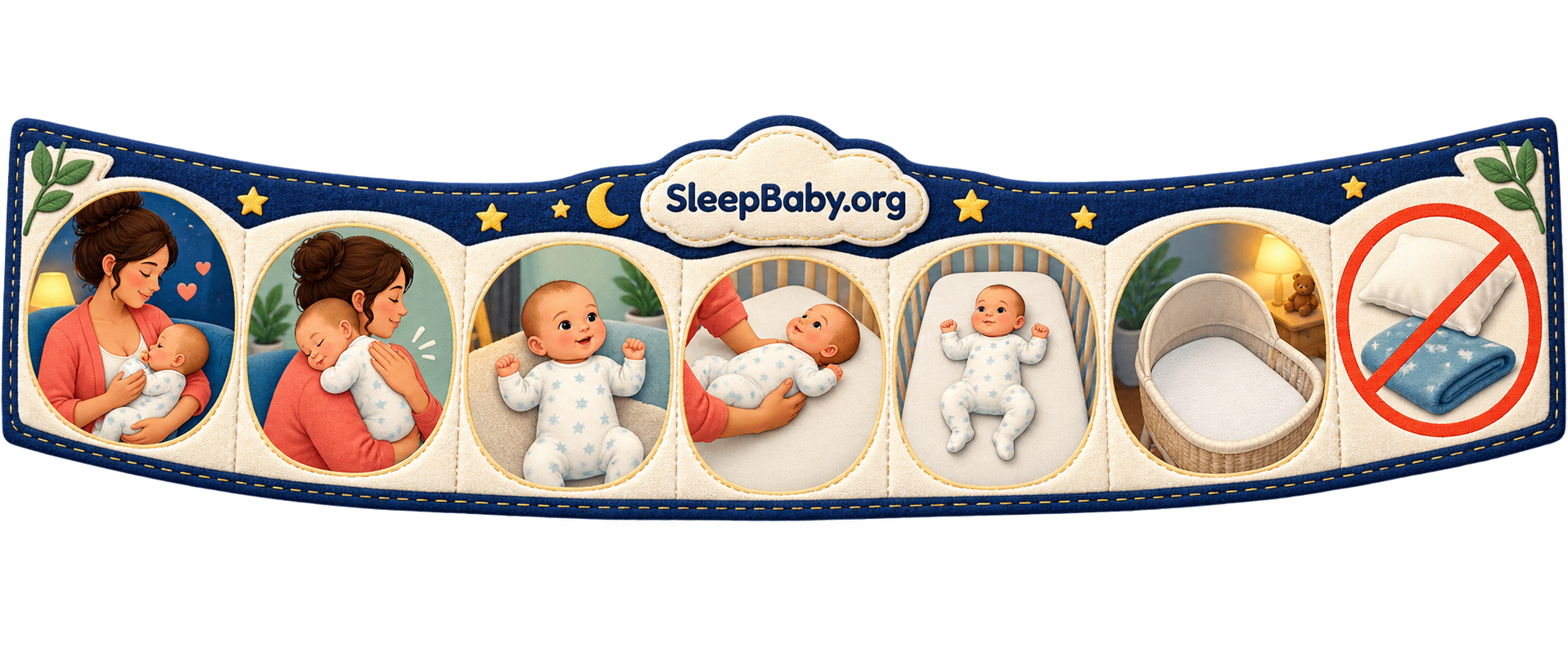
Back. Flat. Level. Clear.
- Back: place your baby on the back for every sleep.
- Flat and level: use a firm, noninclined surface intended for infant sleep.
- Clear: keep pillows, loose blankets, toys, bumpers, positioners, and nursing pillows out.
- Separate: move the baby before you sleep; an adult chest, couch, armchair, or adult bed is not the planned infant sleep surface.
Do not raise one end of the crib or tuck anything under the mattress for reflux. That does not reliably treat reflux and can cause a baby to slide into a dangerous position.
Does my baby have to burp before I put them down?
No single burping rule fits every baby or every feed. Some babies swallow more air while bottle-feeding, feeding quickly, crying through a feed, or struggling with the nipple flow. Others finish a quiet breastfeed, relax, and have no burp waiting in the wings.
I would give burping a reasonable chance when your baby seems gassy or uncomfortable. Hold them upright with the head and neck supported, pat or rub gently, and notice what happens. If no burp arrives but your baby is calm, you do not need to keep staging a one-person percussion concert until sunrise.
The American Academy of Pediatrics offers practical burping guidance but also notes that spit-up is common and usually not dangerous. A burp is not a permit for unsafe sleep, and the absence of a burp is not automatically a reason to keep a comfortable baby awake.
What gives you more useful information?
The timer versus the clues
- “It has been 20 minutes.”
- A number without context. It cannot tell you whether your baby is comfortable, whether you are about to fall asleep, or whether symptoms need care.
- “My baby is relaxed and breathing normally.”
- Useful comfort information. A safe flat transfer is reasonable.
- “My baby keeps arching, coughing, or crying after feeds.”
- A pattern worth recording and discussing with the baby’s clinician, especially when feeding or growth is affected.
- “I am struggling to stay awake.”
- A safety signal. Transfer to the separate infant sleep space rather than trying to finish a countdown in an armchair.
What if my baby has reflux?
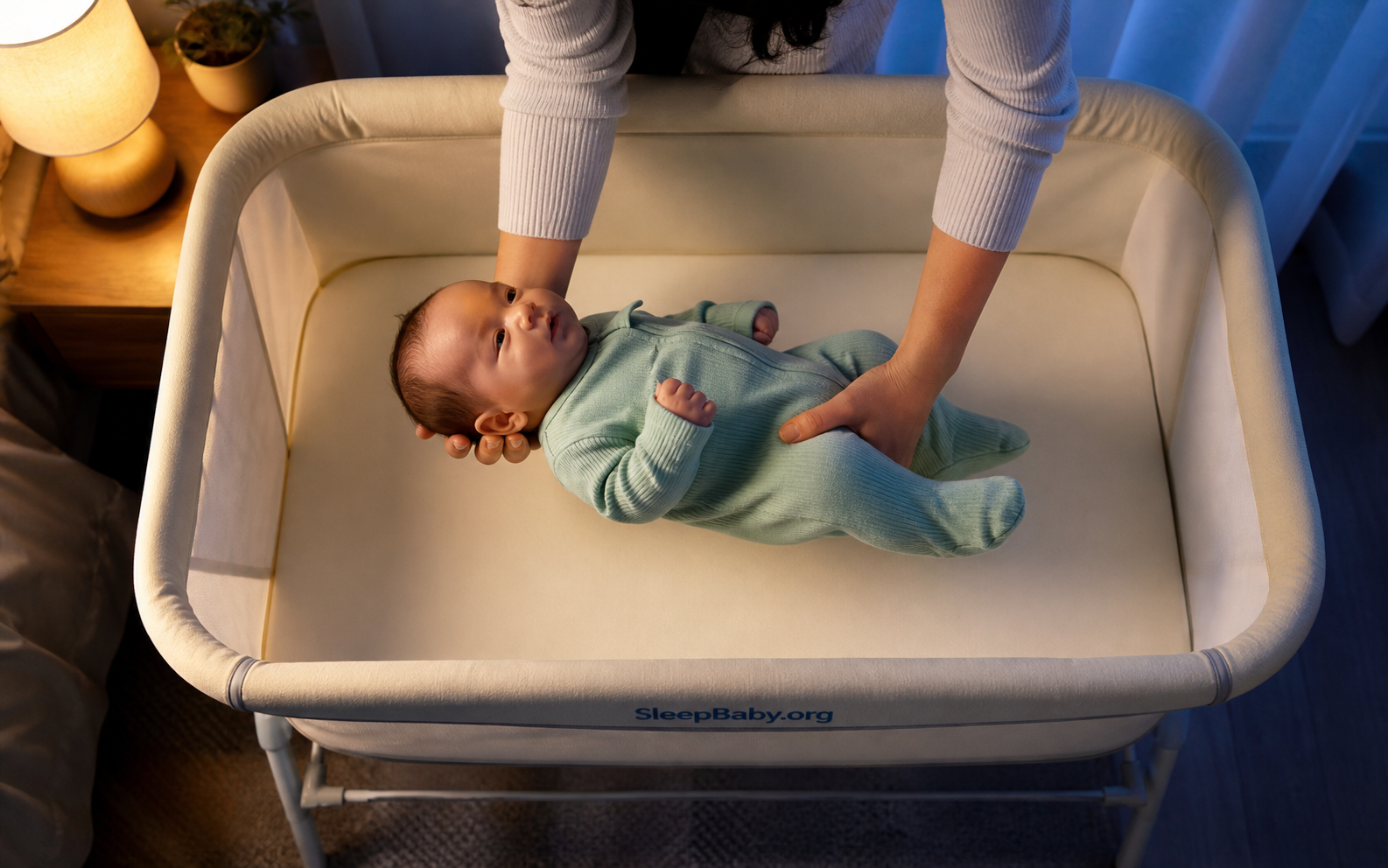
Reflux means stomach contents move back into the esophagus and sometimes out of the mouth. Spit-up is common in infancy, and many babies who spit up are otherwise comfortable and growing well. If your baby is one of them, the safe sleep instructions do not change.
An upright pause after a feed can be a reasonable comfort measure. The NHS advises holding a baby upright during and after feeding and burping regularly when reflux is bothersome. It does not prescribe a single magic number of minutes, and it specifically says the baby should sleep flat on the back and the head of the cot should not be raised.
If your pediatrician has given your baby an individual feeding or reflux plan, follow that plan for feeding size, frequency, technique, or medical treatment. But a diagnosis of reflux does not turn a swing, lounger, wedge, car seat, or inclined bassinet into a safe routine sleep space.
I would also resist turning “hold upright” into “sit perfectly vertical and motionless for half an hour after every ounce.” Comfortable supported contact may be enough. What matters is that the baby can breathe freely, the caregiver remains awake, and the eventual sleep surface is firm, flat, and clear.
Does the answer change for breastfeeding, bottles, or solids?
After breastfeeding
A calm baby who finishes breastfeeding and settles may not need a long burping session or upright wait. If your baby frequently coughs, gulps, pulls off, or seems overwhelmed by milk flow, a lactation professional or pediatric clinician can help assess positioning and feeding—not merely the sleep transfer that follows it.
After a bottle
Watch the pace and the baby’s cues. A nipple flow that is too fast, pressure to finish a bottle, or feeding while the baby is distressed can make the end of the feed rougher. Pauses and responsive feeding may matter more than adding a fixed wait afterward. Never prop a bottle, and do not put a baby to bed with a bottle.
After solids
Once a baby is developmentally ready for complementary foods, the same sleep-surface rule applies. A baby does not need to remain awake for a universal period simply because solids were served. Keep choking-risk food preparation, responsive feeding, and the baby’s individualized health needs separate from the safe-sleep decision.

For newborns, feeding adequacy comes before sleep timing
A newborn falling asleep after a feed may be completely ordinary. The more important question is whether feeding is effective and frequent enough for that particular baby. Age, gestational history, birth weight, jaundice, milk transfer, wet and dirty diapers, and weight gain can all change the feeding plan.
Do not use a post-feed sleep article to decide how long a newborn may go between feeds. Follow the plan from your pediatrician or feeding clinician, especially before birth weight has been regained or when there are concerns about jaundice, prematurity, low intake, or growth. A very sleepy newborn who is difficult to wake for feeds deserves clinical attention.
I would write down the useful facts rather than an impression like “sleepy”: when the feed started, roughly how actively the baby fed, swallowing you could hear or see, diaper output, spit-up pattern, and what it took to wake them. That gives a clinician much more to work with than whether you waited 12 minutes or 27 before using the bassinet.
Spit-up, vomiting, and discomfort are different clues
A small milky dribble that appears with a burp is not the same event as repeated forceful vomiting. Nor is either one identical to a baby who arches, cries, refuses feeds, coughs through milk, or struggles to gain weight. Parents often receive one broad word—“reflux”—for several very different nights.
Ordinary spit-up usually looks effortless. It may dampen a burp cloth, the shoulder of your pajamas, and somehow the only clean fitted sheet in the house. The baby may remain perfectly content. In that situation, the practical job is cleanup and safe back sleep, not a more elaborate sleeping angle.
Discomfort gives you a different pattern. Your baby may repeatedly pull away, cry or arch during or after feeds, gulp as milk returns, or settle poorly despite reasonable feeding support. That does not let an article diagnose GERD, an allergy, an oral-motor problem, or anything else. It does mean the pattern deserves a clearer conversation with the baby’s clinician or feeding professional.
Forceful, green, bloody, or persistently worsening vomit is another category again. So are fewer wet diapers, a baby who cannot keep feeds down, a swollen abdomen, marked lethargy, or breathing changes. Those clues should move you out of routine timing advice and into medical guidance.
A useful note for the pediatrician
Record five details, not just “bad reflux”
- When: during the feed, immediately afterward, or later when lying flat.
- What: a dribble, repeated mouthfuls, coughing, gagging, arching, or forceful vomiting.
- How the baby acts: comfortable, hungry again, distressed, sleepy, or difficult to wake.
- Feeding and diapers: how feeds are going and whether wet diapers have changed.
- Growth and breathing: known weight concerns, noisy breathing, pauses, color changes, or persistent cough.
A short phone note from two or three representative feeds is usually more useful than extending every upright hold and hoping the extra minutes reveal the diagnosis.
When holding upright creates its own sleep risk
The advice to “keep baby upright” often arrives without the sentence a dangerously tired parent needs: do not stay seated holding a baby if you are likely to fall asleep. Couches and armchairs are especially hazardous places to doze with an infant. A baby sleeping on an adult’s chest is also not a substitute for a separate firm, flat sleep surface once the adult may sleep.
Before a night feed, make the safe destination easy to use. Keep the bassinet or crib clear. Put the burp cloth and water within reach so you are not wandering through a dark house. If another alert adult is available, agree in advance who will finish the upright cuddle and who will make the transfer. The plan should not depend on a half-asleep person discovering heroic reserves at 3:41 a.m.
If you are alone and becoming drowsy, place the baby down safely. A few minutes less upright is not a reason to accept the much larger risk of falling asleep together in a chair. If your baby cannot tolerate any flat transfer without significant distress, that is a problem to bring to the pediatrician—not something you are expected to solve by remaining awake all night indefinitely.
A safer nighttime transfer that does not require stopwatch parenting
- Finish the feed responsively. Notice slowing sucks, relaxed hands, turning away, or other fullness cues rather than pressuring a baby to finish.
- Check the basics. Look at breathing, color, comfort, and whether the baby is repeatedly gagging, coughing, arching, or vomiting.
- Offer a brief burp or upright pause when it helps. Support the head and neck. Stop trying when the baby is comfortable; a burp is not a required ticket into the crib.
- Notice your own alertness. If you may fall asleep, transfer now. Avoid couches and armchairs for feeds when you are profoundly tired.
- Place the baby on the back. Use the firm, flat, level, clear infant sleep space. Do not use a wedge or positioner.
- Let ordinary spit-up be ordinary. Follow your clinician’s plan for a baby with symptoms; do not roll a healthy baby onto the stomach because you fear choking.
This is the routine I would want available on a phone at 3 a.m.: short enough to use, specific enough to protect the parts that matter, and uninterested in making a tired parent prove devotion by staying awake with a stopwatch.

Watch the safe-sleep anatomy
Why back sleeping remains safest after a feed
This American Academy of Pediatrics overview shows the separate, firm, flat, clear sleep space that should receive your baby after a feed. Use it as a visual setup check; the written guidance remains complete if playback is unavailable.
Watch the American Academy of Pediatrics video on YouTube.
Takeaway: reflux may change comfort care around a feed, but it does not change the safest infant sleep position.
Questions that come up once the nursery is quiet
Can I put my baby down if they fell asleep while feeding?
Yes, if the feed is complete, your baby seems comfortable and breathes normally, and you place them on their back in a safe infant sleep space. You do not need to wake a comfortable baby merely to complete an arbitrary upright interval. Newborn feeding plans are the exception: if your clinician told you to ensure a certain feeding pattern or wake for feeds, follow that individualized plan.
What if my baby spits up as soon as I lay them down?
Occasional spit-up can be messy without being dangerous. Keep the sleep space flat and clear, and continue back sleeping. If spit-up is repeatedly painful, forceful, green, bloody, associated with coughing or breathing problems, or affecting feeding and growth, contact your pediatric clinician.
Should I change the diaper before or after the upright pause?
There is no single required order. A dirty diaper should be changed. For a merely wet diaper, use your baby’s needs and your normal routine. Some babies spit up more when handled vigorously just after feeding, so keep movements calm and support the body rather than turning the diaper change into midnight aerobics.
Will separating feeding from sleep prevent a sleep association?
Feeding to sleep is biologically common, especially in young babies. You do not need to keep a newborn awake after a feed to teach independence. If an older baby’s feeding-to-sleep pattern no longer works for your family, that is a separate routine decision—not a reason to invent a medically necessary digestion timer.
How long should I hold my baby upright?
Use the shortest interval that leaves your baby comfortable while you remain safely awake. Some babies need no added wait; some with troublesome spit-up settle better after a pause; some need an individualized clinician plan. If you find yourself extending the ritual longer and longer without improvement, take the pattern to your baby’s clinician instead of assuming you have not waited hard enough.
When the feed ends but your mind keeps counting
Build a nighttime rhythm around clues, not imaginary deadlines
The bottle is empty, the burp cloth is damp, and suddenly one glowing clock seems responsible for your baby’s digestion, comfort, and entire future night. SleepBaby helps you sort the useful signals from the exhausting noise so bedtime decisions can feel calmer and safer.
When you look at the clock again
The next time a feed ends at 2:18 a.m., the minute hand does not have to make the decision. Look at your baby. Look at the sleep space. Notice your own alertness. If the baby is comfortable and the bassinet is firm, flat, level, and clear, you can make the safe transfer. If symptoms are telling you something different, respond to the symptoms—not to a generic countdown.
That is a much smaller question than “How long must I keep doing this?” It is also one you can actually answer in the room.
Sources
- Eunice Kennedy Shriver National Institute of Child Health and Human Development, Safe to Sleep: About Back Sleeping.
- American Academy of Pediatrics: What Is the Safest Sleep Solution for My Baby With Reflux?.
- American Academy of Pediatrics: Baby Burping, Hiccups & Spit-Up.
- National Health Service: Reflux in Babies.






What viewers said10 comments · 4 replies+
Archived comments from the original Baby Sleep Miracle presentation. Not independently verified by SleepBaby.org; individual experiences vary.
Thank you so much for this video! I had no idea about the dangers of baby swings :O
Hi Mary-Ann. I have a question: Is method in any way similar to the ones recommended by Dr Bucknam, Dr. Weissbluth or Dr. Karp? We tried those but none of them help.
Hi Regina, thank you for your question. The short answer is no. The techniques I share in my guide are based on newest scientific research and this is why I have never seen any approach similar to the one I recommend.
This method really works! I tried it on my son Jesus and after just one week he went from waking up more than 5 times a night to waking up just once or twice. You are a lifesaver, Mary-Ann!
I'm truly impressed with how much information you share in your video. And all for free! I can feel that you truly care about mothers like myself, and that's hard to find these days. I have recommended your site to several of my friends already.
Mary-Ann, our child suffers from autism. Is your approach still suited?
Chloe, I made sure my method can be used with any child, even babies who are special like yours. Please note that I'm not a doctor and that I always advice to consult with your physician because nothing is more important than the safety and well-being of your love.
Hallo Mary-Ann, I'm from Germany. Do you have your guide in German?
Hello Heide, we do! Normally you should already see our video in German. If not, please contact our support so they can guide you
Thenk you for your answer, Mary-Ann!
I just completed your approach and I have to say, it worked almost too well. Yes, it took a bit of getting used to with your bedtime routine but the difference is huge. My son George used to take 1 hours to go down and now he's firmly asleep in no more than 10 minutes! You're the best!
It seems I'm the only man watching this video, lol! What you shared about the 'emotional backpack' made immediate sense to me and I can't wait to help my little girl Mila to unpack it!
Hey there, just discovered your site and this really sounds different. Just wanted to say thanks for sharing :)
For everyone who's still thinking about getting Mary-Ann's guide I want to advise you to go ahead. I wasn't sure myself but now I'm so thankful I invested in this program. It made a huge difference in our life as a family and yes, my baby girl does sleep through the night now.