
The easiest way to choose baby shower games is to plan two or three that fit the people in the room: one easy arrival activity, one shared game, and—only if it adds something—a quiet keepsake station. You do not need a clipboard, a whistle, and twelve scheduled competitions to prove everybody had fun.
These 35 ideas are organized by what you need to prepare and how guests can participate. There are printable games, no-printer choices, team games, and low-mobility options, with setup time, play time, materials, and a practical participation swap for every one. If you came looking for fun baby shower games rather than activities people politely endure, start by choosing for your actual guest list—not an imaginary room full of extroverts wearing matching shoes.
The best baby shower game ideas make the room easier to join. They do not require anyone to disclose a pregnancy story, perform on command, move quickly, hear one tiny timer, or explain why they would rather sit out. The guest who wants to laugh loudly and the aunt who would prefer to keep her handbag on her lap should both have a way in.
If the date itself is still unsettled, use our separate guide to decide when to have a baby shower. This page stays with the games. For theme and decoration inspiration, route that separate job to our Harry Potter baby shower ideas rather than asking a game list to wear a party hat it did not request.
Choose before you print
Your 60-second baby shower game chooser
No printer
Choose Baby Word Chain, Three Clues, Baby Item Twenty Questions, or Would the Parent Choose? Add Baby Pictionary if you have paper and pens.
Shy or conversation-first crowd
Use one self-paced arrival station and one anonymous seated game. Keep public performance completely optional.
Mixed mobility or mixed ages
Pick a card-based game, a team option with seated equivalents, and a keepsake station that guests can visit in their own time.
Twenty-five or more guests
Try Gift Bingo, one short team round, and a passive arrival activity. Avoid games that require thirty separate turns.
Very little prep
Word Chain, Three Clues, Twenty Questions, and Would the Parent Choose? can be ready while the kettle is still deciding whether to boil.
Guest of honor tires easily
Run the shared activity early, make later play optional, and keep a visible quiet chair or low-stimulation exit from the action.
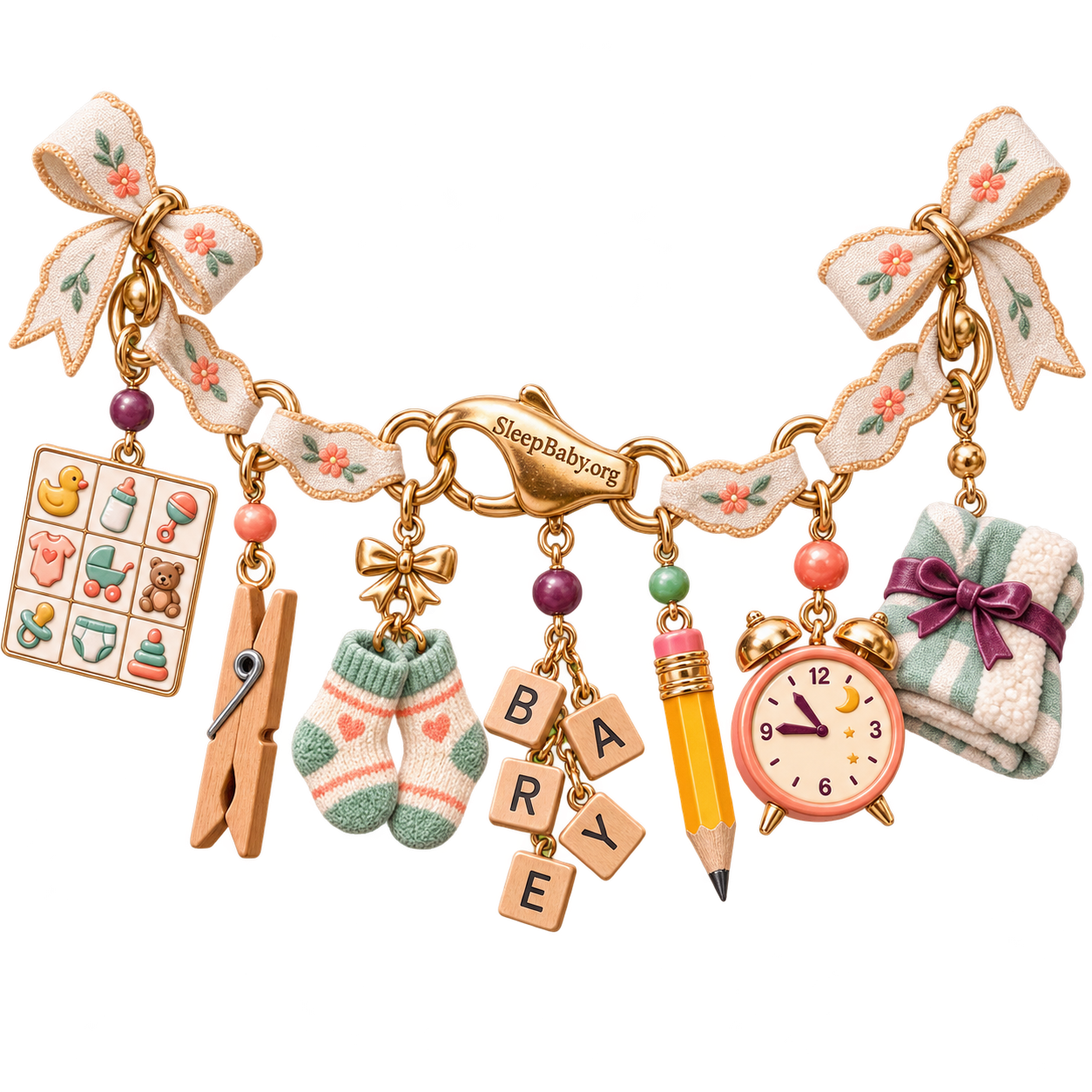
My host formula: arrival or passive game + shared seated or team game + optional keepsake. Two good games beat seven half-explained ones.
Created for SleepBaby.org
Build a three-game plan that still leaves room to talk
A shower is not improved by making every quiet patch illegal. Guests came to see the parent-to-be, eat something, catch up, and admire very small socks. Games should give the gathering shape without swallowing it.
A gentle party rhythm
Arrival, one shared moment, then a soft landing
- 1. Arrival: Put out Guess How Many Baby Socks, a prediction card, or Gift Bingo. Late arrivals can join without hearing a ten-minute rules speech.
- 2. Shared moment: Choose one verbal, drawing, or team game lasting about five to twelve minutes. Explain it in writing and aloud.
- 3. Soft landing: Leave Wishes for Baby or Kind Notes open as an optional keepsake. It can close quietly when the party does.
Five ready-made combinations
- Twelve guests, mixed ages: Guess How Many Baby Socks + Parent-to-Be Trivia + Wishes for Baby.
- Large shower: Gift Bingo + seated Baby Pictionary + optional Don’t Say “Baby” tokens.
- Low-mobility gathering: Who Said It? + Nursery Setup Memory Tray + Night-Shift Note Draw.
- No-printer gathering: Baby Word Chain + Three Clues + Would the Parent Choose?
- Low-pressure gathering: Arrival Prediction Cards + Baby Book Title Match + a private keepsake station.
Choose the mix, write down the start and stop points, and then leave it alone. The room does not need a game committee forming beside the vegetable tray.

10 printable and pen-and-paper baby shower games
Printable games are useful when you want clear rules and a whole room playing at once. Print in large, high-contrast type, keep spare pens within reach, and let people work in pairs. A score sheet is not sacred.
1. Baby Gift Bingo
Best fit: gift opening · Setup: 5 minutes after printing · Play: alongside gifts · Materials: 5×5 cards and pens
- Print cards or draw blank grids.
- Guests add likely gift categories before opening starts.
- Mark matches and celebrate the first agreed line.
Make it easier to join: Use large-print cards, read categories aloud, and let pairs share one card.
2. Parent-to-Be Trivia
Best fit: guests who know different parts of the family · Setup: 15 minutes · Play: 10 minutes · Materials: 8–10 approved questions and answer sheets
- Ask the guest of honor to approve every fact.
- Read each question while guests answer alone or in teams.
- Share the approved answers without ranking anyone’s closeness.
Make it easier to join: Read questions aloud and accept spoken, written, or team answers.
3. Baby Animal Match
Best fit: a quick all-ages round · Setup: 10 minutes · Play: 5 minutes · Materials: adult-animal list, baby-animal list, and answer key
- Choose ordinary terms you can verify.
- Guests connect each adult animal with its young.
- Review answers, accepting common regional variants.
Make it easier to join: Add a word bank, enlarge the print, and avoid obscure disputed names.
4. Emoji Baby Phrase Decode
Best fit: visual clue fans · Setup: 15 minutes · Play: 5–8 minutes · Materials: host-made emoji clues and text descriptions
- Create clues for ordinary baby items or shower phrases.
- Show one clue at a time or hand out a sheet.
- Accept close answers and explain the host’s intended phrase.
Make it easier to join: Include written emoji descriptions and allow verbal or team guesses.
5. Baby Word Scramble
Best fit: a familiar five-minute filler · Setup: 10 minutes · Play: 5 minutes · Materials: 12–15 scrambled baby-item words
- Scramble ordinary words and keep an answer key.
- Let guests solve as many as they want.
- Review together when the five minutes end.
Make it easier to join: Offer large print, a word bank, pairs, and an untimed version.
6. Nursery Rhyme Title Match
Best fit: mixed generations · Setup: 15 minutes · Play: 6 minutes · Materials: host-written clues and a title bank
- Write fresh clues about well-known rhyme titles.
- Guests match clues to titles without reproducing lyrics.
- Read the titles and compare answers.
Make it easier to join: Provide the title bank in print and do not make hearing or singing necessary.
7. Registry Price Guess
Best fit: small teams · Setup: 15 minutes · Play: 8 minutes · Materials: a current host-made list of 6–8 ordinary items
- Record current shelf prices without product claims.
- Teams estimate each price or the total.
- Reveal the host’s dated answer key and nearest guess.
Make it easier to join: Let teams discuss and avoid speed scoring, affiliate links, or claims that one brand is best.
8. Baby Name A–Z
Best fit: word-game guests · Setup: 5 minutes · Play: 5 minutes · Materials: alphabet sheets and pens
- Put one letter on each row.
- Guests add names to any rows they choose.
- Share favorites without treating the list as naming advice.
Make it easier to join: Let guests work in pairs, dictate, skip letters, or ignore the clock.
9. Arrival Prediction Card
Best fit: a self-paced arrival table · Setup: 10 minutes · Play: 3–5 minutes · Materials: optional prediction cards and a box
- Offer date, time window, and one lighthearted nonmedical prompt.
- Guests complete only what feels comfortable.
- Store cards privately for the parent-to-be.
Make it easier to join: Do not solicit conception, fertility, loss, birth, or medical predictions; skipping is normal.
10. Who Said It?
Best fit: one or more parents-to-be · Setup: 15 minutes · Play: 8 minutes · Materials: approved quotes or preferences and voting cards
- Collect warm, nonintrusive lines in advance.
- Read each line and let guests choose the speaker.
- Reveal answers without judging either person’s choice.
Make it easier to join: Support single parents and every family structure; use cards, pointing, speech, or no score.

8 verbal and no-printer games
No-printer games save a host at the moment the printer begins blinking an amber light with the moral authority of a lighthouse. Keep instructions short, demonstrate one turn, and provide a written or pointing alternative so “verbal” does not mean “only confident speakers may enter.”
11. Baby Word Chain
Best fit: a relaxed circle · Setup: 1 minute · Play: 5–8 minutes · Materials: none, or letter cards
- Name a baby-related word.
- The next person starts with its final letter.
- Keep moving without eliminating anyone for a pause.
Make it easier to join: Accept written or pointed responses and let a teammate speak.
12. Three Clues: Baby Item
Best fit: quick whole-room play · Setup: 8 minutes · Play: 6 minutes · Materials: three clues for each ordinary item
- Read the hardest clue first.
- Add two increasingly obvious clues.
- Award a point or simply reveal the answer.
Make it easier to join: Let guests answer aloud, write, point to pictures, or confer in teams; avoid safety claims.
13. Parent Story True-or-False
Best fit: family and friend groups · Setup: 15 minutes · Play: 8 minutes · Materials: approved stories and true/false cards
- Get permission for every short story.
- Read one and invite a true-or-false vote.
- Reveal the answer and one approved detail.
Make it easier to join: Use hand signals, cards, or anonymous slips, and never surprise anyone with a private story.
14. Finish the Parenting Phrase
Best fit: playful, low-stakes answers · Setup: 8 minutes · Play: 8 minutes · Materials: host-written sentence stems
- Write gentle stems such as “The best 2 a.m. snack is…”
- Guests answer aloud or anonymously.
- Read willing responses without ranking parenting opinions.
Make it easier to join: Offer paper, speech, or a pass; do not use lyrics or ask for judgmental advice.
15. One-Minute Baby Categories
Best fit: teams that like word lists · Setup: 5 minutes · Play: 6–10 minutes · Materials: benign category cards and paper
- Choose categories such as diaper-bag objects or bedtime book titles.
- Teams list examples for one minute.
- Celebrate variety instead of speed alone.
Make it easier to join: Provide a written team mode and exclude medical, feeding, development, and safety categories.
16. Lullaby Humming Guess
Best fit: willing music lovers · Setup: 5 minutes · Play: 6 minutes · Materials: a title list; no printed lyrics
- A volunteer chooses a familiar title.
- They hum a brief tune while teams guess.
- Stop after a few rounds while it is still charming.
Make it easier to join: Offer drawing clues, a visual title bank, quieter volume, and a complete auditory opt-out.
17. Baby Item Twenty Questions
Best fit: seated whole-room play · Setup: 1 minute · Play: 5–10 minutes · Materials: one host-chosen everyday item
- Keep the item secret.
- Guests ask yes-or-no questions in turn.
- End when someone guesses or question twenty arrives.
Make it easier to join: Collect questions on cards or through teams, and avoid turning the item into care advice.
18. Would the Parent Choose?
Best fit: a warm preference game · Setup: 10 minutes · Play: 8 minutes · Materials: approved pairs and voting cards
- Prepare pairs such as early brunch or late lunch.
- Guests predict the parent-to-be’s choice.
- Reveal the answer and move on without debate.
Make it easier to join: Vote by card, pointing, or speech; keep scoring optional and the choices nonintrusive.
9 team and shared-group games
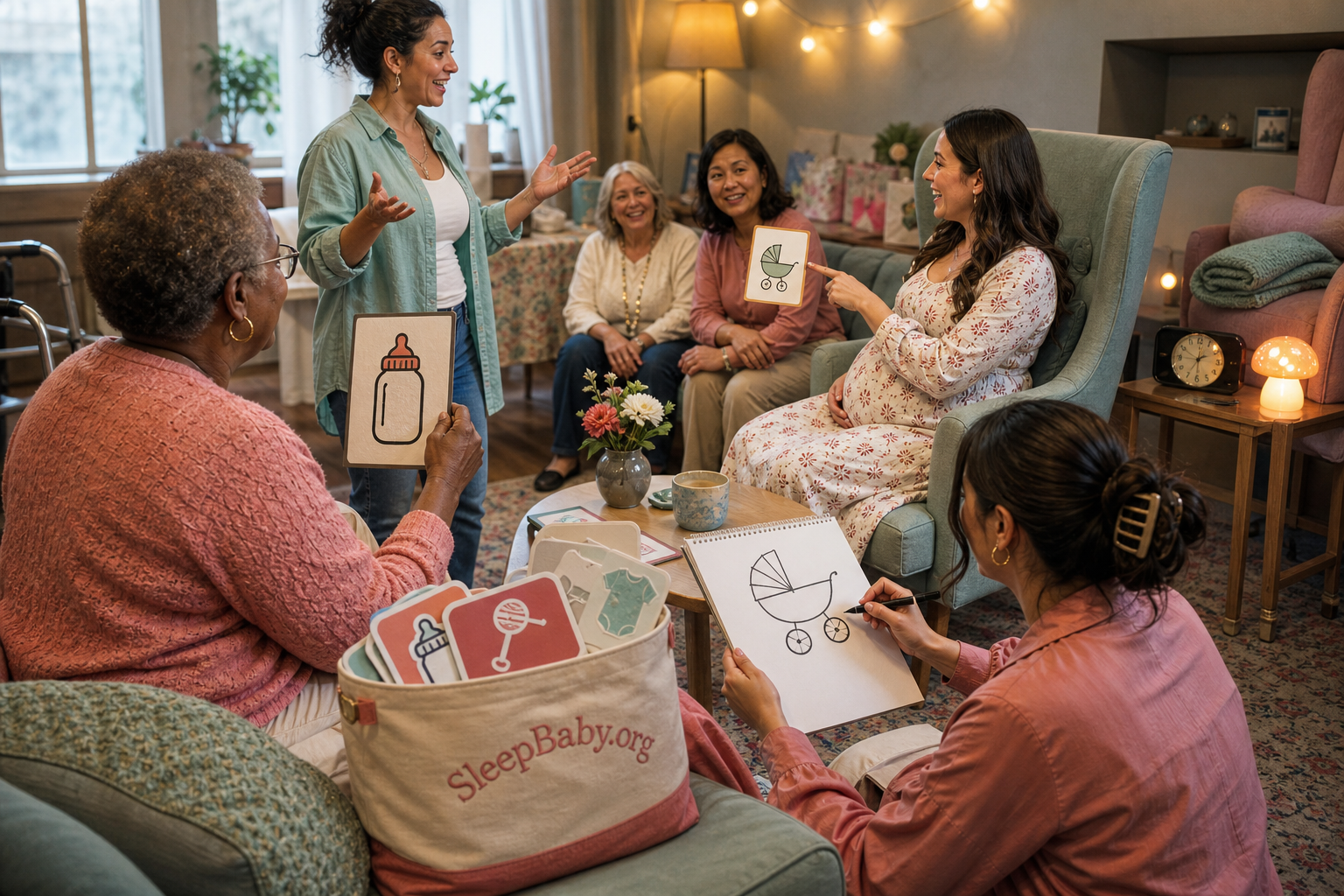
Team games work when a team is a source of backup, not a louder way to be watched. Let people choose jobs—drawing, reading, recording, sorting, or cheering—and keep every active version paired with a seated equivalent.
19. Baby Pictionary
Best fit: teams and mixed ages · Setup: 10 minutes · Play: 6–10 minutes · Materials: host-made prompts, paper, and thick pens
- Use ordinary items or gentle nighttime-care scenes.
- One willing player draws while the team guesses.
- Rotate roles or stop after each team has a turn.
Make it easier to join: Provide a seated surface and let a player offer a verbal clue instead of drawing.
20. Baby Charades With a Choice
Best fit: expressive teams without forced acting · Setup: 10 minutes · Play: 8 minutes · Materials: host-made prompt cards
- A willing player draws a prompt.
- They may act, draw, or give one word.
- The team guesses, then passes the choice onward.
Make it easier to join: Keep turns short, allow every mode, and let teams nominate volunteers rather than pointing at people.
21. Nursery Setup Memory Tray
Best fit: seated observation · Setup: 10 minutes · Play: 7 minutes · Materials: 10–12 clean objects or picture cards, cloth, and paper
- Display the items where everyone can see.
- Cover them after one quiet minute.
- Teams record what they remember, then compare.
Make it easier to join: Use large picture cards, describe the display aloud, and keep tiny objects away from children.
22. Diaper Bag Packing Draft
Best fit: discussion-minded teams · Setup: 15 minutes · Play: 10 minutes · Materials: host-made picture cards and envelopes
- Give each team the same imaginary outing.
- Teams choose a limited number of item cards.
- Each team explains one playful choice.
Make it easier to join: Keep every card on the table, require no lifting, and label this as imagination—not care instruction.
23. Soft Diaper Toss
Best fit: one brief active option · Setup: 5 minutes · Play: 5 minutes · Materials: clean rolled diapers or soft beanbags and wide floor baskets
- Clear the path and mark seated and standing lines.
- Each willing guest takes two gentle tosses.
- Count team totals without elimination.
Make it easier to join: Add tabletop target cards, adjust distance, and never use a baby-care surface as the target.
24. Diaper Stack Challenge
Best fit: tabletop builders · Setup: 5 minutes · Play: 6 minutes · Materials: unopened diaper packs, folded cloths, or large cards
- Give each team equal materials and a stable table.
- Build a freestanding stack during a generous window.
- Compare height only after every hand is clear.
Make it easier to join: Offer card stacking, team direction, and a comfortable reach zone; do not score grip speed.
25. Baby Item Relay Without Running
Best fit: larger seated teams · Setup: 10 minutes · Play: 6 minutes · Materials: soft objects or picture cards and sorting trays
- Seat teams or gather them around tables.
- Pass cards down the line without racing.
- Sort them by a host-defined color or category.
Make it easier to join: Use one shared tabletop sort, no fragile objects, and no requirement to twist, stand, or carry.
26. Team Baby Trivia
Best fit: broad pop-culture and object knowledge · Setup: 20 minutes · Play: 10 minutes · Materials: verified host-written questions and answer cards
- Use baby-item, title, or approved parent-preference questions.
- Teams submit one answer per question.
- Explain the answer without presenting care advice.
Make it easier to join: Read and print every question; exclude health, feeding, development, emergency, and sleep-safety trivia.
27. Story-Building Circle
Best fit: collaborative, gentle creativity · Setup: 3 minutes · Play: 8 minutes · Materials: optional prompt and notebook
- Begin a fictional bedtime or homecoming story.
- Each guest adds a sentence, word, or written line.
- End the story after one circle and save it if wanted.
Make it easier to join: Guests may write, dictate, contribute one word, or pass; keep the baby fictional.

8 low-mobility, passive, and self-paced games
These are my favorite choices for a room that wants more conversation than announcing. “Passive” does not mean forgettable. It means the game waits for the guest, instead of the guest being drafted into the game while holding a drink and trying to remember where they left their chair.
28. Guess the Baby Photo
Best fit: a consent-based arrival display · Setup: 25 minutes · Play: self-paced · Materials: numbered submitted photos and answer slips
- Invite photos in advance with explicit permission.
- Display only images people agreed to share.
- Guests match willing participants to numbers.
Make it easier to join: Accept digital or large-print viewing, allow teams, and never scrape social media or penalize declining.
29. Wishes for Baby
Best fit: a quiet keepsake · Setup: 10 minutes · Play: self-paced · Materials: optional prompt cards, pens, and a box
- Offer a few warm, open prompts.
- Guests write privately whenever they choose.
- Give the closed collection to the parent-to-be.
Make it easier to join: Include “a wish for your family,” provide a scribe, and make public reading optional.
30. Kind Notes for the Parent-to-Be
Best fit: practical encouragement · Setup: 10 minutes · Play: self-paced · Materials: note cards and envelopes
- Offer prompts for encouragement or practical support.
- Guests choose a prompt or write a warm hello.
- Seal or collect notes for later.
Make it easier to join: Do not force advice, feeding opinions, birth stories, personal disclosure, or reading aloud.
31. Guess How Many Baby Socks
Best fit: a one-minute arrival game · Setup: 5 minutes · Play: self-paced · Materials: clear container, clean socks or cloth squares, and slips
- Count the clean items before filling the container.
- Guests submit one optional estimate.
- Reveal the total and nearest guess.
Make it easier to join: Put it on a reachable table, provide a clear photo, and avoid candy or allergen-based fillers.
32. Don’t Say “Baby” Tokens
Best fit: background play · Setup: 5 minutes · Play: 20–40 minutes · Materials: stickers, clips, or tabletop tokens
- Guests optionally take one token.
- Saying the chosen word transfers or removes it.
- End at a clearly announced time.
Make it easier to join: Keep it self-serve and no-touch, allow silent tracking, and let anyone opt out without explanation.
33. Baby Book Title Match
Best fit: book-loving guests · Setup: 15 minutes · Play: 7 minutes · Materials: host-written clues and a large-print title bank
- Describe familiar titles in your own short clues.
- Guests match clues to titles.
- Review answers without reproducing book text or art.
Make it easier to join: Use teams, large print, and spoken clues; use only host-created or licensed visuals.
34. Night-Shift Note Draw
Best fit: gentle late-night encouragement · Setup: 12 minutes · Play: 6 minutes · Materials: paper prompts, blank cards, and a keepsake box
- Write imagined late-night moments on prompt cards.
- Guests add supportive notes without care instructions.
- The parent-to-be draws a few or saves them all.
Make it easier to join: Keep notes anonymous and optional; write on cards, not diapers, and never promise a sleep outcome.
35. Baby-Item Photo Caption Contest
Best fit: anonymous, low-pressure humor · Setup: 10 minutes · Play: self-paced · Materials: one licensed or host-created flat-lay photo, slips, and a box
- Display the photo with a clear caption prompt.
- Guests submit short lines anonymously.
- The guest of honor chooses a favorite or skips judging.
Make it easier to join: Accept dictated entries, avoid guest photos without consent, and use a random draw if judging feels awkward.
Make every game optional before anyone needs to ask
Accessibility is not a last-minute chair placed beside an activity designed for everybody else. Current public guidance on accessible events recommends planning for varied physical, visual, auditory, speech, cognitive, and neurological needs in advance, communicating clearly, and giving people usable ways to request adjustments. The NYC accessible-event guidance, the Government of British Columbia’s inclusive-event toolkit, and the Australian Human Rights Commission’s event guidance all support designing access before guests arrive.
For a shower, that becomes pleasantly concrete: print instructions and say them aloud; use high contrast and generous type; keep aisles open; place materials within easy reach; offer seated, pointing, writing, drawing, and teammate-response modes; and never make speed the only way to win. Announce noise, scent, food, touching, photos, or movement before a game begins. Put an adjustment question on the invitation or RSVP when you can, then treat every option as ordinary.
If the guest of honor feels unwell, the party does not get one more round before care. Follow their clinician’s plan; our separate pregnancy symptoms guide explains general warning-sign boundaries without turning a game page into medical advice.
Prizes, timing, and the graceful end of a game
Prizes are optional. A random draw or one prize for a whole team can lower the temperature immediately. If you use prizes, choose broadly usable items and do not make alcohol the default. Nobody should have to spend money, reveal private information, or bring an item without clear advance notice in order to play.
Put the rules where people can see them, say them once, demonstrate a turn, and name the end point. Five to ten minutes is enough for most shared games on this list; self-paced stations can remain open longer. If conversation is flowing, do not interrupt it because a schedule says the word scramble must begin at 2:17.
The host’s calm-down runway
Let the party come in for a landing
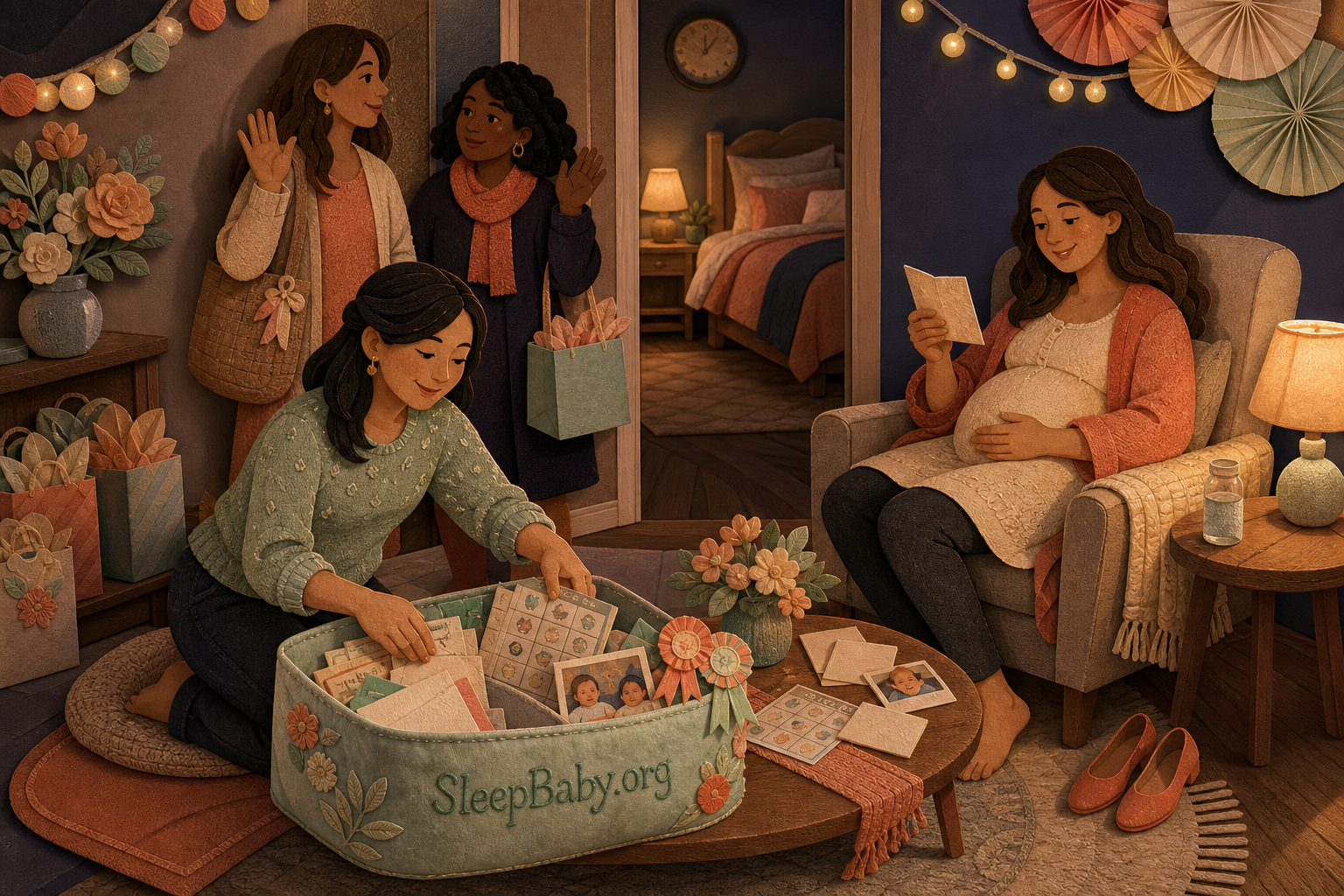
- End the last announced game clearly. Do not leave guests listening for another set of rules.
- Keep water and food easy to reach. A tired guest of honor should not need to cross the room for basics.
- Leave one quiet activity open. Notes or wishes can continue without another microphone moment.
- Soften the room. Lower the volume, reduce announcements, clear one comfortable chair, and begin packing noisy materials.
- Protect the next rest. Fewer decisions and a visible finish are kinder than squeezing in “just one more.”
A SleepBaby.org party-to-rest plan
Watch one low-pressure round
See how participatory shower games can look
This short demonstration from Parent’s Almanac shows seven baby shower games and frames the fun around broad guest participation rather than embarrassing the parent-to-be. Borrow the pace, not the need to run every game.
If the player does not load, watch 7 Different Baby Shower Games on YouTube. The useful takeaway: demonstrate one turn, invite everyone, and stop before the room gets tired.
Baby shower game questions hosts ask at the last minute
The useful answers, before the first guest arrives
How many baby shower games should we play?
There is no universal number. Two or three well-chosen games are often plenty: one arrival option, one shared activity, and an optional keepsake. Use fewer if food, gifts, conversation, or the guest of honor’s energy already fill the gathering.
What works for a large baby shower?
Choose games that run simultaneously or in teams: Gift Bingo, Baby Pictionary, Guess How Many Baby Socks, prediction cards, or one short trivia round. Avoid thirty individual performances.
Is it okay to have no games?
Yes. A shower can be food, conversation, gifts, and time together. If the guest of honor dislikes games, a private wishes station is an option—not a loophole for ignoring the answer.
Do games need prizes?
No. Use applause, a team win, a random draw, or nothing at all. If you offer prizes, keep them optional, neutral, and easy for the winner to take home.
Which games work for guests who hate being put on the spot?
Choose self-paced or anonymous options: Wishes for Baby, Kind Notes, Guess How Many Baby Socks, Baby Book Title Match, Gift Bingo, or a caption contest. Announce that passing is normal before play begins.
Sources
After the last answer card
A joyful shower can still protect the next rest
A social afternoon asks a lot from a pregnant body and a busy household. When the last game ends, soften the lights, reduce the decisions, put water within reach, let the comfortable shoes come off, and leave space for the guest of honor to wind down without one more performance. SleepBaby can help with the quieter family rhythms that begin after the party.
Plan the gentler part after the party
SleepBaby supports family sleep planning; it does not replace accessibility accommodations, pregnancy care, or medical advice.





What viewers said10 comments · 4 replies+
Archived comments from the original Baby Sleep Miracle presentation. Not independently verified by SleepBaby.org; individual experiences vary.
Thank you so much for this video! I had no idea about the dangers of baby swings :O
Hi Mary-Ann. I have a question: Is method in any way similar to the ones recommended by Dr Bucknam, Dr. Weissbluth or Dr. Karp? We tried those but none of them help.
Hi Regina, thank you for your question. The short answer is no. The techniques I share in my guide are based on newest scientific research and this is why I have never seen any approach similar to the one I recommend.
This method really works! I tried it on my son Jesus and after just one week he went from waking up more than 5 times a night to waking up just once or twice. You are a lifesaver, Mary-Ann!
I'm truly impressed with how much information you share in your video. And all for free! I can feel that you truly care about mothers like myself, and that's hard to find these days. I have recommended your site to several of my friends already.
Mary-Ann, our child suffers from autism. Is your approach still suited?
Chloe, I made sure my method can be used with any child, even babies who are special like yours. Please note that I'm not a doctor and that I always advice to consult with your physician because nothing is more important than the safety and well-being of your love.
Hallo Mary-Ann, I'm from Germany. Do you have your guide in German?
Hello Heide, we do! Normally you should already see our video in German. If not, please contact our support so they can guide you
Thenk you for your answer, Mary-Ann!
I just completed your approach and I have to say, it worked almost too well. Yes, it took a bit of getting used to with your bedtime routine but the difference is huge. My son George used to take 1 hours to go down and now he's firmly asleep in no more than 10 minutes! You're the best!
It seems I'm the only man watching this video, lol! What you shared about the 'emotional backpack' made immediate sense to me and I can't wait to help my little girl Mila to unpack it!
Hey there, just discovered your site and this really sounds different. Just wanted to say thanks for sharing :)
For everyone who's still thinking about getting Mary-Ann's guide I want to advise you to go ahead. I wasn't sure myself but now I'm so thankful I invested in this program. It made a huge difference in our life as a family and yes, my baby girl does sleep through the night now.