
The first clue is not the size of the kick—it is the state your child is in
Most kicking and twitching in sleep is ordinary movement, but the pattern around it matters
A baby kicking legs in sleep may be moving through active sleep, startling, practicing a rhythmic settling motion, or reacting to feeding discomfort. A brief twitch in a peacefully sleeping child is a very different picture from repeated stiffening after waking, movement that continues while fully awake, or an episode with a breathing, color, eye, or responsiveness change.
This guide will help you name what you saw and decide what to do next. It cannot diagnose a movement from a description or video. When your child looks unwell, has trouble breathing, loses awareness, or does not return to their usual self, skip the checklist and get medical help.
The middle of the night can make one small leg thump feel enormous. You are half awake, the room is quiet, and suddenly the crib mattress sounds like a drum. Then the search terms begin: baby constantly kicking legs, newborn leg shaking while sleeping, toddler twitching in sleep. Those phrases overlap, but they do not all describe the same thing.
The most useful way through is to look at four details: state, shape, symmetry, and recovery. Was your child asleep or awake? Was it a fine tremble, one sudden jerk, a steady rhythm, or a cluster of stiff movements? Did both sides move? And afterward, was breathing, color, responsiveness, and behavior normal? Those observations give a pediatrician far more information than the word “twitch.â€

State before label
Start with the sleep-state window
Fully asleep
Brief facial, arm, or leg twitches are common in active sleep. In a newborn, repeated jerks that occur only during sleep and stop consistently on waking fit a different pattern from awake movement.
Falling asleep or waking
A single whole-body jolt can be a sleep start. Rhythmic rocking or leg thumping often gathers around sleep onset. Brief stiffening clusters just after waking need a more urgent look.
Fully awake
Movement that continues while a child is clearly awake does not fit a sleep-only explanation. Note responsiveness, symmetry, eye position, breathing, feeding, illness, and behavior afterward.
A label should follow the observation, not replace it. “It happened in active sleep and stopped when she woke†is useful. “It was definitely benign†asks a home observation to do a clinician’s job.
Why babies jump, twitch, or kick during normal sleep
Newborn sleep is active. During active, or REM, sleep, babies can grimace, suck, flutter their eyelids, breathe less regularly, and make small arm or leg movements. The American Academy of Pediatrics describes twitches and jerks as part of this stage; movements become much quieter in deep sleep.1 Developmental research also shows that sleep twitches are organized movements connected with the developing sensorimotor system, not simply random “bad sleep.â€2
That does not mean every repeated movement is “just REM,†and it does not mean children stop twitching forever at 3 or 6 months. Ordinary sleep starts can happen in older babies, toddlers, children, and adults. What is age-limited is a particular newborn pattern called benign neonatal sleep myoclonus, discussed below. The old version of this page blurred those ideas; they need to stay separate.
The Moro reflex can look like a jump
In early infancy, a sudden sound, touch, or sensation of falling can trigger the Moro, or startle, reflex. A baby may fling the arms outward, open the hands, then draw the arms back in. The reflex is present at birth and normally fades around 3 to 4 months.6 A door clicking or your hand leaving the mattress can be enough to startle a light sleeper.
A reflex that is clearly stronger on one side, is absent on one side, appears newly after the expected early-infant window, or comes with weakness deserves pediatric attention. If what you are noticing is persistent one-sided kicking rather than sleep-only movement, the separate guide to a baby who only kicks one leg covers that boundary without turning this page into a diagnosis.
A sleep start is usually one brief jolt
A sleep start, or hypnic jerk, is the quick jolt that can arrive as the nervous system shifts into sleep. It may move one limb or the whole body and then be over. An occasional sleep start without pain, loss of awareness, breathing change, or unusual behavior afterward is generally a normal physiologic movement.5 Repeated movements, however, deserve a closer description rather than being folded into that one-jolt category.
Newborn leg shaking while sleeping: separate twitching, sleep myoclonus, and jitteriness
Newborn movement is where language gets especially slippery. A parent may call a fine tremble, a repeated jerk, and a startle “shaking.†Clinicians separate them partly by how the movement looks and partly by the baby’s state. The distinction is important because two commonly repeated home clues—“does it stop when held?†and “does it stop when awake?â€â€”belong to different patterns.
Benign neonatal sleep myoclonus stops when the baby wakes
Benign neonatal sleep myoclonus causes repeated jerks during sleep in otherwise well newborns. The movements may involve the arms, legs, or both sides and can look dramatic. The defining bedside clue in neonatal reviews is that the jerking occurs only in sleep and stops abruptly and consistently when the baby wakes.34
Holding the limb is not the test for this pattern. Restraint may fail to stop the jerks and can make them look stronger. Most cases settle during the first months of life; the diagnosis still belongs to a clinician, especially when a movement is new, prolonged, difficult to characterize, or accompanied by any change in the baby’s condition.
Jitteriness is a fine tremble that may settle with gentle support
Newborn jitteriness is usually a rapid, fine, fairly symmetric trembling. It may appear after stimulation and may settle when the limb is gently supported or passively flexed. Neonatal reviews contrast this with movements accompanied by forced eye deviation or major autonomic changes such as apnea.3
“May settle†is not “must settle,†and it is not a seizure test. Jitteriness can be benign, but it can also accompany medical problems. Call your pediatrician if it is worsening, occurs while your newborn is calm and fully awake, or comes with poor feeding, unusual sleepiness, illness, abnormal muscle tone, or a baby who simply seems wrong to you.
Two observations, two different jobs
“Stops when held†and “stops when awake†are not interchangeable
Fine jittery trembling
Observation: while the baby is comfortable, gently support the trembling limb without force.
What it may add: a fine tremble that settles is more consistent with jitteriness.
What it cannot prove: why the jitteriness happened or whether medical review is unnecessary.
Repeated jerks only in sleep
Observation: note whether the movement stops when the newborn is fully awake.
What it may add: consistent stop-on-waking supports the pattern described for benign neonatal sleep myoclonus.
What it cannot prove: holding the limb is not the correct test and may intensify the jerks.
Possible seizure features
Observation: protect the child, time the event, and look at breathing, color, eyes, and responsiveness.
Action: use seizure first aid and get urgent help.
Never do this: do not restrain a child to see whether the movement stops.
The safest home goal is a useful description, not a verdict. If you can record a short video without delaying care, bring it with the sleep/wake details to your child’s clinician.

Newborn baby leg shaking spasms: start with what the phrase is trying to describe
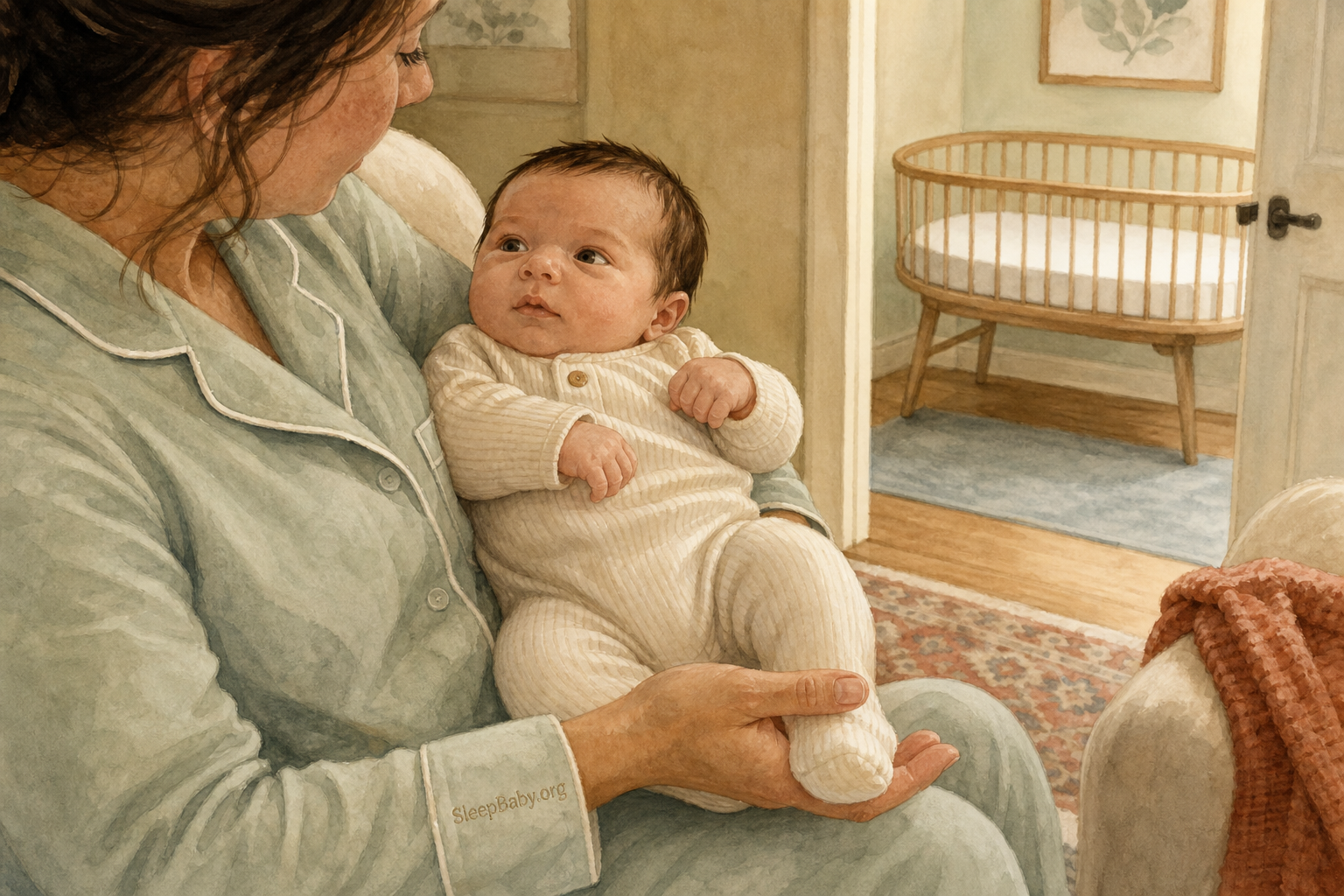
If you searched newborn baby leg shaking spasms, you may be looking at anything from active-sleep twitches to repeated stiffening. Do not try to choose a diagnosis from the search phrase. Instead, write down whether the baby was fully asleep, waking, or awake; whether the movement was fine or forceful; whether it was one-sided; whether the eyes or head pulled to one side; and whether breathing, color, feeding, alertness, or behavior changed.
A sleep-only pattern that stops when the newborn wakes is reassuring in a different way from a fine tremble that settles with gentle support. Movement that continues while the baby is fully awake, clusters with stiffening, changes responsiveness, or comes with eye, breathing, or color changes needs prompt medical assessment. Do not keep retesting the movement at home while the child’s condition is changing.
Why is my baby constantly kicking their legs?
A baby constantly kicking legs can be doing several ordinary things: practicing a new motor pattern while awake, cycling through active sleep, using a repetitive movement to settle, or drawing the legs up with feeding discomfort. The timing and the rest of the body tell you more than the repetition alone.
Transitions and motor practice
Babies repeat movements because repetition is how nervous systems learn. During light sleep or a partial arousal, a baby may lift, bicycle, or drop the legs and then settle again. If the movement is comfortable, roughly symmetric, sleep-linked, and followed by normal behavior, observation is often enough. If it happens mainly before sleep rather than after your baby is asleep, the guide to why babies move so much before falling asleep keeps that pre-sleep pattern in its proper lane.
Gas comes with context, not just kicking
Feeding discomfort is more plausible when leg drawing-up follows a feed and comes with crying, an arched back, clenched fists, or apparent abdominal discomfort. NHS guidance lists those signs among possible clues that a baby needs to burp.12 Pause, hold your baby comfortably upright, burp gently, and review feeding technique if the pattern repeats.
Sleep kicking by itself does not prove gas. Avoid inclined sleep, loose positioning aids, unapproved remedies, or routine medication offered simply because the legs moved. If vomiting is green or bloody, the belly is swollen, feeding is poor, your baby seems unusually sleepy, or pain looks severe or persistent, seek medical advice rather than continuing home gas experiments.
Baby slamming legs while sleeping: when rhythmic movement is the better description
Some babies lift both legs and thump them onto the mattress in a repeating beat. Sleep clinicians group leg rolling or leg banging with other sleep-related rhythmic movements such as body rocking and head rolling. These movements are most common around sleep onset and lighter non-REM sleep and tend to decrease with age.10
The sound can be alarming even when the child is calm. Movement alone does not create a disorder. The clinical concern rises when the pattern causes injury, meaningfully disrupts sleep, creates daytime problems, or points to another condition. A phone video cannot establish periodic limb movement disorder; pediatric PLMD requires clinically significant consequences, exclusion of other causes, and sleep-study criteria.11
Make the sleep space safer, not softer
What to do tonight when the mattress keeps thumping
- Watch one short stretch. Note whether the rhythm happens at sleep onset, during a partial waking, or while your child is fully awake.
- Check the child, not just the noise. Look for normal breathing and color, comfortable facial expression, symmetry, responsiveness when awake, and normal behavior afterward.
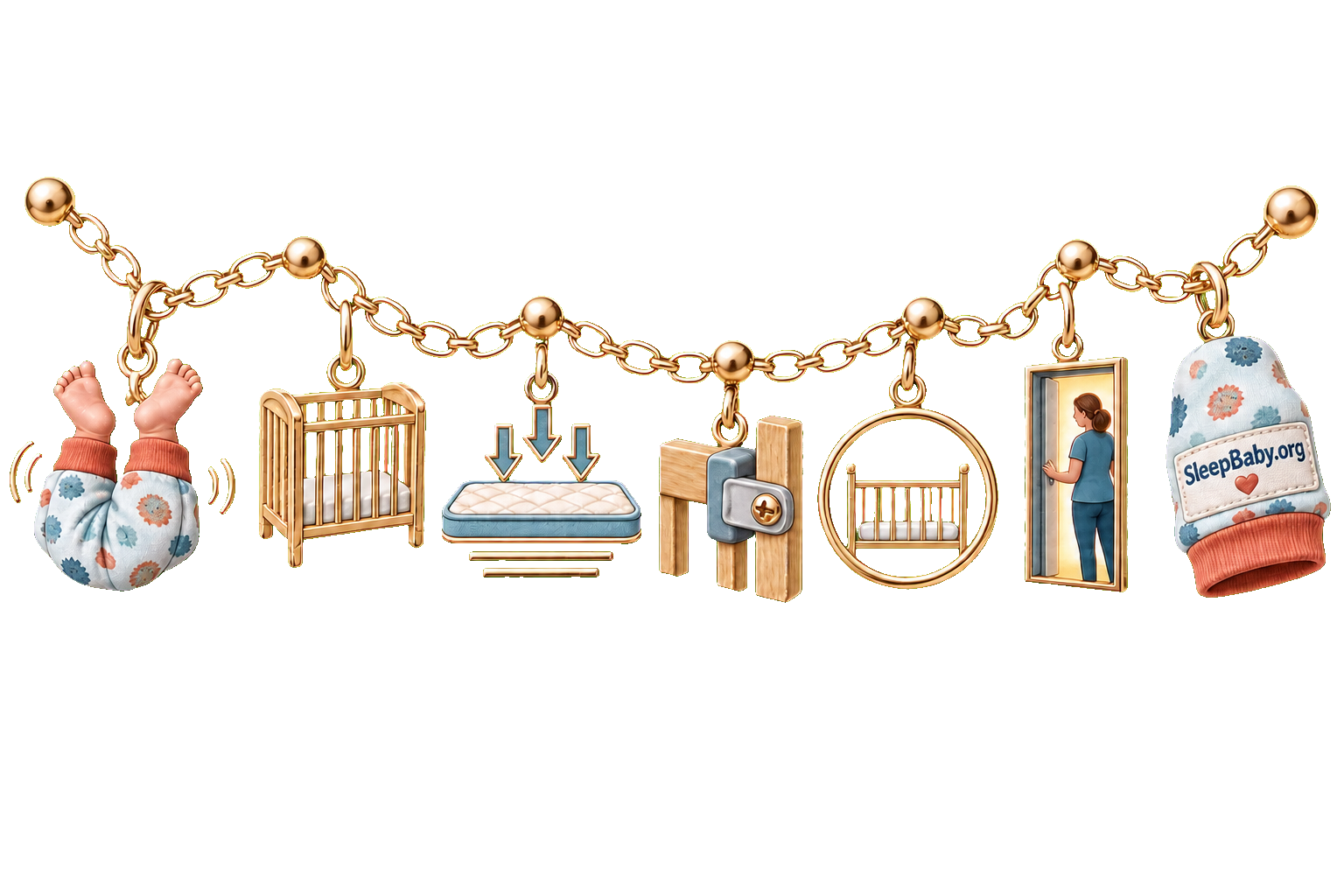
- Keep the crib bare. Do not add bumpers, pillows, padding, positioners, rolled blankets, or weighted products to quiet the sound.
- Check the hardware. Follow the crib manufacturer’s instructions and make sure the mattress support and fasteners are secure. Do not alter the sleep surface.
- Bring patterns, not guesses, to the pediatrician. Call if there is injury, strong one-sidedness, repeated sleep disruption, daytime impairment, awake episodes, or developmental change.
The safe crib is allowed to sound louder than the movement feels. Padding the sound away can introduce a real sleep hazard while hiding a pattern you still need to observe.
Toddler twitching in sleep: broaden the age lens without broadening the diagnosis
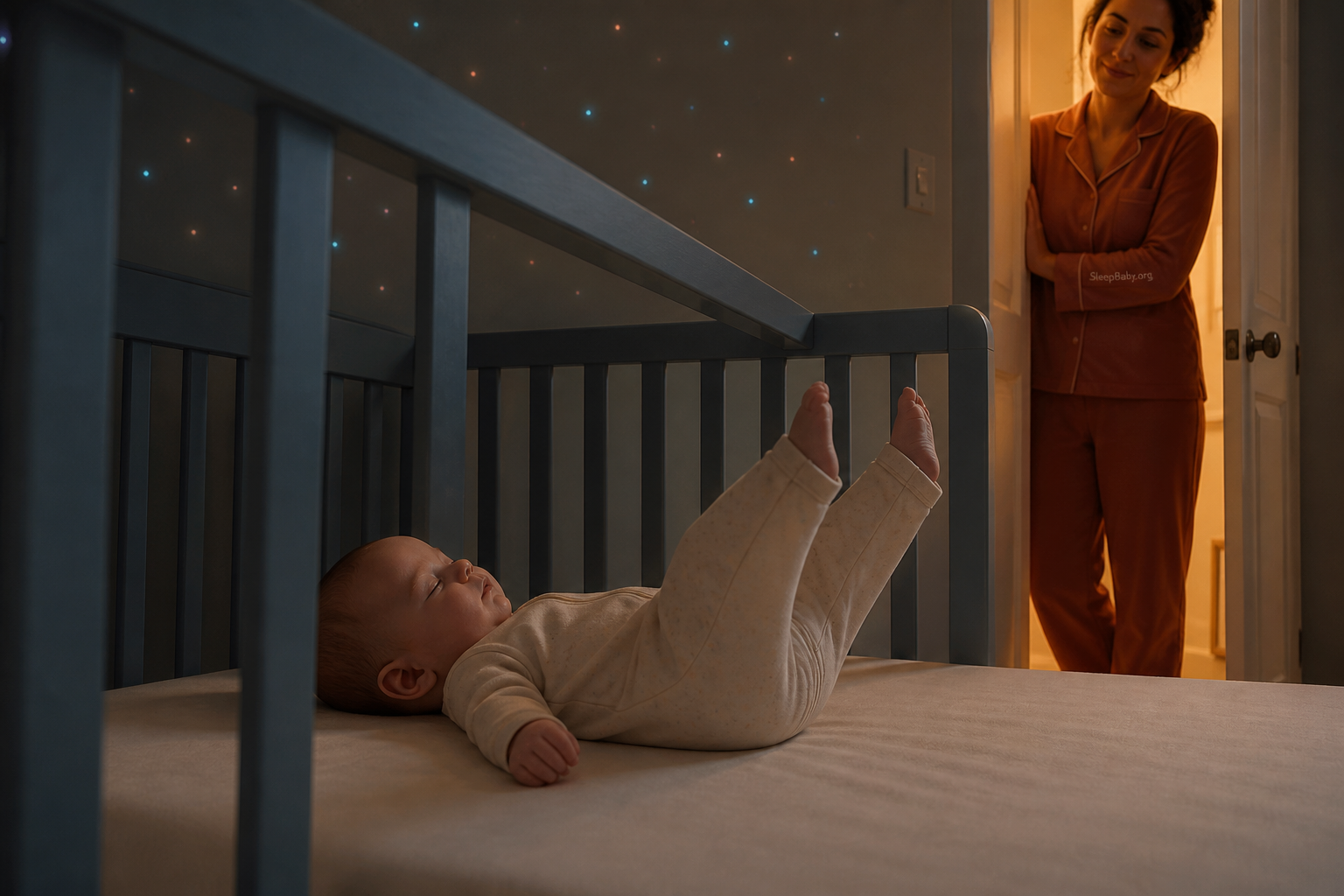
A toddler can have an ordinary sleep start, a brief twitch during sleep, or a rhythmic settling habit. One quick jerk as your toddler drifts off, followed by peaceful sleep and normal behavior, is usually not a sign that something is wrong. Rhythmic rocking or thumping may also persist beyond infancy, especially around sleep onset.
The questions change slightly with age. Does the movement repeatedly wake the child? Is your toddler being injured? Is it happening while fully awake? Is there staring, loss of awareness, a fall, new weakness, a morning headache, unusual daytime sleepiness, or a loss of language, play, balance, or other skills? Those are reasons to call the child’s clinician rather than assume an old baby reflex explains a new pattern.
If the concerning movement is actually an awake flinch—not sleep twitching—the guide to why a toddler flinches covers that adjacent question. The distinction matters because age alone does not turn awake events into sleep movements.
Why do kids twitch in sleep?
Kids twitch in sleep for many of the same non-dangerous reasons adults do: the transition into sleep can produce a quick jolt, active sleep includes small movements, and a partial arousal can briefly recruit the body before the brain settles again. The reassuring picture is brief, sleep-linked, and followed by normal breathing, normal color, normal awareness when awake, and normal daytime function.
Repeated, injurious, daytime, one-sided, or developmentally concerning movement is a different picture. So is a child who cannot be roused normally or who has repeated events without returning to baseline. “Common†should never become a lid placed over new information.
Normal-looking, call-soon, urgent-now
Let the whole picture choose the lane
Usually reasonable to observe
- A single sleep start or brief irregular twitch.
- Movement only during sleep with normal waking.
- Symmetric leg thumping near sleep onset without injury.
- Normal breathing, color, feeding, behavior, and development.
Call the pediatrician
- Movement that is new, worsening, hard to describe, or also occurs awake.
- Strong one-sidedness, repeated sleep disruption, pain, or injury.
- Poor feeding, unusual sleepiness, illness, abnormal tone, or developmental concern.
- A newborn pattern that does not fit the expected sleep/wake clues.
Get urgent help now
- Breathing difficulty, blue or gray color, or failure to wake normally.
- A first suspected seizure, an event over five minutes, or repeated events without recovery.
- Clusters of brief stiffening or flexion, especially after waking.
- Loss of skills, forced eye or head deviation, serious injury, or a child who does not return to baseline.
You do not need every red flag before you act. One directly observed breathing, color, responsiveness, recovery, or developmental concern is enough to change the plan.
Infantile spasms often appear after waking, not as ordinary sleep twitching
Infantile spasms are brief episodes of stiffening or flexion that often repeat in clusters every few seconds. The AAP notes that they are most common just after a baby wakes and are rare during sleep. A baby may suddenly bend forward, stiffen, throw the arms, or show a subtle repeated head drop. Loss of smiles, interaction, rolling, sitting, or other emerging skills can be part of the picture.7
This is a neurologic emergency. If you see a suspicious cluster, take a video only if doing so does not delay care, and contact your pediatrician immediately for urgent evaluation. Do not wait for another night to create a perfect recording. A pattern that happens upon waking is especially important because calling it “sleep twitching†can hide the state change that makes the episode concerning.
Possible seizure: protect, time, and do not restrain
If you think your child may be having a seizure, stay with them. Move hard or sharp objects away, ease the child onto the floor or another safe surface if needed, and turn them onto their side when you safely can. Loosen tight clothing around the neck and time the event. Do not hold the child down, do not try to stop the limbs, and do not put food, liquid, medicine, a spoon, or your fingers in the mouth.89
Call 911 in the United States, or your local emergency number, for a first suspected seizure; an event lasting longer than five minutes; another event beginning before recovery; trouble breathing or waking; serious injury; or an event in water. Follow your child’s established seizure action plan if their medical team has given you one.
Fever, illness, and sleep loss can be relevant in some children, but they are not a universal explanation for unusual newborn movement. Causes and age patterns vary. A newborn who is unwell and moving unusually needs an individual medical assessment, not a search-result list of “common triggers.â€

A useful note, not a home neurology exam
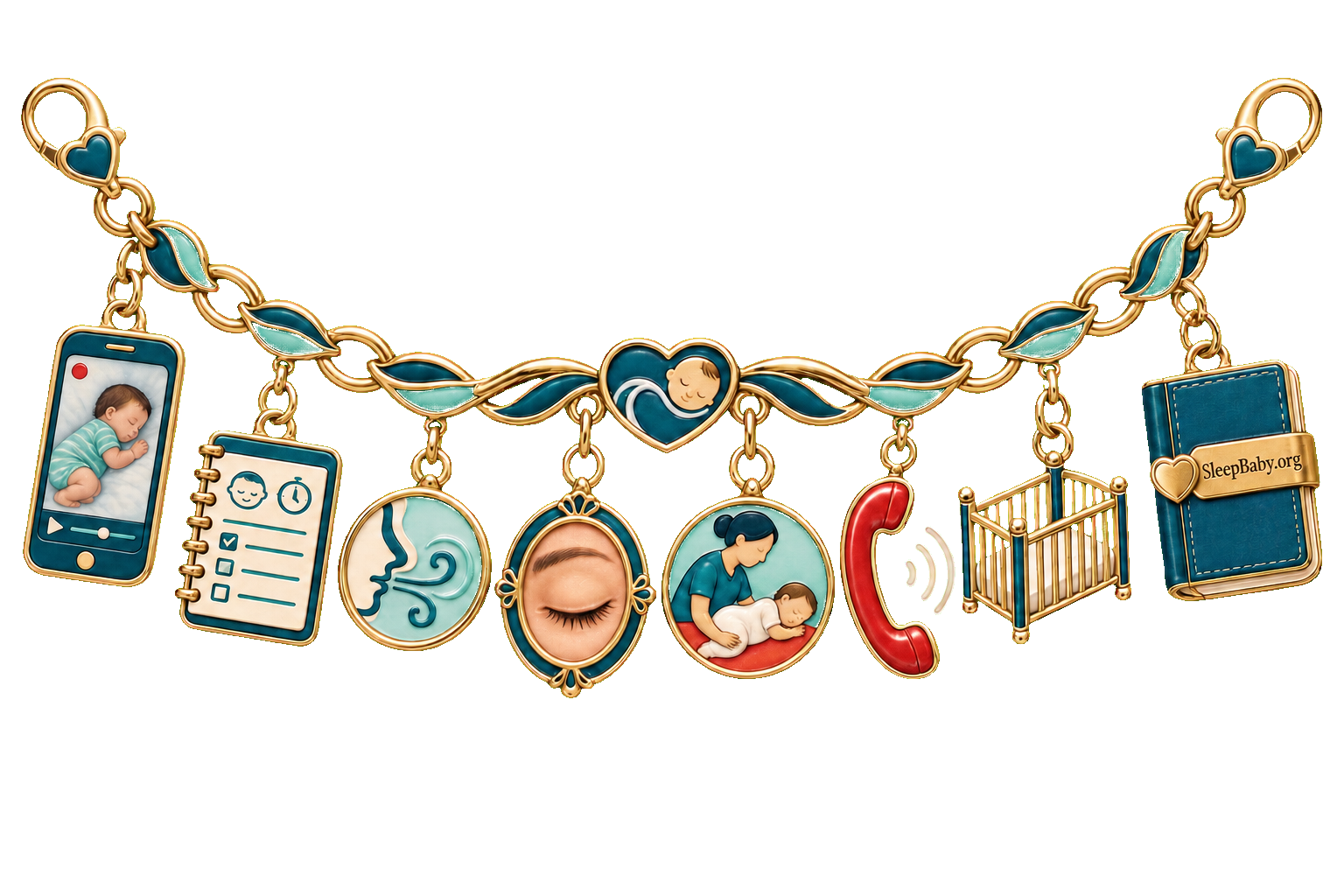
Record nine things without provoking the movement
- Was your child falling asleep, fully asleep, waking, or fully awake?
- Which body parts moved, and did both sides look similar?
- Was it one jerk, a fine tremble, a steady rhythm, or a repeated cluster?
- How long did it last, and did it recur?
- Did a sleep-only newborn pattern stop when the baby fully woke?
- Did an ordinary gentle hold settle a fine trembling limb?
- What happened to the eyes, breathing, skin or lip color, and responsiveness?
- Was there fever, illness, feeding difficulty, injury, or a medication change?
- Was behavior and development normal before and after?
If it is safe, record a short video that includes the child’s face and the moving body part. Do not switch on a bright light, shake the crib, touch the face, pin a limb, or repeatedly wake the child just to reproduce an event. If your child needs first aid, the camera can wait.
Enough detail helps; perfect evidence is not required. Your job is to notice and protect. The clinician’s job is to interpret.
Keep every response inside safe-sleep boundaries
For babies, use a firm, flat sleep surface and place the baby on the back, with no pillows, loose blankets, bumpers, positioners, or weighted products in the sleep space.14 A noisy leg thump is not a reason to make the mattress softer or wedge the baby in place.
If you swaddle a young baby, keep the hips and legs free to flex, always place the baby on the back, use no weighted swaddle, and stop at the first signs of trying to roll—which can begin around 2 months.13 Swaddling may reduce some early startles, but it does not treat repeated neurologic movement and is not appropriate for a rolling baby.
You can dim the room, use steady low sound, check that the child is not overheated, and keep nighttime responses calm. None of those steps should delay medical help or be sold as a way to “train away†unusual movement.
A calm plan for tonight
- Look at the child first. Breathing, color, responsiveness, comfort, and recovery matter more than how loud the mattress sounded.
- Name the state. Asleep, waking, and fully awake are three different clues.
- Name the shape. One jolt, fine tremble, steady leg rhythm, and repeated stiffening cluster should not share one label.
- Keep the sleep space unchanged and safe. Do not add padding or restraints.
- Record one useful note or safe video. Stop collecting evidence if the child needs care.
- Choose the lane. Observe a brief reassuring pattern, call the pediatrician for a new or unclear pattern, or get urgent help for breathing, color, awareness, recovery, cluster, injury, or developmental red flags.
Most sleep movement ends with the child settling and the household exhaling. The goal is not to stare at every toe until morning. It is to know which details let you step back—and which ones ask you to step in.
Sources
- American Academy of Pediatrics: Stages of Newborn Sleep — active-sleep twitches and quiet-sleep movement.
- Twitches emerge postnatally during quiet sleep in human infants — primary developmental research on infant sleep twitches.
- Nonepileptic motor phenomena in the neonate — jitteriness, restraint, eye/autonomic distinctions, and benign neonatal sleep myoclonus.
- Current Overview of Neonatal Convulsions — sleep-state and passive-flexion distinctions.
- National Institute of Neurological Disorders and Stroke: Myoclonus — physiologic sleep starts and benign neonatal sleep myoclonus.
- MedlinePlus: Moro reflex — early-infant startle reflex and expected age window.
- American Academy of Pediatrics: Infantile Spasms — clusters, waking pattern, developmental changes, and urgency.
- American Academy of Pediatrics: Seizure First Aid for Children — protection and emergency thresholds.
- Centers for Disease Control and Prevention: First Aid for Seizures — first-aid corroboration.
- Sleep-related rhythmic movement disorder in children: a mini-review — leg banging, sleep-stage timing, age trend, injury, and impairment.
- Periodic limb movement disorder in children: a systematic review — diagnostic and polysomnographic boundary.
- National Health Service: How to burp your baby — contextual trapped-wind cues.
- American Academy of Pediatrics: Swaddling safety — back placement, hip freedom, rolling, and weighted-product boundary.
- American Academy of Pediatrics: How to Keep Your Sleeping Baby Safe — firm, flat, empty sleep-space guidance.
When the movement is understood but the night still needs a shape
Turn tonight’s observations into a gentler sleep plan
Medical and developmental questions belong with your child’s clinician. Once urgent concerns are ruled out, the same simple note—when the movement happened, what woke your child, how settling went, and what the night looked like afterward—can help you build a steadier rhythm around the baby you actually have.
The SleepBaby.org Workshop helps you organize feeds, awake time, settling, and family handoffs without pretending that a sleep plan can diagnose or treat unusual movement.


Your baby won't sleep. Yet again.
You're tired. You feel helpless – desperate to help your baby sleep...
And yet, you need to get up because it hurts your heart to hear your baby cry.
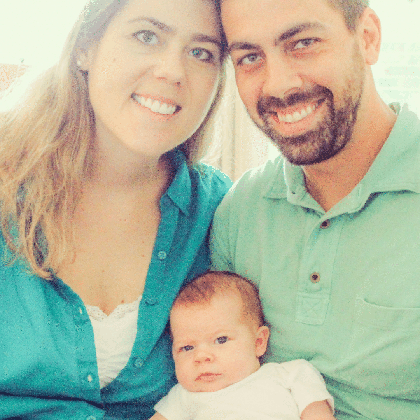
Hi, I’m Kacey.
I’m about to show you a scientific approach to help your baby fall asleep. The SleepBaby Method is designed for newborns through toddlers and does not involve the controversial “cry it out” method.
Most notably, I am a parent just like you. My baby, Benjamin, refused to fall asleep and stay asleep. I understand how it pulls on your heartstrings when your baby won’t sleep.
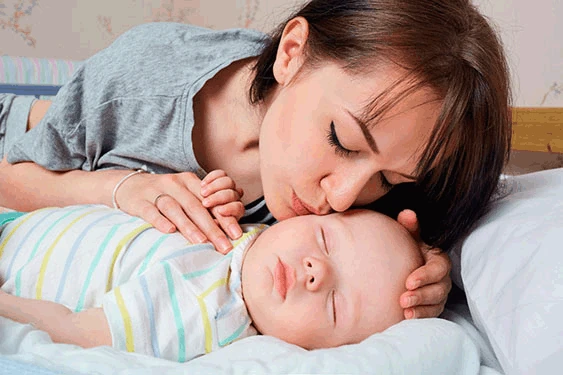
My baby wouldn’t even nap anymore.
When Benjamin was born, my husband and I were elated. We thought he was the cutest baby on planet Earth—and we felt even more fortunate because he was an incredible sleeper.
Then, when Benjamin turned five months old, things changed seemingly overnight.
Benjamin started waking hourly—or every three hours if we were lucky. The sleepless nights began showing up in our work, our patience, and even our marriage.
I went online desperately searching for a solution. I bought the books, the tapes, and even hired a sleep consultant who simply told us to let our baby cry it out. I knew I needed another way.
3 gentle ideas when your baby won’t sleep
These are three of the safer sleep ideas Kacey shares before introducing the complete method.

Unleash the Giggle Monster
Stress can play a big part in why a baby won’t settle. A little laughter can help release built-up tension—and it gives you a warm moment of connection before sleep.
Adjust the Bedtime
A later bedtime does not always make sleep easier. When a child has been awake too long, an overtired “second wind” can make settling harder. A consistent, age-aware schedule can help.
Noise Can Help
The right steady sleep sounds can help a baby feel calm and protected. The complete method includes a collection of sounds designed for baby sleep.
What you’ll discover inside The SleepBaby Method
- The most effective alternatives to nursing or rocking your baby to sleep.
- Ways to help your baby feel loved instead of crying for extra attention at bedtime.
- Simple ways to ease bedtime anxiety and help your baby arrive at sleep calmly.
- Baby sleep schedules designed around your child’s age.
- Holistic ways to support your baby’s natural sleep rhythms without drugs.
- A complete collection of soothing baby sleep sounds.
The complete method + all three bonuses
Everything you need to start a calmer bedtime tonight.
Get unlimited access to The SleepBaby Method, the practical guidance Kacey created after Benjamin’s sleep changed, and all three digital bonuses.
Instant digital access
Continue to checkout. Digital access follows your purchase.
- Complete digital workshop and guide
- Baby Sleep Music
- Deep Into Dreams
- Sleepy Siblings
- 60 days to explore the complete method
Three bonuses for the nights that need a little more help

Baby Sleep Music
A collection of sounds designed just for babies, created to support a calmer, more peaceful sleep setting.

Deep Into Dreams
Simple steps to encourage happy dreams so your baby can sleep peacefully and undisturbed.
Sleepy Siblings
Practical help for putting siblings or twins to sleep at the same time—whether they share a room or sleep separately.
Try The SleepBaby Method for a full 60 days.
Explore the complete method and all three bonuses for 60 days. If it is not right for your family, contact us and we will make it right.
No questions asked. You can begin tonight and decide with confidence.
Simple answers before you begin
The complete method is made to be clear, practical, and easy to start.
Does this use “cry it out”?
No. The SleepBaby Method was specifically designed without the controversial “cry it out” approach.
What ages is it made for?
The method is designed to help families from the newborn stage through the toddler years.
How will I receive it?
It is a digital program delivered instantly, with unlimited access to the workshop and all three bonuses.
What if it is not right for us?
You have 60 days to explore the complete method. If it is not right for your family, contact us and we will make it right.
What parents shared with Kacey
“I was insanely sleep deprived when I heard about you from my son’s daycare. No matter what I tried, my baby wouldn’t sleep and it was driving me crazy!”
“Your information is very intelligent, easy to follow, and unique.”
“As a single dad, I am already tired and my baby’s sleep problems made it even worse.”
“Since starting your method, he now sleeps through the entire night. Thank you, thank you, thank you!”
“Thank you for helping my baby finally sleep! We felt like we were having the worst time and felt so stuck.”
“My baby is now on a sleep schedule that makes her and I both much happier during the day.”
These are individual parent experiences. Every child and family is different.