Skip to content
SleepBaby.orgParent Library
Sleep help
Join the parent chat

Why Does My Toddler Flinch? The Meaning and Causes

Seeing your toddler flinch can cause worry and uncertainty for parents. Understanding why this happens and when it could be a cause for concern is important. Let's delve into this topic to provide some…

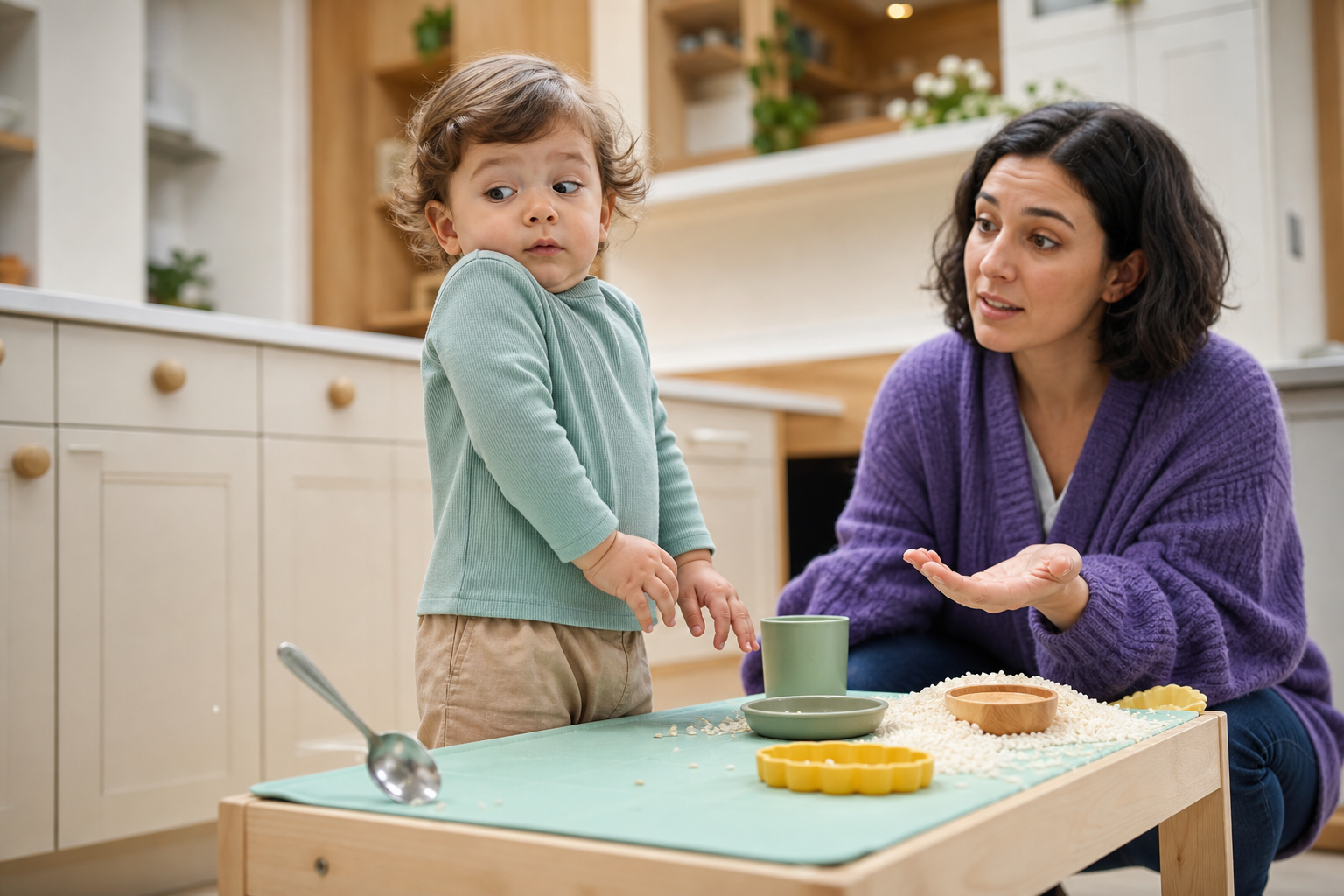
Toddler startles at a fallen spoon as a caregiver responds calmly in the kitchen.
In this guide
  1. Understanding the Flinching Phenomenon in Toddlers
  2. When to Worry About Your Toddler’s Flinching
  3. Exploring the Reasons for Toddler Flinching
  4. Understanding Sensory Sensitivity
  5. Is Flinching a Trauma Response?
  6. When Should You Be Concerned?
  7. Identifying Abnormal Movements in Toddlers
  8. Identifying Sensory Issues in Your Child
  9. Flinching and Your Relationship with Your Child
  10. Touch Aversion in Children
  11. Repercussions of Yelling and Anger
  12. Managing and Reducing Your Toddler’s Flinching
  13. Approaching a Child Who Flinches
  14. Professional Interventions for Sensory Issues
  15. How Flinching Can Affect Your Toddler’s Sleep
  16. Understanding Sleep Myoclonus
  17. How SleepBaby.org Can Help
  18. Conclusion

Seeing your toddler flinch can cause worry and uncertainty for parents. Understanding why this happens and when it could be a cause for concern is important. Let’s delve into this topic to provide some clarity and reassurance.

Understanding the Flinching Phenomenon in Toddlers

It’s common to see your toddler flinch from time to time, and there can be several reasons behind it:

  • Startle Reflex: Also known as the Moro reflex, this is a natural response in babies that can sometimes persist into toddlerhood.
  • Sudden Sensory Input: A loud noise, sudden light, or quick movement can cause your toddler to flinch.
  • Muscle Spasms: These can cause involuntary flinching and are usually harmless.
  • Neurological Reasons: While less common, certain neurological conditions can cause flinching. If flinching is persistent and accompanied by other concerning symptoms, consult a healthcare provider.

When to Worry About Your Toddler’s Flinching

While occasional flinching is normal, there are times when you should seek professional help:

  • When flinching is frequent and doesn’t seem to have an apparent cause.
  • If your child seems distressed or uncomfortable when flinching.
  • When it’s coupled with other unusual symptoms, such as difficulty walking, loss of balance, or developmental delays.

Exploring the Reasons for Toddler Flinching

Understanding Sensory Sensitivity

Some children may flinch because they have sensory sensitivity, a condition where the usual sensory input like touch, sounds, or lights may feel overwhelming. Children with sensory processing disorder, autism, or ADHD often exhibit these sensitivities. When touched or exposed to sudden sensory changes, these children might flinch as a natural response to protect themselves.

Is Flinching a Trauma Response?

While it’s disturbing to consider, consistent flinching, especially when a hand is raised or a voice is loud, can indeed be a sign of trauma or abuse. If you suspect this could be the case, it’s crucial to seek professional help immediately to safeguard your child’s wellbeing.

When Should You Be Concerned?

Identifying Abnormal Movements in Toddlers

It’s normal for toddlers to be a bit clumsy as they master their motor skills. However, sudden jerking movements or persistent flinching may require attention, especially if they appear alongside other concerning signs such as developmental delays or discomfort.

Identifying Sensory Issues in Your Child

Aside from flinching, children with sensory issues might exhibit symptoms such as avoiding certain textures, reacting negatively to certain sounds or lights, or seeking certain sensory inputs. A trained professional can diagnose these issues and provide strategies to help manage them.

Flinching and Your Relationship with Your Child

Touch Aversion in Children

Some children, especially those with sensory issues or autism, may be averse to touch and may flinch when touched. This is not a rejection of affection but a reaction to sensory input that feels overwhelming to them.

Repercussions of Yelling and Anger

Excessive yelling and displays of anger can cause stress and fear in children, leading to behaviors like flinching. Using calm and consistent discipline methods instead of yelling or hitting can improve your child’s sense of security and reduce flinching over time.

Managing and Reducing Your Toddler’s Flinching

Approaching a Child Who Flinches

If your child consistently flinches when you raise your hand or touch them, consider using verbal cues to prepare them for the incoming contact. Use a calm voice and reassuring words to build trust and alleviate anxiety.

Professional Interventions for Sensory Issues

If your child has sensory sensitivities causing them to flinch, occupational therapy can help them better process sensory inputs. A professional therapist will provide a series of exercises and strategies tailored to your child’s needs.

How Flinching Can Affect Your Toddler’s Sleep

If your toddler’s flinching is disturbing their sleep, it can become a cause for concern. Poor sleep can impact a toddler’s health, mood, and overall development. So how does flinching relate to sleep, and what can you do about it?

Understanding Sleep Myoclonus

Sleep Myoclonus is a condition where a child may experience sudden jerks or twitches, similar to flinches, while falling asleep or during sleep. It’s a common phenomenon in infants and can extend into toddlerhood.

How SleepBaby.org Can Help

If your toddler’s sleep is being disrupted by flinching or similar behaviors, SleepBaby.org is here to help. Our expert guidance on sleep training and baby sleep health can provide the support you need. We offer tailored advice and strategies to ensure your toddler gets a peaceful night’s sleep, even when dealing with issues like flinching or twitching. Remember, a well-rested child is a happy, healthy child.

Conclusion

Understanding why your toddler flinches can ease your worries and help you respond appropriately. Remember, occasional flinching is normal and often outgrown with time. But if it’s frequent or concerning, don’t hesitate to seek professional advice. And when it comes to sleep-related issues, SleepBaby.org is your trusted partner for guidance and support.


The night-shift conversation

What are nights looking like at your house?

Compare notes, ask a follow-up, or leave the detail another tired parent may need tonight. No perfect parenting answer required.

  • No email needed
  • Kindness moderated
  • Easy threaded replies
0 messages

You can start this thread.A question, a rough night, or one tiny win is enough to help another parent feel less alone.

Add one useful detail

What happened during this part of the night?

After reading “Why Does My Toddler Flinch? The Meaning and Causes,” share one observation, one thing you tried, or one question. Specific details help parents compare situations—not copy them.

  1. NoticeWhat did you see or hear?
  2. TryWhat changed, if anything?
  3. AskWhat are you still unsure about?
Need a first sentence? Tap a starting point; it adds text without replacing anything you wrote.

Public conversation, calmly moderated.Your comment is public. A first name or nickname is enough. Email stays off the public comment and may be used for moderation. A website is optional and may be linked publicly if entered.

  1. 1. SendYour message goes to WordPress.
  2. 2. ModerateIt may wait for approval.
  3. 3. ContinueApproved replies stay in this public thread.

Your turn

Join the night-shift chat

Just your message + an optional nickname. No email, account, or website field.

Say what happened, ask the follow-up, or share the tiny thing that helped. A sentence is enough.

Not sure where to begin?Tap a starter, then finish the thought.

Honest and specific beats polished.0 / 5000

Keep it kind and public-safe: leave out full names, contact details, and sensitive medical information. New messages may be briefly moderated.

A nickname is enough—please do not use your full name.

Usually under a minute. Your message may appear after moderation.

Article complete · optional SleepBaby guide preview You came for one answer. The rest of tonight may still feel tangled.

You just finished “Why Does My Toddler Flinch? The Meaning and Causes”. If that solved the question you came with, you can stop here. If it uncovered a bigger bedtime, nap, or night-waking pattern, this next section shows how SleepBaby connects the pieces before asking you to go anywhere.

What you may be thinking“Is this just another pile of tips—or a surprise checkout?”

What happens herePreview the method, the current offer, and the questions it answers. Payment stays closed unless you deliberately open it.

Explore the complete SleepBaby guide
6 chapters + 3 bonusesNothing held back $27 / $57 / $87Through August 1 at 11:59 PM HST; then $57. 60-day fit refundYour purchase is protected

One useful article → one connected place to continue

One article can answer one question. Your night may need the pieces in one order.

SleepBaby’s homepage is the calm starting point for the bigger picture: bedtime, naps, repeated waking, and what to try next without opening fourteen more tabs.

Hi, I'm Kacey.I know the special kind of tired where every new tip sounds promising and impossible at the same time. I'll walk you through a clear, responsive approach—structure without a rigid one-size-fits-all routine.

Take me to the complete SleepBaby guide

See the free guide first. The current offer and optional checkout stay clearly separate.

one question
whole night

You are not failing.You are tired and looking for a plan that makes sense.

Maybe you’re wondering “Is this just more disconnected advice?”

The difference is the decision order

Not twenty more tips. A way to decide what belongs first.

One clear patternNotice → adjust → repeat

If your baby won't sleep, take a deep breath. It can get better.

Like so many parents, I tried books, schedules, tricks, and conflicting advice. What I needed was not another isolated hack. I needed to understand the whole pattern and choose steps my family could repeat.

No sleep method works perfectly for every baby. The goal here is to help you notice timing, routine, environment, and connection so you can make calmer decisions instead of starting over every night.

NoticeConnectionHow your baby settles with you.
AdjustTimingWake windows, naps, and bedtime.
RepeatEnvironmentCues your baby can recognize.
Benjamin's storyThe night Kacey stopped collecting random tips

When Benjamin was five months old

My baby wouldn't even nap anymore.

When Benjamin was born, my husband and I felt incredibly lucky. He slept beautifully at first. Then, seemingly overnight, everything changed.

He began waking hourly—or every three hours if we were lucky. We were constantly tired, and the effects started showing up in work, daily life, and our marriage.

“I bought the books, tried the routines, and even hired a $400 sleep consultant. I was overwhelmed. I did not need more noise. I needed a plan.”

Three low-drama things to try first

Start with one small experiment tonight.

These are simple starting points, not promises or medical treatment. Pick one—not all three at once. Persistent sleep, feeding, breathing, or safety concerns belong with your child's healthcare professional.

Connection → calm One familiar cue before lights-down
Try 01

Unleash the Giggle Monster

A little playful connection before the bedtime routine can help the transition feel less abrupt. Keep it gentle and brief so play does not become a second wind.

Think warm eye contact, a familiar silly sound, or one tiny game—then move into the same calm sequence you want your baby to recognize each night.

Earlier wind-down Keep the ending familiar
Try 02

Adjust the Bedtime

A later bedtime does not always create an easier bedtime. Some babies become harder to settle when they have been awake too long.

Look at the whole day—wake time, naps, feeding, stimulation, and your baby's sleepy cues—rather than moving bedtime later by itself.

Low · distant · steady One predictable room cue
Try 03

Noise Can Help

A steady, low background sound can make sudden household noises less noticeable. Keep any sound machine at a safe volume and place it away from the crib.

The goal is not a loud room. It is a predictable sound environment that becomes one more consistent bedtime cue.

A faster way to find your next step

What you'll discover

The complete SleepBaby.org Method organizes the scattered pieces into one place so you can stop changing direction every night.

See how the pieces fit on SleepBaby
  • Alternatives to nursing or rocking all the way to sleepChoose gradual, repeatable transitions that fit your family.

  • A calmer bedtime sequenceConnect timing, routine, environment, and response.

  • Age-aware sleep planningKnow what to reconsider as your baby grows and changes.

  • Support for naps and night wakingUse a decision framework instead of guessing at 2 a.m.

  • Baby sleep soundsCreate a steady sound environment without turning bedtime into a production.

Three extras for the nights that need backup

All 3 bonuses are included.

Not an upsell. Not a smaller edition. They come with the complete method at every allowed price.

Three extra tools—already packed.Sound · sleep cycles · siblings
Bonus 01

Baby Sleep Music

A collection of gentle sleep sounds to help make the bedtime environment feel familiar and consistent.

Bonus 02

Deep Into Dreams

A parent-friendly explanation of normal sleep movement, sounds, and transitions so every little noise does not become a crisis.

Bonus 03

Sleepy Siblings

Ideas for coordinating bedtime when siblings or twins share a room—or simply share the same exhausted parents.

Real words from the original SleepBaby page

What parents said

Individual experiences vary. These archived parent stories are not a guarantee of results—they are here so you can hear more than our voice.

Family portrait accompanying Anna Olson's archived story
“I was insanely sleep deprived when I heard about you from my son's daycare. I was concerned the method might be more of the same, but the information felt intelligent, easy to follow, and unique.”
Anna OlsonTampa, Florida
Father and baby accompanying Paul Deleon's archived story
“As a single dad, I was already tired and my baby's sleep problems made it worse. I used to dread bedtime. The structure gave me a much clearer way to respond.”
Paul DeleonSydney, Australia
Mother and baby accompanying Diana Erickson's archived story
“We felt stuck. Having a plan made bedtime feel less chaotic, and I finally felt like I knew what to try next instead of starting over.”
Diana EricksonBristol, England
The full method—not a mini version

$27, $57, or $87.Every choice opens the same complete method and all three bonuses.

Regular price$57

Choose $27 / $57 / $87 · same complete method

Why we’re testing flexible pricing

The full method at $27, $57, or $87.

Every available price opens the same six SleepBaby Method chapters and all three bonuses. Flexible pricing closes August 1 at 11:59 PM HST; after that, the one-time price returns to $57.

01Choose today's price 02Pay securely 03Open the full method
Explore SleepBaby before you decide

The homepage is the recommended next step. If you already feel ready, the optional secure checkout remains available below—but it will not open unless you choose it.

$27 / $57 / $87 · Same six chapters and three bonuses at every price.

Full method 6 chapters + 3 bonuses One-time payment 60-day fit refund
Flexible pricing closes August 1 at 11:59 PM HST; then the one-time price returns to $57.
Already feel ready? Open the optional secure checkout Closed by default. Explore the homepage first—or deliberately open PayPal, Venmo, Pay Later, or card when eligible.

Your purchase is protected

A 60-day fit refund.

If the SleepBaby Method is not the right fit for your family, your purchase is protected for 60 days.

Email refund@sleepbaby.org within that period for refund help. This is a fit promise—not a promise of a particular sleep result.

Complete method · one payment

Choose $27, $57, or $87.

Every price opens the same six chapters and all three bonuses. This choice closes August 1 at 11:59 PM HST, then access returns to a one-time $57 price.

Regular price$57
Through August 1$27 / $57 / $87

Same six chapters. Same three bonuses. No stripped-down version.

Why flexible right now?Through August 1 at 11:59 PM HST, choose $27, $57, or $87. All six chapters and three bonuses stay the same.

  • Complete SleepBaby.org MethodAll six chapters at every price.

  • Three original bonusesBaby Sleep Music, Deep Into Dreams, and Sleepy Siblings.

  • One-time paymentNo subscription or recurring charge.

  • Immediate private access after payment confirmationYour private delivery page opens immediately after PayPal confirms the completed payment.

This is a SleepBaby.org purchase.PayPal securely processes the payment. SleepBaby.org never receives or stores your complete card number.

Final step

Choose Today's Price

Choose $27, $57, or $87, then choose PayPal, Venmo, Pay Later, or a card when eligible. A separate “Choose another amount” control stays available without competing with the three clear starting choices.

Immediately after payment confirmation, access opens on your private delivery page. One payment, no subscription, with a 60-day fit refund.

Choose one of the three clear starting prices
One-time total Enter your price
Choose Your Payment Method: PayPal automatically shows only the options available for this buyer and device.
Payment options load when you reach this section…

Secure one-time payment processed by PayPal · No subscription

01

Choose today's price

Enter any amount within the displayed range—or use the regular $57 price.

02

Choose how to pay

Use an eligible PayPal option or the secure card fields.

03

Open the full method

After PayPal verifies the payment, your delivery page opens.