The short answer
A flexible 7-month-old sleep schedule
Most 7-month-olds need 12 to 16 total hours of sleep in 24 hours, including naps, but they do not need one universal clock schedule.1 Start with a reasonably steady morning wake time and bedtime. Between those anchors, offer either three naps or an emerging two-nap rhythm based on how long your baby actually sleeps, how feeding is going, and how they cope while awake. Use the sample times below as examples, not prescriptions. If a nap is short, the next sleep may need to come sooner. If a nap is long, the next one may move later. The schedule should bend around the baby in front of you.
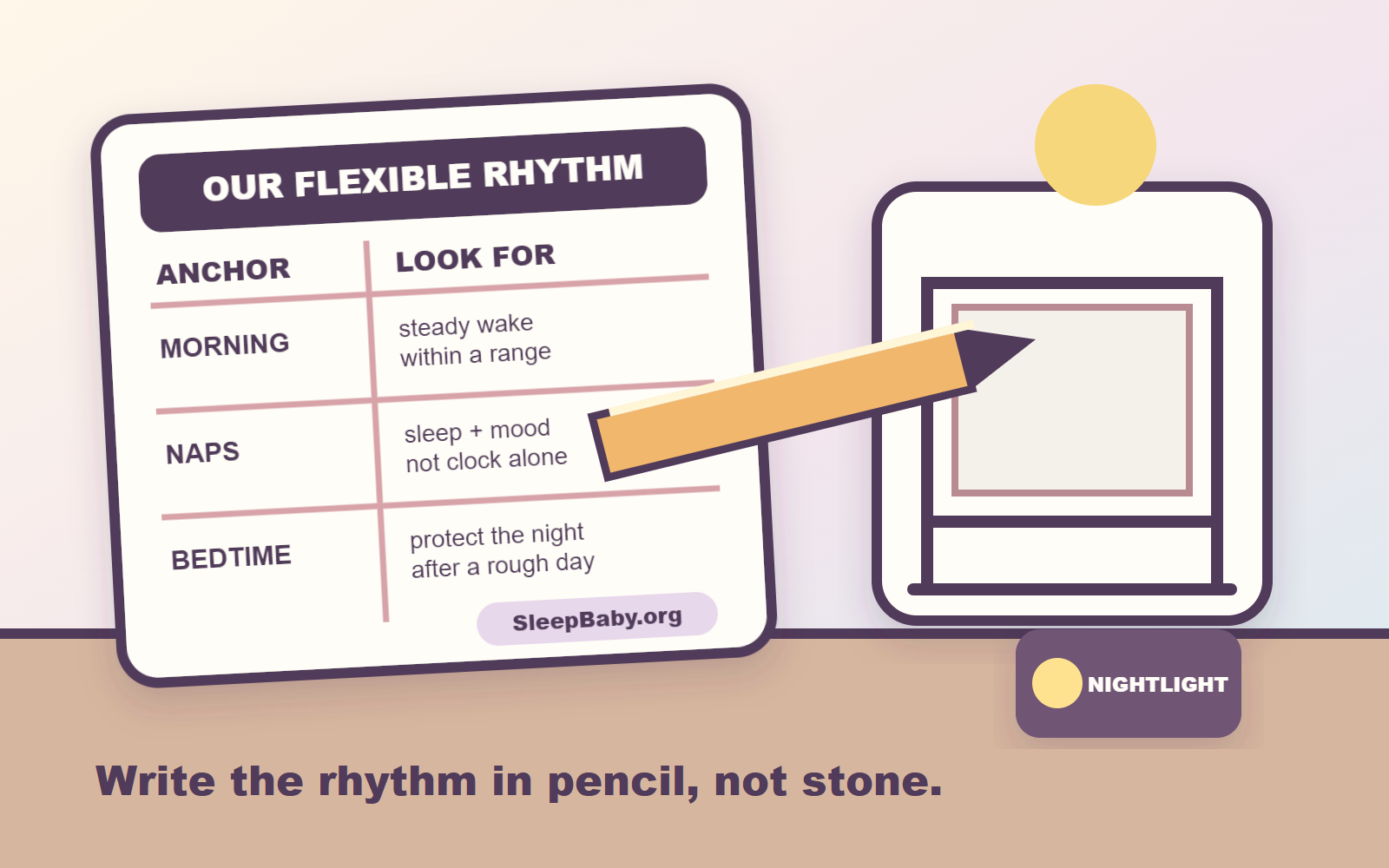
- Anchor 1: morning
- Choose a wake-time range you can usually protect within about 30 minutes.
- Anchor 2: naps
- Offer sleep after a workable stretch awake, then let the real nap length shape what follows.
- Anchor 3: bedtime
- Aim for a familiar evening range, moving earlier after a broken nap day when your baby is fading.
My rule for this age: use anchors, not handcuffs.
Editorial note: The family scene below is a clearly disclosed composite built from common parent experiences. It is not a staff autobiography, a customer story, or medical evidence.
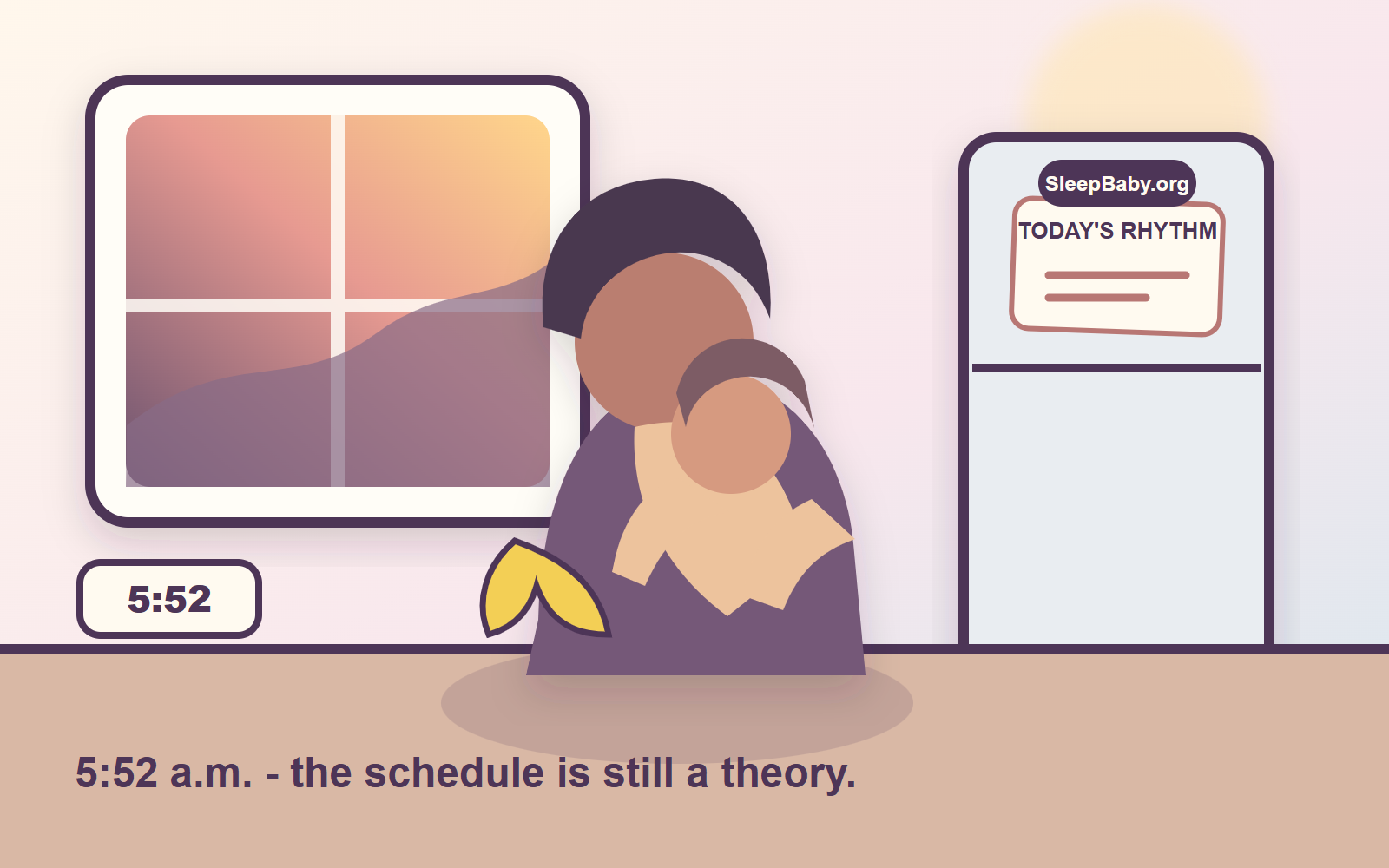
At 5:52 a.m., the schedule is still a theory
In the composite, a mother is standing in the kitchen with a baby on one hip and a felt-tip pen in the other hand. The refrigerator schedule says 7:00 a.m. in confident block letters. The baby, who did not attend the planning meeting, began the day at 5:52.
There is banana on the mother’s pajama sleeve. A tiny silicone spoon has landed under the table. She is doing exhausted arithmetic: if the first nap moves up, will the entire day slide into the sea? If she keeps the nap at the printed time, will the baby become a furious little accordion by breakfast?
I would not ask that mother to obey a chart more faithfully than she observes her child. I would ask her to notice three things: how the baby woke, whether the baby can feed comfortably, and how long the first stretch awake remains pleasant. A schedule is useful when it helps a tired adult make the next decision. It is not useful when every early wake feels like a failing grade.
Seven months can feel particularly wobbly because many babies are moving toward longer awake periods and two more substantial naps, while plenty still need a third short nap. The middle ground is not evidence that you are doing it wrong. It is the transition.

Build the day from three anchors
The American Academy of Sleep Medicine recommends 12 to 16 hours of sleep in 24 hours for infants 4 through 12 months, including naps. That is a broad health range, not a promise that a particular baby will sleep 12 hours overnight or nap for a certain number of minutes.1 Individual sleep need and distribution vary. The National Health Service also emphasizes that babies have their own patterns and that not all babies sleep through the night at the same age.3
The most practical way to use that guidance is to build a rhythm around three anchors:
- Morning anchor: choose the range in which the day normally begins. A 6:00 family and an 8:00 family can both have a workable schedule.
- Nap opportunities: offer two or three chances to sleep. The actual nap – not the fantasy nap – determines the next stretch of the day.
- Bedtime anchor: keep a familiar closing range, but allow an earlier landing after unusually short naps or a missed third nap.
Anchor, not appointment
An anchor gives the day a recognizable shape. It does not mean waking a content baby at every line on a spreadsheet, forcing a nap when they are bright-eyed, or stretching a miserable baby to reach a prettier bedtime. Think in ranges, then use feeding, mood, and actual sleep as your live information.
Wake windows are a tool, not a medical rule
You will see precise wake windows all over the internet. They can be a convenient way to describe time awake, but there is no official medical prescription saying every 7-month-old must sleep after one exact interval. A baby who took a 24-minute nap, a baby who slept 90 minutes, and a baby recovering from illness may not be ready for the next sleep at the same time.
Use elapsed time as one clue. Pair it with slower movements, rubbing eyes, losing interest in play, growing clingy, or becoming harder to please. Also notice the opposite clue: a baby who rolls around happily for a long time before most naps may need a little more time awake. Adjust gently – often by 10 to 20 minutes – and watch several ordinary days before making another change. That small-step method is a SleepBaby troubleshooting approach, not a developmental law.
For the wider age-by-age context, see our flexible baby sleep schedule for the first year. Bring this article’s anchor method with you rather than copying a different month unchanged.
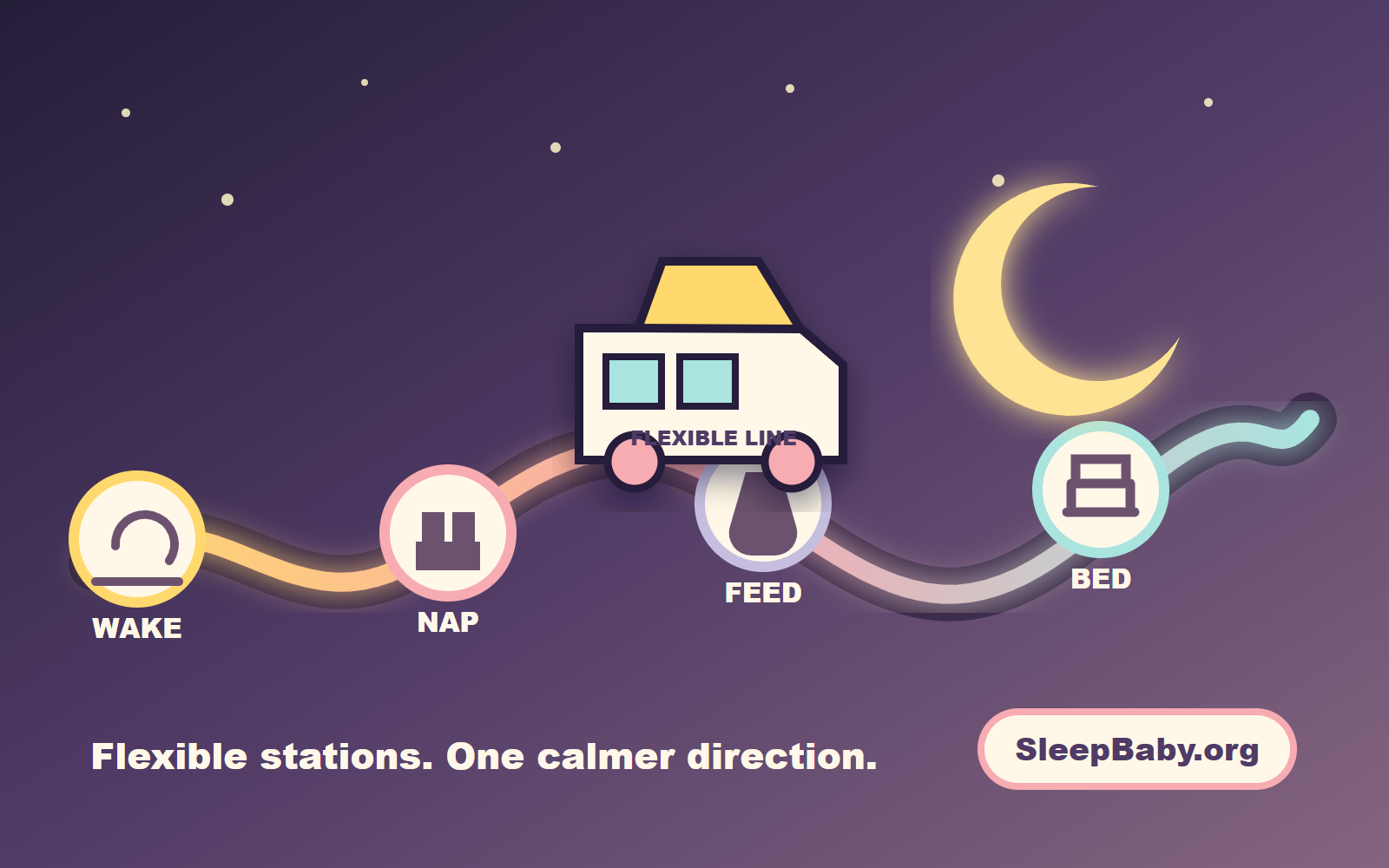

Three-nap schedules for a 7-month-old
A three-nap day often works when the first two naps are still short or inconsistent, your baby becomes ragged during a long late-afternoon stretch, or skipping the last catnap repeatedly pulls bedtime uncomfortably early. The third nap is usually a bridge, not the day’s main event.
These examples deliberately use different morning anchors. They are not promises about nap length, feeding frequency, or bedtime. Shift the whole pattern to match your household and adjust the next sleep after the nap you actually got.
6:00 a.m. start
Nap 1: about 8:15-9:15
Nap 2: about 11:45-1:00
Nap 3: about 3:45-4:15
Bedtime: about 7:00
7:00 a.m. start
Nap 1: about 9:15-10:15
Nap 2: about 12:45-2:00
Nap 3: about 4:30-5:00
Bedtime: about 7:30
8:00 a.m. start
Nap 1: about 10:15-11:15
Nap 2: about 1:45-3:00
Nap 3: about 5:30-6:00
Bedtime: about 8:30
If Nap 1 lasts only 35 minutes, do not pretend it lasted an hour just to protect the chart. Move the next opportunity earlier if your baby is struggling. If Nap 2 is long and restorative, the third nap may become later, shorter, or unnecessary. Some days will be two-nap days and others three-nap days for a while.
Two-nap schedules for a 7-month-old
An emerging two-nap day usually needs two reasonably restorative naps and enough comfortable awake time to reach bedtime without a meltdown. It should not require heroic distraction, a frantic car ride, or a bedtime routine performed while the baby is dissolving into your shoulder.
6:00 a.m. start
Nap 1: about 8:30-10:00
Nap 2: about 1:00-2:30
Bedtime: about 6:30-7:00
7:00 a.m. start
Nap 1: about 9:30-11:00
Nap 2: about 2:00-3:30
Bedtime: about 7:00-7:30
8:00 a.m. start
Nap 1: about 10:30-12:00
Nap 2: about 3:00-4:30
Bedtime: about 8:00-8:30
Notice what these examples do not claim. They do not say every nap must be 90 minutes. They do not require a 12-hour night. They do not tell you to wake a hungry baby to preserve a line of arithmetic. Their purpose is to show how the same day can begin at different times while keeping a recognizable sequence.
Is your baby ready for two naps?
Do not drop the third nap because it was refused once. A new skill, an appointment, a noisy sibling, a missed feed, teething discomfort, or a fascinating ceiling fan can make one nap strange. Look for a pattern across several reasonably ordinary days.
- Keep three naps for now
- The first two naps are often short, the late afternoon is miserable without a bridge nap, or an early bedtime creates an even earlier morning.
- Test two naps
- The third nap is repeatedly refused, bedtime keeps drifting late, and the first two naps are long enough to carry the day.
- Toggle during the transition
- Use two naps after a strong nap day and three after a short one. A transition can be a season of mixed days, not a single graduation date.
I care less about whether the schedule has the fashionable number of naps than whether the baby can move through the day with reasonable comfort. A two-nap schedule that produces an exhausted baby is not advanced. It is just early.
If the late catnap is colliding with bedtime, use our separate guide on whether to let a baby sleep before bedtime for a three-way decision instead of automatically fighting the nap.

Feeding belongs inside the schedule
At 7 months, breast milk and/or infant formula remains the main source of nutrition from 6 to 12 months, while solid foods gradually take a larger role.5 The CDC notes that foods other than breast milk or formula are generally introduced around 6 months when a baby is developmentally ready.4 That means a beautiful nap chart should never crowd out responsive milk feeds or a clinician’s feeding plan.
A practical day might include a milk feed after waking, additional milk feeds around naps according to your baby’s hunger cues, and one or more solid-food opportunities when the baby is alert and supervised. The exact arrangement depends on breastfeeding or formula feeding, growth, medical history, family meals, and how solids are progressing. It does not need to mirror an influencer’s refrigerator.
Feeding-aware boundary
Do not remove a night feed solely because your baby turned 7 months or because a sample schedule has no feed printed overnight. Some babies no longer need a night feed; others still do. If you are considering changing feeds – especially with poor weight gain, prematurity, illness, reflux concerns, low milk supply, or a clinician-directed plan – ask your pediatrician or feeding professional.
A hungry baby may not settle because the clock says it is sleep time. A baby who has just eaten may need a calm upright cuddle before being placed on a safe sleep surface, depending on the clinician’s advice and the baby’s comfort. Feed the baby you have, then fit the rhythm around the care they need.
For the narrower question about feeding overnight, see what to consider when a breastfed baby is not sleeping through the night. This schedule does not replace individualized feeding guidance.
Use the one-variable reset
When naps, bedtime, and night waking are all messy, changing everything at once feels productive and usually creates fog. Pick the clearest pressure point and change one variable for several ordinary days while keeping the rest recognizable.
- Write the real day. Record wake time, nap starts and ends, feeds, bedtime, night wakes, and unusual symptoms. Do not fill in the schedule you meant to have.
- Name the strongest mismatch. Is the third nap repeatedly pushing bedtime late? Is the first nap landing so early that morning keeps moving earlier? Are feeds colliding with sleep?
- Move one thing. Shift one nap opportunity by 10 to 20 minutes, shorten the late bridge nap, or move bedtime earlier after a broken nap day.
- Watch direction. Look for easier settling, a more comfortable awake stretch, a better mood, or a clearer pattern. Keep, undo, or adjust the change based on evidence.
If naps are only 30 minutes
One short nap is not a crisis. If most naps are short, check whether the opportunity is landing before the baby is ready or after they are already frantic. Check hunger, light, noise, illness, discomfort, and whether the transition from play to sleep is abrupt. Make one timing or routine change, not five.
If the third nap is refused
Try a short bridge nap when it remains easy, or choose an earlier bedtime when the bridge nap becomes a daily battle. Do not force a very late catnap and then wonder why bedtime has moved. Also do not assume an earlier bedtime will automatically create a later morning. Observe what your baby actually does.
If bedtime keeps drifting late
Look first at when the last nap ends and how long that nap lasts. A long or late third nap can push the night later; a missing third nap can make the final stretch too hard. Shorten or move the bridge nap, or use a temporary earlier bedtime. Our guide to whether a baby needs an earlier bedtime can help you read that narrower clue.
If morning keeps starting too early
Keep the room dark and your response low-key while it is still night, but do not leave a distressed or hungry baby unattended to protect an arbitrary time. Once the day begins, avoid pulling the first nap dramatically earlier after every early wake; that can keep moving the whole rhythm forward. Use a modest adjustment and watch the pattern.
If night waking suddenly increases
Check health, comfort, feeding, temperature, breathing, and the sleep space before blaming the schedule. New motor skills and changing routines can coincide with disrupted sleep, but a label such as “regression” should never hide illness, pain, or feeding concerns. If your baby seems well, compare the full 24 hours and change one timing variable.
Safe sleep does not bend with the schedule
Every nap and night sleep should begin on the baby’s back on a firm, flat, level sleep surface made for infants, covered only by a fitted sheet. Keep pillows, loose blankets, stuffed toys, positioners, crib bumpers, and loveys out of the sleep area. A bare crib can look emotionally underdressed; it is still the safer crib.26
Do not use an adult bed, couch, or armchair as the baby’s regular sleep space. If a baby falls asleep in a sitting or carrying device such as a car seat or stroller outside travel, move them to their regular safe sleep space as soon as practical.2 A schedule never makes an inclined sleeper, weighted sleep product, loose blanket, or couch nap safer.
The safety floor
Back. Firm. Flat. Level. Empty. Those five words matter more than whether the nap began at 9:15 or 9:27.
When to call the pediatrician
Contact your baby’s clinician when a sleep change comes with poor feeding, significantly fewer wet diapers, repeated vomiting or diarrhea, fever or other illness symptoms, unusual daytime sleepiness, persistent pain, a major change in behavior, frequent loud snoring, gasping, pauses in breathing, or a pattern that remains severe and confusing. Ask sooner when your baby is not acting like themselves or your instincts say the problem is bigger than timing.
Breathing difficulty, blue or gray color, a seizure, severe limpness, or a baby who is very hard to wake requires emergency assessment. In the United States call 911; elsewhere use your local emergency number. Do not continue a schedule experiment while your baby may need urgent care.
For a fuller boundary between a rough sleep phase and a health concern, use when to worry about a baby not sleeping.
Questions that arrive when the house is quiet
What time should a 7-month-old go to bed?
Many families land somewhere around 6:30 to 8:30 p.m., but there is no universally correct bedtime. Count backward from the morning your household can usually support, look at when the last nap ended, and watch how your baby behaves during the routine. A familiar range matters more than choosing a fashionable hour.
How many naps should a 7-month-old take?
Two or three can both be workable. Three naps often fit shorter-nap days; two fit babies who can take longer naps and comfortably manage the longer stretches awake. Mixed two- and three-nap days are common during the transition.
Should a 7-month-old sleep through the night?
Some do and some do not. The NHS notes that some babies from 6 to 12 months may no longer need night feeds and may sleep for long stretches, while others still wake because of hunger, teething, or other changes.3 Do not turn another baby’s longest stretch into your baby’s deadline. Discuss feeding changes with the pediatrician when needed.
Is there a 7-month sleep regression?
“Regression” is parent shorthand, not a diagnosis or a universal appointment. Sleep can change alongside new movement, social awareness, feeding changes, nap transitions, illness, or a schedule mismatch. Name the strongest clue instead of waiting for a promised expiration date.
What if my baby never matches a sample schedule?
Then the sample has done all it can do. Look at total sleep, feeding, growth, mood, settling, night waking, and how the household is functioning. A baby can be healthy without matching one tidy chart. If sleep seems unusually low or high, feeding or growth concerns are present, or your baby appears persistently unwell or exhausted, bring the real log to the pediatrician.
A pediatric hospital perspective
How to help a baby sleep well and safely
This short Boston Children’s Hospital video reviews healthy sleep habits and safe sleep. It is included because a schedule should support a safe, repeatable rhythm – never replace the safety basics or an individual medical plan.
Watch “How can I get my baby to sleep well and safely?” on YouTube.
Written takeaway: use simple, repeatable cues and protect a safe sleep environment. Consistency is the shape of the routine, not a demand that every nap happen at an exact minute.

The schedule should fit the baby
Back in the disclosed composite kitchen, the mother crosses out 7:00 and writes morning: usually 6:00-7:00. She moves the first nap into a range. The baby bangs the spoon against the high-chair tray with the satisfaction of a tiny union representative.
Nothing miraculous happens. The next nap is still shorter than she hoped. But the day becomes readable. A short nap means a shorter next stretch. A solid nap makes room for a later one. A refused bridge nap means an earlier bedtime may be kinder. The plan has stopped arguing with the evidence.
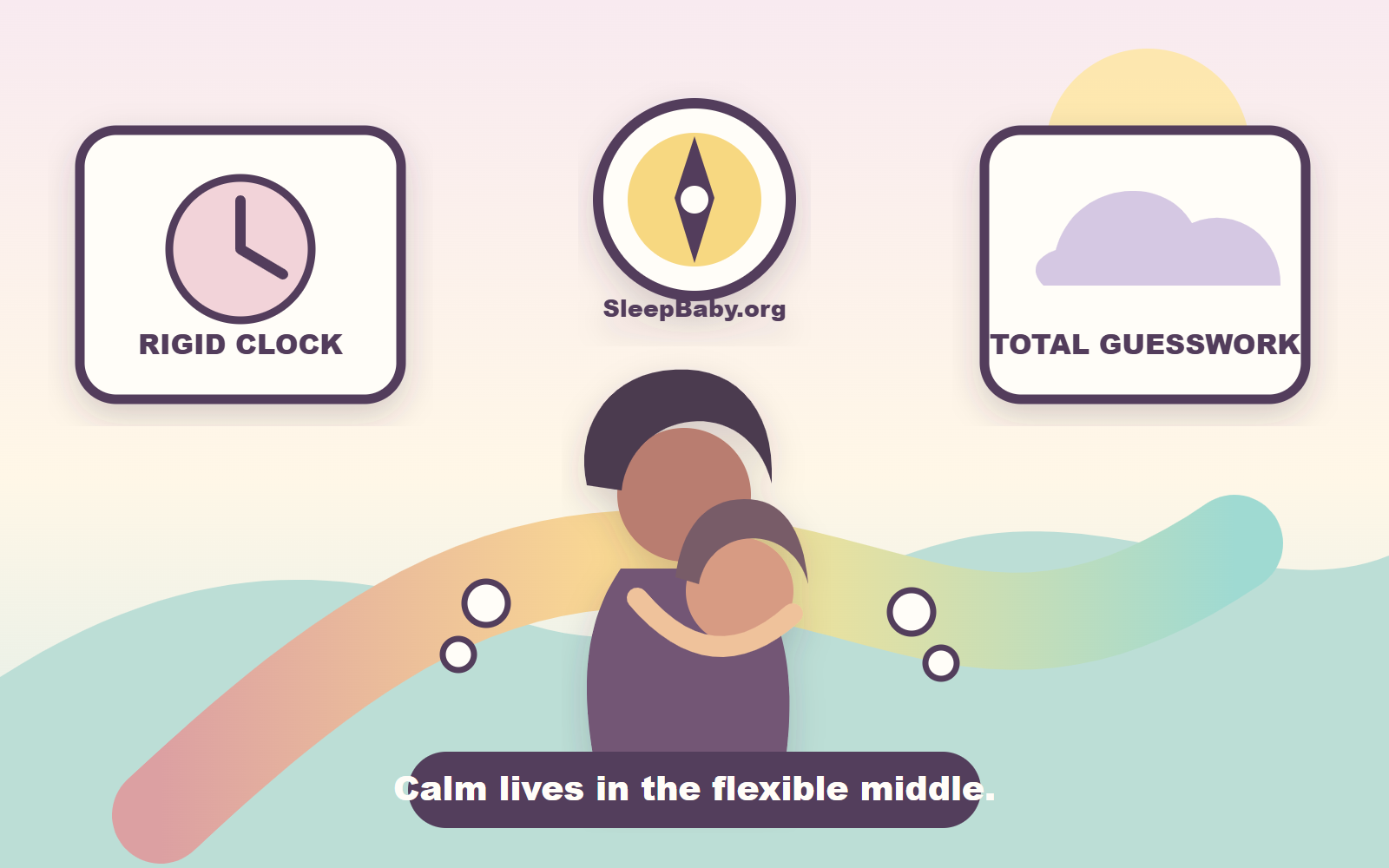
Anchors, not handcuffs. That is the line I want on the refrigerator. Protect the morning range. Offer sleep when the baby is ready enough to use it. Feed responsively. Keep the crib safe. Change one thing at a time. A good schedule is not the one that looks most impressive in a screenshot; it is the one your family can understand on an ordinary, banana-smeared Tuesday.
When the nap math starts multiplying
Bring the real day. Build one calmer rhythm.
You do not need a perfect baby, a color-coded spreadsheet, or one more stranger insisting that 9:15 is sacred. Start with your baby’s morning, naps, feeds, and bedtime as they actually happened. SleepBaby helps you turn that messy day into a clearer next step you can still remember when the third nap disappears.
No rigid clock. No sleep-through-the-night guarantee. Just a steadier place to begin.
Sources
- American Academy of Sleep Medicine: recommended sleep duration for pediatric populations.
- NICHD Safe to Sleep: safe sleep environment.
- National Health Service: helping your baby to sleep.
- CDC: when, what, and how to introduce solid foods.
- CDC: how much and how often to feed infants and toddlers.
- American Academy of Pediatrics: 2022 recommendations for reducing sleep-related infant deaths.
- Boston Children’s Hospital: How can I get my baby to sleep well and safely?.
Educational information only. It cannot examine a baby, diagnose a sleep or medical condition, assess feeding or growth, or replace care from a pediatrician or another qualified clinician.