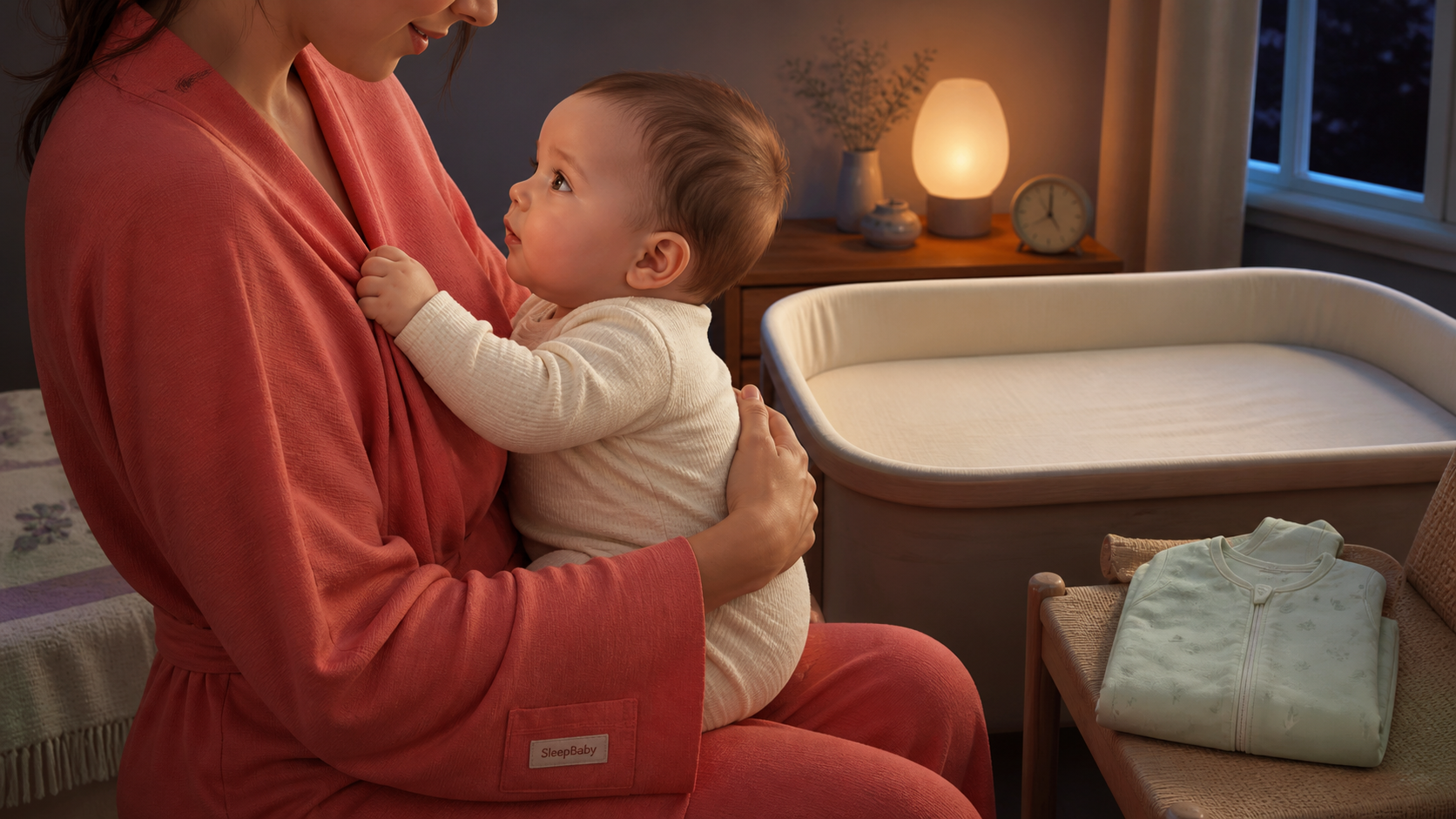
Most of the time, your baby is holding your shirt because it is a handy, familiar bit of you: warm, close, textured, and easy for small fingers to grab while they settle. It can be a newborn reflex, a comfort habit, or simply the easiest way to stay connected during a sleepy moment. The important part is not to turn the shirt into something that stays in the sleep space. Cuddle, feed, or settle together, then put your baby down on their back in their own clear, firm, flat sleep space before you sleep.
If I were standing there with one hand trapped in a tiny fist, I would not tug it free like I was escaping a sweater sale. I would wait for the grip to soften, slide one finger at a time loose, and make the transfer boringly predictable. That is often enough.
SleepBaby.org · The original video
A little help
for the night ahead.
Take a moment to watch the original Baby Sleep Miracle presentation. Your article will be right here when you’re ready to keep reading.
Ready to get started?Take the next step with SleepBaby.
Help my baby sleep
What that little shirt grip usually means
Babies are built to grasp. The palmar grasp reflex is especially noticeable early on: touch the palm and those fingers close around whatever is available. Later, the grip may look less reflexive and more purposeful. Your baby has learned that the collar, sleeve, or soft edge of your shirt stays put long enough to be reassuring.
That does not make the grip a report card on attachment. It does not prove your baby is anxious, overly dependent, or destined to need your T-shirt at college. It is one small piece of ordinary closeness, often made louder by fatigue, feeding, a new skill, teething discomfort, or a day when everybody has already had enough.
A useful distinction
Holding your shirt while you are awake together is different from needing fabric in the sleep space. Your body, hands, and attention are there during the cuddle. A loose shirt, blanket, lovey, or fabric item left with an infant is not a safe substitute once you step away.
Is it the grasp reflex, or is it comfort?
Often it is a bit of both, and the answer changes as your baby grows. In the earliest weeks, a finger touching the palm can trigger an automatic closing response. That is why a newborn can latch onto the edge of your sleeve with surprising determination even when they are not looking at it. A reflex is not a message you need to decode into a personality trait.
As babies become more alert and coordinated, they start choosing what to hold. A soft shirt edge is easy to find, has a predictable feel, and happens to be attached to the person doing the soothing. That can become a comfort pattern. It still does not mean something is wrong. Think of it more like a baby using the handrail while walking through the slippery part of sleep.
The practical answer is the same either way: respond warmly while you are together, then keep the sleep environment simple. You do not need to make your shirt less comforting. You only need a plan for the moment your arms are no longer the sleep space.
Why it can be strongest at sleep time
Sleep is a transition, and transitions make babies reach for their most reliable sensory information. Your warmth, movement, voice, and familiar smell are all right there. The shirt is not magic. It is simply the piece of the moment their hand can hold.
This can show up at the breast or bottle, in the rocking chair, during a contact nap, or in that wobbly minute before a crib transfer. It may be stronger when your baby is overtired or when you have changed the routine. I would treat it as a clue to slow the handoff down, not as a reason to add a fabric sleep prop. A flexible bedtime rhythm can make that final transition more recognizable without turning the clock into a boss.
What the grip does not tell you
It does not measure how attached your baby is to you. It does not tell you that you have created a “bad habit.” It does not mean you must stop holding your baby to protect independent sleep. Parenting advice can make a simple comfort cue feel like a tiny emergency because it is so easy to turn one bedtime detail into a prediction about the next six years.
I would be suspicious of any advice that asks you to choose between being responsive and having a routine. You can have both. You can soothe a baby who wants contact, use a short repeatable bedtime sequence, and make a safe crib transfer. The question is not, “How do I make my baby never touch me?” The better question is, “What part of this moment helps my baby settle, and which parts have to stay with me once I leave the room?”
Why the same baby may grip more on some nights
Look for context before you decide the shirt itself is the problem. A baby who had a short last nap may be more desperate for a familiar cue. A baby learning to roll, crawl, pull up, or make new sounds can look extra busy at bedtime. Congestion, a recent schedule change, visitors, travel, or a new caregiver can all make the last minutes before sleep feel less automatic.
That is why I like a small observation note instead of a giant intervention. For two or three nights, jot down when the grip starts, what happened in the half hour before bed, and whether your baby settles after the transfer. You may notice that the grip is strongest after a long wake stretch, not every time you offer comfort. That is useful information. It points you toward timing rather than a complicated weaning plan.
What I would try tonight
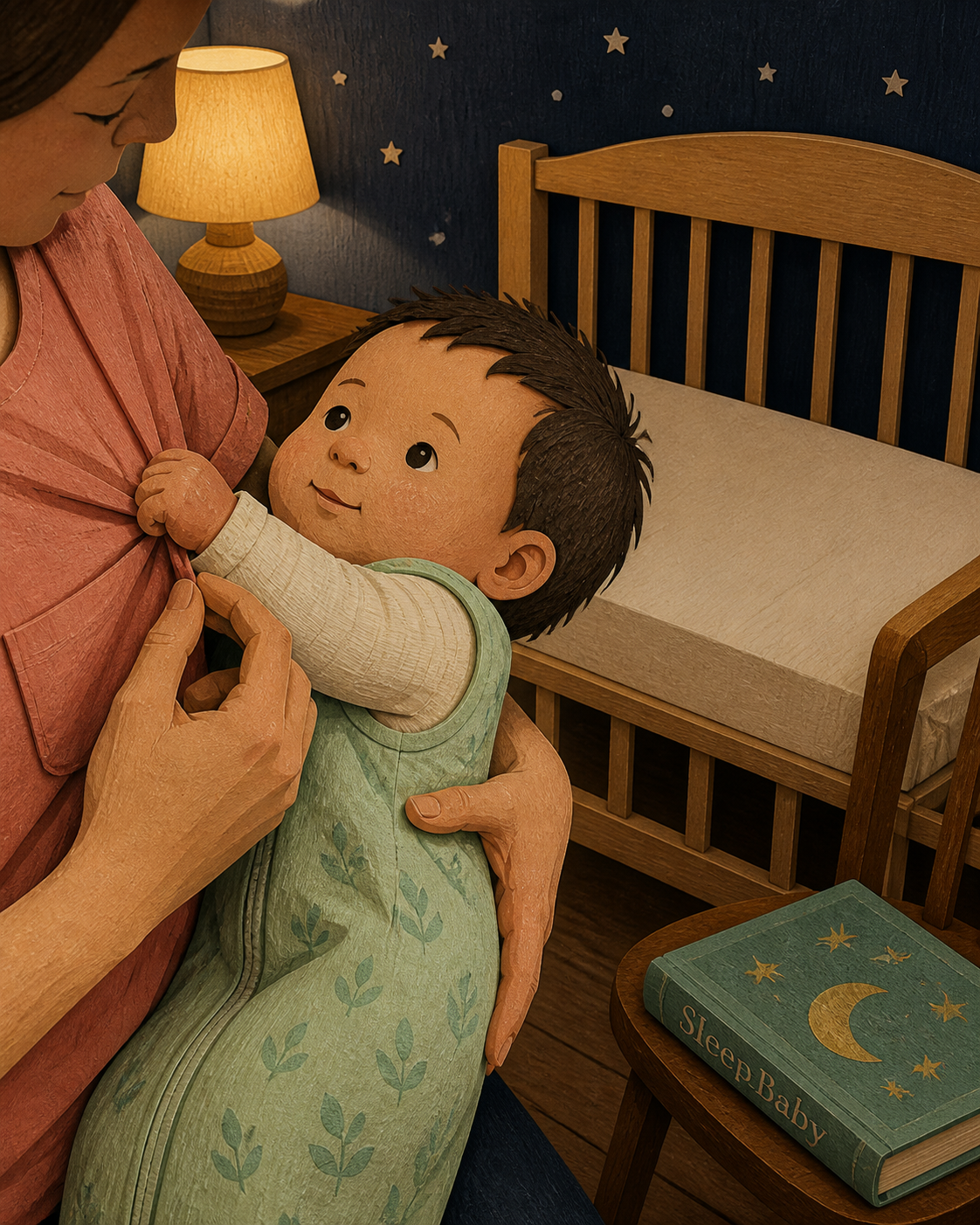
- Keep the comfort, then change the ending. Let your baby hold your shirt while you feed or settle if it is working for both of you. When it is time to put them down, pause until the hand relaxes and peel the fingers free gently.
- Use one repeatable bridge. A quiet phrase, the same short song, a steady hand on the chest while you are still beside the crib, or a few calm breaths can become the cue that follows the cuddle. Pick one. Five new tricks at 2:13 a.m. usually make the room feel busier, not calmer.
- Put the sleep surface first. For every sleep, place your baby on their back on a firm, flat, non-inclined surface made for infant sleep, with only a fitted sheet. Keep shirts, blankets, pillows, stuffed animals, and other loose items out of the space. The American Academy of Pediatrics explains the current safer-sleep guidance here.
- Watch the pattern, not one dramatic grab. Is the grip mainly at the end of a feed? During the last few minutes before sleep? After a short nap? A two-night note in your phone can tell you more than trying to decode every fist in real time.
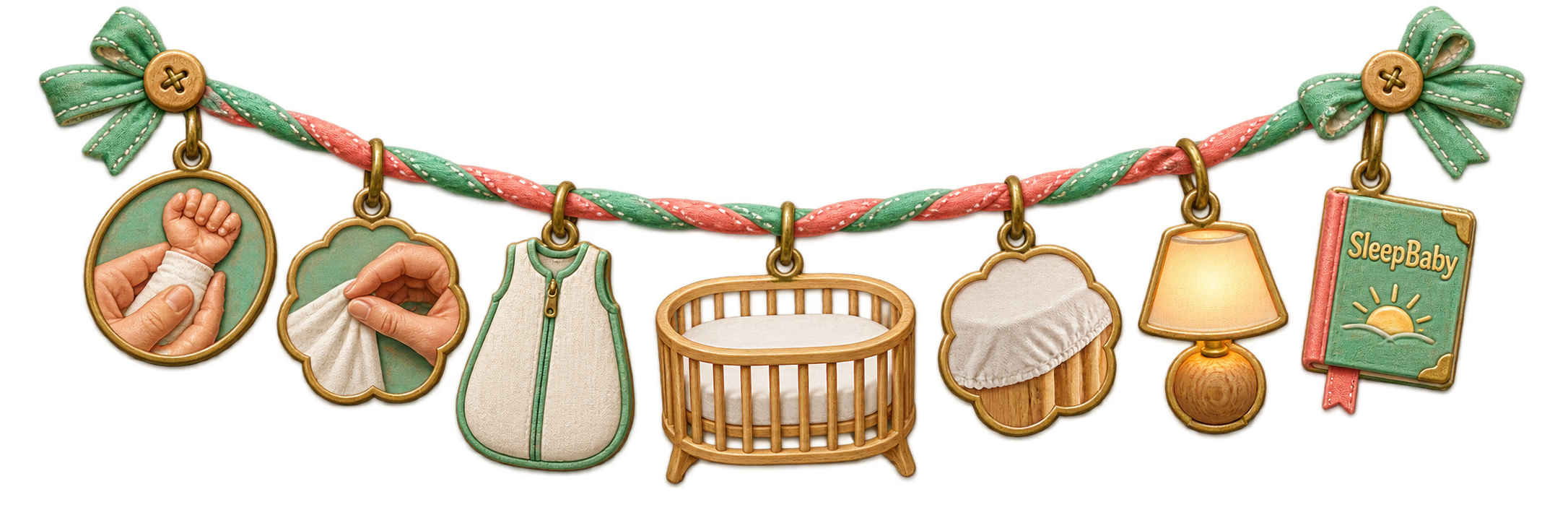
A gentle transfer plan when the shirt has become part of settling
From your shirt to their sleep space
1. Settle together. Hold, feed, or rock in the way that is safe and workable for your family.
2. Wait for soft hands. A sleepy hand often opens before the whole body looks deeply asleep. That is your easier moment.
3. Release, do not pull. Support the wrist and slide each finger from the fabric. If the grip tightens, stop for ten seconds rather than turning it into a tiny wrestling match.
4. Keep one cue after the transfer. Place your baby on their back in the clear crib or bassinet, then use your chosen brief cue while you are awake and nearby. Leave the shirt with you.
Some babies protest a change for a few nights. That does not automatically mean the plan is wrong. I would look for whether the protest settles with calm, consistent support and whether the overall rhythm is becoming less frantic. If every attempt escalates, check the basics first: hunger, a too-long wake stretch, illness, discomfort, or a bedtime that has drifted later than your baby’s actual tiredness.
If another caregiver cannot be the shirt person
This is often where a harmless shirt grip becomes a real household problem. One parent gets a baby who settles with a handful of cotton; the other gets a baby who looks personally offended that their shirt is the wrong shirt. It can feel like rejection, but it is usually about familiarity and sequence, not a verdict on the caregiver.
Give the second caregiver a role that is genuinely theirs. Maybe they do the bath and pajamas, the final book, the sleep sack, or the two quiet minutes at the crib. Keep the steps in the same order for several evenings. The first caregiver does not need to disappear or create a dramatic test. You are simply giving your baby another predictable route into the same safe ending. Our guide to building a calmer bedtime routine can help you choose a sequence that both adults can repeat.
When I want a routine to travel between adults, I keep it almost embarrassingly plain. Same room light. Same short phrase. Same sleep sack. Same clear crib. Babies do not need a stage production. They need a few signals that stop changing underneath them.
Can you use a scent or a lovey instead?
For an infant, do not replace the shirt grip with a loose cloth, a parent-worn T-shirt, a blanket, or a stuffed animal in the crib. The safer-sleep setup remains a firm, flat, non-inclined surface with a fitted sheet and no loose items. A sleep sack that fits your baby and is used as intended can provide warmth without adding loose bedding; ask your child’s clinician if you have questions about the right option for your baby and room temperature.
For an older child, the right comfort object can be a separate conversation because age, mobility, and sleep environment matter. Do not rush ahead and make an infant workaround based on a toddler solution. The boring answer is still the best one here: comfort happens with you awake and present; the sleep space stays clear.
When I would change the plan
Make a change because the current routine is not working for your family, not because a normal cuddle looks too dependent from across the internet. I would consider a gradual reset if the shirt grip means every transfer fails, bedtime is stretching long enough that everybody is getting wound up, or your baby is only able to settle with one exact person and that is no longer sustainable.
Start by changing one layer, not the whole evening. For example, keep feeding and cuddling the same, but add your bedtime phrase before the shirt grip happens. After a few nights, use the phrase during the gentle finger release. Later, use it beside the crib. That is not a trick. It is giving your baby a cue that can survive when your lap, sleeves, and exhausted forearm are not available.
If the change is making everyone miserable, step back one layer for a night or two. There is no prize for making a sleepy baby prove a point. Consistency matters, but so does choosing a plan you can actually carry out at 3:07 a.m.
A quick safety reset for cuddly sleep moments
Many shirt grips happen during feeding or when a parent is already tired. That is the part I would take seriously, without turning it into guilt. If you are holding your baby and feel yourself nodding off, do not rely on willpower. Move before you fall asleep and use the safest available arrangement. Once you are ready to sleep, return your baby to their own approved sleep space on their back. For a more detailed setup check, see our guide to room sharing and a safe sleep space.
Do not use a sofa, recliner, or armchair as a place to sleep with a baby. Keep the crib, bassinet, portable crib, or play yard clear of loose items. This article is about a sweet tiny hand, but safe sleep is still the grown-up in the room. The shirt belongs with you, not tucked around your baby after the cuddle ends.
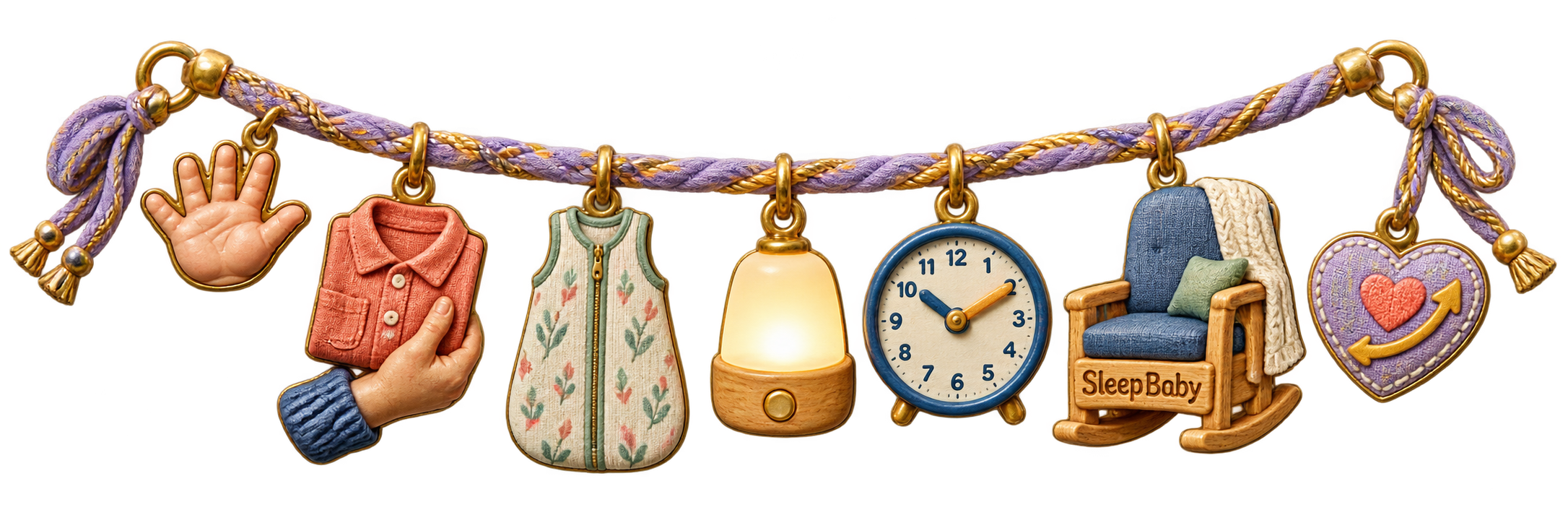
When it is fine to enjoy the moment
A baby asleep on you, fingers hooked in your collar, is one of those scenes that can feel both absurdly inconvenient and almost too sweet to interrupt. Enjoy the cuddle while you are awake. If you feel drowsy, move to the safest available plan before you fall asleep. The AAP specifically advises returning a baby to their own sleep space when you are ready to sleep after feeding or comforting.
For older babies, a shirt grip may turn into a brief bedtime ritual and then fade. You do not have to train away every comfort behavior. I would only make it a project if it is creating a problem you actually need solved: every transfer is falling apart, your baby cannot settle with another caregiver, or the routine has become so long that bedtime is turning into a hostage negotiation.
How to tell whether your baby is actually settling
Parents sometimes focus so hard on the hand that they miss the rest of the picture. A grip that comes with slower blinking, relaxed shoulders, a quieter body, and an easier transition is doing a useful job. A grip that comes with frantic rooting, escalating crying, arching, or repeated wake-ups may just be happening at the same time as another need. The shirt is not always the cause. It is often the thing your baby reaches for while telling you something else.
Try this simple check before changing anything: Was your baby fed recently enough for their usual pattern? Are they comfortable and dry? Did they have enough awake time to build sleep pressure without going so long that they are wired? Is the room calm enough for the kind of baby you have tonight? You do not need a perfect answer to every question. You are looking for the one obvious snag before inventing a new problem.
And if nothing obvious is wrong, it is allowed to be ordinary. Babies are people with very few tools. One of their best tools is grabbing a familiar grown-up and saying, in the only language their hands have, “Stay close for one more minute.”
What a gradual change can look like over a week
Nights one and two: do not remove the shirt grip. Notice when it happens and add the same brief phrase just before you put your baby down. Keep the sleep space clear.
Nights three and four: when the hand relaxes, release the fingers slowly and repeat the phrase while you lower your baby into the crib or bassinet. If your baby protests, offer calm, brief support rather than starting a whole new routine.
Nights five through seven: begin the phrase and your chosen cue a little earlier, before your baby has a firm hold of your shirt. The goal is not to stop affection. The goal is to make the cue familiar enough that a different shirt, caregiver, or transfer does not feel like a surprise.
There is no requirement to follow that schedule exactly. Some babies will need more time, and a rough day can make you pause the plan. I would rather see a parent make one small adjustment they can repeat than announce a hard reset at bedtime and regret it before the lamp is off.
Keep the test small enough to learn from. If you move bedtime, change the feeding routine, switch caregivers, and remove the shirt cue all at once, nobody can tell what helped. One quiet change gives you an honest answer.
When to check in with your child’s clinician
A shirt grip by itself is usually not an urgent concern. Call your pediatrician for advice if it comes with a change that worries you, such as repeated pain cries, feeding difficulty, unusual stiffness or floppiness, a sudden loss of skills, trouble breathing, or sleep that has changed sharply alongside illness. Trust the part of you that says, “This is not my baby’s usual.” The grip is rarely the headline; the company it keeps matters more.
Questions parents usually ask next
Does this mean my baby has separation anxiety?
Not on its own. Babies use touch to stay regulated and connected. Separation anxiety can be a normal developmental phase later in infancy, but one sleepy shirt grab cannot diagnose it. Look at the bigger pattern and talk with your pediatrician if behavior or development concerns you.
Should I leave a small cloth or shirt in the crib?
Not for an infant. Keep the sleep space clear. A familiar scent may feel comforting during a supervised cuddle, but it should not become loose bedding or an object in the crib. Follow your own clinician’s advice for your child and the current safer-sleep guidance.
Will this ruin independent sleep?
No single association has that kind of power. If the shirt grip is the only way your baby can settle and you want a change, shift it gradually: keep the cuddle, add a repeatable verbal or touch cue, then end with the same safe crib routine. Small changes held steady usually work better than a midnight reinvention.
Watch: a short safe-sleep reset
This short American Academy of Pediatrics video is useful for the part of the routine that never changes: a clear, separate sleep space when the cuddle is over.
Sources
Keep the closeness. Make the handoff simpler.
A tiny shirt grip does not need a giant plan. Start with one calmer transfer and one safe, predictable sleep space.
SleepBaby.org · The original video
A next step for
the next bedtime.
Still thinking about sleep? Watch the presentation here, then explore the SleepBaby program whenever you’re ready.
Ready to get started?Take the next step with SleepBaby.
Help my baby sleep