A sweaty head during sleep is a reason to check your baby’s comfort and overall condition, not a diagnosis by itself. Too much clothing or a warm room can contribute. Feel their chest or tummy, look at their breathing and responsiveness, and remove an unnecessary layer if they are hot. Use a body thermometer if you suspect fever.
Get emergency help for trouble breathing, blue or gray lips, or a baby who is difficult to wake. A baby three months old or younger with a rectal temperature of 100.4°F (38°C) or higher needs immediate medical advice. The details below can help you decide what to notice and report.
I would start with the baby in front of you before trying to explain the damp hair. A slightly sweaty hairline in an otherwise comfortable baby calls for a different response from sweating with poor feeding or unusual sleepiness. You do not need to know the cause before asking for help.
SleepBaby.org · The original video
A little help
for the night ahead.
Take a moment to watch the original Baby Sleep Miracle presentation. Your article will be right here when you’re ready to keep reading.
Ready to get started?Take the next step with SleepBaby.
Help my baby sleepWhy warmth is the first thing to check
Babies can become too warm when their clothing and sleep environment do not suit each other. NIH Safe to Sleep lists sweating, flushed or hot skin, and a hot chest as signs of overheating. A warm room, several clothing layers, a thick wearable blanket, or an indoor hat are worth noticing.
Look at the whole outfit, including what is underneath the part you can see. A sleepsuit may already have a bodysuit beneath it. A sleep sack adds warmth too. An adult who came into the room from outside may feel cool even when the dressed baby is warm. Your own comfort is useful context, but it is not the only check.
The NHS notes that small babies do not regulate temperature well and advises removing clothing or bedding if a baby is sweating or their tummy feels hot. Cool hands or feet do not necessarily mean the baby needs another layer. Check the trunk rather than deciding from their toes.
That gives you a useful first action, but it does not prove that warmth explains every episode. If your baby seems ill, or the sweating is persistent despite an appropriate setup, get advice. Avoid labeling them “just a sweaty baby” before considering the rest of the picture.
Check three things: baby, clothes, room
- 1. Baby
- Are they breathing comfortably and responding as usual? How have feeds and wet diapers been? If fever is possible, take their temperature with an appropriate body thermometer.
- 2. Clothes
- Count the layers actually being worn. Check for an indoor hat, heavy sleep clothing, or a sack that is warmer than the room needs.
- 3. Room
- Notice warmth, direct sun and nearby heat sources. A room thermometer gives information about the air, not the baby’s body temperature.
Deal with concerning symptoms first. If your baby otherwise seems well and hot, make a sensible clothing or room adjustment and notice whether their comfort changes.
What a sweaty head does, and does not, tell you
Damp hair tells you there is moisture; it does not tell you why it is there. The size of a wet patch is not a reliable way to measure a fever, assess hydration, or identify a particular illness. Nor does sweating establish that your baby is in an especially healthy or restorative stage of sleep.
I would skip explanations that sound precise but cannot help you decide what to do, such as counting supposed extra sweat glands or assuming that every sweaty nap is “deep sleep.” The useful questions are more ordinary: Is this new? Does it happen in a warm outfit? Is your baby also sweating during feeds? Do they otherwise look and behave like themselves?
When describing the episode, use plain observations. “The hair at the back was damp” is clearer than “profuse sweating” if only a small area was wet. If clothing or the fitted sheet is soaked, say that instead. Tell the clinician whether this happened once or has become a repeated pattern.
You also do not need to turn every damp patch into an overnight investigation. Start with the safety checks, make any needed change, and use your baby’s symptoms and the care team’s advice to guide what happens next. A long checklist is not a substitute for calling when something feels wrong.
Take a temperature if you suspect fever
A hand on the chest or tummy helps you judge warmth, but it is not a fever measurement. The AAP recommends a digital thermometer and notes that rectal readings are most accurate, particularly under three months. Follow the device instructions and ask your clinician to show you the appropriate method if you are unsure.
Ear thermometers are not reliable for babies younger than six months, according to that AAP guidance. A room thermometer, an adult’s hand, and a baby’s forehead strip are not interchangeable with an appropriate body-temperature reading. Do not use a glass mercury thermometer.
When you call, give the actual reading, the unit, the time, and how you measured it. “100.4°F, rectal, ten minutes ago” is useful information. If the reading seems inconsistent or you could not take it properly, say so. Do not delay urgent help for a baby who looks very unwell while trying to obtain a perfect number.
Sweating does not prove that a fever has ended. A normal reading also does not erase other warning signs. Breathing difficulty, poor responsiveness, or a substantial feeding change still matters. Follow the age-specific fever advice above and your clinician’s instructions rather than treating the hair as a thermometer.
Adjust sleep clothing without adding a new hazard
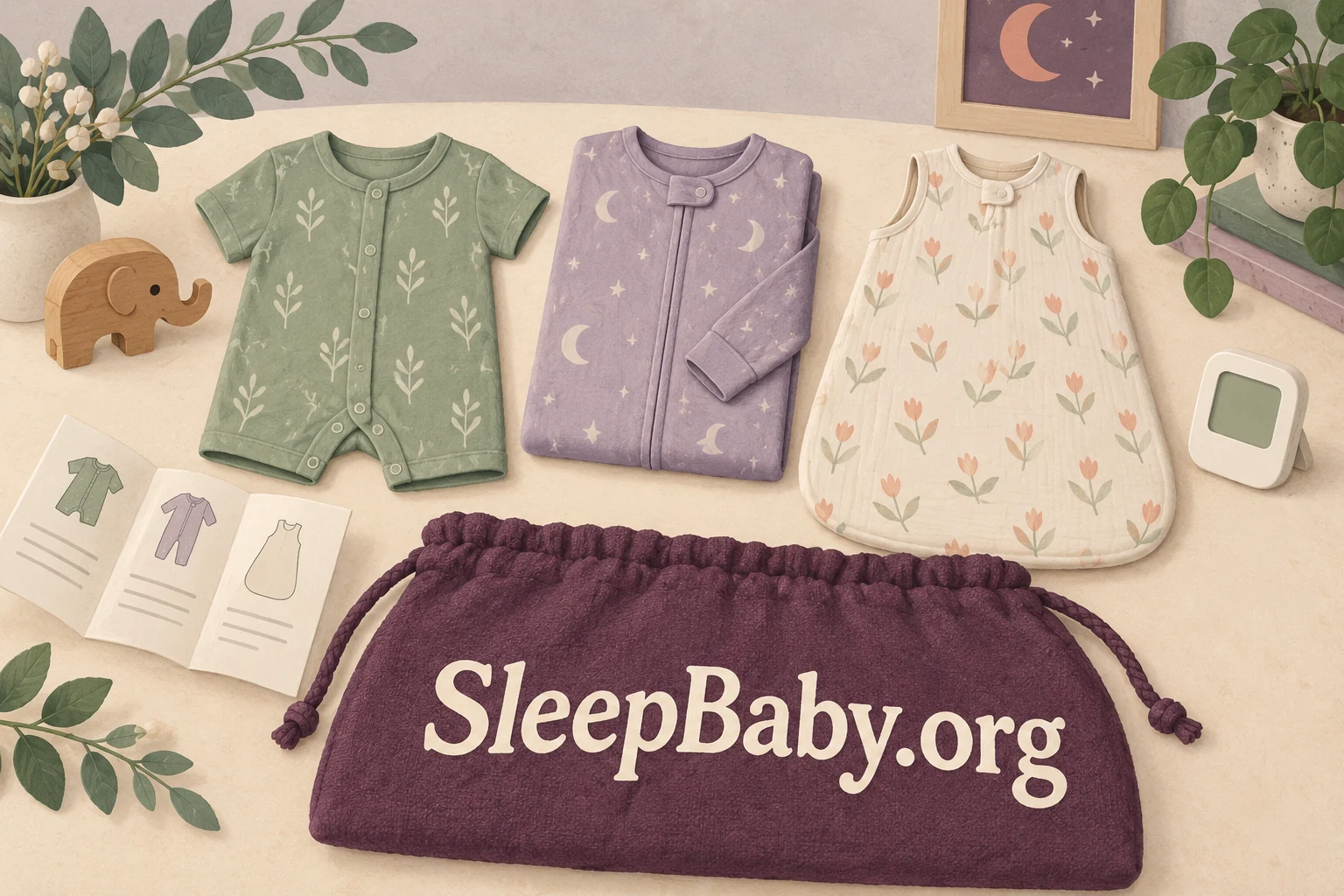
The AAP advises dressing a baby in no more than one extra layer compared with an adult, keeping indoor hats off, and avoiding weighted sleep clothing. Think of that as a general guide alongside the room conditions and your baby’s comfort, not a requirement to add a layer to an already hot baby.
If a wearable blanket is part of the outfit, check the manufacturer’s size and warmth guidance. The opening must fit so your baby’s head cannot slip inside. An oversized sack is not a way to make it more breathable. A particular fabric name or a “cooling” label does not establish that the whole setup suits your baby.
Lay out the choices before bedtime if comparing them in the dark is confusing. You might have a lighter outfit and a warmer one ready, then choose for the actual room. The goal is an appropriate combination, not putting every available item on the baby because each one looks thin by itself.
If you swaddle, AAP guidance says to stop as soon as your baby shows signs of trying to roll. Swaddling can also contribute to overheating. Do not solve sweating by changing to a side or tummy sleep position, or keep using a swaddle after rolling attempts because you hope a lighter fabric will make it suitable.
A change in clothing may briefly wake your baby. Comfort and safety take priority over preserving that stretch of sleep. If clothes or the fitted sheet are damp, replace them with dry, appropriate items while keeping your baby safely supervised. Put them back on their back in their own clear infant sleep space afterward.
COMFORT AND CARE COME FIRST
Make the next bedtime simpler
Once health concerns have been addressed, the SleepBaby.org Method offers information about ordinary bedtime routines and baby sleep schedules on our homepage.
A sweaty night can turn a simple clothing choice into a long round of second-guessing. Start with your baby’s condition, the outfit and the room. Follow any medical advice before returning to the ordinary decisions about bedtime.
If you would like to explore sleep routines separately, read the current Method information and decide whether it answers a question you have. It is not a way to diagnose sweating, treat overheating or decide that a baby no longer needs medical attention.
Use the room temperature as context
The NHS suggests a sleeping-room temperature of 16–20°C, about 61–68°F. AAP guidance describes a temperature comfortable for an adult and asks parents to watch for overheating. These recommendations both require you to consider the baby’s clothing and condition. A number on a display is not a guarantee that a baby cannot become too hot.
Measure the room where the baby actually sleeps, following the thermometer’s placement instructions. A reading from a sunny windowsill or beside a heat source may not represent the rest of the room. Keep the device and any batteries or cords out of your baby’s reach and out of the crib.
Notice what changes across the evening. A room may still hold afternoon heat after outdoor temperatures fall. Heating may switch on later. Another caregiver may add a layer after a feed. You do not need a minute-by-minute graph; a note about a clear change can be enough to explain why yesterday’s outfit no longer seems right.
If your home is warm and you cannot easily change the temperature, use lighter appropriate clothing and seek advice if you cannot keep your baby comfortable. NHS Essex advises circulating air with a safely opened window or a fan, without pointing the fan directly at the baby. Keep window safety and equipment placement in mind. A fan is not a treatment for illness or a replacement for a safe sleep space.
Avoid positioning the crib next to a radiator, heater or direct sunshine. Do not put a hot-water bottle, electric blanket, cooling pack or improvised device in the sleep area. Making the room more comfortable should leave the infant sleep space simple and clear.
An optional room thermometer, with a clear limit
If you do not have a way to check the room, the ThermoPro TP50 Digital Indoor Thermometer and Hygrometer is one named option to compare. It measures the room environment. It does not take your baby’s body temperature, diagnose fever, or establish that a sleep setup is safe. Check the current manufacturer’s instructions; I haven’t tested it.
Already-owned alternative: use a suitable room thermometer you already have. You can also check for excess clothing and heat sources without buying anything. A thermostat reading from another room may not describe the baby’s room. Whichever device you use, keep it and its batteries out of reach and out of the crib.
This section has no affiliate purchase link. As an Amazon Associate, SleepBaby.org earns from qualifying purchases through affiliate links elsewhere on the site.
Do not put a towel or pillow under a sweaty head
It can seem practical to catch the moisture with a small cloth, but loose items do not belong under or around a sleeping infant. NIH recommends a firm, flat, level infant sleep surface with a fitted sheet, without pillows, soft objects, or loose bedding. A folded towel, muslin, positioning cushion or absorbent pad on top of the sheet changes that setup.
Keep your baby’s head and face uncovered. If the fitted sheet needs changing, change it; do not cover the damp area with another loose layer. Use the mattress and sheet arrangement specified for the crib, bassinet or play yard rather than adding a padded topper.
When you are tired, prepare the replacement items before lifting your baby. If another adult is available, one can care for the baby while the other changes the sheet. If you are alone, keep the baby supervised in an appropriate safe place while you work. Avoid using an adult bed or sofa as a temporary sleep solution.
When sweating during feeds changes the question
Sweating while feeding deserves attention, especially with tiring, breathlessness, or difficulty finishing feeds. The AAP newborn illness guide lists sweating during feeds and changes in feeding as reasons to call the doctor or seek care now. For a newborn, do not wait through several nights to see whether it settles.
For an older baby, tell the pediatrician promptly if feeding brings repeated sweating or has become noticeably harder. If your baby is struggling to breathe, has a concerning color change, or is hard to wake, use emergency help rather than waiting for an ordinary appointment.
The American Heart Association describes excessive sweating alongside breathing trouble, poor feeding and poor growth among possible signs of heart failure in infants. That is a reason to have a concerning pattern assessed, not a reason to diagnose a heart problem from damp hair alone. The clinician decides what examination or testing is needed.
Describe what the feed looks like: whether your baby takes longer than usual, stops repeatedly, seems exhausted, or cannot manage their usual amount. Bring any existing feeding or growth concerns into the conversation. Do not repeatedly push a breathless baby to finish a bottle so you can record the total.

Check feeds and wet diapers, not just sweat
A sweaty scalp cannot tell you that your baby is adequately hydrated. Look at how they are feeding and whether wet diapers have changed. NHS dehydration guidance identifies fewer wet diapers, a sunken soft spot or eyes, few tears, and unusual drowsiness or irritability as possible signs. Seek urgent advice for concerning changes, particularly reduced urine or unusual drowsiness.
Continue your baby’s appropriate milk feeds, and ask for help if they cannot feed normally. Do not dilute formula or give a young infant water to compensate for a sweaty night. AAP heat advice emphasizes appropriate milk feeds for young infants. Your clinician can guide any additional fluid needs for your baby’s age and circumstances.
If your baby has vomiting, diarrhea or fever as well, mention all of it. The combination matters more than estimating how much moisture is on the sheet. Do not wait for every possible dehydration sign to appear before seeking care.
Arrange a review for repeated, drenching sweating
The NHS describes night sweats as soaking clothing or bedding even in a cool sleeping environment and recommends medical review when this happens regularly or is concerning. Its general page includes adults and children; a baby still needs the age-specific warning signs and feeding assessment discussed here.
If the sweating keeps happening despite an appropriate room and outfit, contact the pediatrician. Mention whether it occurs only asleep or also when awake, whether sheets need changing, and whether there are changes in feeding, breathing, growth or behavior. You do not have to decide whether it qualifies as “hyperhidrosis” before making the appointment.
Do not start vitamins, supplements, antiperspirants or medicines to stop scalp sweating without professional advice. A symptom on its own does not establish a deficiency or a treatment. If your baby takes prescribed medication, bring the name and dose to the review; do not stop it on your own.
A useful note for the pediatrician
- Your baby’s age, relevant conditions and current medicines.
- When the sweating started and how often it happens.
- What was damp: hair, clothing, fitted sheet, or several of these.
- Room conditions and the clothes or sleep sack being worn.
- Any body-temperature reading, including method and time.
- Changes in breathing, feeds, wet diapers, alertness or growth.
- What you changed and what happened afterward.
Write down what you actually noticed. If you do not know a detail, say so. Do not postpone a call to complete the note.
Keep the plan consistent between caregivers
Tell the next caregiver what happened and what you changed. “The chest felt hot in the heavier outfit, so I changed it” gives them something concrete to work with. “The baby runs hot” can accidentally discourage them from noticing a new symptom later.
Agree where the body thermometer is kept, which sleep clothing is being used, and whom to contact with concerns. If the pediatrician has given a specific plan, make that available to anyone caring for your baby. A family member should not have to find it in a long message history during the night.
Leave the crib clear even when someone wants to make the baby more comfortable. A spare sheet can stay in a drawer. A care note can stay on the dresser. Neither needs to go beside the baby’s head.

What to do at the next sleep
If your baby seems well and the immediate concern was excess warmth, choose clothing for the current room, keep the head uncovered, and place them on their back in their own suitable infant sleep space. If they still seem hot or uncomfortable, reassess and get advice rather than repeatedly trying new products.
If you sought medical help, follow the plan you were given, including when to check again and which changes mean calling back. A sleep routine should fit around that care. It should never be used to explain away an illness sign or delay a feed that your baby needs.
I would judge the next step by comfort and the overall pattern, not by whether the baby stays asleep through a clothing change. You can make the room simpler, keep useful observations, and ask for help without having to solve the cause yourself.
A short reminder about the sleep space
NIH’s Safe Sleep for Your Baby is a 60-second reminder of basic infant sleep safety. It supports the clear-crib advice in this guide; it does not diagnose sweating or assess whether your baby is ill.
Written takeaway: place your baby on their back in a separate infant sleep space with a firm mattress and no soft items. Keep towels, pillows and loose bedding out when dealing with a damp sheet.
If the player does not load, read the complete official text alternative or open the official video.
Sources
- NHS: Urgent Medical Help for Babies and Under-Fives
- AAP: Fever and Your Baby
- NIH: Ways to Reduce Sleep-Related Risks
- NHS: How to Dress a Newborn
- AAP: Taking a Child’s Temperature
- AAP: Safe Sleep and Avoiding Overheating
- AAP: Swaddling Safety
- NHS Essex: Safe Sleeping and Room Conditions
- NIH: Safe Sleep Environment
- AAP: Recognizing Newborn Illness
- American Heart Association: Heart Failure in Infants and Children
- NHS: Dehydration
- AAP: Children and Extreme Heat
- NHS: Night Sweats
- NIH: Safe Sleep for Your Baby, Official Text Alternative
- ThermoPro: TP50 Indoor Thermometer and Hygrometer
A CLEARER NEXT STEP
Check comfort, then follow the care plan
Keep the sleep space simple and share any useful observations with your baby’s clinician. You do not need to solve a medical question through trial and error at bedtime.
For separate information about everyday bedtime routines and baby sleep schedules, visit SleepBaby.org and read about the current Method.
SleepBaby.org · The original video
A next step for
the next bedtime.
Still thinking about sleep? Watch the presentation here, then explore the SleepBaby program whenever you’re ready.
Ready to get started?Take the next step with SleepBaby.
Help my baby sleep