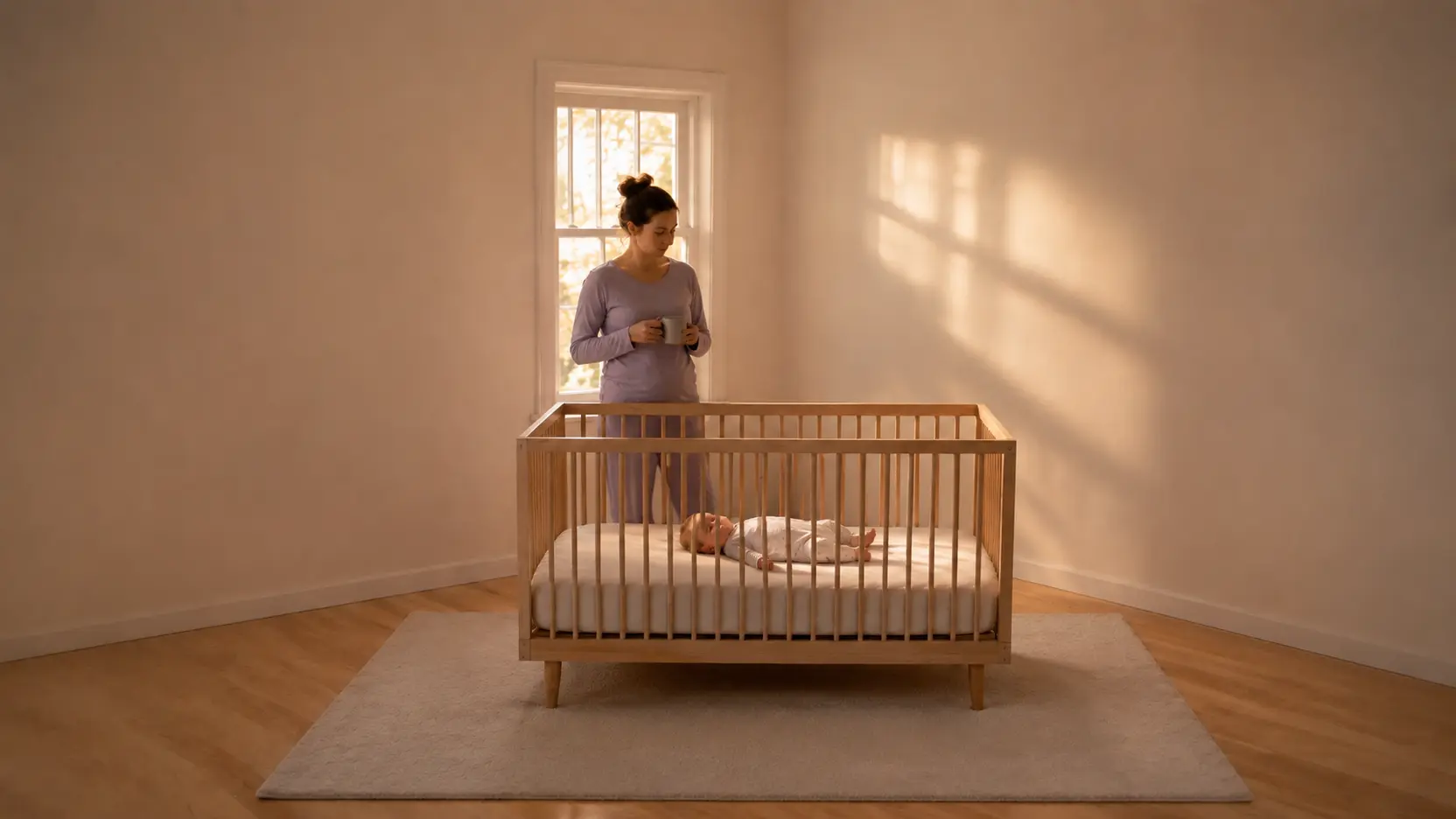
Use a weighted plush for awake comfort, not as weight on a sleeping toddler
Do not place a weighted stuffed animal on a toddler’s chest, neck, face, back, or body during sleep. If you’re considering a weighted stuffed animal toddler sleep routine, keep the overnight boundary simple: weight belongs off the sleeping body. A weighted plush is not a proven treatment for toddler sleep, and it can shift, trap heat, restrict movement, or become difficult for a sleepy child to move. Use it only while your child is awake and supervised, then park it outside the bed before lights out.
Never put any stuffed animal or weighted object in an infant sleep space. For an older toddler, the product’s own minimum age matters: many weighted toys are labeled for ages three and up, which excludes one- and two-year-olds. Even when the label permits use, the child should be able to lift the toy completely off their body and set it aside without help.
Why this particular bedtime idea feels so convincing
A dense plush can feel steady, warm, and pleasantly grounding during an awake cuddle. When a toddler is ricocheting between one more drink and one more dinosaur fact, a calm sensory object sounds wonderfully specific. The leap happens when a useful awake sensation is quietly promoted into an overnight sleep treatment.
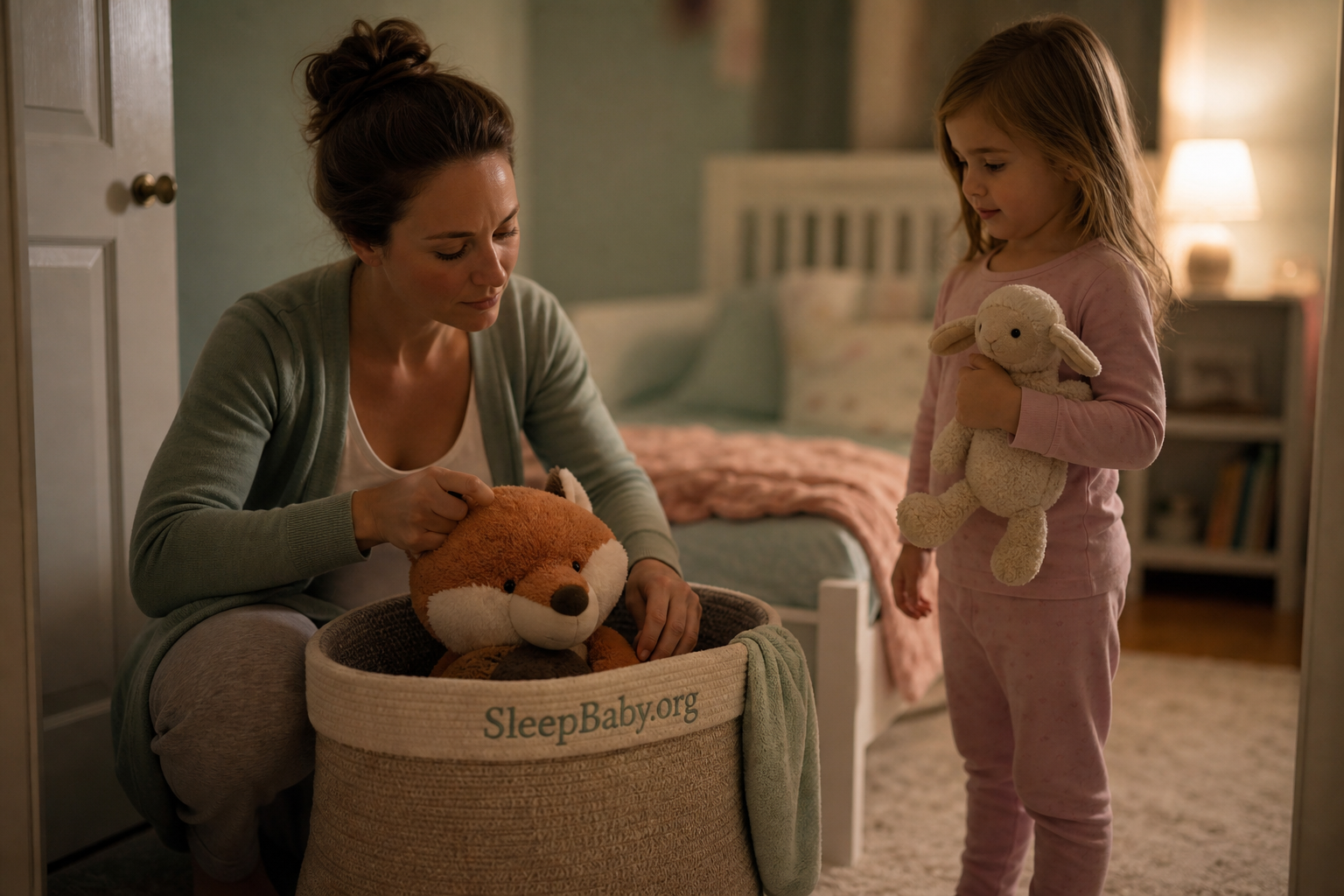
In a clearly labeled editorial composite, I can see the tired-parent logic: if a firm cuddle settles my child for ten minutes, perhaps the weighted fox can do the night shift. That hope is tender and sensible. The evidence is simply not strong enough to hand the toy that job.
A beloved plush can become deputy bedtime manager before anyone remembers holding elections. Keep the affection; give the weighted version a smaller, supervised role.
Give the toy one safe job in one clear place
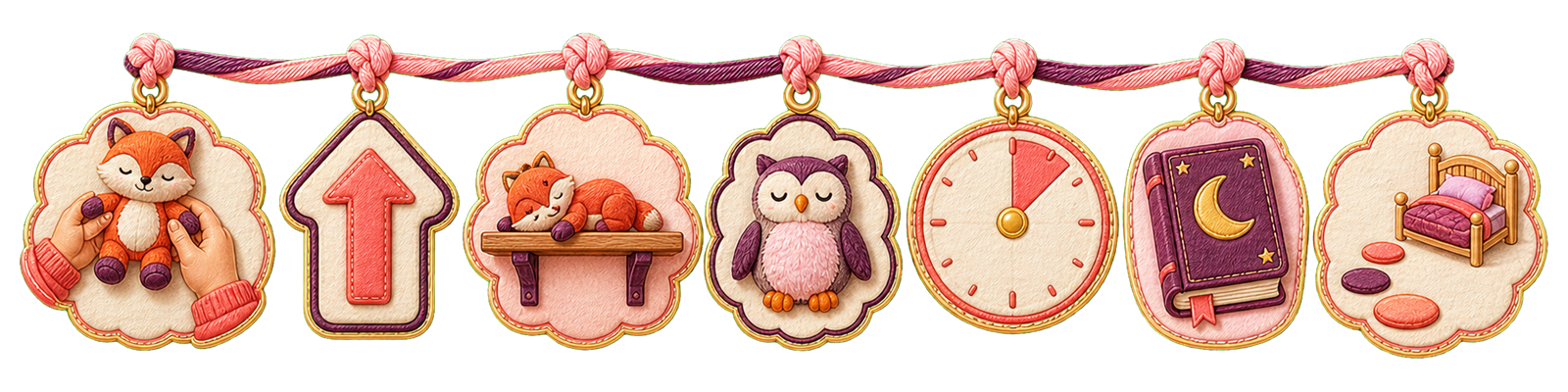
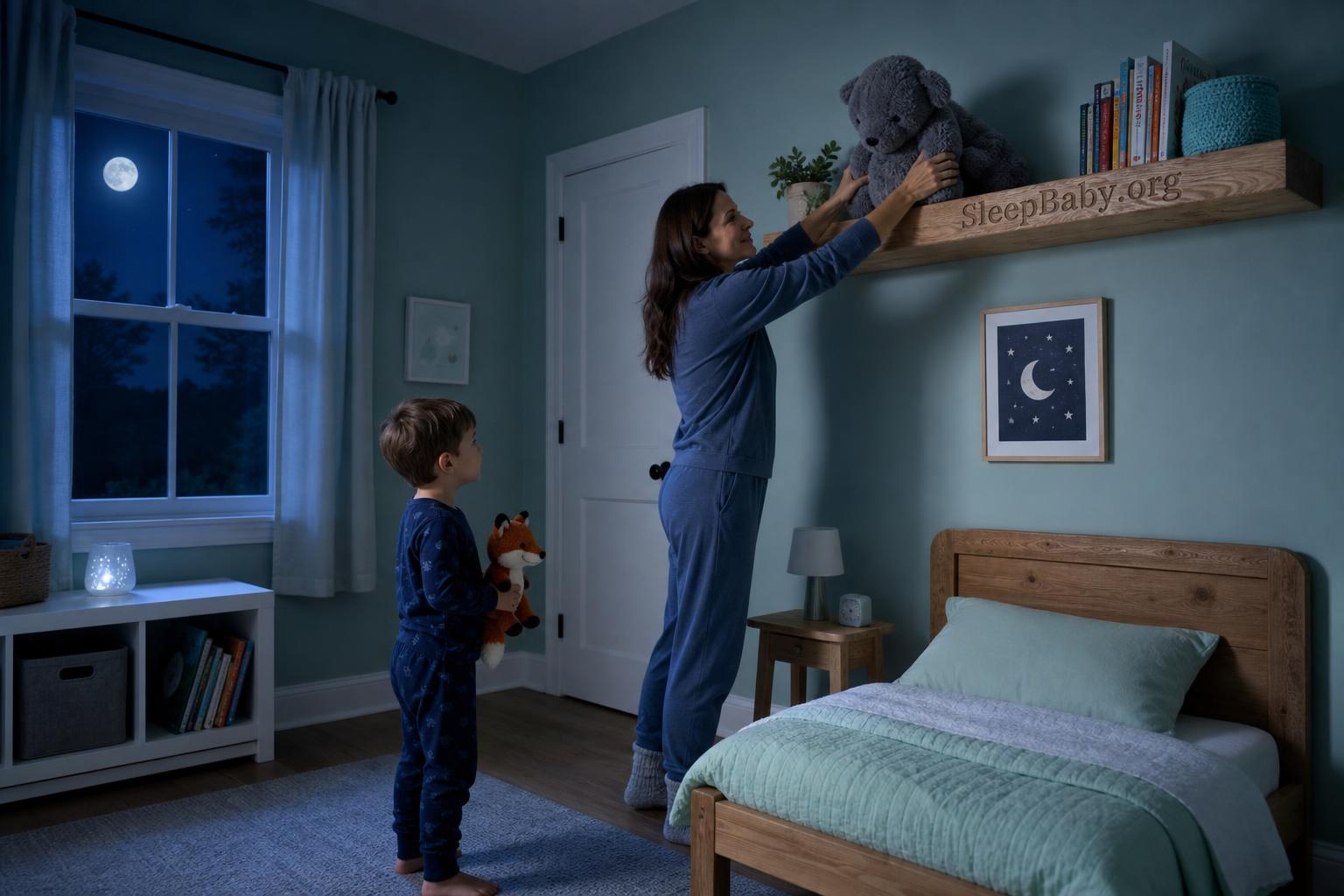
Keep the three places plain: lap while awake, shelf overnight, bed without weight. The distinction matters more than giving it a branded name.
Lap stays awake and watched
Follow the label, keep the face and neck clear, stay close, and let the child end the cuddle immediately. This is observation, not sleep treatment.
Shelf is the overnight home
Choose one visible parking place outside the bed. The same predictable handoff each night prevents a negotiation after the room is dark.
Bed stays free of weighted pressure
Do not leave the weighted plush on or beside a sleeping child where it can shift onto the airway, chest, neck, or face.
Awake comfort ends before sleep begins: lap, then shelf, never weight on the sleeping body.
What research says about weight and sleep
There are not strong clinical trials showing that weighted stuffed animals improve toddler sleep. The closest widely cited pediatric sleep research studied weighted blankets in autistic children, not weighted plush toys. In that randomized controlled trial, children and parents often preferred the weighted blanket, but objective measures did not show better total sleep time, faster sleep onset, or fewer night wakings.[2]
That distinction matters. Liking pressure is a real preference; it is not proof that a weighted object improves sleep. A child can enjoy the toy during a story and still sleep no better with it nearby.
The American Academy of Pediatrics’ infant safe-sleep guidance keeps soft objects and weighted products out of an infant sleep environment.[1] The toddler years change some bedding rules, but they do not make weight on a sleeping body a treatment. Product age labels, independent movement, breathing, temperature, and the reason sleep is difficult still matter.
The forward question is not “Did the plush feel cozy?” It is: Could my child breathe, move, cool down, reject the sensation, and sleep just as safely without it?
A percentage rule cannot make overnight weight safe
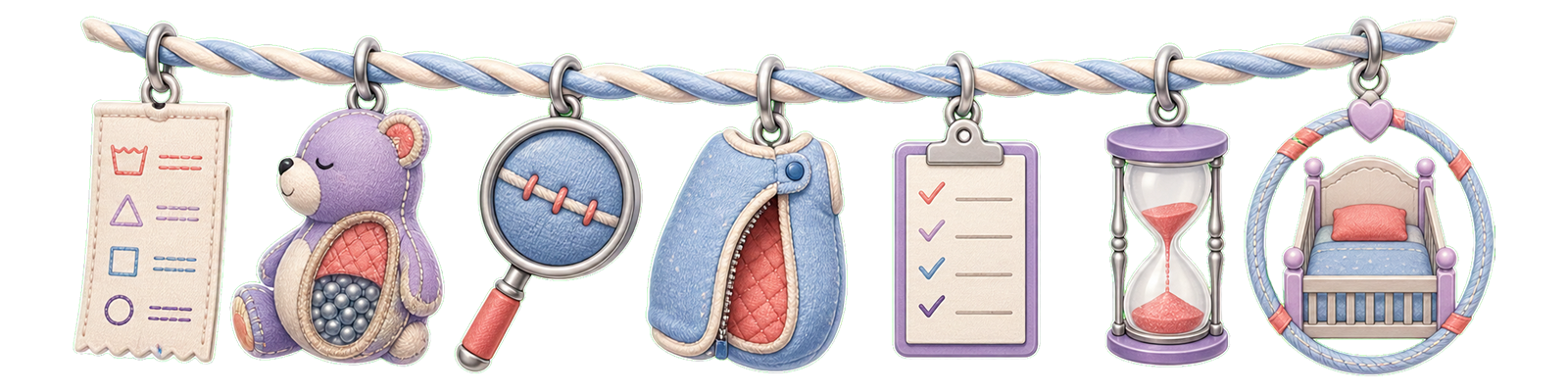
You may see a rule that a weighted item should equal a certain percentage of a child’s body weight. That shortcut is often repeated online, but it is not a plush-specific sleep standard and it does not answer the question that matters here: whether a sleepy toddler can breathe, turn, cool down, reject the pressure, and remove the whole object without help.
Two toys with the same listed weight can behave differently. One may spread filling across a long body; another may concentrate beads in a compact belly. One may stay firm; another may slump toward the child’s neck. A neat number cannot describe seams, shape, heat, leverage, or where the weight lands after a child rolls.
I would treat any percentage as a reason to slow down, not as a permission slip. The product label, the child’s age and movement, the intended awake use, and the child’s own response all have to agree—and even then, the toy still leaves the bed before sleep.
The age label is a floor, not a bedtime recommendation
If a weighted plush says “3+,” a two-year-old does not become an exception because they are tall, strong, or deeply attached to the toy. The minimum age closes the decision for younger children. For a child who meets the label, it opens a second question: is this exact product appropriate for a short, awake, supervised use?
Read the fine print for intended position, maximum duration, heating instructions, removable inserts, and adult-supervision language. Check the current recall status and the manufacturer’s directions rather than relying on a reseller summary or a social-media demonstration.
Do not improvise weight by adding rice, beads, hand warmers, or another insert to an ordinary plush. A homemade change alters the seams, heat, balance, and choking risks without creating evidence that the result helps sleep.
Screen the product while everyone is fully awake
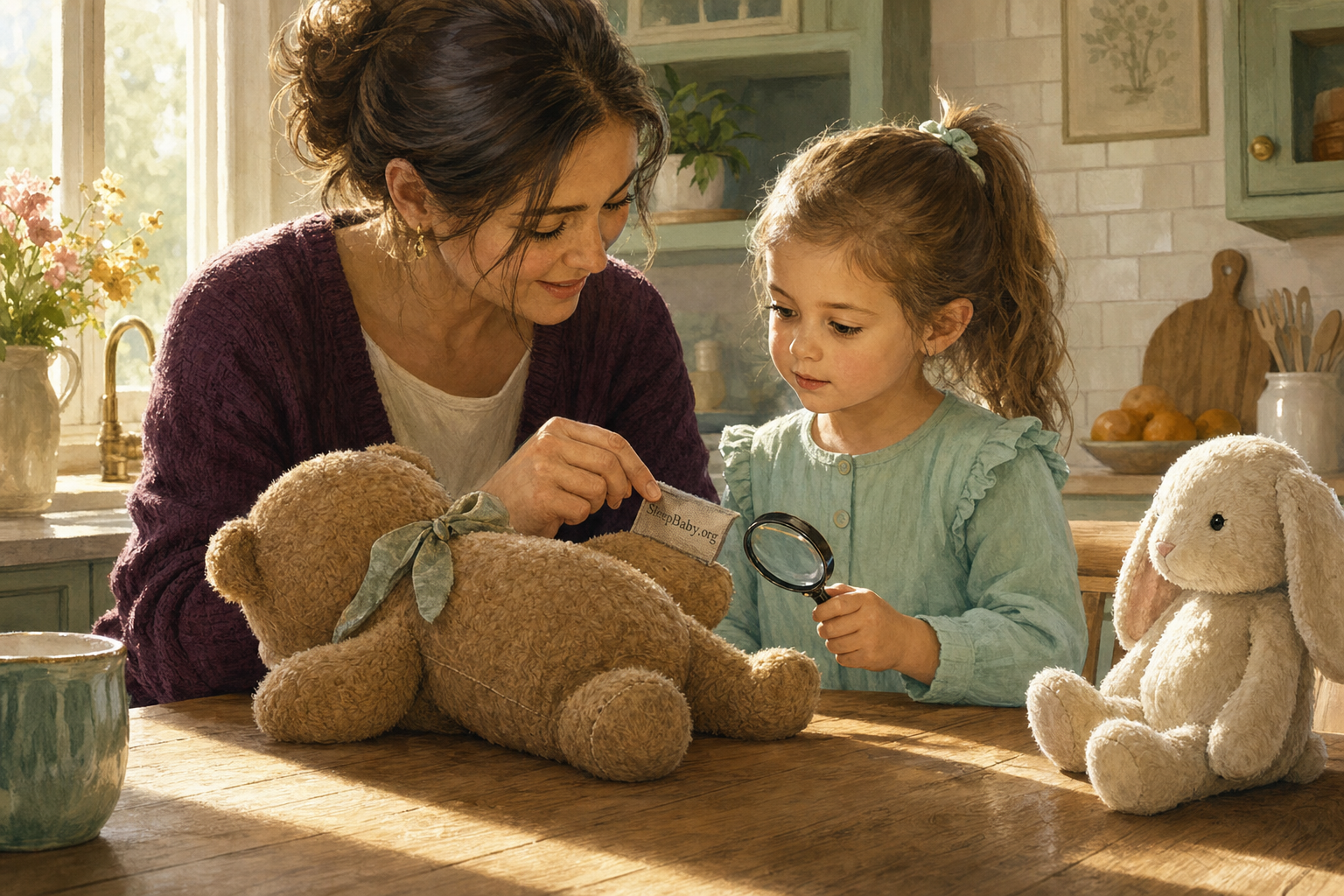
The Two-Hand Lift-Off Check is a conservative awake screen, not medical clearance and never overnight approval.
- Read the entire label. Check the minimum age, intended use, exact weight, cleaning instructions, heating directions if applicable, and warnings. “For children” is not the same as “for every toddler.”
- Inspect every seam. Do not use a torn, leaking, overheated, damp, recalled, or improvised weighted toy. Loose beads or filling add choking and ingestion hazards. The CPSC’s fatal weighted-blanket recall involved entrapment in a different product, not a plush study, but it is a sober reminder that a child must never be trapped inside or under weighted sleep gear.[3]
- Keep it below the shoulders. During a brief awake cuddle, the face, neck, chest, and airway stay completely clear. Never wrap it around the child.
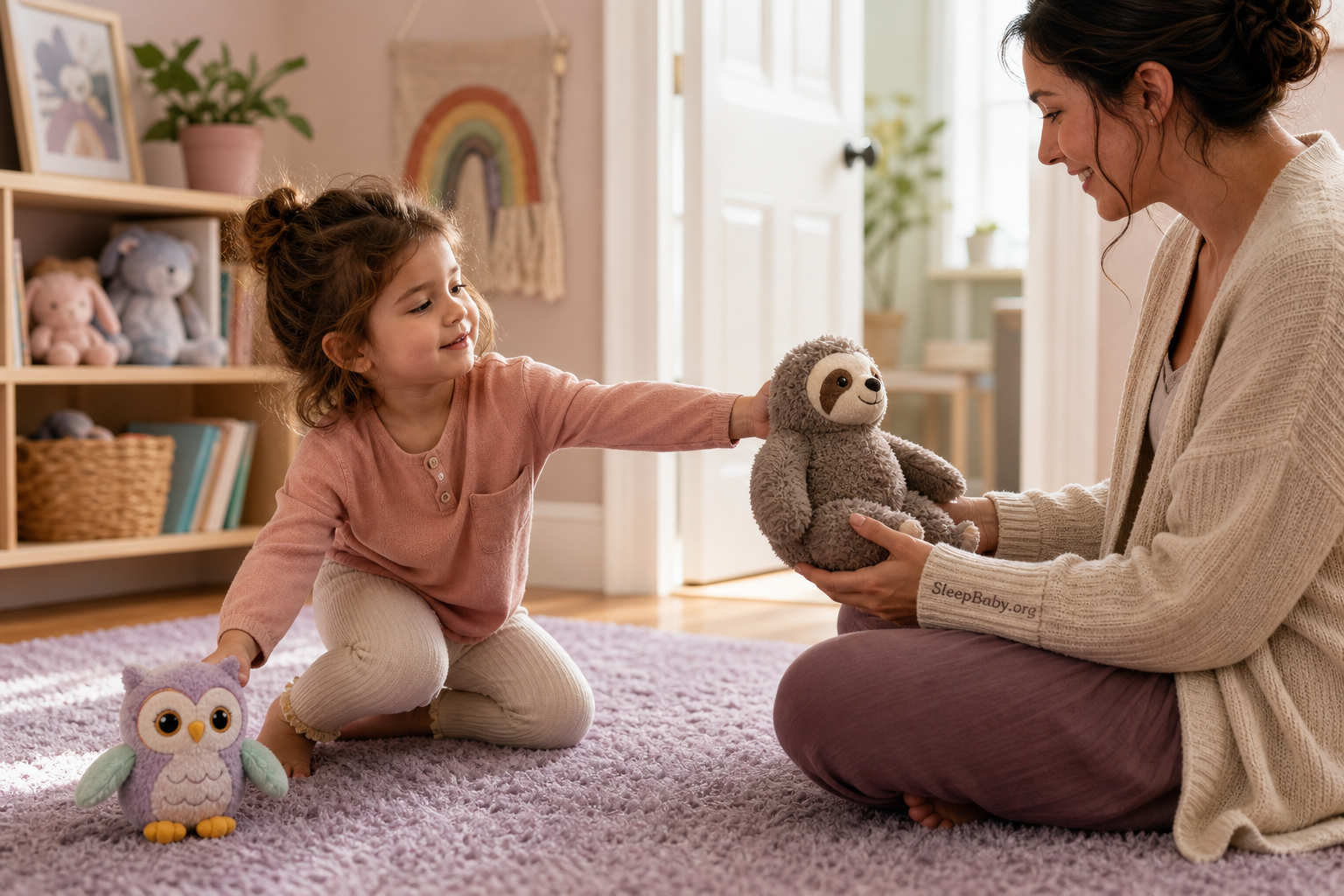
- Ask for three lift-offs. The child lifts the entire toy clear with both hands, places it beside them, stands, and walks away without help. Passing while awake does not authorize overnight use.
- Listen to the child’s no. Stop for “heavy,” “hot,” “stuck,” silence with a worried face, pushing away, color change, unusual sweating, pain, tingling, panic, or breathing changes.
SleepBaby.org Two-Hand Lift-Off Check: label, seams, placement, independent removal, and the child’s response all matter.
Tonight’s sleep connection: the check decides whether an awake cuddle ends comfortably; the shelf still owns the overnight shift.
Check what pressure hides: heat, effort, and a child’s quiet no
A cozy-looking object can add insulation at the exact moment a toddler is trying to release heat. Warm pajamas, a heated insert, fever, a hot room, or a child who already sweats heavily can change an awake cuddle from soothing to uncomfortable. Follow heating directions exactly if the product permits heating at all, and never send a warmed weighted toy into sleep.
Movement matters just as much as stillness. Watch whether your child can rotate the trunk, bring both arms forward, sit up, stand, and move the toy away without bracing against furniture. If the child needs an adult to finish the motion, the object is controlling the child rather than the child controlling the object.
Some toddlers protest loudly. Others go very still, look away, or stop answering. I would count all of those as communication. The goal is not to prove that a purchase can work; it is to notice the child’s response early enough to stop.
Stillness is not the same thing as comfort
A child may go quiet because pressure feels organizing. A child may also freeze because an object is awkward, hot, or hard to move. Watch facial expression, breathing, spontaneous movement, speech, skin color, and whether your toddler reaches for the toy again after it is removed.
If my toddler could not lift the weighted plush completely clear and walk away, I would not let that toy follow us into sleep. I would rather absorb one disappointed sigh at the shelf than make a sleepy child solve a weight problem in the dark.
Do not use the toy to hold a child in place, prevent climbing, stop rolling, quiet distress, or replace evaluation for persistent sleep trouble. Compliance is not the goal; safe, restorative sleep is.
Make “plush to shelf” part of the routine
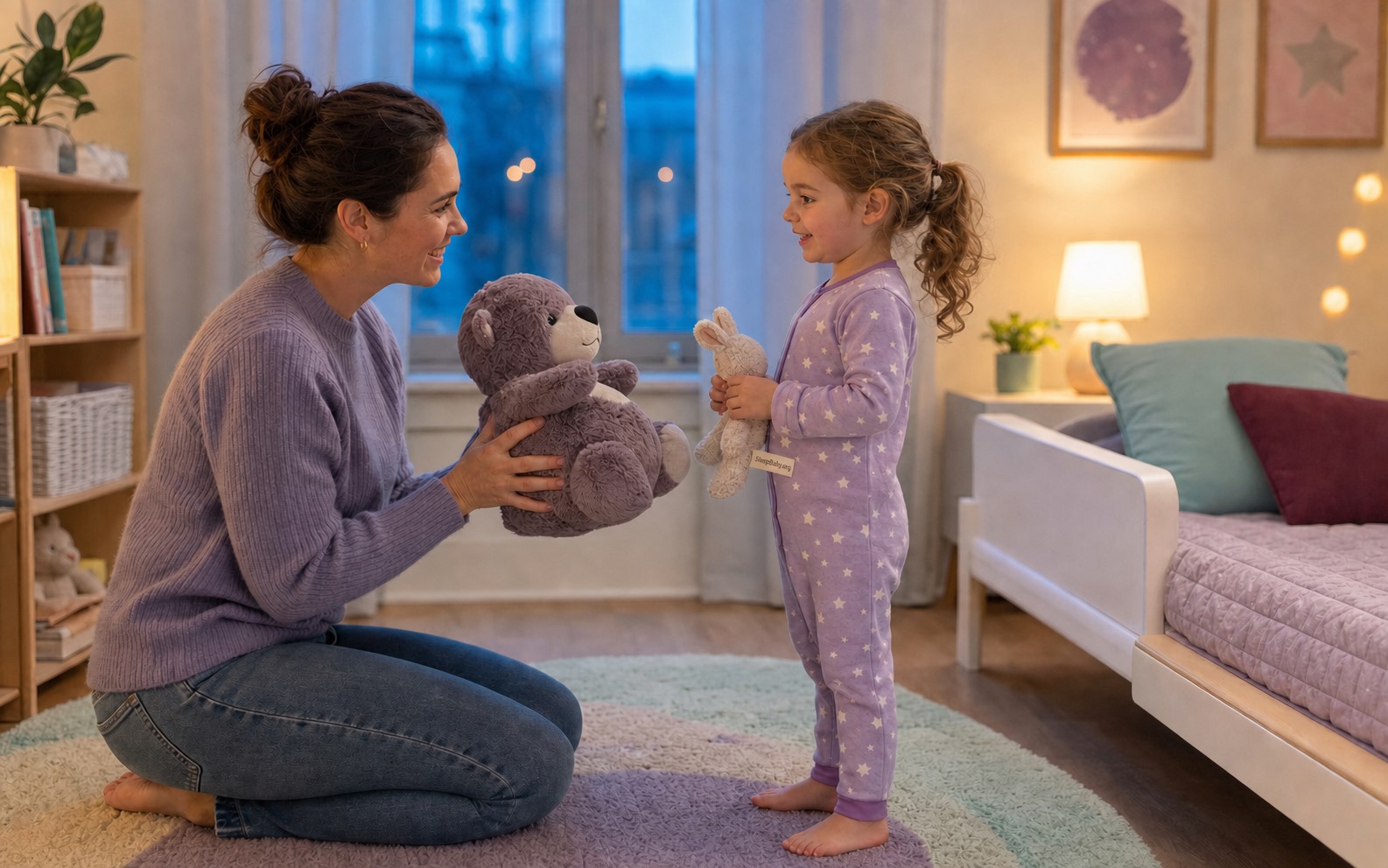
Use the weighted toy, if the label and your child’s clinician allow it, only for a short awake wind-down. Then say the same simple line each night: “Bear helped during the story; now Bear sleeps on the shelf.” Let your child choose an unweighted comfort object when that is appropriate for their age and sleep setup.
For babies, the answer stays stricter: no stuffed animals in the sleep space. Our guide to when a baby can sleep with a stuffed animal keeps the infant boundary separate from toddler comfort decisions.
If a toddler is seeking strong pressure throughout the day, ask a licensed occupational therapist or pediatric clinician about an individualized sensory plan. An awake bear hug requested by the child, pushing a laundry basket, carrying books, wall pushes, or another age-appropriate “heavy work” activity may offer input without leaving a weighted object on a sleeping body. The right choice depends on the child and should never force contact.
Build calm from choices the child can leave
If pressure seems helpful, move the sensory input earlier and keep it child-led. A toddler might choose a firm hug, push a laundry basket down the hall, carry two board books to the bedroom, press palms against the wall, or curl into a regular blanket while fully awake beside you. Stop if the activity makes the child hotter, more alert, frustrated, or less able to move freely.
Then let the bedtime sequence do the repetitive work: dim the room, use the same two or three steps, keep the last request predictable, and give the weighted plush its shelf line before the child is drowsy. Behavioral routines are better established for ordinary childhood insomnia than an unproven sleep product.[4]
If you are comparing another pressure-based bedtime product, our guide to compression sheets for toddler sleep uses the same evidence-first question: can the child move, breathe, cool down, and opt out without help?
You do not need to solve sensory preferences alone. An occupational therapist can help separate a comforting preference from a broader pattern affecting dressing, feeding, play, or daily transitions, while the pediatrician can look for pain, breathing problems, restless sleep, or another reason bedtime is hard.
Measure the bedtime problem, not the product promise
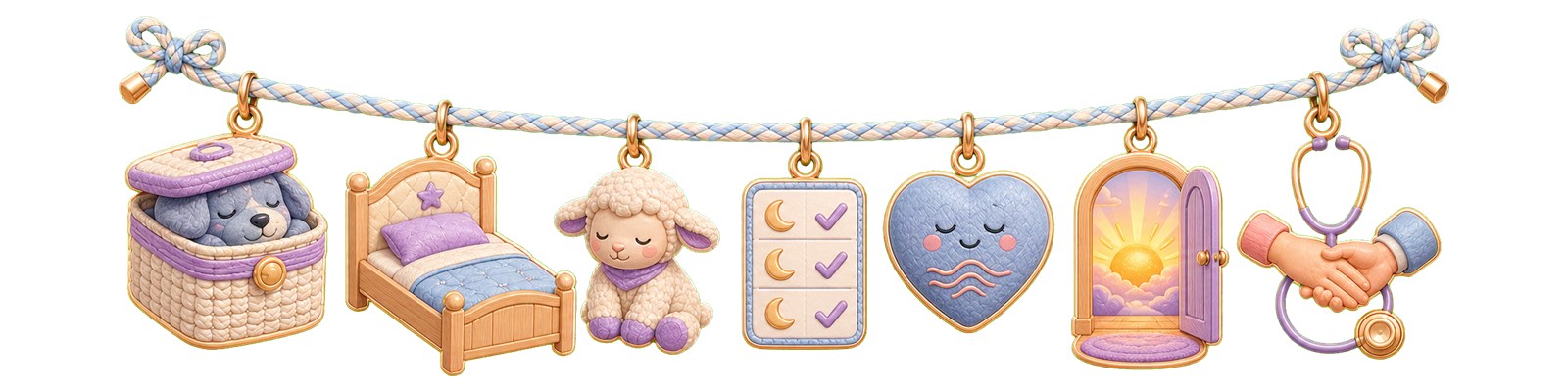
The Three-Night Clue Log keeps the child’s night and next day—not the toy’s marketing story—at the center.
Before bed
Before bed: notice naps, activity, illness, room temperature, and the hard part of the routine.
At settling
Notice whether the child asked for pressure, accepted an unweighted toy, became hotter or calmer, and how long settling took.
Overnight
Record wakes, calls for help, snoring, gasps, sweating, unusual positions, and signs of distress.
Next day
Look at mood, energy, attention, and whether bedtime support made the whole day easier—not merely quieter.
SleepBaby.org Three-Night Clue Log.
This qualitative log is not a diagnostic test. It gives the pediatrician cleaner clues and helps you change one thing at a time.

When the sleep problem needs a clinician
Bring regular loud snoring, gasping, breathing pauses, mouth breathing, very restless sleep, heavy sweating, pain, frequent waking, major bedtime fear, or unusual daytime sleepiness or behavior change to the pediatrician.[5] A weighted plush cannot treat sleep apnea, pain, itching, reflux, iron-related movement problems, anxiety, or another underlying cause.
Remove any object and seek emergency help for severe trouble breathing, blue or gray lips or skin, choking that does not clear, a seizure, or a child who is difficult to wake. Do not wait to see whether the toy settles them.
For a routine reset, our three-way test for sleep close to bedtime can help separate schedule pressure from a presumed need for a sensory product.
Watch child-led calming sensory strategies
Creator: NHS Tayside CYP Occupational Therapy Service. Watch “Calming Sensory Strategies” on YouTube.
Why it is here: this NHS children’s occupational therapy video demonstrates calm, child-centered sensory ideas. It does not endorse weighted stuffed animals for sleep or replace an individual assessment.
Takeaway if you cannot watch: Choose calming sensory input with the child, watch the response, and stop when an activity is alerting or uncomfortable; a weighted product is not the only route to a settled body.

A bedtime friend should be company, not cargo
You do not have to decide that every weighted toy is wonderful or wicked. You only need a clear boundary: a sleeping child’s breathing and movement stay free. If the toy has an age-appropriate, clinician-supported role, let it help during an awake story and then give it a reliable shelf.
The good routine is the one that still works when the plush is in the wash, the batteries are gone, or the beloved fox has been left in Grandma’s car. Keep the comfort portable, the evidence honest, and the weight off the sleeping child.
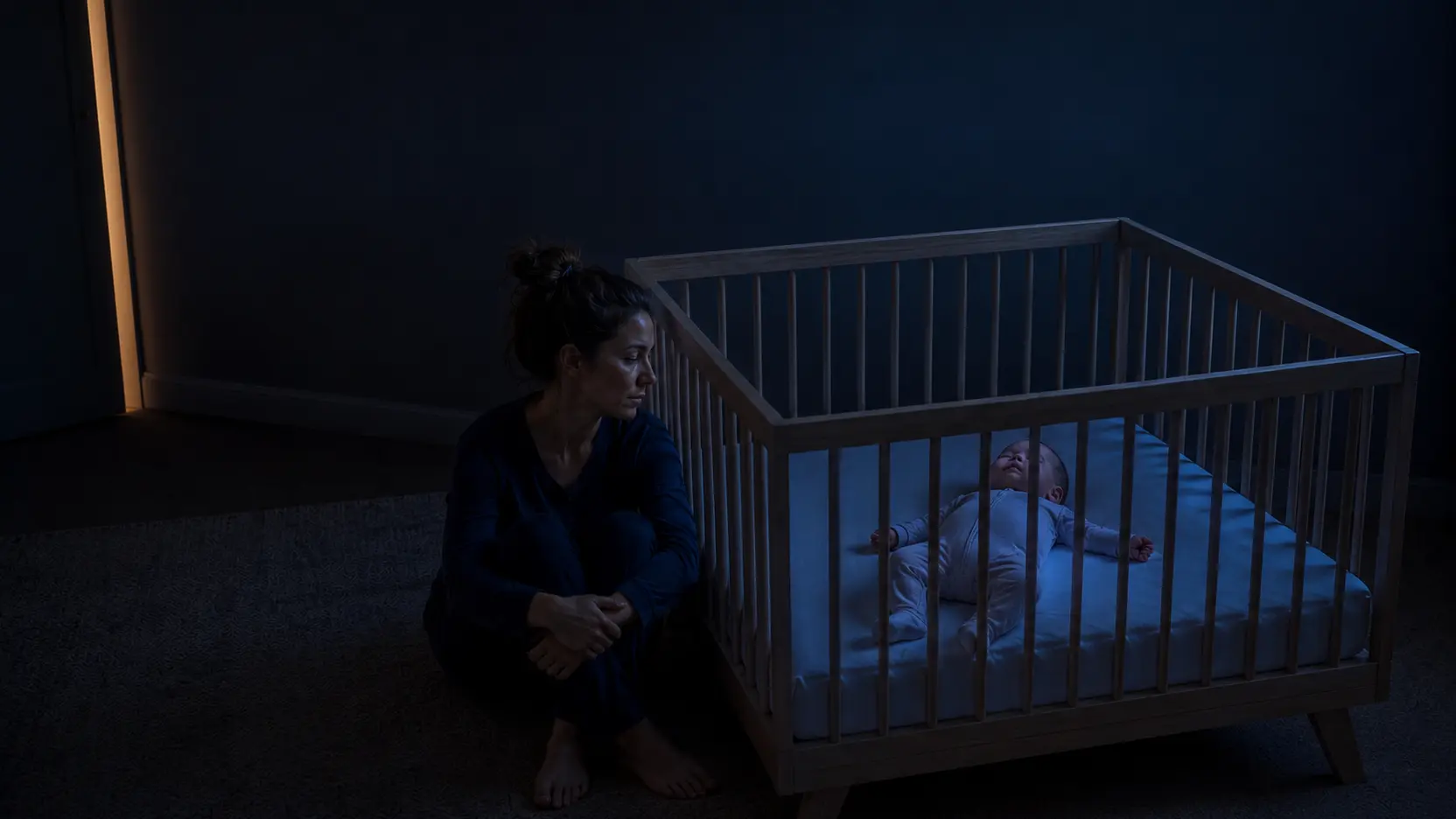
When one cuddly shortcut starts feeling very heavy
Keep the comfort; put the weight on the shelf
The plush animal can look like the missing piece when bedtime has scattered itself across the floor. Your child still deserves an easy breath, a free body, and a routine that works without pressure resting on them. SleepBaby can help you turn tonight’s sensory clues into a calmer plan that stays useful after the weighted toy is put away.