Safe sleep, without the mixed messages
Can a Baby Sleep With a Stuffed Animal?
The teddy can join the cuddle, the song, and the last small wave goodnight. For an infant, it does not join the sleep.
I know that boundary can feel colder than the bedtime you meant to create. My job here is to help us keep the tenderness while removing the avoidable object. I will show you exactly where the teddy can stay part of the routine and where the clear sleep-space rule takes over.
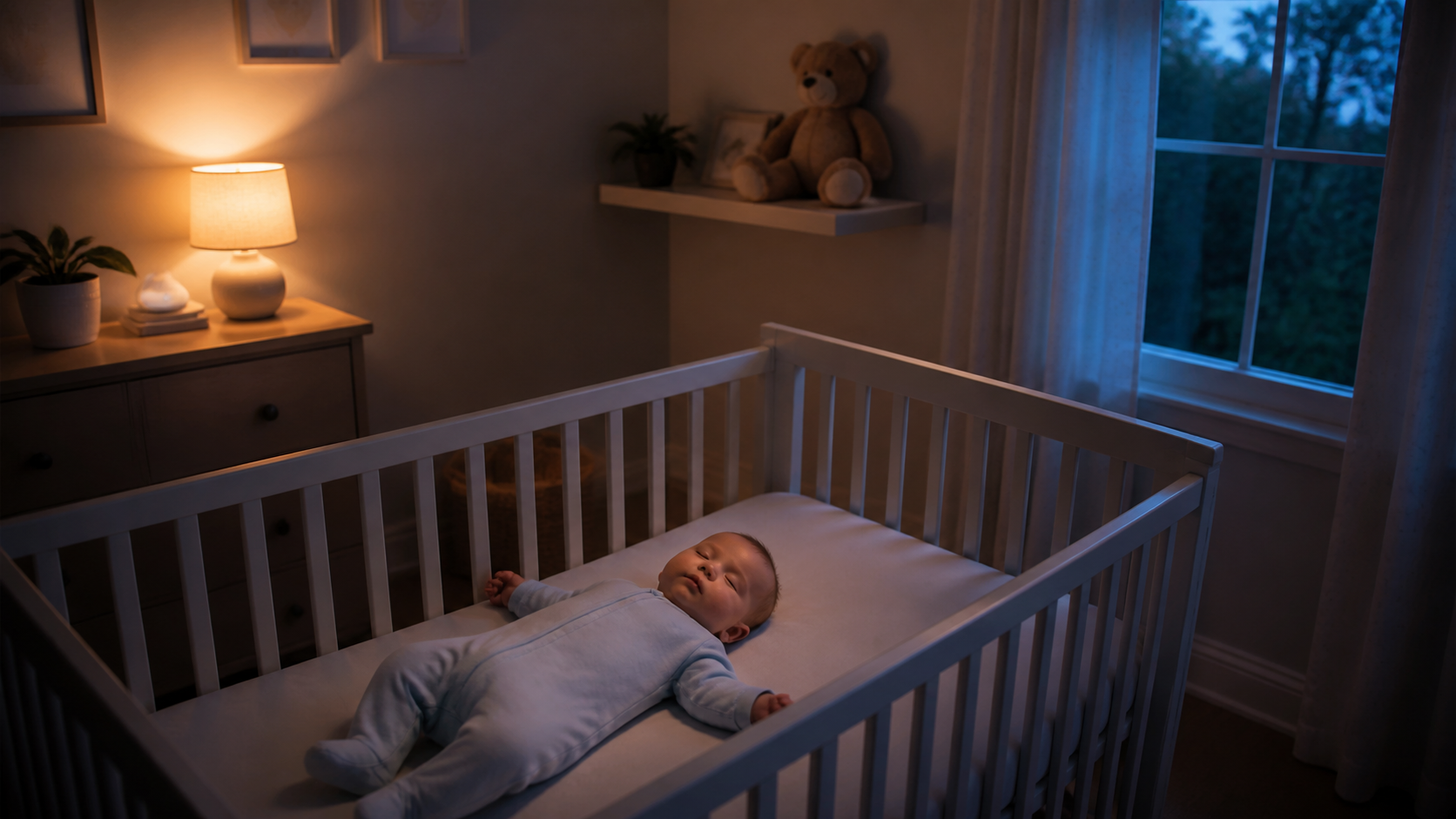
A stuffed rabbit is sitting on the crib rail. It is soft, clean, perfectly sized for one tiny arm, and making the fitted-sheet-only mattress look as welcoming as an airport security tray. I understand the impulse to tuck it beside the baby. A bare crib can look unfinished to an adult because adults have spent years building nests out of pillows, blankets, and objects with sentimental backstories.
The short answer: no stuffed animals during the first year
A baby should not sleep with a stuffed animal, lovey, pillow-like toy, or other soft object during the first year. For every nap and every night, place your baby on their back in a separate, safety-approved crib, bassinet, portable crib, or play yard with a firm, flat, level mattress and a fitted sheet—nothing else. Soft toys can contribute to suffocation, entrapment, or strangulation. A toy may be part of a supervised wind-down, but remove it before sleep.
After the first birthday, the risk picture changes and the American Academy of Pediatrics’ toddler guidance allows a carefully inspected favorite comfort object. That is a later transition, not an exception for a younger baby.
The question underneath “Can my baby sleep with this?” is often gentler: Will the empty crib feel lonely? The safest answer is not to remove comfort from bedtime. It is to move comfort into the parts of bedtime where you are present—your voice, your hands, a familiar order of events—and keep the infant sleep surface deliberately clear.
SleepBaby.org · The original video
A little help
for the night ahead.
Take a moment to watch the original Baby Sleep Miracle presentation. Your article will be right here when you’re ready to keep reading.
Ready to get started?Take the next step with SleepBaby.
Help my baby sleep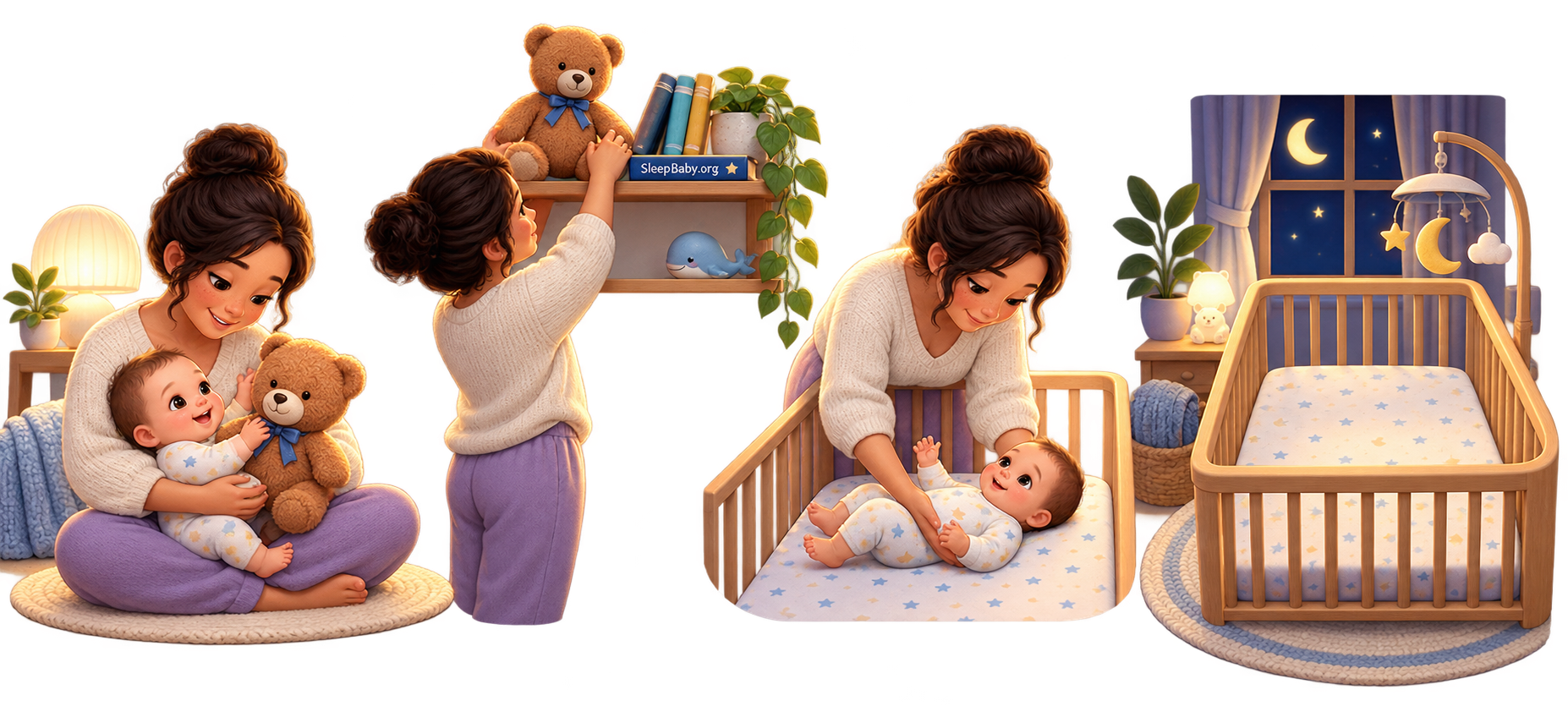
Why a small stuffed animal is still a sleep-space hazard
A baby does not interact with a soft toy the way an awake older child does. During sleep, a baby may turn their face toward it, roll into it, pull it closer, or become positioned against it without being able to create space quickly. The concern is not that every stuffed animal causes an emergency. The concern is that it adds a preventable object to the place where breathing must remain unobstructed.
NICHD’s Safe to Sleep guidance names stuffed toys among soft or squishy objects that should stay out of a baby’s sleep area. The AAP includes toys and pillow-like toys in the group of objects that can raise the risk of suffocation, entrapment, or strangulation. CDC likewise tells caregivers to keep soft toys out. CPSC reduces the setup to a phrase worth remembering at 2:00 a.m.: “Bare is Best”—a fitted sheet and nothing else.
“But it is tiny”
Size does not turn a soft object into approved infant bedding. A small lovey can still reach the face or become trapped near the baby.
“But it is breathable”
“Breathable” is a marketing description, not permission to add an object to an infant sleep space. Safe-sleep guidance still says fitted sheet only.
“But I can see the crib on camera”
A monitor can show a problem after it develops. It does not prevent an object from covering the nose or mouth, and it does not replace the empty-space rule.
“But the toy is attached”
Cords, clips, ribbons, tethers, and attachments can introduce strangulation or entrapment hazards. Do not attach a toy to the baby, sleepwear, sleep sack, pacifier, or crib.
I would not spend bedtime calculating whether this particular bear is 30 percent smaller or 40 percent flatter than the one in a warning photo. That invites the wrong decision. The useful distinction is simpler: Is it a fitted sheet designed for this mattress? If not, it waits outside the infant sleep space.
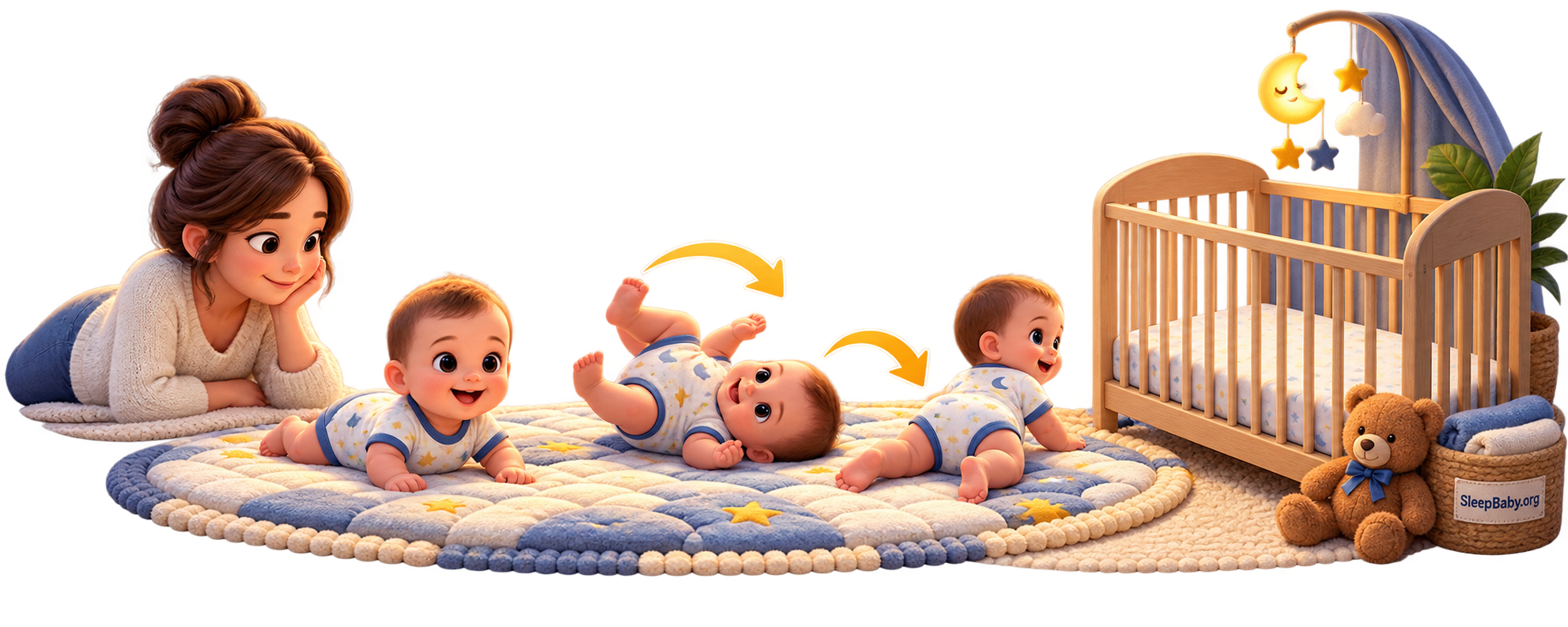
Rolling does not graduate a baby to crib toys
Rolling changes one part of safe-sleep practice, but not this one. Always place a baby on their back. Once a baby can roll comfortably in both directions—back to belly and belly to back—you do not need to spend the night repeatedly turning them over. You do need to keep the mattress firm, flat, and empty so the baby has room to move without meeting a blanket, bumper, pillow, or stuffed toy.
This is where parent logic can get ambushed. A newly mobile baby looks capable. They push up, pivot, grab everything within reach, and conduct vigorous crib inspections when they were allegedly put there to sleep. But gross-motor progress is not a test proving that a baby can always move away from a soft obstruction while asleep. “Can roll” and “can sleep with loose objects” are separate questions.
The rolling boundary
- At placement: put baby on the back for every nap and night.
- If baby rolls one way only: ask the pediatric clinician how to handle the individual situation; keep the crib empty.
- If baby rolls both ways independently: you may leave the position baby chooses after being placed on the back; keep the crib empty.
- If baby is swaddled or showing attempts to roll: stop swaddling. A swaddled baby who rolls has less ability to reposition.
A comfort-object routine that keeps the crib clear
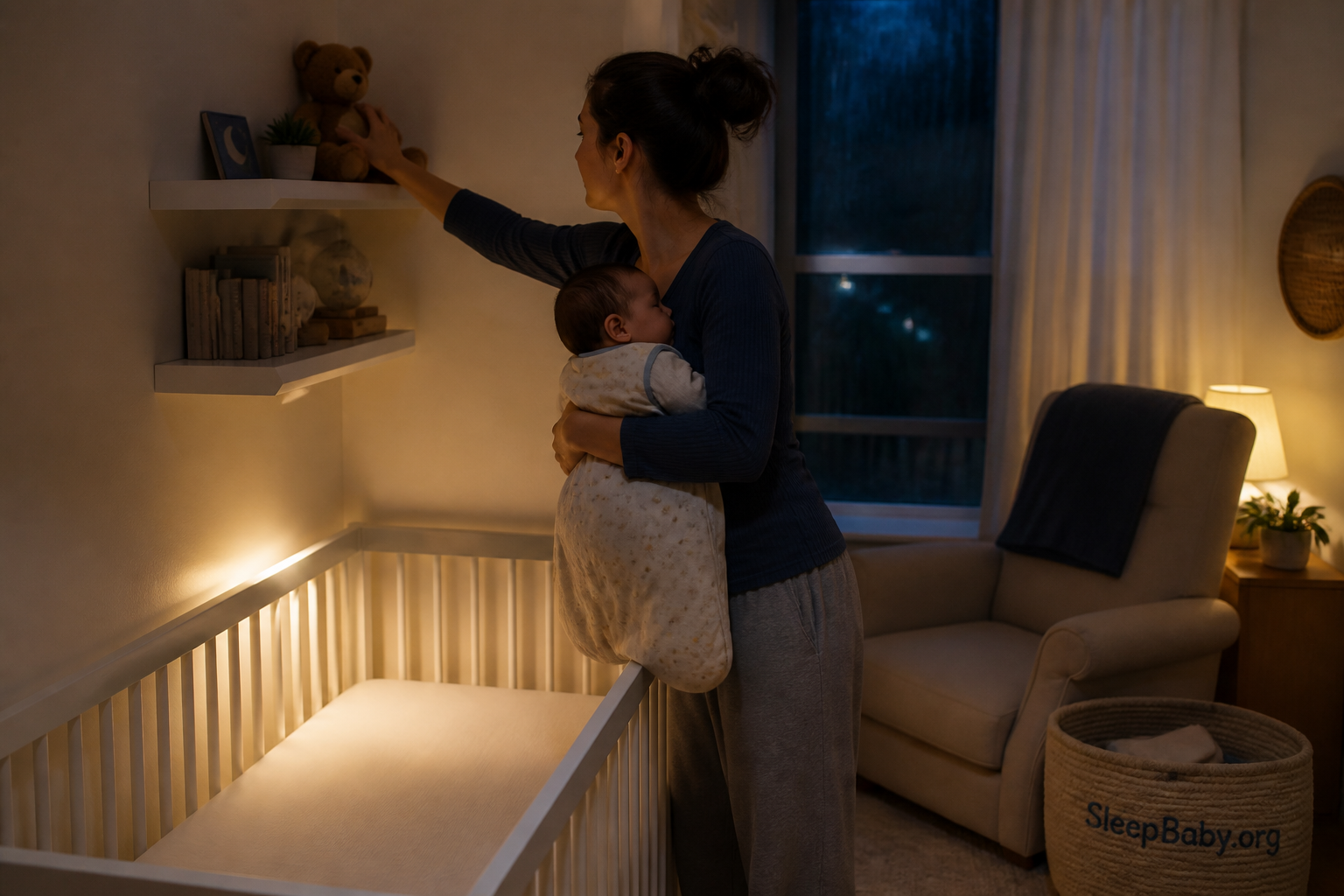
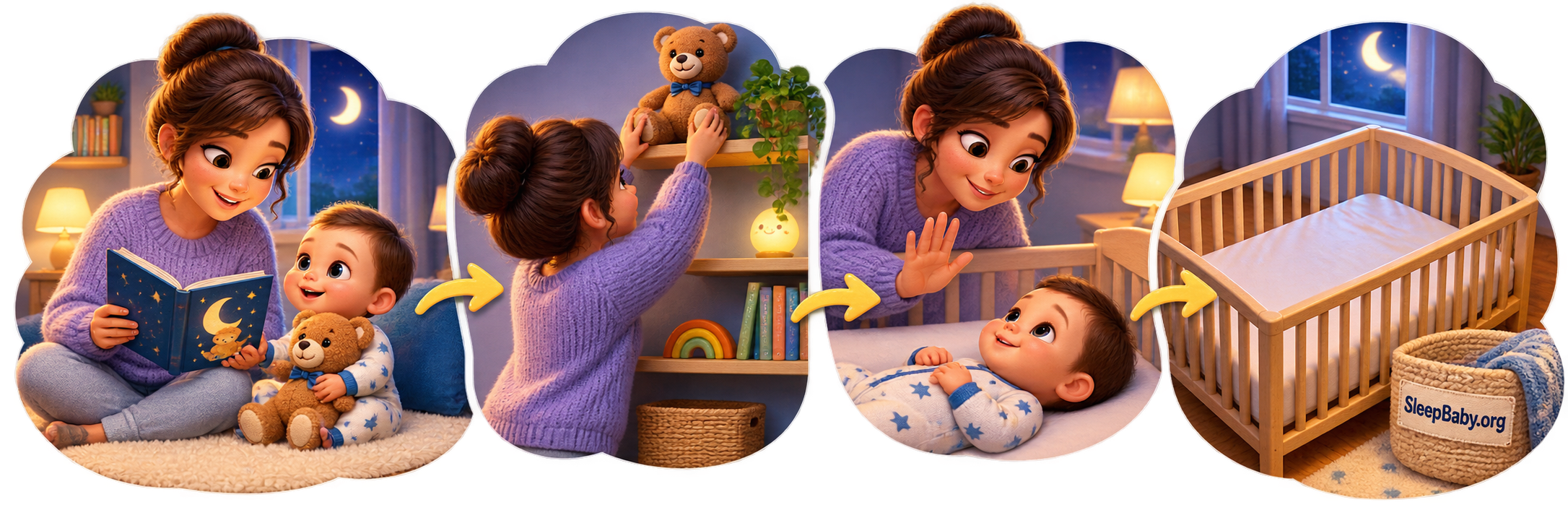
You do not have to banish the stuffed animal from the child’s emotional universe. Use it while the baby is awake and directly supervised. The toy can appear during a short book, sit on your lap during the song, or receive an exaggerated goodnight. Then give it a consistent parking place beyond the baby’s reach before you place the baby in the crib.
The four-step toy-parking handoff
- Cuddle while awake: hold the toy together during the wind-down, with an adult in control of it.
- Name the transition: use one ordinary sentence: “Bear is parking on the shelf. Now it is sleep time.”
- Clear the sleep space: check that the crib or bassinet contains only its fitted sheet.
- Place baby on the back: finish with the same safe placement for naps, bedtime, travel, and caregiver handoffs.
The script is intentionally boring. Repetition does the work. Bedtime does not need a dramatic teddy-bear separation ceremony with closing arguments.
A clearly labeled composite Kacey-and-Benjamin moment
This is a composite scene, not a documented family memory and not evidence. Imagine Benjamin holding a small bear during the last page of a board book while I notice myself thinking, He looks so settled—maybe the bear should stay. That thought is exactly why I prefer a physical “parking spot” to a nightly judgment call. We wave to the bear, I set it on the shelf, and the crib remains empty.
The helpful part is not the imaginary bear’s personality. It is the handoff. Benjamin still gets a recognizable cue and closeness with me; I do not ask a soft object to provide comfort after I leave. The routine stays warm while the sleep surface stays boring.
I like this approach because it survives exhausted nights. A rule that requires me to evaluate fabric density, toy position, baby position, and how deeply everyone is sleeping is not a useful 3:17 a.m. rule. “The toy parks before the baby goes down” is.
What about a lovey, security blanket, or pacifier animal?
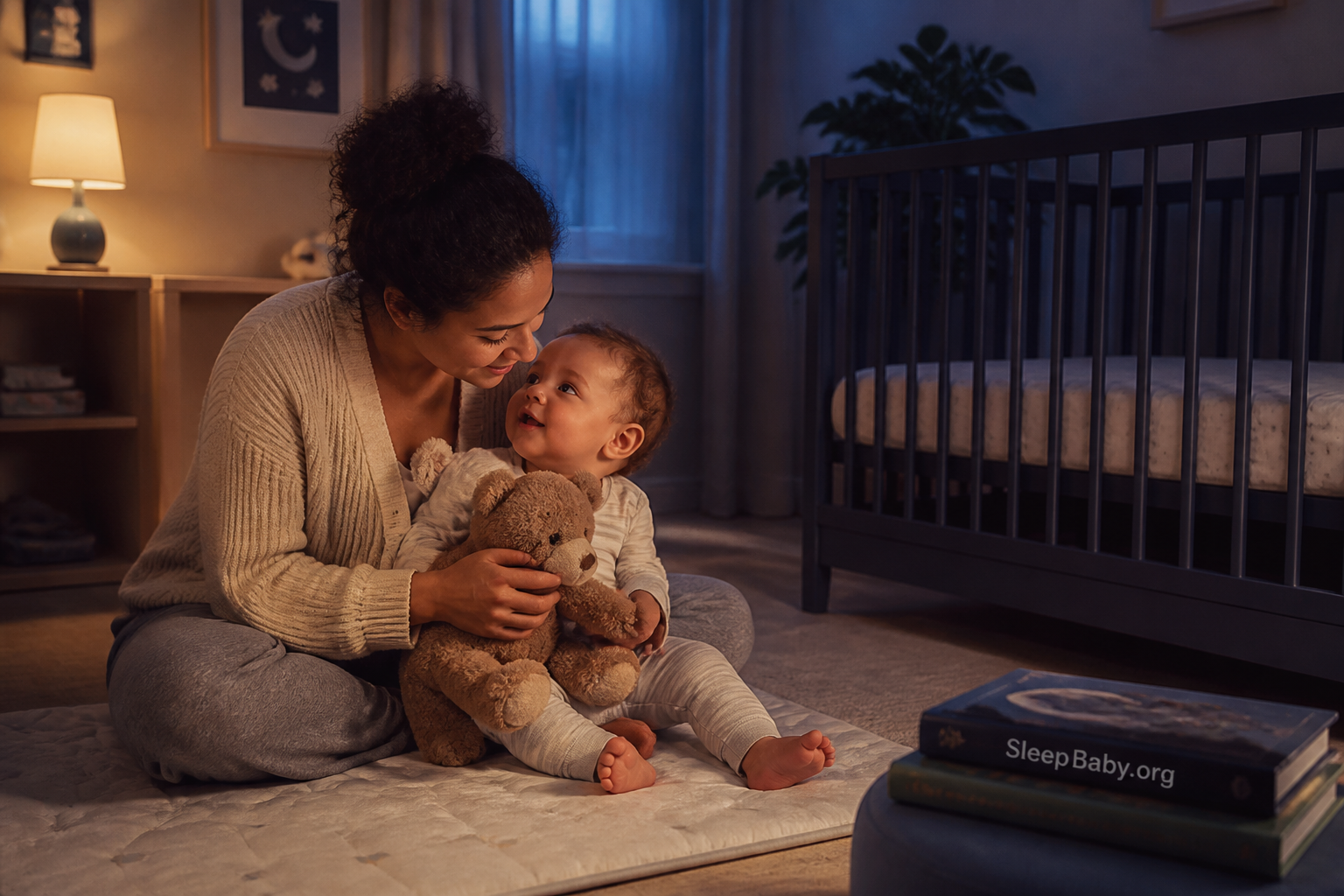
The product name does not change the infant rule. A square of fabric sold as a lovey is a non-fitted object. A tiny security blanket is still loose fabric. A pacifier attached to a plush animal adds the plush object and its connection point to the sleep space. Remove these items before an infant sleeps.
A plain pacifier is different. The AAP says offering a pacifier at naps and bedtime may reduce SIDS risk, once breastfeeding is established if the baby is breastfed. If it falls out after sleep begins, you do not have to replace it. Do not hang it around the baby’s neck or attach it to clothing during sleep. For the full distinction, see our guide to sleeping with a pacifier.
If a particular toy has become inseparable from settling, practice the separation during awake routines first. Let the object be present for the book, then park it before the final song for several nights. You are teaching an order, not conducting a test of whether the baby “really needs” the toy. If the baby protests, respond with your usual soothing approach while keeping the sleep space clear.
When can a child sleep with a stuffed animal?
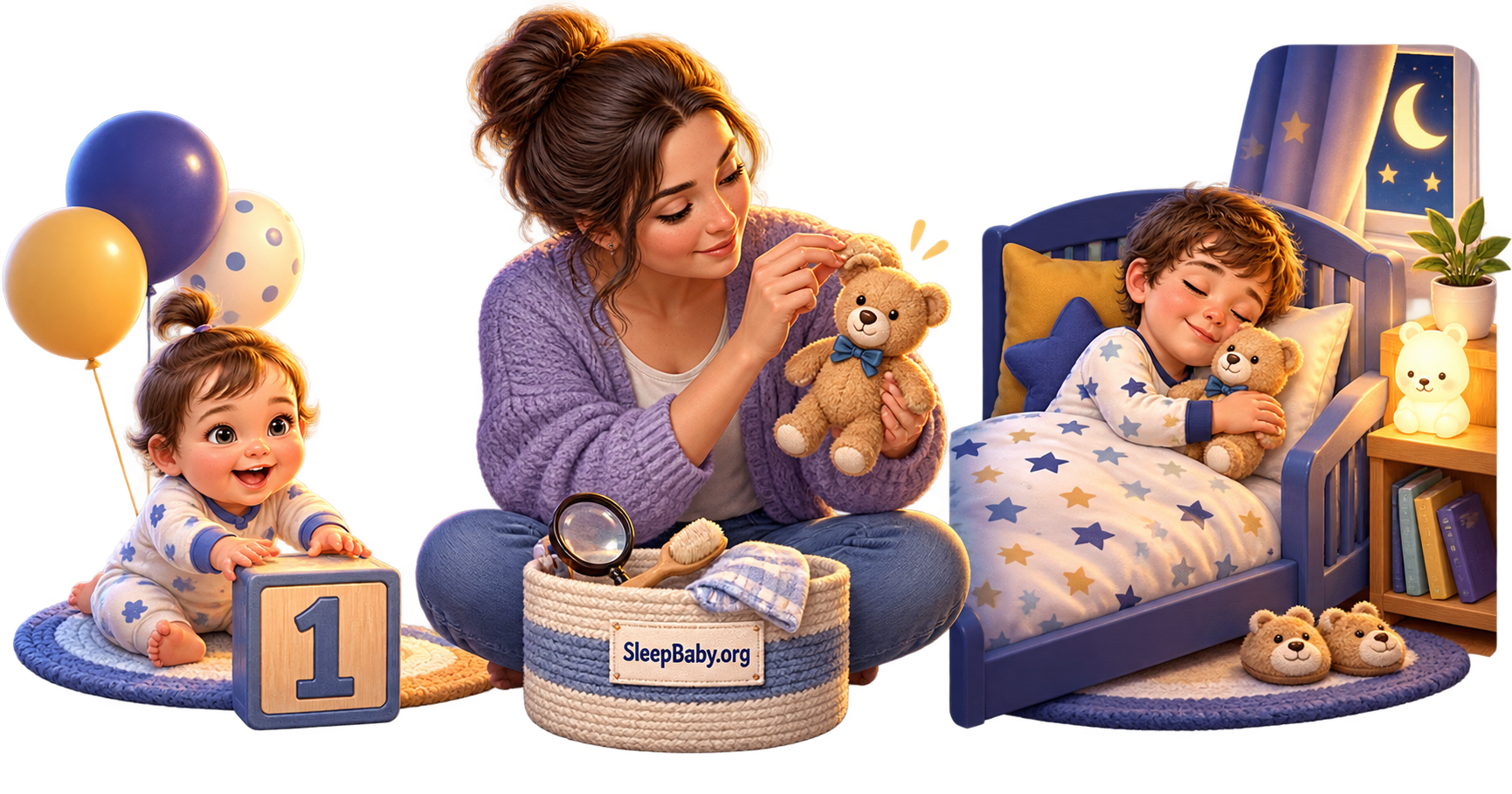
For this article’s exact question, the clean boundary is the first birthday: follow infant safe-sleep guidance through 12 months. After that, AAP toddler guidance says it is okay for a child to take a teddy bear, special blanket, or favorite toy to bed, provided the object itself is safe. This is not a birthday-morning requirement. A child who sleeps well without an object does not need one added.
I would also slow down if the child was born prematurely, has a medical or developmental condition affecting movement or breathing, uses medical equipment, or has an individualized sleep plan. Ask the child’s clinician when general age guidance does not fit the child in front of you.
Birth through 12 months
No stuffed animal, lovey, blanket, pillow, or soft toy in the sleep space. Back placement, approved firm flat surface, fitted sheet only.
After 12 months
A carefully inspected comfort object may be reasonable for a typically developing toddler. Keep it simple, intact, and free of choking or strangulation hazards.
“After 12 months” should not be translated into “every plush object in the toy basket moves into bed.” One modest comfort object is easier to inspect and less likely to crowd the sleep space. Giant plush toys, weighted toys, long-limbed dolls, toys with cords, and products with hard mechanisms do not become good bedding because the calendar flipped.
Inspect a toddler’s comfort toy before it goes to bed
Stuffed animals change with use. A seam that was secure at purchase can open. A decorative eye can loosen. A ribbon can fray into a long loop. A battery compartment can become accessible after repeated drops or washing. The transition after infancy therefore needs a toy check, not just an age check.
The squeeze, pull, and look check
- Squeeze: feel for hard battery packs, accessible mechanisms, loose pellets, or filling pushing through a seam.
- Pull gently: check eyes, noses, buttons, bows, tags, and every attachment. Nothing should detach or form a loop.
- Look at the whole shape: avoid long cords, ribbons, straps, necklaces, removable clothing, and pieces small enough to choke on.
- Check the closure: battery compartments should be secured as designed. Keep button batteries and high-powered magnets entirely inaccessible.
- Check condition and recall status: retire damaged toys and review CPSC recalls or SaferProducts.gov, especially for secondhand items.
- Wash as directed: choose an object that can be cleaned without weakening its seams or attachments.
If a toy contains water beads, loose pellets, accessible foam, magnets, or button batteries, I would choose a simpler comfort object. Swallowed button batteries and high-powered magnets can cause catastrophic internal injuries; this is not a “watch and wait” category. If you suspect ingestion, seek emergency guidance immediately and do not induce vomiting.
What should actually be in a baby’s crib?
A tight-fitting mattress designed for the sleep product. A fitted sheet designed for that mattress. The baby, placed on their back. That is the list.
Keep blankets, pillows, bumpers, positioners, nests, wedges, stuffed animals, loveys, toys, and weighted items out. Dress the baby in appropriate sleep clothing or a non-weighted wearable blanket rather than adding loose bedding. Make sure the surface is firm, flat, level, and not inclined. Use a crib, bassinet, portable crib, bedside sleeper, or play yard that meets current federal requirements and has not been recalled.
If the baby falls asleep in a car seat, swing, stroller, carrier, or sling, move them to the regular safe sleep surface as soon as practical. Sitting devices are designed for transport or awake use, not routine sleep. The stuffed animal question is one piece of a larger principle: products and objects do not become safe for infant sleep merely because a baby managed to fall asleep near them.
Watch the room reset
A bare sleep space in under a minute
This official safe-sleep video reinforces the same visual check: back placement, a firm flat approved surface, and no pillows, blankets, bumpers, or toys. Watch for what is removed from the sleep area—not what gets added.
Takeaway: before every nap and night, scan the mattress from corner to corner. If you see anything besides the fitted sheet and baby, remove it.
Questions parents often ask after hearing “no”
Can the stuffed animal sit in the corner of the crib?
No. Babies move, objects move, and a corner is still inside the sleep area. Park it on a shelf or dresser that is safely secured and beyond the baby’s reach.
Can my baby sleep with a stuffed animal for naps if I am watching?
No. Safe-sleep guidance applies to naps and nighttime. Direct supervision is valuable during awake play, but watching does not turn a soft object into approved bedding.
What if my baby can pull the toy away from their face?
That awake skill does not guarantee the same response during every stage of sleep or from every position. Keep the sleep space empty through the first year.
Can the toy be clipped outside the crib?
Do not create a cord, clip, or reachable attachment near the sleep space. Place the toy on a separate stable surface beyond reach, and keep wall décor, monitor cords, blind cords, and shelves safely positioned away from the crib.
What if daycare or a relative uses a lovey?
Give a short, repeatable instruction: “For every sleep, please place baby on the back in the empty crib with the fitted sheet only.” Ask all caregivers to use the same rule. If a childcare setting will not follow an infant safe-sleep plan, raise the concern with the director and your pediatric clinician.
Will removing the lovey ruin sleep?
The first nights may involve protest if the object has become part of settling. Keep the rest of the routine steady, use hands-on or verbal soothing that fits your family, and move the toy’s participation earlier in the wind-down. Safety is a boundary, not a verdict on the child’s ability to sleep.
When to act urgently
If a baby or child is not breathing normally, is blue or gray, is limp, or will not respond, call emergency services immediately and begin first aid or CPR if you are trained. If you suspect a button battery or high-powered magnet was swallowed, seek emergency help immediately. For non-emergency questions about an individual child’s breathing, mobility, medical equipment, development, or sleep setup, contact the pediatric clinician.
Make the rule portable, not nursery-specific
The stuffed-animal question often reappears away from home. A relative has arranged a travel crib with a blanket and teddy because it looks “more comfortable.” A babysitter assumes the lovey always stays. A hotel crib arrives with extra bedding already inside. I would treat each unfamiliar sleep space as a fresh setup, even when the baby has slept there before.
Remove everything that did not come as the fitted sleep surface and its fitted sheet. Confirm that the product is intended for infant sleep, assembled correctly, undamaged, and not recalled. Move cords, monitor wires, blind pulls, unstable lamps, shelves, and decorative objects beyond reach. Then use the same back placement and empty-space rule you use at home. Familiarity comes from the sequence of care—not from importing every nursery object into the crib.
For caregiver handoffs, I prefer one specific sentence over a long explanation: “Please put the baby on their back in the empty crib; the bear stays on this shelf.” Show the caregiver the parking place and the fitted-sheet-only mattress. Ask them to repeat the plan if you are unsure it landed. That is not being difficult. A safety instruction is only useful when the person doing bedtime can describe it clearly.
If another caregiver disagrees, do not negotiate a halfway version where the toy starts in the corner or gets removed “once the baby is really asleep.” The safe setup begins when the baby is placed down and lasts for the whole sleep. I would rather tolerate one mildly awkward adult conversation than leave an infant sleep rule dependent on somebody remembering a later step.
The one-minute bedtime check
- Baby goes down on the back.
- The surface is firm, flat, level, and approved for infant sleep.
- The mattress has one fitted sheet.
- There are no toys, loveys, blankets, pillows, bumpers, positioners, or weighted items.
- Baby is dressed for comfort without overheating.
- The stuffed animal is in its parking place, outside the sleep area and out of reach.
That check works in the nursery, at a grandparent’s home, in a hotel with a portable crib, and at childcare. It also gives you language when someone says, “We always did it this way.” You do not have to debate the emotional merits of teddy bears. You can point to the same repeatable setup for every infant sleep.
Make the rest of bedtime just as clear
If bedtime has become a string of improvised decisions, the SleepBaby workshop helps you build a practical, age-aware routine around your child—without promising a perfect night or replacing medical advice.
I want you to leave with one calm rule you can use tonight: keep the comfort in your presence and keep the infant sleep surface clear. We can help you build the rest of that safe, repeatable bedtime rhythm from the SleepBaby home base.
The teddy can wait
Back at the crib rail, the stuffed rabbit has not lost its job. It can still be part of the book, the cuddle, the ridiculous little wave goodnight, and eventually—after the infant year and a careful safety check—a toddler’s bedtime. Tonight, its job is to wait on the shelf.
The crib may still look bare to adult eyes. Now you know what that emptiness means: the space has been prepared on purpose. Comfort happened in your arms. Safety continues after you step away.
Sources
- American Academy of Pediatrics: How to Keep Your Sleeping Baby Safe
- NICHD Safe to Sleep: Safe Sleep Environment
- CDC: Providing Care for Babies to Sleep Safely
- U.S. Consumer Product Safety Commission: Safe Sleep—Cribs and Infant Products
- American Academy of Pediatrics: Suitable Sleeping Sites
- American Academy of Pediatrics: How to Buy Safe Toys
- American Academy of Pediatrics: Toddler Bedtime Trouble
This article provides general educational information and does not replace care from your child’s clinician or emergency services.
SleepBaby.org · The original video
A next step for
the next bedtime.
Still thinking about sleep? Watch the presentation here, then explore the SleepBaby program whenever you’re ready.
Ready to get started?Take the next step with SleepBaby.
Help my baby sleep