
The vitamin K shot for newborns is a one-time medication, usually given into the thigh within six hours after birth, to prevent vitamin K deficiency bleeding. It is not a vaccine, and it is not one of the newborn screening tests. Current guidance from the Centers for Disease Control and Prevention and the American Academy of Pediatrics recommends the intramuscular shot for all newborns because babies begin life with very small vitamin K stores and dangerous bleeding can happen internally, sometimes before there is anything for a parent to see.[1][3][5]
This question often arrives while the baby is still warm against your chest, one feed is half-finished, and someone is asking you to understand three hospital routines at once. I would separate the decision before I tried to memorize the paperwork: what the shot prevents, when it is offered, what side effects are expected, and what would change the plan for this baby. Those are fair questions. They also have much clearer answers than the internet’s “natural versus medical” shouting match suggests.
Vitamin K shot, vaccine, and newborn screening are not the same thing
The names can blur because all three may appear on the same discharge checklist. They do different jobs.
Preventive medication
Vitamin K shot
Provides vitamin K so the baby’s clotting system can stop bleeding. Its target is vitamin K deficiency bleeding.
Immune protection
Hepatitis B vaccine
Teaches the immune system to recognize hepatitis B. It is a vaccine; vitamin K is not.[4]
Early detection
Newborn screening
Looks for signals of certain conditions through blood-spot, hearing, and pulse-ox screening. The newborn screening guide explains those tests separately.
The vitamin is commonly called phytonadione, a form of vitamin K1. It helps the body activate proteins needed for normal clotting. Saying that it “thickens the blood” is catchy but wrong; the point is not to make blood unusually thick. The point is to give a newborn’s clotting system a nutrient it temporarily has very little of.
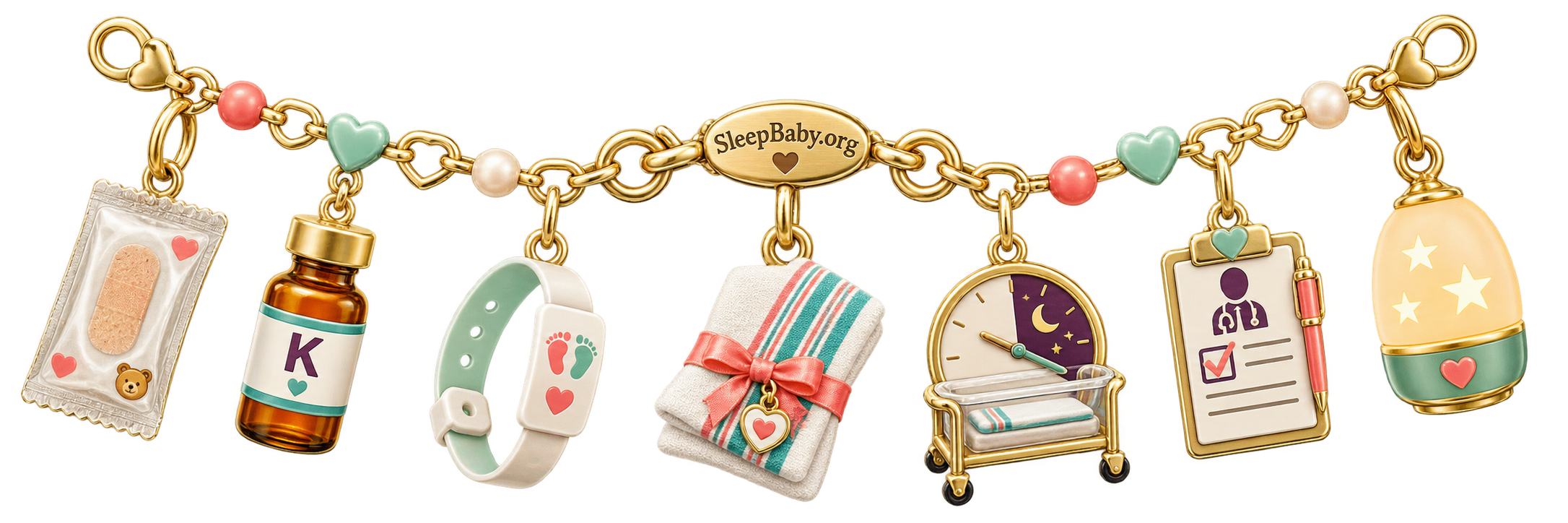
Why a healthy newborn starts with low vitamin K
A baby can be full term, vigorous, feeding, and still begin with low vitamin K. This is ordinary newborn physiology, not evidence that the pregnancy or birth went badly.
Three temporary gaps
Placenta, gut, and milk do not build a large reserve at birth
Before birth
Limited placental transfer
Only small amounts of vitamin K cross the placenta, so newborn stores are low even when the pregnant parent eats well.[1]
After birth
An immature gut supply
The intestinal bacteria that later contribute vitamin K are not yet established in a newborn.[1]
During early feeding
Low amounts in breast milk
Breast milk contains only small amounts of vitamin K, including when the lactating parent takes vitamin K supplements.[3]
That last point needs careful wording. Breast milk is not failing at its job. It is the biologically appropriate food for most newborns, but it is not a substitute for this particular prophylaxis. CDC guidance recommends the one-time shot whether a baby will be breastfed or formula-fed.[3] If you are sorting early feeding questions too, the linked guide explains what colostrum is and how it is usually offered. Colostrum has important jobs; replacing the vitamin K shot is not one of them.
I would also resist the idea that an unmedicated birth, delayed cord clamping, cesarean birth, or an especially healthy pregnancy changes this basic starting point. Those details can matter for many parts of newborn care. They do not create a dependable vitamin K reserve. The AAP recommendation applies broadly because low stores are a newborn trait, not a marker of a difficult delivery.[5]
Which babies have extra VKDB risk?
The universal recommendation does not mean every baby has the same risk. It means the birth team cannot safely identify every future case by looking at a healthy newborn. Some situations raise concern further.
- No vitamin K shot at birth: this is the central preventable risk factor, especially when the baby is exclusively breastfed.[1]
- Certain medicines used during pregnancy: CDC names some antiseizure medicines and isoniazid because they can interfere with vitamin K. The obstetric and newborn teams need the exact medication list, not a parent-led decision to stop a prescribed drug.[1]
- Liver disease or trouble absorbing fat-soluble vitamins: an infant may not use or absorb vitamin K normally. Diarrheal or malabsorption conditions can matter, sometimes before the underlying condition is obvious.[1]
Higher risk does not turn lower risk into no risk. A formula-fed full-term baby without known liver disease still begins with limited stores, and a family cannot use feeding choice or an uncomplicated birth as a home screening test. This is one of the places where preventive medicine can feel oddly impersonal: the recommendation is broad because the dangerous exception is not reliably visible in advance.
If the pregnant parent used any prescription, over-the-counter, herbal, or seizure medicine, bring the actual list to the birth team. Do not stop a necessary medicine because it appeared beside the words “vitamin K” on a web page. The clinician’s job is to interpret the drug, dose, timing, and baby’s condition together.

What vitamin K deficiency bleeding can look like
Vitamin K deficiency bleeding, shortened to VKDB, happens when a baby’s low vitamin K level leaves the clotting system unable to stop bleeding normally. The bleeding may be visible at the umbilical cord, nose, skin, stool, or vomit. It may also occur inside the intestines or brain, where a parent cannot see the beginning.[1]
That hidden part is why “we will watch closely” is not equivalent prevention. CDC says most cases have no warning before a life-threatening event begins. A well-looking baby can become ill after discharge, and late VKDB has occurred in infants who had seemed healthy and were developing normally.[1][2]
The VKDB clock
The risk does not end at hospital discharge
First 24 hours
Early VKDB
Often severe and more likely when certain medicines used during pregnancy interfere with vitamin K.[1]
Day 2 to day 7
Classical VKDB
May show as bruising or bleeding from the umbilical cord, but visible signs are not guaranteed.[1]
Week 1 to month 6
Late VKDB
Most often appears between 2 and 8 weeks. CDC reports that 30% to 60% of affected infants have bleeding in the brain, and warning bleeds are rare.[1]
The timeline is not a home diagnostic tool. A bruise is not automatically VKDB, and a quiet afternoon is not proof that clotting is normal. Its job is to show why a birth intervention can matter after the birth day is over.
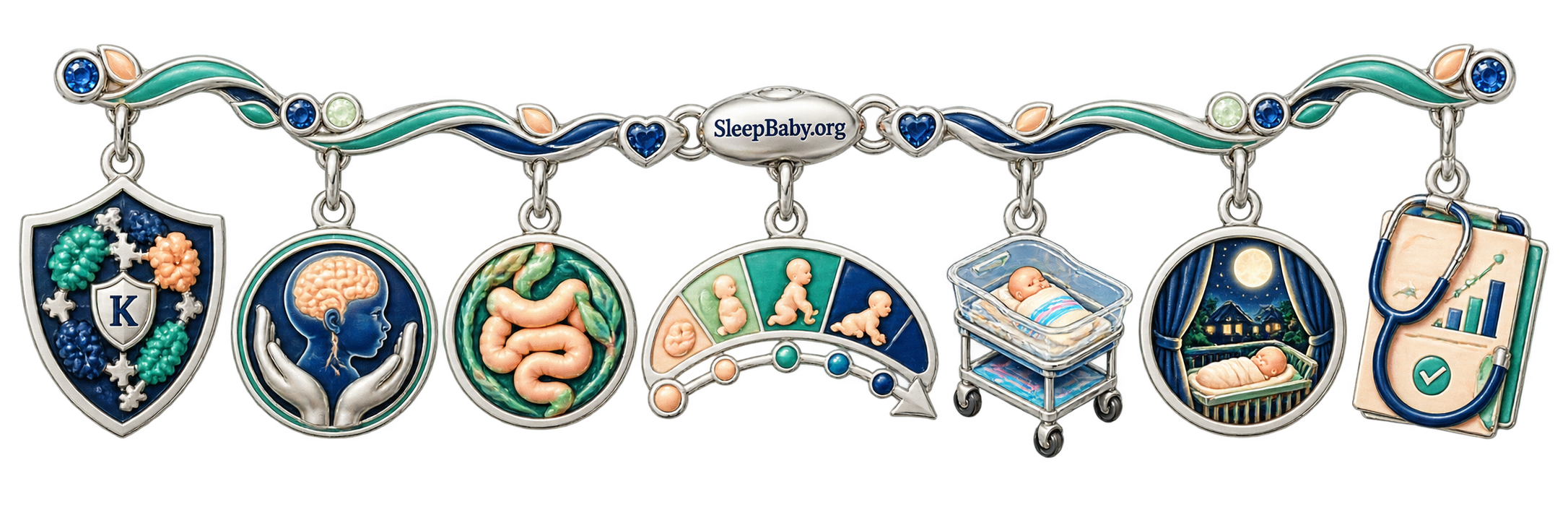
How strong is the evidence for the newborn vitamin K shot?
The AAP has recommended intramuscular vitamin K prophylaxis since 1961. Its 2022 policy statement describes intramuscular administration as the standard of care and notes that rising VKDB incidence is linked to refusal and the lower effectiveness of alternate administration methods.[5]
CDC reports that infants who do not receive the vitamin K shot at birth are 81 times more likely to develop late VKDB than infants who receive it.[1] That is a comparative risk, not a prophecy about one baby. The same CDC page summarizes late VKDB occurrence in the cited surveillance estimates as about 1 in 14,000 to 1 in 25,000 infants. Rates vary with population, feeding, prophylaxis practice, and surveillance, so those numbers should not be pasted onto an individual child as a personalized odds calculator.
The useful risk lens
“Rare” and “preventable” can both be true
VKDB is uncommon in the United States partly because most newborns receive prophylaxis. When a preventive practice works, the harm it prevents becomes less visible. That can make the prevention feel optional even while the underlying newborn biology has not changed.[2]
What changes my judgment is not that every unprotected baby will bleed; most will not. It is that there is no reliable bedside way to identify every baby who will, the bleed can be hidden and catastrophic, and one dose provides dependable protection.
This is also why stories should not be made to carry the science. A family whose baby did not receive the shot and remained well cannot prove the risk is absent. A frightening story cannot calculate another baby’s outcome. The recommendation comes from population evidence, surveillance, physiology, and decades of prevention experience.
When the vitamin K shot is given and what the procedure is like
CDC and AAP parent guidance place the shot within six hours after birth. It can usually wait until after the first feeding so immediate skin-to-skin and bonding are not treated as competing priorities.[3][4] The clinician gives the medication into a thigh muscle. The injection itself is brief.
You can ask to hold your baby, offer the breast, or let the baby suck during or immediately after the shot when the clinical setting allows it. CDC lists holding and sucking as useful comfort measures.[2] A brief procedure still deserves comfort. “Necessary” and “gentle” are allowed in the same sentence.
Why the thigh?
The thigh provides an appropriate muscle for an intramuscular newborn dose. You may see a tiny puncture mark or a small bandage. Ask the clinician what local reaction they expect and when they want a call, especially if your baby has a medical condition or is very premature.
What if my baby is premature or in the NICU?
The AAP policy addresses both term and preterm infants, but the exact product, dose, timing, and route belong to the neonatal team.[5] This article deliberately does not turn a general recommendation into a dose for a particular birth weight or clinical situation. Ask: “What vitamin K plan are you using for my baby, and what is different because of prematurity or illness?”
What if the shot was delayed beyond six hours?
Do not interpret the six-hour recommendation as a claim that later action is pointless. It is the preferred birth timing in current U.S. guidance, not a do-it-yourself deadline. If the dose was delayed, declined, or you are unsure whether it was given, call the baby’s pediatric clinician promptly. Ask the birth facility for the medication record rather than relying on a memory formed during an exhausting first day.
What if you are planning a home or birth-center delivery?
Ask before labor who carries and administers vitamin K, which product is used, how it is stored, how the dose is documented, and what the backup plan is if the birth or newborn assessment changes. “We can decide later” is not a complete logistics plan when the preferred window is the first six hours.
If the planned clinician does not offer the shot, arrange the next step with the baby’s pediatric clinician before birth. Do not order an injectable or oral product and administer it yourself. The goal is the same evidence-based prophylaxis with a qualified clinician, the correct newborn product and route, and a record that follows the baby into pediatric care.

Vitamin K shot safety, side effects, and ingredient questions
The expected tradeoff is small and immediate: brief pain, and sometimes bruising or swelling where the shot was given. CDC notes that a few cases of skin scarring have been reported and that allergic reaction in an infant is extremely rare.[2] Call the care team for swelling that keeps worsening, spreading redness, drainage, fever, trouble breathing, facial swelling, hives, or any reaction that worries you. Emergency symptoms outrank reading another FAQ.
Does the newborn vitamin K shot cause cancer?
A small study in the 1990s reported an association between the injection and childhood cancer. An association raises a question; it does not prove cause. Multiple larger follow-up studies did not find evidence supporting that link, according to CDC and AAP parent guidance.[2][4] The responsible answer is not “nobody ever asked.” Researchers did ask, and the proposed association was not reproduced.
What is in the shot?
Vitamin K is the active ingredient. Other ingredients help keep an injectable product stable and usable, but formulations are not identical everywhere. This is where a screenshot of one label can mislead more than it helps. Ask the hospital or birth clinician for the exact product name, manufacturer, lot documentation, and current package insert. Then ask about the specific ingredient you are concerned about.
Do not assume that a warning for one formulation, concentration, or route describes every product or the routine intramuscular newborn use. The clinician and pharmacist can match the question to the actual vial. If your family has a history of serious medication reactions, say so before administration; do not try to infer newborn risk from a relative’s unrelated allergy.
Is the dose “too high” for a newborn?
CDC explains that the newborn dose is larger than a daily dietary requirement because it has two jobs: part is available promptly, and part is stored and released over time while the baby’s own supply remains limited.[2] Comparing an intramuscular preventive dose with the vitamin K in one day’s food treats two different delivery systems as if they were interchangeable.
The article is not publishing a universal milligram amount because prematurity, birth weight, local protocol, and product matter. The useful parent question is not “Can I recalculate this from an adult nutrition label?” It is “What exact newborn protocol are you using for my baby, and why?”
Can oral vitamin K replace the shot?
Current U.S. CDC guidance does not recommend oral vitamin K for newborn prophylaxis. It is not absorbed consistently and does not provide the same dependable protection for a breastfed infant. The AAP policy also notes the lower effectiveness of alternate administration methods.[3][5]
Some countries use oral schedules, which can make online answers look contradictory. Those schedules require a specific product, repeated doses, and a local health-system protocol. They are not permission to buy a supplement and invent a schedule at home.
Comparison note: this table reflects the current U.S. sources used for this article. Families elsewhere should follow their national newborn guidance and clinician.
| Question | Intramuscular shot | Oral approach |
|---|---|---|
| Current U.S. recommendation | Recommended for all newborns.[3] | Not recommended by CDC as an equivalent substitute.[3] |
| Number of administrations | One birth dose. | Protocols that use oral vitamin K require repeated doses specific to the product. |
| Reliability | Provides dependable prophylaxis through intramuscular delivery. | Absorption and completion are less reliable; effectiveness depends on the exact regimen.[3][5] |
| If you are considering it | Ask about timing, comfort, product, and documentation. | Ask the newborn clinician about the local protocol; do not use an over-the-counter supplement or internet schedule. |
The decision is not “needle or nothing unpleasant.” VKDB evaluation and treatment can involve repeated blood draws, brain imaging, transfusion, surgery, and intensive care.[2] That does not mean fear should make the decision. It means the comparison should include the procedures the shot is designed to prevent, not only the few seconds a parent sees.
Breastfeeding, formula, maternal supplements, and the shot
CDC’s recommendation applies whether the baby will be breastfed or formula-fed.[3] Feeding after birth does not create the immediate, dependable reserve that the shot provides. Breast milk contains low amounts, and maternal diet or supplements cannot raise breast-milk vitamin K enough to replace prophylaxis.[2][3]
That information should support breastfeeding, not turn it into a warning label. The practical plan is additive: feed the baby, protect the feeding relationship, and use the recommended prevention for a nutrient gap that milk alone does not close. A parent does not need to choose between valuing colostrum and valuing vitamin K.
Does the shot affect feeding or sleep?
Brief crying or a sore thigh may make the immediate moment less peaceful, but the shot is not expected to create a new feeding plan or sleep schedule. Comfort your baby and follow the usual feeding guidance from the birth team. If the baby becomes unusually hard to wake, cannot stay awake long enough to feed, is breathing abnormally, or has a marked behavior change, use medical guidance rather than attributing it automatically to the shot. The separate guide for a newborn who is sleeping too much and not eating organizes that urgent response.
The first-night trap is treating every quiet baby as the same kind of quiet. Ordinary newborn drowsiness and a baby who cannot be roused are different questions, and the second one outranks the schedule. The clock can wait while you look at responsiveness, breathing, color, movement, and feeding.
If you declined, delayed, or are still deciding
Start with accuracy, not shame. Ask the birth facility whether the dose is documented as given, declined, or pending. If it was not given, call the baby’s pediatric clinician promptly and say exactly when the baby was born, whether the baby is term or preterm, how the baby is fed, whether there has been any bleeding or unusual behavior, and what product or alternative—if any—was offered.
A no-drama call plan
Five facts to put in one message
- Baby’s age, gestational age, and relevant birth or NICU history.
- Whether the record says given, declined, delayed, or unknown.
- Breast milk, formula, or combination feeding.
- Any bruising, bleeding, pallor, vomiting, unusual sleepiness, or feeding change.
- The exact question: “What should we do now, and where should my baby be seen?”
Do not give an adult vitamin, a liquid supplement, or leftover medication while you wait. Do not assume that because the baby looks well, the decision is no longer relevant. And do not let an online debate substitute for the clinician who can see the baby’s age, chart, product options, and current condition.
Warning signs after discharge
VKDB often gives no warning, which is the argument for prevention rather than a reason to inspect the baby constantly. Still, visible signs deserve a clear route.
Use the faster lane when signs overlap
Emergency now or prompt clinician call
Seek emergency care now
- Seizure, unresponsiveness, or inability to awaken.
- Severe breathing trouble or blue or gray lips or face.
- Vomiting blood or black/bloody stool with illness.
- Bleeding that is heavy or will not stop.
Call the baby’s clinician promptly
- Unexplained bruising, especially around the head or face.
- Bleeding from the nose or umbilical cord.
- Paler skin than usual or pale gums.
- Worsening yellowing of the whites of the eyes after the first weeks.
- Repeated vomiting, poor feeding, or a marked alertness change.[1]
These signs have causes other than VKDB. The job of the list is not to diagnose the cause; it is to prevent a parent from losing time while trying to decide whether the symptom is “enough.” Tell the clinician whether the vitamin K shot was documented and when the symptom began.

Questions worth taking to the birth team
You do not need a courtroom cross-examination. You need answers that belong to your baby and the actual product in the room.
Save this before delivery
The informed-consent checklist
- When do you usually give vitamin K, and can the first feed or skin-to-skin happen first?
- Which product and formulation do you use? May I read the current package insert?
- How do you comfort babies during the injection? May I hold or feed mine?
- Does prematurity, birth weight, illness, or a maternal medicine change this baby’s plan?
- How will the dose appear in the discharge record?
- If we delay or decline today, whom do we call, and what symptoms require immediate care?
SleepBaby.org teaching note: informed consent is not a performance of certainty. It is a clear purpose, a known product, a chance to ask, and a documented plan.
If one answer is “we always do it,” ask for the reason behind the routine. If one answer online is “never do it,” ask what evidence and which route or formulation the claim actually describes. Specific questions make room for a real conversation; slogans mostly make room for another slogan.
A 53-second official explainer
Why the AAP recommends vitamin K for newborns
The American Academy of Pediatrics video gives the short parent-facing reason for the shot. The written sections above remain in charge of timing, side effects, alternatives, and urgent signs.
Takeaway: newborns begin with low vitamin K, hidden bleeding can be devastating, and one intramuscular dose provides reliable prevention. Watch directly on YouTube.
The bottom line
The vitamin K shot is offered because a healthy-looking newborn cannot be assumed to have enough vitamin K or to show a warning before serious bleeding. Current U.S. guidance recommends one intramuscular birth dose, usually after the first feed and within six hours, for breastfed and formula-fed babies alike.[3]
The question is allowed to feel important without becoming frightening. Ask what the shot is, what product is used, how your baby will be comforted, and how the dose will be documented. If it was missed or declined, call the pediatric clinician promptly. If your baby has bleeding, a seizure, cannot be awakened, or seems seriously ill, use urgent medical care rather than waiting for a prevention discussion.
Sources
After the first-day decisions, when the room finally gets quiet
Build the next stretch of newborn sleep around a clear care handoff
The vitamin K decision belongs with your birth and pediatric team. Once the dose, feeding plan, and warning signs are documented, SleepBaby can help you sort the dim-room questions that come next: settling, safe sleep, feeds, and which kind of wake-up needs action.
SleepBaby does not replace medical care or recommend a product for an individual newborn. Use the urgent thresholds in this guide and your baby’s clinician’s advice.






What viewers said10 comments · 4 replies+
Archived comments from the original Baby Sleep Miracle presentation. Not independently verified by SleepBaby.org; individual experiences vary.
Thank you so much for this video! I had no idea about the dangers of baby swings :O
Hi Mary-Ann. I have a question: Is method in any way similar to the ones recommended by Dr Bucknam, Dr. Weissbluth or Dr. Karp? We tried those but none of them help.
Hi Regina, thank you for your question. The short answer is no. The techniques I share in my guide are based on newest scientific research and this is why I have never seen any approach similar to the one I recommend.
This method really works! I tried it on my son Jesus and after just one week he went from waking up more than 5 times a night to waking up just once or twice. You are a lifesaver, Mary-Ann!
I'm truly impressed with how much information you share in your video. And all for free! I can feel that you truly care about mothers like myself, and that's hard to find these days. I have recommended your site to several of my friends already.
Mary-Ann, our child suffers from autism. Is your approach still suited?
Chloe, I made sure my method can be used with any child, even babies who are special like yours. Please note that I'm not a doctor and that I always advice to consult with your physician because nothing is more important than the safety and well-being of your love.
Hallo Mary-Ann, I'm from Germany. Do you have your guide in German?
Hello Heide, we do! Normally you should already see our video in German. If not, please contact our support so they can guide you
Thenk you for your answer, Mary-Ann!
I just completed your approach and I have to say, it worked almost too well. Yes, it took a bit of getting used to with your bedtime routine but the difference is huge. My son George used to take 1 hours to go down and now he's firmly asleep in no more than 10 minutes! You're the best!
It seems I'm the only man watching this video, lol! What you shared about the 'emotional backpack' made immediate sense to me and I can't wait to help my little girl Mila to unpack it!
Hey there, just discovered your site and this really sounds different. Just wanted to say thanks for sharing :)
For everyone who's still thinking about getting Mary-Ann's guide I want to advise you to go ahead. I wasn't sure myself but now I'm so thankful I invested in this program. It made a huge difference in our life as a family and yes, my baby girl does sleep through the night now.