Skip to content
SleepBaby .org
Parenting & Family

When Your Husband Thinks You Treat Him Like a Child: Understanding the Issue

Read the answer first. The Workshop is here only when you want the next step.

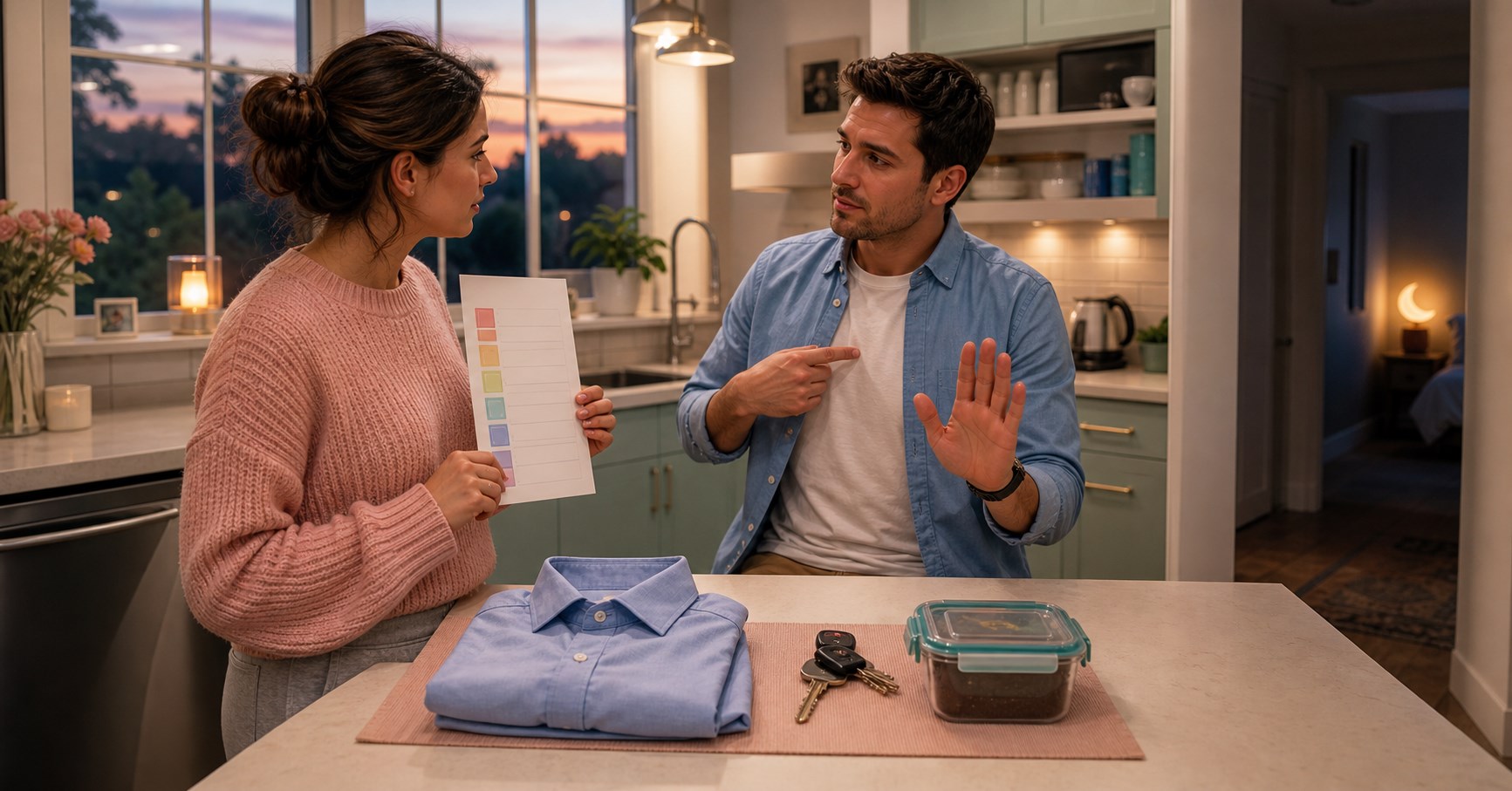
Wife holds a color-coded checklist while her husband raises a hand beside clothes, keys, and lunch she prepared.

Recognizing the Problem

Signs Your Husband Feels Like You’re Treating Him Like a Child

If your husband feels that you’re treating him like a child, he might display certain behaviors or feelings such as:

  • Expressing feelings of resentment or frustration
  • Being defensive during discussions
  • Avoiding taking responsibilities or making decisions
  • Communicating less about his thoughts and feelings

Understanding the Reasons Behind This Perception

Why Does My Husband Think I Treat Him Like a Child?

A few potential reasons could be:

  • Inconsistent communication patterns
  • Unresolved conflicts from the past
  • Misunderstandings about shared responsibilities
  • Perceived over-controlling behavior

Addressing the Issue

How Can I Address My Husband’s Perception That I Treat Him Like a Child?

To tackle this issue effectively, consider the following strategies:

  • Open communication: Encourage open and honest conversations about your feelings and concerns.
  • Active listening: Pay attention to your husband’s concerns and make sure he feels heard.
  • Respectful negotiation: Make decisions together and respect each other’s autonomy.
  • Seek professional help: Engage a marriage counselor to mediate and provide expert advice.

Strengthening Your Relationship

Building Mutual Respect

Mutual respect is the foundation of any strong relationship. Recognize and value your husband’s abilities, skills, and contributions to strengthen your bond and ensure he doesn’t feel belittled.

Encouraging Independence

Promoting autonomy and independence is crucial. Trust your husband’s capabilities and allow him the space to make decisions and learn from his experiences.

Identifying the Issue

Signs Your Husband Feels He’s Being Treated Like a Child

Here are potential indicators to help you understand if your husband feels he’s being treated like a child:

  • He expresses feelings of inadequacy or resentment.
  • He frequently appears defensive during conversations.
  • He avoids making decisions or taking responsibilities.

Understanding the Phenomenon

Man-Child Phenomenon: What Is It?

The term “man-child” is often used to describe an adult male who behaves in a childish or immature manner. This behavior can stem from several reasons, including lack of maturity, unresolved personal issues, or specific personality traits.

Emotional Immaturity in Partners: How to Deal With It

When your husband acts like a child, it might be a sign of emotional immaturity. Strategies to deal with such behavior include open communication about your concerns, setting boundaries, and seeking professional help when necessary.

Transforming the Dynamic

Overcoming Overfunctioning in Marriage

Overfunctioning – where one partner takes on too much responsibility – can often lead to the perception of treating the spouse like a child. Encourage shared responsibilities and mutual decision-making to address this issue.

Breaking Codependency in Marriage

Codependency can create a parent-child dynamic between spouses. Addressing this requires recognizing the pattern, establishing healthy boundaries, and fostering individual autonomy.

Addressing the Consequences

Impact of This Dynamic on a Relationship

When a spouse feels treated like a child, it can cause resentment, hinder communication, and disrupt relationship harmony. Understanding this impact is the first step towards change.

Navigating the Change

Can a Man-Child Change?

Yes, with self-awareness, commitment, and possibly professional help, someone described as a “man-child” can mature and modify their behavior.

Implementing Change

How to Stop Treating Your Husband Like a Child

If you recognize that your husband feels treated like a child, consider these steps:

  • Engage in open and respectful communication.
  • Respect his autonomy and decision-making ability.
  • Seek relationship or personal counselling if needed.

How SleepBaby.org Can Help

At SleepBaby.org, we understand the intricate dynamics of family relationships and how they impact the wellbeing of your baby. Stress in your relationship could affect your baby’s sleep patterns and overall environment. Our resources can provide insights into maintaining harmonious relationships, creating a positive environment for your baby’s growth and sleep schedule.

Seeking Professional Assistance

When to Seek Marriage Counseling

If the issue of your husband feeling treated like a child persists, consider seeking professional help. Marriage counseling can provide an unbiased perspective and effective strategies for communication and mutual understanding.

Conclusion

Addressing the concern of your husband feeling treated like a child can foster a healthier relationship dynamic. With understanding, communication, respect, and possibly professional help, you can navigate this challenge and create a peaceful environment for your family, promoting healthier sleep patterns and development for your baby. Remember, a happy family leads to a happy baby, and SleepBaby.org is here to support you in this journey.
From the guide to your next step

Explore SleepBaby.org

Step-by-step sleep help · newborn through toddler

A starting point for your nights.

SleepBaby is a browser-based Workshop for parents of newborns through toddlers. Choose your baby’s age, usual full wakes, and the change you want most. The free preview gives you one thing to try, what to watch over the next few nights, and a look at the help inside the Workshop.

Use the free library

3 questions · no card · visible preview stays in this browser · analytics follows your privacy settings

Example: 8–12 months · 3–4 wakes · fewer wakes

Let’s choose one response you can repeat.

Here’s one example. Your three answers will shape your own starting point.

Try this next
At the first wake, check what your baby needs and use a quiet reassuring phrase while you feed or comfort them.
What to watch
Notice the timing of the first repeated wake and what helped across nights 2–5, without withholding needed feeds or comfort.
Your effort
Keep a familiar response and compare a few first-wake notes.
Before you begin
Care first, then a familiar response
A small note for each night

Across seven nights, keep a note of the first wake and your response; add nap timing when you know it, then review one small change rather than rewriting the whole night.

The Workshop pairs short steps you can revisit with a seven-night tracker, so the response you’re trying and the notes about it stay together.

Example only. Answer the three questions to see a starting step for your family.

Fictional illustrative tracking example

Fictional illustrative full-wake tracking example over seven nights. The invented baseline ends at 4.0 wakes and the invented illustrative path ends at 1.6 wakes. These are not measured or predicted results. TonightNight 2Night 3Night 4Night 5Night 6Night 7
Fictional starting patternFictional illustrative path

This graph is a separate fictional example. Your answers do not change it.

Don’t take a sales claim on faith. Inspect the decision paths.

Illustrative planning scenarios—not measured customers or verified outcomes. Use the views below to inspect upside, downside, no-change, and no-purchase paths.

Choose an illustrative decision view
Closest waking pattern8–18 mo

What progress could look like

Illustrative family pattern

2.0 fewer night-wakings(example range: 1.2–2.9)

↓ 44%example
Night-wakings per night over seven illustrative nights. Current example: 4.5 wakes to 4.5 wakes. Illustrative path: 4.5 wakes to 2.5 wakes. Example change: 2.0 fewer night-wakings.

Planning example · not an observed cohort

Closest bedtime pattern4–7 mo

What progress could look like

Illustrative family pattern

18 min faster settling(example range: 9–31 min)

↓ 38%example
Settling time in minutes over seven illustrative nights. Current example: 47 min to 47 min. Illustrative path: 47 min to 29 min. Example change: 18 min faster settling.

Planning example · not an observed cohort

Closest morning patternToddler

What progress could look like

Illustrative family pattern

42 min later morning wake time(example range: 21–64 min)

↑ 42 minexample
Morning wake time over seven illustrative nights. Current example: 5:30 am to 5:30 am. Illustrative path: 5:30 am to 6:12 am. Example change: 42 min later morning wake time.

Planning example · not an observed cohort

Planning examples, not testimonials or cohort evidence. Real outcome claims should appear here only when they are independently auditable. Decision safeguards

What the complete Workshop adds after the preview.

Tonight’s Starting Step

A clear first move based on the three answers you choose.

Seven-Night Tracker

A simple way to log changes without treating one night as proof.

Tired-Parent Format

Short steps built for exhausted adults to revisit together.

See the starting point before checkout.

The preview shows the first action, time involved, tracking focus, and reasons the paid Workshop may not be the right next step. It is a planning screen, not a promised outcome. Current purchase and refund terms appear on the secure purchase page.

3-question planning preview Free library stays available Secure SleepBaby purchase page

Take a look, then decide.

Use the preview, inspect the limitations, and decide whether the complete Workshop is worth it for your family.

A few choices. A place to begin.

Your private sleep preview.

Tell me what nights look like, and I’ll help you choose one thing to try.

No sign-up. No card.

Private Workshop preview · 3 questions · no card

A starting point for your family.

Choose your baby’s age, usual full wakes, and what you’d like to explore.

How this preview uses your answers

This is a planning preview, not a medical or safety clearance or a promised result. Your choices stay in this browser tab for this visit, including when you move between our articles and homepage. Growth OS may record categorical choices and actions unless analytics is turned off in the site’s privacy settings or your browser sends GPC/DNT. Google Analytics receives them only after analytics permission. The preview never sends typed sign-in values, your name, email, password, or free text. Deleting the visible preview does not erase analytics already recorded. Privacy policy.

1 of 3
How old is your baby?