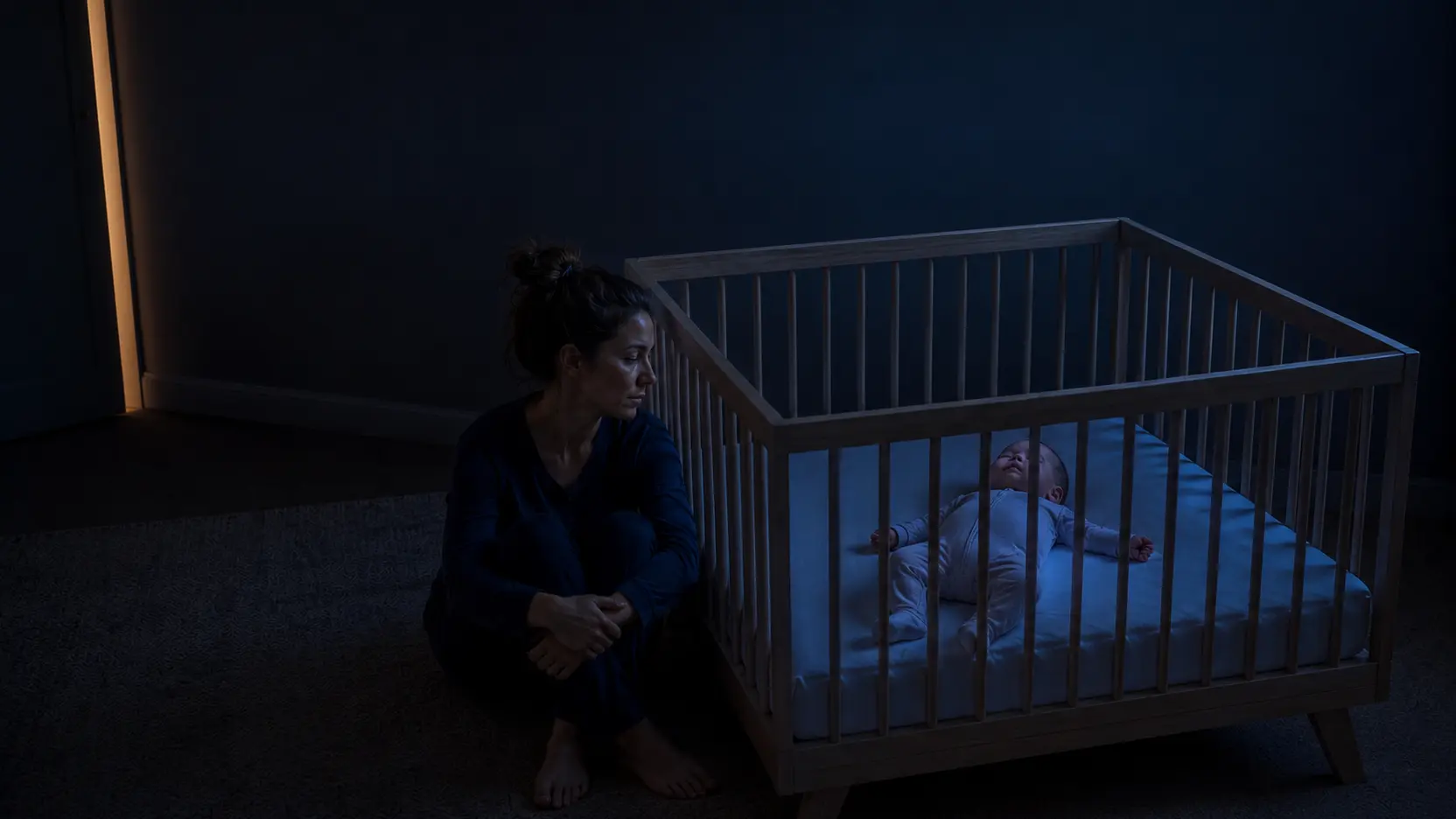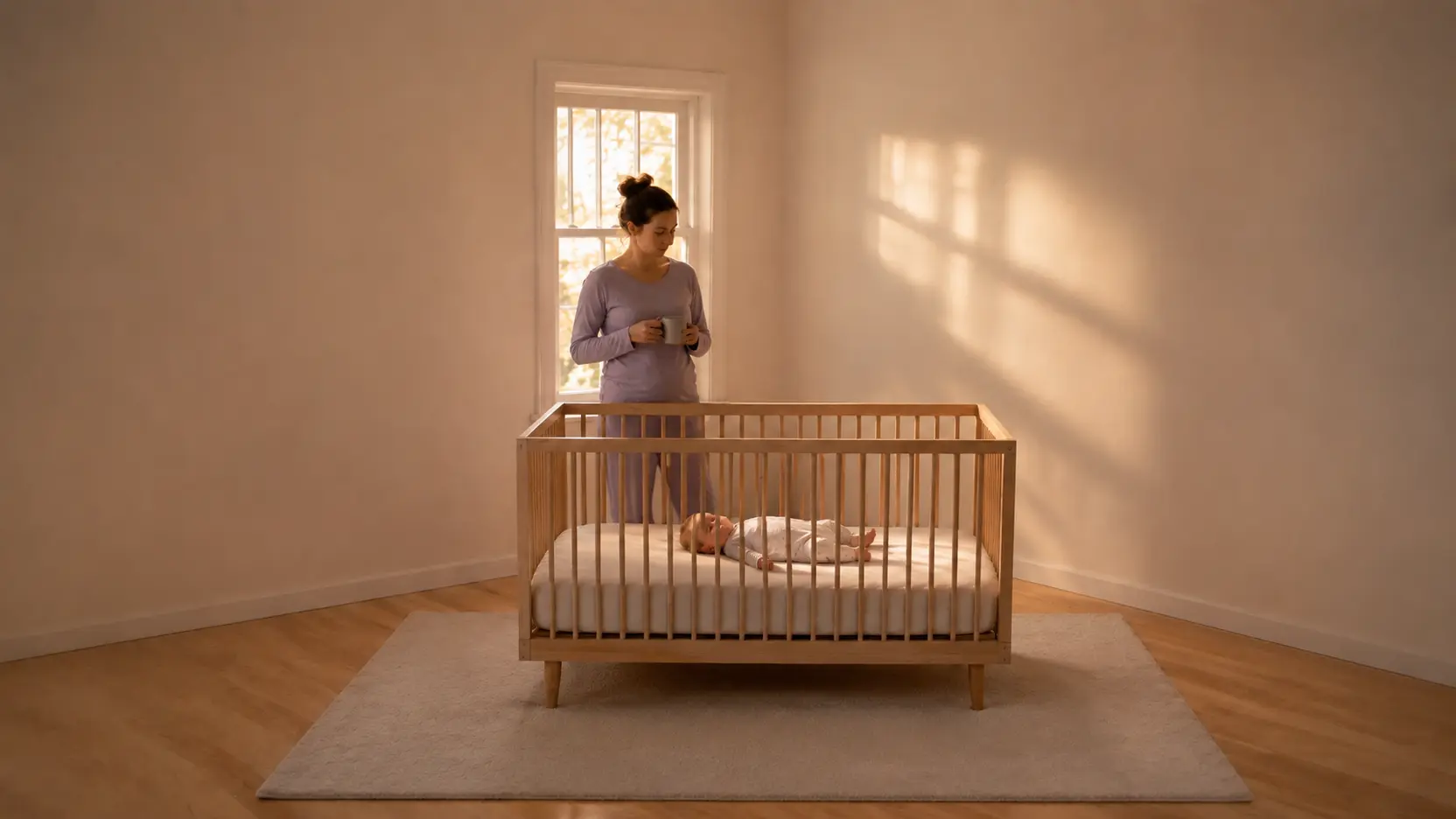

Short answer: some babies consistently sleep less than their peers and still feed normally, follow their growth curve, engage with the world, and move through the day comfortably. But “low sleep needs” is a description of a repeated pattern—not a diagnosis, not a conclusion to draw from one short nap, and not a reason to dismiss a sudden change.
If you are standing at the kitchen counter adding 27 minutes, 41 minutes, and one mysterious car-seat doze into your phone calculator, start here: count the sleep your baby actually gets across the whole 24 hours. Then look at that number beside age, feeding, documented growth, development, comfort, breathing, and daytime behavior. The total matters. The baby attached to the total matters more.
“Low sleep needs” is a pattern, not a label
Infant sleep varies widely. Research following babies through the first year has found substantial differences between children in daytime sleep, nighttime sleep, and total sleep. Variation tends to narrow as children move toward the second year, but there is no single minute total that every healthy baby must reach on every day.
That is the reasonable part of the phrase low sleep needs baby: it gives parents language for a baby who repeatedly sleeps toward the lower end of what is typical. The unreasonable part begins when the phrase is treated like a home diagnosis. A bright morning, one cheerful wake window, or a week of fighting the third nap cannot prove that a baby is getting enough sleep. Nor can an app decide that a baby is unwell because Tuesday came in 38 minutes below its target.
I would use the phrase as a question—“Could this be my baby’s stable pattern?”—and then collect enough information to answer carefully. I would not use it to explain away poor feeding, faltering growth, persistent discomfort, unusual daytime sleepiness, habitual snoring, breathing pauses, or a marked change from the baby’s own normal.
The distinction is rarely hidden inside one stubborn nap. It lives in the rest of the day: the bottle or feed finished, the eyes still bright, the floor-play laugh, the frantic second wind, the shoulders that soften after an earlier bedtime, and the pattern that either stays steady or begins to unravel.

Use age ranges as a compass, not a stopwatch
The American Academy of Sleep Medicine (AASM) gives population-level sleep‑duration recommendations for children. These totals include naps as well as nighttime sleep. They are useful context for health conversations, not a personalized schedule or a pass-fail score for one day.
The age-range compass
Younger than 4 months
The AASM did not set a duration recommendation because evidence connecting a specific total with health outcomes was too limited. That does not mean sleep, feeding, growth, or alertness do not matter. It means a pediatrician should interpret this especially variable period in context.
4–12 months
12–16 hours per 24 hours, including naps. A repeated total below the range is worth discussing with the pediatrician; a single off day is not a diagnosis.
1–2 years
11–14 hours per 24 hours, including naps. The nap pattern may change dramatically within this span, so compare several ordinary days rather than one transition day.
A range is most helpful when it opens a better question. Is your 8-month-old usually sleeping 11 hours and 45 minutes or 8 hours and 45 minutes? Is that estimate based on actual sleep or time in the crib? Is the pattern stable? Are feeds, growth, development, breathing, comfort, and periods of alert engagement reassuring? A number cannot answer those questions, but it can tell you which ones deserve attention.
Count actual sleep: a worked 24-hour example
That is why I keep returning to the whole pattern instead of asking a single total to do a pediatrician’s job. If Benjamin’s log looked low but his feeding, growth, breathing, comfort, and alert periods were steady, I would bring the pattern—not a dramatic label—to the conversation. If any of those companion signals changed, the same number would mean something different.
Sleep logs often mix three different things: the time a parent offers sleep, the time a baby spends in a sleep space, and the time the baby is probably asleep. Separating them removes a surprising amount of confusion.
A day in the sleep ledger
Imagine an 8-month-old with four small dozes and a long stretch in the crib overnight.
- Daytime sleep
- 25 + 40 + 18 + 15 minutes = 1 hour 38 minutes
- Night span
- 7:42 p.m. to 5:58 a.m. = 10 hours 16 minutes in the overnight window
- Awake at night
- About 43 minutes across feeds and fully awake gaps
- Actual night sleep
- 10 hours 16 minutes minus 43 minutes = 9 hours 33 minutes
- Estimated total
- 11 hours 11 minutes in 24 hours
That estimate is below the AASM range for a baby this age, so I would not wave it away with “low sleep needs.” I would check whether the log missed dozes, repeat the observation on ordinary days, look at the broader health and behavior picture, and bring a persistent pattern to the pediatrician. The calculation is a conversation aid, not a diagnostic test.
You do not need to monitor every eyelid flutter. Round sensibly, mark uncertain entries, and write down what you actually know. If a contact nap began sometime between two songs and the washing machine finishing, an honest estimate is more useful than invented precision.

Use a 7–14-day observation window
Seven to fourteen days is a practical editorial window for spotting a pattern; it is not a validated medical threshold. Start when life is reasonably ordinary. Travel, fever, vaccinations, a time change, or the first tooth making its entrance at full volume can temporarily scramble sleep.
What to write down each day
- Actual estimated sleep: start and end of each nap, overnight sleep, and awake periods you noticed.
- Sleep opportunity: when sleep was offered and how long settling took. This shows whether the baby had a realistic chance to sleep.
- How the baby woke: calm and ready to engage, still rubbing eyes, crying hard, or difficult to rouse.
- The final awake stretch: bright play, quiet slowing, yawning, staring, escalating fussiness, frantic movement, or repeated accidental dozing.
- Feeds and diapers: note meaningful changes, not a scorecard. Follow your clinician’s feeding guidance, especially for young infants.
- Context: illness, pain, congestion, travel, unusual noise or light, developmental changes, or a nap taken in motion.
- One change tested: record only the timing or environment adjustment you chose, so the result is interpretable.
At the end, look for a cluster rather than a perfect average. Does sleep repeatedly land near the same total? Does the baby regularly seem restored after shorter sleep, or do signs of strain accumulate by evening? Does another 20 or 30 minutes of sleep noticeably improve settling and daytime comfort? Is there a recurring snore, gasp, pain cue, feeding struggle, or sudden pattern shift that belongs in a medical conversation?
A log should make the next decision simpler. If it turns the household into a tiny sleep laboratory where every yawn triggers data entry, scale it back. Two useful weeks beat two miserable months of surveillance.

Read the pattern in three lanes
No single behavior can tell you whether a baby needs less sleep. Bedtime resistance, short naps, frequent waking, and cheerful play can each have several explanations. Use the lanes below to decide what to do next, not to diagnose your baby.
A three-lane decision guide
More reassuring context
- The total is stable across ordinary days rather than suddenly lower.
- Feeds are ordinary for this baby, documented growth is on track, and development is progressing.
- There are regular periods of alert engagement and the baby often wakes ready to interact.
- There is no persistent pain, unusual sleepiness, habitual snoring, gasping, or breathing pause.
Next step: keep offering age‑appropriate sleep and discuss a persistent outlier at routine pediatric care. These signs are context, not proof.
Sleep opportunity may be falling short
- Fussiness, frantic energy, accidental dozing, or false-start wakings build as the day goes on.
- Settling improves after a modestly earlier sleep offer or a calmer environment.
- The baby spends long periods trying to sleep but is interrupted by light, noise, timing, or discomfort.
- Extra rest is followed by a noticeably more comfortable day.
Next step: test one small, reversible change while preserving sleep opportunity. Do not intentionally restrict sleep to force a schedule.
Bring in the pediatrician
- Total sleep stays well below the age range or the pattern worries you.
- Feeding, growth, development, comfort, or daytime alertness has changed.
- Snoring is habitual, or you notice repeated gasps, snorts, pauses, or labored breathing.
- The drop in sleep is sudden, substantial, or paired with signs of illness.
Next step: arrange the level of care the symptoms require. The urgency ladder below separates routine review, same‑day advice, and emergencies.
The lanes can overlap. A baby may have a naturally lower total and be temporarily overtired after a missed nap. A content baby may still need evaluation for habitual snoring. A rough bedtime may reflect hunger or discomfort rather than schedule math. That overlap is precisely why I prefer small experiments and good observations to confident labels.
Why a baby can appear to need less sleep
Hidden micro-naps change the total
A five-minute feed doze, 12 minutes in the stroller, and a car nap that ended at the grocery-store curb may not feel like “a nap.” They still reduce sleep pressure. If the final nap is mysteriously refused, check the previous two hours for sleep that never made it into the app.
The timing may not match the baby today
A sleep offer can arrive before enough sleep pressure has built, after the baby has tipped into a wired second wind, or at a time that worked last month and no longer fits. Use our baby wake-window guide as a starting framework, not a commandment. Your observations should adjust the clock; the clock should not overrule the baby.
The environment may be doing the waking
Morning light, household noise, temperature, an older sibling making a heroic attempt at whispering, or a sleep space that changes from nap to nap can shorten sleep without changing sleep need. Improve what is safely controllable before deciding the baby simply cannot sleep longer.
Hunger, discomfort, or illness can look like a schedule problem
Congestion, reflux symptoms, eczema itch, teething discomfort, hunger, feeding difficulty, or another illness may interrupt sleep. Parents do not have to identify the diagnosis before asking for help. A pattern tied to pain, feeding changes, fewer wet diapers, vomiting, fever, unusual behavior, or a sudden drop in sleep deserves medical attention rather than another schedule adjustment.
Frequent waking may be a separate problem
A baby can have lower total sleep because the night is repeatedly interrupted, not because the baby functions best on less sleep. If waking is the central problem, our guide to a baby waking every hour helps separate common pattern issues from signs that warrant a pediatric conversation.
Development changes the shape of sleep
Rolling, crawling, standing, language bursts, separation awareness, and nap transitions can temporarily reorganize the day. A developmental explanation should remain temporary and should not be used to dismiss persistent breathing, feeding, growth, pain, or alertness concerns.

Try small changes without taking sleep away
The safest schedule test is modest, reversible, and boring enough that you can tell what happened. Change one variable for three reasonably ordinary days, unless the change clearly makes things worse or medical symptoms appear.
- Choose the question. Are you testing an earlier sleep offer, a slightly later one, a darker room, a quieter wind‑down, or a more consistent morning start?
- Keep the change small. A 10–15-minute timing shift can be enough to reveal direction. It is an observation, not a scientific test or universal prescription.
- Protect the opportunity to sleep. Do not keep a tired baby awake to “build sleep pressure,” cap sleep aggressively, or drop a nap because of one difficult day.
- Watch the whole result. Settling time, actual sleep, wakes, feeding, comfort, and the following awake period matter more than whether the clock looked tidy.
- Keep or reverse. If the adjustment reliably helps, continue gently. If settling, mood, or night sleep worsens, return to the earlier pattern and reassess.
Nap transitions deserve particular patience. Repeated resistance, long settling, and a baby who functions comfortably without the nap can suggest a transition; a single skipped nap does not. During the messy middle, some days may need the nap and others may need an earlier bedtime.

What changes with age
Newborn to under 4 months
This is the age when I would be most cautious with the label. Sleep is scattered, feeding is frequent, day and night are still organizing, and the AASM does not set a duration recommendation for this age because outcome evidence is limited. Follow the pediatrician’s guidance about feeding and waking, especially when weight gain, prematurity, jaundice, or feeding effectiveness is being monitored.
Compare the newborn with their own recent pattern, not an app average. A newborn who suddenly sleeps far less, feeds poorly, has fewer wet diapers, seems unusually sleepy or difficult to wake, has breathing trouble, or has a rectal temperature of 100.4°F (38°C) or higher needs prompt medical guidance. If nights are the hard part, newborn night‑sleep guidance can help with day-night cues while the medical and feeding boundaries stay intact.
About 4–6 months
Sleep architecture and schedules can change quickly. Short naps, more visible waking between sleep cycles, and shifting bedtime behavior are common sources of alarm. Use the 12–16-hour range as context, then look at actual total sleep and the broader pattern. Avoid assuming every new waking is a “regression” or every short nap proves a lower need.
About 6–12 months
Sleep may become more predictable, but mobility, separation awareness, feeding changes, teething, and nap transitions can still disrupt it. This is often the most useful age for a structured 7–14-day log because the family can compare several days with similar routines. Persistent totals below the range, habitual snoring, repeated gasps or pauses, or concerns about feeding, growth, development, comfort, or alertness still belong with the pediatrician.
Early toddlerhood
The recommended total shifts to 11–14 hours for ages 1–2, including naps. A toddler may move toward one nap and resist sleep with astonishing legal confidence, but resistance alone does not reveal sleep need. Watch whether the child is comfortable and engaged across the day, whether late accidental sleep appears, and whether an earlier bedtime improves the pattern during nap transitions.

Safe sleep rules do not change for a baby who sleeps less
Exhaustion makes improvisation feel reasonable. It is not a safe-sleep exemption. Place babies on their backs for every sleep through age 1, on a firm, flat, noninclined surface intended for infant sleep. Keep the sleep space empty of pillows, loose blankets, toys, bumpers, positioners, and weighted products. Room sharing without bed sharing is recommended. Sitting devices such as car seats and swings are not routine sleep spaces; move a sleeping baby to an appropriate surface as soon as practical.
If you think feeding, reflux, congestion, eczema, or another condition is keeping the baby awake, ask the pediatrician how to address the cause while preserving a safe sleep surface. Products that promise to hold, tilt, prop, or weight a baby are not a substitute for medical care.
When to call—and how urgently
The following guide is intentionally direct. When a baby seems seriously unwell or your instincts say the situation is urgent, seek help rather than waiting for the sleep log to become clearer.
Questions parents ask about low sleep needs
Can a newborn genuinely need less sleep?
Newborn sleep varies greatly, but “low sleep needs” is least useful as a label in the first months. Feeding effectiveness, weight gain, breathing, alertness, wet diapers, and changes from the baby’s own pattern deserve more attention than comparison with an app. The AASM does not provide a duration recommendation for babies under 4 months because outcome evidence is too limited.
Is a happy baby automatically getting enough sleep?
No. Calm waking and alert play are reassuring pieces of context, but they cannot establish adequate sleep or rule out a medical issue. Use them beside total sleep, age, feeding, documented growth, development, comfort, breathing, and whether the pattern is stable.
Should I drop a nap if my baby keeps refusing it?
Not after one difficult day. Look for a repeated pattern of long settling or refusal, a schedule that makes the nap biologically awkward, and a baby who remains comfortable without it. Make a small change, protect an earlier bedtime if needed, and avoid intentionally restricting sleep.
Can overtired babies look as if they do not need sleep?
If Benjamin won one spirited argument with a nap, I would call that information—not appoint him chair of the schedule committee. I would change one variable at a time and watch what followed.
Yes. Some babies become more active, fussy, or frantic when tired rather than quietly drowsy. But those behaviors are not exclusive to overtiredness; hunger, discomfort, illness, environment, or mistimed sleep can look similar. A small timing trial and the following behavior are more informative than one dramatic bedtime.
Will a low-sleep-needs baby always need less sleep?
Not necessarily. Sleep amount and timing change with age, health, mobility, development, and nap transitions. Treat the pattern as current information, not a permanent identity.
What should I bring to the pediatrician?
Bring a concise 7–14-day record of estimated actual sleep, awake gaps, feeds or meaningful feeding changes, wet‑diaper concerns, breathing observations, discomfort, and the baby’s behavior across the day. Add the specific question you want answered. A readable one-page pattern is usually more useful than hundreds of app screenshots.
Back at that kitchen counter, the arithmetic has a different job now. It is no longer trying to prove whether Benjamin is a “good sleeper” or whether I missed a secret schedule. It is simply making the pattern visible enough to choose the next sensible step.

Sources
- Paruthi S, et al. AASM pediatric sleep‑duration consensus methodology and discussion. J Clin Sleep Med. 2016. doi:10.5664/jcsm.6288.
- Paavonen EJ, et al. Normal sleep development in infants: findings from two large birth cohorts. Sleep Med. 2020.
- Bruni O, et al. Longitudinal study of sleep behavior in normal infants during the first year of life. J Clin Sleep Med. 2014.
- Moon RY, et al. AAP recommendations for reducing infant deaths in the sleep environment. Pediatrics. 2022.
- Marcus CL, et al. Diagnosis and management of childhood obstructive sleep apnea syndrome. Pediatrics. 2012.
- American Academy of Pediatrics. Urgent care, ER, or pediatrician? A parent guide.
For the parent doing bedtime arithmetic
Trade the comparison chart for a pattern you can use
The SleepBaby.org Workshop helps you turn scattered naps, wakeful nights, and a week of notes into a calmer next-step plan—without forcing your baby into somebody else’s schedule or loosening the safe-sleep rules.
The workshop is educational and does not replace your pediatrician, urgent care, or emergency services.