For everyday drinking, wait until your baby is at least 12 months old before offering juice. After that, juice is optional: for ages 1 through 3, keep 100% fruit juice to no more than 4 fluid ounces a day, and favor fruit your child can eat safely. A clinician may recommend juice for a particular constipation problem before the first birthday. That is a treatment decision, not a reason to add juice to every bottle.
I would start with your baby’s age and why you’re reaching for the carton. Thirst, hard poop and a difficult bedtime need different answers. Watering juice down does not erase that distinction.
When can babies have juice? Start with age
The American Academy of Pediatrics recommends no routine fruit juice during the first year. There is no need to introduce it alongside a first spoonful of food, and no developmental benefit to getting a baby used to it early. The first birthday makes a small amount an option; it does not make juice a daily requirement.
A drink plan that grows with your baby
- Birth to about 6 months
- Breast milk or infant formula provides the usual drinks. Do not add juice or use it to stretch a milk feed. Ask your clinician about feeding or constipation concerns.
- About 6 to 11 months
- Keep breast milk or formula as the main drink. Small sips of plain water can accompany solid foods and cup practice. Routine juice still waits.
- 12 months through age 3
- Water and age-appropriate milk remain the usual drinks. If you offer juice, choose pasteurized 100% fruit juice, serve a small amount with a meal and keep the day’s total at or below 4 fluid ounces, about 120 mL.
The AAP describes about 4 to 8 ounces of water a day from around 6 months, alongside milk feeds. That range is not a cup your baby must finish. I would offer a little with the meal and let practice stay practice. If you are worried about thirst, milk intake, growth or wet diapers, ask about the feeding pattern rather than solving it with another drink.
A premature baby or a child with a feeding, growth or medical concern may need a different plan. Follow the team who knows your child. An age chart cannot replace that individual advice.
Why whole fruit is usually the better choice
Juice can contain vitamins, but it does not bring the same fiber as whole fruit. It is also easy to drink a substantial amount without much chewing or a clear pause between servings. A cup that keeps getting topped up can quietly become a large part of a toddler’s intake.
My concern is what the juice displaces. If a young baby fills up on it, there is less room for breast milk or formula. For an older child, frequent drinks can compete with meals and milk. A vitamin claim on the front of the package does not settle whether that drink belongs in your child’s day.
“Whole fruit” describes the food, not a direction to hand an infant an intact apple. Offer fruit in a texture that fits your baby’s readiness and feeding skills: for example, a smooth or mashed cooked pear for a baby who is eating those textures. Hard raw apple pieces and other firm chunks can be choking hazards. Keep your baby seated upright and stay with them while they eat.
You do not need a complicated fruit menu. A familiar suitable fruit alongside the other foods you are offering is enough. If fruit is difficult to get, tell your child’s clinician what is realistically available. The useful plan is one your household can follow, not an expensive shopping list.
The four checks I would make before pouring
Once your child is old enough for optional juice, use the actual carton and today’s routine. I would not choose by the smiling fruit on the front. This is the small decision aid I would leave on the kitchen counter for anyone sharing feeding duties.
Age. Label. Amount. Moment.
Age: Is your child at least 12 months old, or is there a specific clinician-directed treatment plan?
Label: Is this 100% juice, and is it pasteurized or otherwise treated to kill harmful germs? A fruit-flavored drink is a different product.
Amount: How much juice has already been offered today, including at childcare? For ages 1 to 3, 4 ounces is the daily maximum, not the serving size for every meal.
Moment: Can this be a small drink with food, with the cup put away afterward? Skip a juice bottle, all-day sipping and bedtime juice.
These checks do not require a particular cup brand. They require an adult to know what is in the cup. If another caregiver offered juice earlier, include it in the total rather than treating each household as a fresh allowance.
Read the label: 100% juice, fruit drinks and untreated juice
For a child over 12 months, look for 100% fruit juice if you choose to serve juice. Drinks labeled fruit punch, juice drink or fruit-flavored beverage may contain added sugar or other sweeteners. “No added sugar” still does not mean that a juice contains no sugar, and a small carton is not automatically a toddler-sized serving.
Read the quantity on the carton as well as the product name. A package containing 6 or 8 fluid ounces exceeds the AAP’s entire daily juice limit for ages 1 to 3. Pouring some into a cup lets you choose the amount instead of allowing the package to choose it.
Organic, freshly squeezed and cold-pressed are not shortcuts around the age guidance. They also do not, by themselves, tell you that the juice has been treated to reduce harmful germs. I would look for that information separately.
Skip raw or unpasteurized juice for children
The FDA warns that untreated fruit or vegetable juice can carry harmful bacteria, and children are at greater risk of serious illness. The concern includes cider and juice pressed at home, not just something sold in a shop. Washing fruit does not make the finished raw juice equivalent to a pasteurized product.
Packaged untreated juice may carry a warning. Juice sold by the glass at an orchard, market or juice bar does not have to carry that same warning in the United States. If you cannot tell whether it has been pasteurized or otherwise treated for safety, ask. If the answer is unclear, choose a different drink.
For pasteurized packaged juice, follow the storage and after-opening instructions on the actual container. A shelf-stable unopened carton may need refrigeration once opened. I would put the opening date where the next caregiver can see it rather than rely on someone remembering when it came out of the grocery bag.
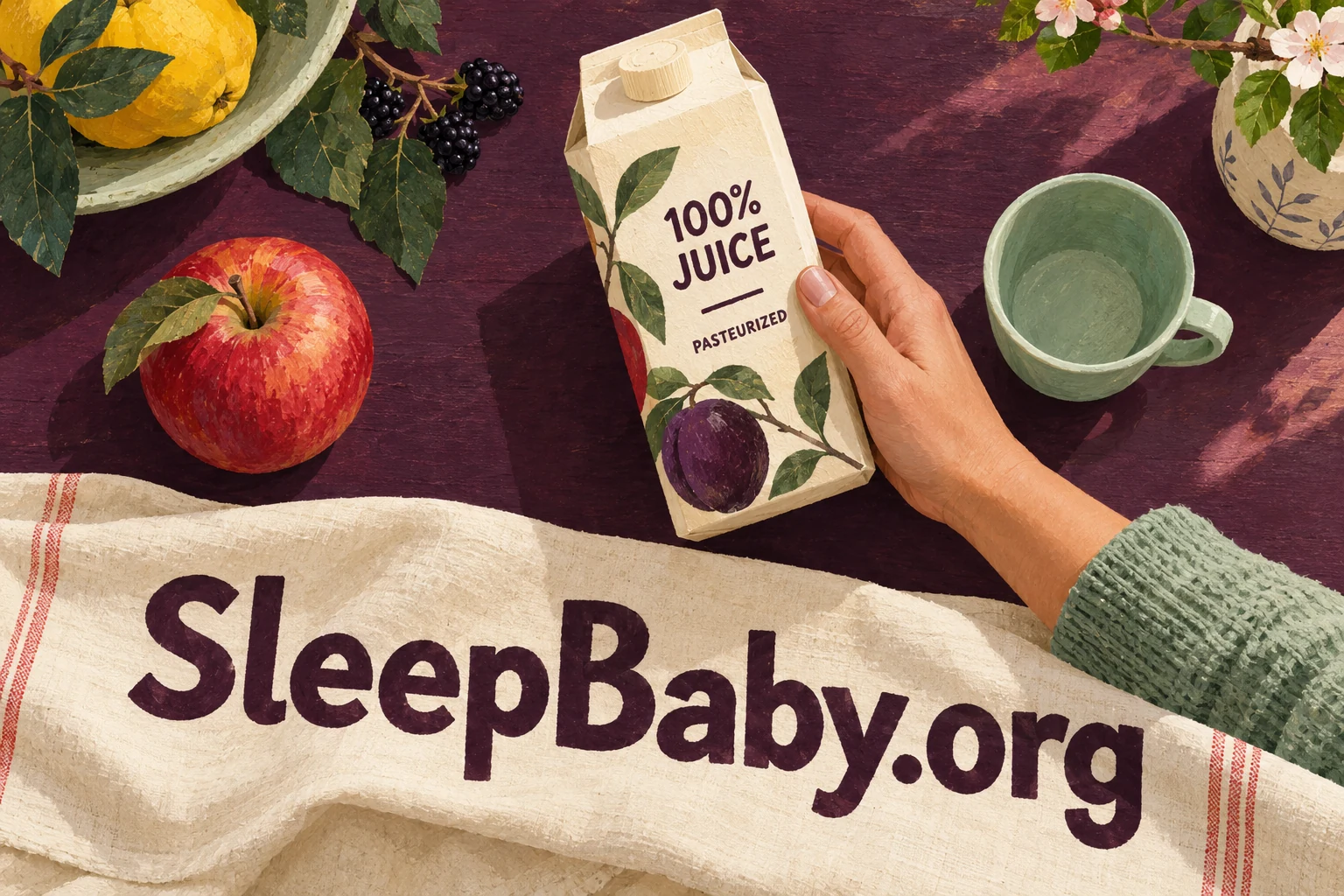
The cup can stay in the kitchen
Leave the drink decision out of the bedtime bargain
For a separate look at bedtime routines and baby sleep schedules, visit the homepage to read about the SleepBaby.org Method.
It is easy for one feeding question to follow you through the day: whether the cup should have water, whether the juice was meant for constipation and whether changing it will change tonight. I would settle the feeding question on its own evidence, then give the ordinary evening routine its own space.
If your child is well and your question is about the rhythm of bedtime, the current SleepBaby.org homepage describes information about routines and schedules. You can explore that without turning juice into a reward for settling or a test of how long your baby will sleep.
The Method is not treatment for constipation, dehydration or illness. Keep your clinician’s feeding instructions and any needed overnight feeds in place. Routine planning begins with the child in front of you, not a promise attached to a drink.
How much juice is too much after the first birthday?
For a 1-, 2- or 3-year-old, the AAP limit is no more than 4 fluid ounces of juice across the whole day. That is about half a cup. You can offer less, and you can skip it. There is no need to make up a missed juice serving later.
I would measure an occasional serving once instead of judging by the height of the liquid in a favorite cup. A short wide cup and a tall narrow one can look deceptively different. A measuring cup already in your kitchen can show you the amount without becoming another item to buy.
Serve it with a meal, then clear the cup. Leaving juice within reach for repeated sips extends the time teeth are exposed to sugar. The daily total and the way a child drinks it both matter; staying under a number does not turn bedtime or all-afternoon sipping into a good habit.
Water changes the concentration, not the juice you poured
For an older child, 2 ounces of juice + 2 ounces of water = 4 ounces of drink containing 2 ounces of juice. If you refill that same mixture, the second 2 ounces of juice also counts.
Adding water can make the drink less concentrated. It does not remove the original sugar, cancel the daily juice total, or make routine juice appropriate before 12 months.
There is no need to use a universal half-juice, half-water recipe for every baby. The first decision is whether juice is appropriate at all. Keep plain water familiar instead of making every cup taste sweet. If a clinician recommended juice for constipation, ask whether their measured amount is meant to be diluted before changing it.

What about apple, pear or prune juice for constipation?
This is where seemingly conflicting advice can both be referring to something real. Routine juice is not recommended before 12 months, but clinicians may use a small amount of certain juices to help a constipated infant. Some fruit sugars draw water into the bowel and can soften stool.
I would ask the pediatrician to confirm that constipation is the problem and specify the juice, amount, frequency and stopping point. A newborn who is not passing stool as expected needs a feeding and medical assessment, not an improvised juice schedule. Do not copy the amount suggested for an older sibling.
Look at the stool and your baby’s comfort, not only the calendar. Straining or turning red can happen even when a baby passes soft poop. Some breastfed babies go longer between stools. Hard, painful stools, a marked change from your baby’s usual pattern or repeated unsuccessful straining are more useful details to describe when you call.
Once your baby is eating solids, an appropriately prepared pear, prune or other suitable fruit may be part of the food plan. It is not a substitute for an assessment when your baby seems ill. If the recommended approach is not helping, call back rather than adding more juice, water or an over-the-counter remedy on your own.
A useful question is: “What should I do if this has not helped by the time you expect?” That gives the next caregiver a clear plan too. A treatment that worked once does not need to become the default drink after every meal.

Juice is not the drink to reach for with diarrhea or dehydration
More liquid is not always the right liquid. Juice can worsen diarrhea, and it does not have the balance needed for an oral rehydration solution. Do not use apple juice, a sports drink or a homemade sweet drink as a substitute for the plan your baby’s clinician recommends.
Continue usual breast milk or correctly prepared formula as advised, with smaller, more frequent feeds when appropriate. If your baby is vomiting, feeding poorly or having diarrhea, ask what fluids and amounts fit their age and condition. Do not weaken formula or replace feeds with juice.
Fewer wet diapers, a dry mouth, few tears, a sunken soft spot or unusual sleepiness deserve prompt attention. Get urgent help if your child cannot keep fluids down, stops feeding or has blood in diarrhea. For a baby under 12 months, it is reasonable to seek urgent advice when you are worried about vomiting or diarrhea rather than trying a sequence of drinks at home.
Difficulty waking, breathing problems, blue or grey coloring, green vomit or a child who is not responding normally needs emergency assessment. Juice choice can wait. Use your local emergency services; in the United States, call 911.
Can I mix juice into formula or breast milk?
I would keep juice out of milk feeds. Formula must be made with the exact water and powder amounts specified for that product. Juice is not a replacement for the water, and a little extra water is not a way to balance juice added afterward.
Keep expressed breast milk separate too. If the concern is that your baby is refusing feeds, seems hungry soon afterward or is having hard stools, describe that to the clinician. Sweetening a feed can hide the question you actually need answered.
If someone has already mixed a bottle incorrectly, stop using that mixture and call your child’s clinician for advice about what was given. Note the product, the approximate quantities and how much your baby drank. Those details are more useful than the phrase “a little juice.” Seek urgent help if your baby is unwell.
A simple note for the next caregiver
Under 12 months: “Please offer the usual milk feeds. No juice unless we share the clinician’s specific instructions.”
Age 1 to 3: “Juice is optional. If we offer it, please measure it, serve it with a meal and tell us how much, so we can keep the day’s total within 4 ounces.”
Add any individualized medical plan to the note. One shared message is easier to follow than a different rule on every fridge.
Keep juice out of the bedtime routine
Juice is not a sleep aid. I would not add it because a baby wakes at night, nor assume a difficult night proves that a particular fruit drink caused it. If there is vomiting, pain or a feeding problem, investigate that concern rather than labeling it a bedtime habit.
For an older child who already expects juice at bedtime, move any optional serving to a meal and keep the evening sequence ordinary: finish eating and drinking, care for teeth and move on to a familiar quiet activity. You do not need to replace bedtime juice with another sweet drink.
From the first tooth, the AAP recommends brushing twice daily with a tiny rice-grain-sized smear of fluoride toothpaste until age 3. Avoid leaving a juice bottle or cup for a child to sip while falling asleep. If you have questions about needed overnight milk feeds or your child’s teeth, ask the pediatrician or dentist for an age-appropriate plan. Removing juice is not an instruction to stop a baby’s necessary feeds.
For tonight, I would make the change you can name: no juice in the sleep space, no topping it up through the bedtime routine and no promise that a different drink will produce a longer night. An ordinary feeding decision does not need to become a sleep experiment.

If your baby already had some juice
Put the cup aside and work out what was actually offered: your baby’s age, the product, whether it was pasteurized, roughly how much they drank and whether it was mixed with formula. A past serving does not mean you need to keep offering it.
A routine recommendation against infant juice is different from saying every sip causes an emergency. I would return to the usual feeding plan and ask the clinician about concerns specific to your baby. For a very young infant, a substantial or unknown amount, an incorrectly mixed feed or an untreated juice, seek individualized advice rather than relying on a reassurance meant for a different situation.
Watch your child’s condition. Vomiting, diarrhea, poor feeding or fewer wet diapers changes the next step; use the urgent guidance above. Sudden swelling of the lips, mouth or tongue, trouble breathing or a floppy or unresponsive child requires emergency help. Do not assume every symptom after juice is merely an upset stomach.
If another adult offered it, share the next plan plainly. A photo of the carton and a short note about usual drinks can prevent a repeat without turning the conversation into a debate about whether fruit is healthy.
Questions that tend to come up at the fridge
Is baby-branded juice different?
The packaging does not change the age recommendation. Read what the drink contains and whether it is treated for safety. Your baby does not need a special juice product to learn to drink from a cup.
What about vegetable juice?
I would not use it to work around the first-year guidance. Offer suitable vegetables as food when your baby is ready for solids. A drink marketed as a vegetable serving still needs its ingredients checked and should not replace milk feeds or a varied diet.
Is there one best juice after age 1?
The type matters less than the basics: an optional small amount of pasteurized 100% juice, with a meal, within the daily limit. A constipation recommendation is a separate question. If your child takes medicine, ask the pharmacist about juice interactions, especially grapefruit, rather than assuming every fruit juice is interchangeable.
Does watering it down protect the teeth?
It reduces concentration, but the drink still contains sugar. Keep any juice with meals and avoid prolonged sipping or bedtime use. Water should not become a reason for unlimited refills.
A short AAP video on healthy beverages
The American Academy of Pediatrics’ Healthy Beverages clip offers a brief introduction to drink choices. It is general family guidance, not a constipation treatment plan or a substitute for age-specific infant feeding advice.
Written guidance if you skip the video: before 12 months, keep routine juice out of the feeding plan. For ages 1 to 3, juice is optional and limited to 4 ounces a day; whole fruit and usual age-appropriate drinks take priority. Medical uses need an individual plan.
Use the cup and measure you already have
A small, suitable open cup and an ordinary kitchen measuring cup can handle this decision. Help your child with the cup and stay nearby. You do not need a special juice bottle, baby juice subscription or new appliance.
If your baby is too young for routine juice, the free alternative is to leave it off the shopping list and continue their usual milk feeds. For a baby eating solids, offer a suitable familiar fruit as food instead. There is no product purchase required for the guidance in this article.
Sources
- AAP: No routine fruit juice before age 1; age-specific limits
- AAP: Recommended drinks for children age 5 and younger
- AAP: Recognizing infant constipation
- AAP: Fruit juice and your child’s diet; embedded Healthy Beverages video
- FDA: Juice safety and untreated juice
- FDA: Healthy beverage choices by age
- NHS: Dehydration signs and urgent care
- NHS: Diarrhea and vomiting
- NIDDK: Constipation symptoms and when to get help
- AAP: Early oral health and toothbrushing
- NHS: Preparing formula correctly
- NHS: Cups and keeping additions out of feeds
- NHS: Anaphylaxis signs and emergency action
- NHS: Preparing suitable food textures
- NHS: Readiness for solid foods
- NHS: Urgent help for a baby or child
One less decision at the fridge
Choose the drink. Then carry on with your day.
Start with age, keep milk feeds intact and let fruit be food when your child is ready. You can leave juice off the menu without replacing it with another special product.
For separate information about bedtime routines and baby sleep schedules, visit SleepBaby.org to read about the SleepBaby.org Method.





What viewers said10 comments · 4 replies+
Archived comments from the original Baby Sleep Miracle presentation. Not independently verified by SleepBaby.org; individual experiences vary.
Thank you so much for this video! I had no idea about the dangers of baby swings :O
Hi Mary-Ann. I have a question: Is method in any way similar to the ones recommended by Dr Bucknam, Dr. Weissbluth or Dr. Karp? We tried those but none of them help.
Hi Regina, thank you for your question. The short answer is no. The techniques I share in my guide are based on newest scientific research and this is why I have never seen any approach similar to the one I recommend.
This method really works! I tried it on my son Jesus and after just one week he went from waking up more than 5 times a night to waking up just once or twice. You are a lifesaver, Mary-Ann!
I'm truly impressed with how much information you share in your video. And all for free! I can feel that you truly care about mothers like myself, and that's hard to find these days. I have recommended your site to several of my friends already.
Mary-Ann, our child suffers from autism. Is your approach still suited?
Chloe, I made sure my method can be used with any child, even babies who are special like yours. Please note that I'm not a doctor and that I always advice to consult with your physician because nothing is more important than the safety and well-being of your love.
Hallo Mary-Ann, I'm from Germany. Do you have your guide in German?
Hello Heide, we do! Normally you should already see our video in German. If not, please contact our support so they can guide you
Thenk you for your answer, Mary-Ann!
I just completed your approach and I have to say, it worked almost too well. Yes, it took a bit of getting used to with your bedtime routine but the difference is huge. My son George used to take 1 hours to go down and now he's firmly asleep in no more than 10 minutes! You're the best!
It seems I'm the only man watching this video, lol! What you shared about the 'emotional backpack' made immediate sense to me and I can't wait to help my little girl Mila to unpack it!
Hey there, just discovered your site and this really sounds different. Just wanted to say thanks for sharing :)
For everyone who's still thinking about getting Mary-Ann's guide I want to advise you to go ahead. I wasn't sure myself but now I'm so thankful I invested in this program. It made a huge difference in our life as a family and yes, my baby girl does sleep through the night now.