
Baby sleep safety · necklaces, cords, and teething jewelry
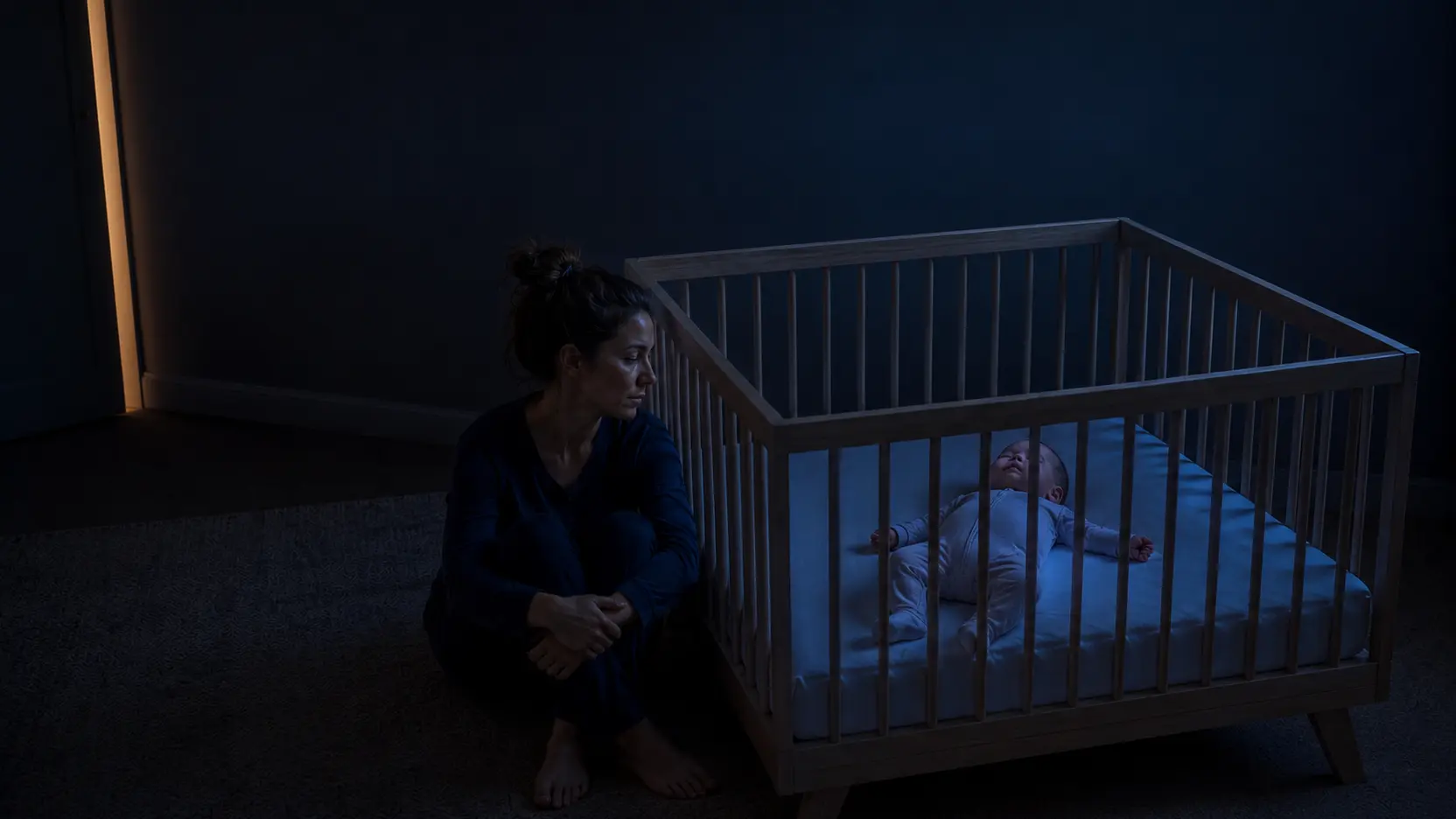
The tiny clasp is already closed, the room is finally quiet, and taking the necklace off now feels like one more chance to wake the baby. Take it off anyway.
No—your baby should not sleep with a necklace
Remove every necklace before every nap and night sleep. That includes amber teething necklaces, silicone bead necklaces, religious or cultural necklaces, keepsakes, chains, cords, and so-called breakaway designs. A necklace can tighten, twist, or catch on clothing or the sleep space, and beads, charms, or clasp pieces can become choking hazards if the item breaks. The American Academy of Pediatrics does not recommend infants wear jewelry, and there is no sleep exception created by supervision, a baby monitor, a short chain, a tucked-in pendant, or a breakaway clasp.12
I would make the rule pleasantly boring: nothing loops around the baby’s neck, awake adornment ends before the sleep routine, and the sleep space stays clear. You do not need to decide whether this particular necklace looks sturdy enough. The category is the answer.

Why a small necklace becomes a different object during sleep
During awake time, an adult may notice a pendant shifting, a bead loosening, or a cord catching on a bib. Sleep removes that layer of observation. Babies turn their heads, bring their hands toward their faces, rub against clothing, curl their shoulders, roll when developmentally ready, and move into positions an adult did not predict at bedtime. A loop around the neck can tighten or become pinned. A necklace can catch on a crib part, play-yard mesh, clothing fastener, pacifier clip, or another object within reach.
There are two separate hazards, and keeping them separate makes the rule easier to understand:
The loop can tighten or catch
The necklace itself can become an entanglement or strangulation hazard. It does not need to be long enough to reach a crib slat. Twisting, snagging, or pressure between the baby’s body and the mattress can change how a loop sits. The CPSC warns that strings, cords, and necklaces can catch on products such as cribs or play yards or wrap around a child’s neck.4
Parts can break free
Beads, charms, pendants, knots, magnetic pieces, and clasps can become small objects if the item breaks. A baby who mouths the necklace may place a detached piece into the airway. A breakaway clasp may change where a necklace opens under a particular pull; it does not prove that every twist, snag, bite, defect, or sleeping position will release harmlessly.
That is why I would not spend bedtime evaluating tensile strength or trying to remember which direction the clasp is supposed to release. This is not a product-comparison problem. It is a remove-the-loop problem.
The shortcut questions
Do any common fixes make a necklace safe for sleep?
I use these six questions to stop my tired brain from bargaining with the same hazard in six different outfits.
- What if I tuck it under pajamas?
- No. Clothing can shift, bunch, or hold the necklace against the neck. Tucking also makes the item harder to see; it does not remove the loop or the small parts.
- What if it is very short?
- No. A short loop can still tighten, twist, press, break, or become trapped. There is no evidence-based infant sleep length that converts a necklace into a safe item.
- What if the clasp is breakaway?
- No. A release feature is not a sleep-safety certification and cannot account for every direction, force, defect, position, or broken component.
- What if I watch the monitor?
- No. Video may not show tightening beneath clothing or a small part entering the mouth, and it cannot put an adult’s hands beside the baby instantly.
- What if the baby sleeps in my arms?
- Remove it. Adults can doze, the necklace can catch against clothing or furniture, and contact sleep does not cancel strangulation or choking hazards.
- What about a car-seat nap?
- Remove it before travel too. A harness, clothing, and seat hardware add places for a loop or pendant to shift or catch. Use the car seat correctly for travel, never as a reason to leave jewelry on.
A clearly labeled hypothetical Kacey-and-Benjamin scene
The bedtime choice should happen before the room goes dark
Imagine me carrying a hypothetical sleepy Benjamin toward the crib while he rubs one eye into my shoulder. A little keepsake necklace is still around his neck. He is warm, heavy, nearly asleep, and removing it now feels inconvenient enough that a tired brain starts presenting arguments: it is short; I can see it; the clasp is good; surely one nap is different.
That is exactly when I want the rule to do the thinking for me. I would step back to the changing table, remove the necklace, put it in its closed container, and then return to the crib. Benjamin might open both eyes and object to this administrative delay. The objection would be survivable. The necklace staying on would be the risk I could remove.
This scene is hypothetical, not evidence and not a claim about Kacey or Benjamin’s real history. Its job is to show why a decision made before everyone is exhausted works better than a fresh safety debate beside the crib.

What the safer sleep setup looks like after the necklace comes off
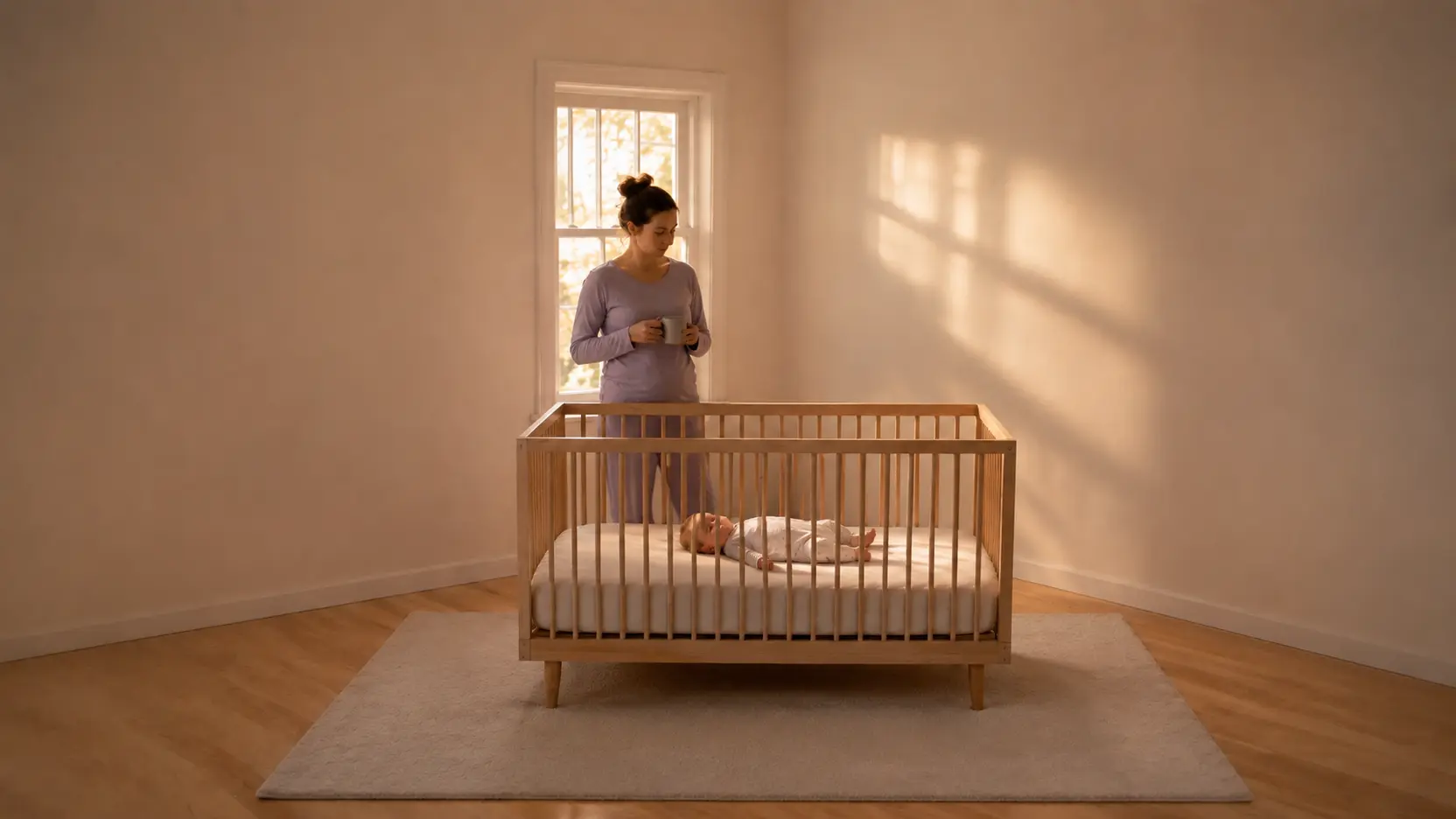
Removing the necklace solves one hazard. It does not replace the rest of the safe-sleep setup. For every nap and night sleep through the first birthday, place your baby on the back on a separate, firm, flat, level, noninclined sleep surface intended for infants—a safety-approved crib, bassinet, portable crib, or play yard—with only a snug fitted sheet. Keep soft objects, loose bedding, toys, bumpers, positioners, cords, and other items out of the sleep area. Room-share without bed-sharing for at least the first six months when feasible.15
I use the word empty here because the visual is useful. The crib is not a display case for meaningful objects, and it is not the place where an awake teething tool waits for morning. The fitted sheet is not lonely. A sparse infant sleep space is doing its job.
Baby on backfirm, flat infant surfacefitted sheet onlyno wearable loop
The necklace leaves with the awake routine. It never travels into the sleep space.

The same sleep boundary applies to every kind of necklace
Parents arrive at this question for different reasons, and the reason deserves respect. The physical boundary, though, does not change with the meaning of the object.
I can respect why an item matters and still separate its meaning from where I let it rest at night.
Necklace type, actual concern, and safer next step
| Item | Why it does not belong in infant sleep | Safer next step |
|---|---|---|
| Amber teething necklace | Neck loop plus beads; no good evidence that wearing amber treats teething pain. | Stop using it as a teething treatment. For awake discomfort, try gum massage or a supervised firm teether, then put it away before sleep. |
| Silicone or wooden teething beads | A marketed material does not remove the loop, clasp, or small-part problem. | Use a separate handheld teether designed for the baby’s age only while awake and directly supervised. |
| Religious or cultural necklace | Meaning does not change entanglement or choking mechanics. | Use it during a supervised ritual if consistent with family and clinician guidance, then store it outside the sleep area. Consider a symbol on the nursery wall beyond reach or a design printed or embroidered into properly fitted sleepwear—without beads, pins, cords, or attachments. |
| Sentimental chain or locket | Metal strength and emotional value do not make sleep movement predictable. | Keep it in a labeled box, photograph the baby with it during an awake supervised moment if desired, and remove it before the sleep routine. |
| Medical-identification necklace | A neck loop remains a hazard, and a pendant can press, catch, or break. | Ask the baby’s clinician and emergency-care team for an infant-appropriate identification plan that does not introduce a sleep hazard. Keep emergency information where caregivers and responders can find it quickly. |
| Adult necklace within reach | A baby can grab, mouth, or pull a caregiver’s chain; a detached charm may become a small part. | Remove or secure the adult necklace before holding, feeding, carrying, or settling the baby if it is within reach. |
The medical-identification row is deliberately not a do-it-yourself recommendation. If your baby has a condition that responders need to know about, the right answer is a clinician-approved identification and emergency-information plan—not choosing a necklace that merely looks less risky.
Amber teething necklaces do not earn a special exception
Amber necklaces are often sold with a story: body heat supposedly releases succinic acid, the substance passes through the skin, and teething discomfort eases. The AAP’s parent guidance says scientific evidence does not support those claims. The FDA has received reports of death and serious injury, including strangulation and choking, involving teething jewelry.23
When a teething claim sounds effortless, I ask what physical trade it requires. Here, I am being asked to leave a loop and small parts on a baby.
I would not balance an unproven benefit against a known physical hazard, especially during sleep. The necklace does not need to be touching the gums to be marketed for teething, which is part of why the idea can feel plausible: the product promises relief without requiring a baby to hold anything. But that convenience is created by leaving a loop on the child. For infant sleep, that trade is the problem.
Teething can still make evenings miserable. A baby may drool, chew, fuss, or have tender gums. You can respond to the discomfort without sending an object into sleep:
- While your baby is awake, wash your hands and gently massage the gums with a clean finger.
- Offer a firm, non-liquid-filled rubber or silicone teether appropriate for the baby’s age while directly supervising.
- If the manufacturer permits chilling, cool it in the refrigerator rather than freezing it until hard.
- Inspect it before and after use. Follow the maker’s cleaning and replacement directions.
- When drowsiness begins, take the teether back. Put it in its case or storage spot outside the sleep space.
If your baby has a fever, looks ill, has trouble feeding, has fewer wet diapers, is unusually hard to console, or has symptoms you are tempted to explain as “just teething,” call the pediatric clinician. Teething should not become a label that hides a different problem.

A one-minute bedtime decision path
What I would do tonight
This is the order I would follow, and I would keep it identical for every caregiver.
-
Remove what loops, clips, dangles, or breaks into small parts
Take off necklaces, cords, lanyards, bracelets, anklets, beaded accessories, bibs with ties, and pacifier clips before placing the baby down. Check the neckline and inside the sleepwear rather than assuming an item is gone because you cannot see it.
-
Put meaningful items in one predictable place
Use a closed container on a high shelf or inside a drawer outside the baby’s reach. A repeatable storage spot prevents the necklace from landing on the changing pad, mattress edge, or chair where it can be forgotten.
-
Look beyond the baby’s body
Scan the crib or bassinet radius for monitor cables, blind cords, lamp cords, charging wires, wall hangings, curtain ties, drawstrings, and caregiver jewelry within reach. A newborn’s reach will not stay a newborn’s reach.
-
Reset the sleep surface
Baby on the back. Firm, flat, level infant mattress. Fitted sheet only. Nothing attached to the baby, pacifier, clothing, crib, or sheet. If your baby is beginning to roll, stop swaddling; always begin sleep on the back and keep the space clear.
-
Tell the next caregiver the rule in one sentence
Try: “Please remove every necklace, bracelet, clip, and cord before any nap, even a short one.” A specific handoff is easier to follow than “watch the jewelry.”
The necklace check should expand to the whole sleep-space radius
I treat the radius as part of the sleep space, because what is out of the crib can still become reachable.
Once a parent notices one loop, it is worth taking ten more seconds to notice the others. Pacifier clips and straps do not belong on the baby during sleep. Neither do bibs, hood cords, drawstrings, lanyards, or an adult necklace dangling while the baby is held. The AAP specifically warns never to hang a pacifier around an infant’s neck or attach it to clothing when the infant is placed for sleep or sleeping.1
Then look at the room rather than only the crib. Move blind cords and curtain ties fully out of reach. Route monitor and lamp cables away from the sleep space, considering what the baby may reach after the next growth spurt or newly learned roll. If a nursery light is part of your routine, the SleepBaby guide to placing a red light and its cord outside the sleep space gives that perimeter check a practical shape.
Wearable items deserve the same mechanical question: can it loosen, slide, tie, wrap, detach, or cover the face? If you are also deciding what belongs on the baby’s hands, our guide to checking mittens for loose, tied, decorated, or attached parts continues the same safer-sleep logic.

Is a necklace safe when the baby is awake and supervised?
The AAP does not recommend infants wear jewelry, so the safest answer is to skip infant necklaces altogether. “Supervised” is also easier to say than to sustain. Direct supervision means an attentive adult is close enough to intervene immediately—not a camera, not someone cooking across the room, and not an adult who intends to stay awake while feeding on a sofa at 2 a.m.
If a brief ceremony matters to your family, I would plan the removal and storage before it begins rather than improvise beside a drowsy baby.
If your family uses a necklace for a brief cultural, religious, or ceremonial moment despite that guidance, keep the baby fully awake and held or positioned safely, keep an attentive adult within immediate reach, and remove the item before feeding, floor play, crawling, travel, or any drowsiness. Check with your pediatric clinician when the item has a health claim or when your baby has a medical or developmental need that changes handling. No ritual loses its meaning because the necklace is stored before sleep.
For photographs, consider placing the meaningful item beside an awake baby only when an adult has control of it and it cannot be grabbed, or photograph the item separately and combine the memories in an album. Never drape jewelry around a sleeping baby for a photo. A camera records the scene; it does not make the setup safer.
Questions that tend to appear after the clasp comes off
These are the follow-up questions I would settle before I reach the next nap, not beside a sleeping baby.
Can a newborn sleep with a necklace?
No. Newborns should not sleep with necklaces or wear infant jewelry. Start safe-sleep habits from birth: back placement, a firm and flat separate infant surface, fitted sheet only, and no necklace, cord, loose object, or attachment.
Can a baby nap with an amber necklace if I stay nearby?
No. A nap is sleep, and staying nearby does not remove the neck loop or small beads. The AAP does not recommend infant jewelry, and amber teething benefit claims lack good evidence. Remove it before the baby becomes drowsy.
Can a baby sleep with a cross, protective pendant, or prayer necklace?
No necklace is a safe infant sleep item, regardless of its meaning. Protect the meaning by moving the object to a safe place: a high shelf, closed keepsake box, wall art beyond reach, or an unattached symbol printed or embroidered into properly fitted sleepwear. Avoid beads, pins, cords, appliqués that can detach, and anything added to the sleep surface.
Are bracelets or anklets safer than necklaces during sleep?
They remove the neck loop but introduce other concerns: slipping off, tightening, snagging, breaking, or shedding small parts. The clean infant sleep rule is no jewelry. Remove bracelets and anklets too.
What if the necklace is sewn into or attached to clothing?
Do not add a cord, chain, beads, charm, or pendant to infant sleepwear. Choose properly fitted garments made and labeled for the baby’s size and intended use, inspect for damage, and avoid modifications that create loops or detachable pieces.
What age can a child sleep in a necklace?
There is no birthday that makes strangulation mechanics disappear. This article’s nonnegotiable infant guidance applies through age one, and necklaces can remain hazardous for toddlers and older children during sleep and unsupervised play. Ask your child’s clinician about individual developmental needs, and follow product age warnings; when in doubt, jewelry comes off before sleep.
Should daycare or a babysitter remove the necklace for naps?
Yes. Put the rule in writing and say it during handoff: remove all jewelry, cords, clips, bibs, and wearable accessories before every nap. Ask the caregiver to store the item where children cannot access it rather than tucking it into a bag pocket within reach.
Does a home monitor make jewelry safer?
No. Consumer breathing, movement, and video monitors do not prevent a necklace from tightening, breaking, or entering the mouth, and they do not replace safe-sleep practices. The safer intervention is physical removal before sleep.

Watch the fixed layer in one minute
See the clear infant sleep space after the necklace is removed
What I want you to notice is how little the infant sleep space needs in order to do its job.
The necklace answer is easier to remember when it sits inside the whole picture. This official NICHD Safe to Sleep video shows the separate sleep surface, firm mattress, empty crib, and back placement that remain fixed after awake soothing and meaningful objects are put away.
Watch NICHD’s Safe Sleep for Your Baby video on YouTube if the embedded player is unavailable.
Takeaway: the keepsake can stay meaningful outside the crib; the infant sleep space stays firm, flat, clear, and free of anything looped around the baby.
Optional awake-only teething alternative
My practical pick when the necklace was meant for teething
If the necklace was supposed to help sore gums, I would replace the wearable loop with one obvious handheld object: the Nuby Silicone Teethe-EEZ Teether with hygienic case. Its one-piece silicone shape is simpler than beads, string, charms, or a clasp, and the case gives it a clear place to go before the sleep routine. That makes it a better fit for this exact problem than an amber or silicone necklace, a strapped teething mitt, or a liquid-filled chilled toy.
The specific reason to buy it is behavioral as much as physical: you can hand it to the baby during directly supervised awake time, wash and inspect it according to the manufacturer, then put it back in its case before carrying the baby toward the crib. It is not a sleep aid and never stays with a sleeping baby.
View the Nuby Silicone Teethe-EEZ Teether on Amazon
As an Amazon Associate, SleepBaby may earn from qualifying purchases.
Use boundary: follow the current manufacturer age, cleaning, inspection, and replacement directions; supervise every use; and remove the teether before any nap, night sleep, car-seat doze, or moment when the baby is not directly watched. Do not freeze a teether until hard.
Let the clasp be the last decision, not the late-night debate
Back at that quiet bedside, removing the necklace may still wake the baby. I would remove it. Then I would move it far enough away that tomorrow’s newly curious hands cannot reach it, look once around the crib for every other loop and cord, and return the baby to a clear sleep space.
The necklace can hold faith, family, memory, or hope without holding a place around a sleeping baby’s neck. Putting it away does not strip it of meaning. It gives the meaning a safer boundary.
Sources
- American Academy of Pediatrics: How to Keep Your Sleeping Baby Safe—AAP Policy Explained — back placement, a firm flat noninclined surface, a fitted sheet, and an uncluttered infant sleep area.
- HealthyChildren.org: Teething Necklaces and Beads—A Caution for Parents — AAP jewelry guidance, choking and strangulation risks, and lack of evidence for amber claims.
- U.S. Food and Drug Administration: Safely Soothing Teething Pain in Infants and Children — reported injuries from teething jewelry and supervised firm-teether alternatives.
- U.S. Consumer Product Safety Commission: Strings, Cords and Necklaces Can Strangle Infants — catch, twist, and strangulation mechanism.
- NICHD Safe to Sleep: Videos and 60-second video text alternative — separate clear sleep surface, firm mattress, and back placement.
- MedlinePlus: When to Use the Emergency Room—Child and Choking—Infant Under 1 Year — emergency signs, 911 escalation, and medical follow-up after choking.
After the clasp comes off
Build the rest of tonight around the same clear decisions
If the necklace question arrived during a larger tangle of teething, short naps, repeated wakes, and a routine that keeps changing shape, start with the fixed safety layer and work outward one decision at a time. The SleepBaby.org Workshop helps you build a practical whole-night plan without turning a safety concern into a promise of perfect sleep.
Start the SleepBaby.org Workshop from tonight’s fixed safety layer
General parent education only. SleepBaby.org cannot diagnose a condition, replace individualized medical care, or promise a sleep outcome.