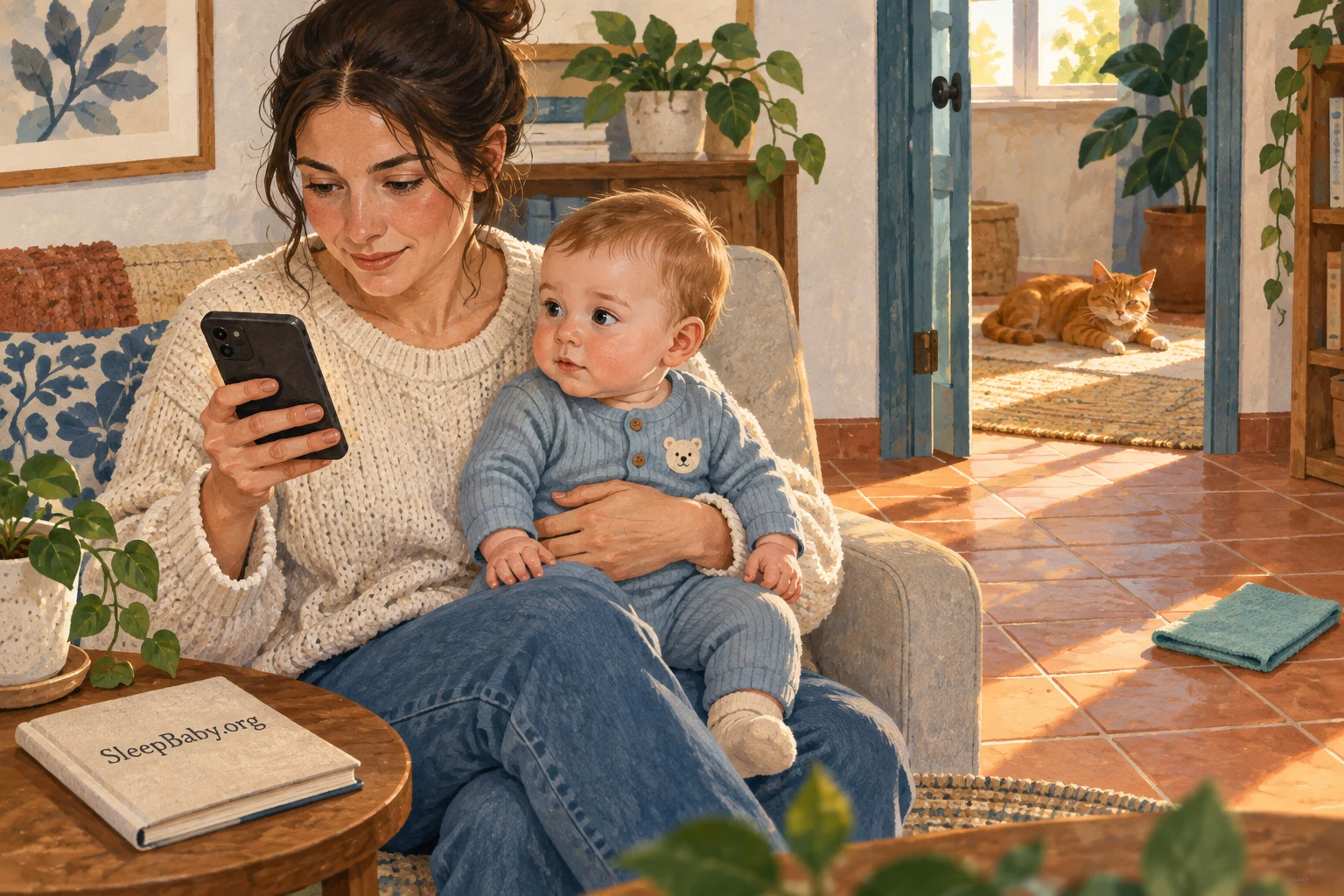
If your baby ate cat vomit, move them away from the mess, check their breathing, and call your pediatrician for advice about the exposure. If they cannot breathe, become unresponsive, have a seizure, or turn blue or gray, call emergency services now. Do not make them throw up. If medicine, a cleaner, a plant, or another unknown substance might also be involved, call U.S. Poison Control at 1-800-222-1222 right away.
I would put the phone call ahead of finishing the floor. What your baby actually touched or swallowed, how they’re acting, and what else was in the area matter more than how unpleasant the mess looked. A normal-looking moment is useful information, but it doesn’t tell us everything about an unknown exposure.
Start with your baby, then the mess
- Check breathing and responsiveness. Emergency symptoms take priority over every other step.
- Stop further contact. If your baby is awake and breathing normally, gently wipe visible residue from their lips and the easily reached front of their mouth with a damp cloth. Don’t reach blindly into the mouth or throat.
- Wash contaminated hands. Keep those fingers away from the mouth while you get help.
- Make the call. Tell the pediatrician what you saw. Use Poison Control promptly for possible medicine, chemical, plant, or uncertain substance exposure.
Do not induce vomiting or try to neutralize anything with a home remedy. Poison Control’s first-aid guidance explains why the substance and symptoms determine the next action. Its mouth-cleaning advice for fecal contact supports gentle removal of visible contamination; its reassurance and timing for feces should not be applied to cat vomit.
When this needs emergency or urgent medical care
If your baby is choking or struggling to breathe
Call 911 in the United States, or your local emergency number, for severe breathing trouble, collapse, a seizure, or a baby you cannot wake. A baby who cannot cough effectively, cry, or breathe may be choking. Get emergency help and use the appropriate infant choking first aid if you know it; follow the dispatcher’s instructions. Do not give abdominal thrusts to a baby under 1 year or sweep a finger blindly inside the mouth.
If your baby is coughing strongly and moving air, stay with them and watch closely. A weakening or silent cough is a different situation. The NHS infant choking guide explains that distinction and the infant back-blow/chest-thrust sequence. Do not stop for a video during an emergency.
If symptoms appear after the contact
Seek urgent medical advice for repeated vomiting, trouble feeding, unusual drowsiness, persistent coughing after the event, or a baby who seems unwell. Blood or green bile in your baby’s vomit needs prompt medical assessment. Tell the clinician about the cat-vomit contact even if you aren’t sure the two events are related. Seattle Children’s infant vomiting guidance lists concerning changes and emphasizes earlier assessment for young babies.
A baby younger than 3 months with a temperature of 100.4°F (38°C) or higher needs urgent medical advice. Don’t wait to see whether it fits a particular infection. The NHS fever guidance also advises urgent assessment if you think a baby this young has a fever.
Fewer wet diapers than usual, a dry mouth, few tears, a sunken soft spot, or unusual sleepiness can be signs of dehydration. Call for advice promptly if you see these, especially with vomiting or diarrhea. You don’t need to wait for a specific number of empty diapers before raising a concern. See the NHS dehydration guidance.
Can a baby get sick from cat vomit?
It is possible for contact with pets and contaminated material to expose a child to harmful germs. But I can’t tell you the likelihood of illness from a lick of cat vomit, and the sources here do not establish a safe amount for a baby. Your baby’s age and health, symptoms, what was swallowed, and possible additional exposures all belong in the assessment.
CDC’s guidance on cats says that even healthy-looking cats can carry germs and recommends prompt cleanup of vomit followed by disinfection and handwashing. That supports taking the exposure seriously. It does not mean every illness associated with cats can be caught from vomit.
I would avoid two shortcuts: deciding that it is harmless because the cat lives indoors, or assuming that your baby has an infection because they touched something dirty. Neither gives you a useful care plan. Report the contact and let the clinician tell you what follow-up makes sense.
What about worms or toxoplasmosis?
Seeing a cat mess isn’t a diagnosis of parasites. For toxoplasmosis specifically, CDC describes the cat-associated route as swallowing the parasite from infected cat feces or things contaminated by those feces. That is a different exposure from simply identifying material as vomit. Tell your baby’s clinician if cat litter or stool was involved, too.
If you see something unusual in the mess, describe it or take a quick photo if doing so won’t delay care. Don’t decide on a dewormer, antibiotic, or test from a photo or an online parasite list. Those decisions belong with your baby’s clinician.

THE CALL NOTE
Four details to have beside the phone
- C · Child
- Age, known weight, relevant health conditions, and how your baby is breathing and behaving now.
- A · Actual contact
- A hand touched the mess, a hand went into the mouth, or you saw swallowing? Say which. An uncertain amount can stay uncertain.
- L · Look for other exposures
- Cat litter, raw pet food, a missing pet-medicine dose, a plant, or cleaning product nearby? Report the possibility and keep labels available.
- L · Log the time
- When you found the mess, when contact might have happened, and when any symptoms started.
This is a call-preparation aid, not a test that decides whether your baby is safe. You can start the call with incomplete information. Poison Control explains what its specialists ask and provides free, confidential U.S. help around the clock.
What to say when you don’t know how much they swallowed
You may have found your baby beside the mess without seeing the moment of contact. Say that plainly. “I saw it on their fingers, and their hand was at their mouth” is more useful than choosing a teaspoon amount because the person on the phone asked how much.
If another adult is there, one person can stay with the baby while the other checks the area. Was a pet medicine left out? Had the floor just been sprayed? Was the material beside the litter box? These are details to report, not reasons to postpone the call while you reconstruct every minute.
For your baby, use the human Poison Control number. A veterinarian can assess your cat separately. If the cat is ill, let both professionals know what happened; advice about the cat does not replace assessment of the child.
LATER, WHEN THE CARE PLAN IS SET
A place for the ordinary bedtime questions

A pet-mess scare can leave you checking every sound at the next nap. Once you have professional advice and understand any monitoring instructions, you can keep ordinary sleep questions in their own place. The free SleepBaby.org planning preview offers a suggested starting step without a sign-up or card.
For ongoing routine planning, the optional SleepBaby.org Workshop provides short lessons you can revisit and a seven-night tracker. You might use it to organize the bedtime handoff or choose one routine step to work on later.
Neither the preview nor Workshop treats an exposure, clears a baby for sleep, or replaces monitoring. Follow the medical care plan first; these planning resources can wait.
After the call, make the advice easy to follow
Before you hang up, ask what to watch for, how long the recommended follow-up lasts, whether feeding should change, and exactly when to call back or seek care. If you are told to observe at home, write the instructions where another caregiver can find them.
I wouldn’t set my own universal “all clear” timer. The source of the material, any other substance involved, and your baby’s symptoms can change the plan. A reassurance about someone else’s child or a different kind of exposure isn’t an observation schedule for yours.
Keep a short note of meaningful changes: an episode of vomiting, a measured temperature, a feed your baby couldn’t manage, or a wet diaper. You don’t need a complicated chart. The point is to give a clear account if you need to call again.
Should I feed my baby or give water?
Don’t force a bottle, plain water, milk, juice, or a large drink to “wash it down.” Ask the clinician or poison specialist what is appropriate for your baby’s age and this exposure. Poison Control’s water-or-milk instructions apply to particular irritating substances and a person who can safely swallow; they are not a general remedy for every ingestion.
If your baby starts vomiting, ask about an age-appropriate feeding and hydration plan. Report whether they can keep feeds down and whether wet diapers have changed. Don’t dilute formula or improvise a treatment drink. If swallowing or breathing is difficult, urgent assessment comes before anything by mouth.
Does my baby need medicine or testing?
Those aren’t automatic next steps. Describe the exposure and symptoms and ask the pediatrician whether an examination, testing, or any treatment is needed. Do not give leftover antibiotics, anti-nausea medicine, or pet medication. A medication prescribed for another person, animal, or illness is not a plan for this event.
The American Academy of Pediatrics’ vomiting guidance cautions against remedies that have not been prescribed for that child and that illness, and advises contacting the pediatrician when fluids cannot stay down or dehydration develops.
Clean up without creating a second exposure
Once your baby is being cared for and you have made the needed call, deal with the area. I would treat the cleanup as two jobs: remove the material, then clean and disinfect the affected surface appropriately. Spraying over the mess and wiping once can skip the first job.
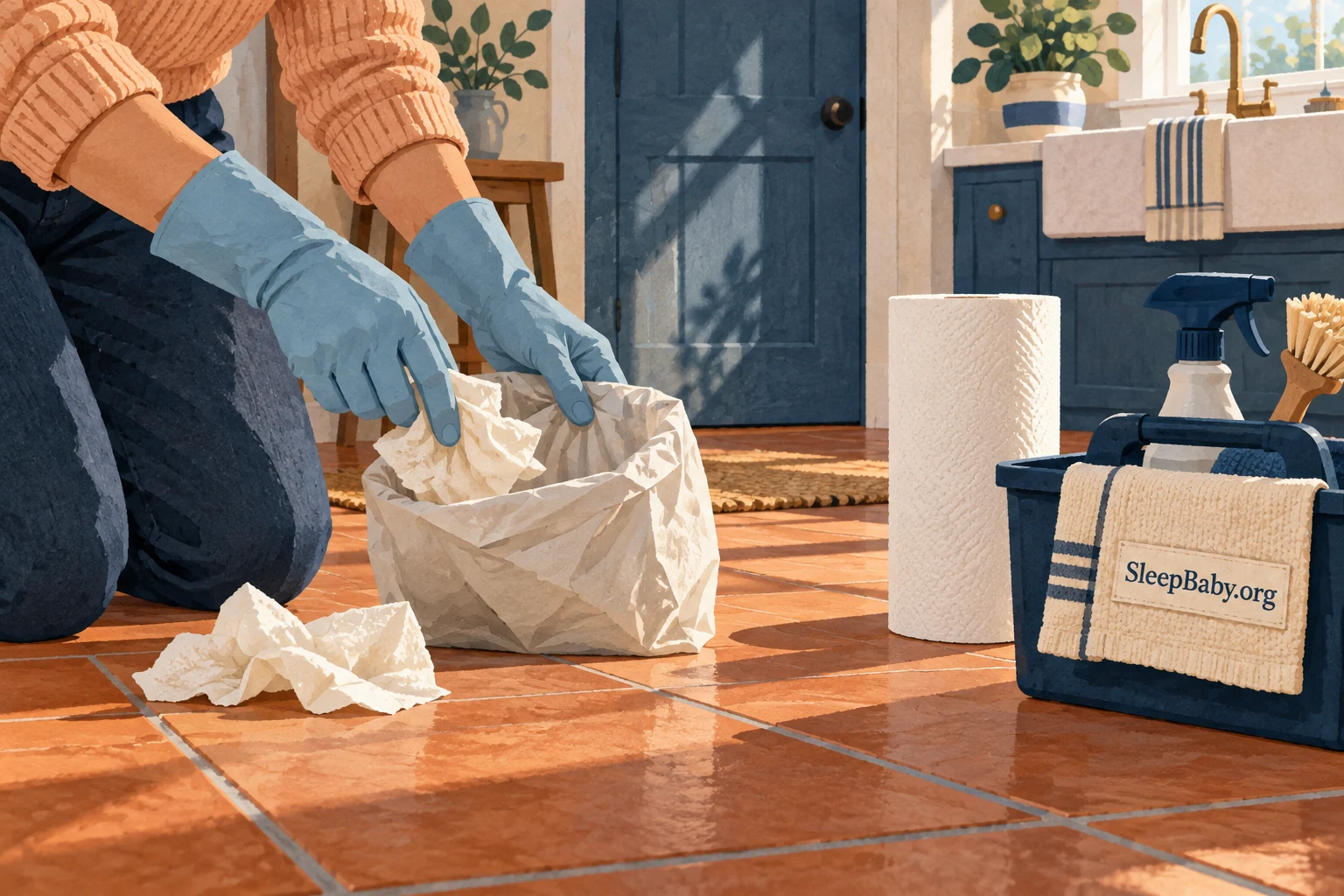
A practical cleanup order
- Keep the area separate. Have another adult care for your baby, or use their safe, age-appropriate space away from the mess and cleaning products.
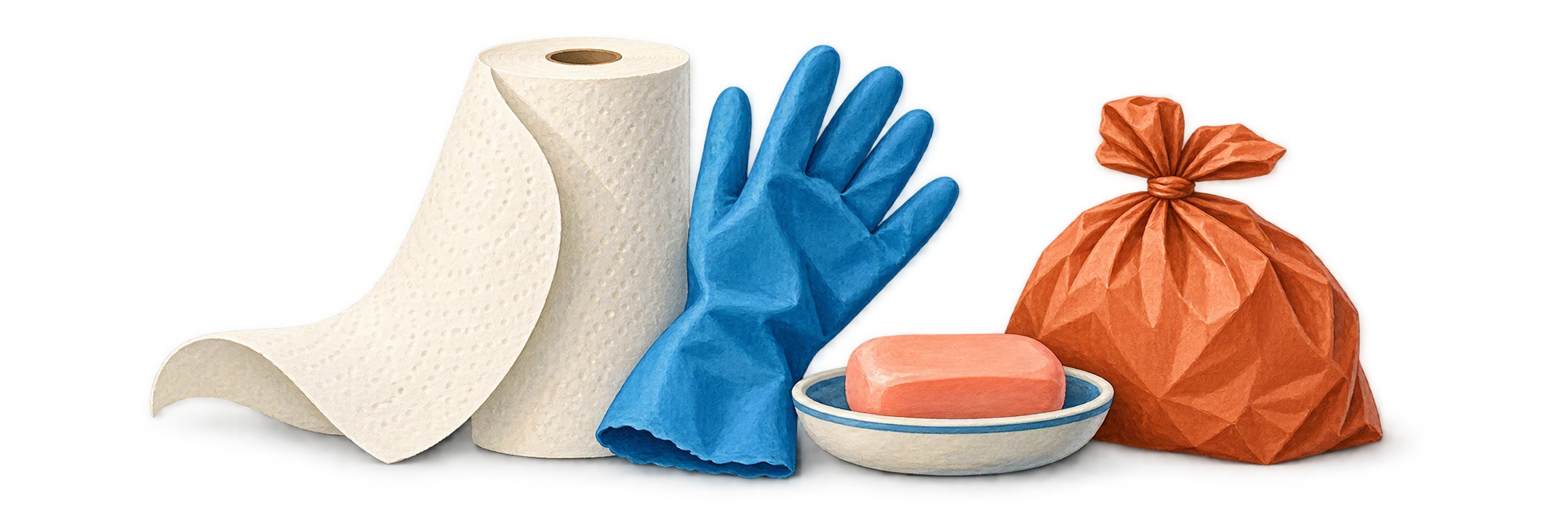
- Lift and contain. Use absorbent paper towels to remove visible material and put the waste somewhere your baby and pet cannot reach. Follow the cleaning product’s protective-equipment instructions.
- Clean the surface. Use soap or detergent and a method suited to the floor, rug, or object.
- Disinfect as directed. For a compatible surface, follow the product label, including how long it must stay wet and any rinsing instructions.
- Finish the job. Keep children and pets away until the label’s re-entry conditions are met. Put products away and wash your hands.
Never mix cleaning products, and never put surface disinfectant on your baby’s skin or in their mouth. CDC’s home-cleaning guidance covers surface choice, contact time, ventilation, and safe storage.
If it landed on a rug, clothing, or a toy
A tile-floor product isn’t automatically suitable for carpet or a toy that goes into a baby’s mouth. Follow the item’s cleaning instructions. Launder washable fabric with detergent using the recommended temperature and dry it completely. Keep an affected mouth toy out of use until you can clean it by its manufacturer’s method.
For the cat’s own supplies, CDC provides separate guidance for hard and soft pet items. It also advises keeping pets away from disinfectants and avoiding phenol-containing disinfectants around cats. Check the actual label; “natural” or a pleasant smell does not settle whether a product fits the job.
Remember the hands and the next object
After helping your baby wash, wash your own hands, too. Think about anything touched during the scramble: the phone, a pacifier, a toy, or the handle used to close the door. Clean affected items appropriately rather than moving the same contamination back into the play area.
The CDC handwashing demonstration uses five steps: wet, lather, scrub for at least 20 seconds, rinse, and dry. Include the backs of hands, between fingers, and around nails. This is a cleanup step, not treatment for something already swallowed.
One ordinary cleanup supply, if you need it
As an Amazon Associate I earn from qualifying purchases.
Bounty Select-A-Size paper towels
If your paper-towel supply is empty, these are one optional way to lift and contain the mess before cleaning the surface. The manufacturer describes sheets that can be torn to different sizes. That is the useful feature here. Paper towels do not disinfect a floor or prevent illness after an exposure, and I am not claiming a personal product test.
Find Bounty Select-A-Size paper towels on Amazon
Already-owned alternative: ordinary paper towels you have at home can do the initial lifting and containment. There is no reason to delay care or cleanup for a particular brand. Put any used material and cleaning supplies out of reach, and follow with the appropriate surface cleaning.
Watch later: CDC’s handwashing demonstration
After the immediate care questions are handled, this CDC video shows the handwashing technique used in the cleanup steps above. It does not assess cat-vomit ingestion or replace a call.
Written takeaway: use soap and running water, cover every part of your hands, scrub for at least 20 seconds, then rinse and dry. The official transcript is available if the player doesn’t load.

What about the next nap?
Ask about sleep and monitoring during the medical call if a nap is coming up. Follow those instructions. Sleep advice cannot tell you that an exposure is harmless, and unusual difficulty waking a baby should never be written off as a good nap.
When your care plan allows ordinary sleep, keep the usual safe setup: place your baby on their back on a firm, flat, level sleep surface with a fitted sheet and no loose bedding or toys. Don’t add a wedge or switch to side or stomach sleep because you’re worried about vomiting. NICHD’s Safe to Sleep guidance explains these precautions.

If two adults are taking turns, leave the care instructions with the person staying with the baby. A useful handoff says who gave the advice, what to look for, and what to do if something changes. Keep that separate from any ordinary bedtime notes.
Make the next floor check easier
Before putting your baby down to crawl, glance over the spaces they can reach, including beside furniture and around pet bowls. Keep the litter box away from children and food-preparation areas. If your cat seems ill or vomiting is recurring, contact your veterinarian; routine veterinary care and prompt cleanup are part of CDC’s advice for a healthy shared home.
I would change one practical thing you can repeat: a clear place for cleanup supplies, a reliable separation between the play area and pet messes, or a quick floor check before tummy time. The immediate job is your baby’s care plan. The household adjustment can be small enough to keep using tomorrow.
Sources
- Poison Control: First aid for poisonings
- Poison Control: How to get help
- Poison Control: The scoop on poop (limited mouth-cleaning context)
- NHS: How to stop a child from choking
- Seattle Children’s: Vomiting, 0–12 months
- NHS: Fever in children
- NHS: Dehydration
- CDC: Cats and household health
- CDC: Toxoplasmosis causes and spread
- AAP: Treating vomiting
- NHS: Making up baby formula
- Seattle Children’s: Swallowed foreign object
- CDC: Cleaning and disinfecting your home
- CDC: Cleaning and disinfecting pet supplies
- CDC: Fight Germs. Wash Your Hands! transcript
- NICHD: Safe to Sleep recommendations
- Bounty: Select-A-Size manufacturer information
WHEN THE URGENT QUESTIONS ARE ANSWERED
Leave yourself one clear next step
Keep the medical instructions with the caregiver who needs them. For the separate, everyday sleep questions that remain, start with the free SleepBaby.org planning preview and decide whether its suggested step fits your family.






What viewers said10 comments · 4 replies+
Archived comments from the original Baby Sleep Miracle presentation. Not independently verified by SleepBaby.org; individual experiences vary.
Thank you so much for this video! I had no idea about the dangers of baby swings :O
Hi Mary-Ann. I have a question: Is method in any way similar to the ones recommended by Dr Bucknam, Dr. Weissbluth or Dr. Karp? We tried those but none of them help.
Hi Regina, thank you for your question. The short answer is no. The techniques I share in my guide are based on newest scientific research and this is why I have never seen any approach similar to the one I recommend.
This method really works! I tried it on my son Jesus and after just one week he went from waking up more than 5 times a night to waking up just once or twice. You are a lifesaver, Mary-Ann!
I'm truly impressed with how much information you share in your video. And all for free! I can feel that you truly care about mothers like myself, and that's hard to find these days. I have recommended your site to several of my friends already.
Mary-Ann, our child suffers from autism. Is your approach still suited?
Chloe, I made sure my method can be used with any child, even babies who are special like yours. Please note that I'm not a doctor and that I always advice to consult with your physician because nothing is more important than the safety and well-being of your love.
Hallo Mary-Ann, I'm from Germany. Do you have your guide in German?
Hello Heide, we do! Normally you should already see our video in German. If not, please contact our support so they can guide you
Thenk you for your answer, Mary-Ann!
I just completed your approach and I have to say, it worked almost too well. Yes, it took a bit of getting used to with your bedtime routine but the difference is huge. My son George used to take 1 hours to go down and now he's firmly asleep in no more than 10 minutes! You're the best!
It seems I'm the only man watching this video, lol! What you shared about the 'emotional backpack' made immediate sense to me and I can't wait to help my little girl Mila to unpack it!
Hey there, just discovered your site and this really sounds different. Just wanted to say thanks for sharing :)
For everyone who's still thinking about getting Mary-Ann's guide I want to advise you to go ahead. I wasn't sure myself but now I'm so thankful I invested in this program. It made a huge difference in our life as a family and yes, my baby girl does sleep through the night now.