Skip to content
SleepBaby .org
Parenting & Family

Why Does My Sister Get More Attention Than Me? Understanding Sibling Dynamics

Read the answer first. The Workshop is here only when you want the next step.

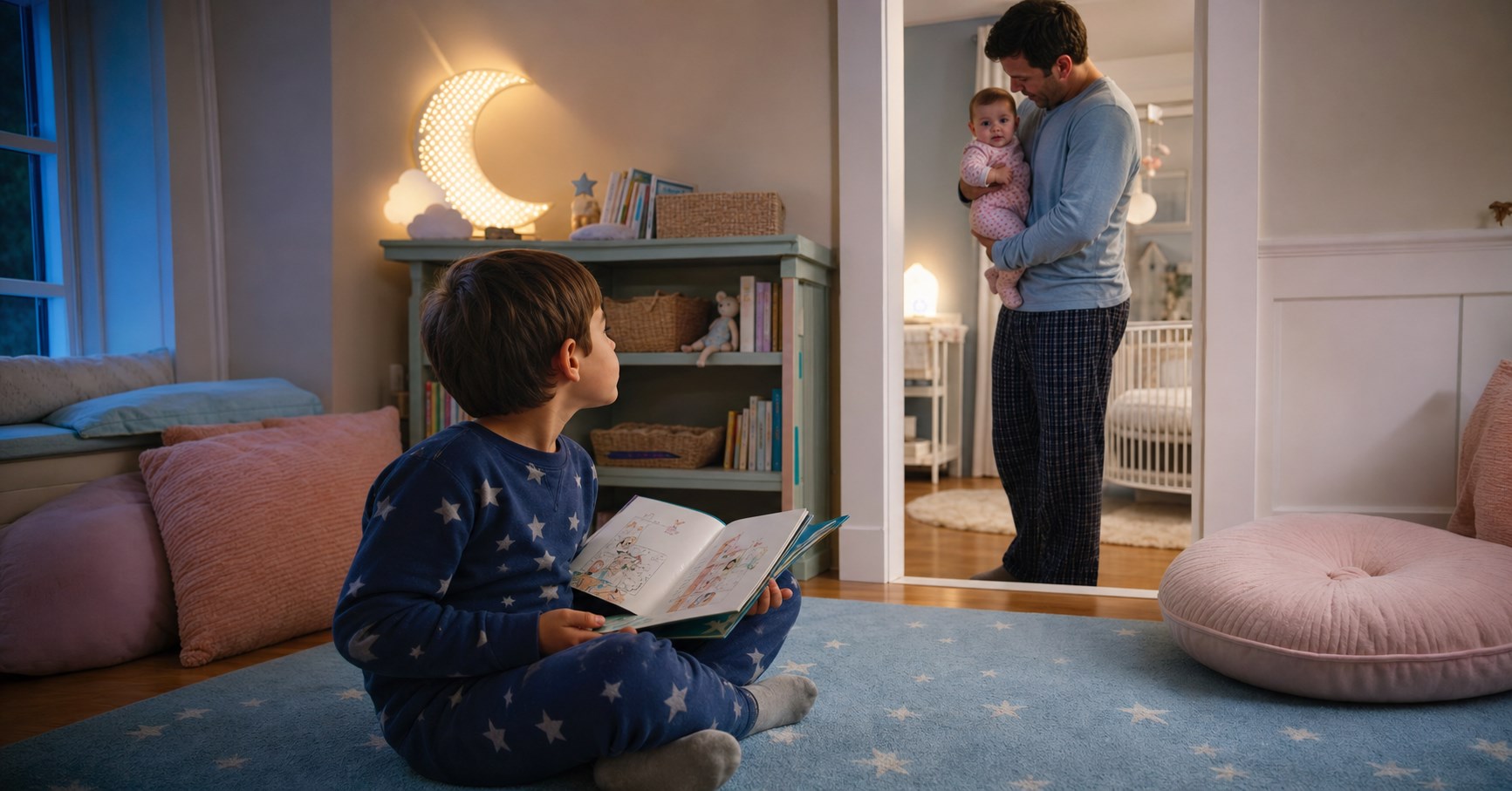
Boy in star pajamas waits with an open book while his father holds his baby sister near the nursery.

Feeling overlooked in favor of a sibling is a common sentiment among brothers and sisters, especially in larger families. In this guide, we’ll explore why you might feel like your sister gets more attention than you and provide strategies to address these feelings.

Exploring the Reasons Your Sister Gets More Attention

Why Do Parents Seem to Favor My Sister Over Me?

There are numerous factors that may contribute to the perception that your sister gets more attention. They might include birth order, age gaps, personality differences, or your parents’ unconscious biases. Remember, perceived favoritism may not reflect your parents’ love or value for you.

Is It Normal to Feel Like My Sister Gets More Attention Than Me?

Yes, it’s common to feel overlooked or less favored compared to a sibling. These feelings can be influenced by factors like sibling rivalry, developmental changes, and individual family dynamics.

Dealing with Feelings of Lesser Attention

What Can I Do If I Feel Like My Sister Gets More Attention Than Me?

  • Express your feelings: Share your feelings with your parents or a trusted adult. They may be unaware of your perceptions and can help address the situation.
  • Practice self-affirmation: Remind yourself of your worth and unique qualities that make you special, independent of any comparison with your sister.
  • Seek support: Connect with friends, counselors, or support groups who can provide a listening ear and helpful advice.

Building a Positive Sibling Relationship

How Can I Improve My Relationship with My Sister?

Fostering open communication, engaging in shared activities, and practicing empathy can significantly improve your relationship with your sister, helping to ease feelings of favoritism or neglect.

Dissecting Attention-Seeking Behavior in Siblings

Why Does My Sister Seem Like an Attention Seeker?

Factors such as personality differences, birth order, or a desire for validation can contribute to attention-seeking behavior. Understanding these can help ease tension in sibling relationships.

How to Respond to an Attention-Seeking Sibling?

Ignoring an attention seeker can sometimes exacerbate their behavior. Instead, fostering open communication and understanding can lead to healthier interactions.

The Dynamics of Parental Attention

Why Do My Parents Seem to Favor My Sibling Over Me?

Perceived parental favoritism can stem from various factors, including differences in age, personality, needs, or even unconscious biases. It doesn’t necessarily reflect a lack of love or care for you.

Understanding the Impact of Favoritism on a Child

Perceived favoritism can impact a child’s self-esteem, sibling relationships, and overall family dynamics. It’s important to communicate feelings of inequality to parents or a trusted adult.

The Challenges of Sibling Hierarchy

Why Does the Youngest or Oldest Sibling Often Receive More Attention?

Family dynamics and traditional roles can sometimes result in the oldest or youngest siblings receiving more attention. The eldest may be seen as the responsible one, while the youngest is often perceived as the baby of the family.

The Plight of Middle Children: Feeling Left Out

Being a middle child can sometimes feel like a curse due to perceived neglect or lack of attention. However, this is often an unintentional result of family dynamics rather than a reflection of parental love.

How to Navigate Feelings of Inequality

What Can I Do If I Feel Less Valued Than My Siblings?

If you feel like you’re treated differently or less valued compared to your siblings, it’s important to express these feelings to your parents or a trusted adult. They can provide support, understanding, and potential solutions.

What to Do When You Feel Like a Failure Compared to Your Siblings

Comparisons with siblings can harm self-esteem. Remember that each person has unique strengths and weaknesses, and your value isn’t defined by comparison with your siblings.

SleepBaby.org’s Support for Sibling Dynamics and Baby Sleep

Navigating sibling dynamics, especially in the context of a new baby’s sleep habits, can be challenging. SleepBaby.org offers resources to help parents manage sibling relationships during these transitions, ensuring every child feels valued and loved. Strategies include preparing older siblings for a new baby, managing sibling sleep schedules, and creating a calm bedtime environment. By fostering healthy sleep habits, SleepBaby.org helps to reduce potential stressors that can exacerbate feelings of neglect or favoritism among siblings.

Conclusion

Feeling like your sister gets more attention than you can be difficult, but remember, it doesn’t define your worth or the love your family has for you. Open communication and mutual understanding can help address these feelings and improve your sibling relationship. Remember, SleepBaby.org is here to provide support and resources during these challenging times.

From the guide to your next step

Explore SleepBaby.org

Step-by-step sleep help · newborn through toddler

A starting point for your nights.

SleepBaby is a browser-based Workshop for parents of newborns through toddlers. Choose your baby’s age, usual full wakes, and the change you want most. The free preview gives you a starting step, the first signal to watch, the time involved, and an illustrative seven-night tracking scenario so you can decide whether the complete Workshop is worth buying.

Use the free library

3 questions · no card · visible preview stays in this browser · analytics follows your privacy settings

Example sleep preview

Workshop starting point:
Workshop route available
Illustrative signal to track (not a prediction):
Track the timing and context of the first repeated wake · review across nights 2–5
Night-waking tracking focus:
Track full wakes, feeding wakes, and the first sleep stretch across seven nights.
Time asked of you:
Estimated 15 min/day for logging and review
Purchase:
Complete Workshop purchase

Fictional illustrative tracking example

Fictional illustrative full-wake tracking example over seven nights. The invented baseline ends at 4.0 wakes and the invented illustrative path ends at 1.6 wakes. These are not measured or predicted results. TonightNight 2Night 3Night 4Night 5Night 6Night 7
Fictional starting patternFictional illustrative path

Fictional example only · answer 3 questions for your family’s planning preview

Don’t take a sales claim on faith. Inspect the decision paths.

Illustrative planning scenarios—not measured customers or verified outcomes. Use the views below to inspect upside, downside, no-change, and no-purchase paths.

Choose an illustrative decision view
Closest waking pattern8–18 mo

What progress could look like

Illustrative family pattern

2.0 fewer night-wakings(example range: 1.2–2.9)

↓ 44%example
Night-wakings per night over seven illustrative nights. Current example: 4.5 wakes to 4.5 wakes. Illustrative path: 4.5 wakes to 2.5 wakes. Example change: 2.0 fewer night-wakings.

Planning example · not an observed cohort

Closest bedtime pattern4–7 mo

What progress could look like

Illustrative family pattern

18 min faster settling(example range: 9–31 min)

↓ 38%example
Settling time in minutes over seven illustrative nights. Current example: 47 min to 47 min. Illustrative path: 47 min to 29 min. Example change: 18 min faster settling.

Planning example · not an observed cohort

Closest morning patternToddler

What progress could look like

Illustrative family pattern

42 min later morning wake time(example range: 21–64 min)

↑ 42 minexample
Morning wake time over seven illustrative nights. Current example: 5:30 am to 5:30 am. Illustrative path: 5:30 am to 6:12 am. Example change: 42 min later morning wake time.

Planning example · not an observed cohort

Planning examples, not testimonials or cohort evidence. Real outcome claims should appear here only when they are independently auditable. Decision safeguards

What the complete Workshop adds after the preview.

Tonight’s Starting Step

A clear first move based on the three answers you choose.

Seven-Night Tracker

A simple way to log changes without treating one night as proof.

Tired-Parent Format

Short steps built for exhausted adults to revisit together.

See the starting point before checkout.

The preview shows the first action, time involved, tracking focus, and reasons the paid Workshop may not be the right next step. It is a planning screen, not a promised outcome. Current purchase and refund terms appear on the secure purchase page.

3-question planning preview Free library stays available Secure SleepBaby purchase page

Take a look, then decide.

Use the preview, inspect the limitations, and decide whether the complete Workshop is worth it for your family.

Private Workshop preview · 3 questions · no card

See where the SleepBaby Workshop would start with your family.

For parents of newborns through toddlers: choose your baby’s age, usual full wakes, and what you most want to improve. We’ll show a starting action for tonight, an illustrative signal to track, the estimated logging and review time, and a descriptive seven-night tracking focus so you can judge whether the paid Workshop is worth it.

How this preview uses your answers

This is a planning preview, not a medical or safety clearance or a promised result. The visible preview stays in this browser for this visit. Growth OS may record categorical choices and actions unless analytics is turned off in the site’s privacy settings or your browser sends GPC/DNT. Google Analytics receives them only after analytics permission. The preview never sends typed sign-in values, your name, email, password, or free text. Deleting the visible preview does not erase analytics already recorded. Privacy policy.

How old is your baby?
How often are they fully awake?
What would help most?