Fluids first; food follows the child, not a stopwatch
What should a toddler eat after vomiting?
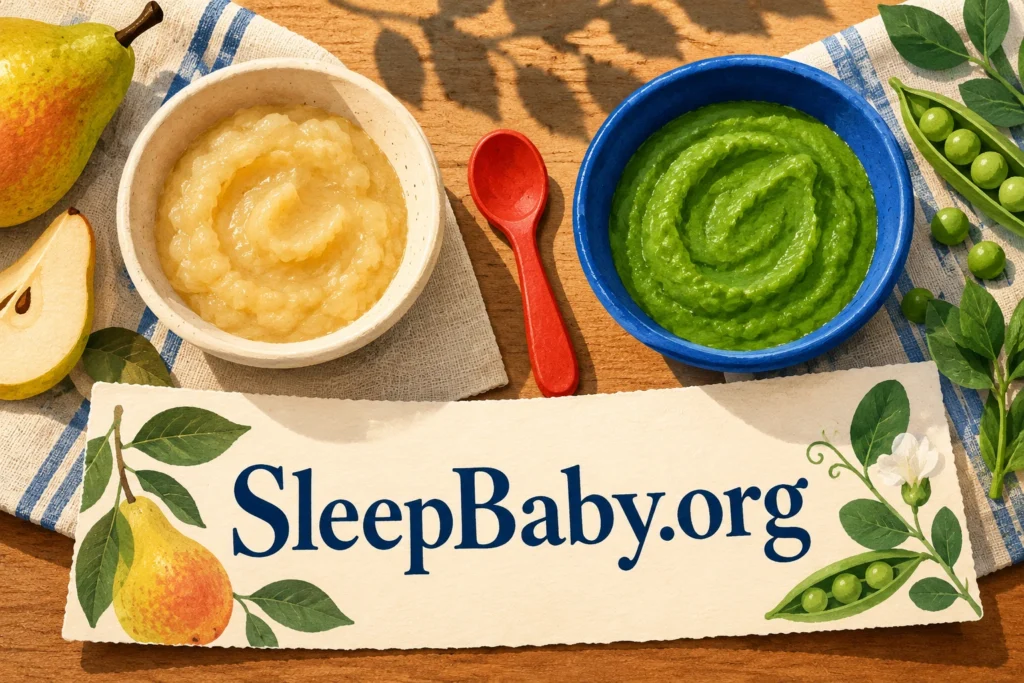
Do not push solid food while your toddler is actively vomiting, cannot keep fluids down, looks dehydrated, or seems markedly unwell. Start with small, frequent amounts of fluid. A commercial oral rehydration solution is the most reliable choice when repeated vomiting, diarrhea, or dehydration risk means your child needs both fluid and electrolytes. Once fluids are staying down, hydration is improving, your toddler is alert, and appetite returns, offer a small portion of a familiar age-appropriate food. Toast, rice, banana, applesauce, potatoes, pasta, eggs, lean meat, yogurt if tolerated, fruit, and cooked vegetables can all fit; no single food is required and none cures vomiting.134
Get urgent medical help for green vomit; blood or material that looks like coffee grounds; severe or persistent belly pain; a swollen abdomen; a seizure; trouble breathing; confusion or inability to wake normally; suspected poisoning or serious injury; or any situation that seems life-threatening. Call the pediatrician promptly if your toddler cannot keep fluids down, has signs of dehydration, is unusually sleepy or irritable, is weak or dizzy, has repeated forceful vomiting, or continues vomiting beyond 24 hours. Call sooner whenever you are worried.267
The hard part of this question is not finding a food that sounds gentle. It is deciding whether food is the right job yet. A worried caregiver can stand in front of six open cupboards holding toast, crackers, bananas, broth, yogurt, and one very persuasive pouch while still having no idea which choice matters.
The first useful distinction is simple: hydration is the priority; appetite is information. Missing a meal for a short time is usually less concerning than a child who cannot drink, is urinating much less, has a very dry mouth, makes few or no tears, has sunken-looking eyes, or is becoming hard to wake. Food can wait for a steadier moment. Dehydration and urgent symptoms cannot.
Before choosing food, check whether home feeding advice fits this moment
Look at your child before you look at the pantry. Are they breathing comfortably and responding normally? Can they sit or stand with their usual strength? Is the belly soft rather than swollen? Is there severe pain that continues between vomiting episodes? What color and appearance did the vomit have? Has there been a possible poison exposure, head injury, or other serious injury?
Green vomit can signal bile; blood or coffee-ground-like material, severe pain, a swollen abdomen, breathing trouble, a seizure, altered responsiveness, or suspected poisoning or serious injury needs urgent assessment. If your child looks very ill or you believe the situation is life-threatening, call emergency services. Do not delay care to see whether toast stays down.267
Next, look for dehydration in ordinary household terms: much less urine or darker urine, a dry mouth, few tears, sunken eyes, unusual sleepiness or irritability, weakness or dizziness, and an inability to drink or keep fluids down. A toddler can be tired after vomiting without being dangerously lethargic, but a child who is difficult to wake, cannot stand normally, or is getting less responsive has left the food-advice lane.167
You do not have to diagnose a stomach virus, food poisoning, allergy, migraine, appendicitis, obstruction, or anything else from one episode. The useful home question is narrower: Does my child have an urgent sign, can small fluids stay down, and is hydration moving in the right direction? When the answer is unclear, call the pediatrician rather than turning the next snack into a medical test.
Get small amounts of fluid staying down
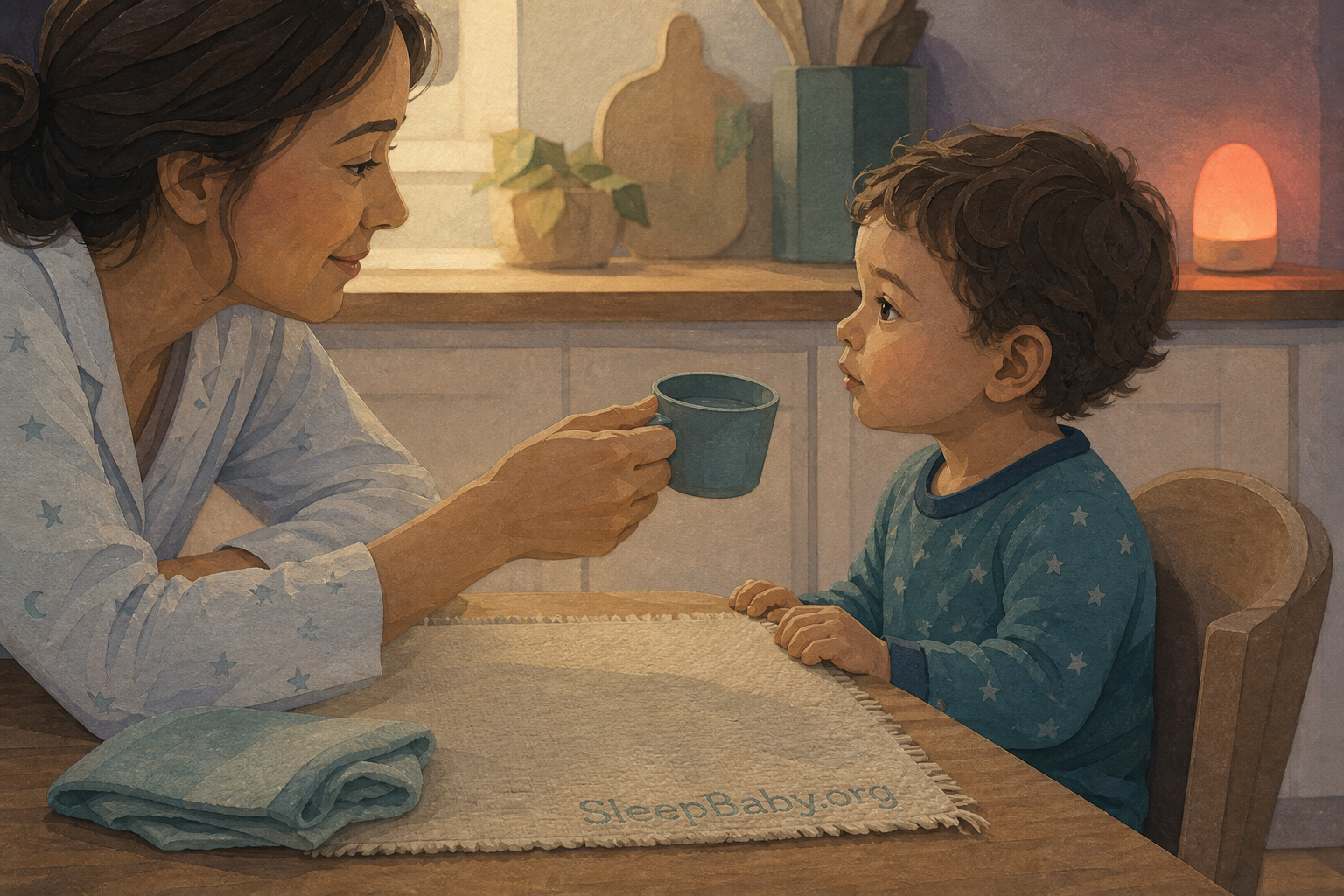
A thirsty toddler may reach for a full cup with both hands and keep going before you have set the towel down. The understandable impulse is to let them finish it. A large amount at once, however, can be harder for an unsettled stomach to tolerate. Current pediatric guidance favors offering small amounts frequently and building gradually rather than using one big drink to prove the illness is over.1347
Use a spoon, small open cup, straw cup, or the child’s familiar cup if it helps you pace the offering. The tool is not the treatment; the small, patient rhythm is the point. Do not force a specific universal volume or schedule from an article. Your child’s weight, fluid losses, diarrhea, medical history, and clinician’s instructions all affect an individualized plan.
A commercial oral rehydration solution is designed with a balance of fluid and electrolytes for rehydration. It has the clearest role when vomiting is repeated, diarrhea is also present, or you see dehydration risk. Soda, ginger ale, undiluted juice, sports drinks, coconut water, broth, plain water, and homemade mixtures are not interchangeable with it. Very sugary drinks may worsen diarrhea, and an improvised recipe can be mixed incorrectly. If your child refuses oral rehydration solution or keeps vomiting it, call the pediatrician for a plan rather than cycling through sweeter and sweeter substitutes.134
Do not give an over-the-counter anti-vomiting or antidiarrheal medicine, bismuth product, supplement, probiotic, or ginger dose unless your child’s own clinician specifically recommends it. Stopping the symptom is not the only goal; the cause, age, hydration status, and medication risks matter.
Read the child, not one rigid clock
Is it time for food yet?
Official guidance does not use one perfectly matching food clock. American Academy of Pediatrics parent guidance describes limiting solids for roughly 12 to 24 hours during a vomiting illness, while CDC, NICE, and NIDDK guidance supports returning toward the usual age-appropriate diet after rehydration or when appetite and tolerance return. That is not a reason to guess. It is a reason to use the child’s state, fluid tolerance, and clinician’s advice.1345
State 1
Vomiting is active or fluids fail
What you see: another episode is happening, even small drinks come back up, dehydration signs are present, or your child looks markedly unwell.
Do now: do not push solids. Return attention to small fluids if home care is still appropriate and call for clinical guidance when fluids will not stay down, dehydration is present, or symptoms are worsening.
State 2
Small fluids are staying down
What you see: the child is tolerating repeated small sips and hydration is beginning to improve, but appetite has not really returned.
Do now: continue the fluid plan. Do not use a large drink or full meal as a challenge. A brief lack of interest in food is not a reason to bargain or force.
State 3
Rehydrated, alert, and asking for food
What you see: fluids are tolerated, urine and mouth moisture are reassuring, energy is returning, and your toddler shows genuine appetite.
Do now: offer a small familiar portion. Let the child decide how much to eat, expand the usual diet as tolerated, and step back if nausea or vomiting returns.
SleepBaby.org kitchen rule: the next bite is an offer, not a finish line. A child who is ready can begin small; a child who is not ready does not need to be persuaded.
What foods can you offer first?
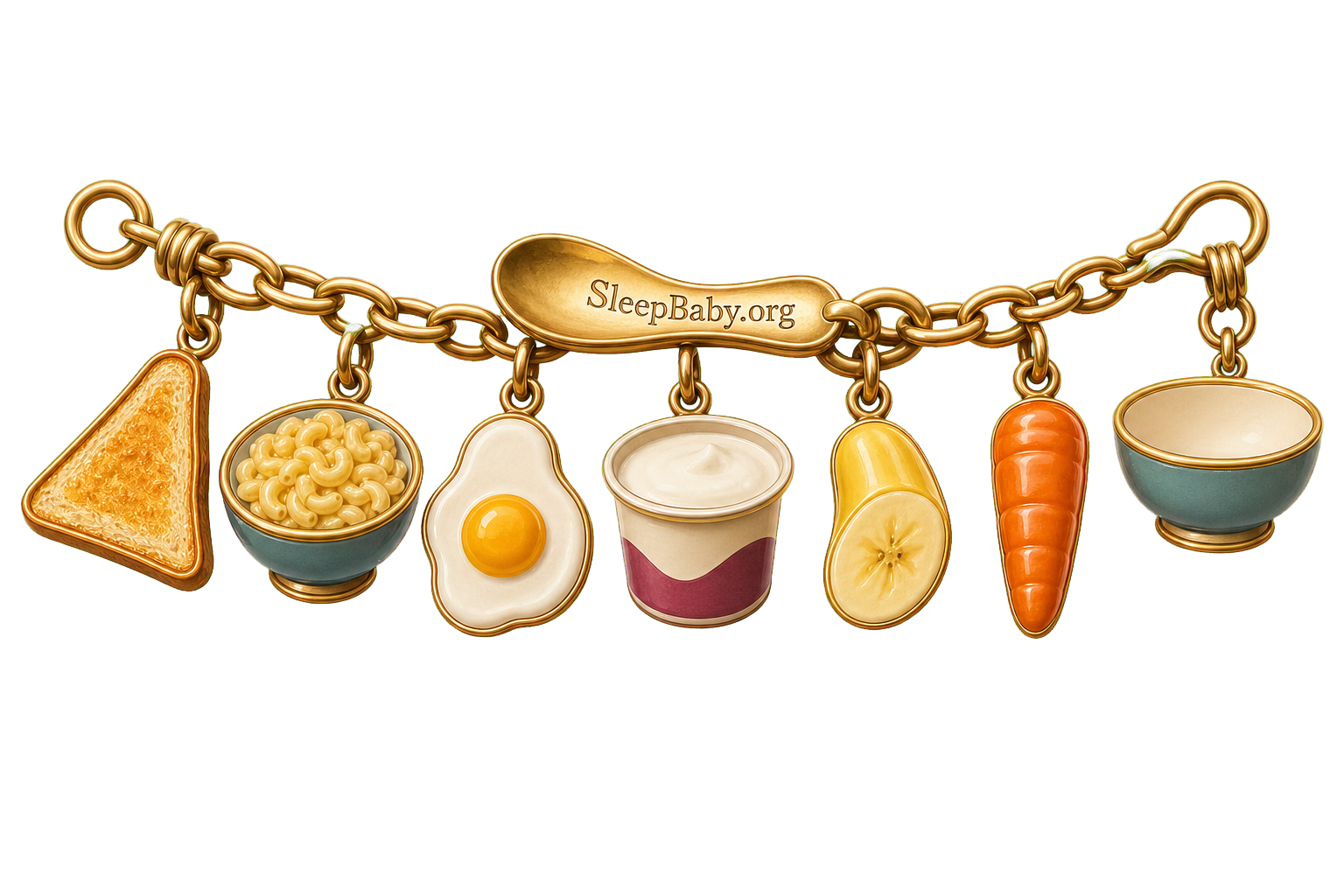
Once your toddler reaches the ready-to-eat state, start with a small amount of something familiar. Familiarity matters more than finding a supposedly perfect recovery food. A few bites of toast, rice, oatmeal, potato, pasta, egg, lean chicken, yogurt if tolerated, banana, applesauce, pear, or a soft cooked vegetable can all be reasonable. Serve age-appropriate textures and ordinary choking precautions, especially if your child is tired.
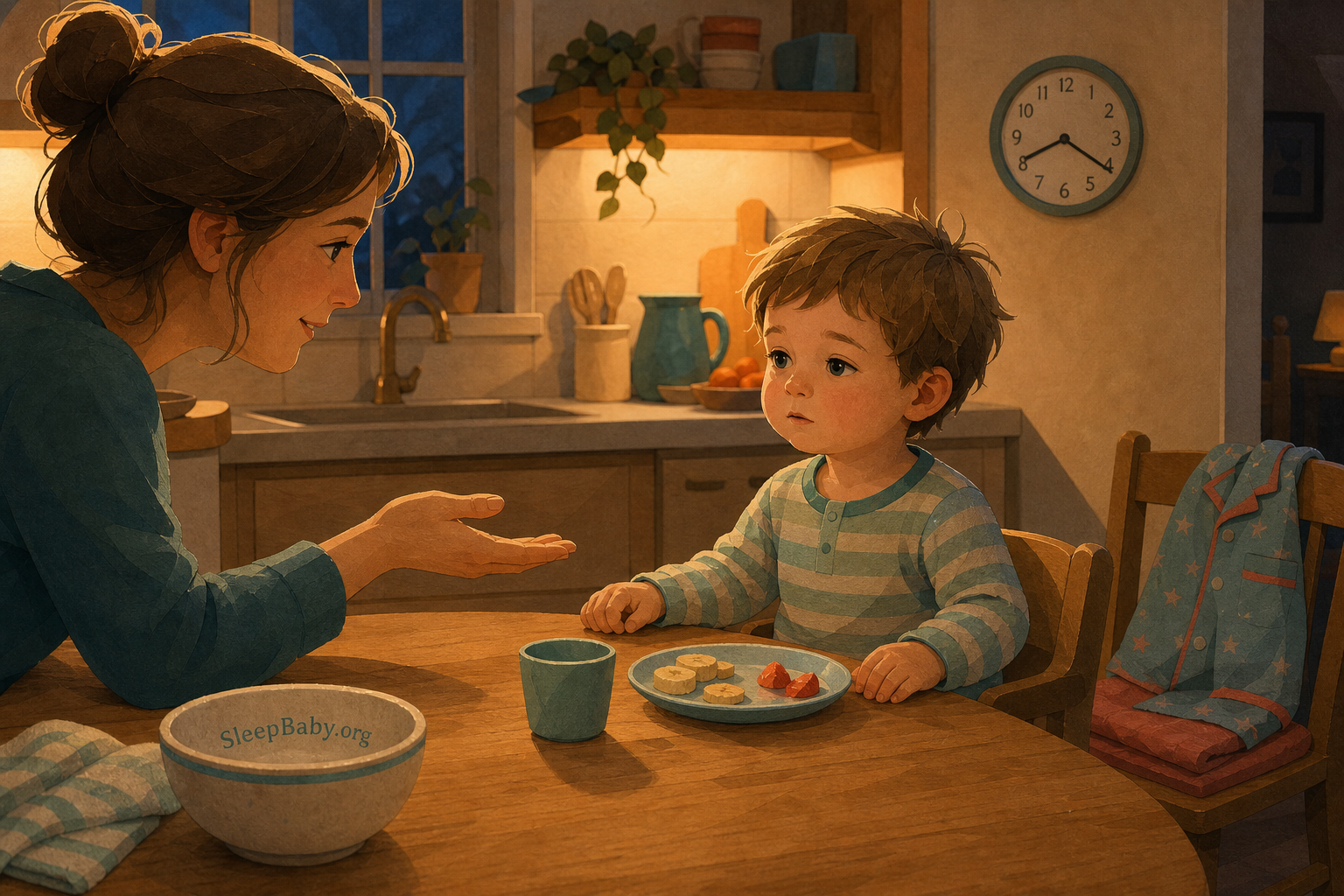
The portion should look like an invitation, not a test. Put down one or two modest choices and let your toddler stop. A plate heaped with every safe-sounding food can create pressure even when no one says, “Just one more bite.” If the child wants more and continues to tolerate it, offer more. The goal is a gradual return to the usual diet, not a ceremonial first meal.
Build a small familiar plate
What to offer next
These are examples, not a required menu. Choose foods your toddler already eats safely, offer a small portion, and pause when the child’s body says pause.345
| Food group | Familiar examples | How to begin | When to pause |
|---|---|---|---|
| Starch or grain | Toast, rice, oatmeal, potato, pasta, crackers, or another usual grain | Offer a few soft bites or pieces in the texture your child manages safely. | Pause for returning nausea, pain, gagging beyond the child’s usual pattern, or vomiting. |
| Protein | Egg, lean poultry, beans, tofu, or another familiar protein | Keep it simply prepared and serve a modest amount alongside a familiar starch if helpful. | Pause if rich preparation, smell, or texture is clearly making nausea worse. |
| Fruit or vegetable | Banana, applesauce, pear, squash, carrots, peas, or another usual soft option | Use ordinary age-safe pieces or spoonable texture; there is no need to turn the whole meal into puree. | Pause if a high-sugar serving appears to worsen diarrhea or the child loses interest. |
| Dairy, if tolerated | Usual milk or plain yogurt after rehydration | Do not eliminate it automatically; return toward the usual diet according to tolerance and clinician advice. | With diarrhea, pause and ask about a temporary plan if dairy repeatedly increases cramps, gas, or loose stools. |
| Fluid beside food | The current small-sip plan; oral rehydration solution when indicated | Keep the cup modest and available rather than encouraging a large wash-down. | Stop the food trial and reassess if fluids begin coming back up. |
Mobile note: the table scrolls horizontally inside its labeled border so each food, serving idea, and pause signal stays aligned.

BRAT foods are options, not the whole recovery diet
Bananas, rice, applesauce, and toast are familiar, soft foods, and there is nothing wrong with offering one if your child wants it. The problem begins when those four foods become a rule that crowds out protein, other carbohydrates, fruits, vegetables, and tolerated dairy for longer than needed.
CDC and NIDDK guidance does not support fasting or a prolonged restrictive diet as a treatment for gastroenteritis. After rehydration, children can move back toward an age-appropriate usual diet as tolerated. That does not mean handing a nauseated toddler a large, rich meal. It means the pantry is wider than four beige choices.35
If toast is the first accepted bite, let toast be the first bite. Then follow the child rather than promoting toast to a treatment plan. The distinction matters because “something familiar was tolerated” is useful information; “this food settles every stomach” is a promise no food can make.
The hydration job stays; tolerance may change
Vomiting only / vomiting with diarrhea
When vomiting is the main symptom
- Watch urgent signs and hydration first.
- Use small, frequent fluids rather than a large drink.
- Offer a small familiar food after fluids are tolerated, hydration improves, and appetite returns.
- Do not force a bland-only diet or remove dairy automatically.
- Call when vomiting persists, fluids fail, pain is significant, or your child looks unwell.
When diarrhea is present too
- Keep the same urgent-sign and hydration priorities; fluid losses may be greater.
- Commercial oral rehydration solution has a particularly useful role when dehydration risk rises.
- Very sugary drinks, large juice servings, and high-fat or fried foods may worsen symptoms.
- Some children temporarily tolerate lactose less well; this is not a reason for every child to avoid dairy.
- Ask the pediatrician when losses continue, hydration is slipping, or you need an individualized feeding plan.
SleepBaby.org tolerance rule: do not rewrite the entire diet because one symptom joined the room. Adjust only what the child’s hydration, stool pattern, and actual tolerance ask you to adjust.
Guidance: CDC, NICE, and NIDDK distinguish early return to usual food from high-sugar, high-fat, and sometimes lactose-related diarrhea tolerance concerns.345
What about milk, water, juice, ginger ale, and oral rehydration solution?
Commercial oral rehydration solution
This is the purpose-built option when repeated vomiting, diarrhea, or dehydration risk means the body needs water plus electrolytes in a tested balance. Offer it in small, frequent amounts and follow your clinician’s specific plan if one was provided. If it repeatedly comes back up, the answer is not to force more; call for guidance.14
Water
Water is an ordinary drink, but it is not formulated to replace the salts lost with repeated vomiting or diarrhea. For a child who is rehydrated, eating, and returning to normal, water can return as part of the usual routine. For active losses or dehydration concern, ask the pediatrician about oral rehydration rather than assuming plain water can do every job.
Milk
Milk is not automatically forbidden after vomiting. NICE guidance supports returning to full-strength milk after rehydration, and usual foods can resume as tolerated. If diarrhea is present and milk repeatedly seems to worsen cramps, gas, or loose stools, ask whether a temporary adjustment is appropriate. Do not create a long-term dairy restriction from one difficult afternoon.45
Juice, soda, and ginger ale
Full-strength juice, soda, and ginger ale are high in simple sugar and are not substitutes for oral rehydration solution. They may worsen diarrhea. Ginger ale is also not a reliable way to deliver a therapeutic ginger dose, and this Article does not recommend giving ginger as a treatment. If that familiar suggestion is still circling your kitchen, the separate guide to why ginger ale is not a baby or toddler rehydration plan explains the distinction in more detail.134
What if your toddler refuses food?
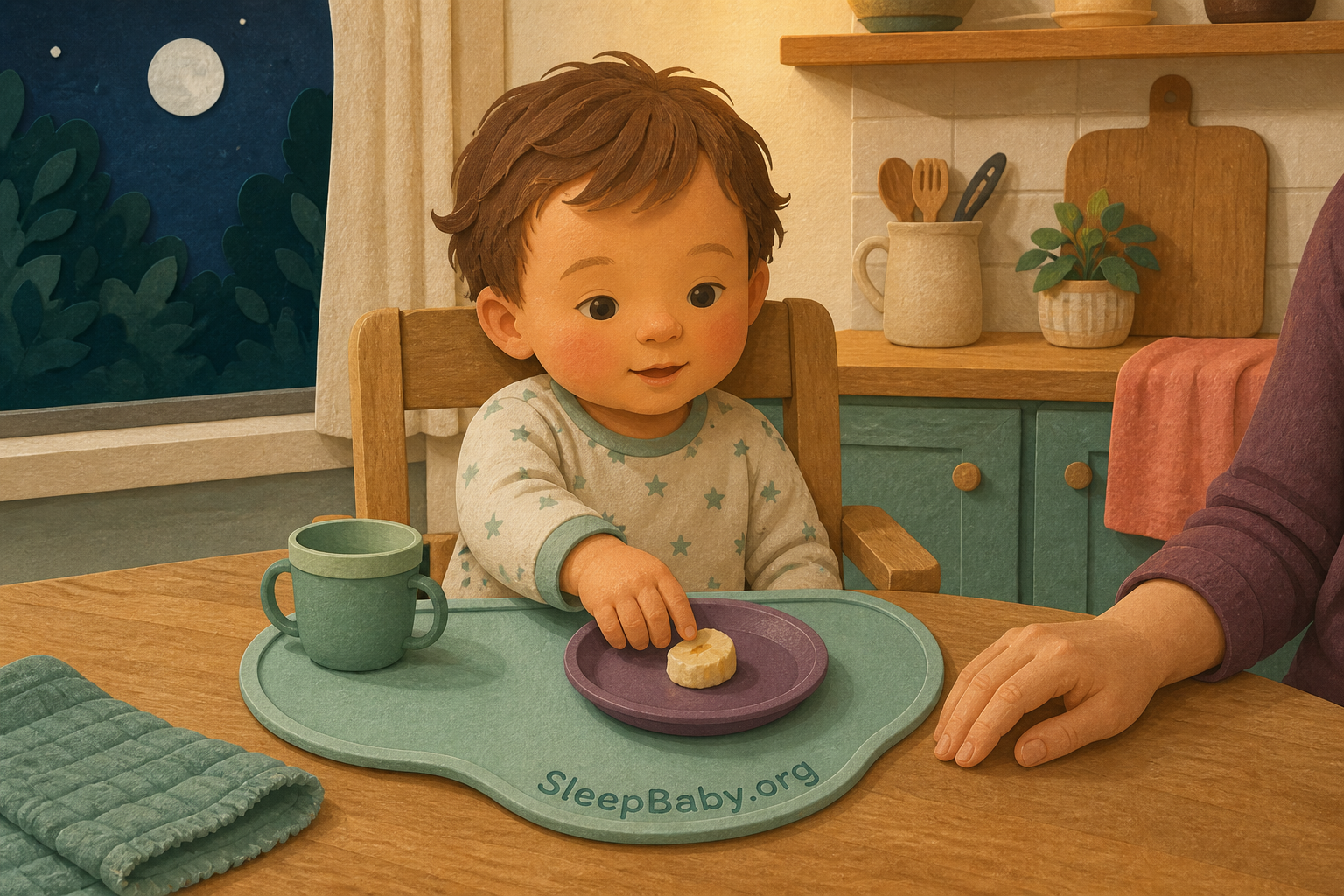
Let refusal be information. A toddler who can take fluids but does not want food yet may simply not be ready. Keep offering the appropriate fluid plan and try a small familiar food later. Do not bargain, chase with a spoon, promise sweets for bites, or keep replacing the meal until the child is living on juice and snack food.
Watch the part that matters more: Can fluids stay down? Is urine returning toward normal? Is the mouth moist? Are tears present? Is energy improving? If hydration is not reassuring, food refusal is not the main problem. If hydration is reassuring and appetite is merely slow, gentle repeated opportunities are enough.
After the acute illness has resolved, some toddlers come back very hungry, including near bedtime. That is a different decision from feeding during active vomiting. The guide to ordinary nighttime hunger in toddlers can help once fluids, symptoms, and the illness plan are settled.
What if your toddler vomits after eating again?
Stop the solid-food attempt. Return to small amounts of fluid if home care remains appropriate, reassess hydration, and look again for the urgent signs at the top of this guide. Do not immediately try a different food, a bigger drink, or a medicine to keep the next attempt down.
Call the pediatrician if fluids will not stay down, dehydration signs are appearing, vomiting is repeated or forceful, pain persists between episodes, the belly is swollen, your child is unusually sleepy or irritable, or vomiting continues beyond 24 hours. A repeated pattern after one specific food can be useful to report, but it does not diagnose an allergy or intolerance by itself.27
The written hydration and escalation guidance is complete without a video. Any later embed must come from a verified pediatric institution, visibly load in the public Article, show a real play control, genuinely play, provide captions or an equivalent accessible path, and retain a written linked fallback.
Use the sign you can see, not the diagnosis you are trying to guess
Get help now / call promptly / keep watching
| Care level | What you can observe | What to do |
|---|---|---|
| GET HELP NOW | Green vomit; blood or coffee-ground-like material; severe breathing trouble; confusion, unresponsiveness, or inability to wake normally; seizure; suspected poisoning or serious injury; severe or escalating pain; or any life-threatening concern | Seek urgent or emergency care now. Call emergency services for a life-threatening concern and follow the dispatcher’s instructions. |
| CALL PROMPTLY | Fluids will not stay down; much less urine; very dry mouth; few tears; sunken eyes; unusual sleepiness or irritability; weakness or dizziness; repeated forceful vomiting; swollen abdomen; persistent pain; or vomiting beyond 24 hours | Call the pediatrician or seek urgent care as directed. Call sooner if the pattern is worsening or you are concerned. |
| KEEP WATCHING AND RECORD | Small fluids stay down; hydration and energy are improving; no urgent sign is present; and your child is gradually returning toward usual behavior | Continue the small-fluid and appetite-led plan. Record episodes, fluids, urine, diarrhea, pain, temperature, and what changes. This row never cancels your right to call. |
Mobile note: the table scrolls horizontally inside its bordered region; each visible sign remains paired with its action.
SleepBaby.org care rule: food is a later question. Breathing, responsiveness, pain, hydration, and fluid tolerance decide when kitchen troubleshooting ends.
Care levels are synthesized from current AAP, NHS, and Seattle Children’s vomiting and dehydration guidance.267
Write down the pattern, not a diagnosis
A short note can make the pediatrician call more useful. Record:
- when vomiting began and the approximate number of episodes;
- whether diarrhea, fever, pain, swelling, injury, travel, illness exposure, or a possible poison exposure is present;
- what the vomit looked like, especially any green, red, dark, or coffee-ground-like material;
- which fluids were offered, what stayed down, and whether oral rehydration solution was accepted;
- urine frequency and color, mouth moisture, tears, eyes, energy, alertness, and ability to stand or walk normally;
- what food was offered, whether appetite returned, and what happened afterward;
- medications and medical conditions the clinician should know about.
Do not delay urgent care to make the note complete. A pattern is useful only when recording it does not compete with the child’s safety.
Questions that often come after the first small meal
Can my toddler sleep after vomiting?
A tired child may sleep after vomiting, but hydration, breathing, responsiveness, pain, and the cause of concern matter more than the fact that it is bedtime. Follow the clinician’s instructions and seek care for red flags or a child who is not waking or responding normally. If your separate question concerns a younger baby, the guide to sleep after vomiting in a baby addresses infant-specific safe-sleep boundaries; do not import infant positioning rules into toddler feeding decisions.
What if constipation appears after the illness?
Once active vomiting and urgent symptoms have resolved, lower intake and routine changes can be followed by a separate stool question. The guide to toddler constipation can help with that later problem. Constipation should never be used to explain away active vomiting, severe or persistent pain, a swollen abdomen, or a child who looks very ill.
How quickly should the usual diet return?
Return by tolerance rather than by performance. Once rehydrated and interested, your toddler can move from a small familiar portion toward the usual balanced diet. If symptoms return, step back and reassess. If a clinician has given a specific plan because of your child’s history, diagnosis, or dehydration level, that plan controls.
Sources
- American Academy of Pediatrics: Treating Vomiting and Drinks to Prevent Dehydration When a Child Is Vomiting – small frequent fluids, oral rehydration, dehydration priority, medication boundaries, and the parent-facing approximate solid-food window.
- American Academy of Pediatrics: Causes of Vomiting in Infants and Children and AAP Symptom Checker: Vomiting With Diarrhea – green or bloody vomit, pain, swelling, forceful vomiting, dehydration, failed fluids, altered responsiveness, and prompt-care boundaries.
- CDC: Managing Acute Gastroenteritis Among Children and CDC Yellow Book: Traveling Safely with Infants and Children – oral rehydration, small fluid volumes, return to an age-appropriate usual diet after rehydration, BRAT limitations, and high-sugar or high-fat tolerance concerns.
- NICE CG84: Gastroenteritis in Children Under 5 – frequent small oral rehydration amounts, no solids during clinical rehydration, usual food and full-strength milk after rehydration, and juice or carbonated-drink cautions with diarrhea.
- NIDDK: Eating, Diet, and Nutrition for Viral Gastroenteritis – return to usual food when appetite returns, no routine fasting or restrictive diet, and possible high-fat, high-sugar, or temporary lactose tolerance concerns.
- NHS: Dehydration and NHS: Norovirus – observable dehydration signs, small sips, food when able, drink cautions, and urgent vomiting signs.
- Seattle Children’s: Vomiting Without Diarrhea – dehydration observation, small fluids, persistent pain, green or bloody vomit, weakness, failed fluids, and urgent-care boundaries.
The first small sip and bite are enough for this moment
Rebuild the rest of the night one gentle step at a time
A sick night does not need a perfect menu or a perfect routine. First handle dehydration, pain, persistent vomiting, and every medical concern. When your child is safe, rehydrated, and recovering, the SleepBaby.org Workshop can help you shape a realistic return to bedtime around the family you have tonight – without pretending that sleep support treats illness.