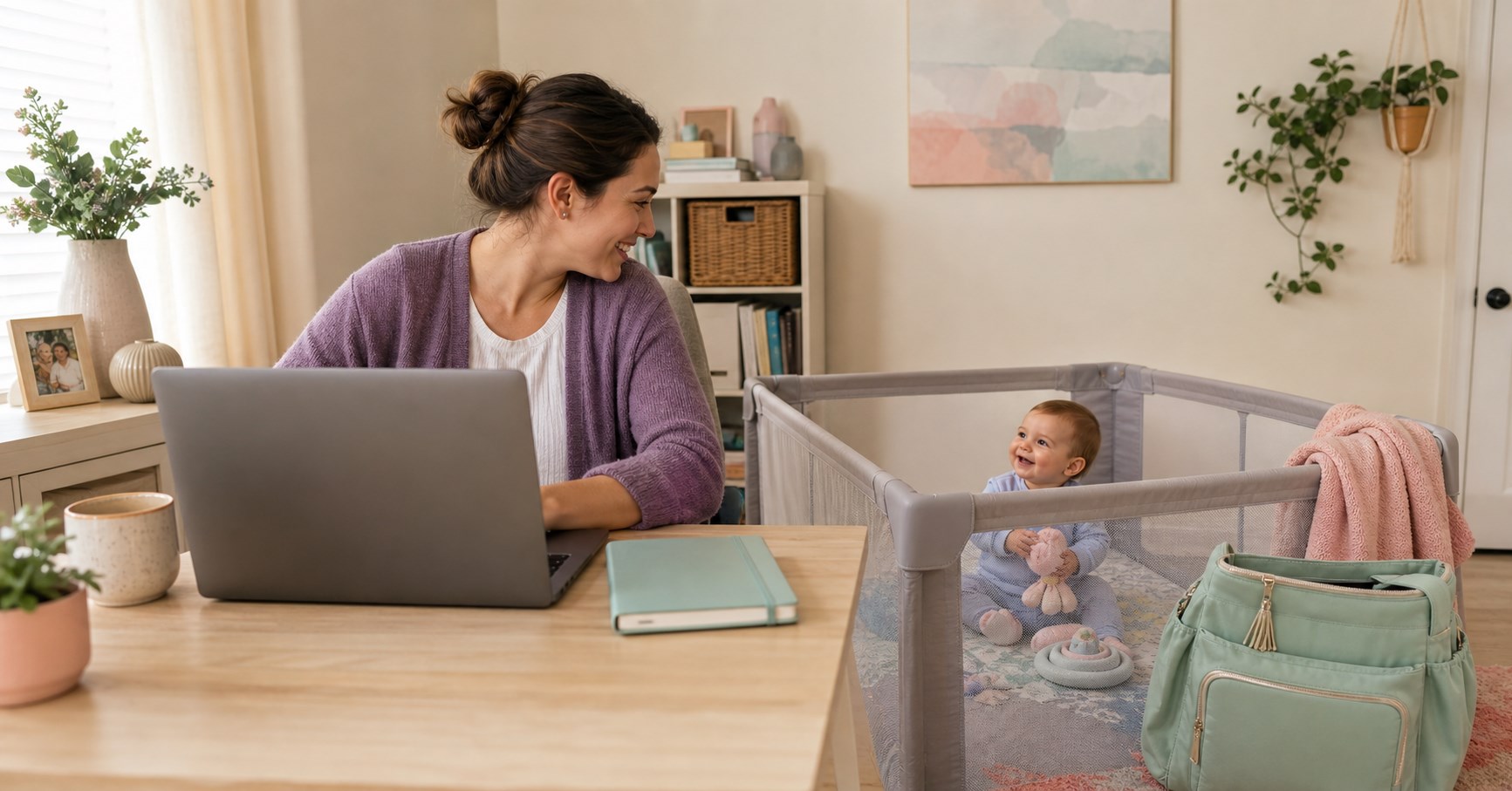
When maternity or paternity leave comes to an end, it can be challenging to leave your little one behind. A solution that many parents are opting for is taking the baby to work. If your workplace supports this kind of setup, here are some of our top taking baby to work tips to ensure a seamless experience for you, your baby, and your coworkers.
1. Understand Your Workplace Policies
Before you decide to take your baby to work, make sure to familiarize yourself with your company’s policies about children in the workplace. This could involve reading your employee handbook or consulting with your human resources department.
2. Plan for Baby’s Needs
Babies have specific needs and schedules. Be sure to prepare a designated area for diaper changes, naps, and feedings to ensure minimal disruption to your work schedule and your co-workers.
3. Pack Essential Items
From diapers and bottles to comfort toys and a change of clothes, ensure you’ve packed all the essentials your baby might need throughout the day.
4. Establish a Routine
Establishing a routine will not only make the day more predictable for your baby but will also allow you to manage your time effectively. This includes regular feeding times, nap times, and playtimes.
5. Be Considerate of Your Co-workers
Always remember that while your baby is your top priority, you should also be considerate of your coworkers. Ensure that your baby is not causing significant disruptions, and be ready to step out when your baby needs attention or becomes fussy.
6. Be Flexible
Last but not least, remember to be flexible. Some days will be easier than others, and that’s okay. The key is to adapt and find what works best for you and your baby.
Taking your baby to work might seem daunting, but with the right planning and preparation, it can become a rewarding experience. Remember, each day is a learning opportunity, so take one step at a time. Happy parenting!
Understanding the Concept: Bringing Baby to Work
Is it OK to bring a baby to work?
Whether it’s okay to bring a baby to work largely depends on your company’s policies. Some companies are supportive of this and may even provide facilities for babies, while others may not. It’s crucial to discuss this with your employer or HR representative.
Why do people bring their babies to work?
Parents may bring their babies to work to reduce childcare costs, to breastfeed conveniently, or to maintain a close bond with their newborn during the early stages of development.
Managing Your Work Schedule and Parental Responsibilities
How can I work while taking care of my baby?
It’s all about planning and creating a routine. Set specific times for feeds, naps, and playtime. Ensure you have a quiet, comfortable space for your baby to sleep or play while you work.
How do I work full time with a newborn?
Working full time with a newborn can be challenging but possible with a bit of planning. Align your baby’s nap time with your work schedule and consider using baby-friendly work tools, like a baby carrier, so you can work while keeping the baby close.
Can you take your baby with you to work?
Yes, some companies allow employees to bring babies to work. However, it’s crucial to understand your company’s policy first. Also, ensure that you have all essentials for your baby’s needs throughout the day, and that you are prepared to handle any disruptions that may arise.
Going Back to Work After Maternity Leave
How do I prepare for going back to work with a baby?
Preparing for going back to work involves creating a baby-friendly routine that aligns with your work schedule. Gradually acclimatizing your baby to this routine before your return to work can help ease the transition.
How soon can you go back to work after having a baby?
The timing for going back to work post-childbirth varies greatly among individuals and depends on factors like your health, baby’s health, and your personal and professional commitments. Always consult with your healthcare provider to determine what’s best for you.
Considering Parents’ Roles
How do working parents manage a baby?
Working parents manage a baby by sharing responsibilities, creating an efficient routine, and ensuring effective communication between themselves and their caregivers or child support systems. This could include tasks like feeding, changing, and playtime.
Should working dad get up with baby?
Absolutely. Sharing nighttime responsibilities can help lighten the load for working moms, thus helping both parents get enough rest. It also fosters bonding between the dad and the baby.
Maintaining Baby’s Well-being
Will my baby know me if I work full time?
Definitely. Even if you work full time, the quality of time you spend with your baby when you’re off work is what counts. Engaging in activities such as feeding, playing, and bathing helps strengthen your bond with your baby.
What happens to the baby when mom goes back to work?
How a baby responds when mom goes back to work depends on how well the transition is managed. It can be a significant change for the baby, but with the right planning, consistency, and support, the baby can adjust well over time.
Dealing with Pregnancy and Work
Can I stop working at 6 months pregnant?
Whether you can stop working at six months pregnant largely depends on your personal health, the nature of your job, and your financial circumstances. It’s essential to discuss your plans with your healthcare provider and employer.
Can I ask for reduced hours at work when pregnant?
Yes, many women request for reduced hours during pregnancy. You may be able to negotiate this with your employer or take advantage of any maternity policies your workplace may have.
Exploring the Idea of Working from Home with a Baby
Is it realistic to work from home with a baby?
Working from home with a baby can be a challenge, but with the right tools and strategies, such as setting a routine and creating a designated workspace, it can certainly be manageable.
How do I keep my baby busy while working from home?
Keeping your baby busy while working from home involves creating a safe and stimulating environment. This could include setting up a playpen with age-appropriate toys, scheduling playtimes, and ensuring they have sufficient naps.
How can I make money at home while taking care of my baby?
You can consider remote work or freelance opportunities that align with your skillset. Additionally, there are many online platforms that provide opportunities for making money from home. Remember to set a routine that allows you to focus on your work and take care of your baby simultaneously.
How can I work around the house with my baby?
Working around the house with a baby can be made easier with the help of baby carriers or baby seats. You can also engage your baby in safe activities nearby as you work.
Remember, taking your baby to work can be a rewarding experience that strengthens the bond between you and your baby. By addressing these concerns and following these tips, you can ensure a smooth transition for you and your baby.
SleepBaby.org: Your Companion in This Journey
One of the most critical aspects when it comes to taking your baby to work is ensuring they are getting adequate sleep. That’s where SleepBaby.org can help. SleepBaby.org is a reliable resource for new parents providing effective techniques to help your baby sleep better.
Sleep is not only essential for your baby’s growth and development but also contributes to their mood and behavior throughout the day. A well-rested baby is usually happier and less fussy, which can make your bring-your-baby-to-work experience much smoother.
SleepBaby.org can help you establish a sleep routine, provide guidance on how to calm a fussy baby, and offer tips on creating a conducive sleep environment, even in a busy office setting. Visit SleepBaby.org for more information and expert advice.






What viewers said10 comments · 4 replies+
Archived comments from the original Baby Sleep Miracle presentation. Not independently verified by SleepBaby.org; individual experiences vary.
Thank you so much for this video! I had no idea about the dangers of baby swings :O
Hi Mary-Ann. I have a question: Is method in any way similar to the ones recommended by Dr Bucknam, Dr. Weissbluth or Dr. Karp? We tried those but none of them help.
Hi Regina, thank you for your question. The short answer is no. The techniques I share in my guide are based on newest scientific research and this is why I have never seen any approach similar to the one I recommend.
This method really works! I tried it on my son Jesus and after just one week he went from waking up more than 5 times a night to waking up just once or twice. You are a lifesaver, Mary-Ann!
I'm truly impressed with how much information you share in your video. And all for free! I can feel that you truly care about mothers like myself, and that's hard to find these days. I have recommended your site to several of my friends already.
Mary-Ann, our child suffers from autism. Is your approach still suited?
Chloe, I made sure my method can be used with any child, even babies who are special like yours. Please note that I'm not a doctor and that I always advice to consult with your physician because nothing is more important than the safety and well-being of your love.
Hallo Mary-Ann, I'm from Germany. Do you have your guide in German?
Hello Heide, we do! Normally you should already see our video in German. If not, please contact our support so they can guide you
Thenk you for your answer, Mary-Ann!
I just completed your approach and I have to say, it worked almost too well. Yes, it took a bit of getting used to with your bedtime routine but the difference is huge. My son George used to take 1 hours to go down and now he's firmly asleep in no more than 10 minutes! You're the best!
It seems I'm the only man watching this video, lol! What you shared about the 'emotional backpack' made immediate sense to me and I can't wait to help my little girl Mila to unpack it!
Hey there, just discovered your site and this really sounds different. Just wanted to say thanks for sharing :)
For everyone who's still thinking about getting Mary-Ann's guide I want to advise you to go ahead. I wasn't sure myself but now I'm so thankful I invested in this program. It made a huge difference in our life as a family and yes, my baby girl does sleep through the night now.