
I would skip Monster Jam with a baby and make a quieter care plan. The American Academy of Pediatrics advises avoiding excessively noisy venues with young children. A venue may admit infants, but admission is not a hearing-safety recommendation. Protective earmuffs can reduce exposure; they do not make every seat, sound or length of visit safe.
If tickets are already on the fridge, you still have choices. Start with who can care for your baby away from the event, then decide whether the rest of the family can attend. A plan that changes is better than one you feel trapped into following.
Start with the care plan, before the packing list
Best starting point: your baby stays in a quieter setting with a trusted, capable caregiver, if that arrangement is available.
If the family can split up: one adult can take an older child while another cares for the baby. Consider everyone’s needs, including hearing protection for those attending.
If neither works: missing this event is a reasonable decision. You do not have to solve an avoidable noise exposure by buying more equipment.
If you are already at the venue with your baby, move away from the noise and make leaving the next practical step.
Why I would not treat this as an ordinary family outing
Noise is more than something that might make your baby cry. NIDCD explains that loud sound can damage structures inside the ear, sometimes after a single intense exposure. Hearing loss can be immediate or become noticeable later. Your baby cannot tell you that sounds seem muffled or that their ears are ringing.
That is why “they slept through it” would not reassure me. A calm face, a nap or an older sibling’s enjoyment is not a measurement of the sound reaching an infant’s ears. You do not need to wait for obvious distress before choosing a quieter place.
The AAP also warns against applying adult workplace noise limits to children. An eight-hour occupational limit is not a safe-event allowance for a baby. There is no universal number of minutes, age or seating row that I can use to clear your infant for Monster Jam.
For a baby born prematurely or with a health or hearing concern, discuss outings with their clinician. That conversation can address your child’s needs; it cannot turn an unmeasured noisy venue into a guaranteed safe setting.

Can babies enter Monster Jam?
The current U.S. Monster Jam FAQ says many venues admit children under two without a ticket when they sit on an adult’s lap. Some venues require a ticket for everyone. Confirm the policy for your specific event and country rather than assuming the general rule applies.
The FAQ describes an average event length of about two hours, including an interval, and says some events may use pyrotechnics. Bags follow the venue’s rules, and most venues restrict re-entry. Those details matter when you are deciding whether an early departure will be simple or difficult.
I would settle the baby’s care before adding experiences or making a group promise. A free lap admission can make the choice feel easier, but it does not change the hearing question.
If you already bought tickets, ask the ticket provider what your actual options are. Do not assume you can exchange, refund or transfer them, or that leaving and returning will be allowed. Get the answer before the day if possible, so it does not become a decision made while holding an unsettled baby.
Your call-ahead questions
- Admission: Does this exact event require an infant ticket, and are there separate rules for any additional experience?
- Leaving: Which exit is easiest to reach from the booked area? What happens if part of the group leaves?
- Quieter space: Is there a genuinely separate room available, where is it, and can it be reached without waiting in a long queue? Do not assume a concourse is quiet.
- Baby care: What are the rules for milk, feeding supplies, diaper bags, changing facilities, strollers and storage?
- Access: Are there stairs, lifts or other obstacles between the seats, facilities and exit?
These questions reveal practical limits. A helpful answer from guest services is not medical clearance to expose your baby to the show.
What hearing protection can and cannot do
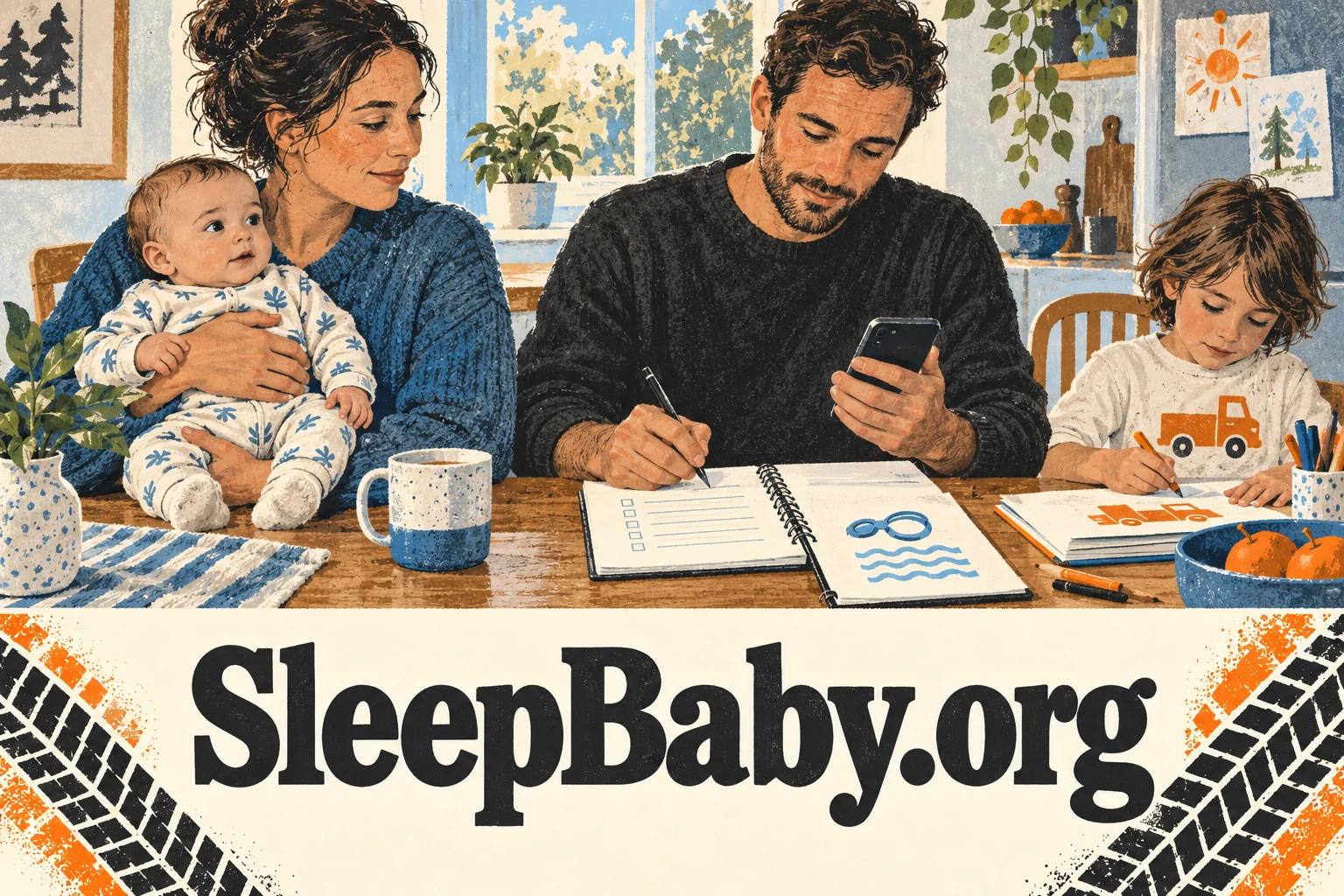
NIDCD puts avoiding loud activities first. When noise cannot be avoided, correctly fitted protective earmuffs can help. They need to cover both ears and seal against the head; hats, hair or other objects can interfere. No hearing protector blocks every sound.
For infants who are brought to excessively noisy events, the AAP advises protective earmuffs. It also cautions that earplugs can be a choking hazard for young children. Do not improvise an infant setup from loose foam plugs, cotton, ordinary headphones or someone else’s adult-size equipment.
Noise cancellation and hearing protection are not interchangeable labels. NIOSH explains that active noise-cancelling headphones should not be treated as hearing protection unless labelled with a noise reduction rating. That is a distinction between products, not a recommendation to use adult occupational equipment or exposure limits for a baby.
Choose only a product that is appropriate for your baby’s current size and developmental stage, and follow the exact instructions. A “baby” label alone does not confirm fit. If protectors slip, leave gaps or cannot be kept in place, move out of the noise. Do not spend the next performance repeatedly adjusting them while staying in the same setting.
NIOSH also notes that a package noise reduction rating does not necessarily describe the protection an individual actually receives. Subtracting that number from an online estimate of an arena’s sound level cannot establish your baby’s exposure. I would not use that calculation to decide to stay.
PLAN FOR THE QUIETER PART OF THE DAY
A different outing can still have an ordinary bedtime.

The SleepBaby.org homepage introduces the SleepBaby.org Method and its information about bedtime routines and baby sleep schedules.
Perhaps one adult is taking an older child to the event while another stays with the baby. Perhaps everyone is choosing a different activity. Once that decision is made, you may want to think through the familiar parts of the evening: feeding, changing, who is available to help, and where your baby will sleep.
Visit the homepage to read what the Method covers and decide whether its discussion of routines and schedules fits the planning you want to do. It does not protect hearing, assess an arena’s sound levels or turn a noisy event into a suitable infant outing. Make that safety decision separately.
You can keep your evening plan modest. A clear care handoff and a suitable sleep space are useful starting points when the day has changed. There is no need to promise yourself that every nap or bedtime will happen exactly as planned.

Would a higher seat or outdoor stadium solve it?
Distance and time both affect noise exposure, but “farther back” is not a complete safety assessment. You would still need to know the actual sound conditions and the protection reaching your baby’s ears. An open roof does not provide that information either.
When planning for adults or older children who attend, ask about practical access as well as the view. A seat beside an aisle may make leaving easier. That is an exit advantage, not a promise of quieter or safer sound.
A phone app may help you notice noise, but it cannot approve the event for your infant. The NIOSH sound level app was developed for workplace measurement. Its published accuracy depends on the device and measurement setup. A reading on your phone does not measure sound under a baby’s earmuffs or create an infant-safe exposure limit.
The CDC describes needing to shout to be heard as a warning that sound may damage hearing. Treat that as a reason to move away, not as a challenge to stay until conversation becomes impossible. A place feeling tolerable to you does not settle the decision for your baby.
Optional: investigate suitable hearing protection
If you need infant hearing protection for unavoidable noise, Alpine Muffy Baby Comfort is one named option to investigate. Check the current exact model, size requirements and instructions against your baby. A product marketed for babies will not necessarily fit every newborn. I have not tested it, and this is not a comparative performance recommendation.
Follow the exact fitting and supervision instructions. Do not use a reduction rating to calculate that Monster Jam is safe for your baby, and do not use hearing protectors as a sleep aid. For this optional event, choosing a quieter care arrangement remains my recommendation.
Free or already-owned alternative: skip the noisy event with your baby, or arrange suitable care elsewhere if available. Already-owned hearing protectors should only be considered when appropriate, undamaged and correctly fitted under their exact instructions. Buying gear is not a requirement for changing the plan.
This section has no affiliate purchase link. As an Amazon Associate, SleepBaby.org earns from qualifying purchases through affiliate links elsewhere on the site.
Watch: why hearing deserves protection
NIDCD’s Journey of Sound to the Brain shows how sound travels through the ear. It is an educational animation for understanding hearing, not an assessment of Monster Jam or infant hearing protectors.
If the player does not work: open the official NIH video or read NIDCD’s written explanation of how we hear. Sound waves move the eardrum and tiny middle-ear bones, then travel through the cochlea. Sensory hair cells help turn that movement into electrical signals carried to the brain. The article’s noise guidance explains why protecting those structures matters.
Is the Pit Party a quieter alternative?
The organizer’s Pit Party page describes getting close to the trucks and meeting drivers, with activities varying by location. It does not establish that the area will be quiet or suitable for an infant.
Ask about the exact setup if your group is considering it. Do not assume “before the show” means no loud announcements, machinery or crowded waiting. Nor should you assume the baby can attend briefly and then leave with one adult while everyone else’s access remains unchanged.
For an older child who loves trucks, seeing the event with another trusted adult may preserve the experience they were looking forward to. Your baby does not need to join every part of an older sibling’s day for the family plan to count as a success.

If you are already there: leave first, reorganize second
- Move away from the noise. Ask staff for the quickest safe route out. Do not wait for halftime or one favourite truck.
- Keep care simple. One adult holds and attends to the baby while another handles belongings or speaks to staff, if you have that support.
- Reach a suitable quieter place. Then feed, change or settle your baby as needed. Do not assume the corridor beside the arena provides meaningful sound separation.
- Decide the rest of the day from there. Your group may separate, go home or cancel the next activity. Have the keys, transport plan and essential supplies with the baby’s caregiver.
If you cannot safely manage the route on your own, ask venue staff for help. Leaving is a complete decision; you do not owe anyone another trial period.
Feeding, weather and sleep still need a plan
If your baby stays with another caregiver, talk through the next feed, familiar ways of comforting them, emergency contacts and when you expect to return. The caregiver needs the supplies and instructions they will actually use, not just a bag whose contents you know.
For bottle feeds, keep your baby supported and supervise the feed. NHS bottle-feeding guidance advises against propping a bottle or leaving a baby alone with one. Follow the preparation and storage instructions for their usual milk; do not stretch the next feed to fit a show schedule.
At an outdoor outing or while waiting for transport, protect your baby from heat and direct sun. The NHS advises keeping babies under six months out of direct sunlight and warns against covering a pram with a blanket because it can cause overheating. A parked car is not a safe waiting room for a baby.
For sleep, use a separate appropriate infant sleep space with a firm, flat, level surface, placing your baby on their back and keeping soft objects and loose bedding out. NIH’s Safe to Sleep guidance explains the setup. Hearing protectors, a lap, a nursing cushion or a stroller seat do not create that sleep space.
If your baby falls asleep in a car seat, stroller or carrier, the AAP advises moving them to an appropriate firm, flat sleep surface as soon as possible. Plan where that will be rather than counting on a nap during the show.
If your baby has already been exposed to loud sound
First, prevent more exposure. Then contact your child’s clinician if you are concerned about the noise they experienced or a change in how they respond to ordinary sounds. Describe where you were, roughly how long you stayed, whether protection stayed in place and what you have noticed.
NIDCD advises telling your doctor if you think your child has trouble hearing. A baby passing a newborn hearing screen does not answer every later hearing concern. Do not try to test hearing by making loud noises close to their ears; ask about an appropriate assessment.
If your baby has difficulty breathing, becomes unresponsive or is difficult to wake, seek emergency help immediately. Those signs need urgent attention whatever you think caused them.
When you are home and immediate concerns are addressed, keep the next steps ordinary: feeding, a diaper change and a suitable sleep space. The AAP explains that noise can disrupt sleep. There is no need to make the room louder to help your baby “get used to” noisy outings.


Questions parents ask before changing the plan
What age is safe for Monster Jam?
There is no universal birthday that makes a loud event safe. For a baby, my starting recommendation is to avoid the excessive noise. For an older child, hearing protection, the actual environment and the ability to leave still matter.
What if my baby normally sleeps through everything?
Sleep is not proof that sound exposure is harmless. I would make the hearing decision independently of how easily your baby settles.
Can I buy hearing protection at the venue?
The organizer says concessions may sell novelty ear protection and disposable plugs while supplies last. That does not establish infant fit or suitability. Do not make a baby’s protection plan depend on whatever happens to be available after you arrive.
What if there is no one to watch the baby?
Then the plan may need to change for everyone, and that can be disappointing. You can acknowledge the disappointment without taking your baby into excessive noise. A quieter activity now and a different outing later are valid choices.
Can a sleep routine make the event easier on my baby?
A routine cannot protect hearing or make an unsuitable sleep location safe. Keep bedtime planning separate from the decision about exposure. The first question is where your baby should spend the event, not how to make them sleep through it.
Sources
- Monster Jam: U.S. FAQ
- Monster Jam: Pit Party
- AAP: Excessive noise risks to children
- AAP: How noise affects children
- NIDCD: Noise-induced hearing loss
- NIDCD: Protect your child’s hearing
- NIDCD: Your baby’s hearing and communicative development
- NIDCD: Journey of Sound to the Brain
- CDC: Preventing noise-induced hearing loss
- NHS: Keeping your baby safe in the sun
- NIOSH: Provide hearing protection
- NIOSH: Sound level meter app
- NIDCD: How do we hear?
- NHS: Bottle feeding advice
- Alpine: Muffy Baby Comfort hearing protection
- NIH Safe to Sleep: Reduce baby's risk
- MedlinePlus: When to use the emergency room for a child
- AAP: How to keep your sleeping baby safe
THE PLAN CAN CHANGE
Choose the day your baby needs.
You can protect your baby’s quieter care while making a separate plan for the rest of the family. For ordinary bedtime routines and schedules, visit SleepBaby.org to learn about the Method.


What viewers said10 comments · 4 replies+
Archived comments from the original Baby Sleep Miracle presentation. Not independently verified by SleepBaby.org; individual experiences vary.
Thank you so much for this video! I had no idea about the dangers of baby swings :O
Hi Mary-Ann. I have a question: Is method in any way similar to the ones recommended by Dr Bucknam, Dr. Weissbluth or Dr. Karp? We tried those but none of them help.
Hi Regina, thank you for your question. The short answer is no. The techniques I share in my guide are based on newest scientific research and this is why I have never seen any approach similar to the one I recommend.
This method really works! I tried it on my son Jesus and after just one week he went from waking up more than 5 times a night to waking up just once or twice. You are a lifesaver, Mary-Ann!
I'm truly impressed with how much information you share in your video. And all for free! I can feel that you truly care about mothers like myself, and that's hard to find these days. I have recommended your site to several of my friends already.
Mary-Ann, our child suffers from autism. Is your approach still suited?
Chloe, I made sure my method can be used with any child, even babies who are special like yours. Please note that I'm not a doctor and that I always advice to consult with your physician because nothing is more important than the safety and well-being of your love.
Hallo Mary-Ann, I'm from Germany. Do you have your guide in German?
Hello Heide, we do! Normally you should already see our video in German. If not, please contact our support so they can guide you
Thenk you for your answer, Mary-Ann!
I just completed your approach and I have to say, it worked almost too well. Yes, it took a bit of getting used to with your bedtime routine but the difference is huge. My son George used to take 1 hours to go down and now he's firmly asleep in no more than 10 minutes! You're the best!
It seems I'm the only man watching this video, lol! What you shared about the 'emotional backpack' made immediate sense to me and I can't wait to help my little girl Mila to unpack it!
Hey there, just discovered your site and this really sounds different. Just wanted to say thanks for sharing :)
For everyone who's still thinking about getting Mary-Ann's guide I want to advise you to go ahead. I wasn't sure myself but now I'm so thankful I invested in this program. It made a huge difference in our life as a family and yes, my baby girl does sleep through the night now.