
You can take your baby in an Uber, but arrange an appropriate rear-facing car seat before you request the ride. Bring your own suitable seat, or confirm that a specifically reserved Car Seat service supplies one that fits your baby. A standard ride does not promise a child seat. Holding your baby, sharing your seat belt or wearing a baby carrier is not a substitute for a properly installed restraint.
I would settle the seating plan before worrying about the stroller, the fare or whether the ride overlaps a nap. If the right seat cannot be supplied or installed correctly, change the travel plan. A short journey still needs a safe setup.
Service and official guidance checked October 3, 2026. Confirm current app details and the actual seat’s instructions before your trip.

Choose a seating plan before choosing a car
There are two decisions here: how you will get a suitable restraint, and which vehicle can accommodate it. Booking a larger car may help with luggage or space, but it does not answer the first question. I would work through the options in this order.
Three workable directions
Bring a seat you know: use an appropriate restraint you can install according to both its manual and the vehicle’s instructions. Check whether you can manage that seat, your baby and your bags at both ends of the ride.
Reserve a confirmed seat service: check that the actual supplied model supports your baby’s rear-facing size and fit. Read the local service details and check again when the car arrives.
Choose another arrangement: if neither works, consider a trusted adult’s vehicle with a suitable seat, a prearranged service that confirms the required equipment, or changing the outing. Another ordinary rideshare booking does not solve a missing seat.
“Bring a seat you know” does not mean that familiarity makes it compatible with every car. A different vehicle can have a different belt-locking system, seat shape or permitted seating position. The reason to practise beforehand is to understand your restraint’s instructions well enough to recognize a problem, not to assume installation will always be identical.
Think about the return now. If you bring a seat to a restaurant, appointment or airport, you need somewhere suitable to keep it while you are there. If you rely on a reserved service, you need a separate plan for getting back. I would not count on the same driver remaining nearby or a suitable seat appearing on demand later.
What Uber Car Seat does and does not establish
Uber’s Car Seat help page describes an advance reservation option in selected U.S. markets, with one supplied seat. That is a different choice from simply requesting an ordinary UberX or a larger vehicle. Look for the specific option for your route and time.
There is an important discrepancy in Uber’s public information. Its help page describes Nuna RAVA seats, while its U.S. service page still describes different, older-child seating in Orlando and Washington, DC. The help page also gives inconsistent forward-facing minimum weights in different sections. I would not use either a city list or the broad “5–65 pounds” description as proof that a particular booking suits an infant.
Confirm the actual model, rear-facing limits and local reservation details. A broad weight range covering more than one seating mode is not a rear-facing limit. Read the supplied seat’s labels and current manual; check fit on arrival. If the option is missing or the equipment is unclear, use another confirmed plan. Don’t request an ordinary car hoping it will happen to carry a seat.
One supplied seat also does not solve a trip with twins or another young child who needs a restraint. Plan every passenger’s seating position and every child’s equipment. Leave room for the adults to use their own seat belts, too. The relevant question is whether everyone can be restrained correctly at the same time, not whether the doors will close.
Check the fare, reservation conditions and cancellation terms shown for your booking before confirming. Keep the practical question separate from the price: paying for a seat option does not remove the need to inspect the seat and secure your child correctly.
Legal exceptions are not a seating recommendation
Car-seat laws depend on where you travel and how the vehicle is classified. A rule for a licensed taxi may not apply to every app-based service. A trip that starts in one jurisdiction may continue into another. Use the relevant transport or road-safety authority for the actual journey.
New York illustrates why broad internet answers are unreliable. NYC311’s car-service guidance describes a child-restraint exception for taxis and for-hire vehicles while encouraging parents to bring a seat. The TLC passenger FAQ contains different wording about child-restraint requirements in its taxi-capacity answer. I would check current requirements with the responsible authority rather than resolve that conflict by choosing the more convenient sentence.
Regardless of an exemption, my safety recommendation for an infant stays the same: an appropriate rear-facing seat, correctly installed in the back. NHTSA recommends rear-facing travel for every child under one and continuing rear-facing until the restraint’s height or weight limit is reached. A legal minimum does not tell you that holding a baby will protect them.
Bringing your own car seat: what to practise
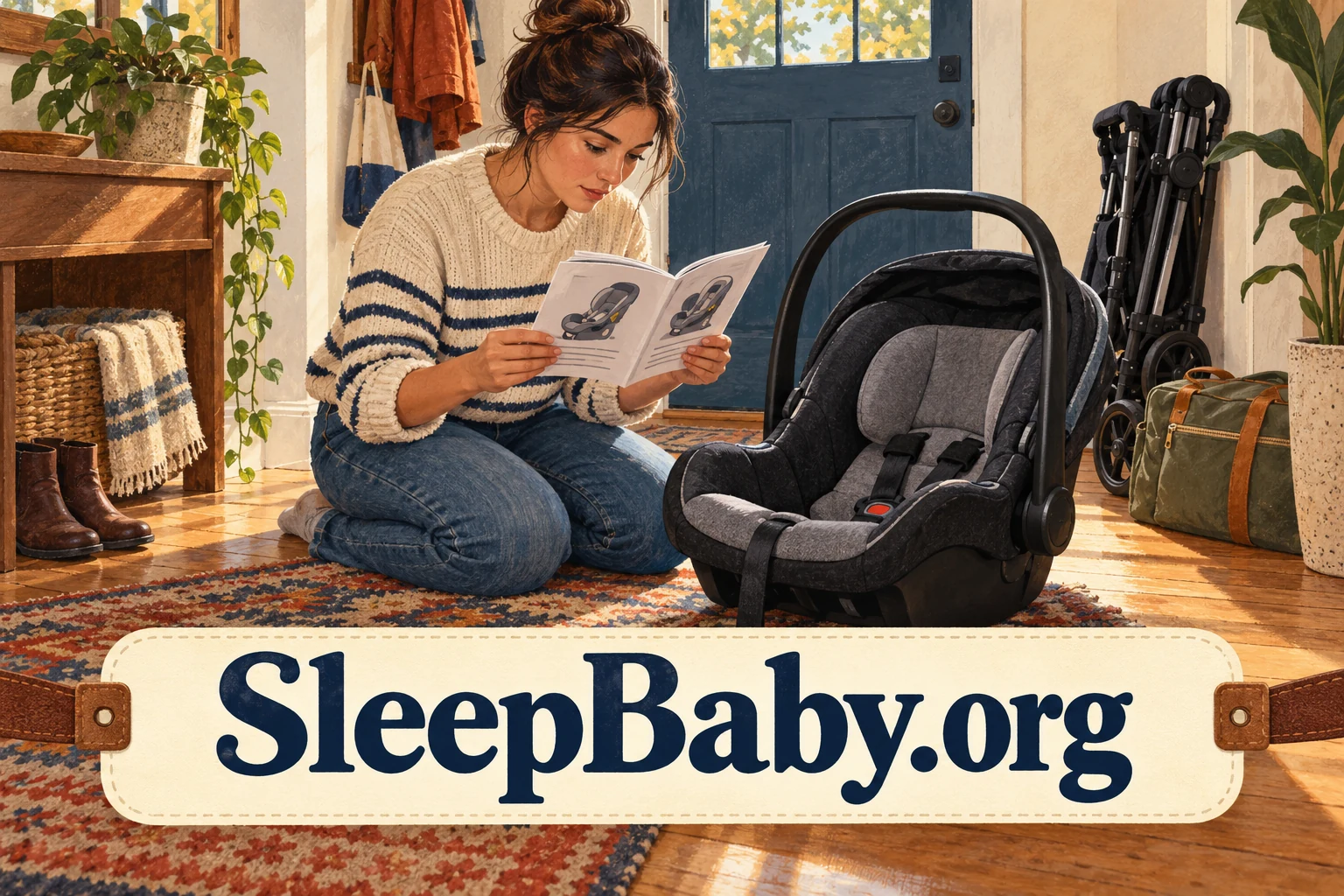
Take out the manual before the travel day. Find the exact model name, the rear-facing height and weight limits, the allowed installation methods and any infant-fit requirements. Save the manufacturer’s instructions somewhere you can read them without relying on a curbside internet connection. Photos of the labels can help you identify the model when asking for help.
Check the seat’s condition and history, too. Follow the manufacturer’s service-life and replacement instructions, check for recalls, and make sure essential parts are present. An unfamiliar borrowed seat is not automatically a good backup just because it is nearby. If its history, labels or instructions cannot be established, I would not build the trip around it.
Can you install an infant seat without its base?
Some infant seats permit installation using the vehicle belt without a base. Children’s Hospital of Philadelphia discusses this option for taxis and rideshares, while emphasizing that belt routing affects how the restraint performs. That is a reason to use your exact manual, not to copy a belt path from a different seat.
Do not leave the base at home unless your model specifically permits the installation you intend to use and you know how to perform it. Check the handle position, recline requirements, belt routing and locking instructions for that method. Never improvise an extra belt route because it looks more secure in a photograph.
Learn how your installation is checked
NHTSA’s rear-facing installation guidance starts with both manuals. The vehicle belt or lower-anchor installation must follow the permitted method. Use the correct rear-facing belt path and the seat’s recline indicator. Keep webbing flat and secure the installation as instructed.
Check movement at the belt path: the installed seat or base should not move more than one inch side to side or front to back there. Testing the top of the shell is not the same check. For a detachable carrier, confirm that it is securely attached to its base according to the instructions. A click alone is not your entire inspection.
A certified child passenger safety technician can help you learn these checks before the ride. NHTSA’s inspection finder can direct you to local help, often at no charge. Ask to practise the installation you will actually need. Having someone install a seat for you once is less useful than understanding how to recognize a correct installation yourself.
I would also practise the physical sequence: where your baby will be safely supervised, where the bag goes, how the stroller folds, and which hand needs to stay free. With another adult, divide those jobs. Travelling alone, reduce the bags and choose a pickup location where you have room to work without standing in moving traffic.
THE RIDE ENDS. YOUR EVENING CONTINUES.
Leave room for the steps after the drop-off

Once the car is parked and your baby is safely inside, the next questions may be about feeding, a nap or the usual bedtime steps. The SleepBaby.org Method is introduced on our homepage, with information about bedtime routines and baby sleep schedules.
I would give the arrival its own small place in the plan: somewhere to put the bags, time to meet your baby's needs and an appropriate infant sleep space. You can read the current Method information while thinking through that ordinary part of the evening.
Sleep planning does not replace a suitable car seat, correct installation or medical advice. It begins with those needs respected, including moving a sleeping baby out of the car seat after travel as soon as possible.
Book enough space and enough time
Count your baby as a passenger needing a seating position. Include other children, their restraints and the adults before choosing a vehicle type. The listed passenger capacity does not guarantee that your particular seats will fit next to one another. A large stroller and suitcases create a separate cargo question.
Once matched, communicate the practical setup through the app: you are travelling with a baby, bringing a rear-facing seat, and need time to install it. You can mention a folded stroller or large bag so the driver knows what to expect. That message helps coordinate the pickup; it does not replace the seat and vehicle checks.
Build in time for an unsuitable vehicle or a cancelled ride. A reservation is not a reason to arrive at the pickup point with no alternative. For a medical appointment or flight, work backward from the time you need to arrive, including loading, installation and unloading. I would rather simplify the luggage than shorten the safety checks to protect a tight schedule.
Keep feeding, changing and essential medical supplies accessible to you, rather than buried in a suitcase. Pack what the journey needs without crowding the seating area with loose bulky items. Arrange luggage so it cannot interfere with the restraint, its required support features or the adults’ seat belts.

At pickup, pause before loading everything
Uber’s rider safety guidance recommends checking the license plate, vehicle make and model, and driver’s photo against the app. Do that before putting your belongings or baby into the car. A car arriving at the right time is not enough identification.
Use a safe, legal place to load. If the driver stops where you would have to work in traffic, ask about a safer pickup point. Keep your baby supervised while the seat is installed; do not leave them alone in the car while you walk back for another bag. The driver should remain stopped until installation and buckling are finished.
Three fits, checked separately
Child to seat: the restraint’s rear-facing limits and harness fit suit this baby now.
Seat to vehicle: the permitted installation, seating position and recline work in this car.
Trip to family: everyone has a restraint, the bags fit safely, and you can manage the return.
If one answer is unclear, stay parked and solve that part. Two good answers do not compensate for the missing one.
For a supplied seat, check the model and instructions rather than relying on the name of the booking. Look for damage or missing parts, confirm the intended orientation, and check installation and harness fit. If you cannot establish that it is appropriate, do not begin the trip with it. A service label is not a personal fitting assessment.
Harness checks belong before the car moves
In a rear-facing seat, NHTSA advises placing the harness straps at or below the shoulders, keeping them flat and tightening them so you cannot pinch slack at the shoulder. For a seat with a chest clip, position it at armpit level. Follow the specific restraint’s instructions, including any permitted infant insert and buckle positions.
Bulky coats and snowsuits can prevent a snug harness. Use suitable thinner clothing beneath it, then add warmth over the secured harness if needed, keeping your baby’s face clear. Don’t add a pillow, aftermarket head strap or unapproved padding to make the seat look more comfortable. If positioning remains wrong, get model-specific help instead of filling gaps by guesswork.
Install the rear-facing seat in an approved back-seat position. Never place it in front of an active passenger airbag. A seat that cannot be installed appropriately in the back is a reason to choose a different vehicle, not to move the baby to the front to save the booking.

If your baby cries, feeds or falls asleep during the ride
A crying baby can make every traffic light feel longer. I would begin with changes that keep everybody restrained: a calm voice, a quieter cabin if the driver can accommodate it, or checking whether your baby is too warm. If they need hands-on care, ask the driver to stop at a safe place before unbuckling anyone.
Do not remove your baby from the seat, loosen the harness for comfort, or try to breastfeed while the vehicle is moving. A stop needs to be somewhere safe to care for your baby, not simply a brief pause at a red light. If a feed is likely to be needed immediately, feeding before requesting the ride may make the journey easier to organize.
If your baby sleeps while travelling, keep the correctly fitted harness secured and watch their position. Do not adjust the seat outside its approved recline range to make it flatter. Trouble breathing, blue or gray lips, or a baby who is difficult to wake needs emergency help, not an attempt to finish the ride quietly. In the U.S., call 911 and tell the driver to stop safely.
A rideshare is not medical transport. If your baby is seriously unwell, call emergency services rather than using an ordinary booking to avoid an ambulance. For a baby with a known breathing, positioning or other travel-related medical need, arrange transport around the clinician’s instructions before the trip.
Arrival is part of the sleep plan
When you reach your destination, take your baby and restraint out deliberately, check the back seat for belongings, and move away from the vehicle before reorganizing everything. With two adults, one can supervise the baby while the other checks the bags. Travelling alone, decide the unloading order before the driver pulls up.

The AAP’s safe-sleep guidance says to move a baby who falls asleep in a car seat to a firm, flat sleep surface on their back as soon as possible. At home or your accommodation, use an appropriate infant sleep space with a fitted sheet and no loose bedding or toys. An adult bed is not the replacement sleep space.
I would avoid turning a successful arrival into an extended car-seat nap in the hallway. Take the few necessary steps to get inside, meet your baby’s immediate needs and make the transfer. A nap that ends during unloading is inconvenient; preserving it does not justify leaving the baby sleeping in travel equipment after the journey.
If you’re visiting somewhere without a suitable sleep space, include that in the plan before leaving. You may need a shorter visit, appropriate portable sleep equipment, or a different destination. The seat you need for the drive and the sleep surface you need afterward have different jobs.
A short look at rear-facing harness fit
NHTSA’s Rear-Facing Car Seat Tips illustrates harness and chest-clip checks and reinforces keeping children rear-facing to their seat’s limits. It is a general overview, not instructions for every model or proof that a supplied rideshare seat fits your baby.
Written takeaway if the video will not play: follow the car-seat and vehicle manuals; check the rear-facing harness position, flat straps and snug fit, and place a chest clip at armpit level when the seat uses one. The NHTSA written instructions support these checks independently.
Official publisher metadata and selected muted visual frames were reviewed. The attempt to seek to 65 seconds exceeded the approximately 62-second video; that timeout is retained, not counted as a completed viewing. No full audio or transcript review is claimed.
Airport trips and other journeys with extra moving parts
For an airport pickup, check the airport’s official rideshare meeting instructions before travelling. The designated area may be away from the arrivals door. Work out how you will move the baby, restraint and bags to that location without assuming the driver can stop wherever you are standing.
Once there, the same seat checks still apply. A delayed flight, tired baby or queue of waiting cars does not make an uncertain installation acceptable. If the meeting area is too rushed to work safely, contact the driver through the app and ask how to move to an appropriate permitted place. Airport staff can help clarify local pickup arrangements.
Plan for what happens if equipment is delayed or damaged in transit. I would keep the details of another confirmed transport option with the booking information. Do not assume that any loaned or rental seat will be suitable without checking its model, condition, fit and instructions.
A newborn’s first ride home deserves the same advance planning. If your baby was born prematurely or has special positioning needs, ask the discharge team about travel requirements and any testing or equipment needed. The AAP notes that some babies need assessment before travelling in a semi-reclined position. Do not assume a supplied convertible seat suits every newborn simply because its label includes a low weight.
Start with a suitable seat you already know
As an Amazon Associate I earn from qualifying purchases. There is no specific shopping recommendation or affiliate link in this section.
I would not pick a car seat from a generic rideshare packing list. Your baby’s fit, the seat’s instructions and the vehicle matter more than an accessory’s convenience. An appropriate seat you already own may meet the need if its condition, limits and permitted installation are checked.
Free practical alternative: use the manufacturer’s instructions and NHTSA’s inspection finder to arrange help from a child passenger safety technician. Practise the setup and make a backup transport plan before buying another travel item. A seat that cannot be fitted correctly is not made suitable by a carrying strap or other accessory.
When the plan fails, keep the safety decision simple
If a driver declines, the seat is unsuitable, or installation does not work, pause the ride arrangement. Move your baby and belongings to a safe place and choose the next option. You can address app support and a disputed charge after everybody is safely out of the loading area.
Uber’s driver guidance says trips cancelled because a rider lacks a required seat may incur a fee. That is not a reason to travel without one. Describe what happened accurately if you contact support; don’t assume a refund or ask the driver to record a different reason for the cancellation.
A fallback can be very ordinary: call someone who can bring the correct seat, use a prearranged service that confirms the equipment, postpone the outing, or choose a destination you can reach another appropriate way. Consider the whole route before changing transport modes. Do not treat every shuttle, bus or taxi as if it follows the same restraint rules.

Door → Seat → Stop → Sleep space
Door: confirm the ride and keep everyone safely supervised while you load.
Seat: check child fit, vehicle installation and every passenger’s restraint.
Stop: pull over safely for hands-on care; change the plan if the setup fails.
Sleep space: know where your baby can sleep after arrival, away from the car seat.
Use this as a planning reminder, not an installation manual. Your seat and vehicle instructions control the setup.
Quick answers before you leave
Can I hold my baby for a five-minute ride?
I would not plan any car journey that way. Short distance does not provide a restraint. Arrange a suitable rear-facing seat or another travel plan before starting.
Does UberXL automatically include a baby seat?
No ordinary vehicle-size choice establishes that a child seat is included. Check the specifically named Car Seat option and its local details, or bring an appropriate seat you can install correctly.
Can a stroller seat or baby carrier replace the car seat?
No. Use a restraint approved for the relevant vehicle use and your baby’s size. A travel-system infant seat must still be removed from the stroller and installed in the vehicle using its approved method.
What if the driver says the seat is unnecessary?
Keep your seating decision. Confirm the current local requirements separately, and choose another arrangement if you cannot use a suitable restraint. A curbside opinion cannot establish your baby’s protection.
Sources
- Uber: current Car Seat help
- Uber: U.S. Car Seat service page, compared for discrepancies
- Uber: car-seat responsibilities and cancellation guidance
- Uber: rider safety and vehicle checks
- NHTSA: choosing, using and checking child restraints
- NHTSA: rear-facing installation and harness fit
- American Academy of Pediatrics: car seats and special travel needs
- Children's Hospital of Philadelphia: baseless installation and belt paths
- NYC311: car-service guidance
- NYC Taxi and Limousine Commission: passenger FAQ
- American Academy of Pediatrics: safe infant sleep
- NHS: urgent help for babies and young children
FROM THE PICKUP POINT TO YOUR OWN FRONT DOOR
Keep the journey and the evening manageable
You have a seating plan, a pickup check and a fallback. For the routines and sleep schedules you are thinking about after arrival, visit the homepage to read about the current SleepBaby.org Method.





What viewers said10 comments · 4 replies+
Archived comments from the original Baby Sleep Miracle presentation. Not independently verified by SleepBaby.org; individual experiences vary.
Thank you so much for this video! I had no idea about the dangers of baby swings :O
Hi Mary-Ann. I have a question: Is method in any way similar to the ones recommended by Dr Bucknam, Dr. Weissbluth or Dr. Karp? We tried those but none of them help.
Hi Regina, thank you for your question. The short answer is no. The techniques I share in my guide are based on newest scientific research and this is why I have never seen any approach similar to the one I recommend.
This method really works! I tried it on my son Jesus and after just one week he went from waking up more than 5 times a night to waking up just once or twice. You are a lifesaver, Mary-Ann!
I'm truly impressed with how much information you share in your video. And all for free! I can feel that you truly care about mothers like myself, and that's hard to find these days. I have recommended your site to several of my friends already.
Mary-Ann, our child suffers from autism. Is your approach still suited?
Chloe, I made sure my method can be used with any child, even babies who are special like yours. Please note that I'm not a doctor and that I always advice to consult with your physician because nothing is more important than the safety and well-being of your love.
Hallo Mary-Ann, I'm from Germany. Do you have your guide in German?
Hello Heide, we do! Normally you should already see our video in German. If not, please contact our support so they can guide you
Thenk you for your answer, Mary-Ann!
I just completed your approach and I have to say, it worked almost too well. Yes, it took a bit of getting used to with your bedtime routine but the difference is huge. My son George used to take 1 hours to go down and now he's firmly asleep in no more than 10 minutes! You're the best!
It seems I'm the only man watching this video, lol! What you shared about the 'emotional backpack' made immediate sense to me and I can't wait to help my little girl Mila to unpack it!
Hey there, just discovered your site and this really sounds different. Just wanted to say thanks for sharing :)
For everyone who's still thinking about getting Mary-Ann's guide I want to advise you to go ahead. I wasn't sure myself but now I'm so thankful I invested in this program. It made a huge difference in our life as a family and yes, my baby girl does sleep through the night now.